Hi,
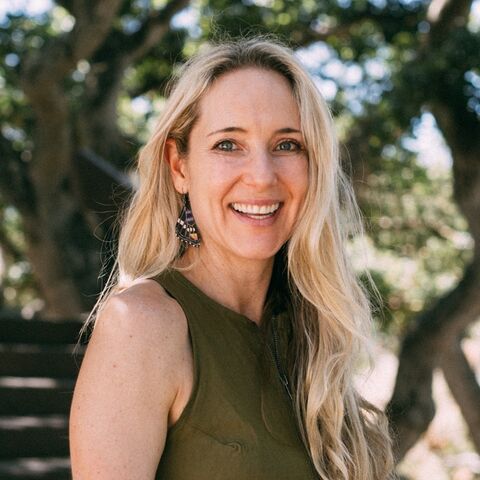
I'm Dr.
Diana Hill.
I'm a clinical psychologist and I practice a type of therapy called ACT,
Acceptance and Commitment Therapy.
One of the core processes that underlie ACT is being present.
And it's really about being present where it matters most to you in the areas that are important to you in your life.
In order to be present,
We need to develop flexible attention.
The capacity to move our attention away from things when we get rigidly attached to them,
Sometimes we can get rigidly attached to our thoughts or attached to the past or the future or sensations in our body.
It helps to have flexible attention to move in and out of that moment.
We can also develop our attentional capacities when we have scattered attention.
Scattered attention happens when you're sitting down to work on a project and all of a sudden you're on your phone or you're getting up to have a snack.
Being able to stay with it and focus is something that is incredibly helpful in having a rich and meaningful life and getting things done.
So this meditation will help you develop flexible attention.
It'll help you focus on the present moment,
But then also move your focus to other aspects of the present moment and become more flexible with it.
Let's get started.
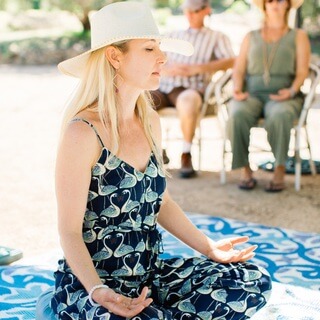
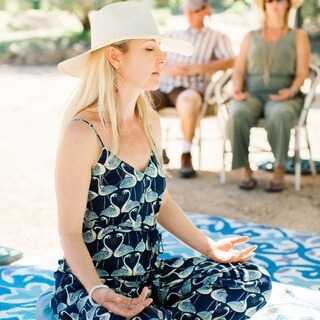
Go ahead and close your eyes and begin by turning your eyes inward.
This practice is called one eye in and one eye out.
And we'll begin with two eyes in.
So turning your eyes inside of your body,
Noticing sensations in your body.
Where is the strongest sensation located in your body?
Bring your attention there.
Does it have movement?
Does it have weight?
And then also notice within your body,
There's areas that maybe you've disconnected from,
You have no sensation in.
Weights.
Where are some of those areas in your body?
So you can bring attention to the physical sensations in your body.
You can also bring attention to your body's needs.
Are you hungry?
Where do you feel hunger or fullness?
Are you fatigued or energized?
Where do you notice that in your body?
And you can bring awareness to your emotional state.
What is the state of your feelings?
And how do you feel them in your body?
With two eyes in,
You can also bring awareness to your mind and not just the content of your mind,
But the quality.
Is it foggy?
Is it sharp?
Is it racing?
Is it slow?
What's your mind like right now?
Is it negative?
Is it optimistic?
So we bring our two eyes in to what's happening in your body,
The sensations,
The emotions,
Mind.
And you can also bring your two eyes in to the movement of your body,
How your breath moves you.
Other subtle movements and micro adjustments that your body is making to maintain its homeostasis.
Two eyes in.
And then we can shift.
We can shift our awareness to the moment that we are moving.
We can shift our attention to two eyes out and we can shift our attention,
Even with our eyes closed,
To just this world around us.
You can feel the temperature of the air on your skin.
You can feel the ground beneath you.
You can hear the sounds of the world around you.
We're moving from two eyes in to two eyes out,
Shifting our attention from inside to outside.
And when you're ready,
You could even open your eyes and look two eyes out at the world around you,
Beginning in your space,
What you see,
But also looking out a window or a doorway,
Two eyes out to the sky,
To nature,
And even two eyes out in a more interpersonal way of feeling the connection to people and the animals and environments that are outside of the space.
People that you care about,
People that you've never met.
Two eyes out,
Feeling that connection and continuing to have your eyes open.
You can bring this practice to one eye in and one eye out.
Can you stay connected to your body,
Your body's needs,
Sensations,
Emotions,
Thoughts,
Movements,
And toggling from attention to the inner world to attention to the outer world?
Can you be connected to what's happening in the world around you so that you have one eye in,
Checking in,
And one eye out,
Checking out?
And toggling your attention in this way,
You get to choose where you put your attention rather than your attention being taken from you so that you can notice an urge show up in your body.
You can choose to pay attention to that urge and then you can also choose to pay attention to what's the most helpful move in the next moment.
One eye in,
Four eyes out,
One eye in,
One eye out.
Feel your breath.
Feel connected and notice that even with your eyes open,
You can practice.
Eyes wide open while still staying connected to eyes inside.
This week,
I'd like for you to bring this practice to your movement,
To your relationships,
To your work.
What if you were to keep one eye in and one eye out in the important domains of your life so that you don't lose yourself and also so that you don't lose the world around you?
One eye in,
One eye out.
One eye in,
One eye out.
Many blessings and I hope that today's practice is useful for you in your daily life,
For your flexible,
Embodied attention.