I'm never bored practicing because it's something that I really,
Really enjoy doing.
And let's say for me,
I say,
Okay,
I got a 30 minute block.
I got stuff to do on this side.
I got 30 minutes.
I'm going to devote to practice.
And next thing I know,
It's been 60 minutes.
Welcome to the Art of Attention.
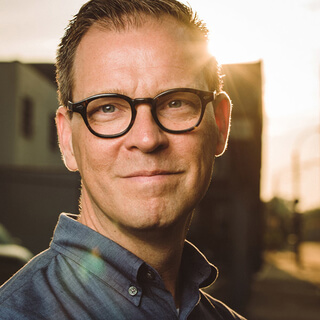
This is Darren Larson.
This podcast is about strengthening our attention without waiting for the world to get less distracting.
Some of our guests are considered experts,
Whether they've done some research or written a book or have spent a lot of time honing their attentional skills.
But I don't think you have to write a book about attention in order to have some interesting stories to share or to have insights that we can all relate to about exercising our attention.
This is why I'm super excited about this episode with Carl Coleman.
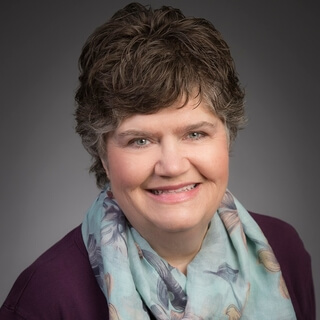
Carl Coleman is a local police officer who also works in executive security.
He recently helped keep a presidential candidate safe during a national debate hosted in central Ohio.
Carl is a husband,
A father,
And a lifelong learner.
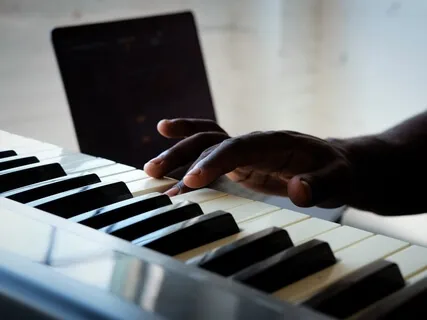
He caught my attention because he's also a musician who started practicing the piano as an adult 11 years ago.
It was fun to discover how many interests and experiences that we share.
It's the kind of conversation that makes me wonder how many people we might pass by every day without realizing how much we actually have in common.
I hope you enjoy it.
Carl Coleman,
Welcome to the art of attention.
Thank you.
Good to be here.
I'm curious to hear about the work you do.
I've heard from a mutual friend some things about you,
But I'd like for you to tell me a little bit about what you're up to in the world,
The kind of work that you do.
I understand that you have background as a plainclothes cop.
What are you up to now?
Well,
I'm still working in that capacity.
Specifically,
We're known as the gang unit on the street.
Some of the criminals refer to us as the gang unit.
The real name was the criminal intelligence unit.
I do work plainclothes.
Some of our duties is just simply gathering intelligence on some of the local gangs here.
We were under the subdivision of Homeland Security.
The FBI says that gangs are considered domestic terrorists.
We were under the subdivision of Homeland Security.
We gather intel.
We investigate.
We execute search warrants.
We buy narcotics.
Pretty much anything to do with gangs or Homeland Security,
We cover it.
When there's a home OSU football games,
We do bomb sweeps.
We do continuous surveillance two or three days out from the game leading up to the game and during the game.
Does the term situational awareness come up in your world?
Is that something you guys talk about?
We do talk about that,
Yes.
And then what context does that come up?
Are you given training on that kind of thing?
We do have some training on it.
Basically,
It's almost self-explanatory where you just have to be aware of your situation,
Us evolving around you,
Just paying attention to the little things.
For instance,
During the course of my duties,
I do a lot of surveillance.
I hunt down people with felony warrants and I may be sitting in a crime-ridden area by myself and you just have to be vigilant and pay attention to what's going around you as well as when the person you're looking for may either come out of a house or show up to a house.
So you have to be aware of your environment.
So I probably see way too many movies about this.
I just saw the new Scorsese movie.
But in a movie,
It's kind of romanticized,
I'm guessing.
We just see the action.
But it sounds like in your experience,
There's probably a lot of waiting around.
Do you find that trying to stay vigilant for long periods of time?
How do you do that?
Well,
You know,
It's funny you mention that because in the movies,
A lot of it is romanticized.
You'll see,
Let's say,
If a detective make a bust,
If you will,
And get a gun or someone with some dope.
The scene is they got him in handcuffs,
They walk him into a precinct,
They go to jail,
And five minutes later,
They're back out on the street.
That's not true.
Not true at all.
You're going to get tied up with a ton of paperwork for hours before you get back out on the street.
Now,
For,
Let's say,
My purposes,
If I'm on surveillance,
And let's say there's different concentric rings of surveillance.
Let's say if my unit is out there,
And let's say if someone may have the eye on the target or the house.
They have the eye.
The rest of the team doesn't have to be that close.
So you kind of take a perimeter further away.
And let's say there's another team that we're following someone and we're waiting on them to get in the car and leave.
The person that has the eye will call it,
And they'll stay put.
When that person leaves out of their line of sight,
They air the direction of travel,
The next concentric ring of surveillance may cover.
And so if I'm on an outside ring,
I'm not responsible for the eye.
I may listen to a podcast.
I might even read a book.
But if I have the eye,
Then I have to concentrate on just that.
So I'm hearing it's a more complicated but more collaborative effort where you're actually taking advantage of all the potential eyes,
But sort of taking turns in that front seat maybe I guess is one way to think about it.
So if I'm more game on,
Because how do you put it?
I have my eye on it or I'm the eye?
I'm the eye.
If I'm the eye,
I got to be really on my game and really focused,
Vigilant.
If I'm sort of backing that person up,
I'm helping expand the scope of what territory they're able to track.
But it's not where the heat happens to be at that moment.
So there is some wiggle room for doing other things,
But you're ready to go.
Is that right?
That's right.
That's a good way to put it.
Wiggle room.
And then apparently,
Or I guess I'm assuming with experience,
You sort of start to get a sense of when you've got to switch over.
I'm really interested in not necessarily sustaining laser-like focus all the time,
But being able to toggle onto that as needed.
Like sort of switch over from more relaxed to more focused.
I think ordinary life calls for that.
It sounds like you've got kind of a more extreme example where the stakes are higher.
But is there anything that helps you,
Whether it's experience or training or specific strategies,
That prepares you to be able to make that toggle back and forth?
Yes.
So let's say with that same scenario,
If I'm the only one out there and I have to stay focused,
Who knows,
Three,
Four,
Five hours because I'm the only one out there.
So one thing that I do,
I've always had the ability to kind of reflect inward and think about my life and think about where I've come from and think about where I want to be.
And if I'm not yet where I want to be,
I start to develop strategies to get where I want to be.
Okay.
And so all this is going on while I'm sitting there focusing on someone either showing up or coming out that I want to arrest.
And so,
You know,
My attention is somewhat diverted from what I'm doing,
But I'm still pretty much laser focused on any kind of movement that I may see.
And that gives me the ability to sit there for me for hours,
Just game planning life.
Where did I come from?
Where do I want to go?
It reminds me,
There's a novelist who is considered one of the most prolific novelists right now,
Joyce Carol Oates.
And she says,
People ask her,
How do you write so many books?
And she says,
I really spend a lot of my time looking out a window because she's looking out the window.
She sees the trees,
She sees the whatever happens to be there,
But she's got this background.
Right.
Right.
And she's also describing,
Which is I think different than multitasking because you're not doing two things at once.
You've kind of got,
You've got some attention at the ready as needed,
But then you've got this something going on inside that you can switch off of as needed as well.
Is that right?
That's right.
Wow.
Interesting.
And so,
You know,
You mentioned the novelist.
It's funny you mentioned that because I've been writing a book in my mind for the past 20 years.
Here recently,
I just sat down and put pen to paper and I get a lot of writing done in my mind while I'm sitting there doing surveillance.
Okay.
So.
Oh,
Interesting.
Yeah.
Cause you can work it out.
You're working out a narrative thread or a storyline.
Right.
Testing out a scene or a character.
Exactly.
And then how does the work you're doing and what you've described so far,
Is it just an exact match to some of the security you provide?
Like what do you call it?
Bodyguard or executive?
Executive protection.
Executive protection.
Is it very similar or?
It's very similar.
You know,
I do executive protection on the side.
I've done some protection for a couple presidential candidates that's currently running.
And a lot of times it involves just sitting still and waiting for the protectee to come out.
The presidential debate in Westerville was one example where I'm sitting for hours waiting for him to,
You know,
Get finished with the debate and come on out.
Of course,
Once he's done with the debate,
There's interviews that he has to go through before he actually comes out.
So there's a lot of downtime and I do the same thing.
During the downtime,
I'm game planning life.
I'm still focused on,
You know,
Any possible threats that might be around.
But in most cases there are none.
So I get to think about the book that I'm writing or I think about where I'm at in life and where I want to be.
Wow.
This is where I spend a lot of my time relating into other parts of life.
I just saw a performance by the symphony,
Columbus Symphony.
There's certain musicians who may be in this composition,
They have a smaller role,
Like the timpani player,
And waiting,
Waiting,
Waiting for their turn.
So it's like there's things we all do to come up with how do I navigate that time.
So it sounds like in addition to the novel prep,
Though,
Is this where you would also use some of your attention for education,
Like if you're studying something?
Right.
So tell me a little bit about the education you got most recently and how you incorporated that into your routine.
Okay,
So I believe it was back in 2014,
2015,
I went back to school to obtain my master's degree.
And so this was a three-year program.
But the person that told me about this program,
It was a master's of science and Homeland Security.
Okay.
It ties in directly to what I do now.
And he told me that he did the accelerated course in one year.
So I work probably 60,
65 hours a week.
And I'm thinking,
Well,
If he can do it,
Certainly I can do it.
And I did the accelerated course in one year.
And it helps that if I'm sitting and I'm doing surveillance,
I can get some schoolwork done while I'm doing surveillance.
Okay.
I can still be focused.
Okay.
And so I write,
Let's say with regard to protection of the power grid here,
Infrastructure protection,
I can sit there and think about,
Okay,
What I want to write about,
What's important,
What's not important.
If I were a terrorist,
How would I attack?
And just game plan that way.
And you do the same thing with executive protection.
You what if,
You sit there and you game plan and you say,
Okay,
If this happens,
What am I going to do?
Where do you learn these skills?
Is that something being mentored or learning from your other colleagues?
How do you know what to do with that time?
Well,
A lot of it's training and with repetition comes to habit.
And so if you go over and over in your mind,
What if this happens?
What if that happens?
When it does happen,
Then you're prepared.
You're not taken by surprise.
If it doesn't happen,
Great.
It's a great day.
But through training,
Through repetition,
And a lot of it is life experience.
I've been doing this work for 31 years now.
So not that you've seen and done it all,
Because life comes at you fast and life throws you some curve balls,
But there's a lot of experience there and you've seen and you've done a lot.
So then I'm assuming maybe do you find yourself in a mentor role?
Would that kind of experience helping the newer folks?
Definitely.
So where I really kind of relate to the challenge or what I see as potential challenge of this is where your attention is going during those stretches of time,
You can't necessarily read that from the outside.
So as a mindfulness teacher,
I'm teaching people that just because someone's sitting there with their eyes closed doesn't mean they're necessarily having a great time.
They might have,
Their thoughts might be all over the board,
Right?
So trying to help map or clarify the reality of what can be going on in someone.
We don't know what's going on in someone else's mind.
So how do you in your world,
How do you find it?
Is it easy to bridge that to compare notes or to pass that knowledge and experience you have on to someone about that kind of stuff that people can't see from the outside?
I think it is and with regard to let's say law enforcement or executive protection,
That's something you can see,
You can put your hands on.
So follow my lead and I lead by example.
So if I want you to let's say be vigilant and concentrate on what you're doing,
If you see me chasing butterflies off someplace,
You're not going to be attentive.
But if you see that I'm attentive as the trainer and I say hey,
Stand over here,
Be alert,
Do X,
Y,
Z and you see me do it,
Then you're going to do it too.
So you actually role model that and you then I take it probably recognize when someone isn't paying attention.
Yes.
Do you have certain signs you can tell like a more rookie person?
Well you know what,
With today's millennials,
The cell phone is a huge distracting factor.
So you see somebody get out the cell phone and send in a text message,
You're not paying attention,
Especially with prolonged usage of that cell phone.
You're engaged in a conversation that has nothing to do with the job at hand.
I think all of us can relate to that for driving.
Yes.
But then it's interesting to think about that in your line of work and I'm taking it,
It's probably a slow tip for them to absorb.
Are they resistant to that?
Usually not because let's say in the field of executive protection,
If the client who's paying you see that you're distracting and you're on the phone,
That's not a good thing.
And so let's say if I brought you on to work with me on a detail,
Then you need to be listening to what I tell you to do.
And if I say hey,
The client doesn't want to see you on the phone continuously.
Everyone has to take a call every now and then or receive or send a message,
But it shouldn't be continuous.
It's the continuous that's the problem,
Right?
Yeah.
And then that's going to break your concentration.
I wonder if that makes you less able to toggle back into where you need to be.
With some people,
Yes.
It's a huge distracting factor.
Okay.
So you want to keep that to a minimum.
And then in other cases,
Let's just say,
Since we're talking EP or executive protection work,
Let's say someone is actually with,
We call it the package or the principal,
Inside somewhere.
And I'm outside,
I have outside security or containment and they need to communicate with me,
Then it's permissible.
It's actually a communication tool in that case.
But that's different than I'm paying attention to something completely unrelated or am I getting engaged in like socializing with someone who's not there.
And some people like to,
What's that game,
Like Candy Crush,
I think it is.
Oh,
They play a game.
From what I understand,
It's a pretty addictive game.
And now you're involved in the game,
You're not focused on what you should be focused on.
Do they ever say,
Do you ever get pushed back?
Like I'm as focused as you are,
Even though I'm doing this because I've always done this.
Is that something you ever.
.
.
You know,
Usually for the seasoned older people like myself,
They probably can concentrate and do both.
But for the younger crowd,
I think it's a little bit difficult for them to do it.
They need to learn the basics first before they can.
.
.
Right.
And that is a distinction that's hard to maybe clarify,
But there's a distinction between I'm remaining alert,
Even though I've got something else going on in my mind.
It's different than I'm alert and I'm getting myself absorbed in a completely different task.
We're talking about that's multitasking there.
Or the other one I think is more like a kind of an attentional agility where I can switch back and forth.
Right.
And I do wonder if that agility is something that you really have to exercise it to.
.
.
To get it.
To get it.
And then also,
You know,
With the education piece,
You know,
I enjoy challenge.
I'm a pretty competitive guy,
You know,
Growing up competing in sports.
I did it in college,
Post college.
So the challenge of completing a master's in one year,
Like the person who told me did,
It was a challenge,
Especially given the amount of hours that I work.
And so the challenge is,
How do you balance it?
How do you juggle it?
Because at some point you got to sleep.
You got to work.
Yeah.
How'd you do that?
And you have papers just due.
Yeah.
Right.
That's when you really,
Really have to stay focused.
And for me,
The focus part of it is the challenge part of it.
Because,
You know,
When you're working on your masters,
You have to maintain a certain GPA.
And so for me,
In the back of my mind was,
Okay,
Well,
If he did it,
Then I can do it.
And he wasn't the first one to have done it.
So others have done it,
Then I should be able to do it too.
And the challenge piece is also what keeps me laser focused.
Okay.
Is there any other things you learned?
Is there something that helped you be successful in that?
So you pulled it off.
You did it in a year,
Were there certain things that you relied on?
One thing that I rely on academically,
Athletically,
Work-wise,
Just in life,
Is I'm a huge believer in visualization.
So I always say,
If you can see it in your mind's eye,
Then you can obtain it.
And so a lot of times if I'm sitting there doing surveillance,
I visualize and I see things in my mind's eye.
Oh,
Interesting.
And once I do that,
I can carry it out.
And so I've taught my kids to do the same thing as best I can.
So in that context,
Would that be that you're visualizing an ability or something related to the work you're doing?
Can you give a specific example of how you- Exactly.
So let's say on the athletic playing field,
I wrestled in college.
So post college,
I still competed in tournaments.
So do I have the time to practice the way I like to?
Absolutely not.
But I would go over and over in my mind certain moves that I wanted to do to my opponents.
And I would also say I would go three,
Let's say three moves.
If I do that and you block it,
Then I'll go to this move.
And if you block that,
Then I'll go to this move.
Usually one of them would work police work-wise.
Okay.
I sit there and I visualize and say,
Okay,
Well,
It's the holiday.
So what's the likelihood that this person is going to show up at his mom's house for the holiday?
Or he's already there and he's going to come out.
And I see it happening.
And I may scan the environment and figure,
Okay,
If he comes out and I approach him and he runs,
Which is the path that he would most likely take.
And so you just visualize and see things.
And so you do the intercept way before it happens.
Wow.
I just had this connecting the dots between your trying to write a novel.
It's kind of similar.
You're playing out scenarios.
Exactly.
And then the scenarios are specific to what could happen.
And I'm imagining you probably try a bunch out.
You got time.
I have nothing but time.
Okay.
So congratulations on the masters.
Anything else about that process you think might be?
That masters in Homeland Security,
Again,
It ties directly into my work and even travels.
I had an opportunity to go to Tel Aviv,
Israel and do some studying and training with some of their security forces there.
And we learned how they secure their infrastructure in Israel.
And so when you compare how they protect their infrastructure versus how we do ours here,
It's a big difference.
And they're excellent at what they do.
And we have some work to do here in this country.
So you actually saw some benefit to how they were doing it,
Maybe a little differently.
Yes.
Was there something like specific you can share about something that stood out about that or what caught your attention?
So when we talk about laser focus,
And in that case,
Over there,
Their lives may depend on it for sure.
So in one area,
We go into a police facility where there's a ton of cameras on a specific site.
And so their security personnel there is focused with laser focus on those cameras.
Their attention didn't deviate from those cameras,
If at all,
But for a split second.
They're looking at everything.
Whereas here,
Some places we have surveillance cameras,
And there's no one even manning the cameras.
Ah,
Okay.
But there,
You have to be vigilant.
And they were.
You could be fired for not being attentive to duty.
Well,
That's interesting.
So then kind of makes me wonder how,
I mean,
In our culture in general,
I think there's a tendency,
Once we find a tool,
Then we sort of overly rely on the tool instead of,
As if the tool is going to do something without us being,
You know?
Right.
So it makes me wonder if there's partly that might be at play.
And I think we're all guilty of that.
We find out something,
A tool makes it easier,
And we kind of ease up and maybe a little too much.
We do.
Do you think we have something to teach them?
Was that part of what you noticed as well?
No.
It was one dimensional.
We were there to study and learn from them.
And they pretty much have it down to a science.
You know,
You have one small country surrounded by hostiles.
So you have to be vigilant in protecting your country,
Your infrastructure,
Because they're under constant attack,
Where that's not the case here.
So what a great opportunity.
And that was around the same time of your master's program?
That was about four years prior to me working on a master's.
Okay.
So yeah,
Let's talk about how you came across my radar,
Which is kind of a,
I think,
An interesting story.
So we have the same piano teacher.
And my story is that I played the piano while growing up,
All the way through high school.
And then I started my college,
I started out as a piano major,
Actually.
And I ended up not liking it.
And I don't know,
There's lots of reasons for that.
But for whatever reason,
I kind of put a hold on it.
And that's 33 years ago.
And so what happened in my experience is I kept running into pianos out in the world.
And since I hadn't been practicing,
And I didn't have any sheet music,
And my eyes are not getting younger.
So if I did have sheet music,
It's harder.
But I found that I could not show at all what I was capable of.
And so I said,
I was looking for,
Can someone help me?
So Mary Ellen Fitzer,
I found out about her.
And I said,
Here's my goal.
I want to be able,
If I'm at a restaurant,
I'm at a party,
And there's a piano,
I want to be able to sit down and blow people out of the water.
So I got a couple questions for you now.
So given the years of experience playing,
You didn't think that you could sit down and just play something,
Anything.
It didn't have to be a Beethoven or Chopin piece,
Just anything.
So in particular,
I relied heavily on sight reading and practicing heavily,
Those two things.
So if I saw a piano at a restaurant,
I had nothing to draw from.
If there was some sheet music around,
And it's probably something old and tattered,
It'd be like,
Right?
And so what would actually kind of an ego thing,
I think,
At the heart of it is I would play any little something,
And people would be so impressed.
And I'm like,
Oh,
No,
No,
No.
I appreciate it,
But don't be impressed by this,
Because I used to play big things.
How'd you hear about Miss Fitzer?
I'm friends with her daughter-in-law.
So actually,
Yeah,
That's a funny connection.
And it was just kind of a random thing.
I actually ran into Mary Ellen's husband at a work-related thing,
And we were comparing notes.
And I told him exactly what I just told you.
I want to be able to,
You know,
Have you ever seen a piano at the airport?
Sometimes I'll have pianos at the airports.
I've seen YouTube videos of random pianos.
Exactly,
Like that.
So I'm like,
It's like I'm walking by that piano,
And it's starting to actually really get to me that I want to be able to sit down on that piano and have,
You know,
Draw some attention.
And so,
What do you think about this?
And so we know we started lessons,
And I'm super pleased with how that's gone,
Because luckily it's still in there in my brain,
But it's like a muscle that had been unexercised.
And you know,
I would pull out stuff for the holidays,
For Christmas and stuff,
But I hadn't been practicing.
And I think the thing I didn't expect is she's got a really good ear,
And there's no fool in her.
So she keeps me on my game,
And knowing that her ear is going to be there at my next lesson,
It's got me working harder.
So what's your story about working with her?
So here's my piano story from my childhood days.
Loved music,
Always loved music.
Wanted to play the piano,
We were poor,
Didn't have the means for me to take lessons.
And so we had a kid at my church that played by ear,
He's a pretty good player,
And then after a couple years his parents started getting him lessons,
And he's getting better and better.
So fast forward to the teenage years,
13,
14.
You know how it is when you're a guy,
You can play the piano,
And the girls all clamoring around,
Can you play,
Can you play?
And so I'm on the outside looking in,
Just seething with anger because the girls are all around him,
Because I'm like,
Man,
I'll knock him out.
He can play the piano.
That's one motivation,
Right?
So fast forward,
I took like a half a credit piano course in college.
Loved it.
Didn't continue after that.
Again,
Money.
My kids,
We had a piano in the house,
All three of my children were taking lessons,
And they hated it.
But they loved to show off the little bit that they could play.
They hated practicing.
And so we made them do it for one year,
My wife and I,
And they wanted to stop.
So due to sports and other extracurriculars with them,
Practices and whatnot,
We let them stop.
So the piano's sitting there collecting dust.
And I think probably two,
Maybe two years down the road after they quit playing,
I'm thinking,
Hmm,
I always wanted to learn how to play.
Let me find an instructor and get some lessons.
So I went back to where they were having their lessons and talked to a guy who gave me Miss Fitzer's name.
Now,
The funny story about that is when I showed up to her house,
I was probably looking kind of bummy.
And here you got an older white lady and a black guy just randomly showing up to her door saying,
I want some lessons.
And so I could see the look of concern on her face.
And so I said,
Well,
Pulled out my badge,
That badge there,
And said,
Hey,
I'm a Columbus police officer.
Here's my name.
Here's my number.
Call it in.
Check out my credentials.
Call me back if you're able to give me lessons.
When she called me back and was very embarrassed that she actually checked.
And I say,
You check out whoever you're going to have in your home.
You make sure you check that person out.
You vet them before you get them.
So it was a match made in heaven.
I told her,
I said,
I need you to treat me like I'm that five-year-old student.
Because I couldn't read music.
I couldn't read a lick of music.
I couldn't do anything.
OK.
I said,
And like you,
I said,
Here's my goal.
I want to be able to sit down at a piano and just play.
I don't need to be a concert pianist.
I just want to be able to sit down.
I love music.
And just play some songs.
Play some gospel.
I love gospel.
I love blues.
I want to be able to play that stuff.
And I know at the same time,
It's classical piano.
So I'm getting some.
.
.
Like technical training.
Right.
Yeah.
But at the same time,
I want to learn everyday popular music.
And so from time to time,
I bring in music of the day.
She'd music and she would help me figure out how to play it.
And so here has been,
I think,
11 years later,
I'm still with her.
And the frustrating part for me is I don't have the time to practice the way I'd like to.
Because in my mind,
I should be further along than where I'm at.
Well,
I think this is a real thing.
And I don't have the time either.
I find it comes and goes.
And you know,
If you don't practice,
It starts to slide.
It's a muscle.
It's like a muscle.
And also,
I think what I love so much about your story is there's a thing that the neuroscientists are finding that our brains can continue to learn as we get older.
But it does take longer for an adult than a child.
So there's that window when you're a kid,
You've got more flexibility or plasticity in your brain.
As an adult,
You got to hang in there longer.
So a kid is willing,
Like when I was little,
I would be willing to go through the motions.
What else am I going to do?
I'm a kid.
It's just like another homework thing.
And then one year,
Two years,
Three years pass,
Suddenly I can play something that starts to get attention.
But an adult,
That's a long wait.
If you're waiting two,
Three,
Four,
10 years.
It didn't quite take me that long.
But when I got started,
She had a five year old student that got started with me.
And so that student kind of surpassed where I was at after about four or five years.
She no longer had that student,
But I would always compare and say,
Okay,
What's she working on now?
I get it.
And her lessons would end as my lessons,
You know,
Our lessons butted up to one other.
Yeah.
An opportunity to hear her play while I'm waiting for her lesson to finish up.
I'm like,
Oh,
Man,
She's,
She's getting pretty good.
Yeah,
Those kids,
Darn it.
Yeah.
You're right.
You do,
You learn at a different rate as a child versus an adult.
And you have to adjust.
You do.
You have to adjust.
I run into this with,
If you're going to develop your attention through mindfulness practice,
It's not going to happen overnight.
And it's going to take a little longer the older we are.
Miss Fitzer actually was,
She was surprised that I stuck with it because she didn't think that I would.
And then she would think,
Say if I'm,
It's a piece we're on now.
Okay.
We've been on this piece now for probably easily a month.
And she thinks that maybe I'm getting frustrated and I'm ready to move on.
And number one,
I'm not because it's a challenge and I love challenges.
Number one,
Number two,
I know that if I just had the time to devote to practicing that piece the way that I should,
I'll get it.
And number three,
I have other music that I work on in addition to that piece to keep from being bored.
Okay.
But,
And I'm never bored practicing.
Yeah.
Playing.
Yeah.
And that's something that I really,
Really enjoyed doing.
You know as well as I,
It relaxes you.
And let's say for me,
I say,
Okay,
I got a 30 minute block.
I got stuff to do on this side.
I got 30 minutes.
I want to devote to practice.
And next thing I know,
It's been 60 minutes.
Totally.
That's exactly right.
It's easy to engross yourself in.
It's like the hardest part is sitting down on that bench.
I'll just say,
I'll just run through this once.
Next thing you know,
It's an hour.
That's how it works.
Right.
And then the challenge is if I don't have that hour.
And that's life.
That's real.
And that's the difference.
And I also don't have an end point in mind.
Actually I've been kind of thinking about this lately because it's not like,
It's not like I'm going to be a concert pianist,
But I really do enjoy every time I get to add some new thing.
But when I add this one and I add this one and then this one starts to crumble a little,
You know,
That's how it goes.
But wow,
It's just so great to hear your story about sticking to something for 11 years so far.
Hey,
Here's something for you.
Can you imagine as a child,
You're at a piano recital,
Bunch of kids your age,
And then you got an old person.
That was me.
Okay.
She wanted me,
She asked me about doing a recital a few years ago and I told her,
Yeah,
Okay,
I'll do it.
You know,
Why not?
She's like,
Oh really?
I said,
Yes ma'am,
I'll do it.
And so,
You know,
Put on a suit and we all did.
We went over to,
I guess it's over on what,
Morris and Carl,
And I was taken aback because even though,
You know,
We practice on her baby grand,
That was a grand piano that I was playing on.
And it kind of like,
Oh my God,
That thing looks like it's as big as a football field.
Same keys.
Right.
And so that kind of,
I was a little bit disconcerted.
I know this feeling.
Yeah.
I wasn't nervous about people watching because,
You know,
I'm used to performing,
If you will,
On an athletic playing field with people watching,
But it just seems so immense.
And I'm like,
Oh man,
It kind of threw me off.
Okay,
Well let me find middle C.
I got my bearings,
Started playing.
I messed up in the end,
But the audience would never know because I had lived and Miss Pfitzer has a perfect ear.
She has a perfect ear.
She knew I messed up.
Nobody else knew.
You know,
Being the old man and the group of these kids was kind of funny to me.
Yeah,
No,
I think it has to be funny if we're going to stay in it.
And I do remember my parents bought a garage sale piano.
I want to say this is in the seventies,
But like $15.
And then painted it like avocado green and it had,
It was like an upright and it had,
Most of the keys had something wrong.
It wasn't all in working order.
And that's what I was used to.
But one of my earliest memories of my mom getting me out of school,
Taking me to this high school or something,
And that was the auditorium and I had to walk up to that stage to a grand piano and there's a bench that was leather.
Yeah,
It's intimidating.
That is not just furniture.
That is,
It's like radiating something that it kind of says,
Are you sure you're worthy?
You know,
And you don't necessarily feel it if that's not what you're practicing on.
So it's intimidating.
And I do think there is something funny about performing at all.
The fact that we would put ourselves in that spot,
In that hot seat,
Because it's a,
It's a,
The payoff,
The risk for payoff is really high if it goes well.
But it's easy for it to not go well.
So what makes you stick to it at this point?
The number one thing is that I really,
Really love music.
And so I want to be able to play music.
I won't say create,
Cause I'm not creating anything.
I'm just reproducing what I've already heard.
And I had a pianist tell me at the Claremont restaurant that used to be on South High Street,
I was watching him play.
This was seven,
Eight years ago.
And he just ran through a whole set of music with no sheet music.
And I'm watching him and I'm just amazed.
And so when he got done with his set,
I went over and I talked to him and he says,
Let me tell you something.
He said,
Number one,
I've been playing since I was a small child.
He was probably 70 or so at that time.
Yeah,
I've been playing since I was a small child.
He said,
You have to remember,
People want to hear you play.
They don't want to hear you reproduce something that's already been.
And I said,
But sir,
You don't understand.
I don't have the ability to play like that.
I don't have the ability to improvise right now.
So if I had sheet music in front of me,
I have to play what I see.
And I'm okay with that.
I'm great with that.
You know,
Like you said,
This brain is frozen almost.
We learned at a different rate than kids.
So right now,
I'm at the stage where I've got several songs memorized.
I can sit down at any piano,
Play them.
My sight reading is okay,
Whereas yours is probably excellent.
But here's a classic example.
So I ran across a musician who plays keyboard in a band.
And so I was trying to learn Marvin Gaye's Let's Get It On,
One of my favorite songs.
He didn't know how to play it.
But he's like,
If you got some sheet music,
I can play it.
So I gave him my sheet music.
He struggled to play it.
His playing was about as lousy as mine.
Okay.
From reading the sheet music.
So I've told him,
It's fits.
I say,
Look,
I'm that guy that if I could play as well as Stevie Wonder or Ray Charles,
And I couldn't lead a lick of music,
I wouldn't be that guy.
I would rather play like that than to be able to read music.
I see what you're saying.
Yes.
Yeah,
Right.
Yeah.
So what would you say to someone who said,
Why should I?
It doesn't have to be piano.
I mean,
Really,
We're talking about skill development.
That could be a foreign language.
That could be any instrument.
It could be learning,
Like going back and learning math because you didn't do so well.
What would you say to an adult who's got a full time job,
Maybe even in school?
What's the point of devoting half an hour,
20 minutes a day to learning a skill at this point in your life?
What would you say?
To me,
It's the sense of pride of accomplishment,
Whether or not you will become a concert pianist,
Or you'll become a mathematician or a scientist,
Or just the sense of having accomplished something that you set out to accomplish.
And whatever the case may be,
Let's say working out,
Lifting weights.
You wanted to be able to bench press 200 pounds or three.
So over the course of time,
With diligence and hard work,
You eventually get there to set the goal and to be able to accomplish the goal.
I would encourage any adult to pay.
Go after that dream that you may have had.
Finish up what you started.
And the big thing is,
See it in your mind's eye way before you even endeavor to do it.
See it.
And see yourself finishing,
And you'll get there.
It sounds like that served you well.
A couple things I hear that are big themes in the work I do,
I think people don't realize what's possible.
If you make small changes consistently over time,
That builds up.
And I think people don't know how to see that or don't know how to connect those dots.
I want the outcome now,
Or I don't want to put in the time or some kind of guarantee,
I guess.
And here's the other piece of that that works for me.
I'm the kind of guy that,
You know,
I like to have fun,
I love to laugh,
And I try to find humor in everything.
And this is something that I did unintentionally.
I wasn't expecting people to either hear it or laugh about it.
But the piano recital.
So I sat down,
Everybody's quiet.
Number one,
Because I'm old,
And I'm the only black guy in the room.
They want to see what I'm going to play.
And so I sat there,
And I did like this.
And they heard it.
Cracking your knuckles.
There was a couple of chuckles.
Like,
Oh,
Man,
He's going to tear it up.
So you know,
Just finding humor in things to relax you so that you can focus.
Shouldn't be all uptight about things.
But I think you're also kind of a thread I hear in everything you're saying today,
Actually.
And I really appreciate this conversation so much.
It's illustrating something very subtle,
Something deeply human,
Which is a almost muscle memory.
Or how do I put this?
I think of it as a taste.
There's a taste of I keep showing up,
Challenging myself within my range.
So this is a reasonable challenge for me.
And there's something surprisingly delicious.
There's a taste you can acquire or reacquire.
I think we have it more in childhood.
We're willing to play without so much worry about the outcome.
But as adults,
We have to reacquire that taste.
Definitely.
Does that seem like it resonates?
Because I hear it and what you're saying is like the outcome isn't the point.
But there's something satisfying about putting in a few minutes a day towards that skill development that it's its own reward,
I guess.
It is.
It really is.
And I mean,
You nailed it.
As a child,
You're not that concerned about it.
You just want to go out and play it or do it.
As an adult,
You're worried about the outcome,
What people are going to think,
How am I going to look.
Just do it.
Just do it.
And it's funny how something inspired you as a child to even want to,
You know,
And you had obstacles to that.
I certainly had obstacles all along the way to that as well.
We all still have that little spark of inspiration.
Right.
And what we lose,
We start to lose is maybe hope of or we get this,
Why bother,
Which I don't think really serves us very well.
No.
And people,
You know,
The older you get,
You say,
You know what,
Why bother?
Why bother?
Late stage in life,
You know,
I got other things I could be doing.
But you know,
It's just like the Nike,
You know,
Slogan,
Just do it.
Because I think what you can't imagine until you experience this,
It's not about winning an award or like you said,
Cutting a record deal or whatever.
It's that there's something satisfying about learning a new skill,
Learn,
Developing a skill for its own sake.
Right.
Is you can't really imagine until you try.
And I do work with some older folks who just in simple basic mindfulness very quickly,
They're like,
Oh my gosh,
I'm noticing more richness in ordinary moments.
I'm 80 years old.
I never knew I could do.
It's the same thing I'm talking about.
And the same is true with,
You know,
I like to fish.
I'm sitting there fishing and waiting on a bite.
And I'm in the middle of a thought process,
Again,
About life,
Where I'm at,
Where I want to be,
How do I plan to get there?
And you start to visualize and focus on that.
All of a sudden,
You got a nibble.
My ability to focus and see things in my mind has served me well.
And patience,
Sitting and watching and waiting.
And I don't hunt animals.
I hunt two legged animals.
I hunt people.
And so,
You know,
It serves me well in that capacity.
It's like that they talk about the flow state,
You get caught up in it,
The sense of time passing changes.
And I also hear in your stories,
Attention is a transferable skill,
You know,
You hone it in one area.
I do I actually think that's kind of a theme of our conversation today is you hone it one area and you realize it applies to this.
Right?
Wow.
I mean,
We cover a lot.
Is there anything else you can think of that we haven't covered that people would find interesting?
Especially the music piece.
And obviously,
That's the connection that we have.
And your face lights up and you're smiling when you're talking about your music and the piano.
And I know for me too,
And it's just that the one thing that I found to be true with regard to music,
If you spoke Chinese,
And I spoke Arabic,
Music notes are music notes.
That's the universal language.
So we can communicate through music,
Which I believe is why the world love,
Let's say Michael Jackson,
Prince,
Any other major icon that may have passed away,
Whose music crossed over the ocean,
The Beatles,
You know,
Whatever.
That's the connect.
Music,
I know,
A lot of people say that if you teach a child how to read music,
They're probably going to do well in math.
I didn't understand it prior to being involved with music.
But now I do.
And being able to concentrate and focus on a piece that I'm working on.
Like you said,
It all lines up with paying attention.
And it's been easier for me to do as an adult.
You know,
I was a college athlete.
My focus was on sports and not academics at certain periods.
And so in order to remain eligible,
I could focus,
Do what I needed to do to ace an exam.
And I'm like,
Man,
You know what,
If I'd have done that,
At that time in my life,
I'd be a doctor right now,
Not a police officer.
Okay,
Right,
Right,
Right.
Yeah,
Right.
But I still think it's not too late to apply it.
Right.
So it's not.
No,
I think that's a great place to stop.
And again,
I really appreciate your generosity,
Your time and comparing notes with me.
Thank you so much,
Carl.
And thanks for listening.
I hope you'll take Carl's encouragement personally and consider picking up a skill you've been meaning to learn just for the satisfaction of challenging yourself.
In the show notes,
You'll find links to a few resources related to topics Carl and I discussed in this episode.
If you enjoyed our conversation,
I hope you'll help us spread the word.
In addition to listening on wcbe.
Org to the WCBE podcast experience,
You can also listen on iTunes,
Spotify,
Stitcher,
SoundCloud,
And even on the Insight Timer meditation app.
If you or someone you know is interested in being a guest on a future episode,
Please email me at daron,
D-A-R-O-N,
At attentionalfitness.
Com.
You can also email me anytime with questions or feedback about the show.
Until next time,
Let's not wait for the world to get less distracting.
Find ways to exercise your attention right now.
I'd love to hear about it.