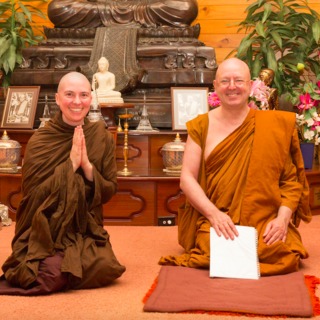
Said today's talk is about seeing the danger in the five senses.
We might have to extend it to the sixth ultimately but for now the five and also the practice of sense restraint or guarding the senses which is all of course a part of that because if there is a danger in these senses then we want to be sure that we're using our senses wisely.
We have these six senses and I will define them in a while but as long as we're human beings and we're alive then this is part and parcel of having a body,
Having a human life.
So it's not that we can avoid these things or that we should be but the Buddhist practice helps us to see that that happiness doesn't lie in stimulating those senses,
It doesn't lie in the sense pleasure outside ourselves and yet this is the way the world is mostly moving.
It's moving toward that gratification through the senses because we don't know really anything else and the Buddha here is coming along and saying there is another way and in fact the input,
The sense impressions can be an agitation to peace.
They can be an agitation to the happiness inside and that there is a happiness that is more sublime than the happiness of sensual pleasure or of course obviously the unpleasant contact at the sense doors.
So as long as we have these sense doors there is bound to be contact and this is where the issue begins right.
So the sense doors in short as the Buddha describes them are the eye yeah and we have the eye but the eye on it by itself doesn't see.
It's only when the eye comes into contact that contact with sights,
With visual forms and that contact creates the eye consciousness in the sense the eye consciousness turns on that we see and that we recognize a person or a microphone or a bell.
So it's only at that point of contact that we have an experience through the eyesense door including eye consciousness and from there in the paticca samapada the Buddha says that from contact there's Vedana,
There's feeling that arises that feeling can be pleasant,
Unpleasant or somewhere in between what we might call neutral that we don't really feel anything particularly pleasant or unpleasant but fairly nondescript and often you know I'm sure for yourselves you prefer to have pleasant eye contact than unpleasant eye contact so we prefer to be in a forest where we're looking at Buddha statues and beautiful trees than we do to perhaps be in a city or looking maybe at a dirty toilet bowl or I remember the first dirty toilet bowl I saw outside of England was in Egypt and it was literally crawling with maggots and that was the only place to do my business and so I had to go into this little shack with this filthy kind of squat toilet and I was like it's moving what's moving here and I realized it was just like a whole layer of maggots the eye doesn't like this and of course the smell was there as well so but that's not the only danger the only danger isn't in the unpleasant sights or the unpleasant sounds smells tastes or touches it's also in that contact itself because it has the tendency to to be co-joined let's say with craving and aversion yeah so in another sutta the fire sermon the Buddha says that the eye the ear the nose the body the tongue and also the mind are burning with the fires fires of what fires of greed hate and delusion these things are burning with that and so on the one hand we could say it's the clinging to these sense doors that are the problem but the Buddha goes deeper than that and actually says that it's these senses in and of themselves that are suffering because wherever there's contact there is going to be feeling and that feeling leads to craving clinging and becoming yeah and then that leads to the whole mass of suffering increasing and increasing and this might be a little bit of a difficult message to hear because we are in this world and yet this isn't really the point the point of this message is that there's a happiness far more sublime and beautiful and stable and secure than the happiness that's available through the senses and that happiness begins with the path with sila with the practice of virtue by body and speech you could say that the practice of sense restraint is the practice of mental virtue is the practice of learning how to use our mind in wholesome ways so that we don't only speak in a kind manner but that speech is motivated by genuine care genuine matter so the motivation of the mind is very pure so in a sense we can't even have strong sila without practicing some degree of sense restraint you know because the mind will be drawn to things that cause it trouble you know for example you might see two people having an argument and maybe fighting each other or maybe you've read the news and because of that we get very upset and distressed or maybe anger also arises in ours and so because of this you know our minds kind of increase in aversion right if we don't know how to meet that aversion at the root and then we act in ways that are unskillful and reinforce that unwholesome root unwholesome root so but if we know if we can see the way the mind is moving the way the mind is starting to get tense or stressed or agitated then if we're able to stay at that level of the sense contact before we break out into unwholesome speech we can restrain we can protect our sila we can protect our virtue so in a way the two things go hand in hand yeah and again just to say that the Buddha never denied that there's gratification to be found in sense experience so again and again in the suttas he talks about the gratification the danger and the escape yeah and of course the gratification is why we're here in the human form because we're still hungry for that sense contact we're still hungry for beautiful sights and sounds beautiful or pleasant physical touch or physical experience you know we like to be hugged we don't like to be pushed around you know we're looking for pleasant experiences mentally as well we want the peace we don't want the craving we don't want the wondering thoughts and so because of this we're kind of stuck in samsara you know we're always fighting with the situation instead of learning to understand it as it is and the Buddha said if beings were not enamored with with sense contact then we wouldn't experience the clinging and the craving towards these experiences right so we are enamored with it and so there is some gratification there but that gratification is so short-lived have you ever been able to look at a beautiful sight all day long for 24 hours without getting bored even the most beautiful forest you know sometimes you can think i could live here forever but after a while it becomes normal again sometimes i show people photos of england and the english countryside thinking yeah i don't know it's just normal to me and they go wow it's so pretty but for me it's just a field when i was staying with diana in massachusetts we did that and she was saying i've got this book on england and it's really lovely it shows all the cities it's quite nice on a sunny day but when i look out in the countryside i see yeah fields and sheep and you know the same old thing but to somebody from here that's really pretty that's beautiful so it's not a permanent source of pleasure and then the buddha says there is also is also a danger and if we didn't see the danger in these senses there would be no repulsion or disenchantment or weariness from the sense realm so this is interesting because many of us might think yeah but i don't want to feel weary and disenchanted with the sense realm but that disenchantment the word nibbida which literally means being repelled from that realm is a really important part of the path and it's a pivotal part of the path it's that force in the mind that kind of moves the mind away from suffering away from the world away from the world of the senses and inward towards the path of peace so it's not that we're repelled from the sense world with aversion but more with wisdom and this comes as a result of seeing things as they really are yeah which of course is a result of deep meditation so it's a gradual training it's a gradual refinement of happiness and after a while we just get tired of playing around in that realm it's like a child getting tired of playing with the same toys you know it's not that the child's angry with the toys or kind of looks down on them or judges them in any way but you've had enough of those and now you want something a little bit more satisfying a little bit more meaningful and more productive of lasting joy the kind of joy and peace that's stable and it's reliable which these senses can never really give us so if there was no danger we wouldn't be able to experience this sense of disenchantment and he further says that if there was no escape there is also an escape if there was no escape beings would not find that escape and what is that escape from the five senses and the six senses ultimately that escape is nibbana it is this unconditioned happiness that is lasting and stable and beyond this five sense and sixth sense well there's another really nice sutta called the end of the world and i've got a lot of sutta's i wanted to bring in today but this one's worth mentioning because i looked in the footnotes to it it's in the samyata nikaya and uh anyway if anybody's a sutta junkie you can look at it junkie you can look at page 1413 in the footnote and bhikkhu birdie there he says that the six sense bases are in a sense the world because the six sense bases are the way we experience life you know if there's no eye ear sight sound no nose and smells no tongue and taste no body and touch and no mind then there is no world for us right so the buddha said that we have to walk to the end of the world we have to get to the end of the world and there are six sense bases of the world they're part of the world but they're also the media bhikkhu bodhi says for the manifestation of that world you know unless the eye meets a form and consciousness arises then we don't see anything and so he said that making an end of a work of the world is really making an ending of suffering and that is nibbana and that nibbana among other things is actually known as the cessation of the six sense bases yeah it's also the cessation of the five khandhas body feeling perception um mental volition and consciousness yeah i've missed one out have i consciousness perception mental volition feeling that's five um so that is what the buddha means by making an end of the world and nibbana can be called the cessation of those six sense bases or six sense doors so on the one hand this sense restraint is leading us all the way to nibbana and on the other i was reading various suttas and i found a really lovely one here and this talks more about the danger of not having that sense restraint and the danger here is that we are not able to experience samadhi without sense restraint yeah so not only does it block us from nibbana it blocks us from all the other steps of course leading up to that and i love this one because it talks about the sequence of meditation so this one is called dwelling negligently and it's the samyutta nikaya salayatana samyutta that's number 35 number 97 okay so for anyone who wants to look samyutta nikaya 35 number 97 so here the buddha says why again this sense restraint is so important and the dangers of not having proper sense restraint so he says monastics i will tell you about it one who dwells negligently and about how one dwells diligently listen to that and how does one dwell negligently if one dwells without restraint over the eye faculty the mind is soiled which means it is kind of tainted by kilesas yeah impurities can come in the version irritation agitation etc clinging and it is soiled among forms cognizable by the eye if the mind is soiled there is no gladness there's no pamoja when there is no gladness there is no rapture p t when there is no rapture there is no tranquility pasadi when there's no tranquility one dwells in suffering so normally in this sequence it's the sequence towards samadhi states we start off with the gladness and the rapture the tranquility and from tranquility we get happiness sukha but here one dwells in dukkha dukkha viharati instead of sukha viharati dwelling in happiness so the sequence goes wrong it doesn't even take off right and one dwells in suffering then further he says that the mind of one who suffers does not become still in other words samadhi doesn't happen and again many of you here have known my teachings the buddhist teachings for a long time and happiness is the proximate cause for stillness not suffering so when the mind suffers one does not become concentrated one does not become stilled one is not able to enter deep samadhi of jhana when the mind is not stilled or concentrated phenomena do not become manifest so i had to look in the footnotes for that because what does it mean phenomena do not become manifest and it could mean any kind of phenomena that could lead to wisdom you know basically anything that we can see through the lens of a nitya dukkha and anatta in other words impermanent suffering non-self we've got to be able to see all phenomena all of reality as suffering impermanent non-self and those phenomena do not become manifest and then in the footnotes vikabodhi said that this could mean in this context that the internal and external sense bases do not appear as impermanent suffering and non-self right so we're still grasping at those sense bases we're still allowing them to rule us rather than being able to govern those sense bases through our practice and we're not able to see their impermanence yeah because we cannot as i said depend on the eye or depend on the ear we cannot even depend on this mind sometimes the mind is bright and joyful other times the mind is dull and full of worries or you know agitated irritated the mind itself is also changing right we cannot even rely on that even the deepest states of meditation the jhanas you know or even more refined states are conditioned and volitionally produced they're not permanent they're not lasting you wouldn't believe what's happening here i'm having good senses i don't know if i'm having good senses change or sense pleasure but the other nun who's uh staying here she's coming out and pouring like a foot bath for me while i'm teaching can you imagine isn't that so sweet so she just came out with the kettle and poured more warm water into the footpath it's just the sweetest thing so so that's a kind of sense restraint in the sense that although it's pleasant and i could have had like quite a bit of craving really what i feel is such joy and gratitude by such loving kindness anyway just to interrupt this rather deep and serious talk so because we're not stilled in our mind stilled and quieted internally we're not able to basically have that insight that would break through this delusion and allow us to enter the stream yeah so it begins with sense restraint and whatever the dumas so wonderful because really i could have given a talk on virtue i could have given a talk on mindfulness and in each case i could say you know it begins with virtue or it begins with sense restraint or it begins with mindfulness because everything is like this beautiful cake you know and you take a piece out of that cake from any place you take that slice of cake it tastes delicious but the cake is a whole and everything belongs it's all part and parcel of the teachings and we can come at it from any angle so basically all of this begins with right view right the first thing we have to do as i said is understand um how to use these senses in a wise way we're not here to shut down the senses you know we're not here to take out our eye or to not care if we have an ear infection and go deaf that's not the point you know we look after our senses they're precious and they can be a great support to us on the path but we do live in this sense world and sense contact is inevitable so we must know the direction with which to work with these things yeah um and the first job then is to work with sense the senses in a skillful way yeah later on we can actually look at overcoming uh and moving beyond that realm of the five senses completely in deep meditation but first we need to learn to work with them in a skillful way yeah and right view one of the definitions of right view is to be able to distinguish the wholesome from the unwholesome mental states to be able to distinguish right intention from wrong harmful intention yeah so we have to know where the mind is coming from yeah is it coming from a place of kindness gentleness letting go or is it coming from a place of grasping aversion even cruelty and harm yeah and also we need to know like am i using my senses in a way that lead to the wholesome states increasing or for example am i watching the news to the point where the empathy turns into empathetic distress yeah that's just one example of how sense contact can start off as being quite wholesome but if we indulge in that for too long we might not notice when the mind is becoming soiled and the chalices are arising and increasing in our mind the unwholesome states so some of these ways i i just thought of a few examples but i'd really be curious to hear from you after this talk about your own examples in daily life i was speaking to my friend ayat chitinanda here and um talking about this and she said one thing that applies probably to most people in the world even if not to monastics so much is going shopping yeah you might be going shopping looking for some food and you have your shopping list there to keep you on track but you get into the bakers and you know they pump out these artificial smells have you come across that like as if some muffin or something is is baking there and then of course it's just chemicals mostly and you think oh you know and you get enticed you get allured by that smell and then you buy these cakes and realize when you get home that actually i have a gluten allergy but never mind you know it's too delicious to avoid and then you eat not one but two and three and eventually feel quite sick right how many times has this happened maybe you don't have any allergies but you know we we tend to over indulge sometimes if that craving that clinging is stimulated in our mind so this is a whole combination of the eye sense door the nose sense door and of course all the adverts that you see you know the billboard saying buy me buy me buy me you need me and if you buy me you'll be happy forever more have you ever been to the store been sucked in by that ajahn brahm actually defines uh he translates sometimes uh one of the definitions for sense restraint is being sucked in by its signs and features so in the text it says um uh grasping at the signs and features of a particular sense impression so for example if you see a beautiful person you look at their hair or you look at their um sparkly eyes you know and you're kind of grasping at those particular things that actually increase lust right so we shouldn't do that we should look at the whole of the person we should also recognize that this is just a human being with a body and that body if you don't wash it quickly becomes quite smelly quite dirty and no different from mine right underneath the skin which might look glossy and smooth there's just blood and flesh and all kinds of liquids and and waste products in there so you know we might not have to look at a person in that way but at least we can see them as a human being i mean one of my practices and it's not really a very intentional practice because i don't really have struggles with lust but certainly in monastic life for some people that is an issue and i really enjoy sort of being a shaven-headed uh renunciate and just having all these other monastic friends who pretty much look the same you know and seeing the monks as my brothers just seeing them as spiritual friends on the path you know seeing the nuns as my sisters um they're not people i need to compare myself to or compete with they're people who i can lend support to and who can also lend me their beautiful mutual support so it's a really beautiful way of kind of equalizing beings you know just kind of relating to each other as spiritual companions rather than objects for our pleasure or entertainment in the way that we do in the world at large in the way many people do right so anyway not getting sucked into those things and another thing that struck me you know just even from the sutta class uh on friday was that you know there are horrific things happening in the world and again it's maybe not right always to turn away from that you know it's good to be informed i think it's good to know and to understand you know um the kind of things that can lead to that i mean for me immediately it's a check as to whether you know i still have the roots of hate and delusion and greed that i could be capable in such circumstances of also perpetrating harm you know on another perhaps it's still within me and i'm sure it is you know unless i'm an anagami then i have these roots of greed hate and delusion inside um and so it can be good to watch these things and to understand what's happening perhaps to be able to um give some aid or raise awareness or even support refugees if they allow them in um you know vote for the political parties that will have compassionate policies towards refugees for example um you know vote for systems of social welfare um with social conscience protecting the weaker members of society these are all things that we can do as good buddhists um and of course there may be people who vote differently you know with very good intentions as well i'm not saying that all buddhists should be on the left although i'd kind of like to i have to admit but anyway but i know that's not the case right and we can also cling to our views so the main thing is our intentions where are we coming from you know why are we making the decisions we make and are they really for the good of the whole and you know i know for myself if i watch these kind of things on the news and just hear about it day in day out it creates distress it creates some kind of suffering that is not really that helpful to myself or to anyone else and if we do find ourselves burning out with that empathetic distress we're not actually in much of a position to take clear action we're not really clear enough mentally you know the buddha said that the hindrances are those things that cloud the mind that obscure the mind that obstruct wisdom so we when we're not able to make proper decisions we're not as effective in helping and so it's really important to just acknowledge that yes it's sad it's very sad and you know there will be maybe anger and despair arising but at that moment do you want to stay in that realm of indulging the senses and it is a kind of indulgence right with the bad news or is it time to just step back go inside and look at what's arising with a heart of compassion and kindness you know using that self-compassion to respond to the distress within ourselves this is so important and this can really give us much more strength and if we're able to have that compassion towards ourselves then we can gradually extend that compassion towards those who are suffering you know and really practice trying to look toward and to act toward the end of their suffering so that compassion isn't only a sentiment that we have on our seat but it actually translates into action you know action for the good of all and for the end of suffering of all beings everywhere yeah that way the compassion doesn't turn into distress and sadness i also wanted to bring in the example of facebook because that is one of my kind of weaknesses sometimes and not so much now because i'm kind of really connected with real life people but during the pandemic it was sometimes a danger because i didn't have anyone around and i'd noticed that i'd go on to facebook purely to spread the dumber purely to kind of put on a post about you know the events that are upcoming or a few words of inspiration even just some pictures that might bring a bit of sunshine into a person's life you know but then what happens even you know even to me um and i've been meditating a long time and i'm sure many of you as well so it happens to you too i'm sure maybe not um is that there's a kind of dopamine hit right and it's a really strange thing because it doesn't feel very pleasant but there's this kind of um apparently dopamine that starts getting generated in the brain and we start scrolling through these feeds looking for the next post that's going to kind of bring some kind of funky dumber teaching into our lives or kind of maybe capture our imagination with a beautiful photo or whatever it is do you notice yourself doing that you're stuck on that thing you're kind of hooked and then you're not really enjoying it anymore but you think okay but if i keep going i'll find something worth reading right and before you know it whole hours pass passed you by and this is again is is a case of sense restraint you know we're not guarding the senses we're not seeing it is literally addictive correct we're not seeing where that good motivation turns into wasting time and turns into something that actually drains our energy so that then if you go to meditate you find you're already too tired you know you could have spent that hour sitting on the cushion listening to a good dumber talk and meditating you know actually emptying the mind and uh yeah lessly i just like to bring up the the disliked person because we all have one of those or more in our lives do we is anyone here without any kind of animosity to anyone at all anyone no i used to be i have to say there was a long period of years and years in my life that there was no one in my life maybe it was a very selective life that i had any animosity or any kind of unfinished business with at all and it was so wonderful and now that i'm in this role sometimes it's challenging you know sometimes people project stuff onto you or speak to you in ways that feel a little bit sharp or disrespectful and you know i'm meeting thousands of people at least you know online less so in person at the moment and you know sometimes it's difficult and i think gosh you know i wouldn't choose to be around this in my ordinary life but this is the way it is right and we can find some irritation some agitation arising and at that time the Buddha gave some very clear instructions about how to focus on the good part of that person how to focus on their qualities and strengths not to deny the parts which may be less than admirable to you maybe to others those faults that you see are actually qualities and strengths so it's not to deny that but it's to protect your own mind yeah because as long as we're not actually enlightened and free from hindrances at the very least we're not actually seeing things as they really are in their entirety in their entirety you know in their fullness we're not really having an objective perception about anything or anyone and so it's a skillful means for our own mental well-being and for the protection of ourselves and for that other to focus on the good and we can do that for ourselves as well we don't have to always talk and bring up our weaknesses to ourselves and to others you know how many wonderful strengths do each of us have how many beautiful qualities maybe you don't have in the quantity or proportion you'd like but you're developing in your heart right now you know i see so many i mean i see you listening to this talk with kind of real a real sense of openness and interest and i'm kind of blown away you know it's just so beautiful to think that people want to hear the Dhamma and people are open to hearing that and to taking some of it on board on board so you know these are all qualities we can rejoice in within ourselves and also within others around us you know we can tell each other right we can tell each other the qualities we see even if it's your partner and you never do that forget about it you can change at any moment and do something outside the box give it a go and see what happens right and the buddha says that one way to overcome anger is to think thoughts of loving kindness not only in public not only speak words of loving kindness to that person's face but also to think thoughts of loving kindness in private as well so that while you're alone you know whether you maybe you're just washing up and you might think you know what that person yesterday they were a bit rough with me on the phone yeah but you know perhaps that hurt me at that time but at the same time that person has this and this quality oh may they be happy you know may they be happy and may that those qualities grow you can have these thoughts in your daily life you can notice when you're moving into negativity and turn it around and if you start thinking that way about that person and then even perhaps taking them to the cushion figuratively speaking in your mind and use them as your object of loving kindness yeah choose them i should say not use them and uh that's more of a gift and generate thoughts of loving kindness towards them picture them happy and well and you'll be surprised that when you meet that person there'll be less friction they may not feel quite so defended defensive you know you know don't you if you meet someone who's been saying bad things about you kind of know there's a kind of lack of uh how to say there's something shifty isn't there about them in the atmosphere it's like they know they've been saying bad things and now they've got to try and you know put on a good face in your presence so people feel it and we can do this in private too and then of course on retreat we can go that step further in sense restraint and actually start to turn away from the sense world altogether like we did just now so i use that little sutta of the tortoise because i think it's a very beautiful sutta about just bringing in our limbs closing our eyes closing our ears as best we can you know sounds will be there but we just let them be feelings will be there but after a while once we've cared for them we let them be you know we go inward and we make our sensory impressions so much smaller so maybe just the breath it's just a very very refined perception still physical bodily sensation it's a body sense door but it's much more refined and slowly as you meditate with the breath you might find that that breath starts to become softer and softer and even disappears even maybe turns into more of a mental image of the breath like a softness or a light or a luminescence and then we're getting more and more deeply into the mind into that stillness and silence and check it out there's peace to be found there's peace to be found in that place and it's tuning up to that peace that joy that happiness of being secluded from the central world that really gives us the encouragement to take this path further it's not a scary path it's a beautiful path and it's an encouraging path you know and it's step by step we don't have to push ourselves too far too soon yeah the process is joyful and the process is wonderful and just to finish lastly because i just love this sutta the buddha basically said whatever is not yours abandon it the eye is not yours the nose is not yours the tongue ear body even the mind is not yours abandon all that's not yours because this will be for the happiness and benefit of yourself for a long time to come and that is just from memory i haven't read the exact words of the buddha in that sutta um i think i wrote down the quote it was samyutta 35 101 it's not far away so i'll just make sure that i got the phrasing right because it's very beautiful so yes he's he's saying that the eye is not yours forms are not yours eye consciousness is not yours eye contact is not yours and whatever feeling arises with eye contact as condition whether pleasant or painful neither pleasant nor painful that too is not yours abandon it when you've abandoned it it will lead to your welfare and happiness and he goes through all of the senses including the mind the mind is not yours whatever feeling arises with mind contact as a condition we skipped a few here so the mind is not yours mental objects are not yours mind consciousness is not yours mind contact is not yours whatever feeling arises with mind contact as condition whether pleasant or painful neither pleasant nor painful that too is not yours abandon it when you've abandoned it that will lead to your welfare and happiness so i think that's plenty and it's a big subject but hopefully it was a mixture of theoretical practical and yeah it's just a really big subject maybe we should do it again because i didn't really get to talk about the place of the uh sense restraint in the gradual training but it's part and parcel of the path and i'm hoping that it's something you can really apply and use in your everyday life as a kind of bridge between what you do you know when you're really not thinking about buddhist practice and when you're sitting on the cushion it's something you can apply at all those in between moments in life whenever you can think about it whenever you have say a negative thought whenever you see that the mind is turning towards suffering maybe the problem is in the lack of sense restraint in the way you're using your mind in the way you're perceiving the way you're attending and the way you're allowing those on wholesome states to arise so see if you can catch it there and that will be of great support in your practice i think of it almost like maintenance you know you go to retreat it's like having a deep clean of the kitchen so everything's really clean and shiny and lovely and then you come home and if you just don't clean it at all in a month it's going to be filthy again so the sense restraint is like giving that weekly clean or even that daily polish yeah you just keep on cleaning a little bit here a little bit there and then when you next go on a retreat or have time on your cushion the kitchen will be fairly well maintained so keep your mind like that kitchen and don't forget to do the ongoing cleaning up that way you'll have a much more happy life and everyone around you will benefit as well so there is the talk for today and let's have a few questions and some input if you wish thank you very much thank you thank you and thank you for those who asked because it's a wonderful subject i hope it somehow