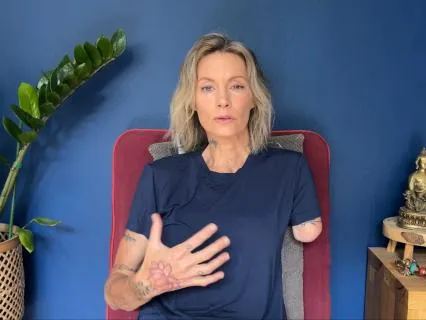
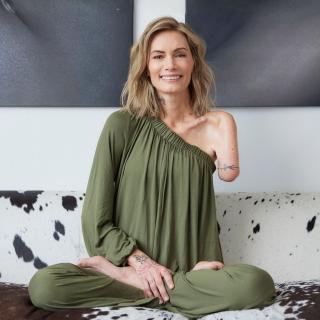
So I really understand what it's like to live in constant pain.
I have it myself every moment of every day.
And my experience of pain is actually changing and,
Well,
I guess evolving over the years.
And as you probably know,
It impacts so much.
Of our lives.
There's also many different perspectives of how to deal with chronic pain.
One thing that I have learned.
By nature of it,
Chronic pain,
You can't take the extra pain away,
Unfortunately.
So in my own experience,
What's really helped me.
Is not to.
Try and take the pain away.
But to transform.
How I respond to that pain.
I wanted to talk about my own perspective of pain and my own experience with it.
And what really helped me over the years.
To deal with it in the most peaceful way.
So that I can still live my life as fully as possible.
It isn't easy to condense many years.
Of practice and many years of understanding into a nutshell of a talk or meditation.
But I'll just give you a general idea of.
My perspective of it,
And what's really helped me.
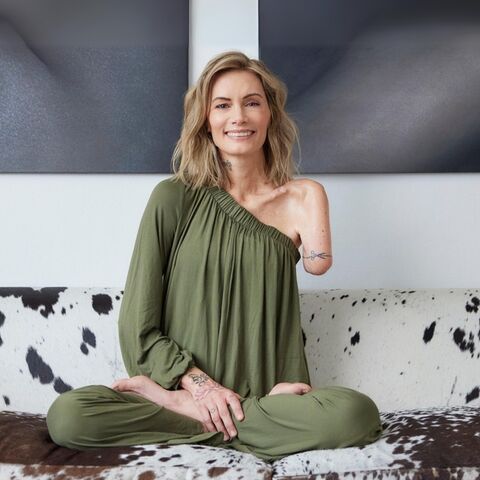
I've been injured and disabled for almost 11 years now.
And before the accident that I was involved in.
I lived a very physical life.
I worked in film as a stunt performer.
I was a professional martial artist.
I loved riding motocross when I was very full,
I traveled a lot.
And very,
Very physical.
And then post-accident.
I was stuck with.
Tens of injuries.
That will never really heal or never really go away.
And.
I was told earlier on that I would be in pain for the rest of my life.
Which I didn't want to believe at the time.
But even though.
.
.
I had all these injuries and such a massive.
.
.
Change of lifestyle.
One thing that was really hard for me was the loss.
The loss of the life that I love.
The loss of my capacity to go out and be with my friends.
Loss of so many things.
So when we have an illness or an injury,
Or some kind of physical change where we have to live with a lot of pain.
There's so much more that goes along with it.
It's not just the physical pain.
Although that's really hard.
It's compounded by everything else.
That it changes within our life,
Right?
And I remember in the early days.
I was searching the world wide.
With someone that could help me.
A surgeon,
A specialist that could help me.
Take the pain away.
Or the musculoskeletal pain around the body,
The broken bones.
Injured organs.
And the neurological pain that I have consistently going through my body.
And over the time,
I went through many,
Many surgeries to try and fix what I could.
Where I could.
Which was very helpful.
And also very necessary.
But I found after several years that no matter what I did,
I was still stuck.
In constant pain.
Every moment.
Of every day.
And the only thing that changed was.
.
.
That it went from maybe 5 out of 10 pain to 10 out of 10 pain.
In the beginning,
It was very hard to accept.
That my pain will never go away.
But I feel so very grateful.
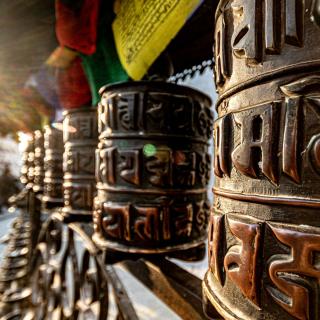
That at the time of the accident I was already a Tibetan Buddhist for 15 years.
And so my transformation of how I live with that pain.
Began in the first.
Few months that I was in hospital.
Lying in pain,
No matter what drugs I was on.
So because I couldn't wear due to my disabilities.
I started to spend a lot of time and energy in meditation.
Because it became a rally.
True resource for me at that time.
I also learned a lot from my Buddhist teacher Rob Priest.
Who's a psychotherapist.
The way that he taught me to meditate really changed.
How I inhabited my body.
Became a much more embodied meditation.
Much more somatic.
And I started to learn.
How meditation affects your psyche or transforms your psyche.
In magical ways.
So things started to really shift for me.
The pain itself.
Has never gone away.
But how I respond to that pain.
In the body,
In the mind.
Really started to transform.
I began to feel much more.
Peaceful,
Much more inner peace and ease with it.
Despite the pain being there.
And I also learned that.
Pain and suffering.
Are not the same thing.
It sounds really simple.
But it's.
Really profound,
Actually.
So you have the sensation of pain.
And then you have your reaction to that paint.
And the reaction to pain is what causes suffering.
But that's also the bit that we can work on to transform.
So we're kind of in a journey that I went on.
Still am on.
There needed to be some sense of grounding for me.
A sense of safety.
And then really coming back into relationship with the body.
And while cultivating that relationship.
In the body.
With the body.
Getting to know.
Yourself really deeply,
Deep sense of.
In a discovery.
So getting to know that inner spaciousness that we all have within us.
Which can be a really deep resource.
And also getting to know.
Directly the energy within ourselves.
Getting to know our true nature,
I guess.
Getting to know the energy of the pain,
Because everything.
.
.
Is energy pain.
Is energy and movement.
So if we can let that energy of pain move through.
It's not as disturbing for us.
And we can live our life.
More fully despite the pain.
So I'll talk you through some of the paths.
Or some of the aspects of the path.
Has really helped me to transform my relationship with pain.
And all these aspects are actually.
.
.
They're not separate.
They're all very interconnected with each other.
And one of those.
Aspects is.
Relaxing,
Grounding,
Calming the nervous system.
Because there's a very intimate into connection between.
Relaxing.
And pain.
I'm sure you've noticed.
When you're tense,
When you're stressed,
The pain seems to heighten.
And at times when maybe you feel more relaxed.
More grounded.
It's a little bit easier to deal with the pain.
And acceptance is a massive part.
Of transforming your relationship with pain.
Sometimes it's very hard.
For people to genuinely accept.
The situation and accept that they'll always be in pain.
Accept the pain there in the body.
Because our instinct is we want to get rid of the pain.
It arises,
We want to get rid of it.
So what it leads to.
That there's an inner conflict actually.
Pain arises,
You want to get rid of it instinctually.
And so there's an inner constriction.
Is a kind of trying to.
Push it away all.
Dissociate from it.
So there becomes an inner conflict actually.
I remember many years ago in my first couple years of living with pain.
Somebody pointed me towards a book.
About A man,
I can't remember the name of the book.
But it was about a man who lived in pain.
And he was talking in the book in the first.
Third of the book maybe.
About accepting the pain.
That that's a massive part of the journey.
And I remember thinking to myself at the time,
No ways.
I do not want to accept this pain.
Because if I accept it,
It means.
.
.
It will never go away or maybe it will even get worse.
Which isn't actually true.
Acceptance doesn't make a difference to the painting.
Except maybe it becomes a little bit easier to be with actually.
It doesn't ever.
Take the pain away or even lower it actually.
And sometimes if acceptance is really hard for you.
We don't have to accept the whole concept of it in our lives.
It can come down to just semantically.
When the pain is there in the body,
Can we just let it be there?
Give it space.
Not constantly trying to get rid of it or push it away.
And within all of this,
Embodiment is really important.
Sometimes or often when we have pain.
We can become quite disconnected.
From the body.
Because it's uncomfortable in the body.
It doesn't feel safe.
So we want to kind of split off from it.
Coming back into deep relationship with the body is super important.
Which is often or very commonly very difficult.
Also incredibly resourceful and a very essential part of the journey actually.
We can also begin to look into the true nature of pen,
Which can be super interesting.
And very helpful in transforming our perspective of pain in the mind and in the body.
You can really begin to look into.
Nature of pen,
See what it's really made of.
Begin to separate.
Sensations from stories.
For separate.
The sensations of the pain.
From the stories that we layer onto it.
The emotions that we layer onto.
And we begin to realize.
It's ever-changing nature.
It's not something as solid.
And fixed as we normally perceive it as.
And as we know from science as well as ancient wisdoms.
Everything in life is made of energy.
Including ourselves.
And treating pain.
So if we can get to know the energy of pain,
Feel it.
And allow that energy to move through.
Without trying to change it or stop it or disturb it.
It's actually not as.
.
.
Distracting for us.
And we begin to have a much easier relationship with the pain.
And as you know,
Probably.
When we're in pain,
There's loads of emotions that we have to deal with.
In reaction to the pain.
Frustration,
Anger.
A sense of defeat,
Whatever it might be.
As well as a lot of emotions.
Around loss.
Quality of life that we didn't really want,
Maybe.
Loneliness can be very common with pain because we maybe spend a lot of time at home,
A lot of time alone.
So pain is difficult to deal with itself.
But also what makes it really challenging for us.
Is all the emotions that surround it,
All the emotions that are entangled with it.
So for myself,
There's not one thing.
Specifically.
That is fixed.
Or changed how I live with pain.
But it's been a gradual.
But complete transformation.
Of my perspective of pain.
Not just in the mind,
But in the body.
So every time pain arises,
Is a transformation of how I respond to that pain in the body.
As well as the mind.
And in this way,
Even though the pain might be there,
Because unfortunately I can't take it away,
I still feel much more peaceful.
Or much more at ease with it.
And so that really helps me to live my life.
Much more fully.
So I hope this talk was helpful.
As I said in the beginning,
It's very difficult to compress.
Many years of understanding.
And practice into one little nutshell of a course or a talk or meditation.
So if you'd like to explore more.
You're welcome to try my course.
Finding peace with chronic pain.
Where I spend a little bit more time.
On each element that has helped me.
Pass on.
That power,
That resource.
For you to be able to.
Transform how you live with pain,
Transform your perspective of pain.
And transform how you respond to that painting.