Hi,
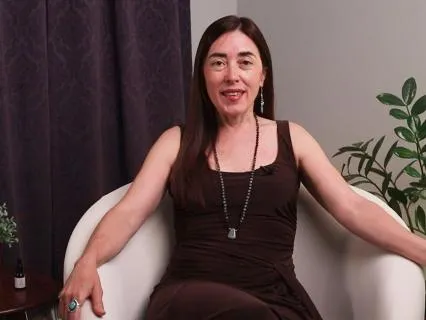
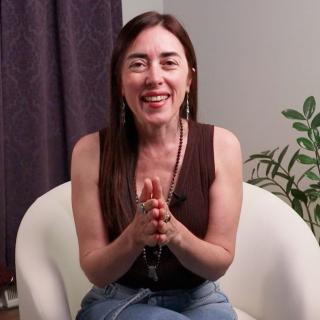
I am Diana Pereira,
Feldenkrais Practitioner and Somatic Teacher.
Welcome.
Let's begin.
In our last video we talked about what trauma does to the body,
How it lives not as a memory but as a pattern,
As a nervous system that learns to brace to guard.
To hold.
If you haven't watched that video,
I recommend you take a look first.
It will give you the context for what we're going to do today.
Today I want to introduce you to the approach we'll be using in these videos,
The Feldenkrais method.
I'll tell you a little bit about what it is,
How it works.
And why I built my entire practice around it.
And then we're going to practice together.
Moshe Feldenkrais was a physicist,
A judo black belt,
And a remarkably original thinker.
In the mid-20th century,
Around the 40s and 50s,
After a serious knee injury that doctors couldn't cure,
He essentially taught himself how to walk.
Not through willpower or exercise,
But through patient,
Curious attention to how he was moving.
What he discovered in the process became a method.
A way of learning through movement that works not by forcing the body into correct positions,
But by offering the nervous system choices.
New options you didn't know you had.
He said something that I come back to often.
Movement is life.
Life is a process.
Improve the quality of the process and you improve the quality of life itself.
Most movement practices ask you to try hard.
To stretch further,
To hold longer,
To push through.
Feldenkrais asks you to do exactly the opposite.
To move slower.
To move less.
To pay attention,
To rest often.
Not to ask yourself whether you're doing it right,
But how do you actually feel?
And this matters enormously for someone whose nervous system has been through difficulties.
When a body has learned to brace,
Pushing harder just reinforces the bracing.
But when you move slowly enough to actually feel what is happening,
Something shifts.
The nervous system gets new information,
And new information creates new possibilities.
There's a concept in this work called awareness through movement.
The idea that the moment you bring genuine attention to how you're moving,
The movement begins to change by itself.
On its own.
You don't have to fix anything.
Awareness itself is the agent of change.
We'll come back to that phrase,
Awareness through movement,
In a moment,
Because it's also the title of our next session together.
Before we move into today's practice,
I want to orient you into how these sessions work because they might be a little different than anything else you've experienced.
I'll ask you to move in ways that feel almost too small to bother with.
Trust that.
That smallness is the point.
I will ask you to rest often.
That is not a break from the learning.
Actually,
That's when the learning happens.
The nervous system integrates during rest.
Not during efforts.
Effort is the information.
I will ask you to notice rather than judge.
Not is this right or wrong Rather,
How do I feel?
Not am I doing enough,
But what is here?
I will ask you to be curious about discomfort rather than pushing through it.
And to stop before you reach the edge of your range.
We work in the middle,
Not at the limit.
Right here in the middle is where change actually lives.
Body awareness is not about feeling anything perfectly or having some profound somatic experience.
At its most basic,
It just means I am here.
I can feel something.
I'm paying attention.
And this feels safe.
For many people.
Especially those that have experienced trauma,
Chronic pain,
Or long periods of high stress,
The baseline connection has been interrupted.
The body became a place to leave,
To exit,
Not a place to inhabit.
So if you feel very little at first,
The sensations are vague or you can't quite locate what I'm pointing to in the directions Don't worry,
That's not failure,
That's information.
That's exactly where we start,
And it builds from there.
Body awareness,
Like any skill,
Develops with practice.
And it develops faster than most people expect once they stop trying to force it or second-guessing it.
So now let's practice together.
Let's begin by noticing where you are seated on the chair.
If you're like me,
You like to cross one leg over the other perhaps lean back on the support of the chair.
Just observe your habits.
How do you feel comfortable?
And in this comfortable place,
How is your breathing?
Can you take a full breath?
Front.
Sides.
Bye.
If you turn around yourself slightly,
How far can you go?
Where is the movement when you move your head?
Do you feel it below the neck?
Now observe the contact of your feet on the floor.
Are both feet touching or only one?
And if so,
What part of your foot is in contact?
Where is the weight?
Do your sensations change if you keep your eyes open or closed?
Now let's propose to your nervous system one or two different options so you can feel the difference.
Let's begin by moving yourself a little forward on the chair.
Close to the front edge,
So you have a little space behind you.
And notice if it's easier in this configuration of your body to keep your legs straight.
Spread apart,
Perhaps two fists.
About the distance between your shoulders.
And with this simple change,
Uncrossing your legs,
Putting your feet on the ground.
Creating a little space between you and the back of the chair.
Let's do the same check-in.
How is your breath?
Can you breathe forward?
Back and sides.
More like a balloon type breathing and not just in the front when you move around yourself.
Can you see more behind you?
Do you feel more movement below your neck when you turn your head?
Your collarbones,
Your ribs perhaps.
Your chest.
And as you feel your feet on the ground.
Is the contact a little different?
Different areas of your feet are touching?
Do notice a different sensation and weight.
Maybe you feel more grounded.
Now let's take that as an example.
One choice different than the one you had at the beginning,
Your habitual choice.
And now let's create a different one.
Perhaps you cross one leg and lean back.
On one side like we do sometimes and even.
Asymmetrical.
Something comfortable,
Leaning back.
Relying on the sides of the chair you are on.
And do the same little check-in.
Turn around yourself a little bit.
Observe the difference.
Take a breath.
Observe your feet on the ground,
The weight.
Now allow yourself to choose from these two or three options which one allows you for more freedom.
More freedom of movement,
Of breath.
Contact or support with the ground.
Which one feels easier versus which one feels more familiar.
Is defined by the quality of your movement.
Is your movement easier?
Is breathing easier?
Is feeling support from the ground easier?
And allow your body to recalibrate and find that position again.
And again and again,
Perhaps throughout the day.
Now we're planting the seed,
You're feeling the differences.
And then as you practice it again,
You build on that awareness.
And I bet you that next time that you're sunken in in a comfy chair that feels really cozy but doesn't fully let you move or breathe or feel the support from the ground,
You will remember this moment.
And that is what body awareness is all about.
Baby steps.
Very slow.
Inviting you to sense more and more possibilities in your daily life to introduce this movement.
And see how they change the way you move,
You think,
You feel.
Now take a breath.
Allow your eyes to softly open if they were closed.
Before you do anything,
Before you check your phone or shift positions or move on to the next thing,
Just notice.
What's different?
Even slightly.
Sadly.
Maybe there's a little more weight.
On the chair or on the floor beneath you.
Maybe your breath moved somewhere it wasn't before.
Maybe there's a quiet.
.
.
You didn't have a few minutes ago.
That noticing.
Is body awareness.
You just did it.
Thank you for being here with me today.
Take a moment before you move on.
Let this settle.
This is the foundation everything else we do together is built on.
The method,
The curiosity.
The slowness.
The return.
I will see you in the next video.
So much love.