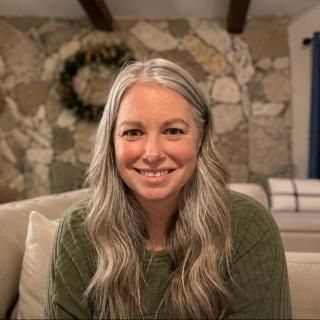
Hello friends,
Have you ever had a difficult traveling experience with a loved one?
Well,
We experienced that very recently and we'd like to talk to you about how we navigated that and avoided the pitfalls and traps that we've fallen into before.
So before we get into the story,
I'm Jesse,
And this is Carolyn,
And this is At the Helm.
So welcome.
So,
On this show you'll hear us talk a lot in parts terminology.
We take this from the internal family system from Richard Schwartz.
And from Carl Jung and the Archetype Model.
And we identify parts of ourselves that are trying to come out and protect us when things get difficult,
But so often end up causing bigger problems because they are more immature and they are acting out of fear and protection rather than logic and ration.
So we will talk a lot about the parts that come out,
And we even find it very helpful to have specific names for these parts.
For instance,
I am Mr.
Wadkins,
And she is Mrs.
Wadkins.
When we are at our best selves,
I am the teacher,
She is the therapist.
We know how to handle things.
We know how to handle people that are in stress or in need.
And so when our other parts come out,
We have JJ,
The younger version of me,
And Kara,
The younger version of her.
And when we can accurately identify those parts coming out and talk directly to those parts.
It is extremely helpful.
So without further ado.
.
.
Let's get the story.
So we recently had the opportunity to fly to Austin to go celebrate our daughter's graduation.
And so for weeks beforehand,
I think you probably already noticed that I was starting to feel anxious.
I tend to pretend like that's not happening.
I've done fear of flying courses.
I really struggle with flying.
I've had a pretty bad experience once or twice on a plane.
And so,
As always,
Weeks beforehand,
I start getting a little anxious.
I start switching sort of into that control mode.
That part of me that is trying to keep me safe and trying to prevent future pain shows up and tries to control.
And we are drastically different in this situation as I spent nine years in naval aviation and I'm very comfortable flying and being around airplanes and my logical brain says there is nothing to be afraid of.
So that's probably an important point is that we are both consider ourselves neurodivergent and Jesse tends to really lean into that logic.
I tend to really lean into control.
And so.
There was a part of me that was feeling really anxious and didn't want to admit that.
And so every time we've gone to the airport,
We always wind up getting there super early.
And the part of me that then feels ashamed or embarrassed that we showed up so early because I was so anxious said,
You know what,
This time we don't need to leave as early as we normally do.
So we left a little bit later than typical.
Traffic was a little heavier than I expected it to be.
And so even on the drive there,
We're over in like maybe the second or third lane,
And I'm seeing the carpool lane flowing by easily.
And Jesse just didn't want to get over to it.
I didn't want to say anything again.
I'm trying not to admit that I'm feeling anxious and also just trying not to let that part run the show.
And so I'm trying to sit quietly in the passenger seat.
Eventually,
I suggest,
You know,
It looks like that carpool lane is driving pretty smoothly.
We all like backseat for passenger drivers,
Right?
So there's problem number one.
And so,
And exactly,
And that's how anxiety or that desire for control tends to show up.
So backseat driving,
Trying to be perfect in that situation.
We get to the airport.
My aim was to park in the parking garage where we could just walk right into the terminal and not have to deal with the long-term parking and the bus because I know that my anxiety really struggles with parking out there,
Dealing with the bus,
Waiting even more.
It's just one more thing that I can't control.
However,
I forgot to consider the fact that it was graduation season and so a ton of people were flying.
We show up at the airport and the parking garage is full.
We had to go park out in long-term parking.
We had to wait for the bus.
The bus driver's waiting for person after person to get on until they're completely full.
We finally take off.
We get to the terminal.
I don't know where to go because I don't usually take the long-term parking bus,
And so we show up at the terminal,
And I'm trying to figure out where to go,
And anxiety has already started running the show,
And I'm not thinking clearly.
So I'm kind of wandering around and looking for where to go,
And Jesse's,
You know,
Just following me and giving me a little bit of space.
But anything that could go wrong just is going wrong.
Wrong at this point in my mind.
We show up at the gate or we show up to check in.
I hadn't pre-checked our bag because I thought we'd be there in plenty of time.
And it turns out that we were one minute late showing up.
And so the airline agent just couldn't check our bag.
We didn't have the time to check the bag and get it to the plane.
And so they had to bump us to a different flight.
This is when that part of me,
The anxious part,
The controlling part,
Kind of that younger part of me,
Showed up in full force.
I started to feel really emotional.
I started to get snappy with the agent,
But realized,
You know,
Kind of what was happening and that there really wasn't anything that she could do.
They bumped us to a different flight.
The flight that we had been on was nonstop.
I had picked my specific seats where I felt comfortable,
Kind of in front of the wing.
And so we got bumped to a different flight.
Luckily,
We were able to get two seats together and it gave us time.
You know,
Now we had a couple of hours in order to get through security,
Which also,
Had we made that flight,
Had we been two minutes earlier and been able to check our bags,
Getting through security would have absolutely been another spot where I might have had a bit of a meltdown.
And so it all worked out in the end.
But man,
That anxious part of me really struggled with it.
I took a step to the side for a minute,
Was a little bit tearful,
And had to kind of pull myself together as Jesse was dealing with getting the bags checked.
But eventually we made it through,
Got through security,
Got to our gate,
And we actually had enough time to sit and have a nice meal before we got on the plane.
So as we review the story and we look at it from the lens of the parts,
And we say that there are no bad parts.
That's the title of Richard Schwartz's book.
We treat these parts with compassion,
With understanding.
We understand that they're coming out to try and protect us from a perceived threat.
So as we worked our way up to this trip,
I know from history and past experiences the dangers that come along with the trip,
The anxiety that starts building up ahead of the trip.
And we've worked for a long time to get better at that.
And Carolyn's worked really hard at getting better at that and preparing herself.
And so she did try to adjust and not have us show up hours early so that we were frustrated sitting there wasting a bunch of time.
And it became a perfect storm.
Of making decisions that effect of how we were operating.
And gave us so many opportunities to turn on each other and start pointing the finger and start pointing blame.
I easily could have told Carolyn,
Well,
This is your fault.
I let you choose the time that we were leaving because I know that that helps your anxiety and you chose poorly this time.
Which in turn I can automatically predict that she would have retorted immediately.
Well,
I only chose to leave so late because you get irritated with me when we're sitting in the airport for hours,
And she would have been correct.
And then we had the driving.
Where she wanted me to cross a bunch of lanes of traffic.
And I did not want to do that.
And I said,
It's only going to save us a minute or two.
And so that was a perfect setup for her to turn to me at that point.
Of being one minute too late to say dead.
I did say at one point if only we had gotten in that carpool lane But I pretty immediately recognized,
You know,
Who that was.
And so I think that that's been something that's been really important is recognizing whether it's the gate agent or with you.
That if I say this thing,
If I do that,
If I let this emotion or this part run the show,
I'm going to feel really regretful.
I'm going to have to make amends with you.
I can't really make amends with the gate agent.
We were going to move on with things,
But I would have felt really terrible if I let all of that emotion out to her.
And so I did.
I turned to,
I think,
And said,
You know,
If only we'd gotten in that carpool lane.
And then I immediately,
I think,
From my recollection,
I think I immediately said,
No,
You know,
We're not doing that.
We could have left earlier.
We could have been in the carpool lane.
We could have been able to park in the parking garage,
But just none of that worked out.
And so it just kind of was what it was,
And I was able to settle that down pretty quickly.
Yeah,
And speaking of settling,
I think the perspective here that's important to note is that I was trying to be the calm adult in the situation as Carolyn in that moment was struggling to be that calm adult.
And what I did in that moment was I addressed her parts directly,
The parts that were coming out who were trying to protect her and make her feel safe,
Trying to push blame onto somebody else or,
You know,
Be defensive and not make it her fault.
And I talk to those parts directly.
Calmly and compassionately.
Being a teacher,
I just talk to them exactly like I'm talking to a student who is having a difficult time.
There's an incident at recess or something,
And they're very worked up.
And so I listen,
And I'm very calming and soothing.
And I know it's not their fault.
I know they're not being bad.
They're not doing this on purpose.
When she takes a jab at me,
With that one minute,
I know that there's a part of me that wants to come out and defend me as well and say,
Okay,
You want to battle?
You want to do this?
We'll do this.
But I recognize that part in me and I recognize what's happening with her.
And I say,
OK,
Calm down.
We know what's going on.
We know that she doesn't mean it.
We know that she's not her best self right now.
So let's take care of her.
So I gently talk to those parts,
I help them to feel safe,
I talk logically to them.
And ask questions.
How much is this going to affect us?
Is this a disaster?
Is this a catastrophe?
Do we need to panic?
Do we need to Go full Karen on the airline employee.
And that starts calming them down and getting them to see logic.
And what I'm trying to do is to draw out Mrs.
Watt.
Is to speak the words that she can hear so that she'll come back to the forefront and she'll start taking care of her own parts.
Is she can't take care of her parts in that moment,
Just like parents taking care of a kid.
Sometimes a parent gets too flustered or the kid can't listen to them in that moment,
And so one has to step in and calm things down until things can be reasonable again.
So I kept gently physically reassuring her so that she was staying grounded and making eye contact,
Which I think is very important so that she could read my face,
That she could see that I am calm,
That I am not worried about anything.
I know because I'm in my rational spot that everything's going to work out and it's not going to prevent us from getting there.
It won't have us miss the graduation or affect us really negatively in any way.
And I can convey those things very patiently and calmly.
How did that help you in that moment?
So that's a great example of co-regulation.
And so that may be something that you might want to try with your partner,
With your friends.
Any time that we can make eye contact with each other,
Slow our breathing down.
Jesse knows.
For me,
Co-regulation is a nice long hug or even just reaching out and holding my hand.
Literally,
You know,
Treating me as if it's that younger part of me.
Sometimes we'll even kind of just slow our breath down together because remember that helps to settle your nervous system I was in full fight or flight,
Like there was a tiger chasing after me when really I'm just at the airport.
So slowing your breathing down,
Slowing your heart rate down,
Co-regulating with a partner or with a loved one can really help to do that.
So looking for any opportunity to,
When you notice that your partner is having a really difficult time,
Jessie knows beforehand what those things are.
So if there's things that you know are helpful for you,
It's great to express those to your partner,
Let them know.
I really love it when you hold my hand,
It helps me feel calmer.
I really love it when you kind of give me that eye contact.
Jesse knows that for me.
What I need is eye contact and the simple words,
Everything's going to be OK.
That reminds me that we're in this together,
That he is also an adult who's present and can help us problem solve.
And so trying to co-regulate with a partner can be a really useful tool.
So that,
I think,
Is what helped me the most in doing that was really your calm demeanor.
In the past,
There's been moments where you've gotten really frustrated with me.
Like I said,
Part of your neurodivergence is that logic driven.
And this makes no logical sense.
Completely understand that.
But when we show up at the airport and we give up all that control,
Suddenly those parts of me really show up and really want to have control,
And it makes it really challenging for both of us.
And so I also understand that it's frustrating for him,
Right?
Now suddenly I'm trying to control everything and run the show and I'm not the normal,
You know,
Mrs.
Wodkins or even just Carolyn that he knows.
So being able to co-regulate together and having him know what's helpful for me before we even get there is incredibly useful.
And I think an important thing to note here is that when we're addressing these parts,
This is something that we had to get used to.
As a therapist and a teacher in our 40s.
We don't like to be talked to like children.
And we can be very defensive when somebody tries to talk to us that way.
But we have developed this over years of practice and study.
And learn that it is okay to acknowledge those parts that are coming out right now.
And it's okay because I'm not talking to Mrs.
Watkins at that point.
I am literally talking to that part I call her Kara.
And I am acting out of love and compassion.
And I am trying to take care of that part and I'm not treating my wife the 40 or so.
.
.
40-something year old therapist.
I understand why you got caught up there.
The 40-something year old therapist,
I'm not treating her like a child.
I'm comforting that part of her so that the therapist can come back to the forefront.
And take care of that part herself and get it back under control.
And when I can acknowledge that,
That Kara needs that,
That she really needs that compassion and to slow down and that she needs me to show up to do that,
Then suddenly,
You know,
Self kind of becomes more at the forefront.
So that curiosity of who is this or what's going on can really help us link back to self in that moment and to be that more mature,
Grounded adult that we all need to be out in the world.
Curiosity is a good word for that and that's something that we've learned to recognize because we get triggered so easily when our partner doesn't behave like themselves or their best selves.
And for example,
Years ago,
We had gotten into a disagreement and something was off and I could feel it and we were in the kitchen.
And I stopped and I was so frustrated and I looked at Carolyn and I said,
You feel like this 12 year old girl in my class who's really struggling and always sees me as the enemy and is always very defensive.
And I don't like that girl.
In my house.
I don't want to deal with her in my kitchen.
I want to be with my wife.
And she called it out at that point and said,
That part of me heard what you said.
That part of me heard that you don't like her and you don't want to spend time with her and that there's something wrong with her.
And that was a very big awakening moment for us and a realization.
And I realized that,
Oh,
Absolutely,
I didn't think about that.
I'm so sorry.
That's not what I meant to say.
What I meant to say is I'm used to having my therapist wife here and I wasn't expecting this part to show up and need help in this moment and I'm not used to recognizing that.
And so that's how we've gotten so much better at that,
Is recognizing.
Oh,
There's something that feels off,
There's something that feels like this is not calm,
This is not normal,
This is not rational.
And being curious and we'll stop all the time and look each other in the eye and say,
Who am I speaking with right now?
What part am I speaking with right now?
And there's a tendency to have a little bit of defensiveness,
Especially at the beginning,
And say,
There's no part.
This is me.
What are you talking about?
But we've learned to take a breath and actually ask the question of ourselves.
When we're asked that and contemplate and sit there and think for a moment and ask that internally and say,
What is this part really?
And then we become more aware that there is something inside of us that is trying desperately to take control of the wheel.
And steer us toward safer waters.
Yep.
And so I think that's how we survived this travel experience.
And then we definitely have more stories every week of the challenges that we're going to face in our lives and the ways that we've figured out how to deal with those.
And so we hope that you'll stick around.
So in the Navy,
We wish people fair winds and following seas,
But in reality,
That's the easiest time to be the captain.
And so whatever the weather,
We hope that you approach life with curiosity,
Self-compassion,
And a steady hand at the wheel.
Take care.