Hello and welcome to Life As It Is.
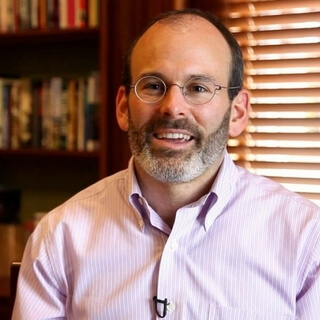
I'm James Shaheen,
Editor-in-Chief of Tricycle The Buddhist Review.
Over the course of the last few years,
Many of us have found ourselves dealing with loss,
Yet our contemporary culture often doesn't allow us the space we need to grieve.
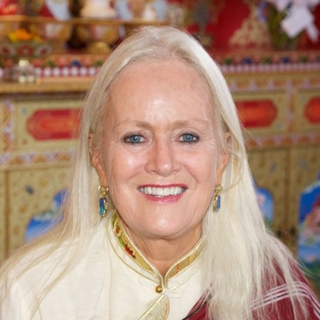
Meditation teacher Kimberly Brown believes that mourning takes time,
And she works as a grief counselor to support people through difficult and complicated losses.
In her new book,
Navigating Grief and Loss,
25 Buddhist Practices to Keep Your Heart Open to Yourself and Others,
Brown lays out concrete tools to help us become better friends to ourselves as we grieve.
In today's episode of Life As It Is,
My co-host Sharon Salzberg and I sit down with Kim to talk about how we can learn to stay with our grief,
Why it can be so hard to ask for help,
And how rituals can help us honor the losses in our lives.
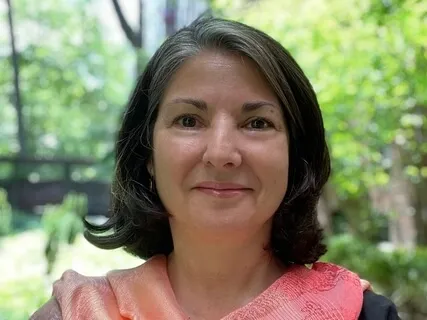
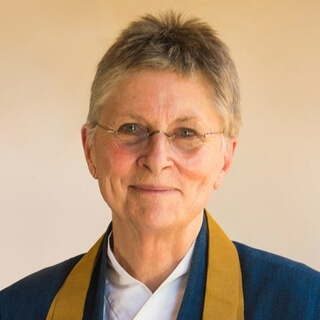
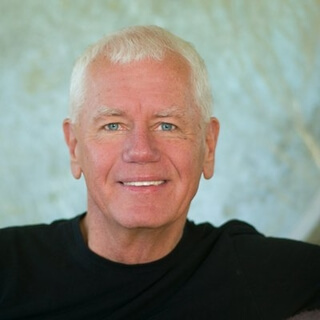
So I'm here with meditation teacher Kim Brown and my co-host Sharon Salzberg.
Hi Kim,
Hi Sharon,
It's great to be with you both.
Hi.
Hi.
So Kim,
We're here to talk about your new book,
Navigating Grief and Loss,
25 Buddhist Practices to Keep Your Heart Open to Yourself and Others.
This is a deeply personal book and you open with your own mother's death.
To start,
Could you share a bit about your own experience of grief and why you decided to write this book?
I decided to write this book because I had learned and studied in the Buddhist tradition for some time,
And many of the practices that I had been taught were very helpful to me during times of great stress and grief,
Times of loss.
You mentioned when my mom died,
This book was really propelled into existence after the death of my friend Denise.
She died four years ago.
It was just a painful loss and it continues to be a loss and a pain.
And to fully experience it is to realize that I'm experiencing what all humans are going to experience in one way or another,
What all the humans before me have experienced in one way or another,
And likely every human that's ever going to be born.
So in a certain way,
It allows us,
I think,
To have an even greater and deeper connection.
So not only does it put us in touch with our own grief and our own humanity,
It connects us with everybody who's ever been born,
Every human and every human that's ever going to be born.
Through this,
We connect with our compassion for ourselves and for each other.
It's just so there.
And no matter if you like someone or you don't like someone,
Or even if you don't know someone,
You can be assured that they will have some sort of loss and some sort of grief in their life.
I don't know if I'm going to say this right,
But in my case,
It broke open my reality or it made my reality bigger.
And a lot of the petty concerns I had disappeared.
Of course,
They came back after a certain point,
But there was a moment of freedom from the pettier concerns and anxieties that I had.
And like you say,
I felt far more compassionate toward others during that period than when I'm caught up with my own concerns.
You write that the book is intended to help us become,
Quote,
Dear and loving friends to ourselves,
Which I also experienced,
As we navigate grief and loss.
Can you share more about how you've learned to become a better friend to yourself in your grief?
So I'll answer it in two ways.
In the sense of anticipating a loss and actually experiencing a loss.
When I was with my friend Denise,
When she had cancer for a year and a half,
And it became evident she wasn't going to survive it,
I had this wave of,
I like to call it the big no.
It wasn't even a word,
But it was just this underlying sense,
This unconscious,
No,
I don't want this to be happening.
And I could feel it anytime I would think about her,
Think about the situation,
I found myself avoiding and working and doing anything I could to not really be with this terrible thing that was going to happen.
I was able to see it.
Thankfully,
I really credit my practices and my teachings and was able to say,
Kim,
It's okay,
Sit down and feel this.
Sit down and be with what's arising.
And that sense of friendliness that,
A,
It's okay to feel this big no,
And B,
To be able to sit down and really investigate and allow this big no to happen,
Gave me so much more space to not run away from something really painful and hard.
And then later,
When a loss has happened,
After my dad died,
I was able to be friendly in the sense of,
It's okay to feel like this.
I became very forgetful.
And my first inclination was,
Why am I being so forgetful?
What's going on?
Didn't I get enough sleep?
And I was able to,
Again,
Come to myself with this friendliness and say,
Oh,
Well,
You know what?
Your dad died.
It's okay.
It's all right.
A lot of it was just sort of a mindful compassion,
Which I equate with friendliness.
I know we receive messages when we've experienced a loss that time's run out,
We should just get over it and get on with our lives.
And I know it's such a strong conditioning in North America and the United States.
It's certainly not necessarily a conditioning everywhere,
But it's ours to a large,
Large extent.
You write that these messages like get over it can be destructive and actually prolong our process of grief.
And instead,
You recommend a practice you call stay.
So can you share more about first the dangers of trying to skip over grief?
And what does it mean to stay with our grief?
Yes.
In our culture,
We really feel like we should get past it pretty fast.
And in fact,
Most companies,
I think they give people three days for what they call funeral leave if someone close to you dies.
Even though maybe the world is telling us not to,
How can we be with ourselves in our grief and allow it to unfold?
The practice of stay to me is being able to not look away from what's happening,
To be able to not push away and to be able to not try to make it different.
So it's almost like getting in touch with all these poisons.
I don't have to meddle with what's going on.
I can just sit and stay with myself.
And the practice of staying,
It's a coming back kind of practice because in my experience of staying with grief or just a sense of loss and change is that I really don't want it to be happening.
And so off my mind will go into some way to figure it out,
Fix it.
And then the reminder is to just come back to feel it in my body,
To notice what's tight,
To notice what's really here and to do it with an attitude of,
Well,
It's okay to be here.
There's nothing at all wrong,
Which of course is not what I'm being told and that maybe even what I believe,
But that I can do it,
That I can adapt this attitude.
As you say,
Morning takes time.
Yet our culture often doesn't allow us a lot of time and space to grieve,
As you've said.
Again,
We get one to five days off work and are expected to carry on as usual.
How do you see these expectations about loss playing out on a societal level?
You know,
That's interesting because we've lost so many people through the pandemic,
Especially I think I read something like 10% of people lost their grandparents.
So that's mostly young people.
One way that we don't deal with grief and what happens is that we're operating in a way that we're not at all in touch with our feelings.
So I see a lot of students who think a lot about their feelings.
Students will say things like,
I know I'm feeling sad about my grandmother and I'm just going to love myself more.
And these are the feelings that are all coming up,
But they haven't been taught to actually sit and be with them.
So I feel like one of the outcomes of not being in touch with our grief,
Especially collectively is A,
We can't learn from it.
B,
We become more uncompassionate or unable to be compassionate to ourselves.
And so then we become less compassionate towards others too.
There's just this sort of impatience like,
Let's just get on with being productive.
I think it really hinders the way we connect with each other when we can't be patient with ourselves and compassionate with ourselves and grief.
As anyone who's experienced grief knows,
And that's everybody or it will be everybody,
It can bring up a lot of anger.
Can you say more about your own experience working with anger,
Especially the anger that rises after a loss?
I sort of run angry,
So I'm really familiar with it.
My experience with anger is often that I'm trying to control something.
And in grief and in loss and change,
You can't control it most of the time.
I start to feel like I'm going to control it all.
And then I can't.
And then I'm really mad about it.
So my father was very sick during the pandemic.
He had a very big health crisis.
He was a very old man.
I was trying to manage it.
He was in Chicago.
I was in New York.
I was calling the hospital.
I was calling his doctors.
No one was,
In my opinion,
Responding appropriately.
I was getting more and more mad.
I don't always see it right away,
How mad I'm getting.
But when I do,
Which is usually because I start to notice that I am so tight in my heart and my palms are sweating,
My thoughts are racing,
What I usually do that is just sit down.
I remember sitting on the floor often during these angry times and just breathing and just bringing a sense of friendliness to myself and allowing myself to notice how much I was trying to control.
We talk so much about letting go.
And I think it's John Capitzen who says,
If you could let go,
You would have done it a long time ago.
So it wasn't like I sat down and let go.
But I sat down and gave myself space to feel that I was trying to control things and recognize that I could maybe just breathe into it and be less clinging and less hard to it.
And also,
What's underneath anger for most of us is something hurt,
Fear,
Worry,
Whatever it is.
And so sitting down recognizing,
Oh,
Okay,
Anger is here,
Is recognizing what's propelling that anger and what's beneath it.
In grief,
It's usually a terrible heartbreak,
A terrible,
Terrible feeling.
Well,
Along those lines,
You write that anger can be either a wise signal or a misdirected warning.
Can you walk us through the distinction?
Because the way you were talking,
It was sounding like it was waking you up to what might be underneath it.
What is a misdirected warning?
Well,
A misdirected warning,
In my example with my dad,
I was taking all of this information and I was misinterpreting it.
So I would call and talk to a doctor.
I'd call and talk to a hospital.
I would try to manage the insurance.
And what I took this as,
As,
Oh,
My gosh,
Something wrong is happening.
They're doing it all wrong.
There is a terrible danger about to happen because these people are not competent.
That's what I meant by the misdirected warning.
I feel angry.
I feel upset.
That must mean something wrong is happening.
Sometimes nothing wrong is happening in a bigger view in terms of grief,
In terms of change and loss and death.
Nothing wrong is happening.
This is the unfolding of life,
Sadly.
The wise signal is,
Okay,
I see that I'm upset.
I see that this anger is really powerful and underneath it is something very hurt and I'm going to tend to it.
But the disconnected warning is there is something wrong and I have to fix it.
And yet the truth is there's nothing wrong and I may be unable to fix it.
Yeah.
I think that's a really important point.
This sense sometimes that something is wrong.
I mean,
I think about in my twenties,
A lot of people my age were dying and yes,
There was plenty wrong with how,
Say our government was responding or others were responding.
But the fact that people were actually dying,
That didn't mean something was wrong.
It was difficult,
But it wasn't that something was wrong.
It was just painful,
Especially at that age when we least expected it to accept it.
But sometimes crises bring out the worst in people.
And again,
We saw that during the pandemic and we saw it a few decades back.
Can be so easy to get sucked into anger anyway and displace a lot of grief borne anger and put it on other people.
But you write about the power of forgiveness as a quote choice to heal yourself by letting go of poisonous emotions that are causing you pain.
Can you say more about the practice of forgiveness?
How can it be liberating?
I think for me and for a lot of people I know,
There's a sense that if we remember and hold very tightly to things that happened to us in the past,
Times we've been hurt,
Times when people have behaved badly to us,
Times when someone was dangerous and we were really harmed.
There's a sense that if I let go of that,
Then I am saying that it didn't mean anything and it wasn't powerful or upsetting or wrong even.
And forgiveness is a way to be able to say,
Me hanging on to this difficulty,
This harm,
This trauma even is really causing me a lot of pain.
I am feeling angry and maybe even sick and maybe even unable to move forward.
So I'm going to choose to forgive.
And in this sense,
It's forgive and remember,
As many Buddhist teachers say,
Forgive and remember to be able to say,
I don't want to feel like this anymore.
It's eating me up.
I'm on fire all the time because of this situation that happened that's in the past.
So I'm going to choose to take care of it by bringing kindness and friendliness to these feelings.
And I'm going to choose to recognize that that person,
Whoever inflicted this,
Perhaps they were wrong,
Perhaps they're even dangerous.
And I'm going to choose to recognize that they are another human being,
That they made a terrible mistake or they did something awful.
I don't have to be friends with them or even know them.
And I don't have to hate them and wish something ill would happen to them.
I had a situation with a friend who died and someone involved with that behaved very badly as these things happen in families sometimes.
And for the longest time,
I had a sense that they should be held accountable.
Someone should call them up and tell them how terrible it was.
And finally,
Through a lot of practice,
I was able to say and I am able to say,
Well,
They did what they did.
Me holding on to this is really painful.
I don't know if I wish them well,
But I don't wish them ill anymore.
Just as tricky in a way as the relationship to forgiveness is the relationship to hope.
I know that if you're talking about kind of the nature of the relationship between fear and hope,
It's hard to know exactly what type of hope one means.
That word can be used to mean strong attachment and holding and clinging.
And it could also mean perspective and not being defined by the circumstances of the moment.
So you lay out two types of hope,
Skillful hope and hope that causes fear.
And I'm wondering if you can share more about the connections between fear and hope and how can we cultivate skillful hope rather than grasping at particular outcomes?
In many ways,
Hope is also related to that,
Trying to make things happen.
Sharon just mentioned the idea of clinging.
I really,
Really want this to happen.
I am going to only focus on this outcome.
I don't get fired.
My dad recovers and I put all my effort into it and all my thoughts and all my feelings because I'm so afraid that those things will happen.
Not only am I afraid they're going to happen,
I'm afraid of what it's going to do to me,
That I will fall apart,
That I won't know what to do.
My mind would run off into all the possible scenarios.
So that's the kind of hope that's connected with fear.
And I think it's actually the most common kind of hope.
Skillful hope requires an openness and a humility to say,
I really don't know what's going to happen because that's the truth.
I don't know what's going to happen.
You can have an idea that might go this way or that way.
But skillful hope is saying,
I really don't know what's going to happen.
I will do my best with my thoughts and my words and my actions to bring about the most beneficial outcome possible.
But skillful hope is saying,
I'm here,
I'm now,
I'm not sure how it will unfold.
It requires a certain amount of confidence,
Confidence that however it turns out,
I'm going to be OK.
That's such an important distinction because we suffer so much from clinging and grasping.
And then maybe the last thing we want is to cultivate it even more strongly.
And yet to have despair,
To be nihilistic,
To think nothing matters,
To have no hope is really not a way to freedom either.
You also write,
Interestingly enough,
About fear and hope in the context of anticipatory grief or grief when you know someone is going to die.
And that made me think of my friend Sylvia Borstein,
One of my colleagues,
Who describes herself as a recovering catastrophizer.
So it's not even so much,
She says,
When we know someone is going to die because she said in those situations,
Like a real crisis,
I'm like a rock.
But when we just fall into like a pit of anxious thinking,
Maybe our conditioning is all toward focusing exclusively on maybe what we are losing and not the gifts we've gotten or many possibilities.
But how do you learn to accept the unknowable future?
That's the question,
Isn't it,
Sharon?
How do any of us learn to accept the unknowable future?
I don't know if I would use the word accept.
I don't think it's wrong.
It's just I don't know how to do it.
I think the best way to be with the unknowable future is just to be as close as we can to right here and right now.
That's what all these practices sort of lead to,
Lead us back to here and to now.
And I think it was the composer John Cage,
He had an idea of all you need to do is take the next right move.
I think of that often because when I get caught up about that's going to happen,
This is going to happen,
Oh my gosh,
Where is that going to go?
I sort of come back to my breath,
Come back to my body.
And then I start to notice how I'm having a sense of doing something.
And when I notice that sense of what am I going to do,
What's my next action?
That's when I come back to now and remember that what's the next right move.
And the next right move is usually something like noticing my breath,
Taking a walk,
Doing some meta for myself or someone else.
In doing that,
That also helps me have confidence that I'll be okay and I'll be able to read and respond appropriately to whatever's needed at the time.
I think of myself in that position and I kept asking what am I going to do?
And having the confidence that somehow since this has been going on for millennia,
I will know as just a human being what to do.
It got to a point when I was really stumped,
It occurred to me,
Ask for help.
And I did and everyone showed up.
So after a while it was what are we going to do?
What's next?
And I made all the difference.
Let's take a quick break and we'll be right back.
This episode is brought to you by the Mindfulness Meditation Podcast presented by the Rubin Museum of Art,
A museum in Chelsea,
New York City that connects visitors to the art and ideas of the Himalayas.
Every week,
The Rubin presents a live guided meditation session inspired by a different artwork from the museum's collection and led by a prominent meditation teacher from the New York area.
The Mindfulness Meditation Podcast is a recording of the weekly practice which includes an opening talk about an artwork and that session's theme,
Followed by a 20-minute meditation for beginners and skilled meditators alike.
Recent teachers include Sharon Salzberg,
Kimberly Brown and Lama Arya Drolma,
To name a few.
Find inspiration in the art from the Himalayas.
Learn to quiet the mind,
Open the heart and engage with the world more consciously.
Listen to the Mindfulness Meditation Podcast wherever you get your podcasts or at RubinMuseum.
Org.
Now let's get back to our conversation with Kimberly Brown.
You also write about the experience of losing a parent.
You describe sitting at your mother's bedside as she was dying.
You write that you were supported by a practice called Calling the Lineage.
I'm wondering if you can say more about this practice and how it supported you.
Every Buddhist tradition that I've studied in and every teacher will talk about lineage.
We'll talk about their teacher and their teacher's teacher and their teacher's teacher going all the way back to the Buddha.
We talk about the lineage to honor these people that came before us and to have gratitude for them.
But it also connects us to all these other beings that came before us that were not alone.
There are lots and lots of others who've done it before us and they will in the future and they are right now.
That was very inspiring to me when I first started studying Buddhism.
And then I realized too that we all have a lineage even if we're not a Buddhist student.
Our lineage is all the people that have supported us,
All the animals that have supported us the earth that supported us.
You can go back to even before you were born there were very likely people who helped your mom while she was pregnant.
Probably medical people and family and friends.
People probably opened doors for her.
So you can start to see that we all have this lineage continued when we were kids.
People taught us how to walk and to read and even if our families weren't so great they were teachers and strangers and friends.
If you start to review that lineage you realize well it continues today.
Lots of beings are supporting me and I'm supporting a lot of beings.
It can remind us that we really aren't going through this alone.
Like you said James you can ask for help.
People come out and help you.
And I don't think this is in the book but soon after my mom died we had a terrible relationship.
I wish I could say otherwise but it was awful.
And after she died I kind of thought well I'll be relieved.
We didn't have a great relationship or it won't be so effective.
But it was very very affecting.
For about six months to a year I was really really struggling.
My mind was very unsteady and I really didn't know what to do at times.
And a Tibetan teacher had said something like when you're in trouble you can just call on the Buddhas because that's their job.
They'll come.
They'll help you.
And it seemed so silly.
I clearly didn't really believe that sort of thing.
But one day I was on the Upper West Side.
I was walking down the street.
I was feeling so hopeless.
And I thought well all right.
Buddhas if you're here I really need some help.
I walked out of the subway.
I was on my way to an appointment with a therapist.
From the subway to her door I encountered first a street vendor who said to me hey are you OK.
Can I give you a cup of tea.
And he did.
And then someone else kind of smiled at me.
And then I got a text from my oldest friend saying I'm thinking of you.
Are you OK.
And then of course I got to my therapist.
And I still continue to believe that that's what's meant by the Buddhas at least today.
That's how they're manifesting.
They're from each other from us.
They're all here right now.
We can ask for that help and really tap into it.
Just the mere act of asking can change everything.
It makes us open to things we might otherwise have missed.
But when someone we love is dying.
You discuss this in the book.
It can be so challenging to say goodbye.
You share some of what you learned about saying goodbye.
They're saying goodbye in a literal way.
Right.
And it wasn't at someone's death actually being able to express this sense of they're dying.
You're not going to interact anymore.
And that can be something that people really avoid doing.
At least in my experience.
I've known a lot of people who have managed to not show up or come at the last minute when someone's very sick because it's so scary to do that.
And who wants to say goodbye.
So my experience is twofold.
There's this idea of actually being there and being present with this person while they're going through this experience we call death.
And being able to wish them well.
And to perhaps thank them.
To touch them and be with them and say,
I love knowing you.
And then there's the sense after someone dies.
There's a long time where I'm still saying goodbye because they feel so present.
They're very much part of me.
Something happens every day that I think of my dear friend Denise.
So in this strange way,
I didn't have to say goodbye to her.
She's right here.
Or I'm constantly saying goodbye to her because I can't interact with her anymore.
In fact,
It sounds pretty much like the state of grace that you say we can cultivate so that we can offer our full presence in challenging moments.
Can you say more about what you mean by grace?
Because what you just described seemed to require that.
How do we tap into that state?
Well,
I think the state of grace,
Which I have seen a number of times for myself and for others when they go through something really profound loss or tragedy.
That at least for a period of time,
There's a sense that they are able,
We are able to receive life as it unfolds with a sense of presence,
With a sense of gratitude and appreciation.
And to cultivate grace,
I think it goes back once again to is it possible to do our best to let go of control,
To let go of a fearful hope,
To let go of resentment or a sense that something shouldn't have happened.
And part of the reason it's hard to let go of that control is there's sometimes a sense that we'll be destroyed if we actually feel the profound loss.
I remember maybe a month after my friend Denise died,
I was walking down the street and I thought,
Wow,
It would be less painful to cut off my arm than to have this loss.
And at the same time,
I wouldn't want to not experience this grief.
It felt like an honor to be able to be a mourner for her and to remember her.
Throughout your book,
You write about complicated family dynamics that can get exceedingly complicated when grief is an issue.
I remember someone sort of in my larger community years ago died and people were not behaving well within the family,
Within the friendship group toward one another.
And I was puzzled.
And I thought it wasn't like that when he was around,
You know,
Like what's going on?
And one of my friends just looked at me and said,
Don't you understand?
No one knows how to grieve.
And I said,
Oh,
That's right.
You know,
We want to avoid it.
We pushed it away.
Certainly within families,
I have seen as I think many or most of us have some very strange dynamics.
It's just so hard for us to feel that pain,
To learn how to let go,
To learn some skill and write about the unique challenges that we face when we lose someone who may have been abusive or manipulative.
And I'm wondering if you could say something about the range of that kind of complicated grief.
Yeah,
It's all very complicated.
And like your friend said,
We don't really know how to grieve.
There's sort of a myth in our culture that,
Oh,
When something difficult happens,
Families will come together.
That's what we do.
We're family.
And that doesn't happen a lot.
Often people are really struggling and they don't know what to do and then behave badly.
There's a couple of ways I think that we can work with people that are behaving badly during a difficult situation.
My mom was an alcoholic and she had a lot of strange friends,
As many people with a drinking or addiction problems have.
And she was in the hospital and this man who was a friend of hers is a younger man.
She knew him from the tavern.
And he said,
Kim,
Your mom said she was leaving the house to me.
I just wanted to let you know this.
Well,
I remember laughing,
But the people closest to me were so angry at him.
They were so inappropriate.
And here's my mom dying.
I think that it's possible when people are behaving badly to just keep coming back to yourself,
Bringing your attention to your own heart,
Your own mind,
Your own breath,
Your own body,
Being able to take a pause.
You don't have to say anything right away.
You have to do anything.
You can just sit for a minute and that you don't have to be the one to make anybody else feel better.
You can do your best,
But other people are going to behave the way they're going to behave.
Using your wisdom to be able to say,
No,
I'm not dealing with this right now,
Or we can talk about this later can be really useful.
Now,
For someone who's died,
Who was difficult,
Abusive with whom you had a very complicated relationship,
It's very likely you're going to have what's called complicated grief.
That's another myth.
Someone dies and our heart opens and we just feel so bad for them and we can say goodbye and everything's at peace now.
But that's not usually how it happens either,
Because what happens when someone dies is you've lost any opportunity that you might have to mend this relationship.
Even if that really wasn't going to happen,
There's always that possibility.
And you might have to honor a lot of your own deeply felt wishes that things had been different with that person.
In 2012,
Six months after my mom died,
Is the first time I came to IMS and I did a META retreat with you and with Gina Sharp.
And it's really from there on that I adopted that practice for myself.
But when I got there,
I was really in torment and I almost didn't come.
My mom and I had this terrible relationship.
I felt so guilty about it.
I should have been a better daughter.
She was very troubled.
Why didn't I help her more?
All kinds of stuff.
And going on that retreat is in many ways the single best thing I've done for myself,
Because I was at that point just crying a lot and nothing was wrong.
I didn't have a sense of anything being wrong.
And by maybe the fifth day,
I realized I was going to be fine.
This was a really hard thing to go through.
And I was going to be fine.
Being able to be with all of that,
That arises the regrets and the sadness and the fear.
So yes,
To this complicated grief,
To be really patient with yourself,
Don't have expectations of how your grief is going to go.
Ask for help when you need it from friends,
From counselors.
And just remember that you're going to be okay.
You're not always going to feel like this.
Daishi In the context of complicated grief,
You describe compassion as being able to say,
I love you and no.
You say more about this understanding of compassion,
Being able to say no.
Shana Most of us,
Me included,
I was always taught it's I love you,
But no,
Or I love you and yes.
A real emphasis on if I'm a good person,
If I'm a giving person,
A caring person,
A loving,
Compassionate person,
Well,
Then I'm going to do my best to honor everybody's request to give everybody what they ask for.
And yet,
That is not wisdom,
Right?
There's not a lot of wisdom in that.
I love you and no is saying,
I care about you.
I don't have to be defensive about my choices and my wisdom.
And saying no doesn't mean that I don't love you,
That I'm not a compassionate person.
In fact,
It can say that I'm using my wisdom to know what's best for both of us in this moment.
I love you and no,
I won't lend you any money.
I love you and no,
You can't stay on my couch again.
The Bhramavahara's really emphasize this by including equanimity or wisdom.
So we can be compassionate and joyful and loving and without some sense of balance,
Some sense of reason and the motivation for saying yes,
Which sometimes is because we want someone to like us or we want to appear as a good person,
That things can get very messy and we can contribute to things being more difficult.
So one of the nicest practices is to be able to say,
I love you and no without feeling defensive and having to explain,
But to be able to come from a place of,
I care about you,
I care about me and no,
And that's okay too.
You also talk about grieving for strangers,
Which is something that surprised me a little bit because I haven't thought of it quite that way before.
So could you say more about this practice and what you learn from mourning the death and pain of people you don't know?
Every day we hear about the deaths and the anguish of people that will never meet or never even see wars and natural disasters and even murders and there's a lot of them.
And I know when I look on social media,
I'm scrolling through it and I might see something about refugees in the Mediterranean who drown and then I see something about the war,
Ukrainian soldiers,
Russian soldiers,
Deaths and then I see something about terrible murder here in New York City.
And the way I usually deal with that is to just keep going,
To not stop because I notice that it's very overwhelming.
I feel a helplessness and a sadness for the loss of these beings.
My practice has been to first sit and realize,
Wow,
That's terrible.
That loss was terrible for them,
For their families and allow my heart to open up,
To heartbreak and then to give them,
Like you mentioned,
Some meta as part of honoring their death to be able to feel this loss,
This loss of a fellow being and to be able to say,
Well,
I wish you well,
I wish peace in your realm,
I wish happiness for the people who love you,
May you be free from suffering.
And when I do this,
I am not doing it as like asking God to do something or in a mystical way.
I'm doing it for me,
Doing for my own mind and my own heart so that I make a connection and I don't separate myself from what's going on in the world.
So I'm orienting my mind and my heart in a way of connection so that I keep this connection for these beings so that time may come when I can help them.
I can vote in a certain way to affect policies that might affect their life and perhaps even in another lifetime,
I will have a connection with these beings.
I don't have to disconnect from them or be overwhelmed by my grief.
I can actually have it.
You also write about the experience of loss during a crisis,
Including pandemics,
Natural disasters and civil unrest.
In particular,
You describe the dangers of comparison and the power of moving toward an understanding of shared suffering.
How can we move from comparison and judgment to solidarity?
I'm a terrible comparator.
I'm always comparing myself to others and usually in a way,
Of course,
Where they're much better.
That comparison really comes up in times of shared suffering,
Pandemic or blackout or whatever it is,
Something that we're all experiencing.
It feels like,
Oh,
Well,
My suffering isn't quite as great as theirs.
My loss isn't quite as terrible as this group or this person who's struggling even more.
I think there are two things.
I mean,
One,
Of course,
Understanding that some suffering is really awful.
It's worse than what I'm experiencing in a certain way.
There are degrees of suffering and struggle.
But also to recognize I am still struggling and suffering as well as these other beings.
I can just talk about New York City.
Everybody here struggled and suffered in that pandemic.
Now,
Some people lost a lot.
They lost people they loved.
They lost their own health.
They lost jobs in our neighborhood.
Many,
Many people were out of work.
A lot of them were in the hospitality and restaurant business and were really devastated.
So to be able to keep that in mind,
A,
Yes,
There are degrees of struggle and suffering and some people are having a harder time than me.
And I am affected.
And this is really painful.
And together,
We are all experiencing something devastating.
I think sometimes with comparison,
It just allows us to close our hearts to different people,
Often ourselves.
And instead,
We can open our hearts to everybody,
Ourselves and somebody who seems to be having an easy time and someone who's having a hard time.
Instead we can say,
Gosh,
We're all in this.
And for those of us who have less degree of struggle,
Well,
How can we contribute?
Because we can notice that we have more,
You know,
And so we have something to give.
Daishi,
Another theme that runs through the book is the guilt and regret that we can feel after someone passes away.
All of the things that we could have done differently,
Or what we may feel responsible for.
And I also noticed that there's a guilt of moving on.
How can I turn my back on this person I loved and find joy elsewhere?
That is not perhaps logical,
But it's something that we end up feeling.
So you offer a Tibetan Buddhist ritual called the Four Powers as one way of moving through guilt and regret.
Can you walk us through this ritual?
How can it help us forgive ourselves?
Whether we need that forgiveness or not seems to be healing.
I actually learned it as something that you do right before bed.
I had a Tibetan teacher and he would say,
You know,
You don't have to make a big deal about this.
Right when you get in bed and you go to sleep,
You can review your day and just kind of see,
Oh,
Those are things I did well and be glad about it.
And then those are things that maybe I didn't do so well and I would like to not do them again.
So it's the same with when we have regrets and feelings about people who've died and the ways we could have done things differently.
There are four steps,
The power of regret,
What's called the power of reliance,
The power of resolve and the power of the remedy.
The first,
The power of regret is really just noticing that you can acknowledge an action that was negative,
That was unkind,
That was impatient.
So you're just saying,
Okay,
Yeah,
I don't have to get all upset about it,
But I can recognize I'm human and I made a mistake and it wasn't the greatest thing to say or do.
Step two is the power of reliance.
What you're relying upon is your true intention.
The fact that you can notice regret means that you notice and want to be beneficial to not harm.
So the power of reliance is really relying on that intention,
Your kindness,
Your wisdom.
The easiest way is just to put your hand on your heart and remind yourself,
I really have an intention.
I really have a desire to act wisely,
To be kind.
I want to be useful and loving and not harm.
And the third is the power of resolve.
This is making this decision.
This is making a choice.
And teachers have said the best way to do that is to put it in the form of a vow.
I vow not to criticize my son again.
I vow not to be impatient with family members.
And one way you could do it is say that vow three times.
And then finally is the power of remedy.
That's a way to release this sense of guilt or shame or regret.
I suggest that you light a candle because that was useful for me.
While I'm lighting it,
While you're lighting it,
Say,
I forgive myself for making mistakes.
You could choose to apologize out loud to the person that you've harmed.
It's kind of a gesture of humility.
It's an understanding that doesn't mean that you're a bad person.
It just means you're human and you're like everyone else.
It's very powerful to me to begin studying with Buddhists because the view is that there aren't any inherently bad people.
There are just lots of bad mistakes and people making bad decisions and people harming.
But it doesn't mean that we're bad,
Which often comes out after someone dies.
Oh,
I must be a terrible person for having behaved like that.
And this allows us to let go of that and just be a little kinder to ourselves and recognize we're just human like everybody else.
You close the book with reflections on how we can honor loss through rituals and prayer.
Can you share more about the rituals that you've developed to honor the losses in your life and do you have any recommendations for people looking to develop rituals or ceremonies of their own?
It's interesting because I used to be very much a materialist and I didn't believe in ritual or any sort of spirituality or prayer.
And I still don't today.
I don't believe in God and I don't really know about afterlife or if we make connections with other beings.
But what I've realized is that these rituals really help me.
They really help orient my own mind and my own life in a certain way.
For example,
I have a shrine in my home and it's just a little shelf on a big bookshelf and it has candles and it has pictures of everybody I know that have died.
And not every night,
But at least a couple of nights a week,
I light a candle,
Say a little prayer.
Sometimes when I walk by that shelf,
I say something to those beings.
That's part of my ritual.
Also when I pass a church or a temple,
I almost always go in and you can almost always light a candle.
I go in and I do this and I say a prayer for people who've died,
For people who are still alive.
It's for me.
It's not about God.
It's not about anybody else.
It's about keeping my heart open and recognizing my wisdom and developing a way to orient my actions in every moment.
It's the idea of coming back and reorienting and reconnecting in every moment with what's beneficial,
What's kind,
What's useful,
Where can I give.
And coming back to that again and again through ritual,
Which is really powerful,
Really plants a deep seed.
Kimberly Brown,
Thanks so much for joining us.
For our listeners,
Be sure to pick up a copy of Kim's new book,
Navigating Grief and Loss,
Available now wherever books are sold.
We like to close these podcasts with a short guided practice.
So I'll hand this over to Kim.
Just take a minute to let go of your device.
Set it aside for a second.
Close your eyes.
Put one hand on your heart,
One hand on your belly.
Just noticing that you're breathing.
You can notice your breathing by feeling your hands and your body moving.
Noticing your feet,
Your seat,
Your belly.
Noticing your shoulder blades and relaxing the back of your head.
Relaxing your forehead and your cheeks and your jaw.
Just giving yourself permission to be here,
Just permission to be.
Feeling your breath.
And let's take a moment together.
I'm going to recite the five remembrances.
These are five facts that are true of all human beings.
They're from the early Buddhist tradition from a sutta.
I'm going to say it and then I'll leave some space so you can repeat it silently to yourself.
The first truth.
I am of the nature to grow old.
There's no way to escape growing older.
I am of the nature to get sick.
There's no way to escape getting sick.
I am of the nature to die.
There is no way to escape death.
All that is dear to me and everyone I love are of the nature to change and there is no way to escape being separated from them.
My actions are my only true belongings and I can't escape the consequences of my actions.
They are the ground on which I stand.
Noticing your feet,
Your seat,
Your belly,
Thanking yourself for practicing here today.
And you can open your eyes and conclude this practice.
Thank you so much,
James,
Sharon.
It's a pleasure to see you.
Thank you,
Kim,
And thank you,
Sharon.
It's good to be with you both.
You've been listening to Life As It Is with Kimberly Brown.
We'd love to hear your thoughts about the podcast,
So write us at feedbackattricycle.
Org to let us know what you think.
If you enjoyed this episode,
Please consider leaving a review on Apple Podcasts.
To keep up with the show,
You can follow Tricycle Talks wherever you listen to podcasts.
Life As It Is and Tricycle Talks are produced by As It Should Be Productions and Sarah Flemming.
I'm James Shaheen,
Editor-in-Chief of Tricycle The Buddhist Review.
Thanks for listening.