Welcome to the Tricycle Talks podcast.
I'm James Shaheen,
Editor and publisher of Tricycle the Buddhist Review.
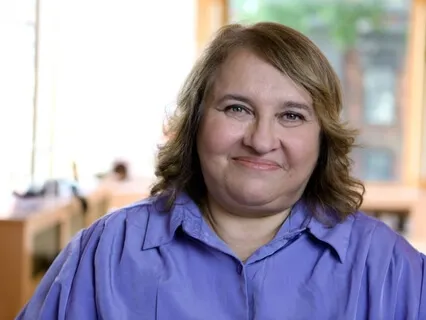
Today we'll be chatting with meditation teacher and bestselling author Sharon Salzberg about her newest book,
Real Love,
The Art of Mindful Connection.
In it,
Sharon explores an authentic love for ourselves and others based on direct experience,
Cutting through the habitual preconceptions we hold of one another.
She also examines what it could possibly mean to love all beings,
Even those who,
Well,
We don't particularly like and even work against.
Sharon is co-founder of the Insight Meditation Society in Berry,
Massachusetts and among the first Westerners to teach mindfulness meditation in the United States.
She'll be speaking with Carolyn Gregoire,
A journalist who covers health,
Science,
And spirituality.
Carolyn is also co-author of Wired to Create,
Unraveling the Mysteries of the Creative Mind.
Sharon,
Thanks so much for being here.
Oh,
Thank you.
So your book,
Real Love,
Follows real happiness and real happiness at work.
What made you decide to write a book on love and relationships?
Oh,
Isn't it an interesting question?
Well,
My very first book was called Loving Kindness.
It came out in 1995 and The Matter of Love,
Not necessarily in the form of relationships,
Romantic relationships,
But love in our lives has been of compelling interest to me my whole life and certainly my life as a meditator,
As a practitioner and teacher.
And so I think there actually was a line in a movie that was kind of almost like the goad for this book.
That movie is Dan in Real Life,
Maybe 13 years ago,
Something like that.
And the line is love is not a feeling,
It's an ability.
And I realized that,
Of course,
It is a feeling in the sense that that's what we yearn for,
That's how we tend to identify with it.
But so much of my kind of really transforming moments in my own meditation practice have come from again and again saying,
Oh no,
It's an ability,
It's a capacity within me.
It's not really in the hands of somebody else to deliver unto me or take away from me that it's something as a capacity that exists inside of me.
And I think that's maybe one of the greatest empowerments we can have in life.
And we tend to see love in a much more limited way than what you're describing.
When you were doing your research for the book and just in your work and your observations,
How do people tend to look at love that perhaps doesn't encompass the full spectrum of what we're capable of?
Oh,
Well,
Certainly that came up again and again.
And I think one characteristic of this book was that I really kind of crowdsourced it.
I asked a lot of people,
We had regular groups in different cities,
I just asked people,
Tell me your stories,
Tell me what,
What word do you think of when you think of love?
Do you think it's a weakness?
Do you think it's a strength?
And I really learned so much.
From the perspective of,
Say,
Buddhist psychology or kind of the world of meditation,
The sense of love,
First of all,
It's not limited to romance,
You know,
And intoxication or any of that.
And it's not about the particular form that a relationship will take.
It's about that kind of moment of pure connection,
Where we're not,
Our sense of the other is not distorted by our own agenda,
Our own assumptions.
That's something that came up again and again and talking to people is like,
I thought I had nothing in common with that person or that kind of person.
Then I really learned to listen.
And I saw a whole other aspects or I thought,
I could never do this kind of thing.
And then I realized that was just a thought.
You know,
That wasn't the kind of thought that's based in reality,
That was just a construct.
And so how much letting go there is in love of our own withholding and our own fears and so on,
Was a surprise in a way.
I mean,
It wasn't a personal surprise,
But seeing how universal that was,
Was a surprise.
And then,
In a way,
I think what was really surprising seeing how lonely people are,
Because it is really a prevalent state.
And I quote this book,
Which is really,
It's almost exemplified in its title,
The book Bowling Alone,
You know,
About sort of the disintegration of different social structures and ways we used to come together,
And how like a bowling league,
You know,
And that doesn't necessarily exist anymore for people,
Or church,
You know,
Which exists for some but not for perhaps as many,
And things like that.
And so how do we find each other nowadays?
Yeah,
And I again and again,
When I was reading the book,
I thought about this famous Rumi quote,
I think it's seek not for love,
But the barriers inside of yourself that you've built to love.
What are sort of the most common barriers and habits of mind that you see that block us from fulfilling this deep desire we have to love?
I think there it's,
Of course,
There are many,
You know,
Workable,
Workable.
There are things like idealization,
You know,
Even just to love this moment,
Not necessarily like it.
But to have that sense of intense connection,
Really being here,
You know,
Is it not quite good enough,
According to what we think should be happening?
We have commonly a lot of fear.
And certainly we have a tremendous habit of assumptions,
Which I found fascinating.
I found it fascinating in my own mind and in the minds of others.
I also tell the story in the book about a friend who was a writer talking about a lecture he had given in the Midwest somewhere.
And in the course of the lecture,
He mentioned,
Remembrances of Things Passed by Proust,
Which had been a very formative thing for him to read and very important for him.
Then he was having dinner somewhere and this woman came up to him and his assumption about her,
You know,
His take on her was that she's probably not highly educated and she looks sort of frumpy or,
You know,
Like whatever.
And she started by saying,
I was at your lecture.
And then his heart sank because he thought,
Oh,
She's going to like,
I didn't understand a word you said,
Or,
You know,
Like,
You know,
You're really like off or something like that.
And to his amazement,
She went on to say,
You know,
I was at your lecture and I want to say that I find it so much more fulfilling to read Proust in the original French.
You know,
It was like,
Whoa.
You know,
So how do we categorize people?
The automatic filtering.
Yeah,
Exactly.
And there's so much of that.
And it's one of,
Of course,
The great blessings of mindfulness is that we can finally see it rather than have it be unconsciously determining our reactions.
And so mindfulness you described as being sort of at the core of this ability to develop our capacity to love.
Could you speak specifically to some of the ways that mindfulness can deepen our love for ourselves and also love for others?
Oh,
I think there's so many ways.
I mean,
I think it is an enormous gift in that journey.
For one thing,
We can,
If you think about different components of mindfulness,
One is seeing quickly what we're experiencing.
And the other is seeing what we're experiencing in a more balanced way.
You know,
Mostly say when an intense emotion comes up or some kind of assumption or reaction,
If we see it even,
We have one of two responses to it.
One is we dive into it.
Like we have this mode of anger and it overtakes us.
We feel overwhelmed by it.
We feel defined by it.
Our actions and our choices are determined by it.
The other reaction that's common is the opposite.
It's like we hate what we're feeling.
We fear it.
We're ashamed of it.
We want to push it away.
We want to repress it or deny it.
And we say mindfulness is a place in the middle where we're neither getting overcome by what's coming up nor are we pushing it away.
So that allows us to keep learning,
Right?
Almost like in right relationship to what we're experiencing.
And we can see it much more clearly.
So this is another story from the book where I talk about if your inner critic,
If that kind of critical voice is pervasive or prevalent,
Give it a name.
Give it a persona.
Give her a wardrobe maybe.
I say her because mine happens to be female.
But give them a wardrobe,
Whatever it might be.
So I tell the story about I named my inner critic Lucy.
So I always apologize.
So the Lucy's of the world based on the character in the Peanuts comic strip because I'd seen this cartoon once where Lucy's talking to Charlie Brown and she says,
You know,
Charlie Brown,
The problem with you is that you're you.
And then the cartoon goes on from there.
And somehow whenever I saw that cartoon,
It was on a,
Somebody had left it on a desk in a room that I had moved into.
And whenever I saw that cartoon,
My eye would fall right on that line.
The problem with you is that you're you because that's the view because that Lucy dominant voice had been so strong in my earlier life.
And I'd also been highly trained in this one particular technique of mindfulness called mental noting,
Where you start with applying a silent mental label to your breath,
Like in out and out as you feel the breath.
And then if the word comes easily,
You place the label on the predominant experience like joy,
Joy,
Sorrow,
Whatever it might be.
So I felt like after seeing the cartoon,
I had two new mental labels.
One was hi Lucy.
And that came about because very soon after seeing it,
This really great thing happened for me.
And my very first thought was never going to happen again.
And I just responded with hi Lucy.
And my favorite form of it was actually chill out Lucy,
Just chill out.
Like I see you,
I know who you are,
Put your feet up and take a rest.
And that's different than you're right Lucy,
You're always right.
And it's also different than I cannot believe I've been meditating all these years and Lucy's still here and I'm such a failure and this is so shocking,
Right?
It's just slicing down the middle,
Which is what mindfulness is.
So it gives us the gift of knowing what we're feeling.
And it also gives us the gift of having a more balanced relationship to it.
And the character brings this sort of lightness and humor,
Which I appreciate.
I'm already starting to think of what the name for my inner critic might be.
I'm going to have to do some brainstorming,
But that seems like a really helpful practice.
The first part of the book you dedicated to self love and talking about this as the foundation for our other relationships.
And you touched on something that I think is really important,
Which is that,
You know,
We always hear that you have to love yourself before you can really love someone else.
And while there's truth in that,
It can also start to feel like fully loving yourself is something you have to achieve before you're worthy of love,
Which is a trap I think a lot of us start to fall into thinking that way.
What is maybe a better way to look at it?
Yeah,
You know,
I'm actually having kind of an ongoing conversation with bell hooks about this because we did an evening together in New York City.
And she challenged me on that very point.
And she said,
She felt like you could offer care to others,
But not really love unless you loved yourself.
And I said,
You know,
My point was really about the word completely that we do get into a project mentality.
Like I can't begin to love anybody else until I totally completely love myself.
And I think,
First of all,
That's a long time.
Second of all,
It's not true because I feel like I know many people who love others.
And yet I don't think that love for others is sustainable in a good way without love for oneself.
I think generosity becomes martyrdom,
Giving becomes something kind of distorted,
And we're filled with resentment at some point,
Or we burn out.
There's just not enough balance.
And this is why some of the most caring,
Empathetic people who are serving others and helping others just can't sustain it over time because there's just too much imbalance.
They're not figuring into the whole vision of who needs to be healed or who needs to be helped or who needs a break.
And so I just don't think it's sustainable.
But I wouldn't wait.
People kind of have this waiting mode,
Like I can't love anybody until I really,
Truly totally love myself and I wouldn't wait.
And so for people who are reading this book,
Who would maybe describe themselves as unlucky in love or having been unable to find the kind of love that they're looking for,
Again,
We learn that romantic love is just such a small part of what love is.
But what can they do in the meantime,
Besides continuing to work on loving themselves and being open?
One of the most frustrating feelings we can have is the sense of like,
I have nothing,
And I will forever.
So one thing we can do is really directly challenge that on both fronts.
It's like nothing is forever.
And also it's so unlikely that we actually have nothing.
When we feel that kind of inner impoverishment and the sense of being deficient or bereft,
It actually helps,
Even though it sounds a little cliched.
Just look at what you have to be grateful for.
Get back in touch with it.
Because the truth is for most of us,
Just do the four steps of love and for most of us,
Just do the force of conditioning.
But some would say evolutionary biology.
We don't tend to look at the positive stuff very much.
Some people say we're wired to look at threat,
To look at danger.
For others,
I think it's more consideration of their personal familial conditioning.
Like not everybody is brought up to look at the blessings they have,
So much as what's not enough.
So it's actually turning your attention toward the parts of life we don't often give much airtime to.
And you don't have to feel that's forced or coerced or phony.
It's just what I described,
Really.
It's like filling in the blanks.
Yeah,
And something kind of related to that,
That I learned about myself reading this book was that I think what I'm the most challenged with is sympathetic joy and being really genuinely happy for others,
Especially in areas that I feel a sense of competitiveness or comparison,
Maybe with my work,
With other writers.
And then also,
I think with social media,
When we're getting sort of a highlight reel of people's lives that just naturally invites this kind of comparison,
It becomes a little stickier.
First of all,
That the way we use technology and social media might be affecting this.
And how can we come back to a place of being just genuinely happy for other people's happiness?
Well,
You know,
In Buddhist teaching,
There are these four qualities that are talked about often as a bundle.
The first is loving kindness.
The second is compassion.
The third is sympathetic joy,
Feeling happiness for the happiness of others.
And the fourth is equanimity or balance or perspective.
And so many teachers would say that of those four,
Sympathetic joy is often the most difficult.
You know,
Like we may not feel compassion for somebody,
But if we can register like,
Oh,
That that's a painful place to be,
Rather than just that's bad,
You know,
Then the compassion will often come.
But to actually be happy for someone else's happiness,
When you don't feel you yourself have enough,
It's very tough,
But not impossible.
It just it means challenging a lot of assumptions that we may be holding like around enough and how little we have or where you have everything and you will forever.
Both statements of which are probably not true either,
You know.
And so it's part of a practice really,
Of continually looking at what's holding us back.
Because not having joy and happiness of others is a path of a lot of resentment and loneliness and unhappiness and being happy for others is a path of a lot of happiness,
But it's not easy.
And we we look at those challenges with a kind of sense of learning and exploration.
It's experimentation is what it is.
And that really helps us,
You know,
Quite a lot.
And it struck me as somewhat related as well to the loving kindness practice of directing compassion to someone that you find difficult.
So I've been trying that as well as a way to work on this sympathetic joy.
How's it going?
I'm just starting,
But it's changing the way that I think about it.
It's making me more aware of those tendencies within myself.
Yeah,
I think a lot has to do with understanding and questioning.
And it's one of the most invigorating aspects of meditation I found,
You know,
Was that all of the myths we've been told and,
You know,
Things that have been presented in a certain way,
We get to look for ourselves and question like,
Does that kind of obsessive vengefulness really make me happy?
How happy does it make me?
Is compassion or love or kindness really weak and sort of stupid or sentimental?
Is it really?
Look at that,
You know,
And so we get to look directly at our experience and to come back to what you asked about social media.
We do live in a time where kind of the a prevalent way of relating is through presenting your best experience,
You know,
Like a professor,
Oh,
This may be somewhat age related.
I'm not totally sure this professor friend of mine talked to me once about his students and he said,
You know,
He,
He feared that they were using social media largely as a way of just comparing and feeling bad about themselves because nobody puts up a picture of their mediocre meal,
You know,
So he's like,
Wow,
Look at that,
You know,
And I said,
Well,
That might be age related.
My friends tend to post lamentations about like their shoulder surgery or something like that,
You know,
Or the sciatica.
I have to find a sciatica group now,
You know,
Something like that.
So it could be different,
But it is,
I think,
Creating it in general,
Kind of a sense of a curated life,
You know,
Like,
You know,
Look how exciting this is,
You know,
I won't tell you about the rest of the week.
And so it doesn't have to be on social media where it may not even be appropriate,
But somewhere in our lives,
We had to feel we're completely authentic,
You know,
And not hiding the parts of us that are troubled or uncertain or whatever it might be.
Yeah,
I think that's a great point.
And I wanted to come back to this point you just made about the myth that we kind of buy into that there's something weak about love or compassion that there's some sort of weakness associated with these qualities.
And,
You know,
You mentioned this Martin Luther King quote that we should love everyone.
But I think we have the sense that loving everyone would make us kind of a doormat maybe or something of a pushover.
I mean,
What kind of person loves everybody?
How can we kind of rewire our thinking on that and really come to see love and compassion as real strengths?
That's why I keep using the word experiment,
You know,
It's like,
I don't think it's a question of convincing ourselves,
You know,
Or analyzing it so thoroughly that we decide,
Oh,
That would be better after all.
But it's really putting ourselves in the position of trying it out.
What does that feel like?
What does it feel like to cultivate love for ourselves,
Even as flawed as we may be?
You know,
Not like I love myself when I finish my doctorate,
You know,
Or whatever.
But like right now when I'm procrastinating as well,
And really see that compassion doesn't mean giving in.
Loving ourselves doesn't mean being lazy.
That these tendencies,
You know,
To hold qualities like love and compassion as weaknesses are really just myths,
You know,
They're just constructs that have been given to us.
What happens when we really look like?
How did I learn best?
How did I make most progress in that goal?
Was it by trying to be resilient?
Was it by putting myself down for four hours after I blew it?
Or was it by kind of being resilient and picking up and saying,
I'm going on,
I'm starting again.
And so we really see for ourselves.
And what about this person we don't like?
You know,
How many hours have we spent going through the list of their faults,
Never even discovering a new fault,
But just going over the same list?
And how much of our own life energy and our time has been given over onto them?
And how much of our life energy has been captured that?
And how much of what we say is anger is really fear?
You know,
And what if there was another way of not being afraid?
You know,
So all of that is like,
It's incredibly interesting just to explore.
Yeah,
I think a practice that a lot of us are probably working on right now is transmuting maybe some of the anger and outrage that we're feeling at the sort of collective situation and more productive in order to make our contribution and to find a way to give back.
Are there some particular mindfulness practices that can be helpful there?
I was just teaching somewhere and I was talking about taking action,
You know,
And somebody came up to me and said,
You know,
You should have said we always have to lead with love.
And I said,
You're right.
And then when I was speaking next,
I said,
By the way,
You know,
It's looking at our motivation,
First of all,
You know,
Because the intention from which we're speaking or acting makes a difference.
And realizing that,
Like in the Buddhist psychology,
Anger is likened to a forest fire which burns up its own support.
The positive part of it,
Of course,
Is the energy,
You know,
We're not complacent,
We're not indifferent,
We're not passive.
There's a lot of energy there.
And sometimes that energy is the real spark for taking action.
But if it's likened to its forest fire,
Which burns up its own support,
It means that it can damage us quite a lot,
The host.
It can actually destroy us.
And so what we want to do is really look toward ways of having that kind of energy without the burning and the sort of obsessiveness and the fixation of the state of anger.
And that's part of what we actually explore through mindfulness,
Is,
Say,
Compassion,
Which would be the kind of regular answer,
The traditional answer to that question.
How weak is it?
And can there be a compassion with a kind of rigor,
You know,
Or intensity about our actions?
And we'd say,
Of course,
Say yes.
And you talk also about this idea of awakening to our interdependence,
Which,
Of course,
Seems more critical now than ever before.
What kind of,
What are the main things that keep us stuck in this hole of isolation and in a shell of sort of our own selves that keeps us from seeing this?
And are there ways to break out of that?
Yes,
I mean,
Here,
Too,
I think the role of assumption,
Especially around,
I guess,
These days,
We know it as privilege.
It's like the centrality of our existence rather than realizing.
It's a little bit like I was in the car with somebody I can't remember who it was.
And we're talking about how terrible the traffic was and how awful it was.
And just complaining.
And the person I was with said,
Remember,
We are the traffic.
Like,
You know,
To others,
We're the traffic.
We're the problem.
It's like,
There was a kind of equality,
Really,
You know,
Rather than thinking,
You know,
I own the world,
And you're causing me a problem by being traffic.
I'm out there too.
I actually,
There are a couple of times when I really saw it in a clear way.
One was after the nuclear sort of meltdown in Japan.
And,
You know,
After all the things that preceded that,
And I was reading a lot of international news for some reason on online and and there was a French newspaper that said something like whatever nuclear material might have been leaked,
Radioactive material might have been leaked,
Was going across the Pacific due to fortuitous winds.
And I thought,
Yeah,
Maybe they're fortuitous if you're in France,
But they're not that fortuitous if you're in Hawaii,
You know,
Or like,
Whatever.
And I thought,
Look at that.
And I saw the same thing after Hurricane Sandy when I was not in New York City.
But of course,
So many of my friends were and so it wasn't actually Hurricane Sandy,
It was Hurricane Irene.
So I was not in New York then either.
And so many of my friends were and I was reading New York media.
And,
You know,
First there was all this stuff that's gonna be devastating,
It's gonna be so incredible,
It's gonna be so awful.
And then it didn't happen in New York City that way.
And so I was reading these headlines like Hurricane Irene was like,
Just hype,
There was nothing to it,
It wasn't real.
And I thought,
Yeah,
Not if you're in Vermont,
Which is drowning,
You know,
Like,
It just happened that that particular one spared New York City,
Which had not been expected.
But you know,
It's that sense of it's my world,
It's central to me.
And other people exist on the margins,
I can be nice to them,
But it's not the same,
You know,
That's what we have to dispel.
So here too,
Like every time we see that kind of thinking,
We can just see it and let it go because we can see it for what it is and,
And come to what's really a more truthful sense of how things are,
Which is that we are all interconnected and that,
You know,
It's not that New York will never feel the consequences of Vermont drowning either.
Yeah,
I think it gets out this idea of the empathy gap that psychologists talk about,
Which is it's so much easier for us,
Even if you look at something like the Paris attacks,
Versus,
You know,
I remember just a few days later,
There was a huge attack in Beirut.
I think the natural tendency as a person in the West is you maybe feel more empathy towards the victims of this attack in France versus this attack in the Middle East.
And that gets to a lot of these unconscious biases that we have,
Which you talk about in the book.
And I think we're seeing those really come out on a new level now.
These things are so quick and sort of ingrained.
I mean,
What hope is there for sort of dislodging those very deep biases?
Oh,
I think there's a lot of hope in a lot of levels,
You know,
Like,
We feel more akin to others,
Some others,
Because we don't necessarily know those others,
You know,
And just through,
I think,
Genuine interaction.
Here's where I actually do have a lot of hope for technology.
I'm not,
You know,
The kind of person who's really disparaging of social media or whatever.
I mean,
It certainly could be misused and one could be addicted to it.
But,
You know,
I do hold out a lot of hope.
We can come to know one another differently.
And that's through paying attention.
And it's also being in situations where we're put together,
Or we are together voluntarily so that we can meet anew.
And it also comes,
I think,
Very much from being able to see those assumptions come up in our minds.
And we can,
Hopefully,
Before we've said anything or done anything and,
You know,
See them for what they are.
And even if it's not knowing,
We can ask,
You know,
Rather than just assume we know.
And I really liked this idea that you mentioned as well of our everyday communities,
These little pockets of people that we're a part of each day that we don't necessarily think of as our community,
Maybe even it's just the dry cleaner that you go to,
And using that as a site for practicing compassion and for practicing love.
Can you elaborate a little bit on that idea?
Yeah,
In the classical loving-kindness practice,
We begin by offering loving-kindness to ourselves.
And then we go through this sequence of beings,
Not necessarily people,
That's why I say beings,
Even though it's an odd term,
Ending with the offering of loving-kindness to all beings everywhere.
And somewhere in that sequence is someone known as a neutral person.
It's somebody we don't particularly like or dislike.
This is like the proverbial stranger,
You know,
And it's actually my favorite part of the practice because I feel like that exemplifies how that practice works.
It's not through trying to force a feeling or an emotion,
Certainly not through trying to cover over conflicted or difficult emotions with this thin veneer of kind of hypocrisy at all,
But it's by paying attention differently that we come to have this genuine sense of connection with others,
Even not knowing their story,
Even not knowing their situation.
So the neutral person is someone we don't strongly like or dislike,
And often people will choose somebody like their dry cleaner or clerk in the supermarket.
And what happens is that in the course of that practice,
You extend loving-kindness to that person.
You may not know their name,
But you kind of hold them in your heart and you repeat phrases to yourself wishing them well,
Like,
May you be happy,
May you be peaceful.
So in effect,
You're paying attention to them instead of looking right through them or ignoring them.
And one of the reasons I love that part of the practice is because we're urged to choose somebody we'll tend to run into now and then so that you get to kind of see if that evolution of a relationship has really happened.
And it really does,
You know,
And you can walk into that store and see your dry cleaner and there's this rush,
Like,
Oh,
This is my friend,
You know,
And like still not knowing their story or their particular trials or tribulations.
And it really does get to be a different sense of connection.
And that seems to be such a powerful practice for people who do feel lonely and disconnected is just to recognize that the people around you are people that you're interacting with.
There is an opportunity to practice love,
Even if it's from a little bit of a distance.
Yeah.
Yeah.
My friend Barbara Fredrickson,
Who's a researcher at the University of North Carolina,
She wrote a book called Love 2.
0.
So she got the title before I could.
And she talks about those mini moments of connection,
Like a stranger on the street,
You know,
Or being in the elevator with some people and really being there fully present as love.
And she says,
You know,
That's different than the structure of a relationship or making a commitment to somebody or whatever that might be.
That moment is the moment of love.
And she,
You know,
Being a researcher has like all the biochemistry and the vagal tone changes and all that.
And I thought that was interesting.
Yeah.
And even just not being on your phone while you're checking out at the grocery store.
I mean,
I see so many people doing that now.
And I think that's just such an important tiny action to be present with someone that you're interacting with and in such a small way to remember that we're all human.
You talk in the book about the space in between that exists in any relationship as being the site of practice and of learning and love.
What exactly does that mean?
And what does this space kind of signify in our relationships?
It's a great phrase.
I think the space in between is kind of the co-created set of agreements and understandings,
Almost like a kind of contract,
Even if it's silent,
Even if it's pretty unconscious,
That happens.
Another goad for me to write this book was a conversation I had with somebody,
A man,
Who was saying that he felt his move toward a state of real love involved not being so central in his marriage in the sense of,
You know,
Sometimes his wife wanted to do something that didn't really work for him.
And he would find himself thinking,
Well,
You know,
That doesn't really work for me,
But she really wants to do it.
So I'll get out of that position,
You know,
Of being the center of the universe and we'll do it,
You know,
Or something like that.
And,
You know,
He,
So he said,
Not really kind of insisting on his views or his opinions or whatever.
And I said,
I really agreed with that,
But there are an awful lot of people in this world who don't tend to express their needs.
You know,
So for them,
A state of real love is actually finally saying what they want and being themselves in that connection,
You know,
Rather than always trying to pretend or or give in or submit.
And so in the book,
I have that kind of telling and also the story of a woman,
Friend of mine who told me that long,
Long time ago when she had a pretty dire cancer prognosis,
Which she outlived by at least 40 years,
Honestly,
But right at the beginning of her kind of healing journey,
She said to me,
You know,
I used to be the kind of person who'd be sitting in the car next to my husband,
I'd be boiling hot.
And the most I could bring myself to say was,
Are you warm,
Dear?
I remember.
And she said,
You know,
Part of my journey was kind of claiming that voice,
Saying,
I'm really hot,
You know,
Because if one can do that,
At least they can be genuine communication.
They can fight about it,
Whatever happens,
You know,
But then that space in between is alive,
You know,
Because both are participating in some way.
And so I think it is that co-created set of understandings that can be one way or the other.
It can be mutual and beneficial,
Or it can be way too one-sided in terms of generosity or,
You know,
Many possibilities.
It was so nice to speak to you.
Thanks so much for being here.
Thank you.
Thank you.
You've been listening to Sharon Salzberg discuss her newest book,
Real Love,
The Art of Mindful Connection with Carolyn Gregoire.
If you'd like to tell us what you think about this episode,
Please email us at feedback at triscall.
Org.
Thank you for listening to the Tricycle Talks podcast.