Hello and welcome to Tricycle Talks.
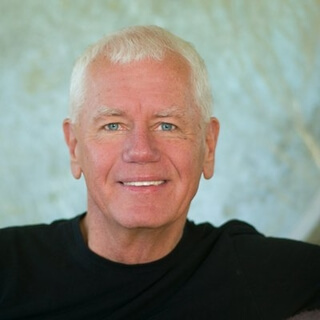
I'm James Shaheen,
Editor and publisher of Tricycle the Buddhist Review.
In this month's episode,
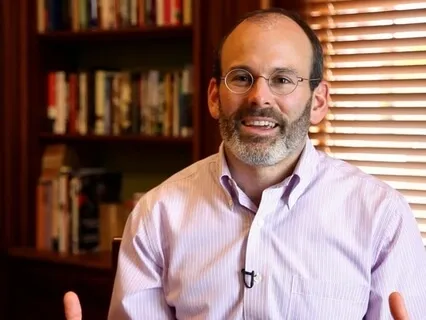
Tricycle contributing editor Amy Gross speaks with psychiatrist and addiction expert Judson Brewer,
Director of research at the Center for Mindfulness in Medicine,
Healthcare and Society at the University of Massachusetts Medical School.
Brewer is also author of The Craving Mind,
From Cigarettes to Smartphones to Love,
Why We Get Hooked and How We Can Break Bad Habits.
Brewer,
Who brings mindfulness practice to the treatment of addiction,
Has found in his research that mindfulness meditation actually quiets a network in the brain that lights up when we think of ourselves in the past or future,
When we have cravings and when we feel anxious.
This application of Buddhist practice is typical of Brewer,
Who brings a deeply practical approach to his understanding of Buddhist teachings.
Now let's join Amy Gross and Judson Brewer.
Welcome Judd,
I'm so glad to have you here.
I've read your book and I can't wait to talk to you about it.
It's great to be here,
Thanks for having me.
So I thought we might start at one of my favorite places,
Which is the intersection of science and Buddhism,
And it's a place you spent a lot of time in.
And I want to know when you discovered or we might say got hooked on Buddhist practice.
That's a great question and one of my favorite intersections.
You know,
It's hard to pinpoint the exact moment if there was one,
But I can say that,
You know,
In college I did a lot of backpacking and started to learn the joys of being in nature and kind of getting out of my own way from all that was happening in college and started formally meditating my first day of medical school.
You know,
I didn't really have much of a clue at that point.
But somewhere in,
You know,
In my medical school,
In my PhD training,
I really started to dive more into the suttas and into the Buddhist teachings and practices.
And I think one of the big pieces that was a big aha for me was learning about dependent origination.
Dependent origination?
Yes.
So this is a Buddhist concept around these 12 links of,
You know,
Codependently arising things.
You know,
It's this thing that the Buddha was reportedly contemplating the night of his enlightenment.
So probably a really important thing to explore.
Because?
It described what the modern day scientists were talking about in terms of habit formation.
Most importantly,
It described really to a T how my patients with addictions were talking.
And that was really powerful for me to see,
You know,
Everyday people who were struggling with their own addictions who were using the same language as the historical Buddha 2,
500,
2,
600 years ago.
Finding those same links.
Yes.
Yeah.
Craving,
Clinging,
Attachment,
You know,
Becoming.
Well,
They didn't say becoming,
But.
.
.
Yeah.
All of it.
What did they say?
What's the colloquial of becoming?
Yeah.
The really being identified with their behaviors.
You know,
I'm a smoker.
I'm an addict.
Yes.
And you know,
That makes me think one thing I appreciate about the title is it's the craving mind.
So it's not about me,
The addict,
But this mind.
Yes.
There's a depersonalizing that seems very Buddhist.
Yes.
Well,
It's the personalizing that's also very Buddhist that points toward this is where the suffering is.
So as you saw those links and saw these connections,
Also craving is the second noble truth.
So we're going to see throughout your book these connections of the dependent origination,
The cause of suffering,
The cessation of suffering into the eightfold noble path.
So you started studying addictions.
And as your title suggests,
You're really sweeping a lot of behavior into addiction.
Did you find one pattern that is the pattern of addiction?
There was one pattern,
And this actually came from studying my own addicted mind,
That really became really interesting.
I remember being on a month-long retreat,
You're just watching craving in particular and then noticing that pleasant things,
Pleasant thoughts in particular would lead me to want to continue those.
And then the unpleasant thoughts would lead to wanting those to go away.
And I was noticing there was this feeling in my body,
It's like around my solar plexus or my gut,
Where it was like that contraction,
That urge.
And I remember going,
Oh my gosh,
Oh my gosh,
This is the same for when I want pleasant and when I don't want unpleasant.
I remember going up to the retreat teachers and they're like,
Yep.
It's all suffering.
Welcome to the club.
So that was remarkable for me to see,
Oh,
It's that push and pull,
But the push and pull feel the same no matter what the feeling tone is.
And that craving and clinging,
Those pieces drive the entire process.
I even love one of the translations,
I'm certainly not a poly scholar,
But I love one of the translations of clinging or upadana,
However you pronounce that,
As fuel or sustenance.
And to me,
It's like,
Oh yeah,
This is what sustains the cycle and sustains craving.
It feeds back on itself and on itself and on itself.
Yes,
That's profound because it all points to the way things are is never enough.
That's how we act moment to moment to moment.
Yeah,
And endless wandering.
Endless wandering,
Wanting.
Yeah,
I see this every day,
Whether it's my patient who's trying to quit smoking or quit using other drugs or somebody that's trying to change their relationship to eating.
And there are actually very simple elements to this.
They get triggered by something and then they want that to either continue or to go away,
Whatever that pleasant or unpleasant feeling is,
And then they do something accordingly.
And it just simplified the process.
I was I struggled for a long time with understanding what this,
You know,
These 12 links of dependent origination,
All this stuff.
And it's like there's some key elements that are pretty easy handholds to really identify on our own daily behaviors.
And also,
You know,
In seeing that in myself,
It helped me start to look to help my patients identify these as well in my addiction clinic.
Can you name those handles?
I would start in the middle at behavior because sometimes it's difficult,
Especially for someone who hasn't spent time looking inward.
It's hard for them to identify feeling tone.
It's hard for them to identify any of the other aggregates around these triggers that come in through the sense doors.
But they can identify their behavior if they've got a,
You know,
Their mouth full of Oreo cookies or they've got a cigarette half burnt in their lips and they wake up and they're like,
Where'd this come from?
So they can start there and then trace forwards and backwards,
You know,
Oh,
What triggered this and start to become aware of the triggers.
And then in between those,
Notice cravings and start to bring those to the surface more because there can be subconscious or unconscious triggers and cues that just triggers to automatically behave.
And so tracing out that part of the loop and then also beyond the behavior,
You know,
What's the result of the behavior?
And so that's kind of the perpetuation or the becoming piece,
Which is really interesting because from a modern day,
Psychological perspective,
This is described as reward based learning.
And so the learning piece comes from the rewards or the results of our action.
Does results sound familiar from Buddhist terminology,
Cause and effect,
Right?
So there's this beautiful parallel where there's a cause as in a behavior and then there's an effect that if we pay attention to that effect,
We can see,
You know,
Is it wholesome?
Is it unwholesome?
If it's unwholesome,
We can pay attention and say,
Wow,
What did I get from this?
You know,
And pay very close attention to that because that's the piece that helps us change in the future.
Oh,
It didn't feel so good.
If I ate 12 cupcakes,
I have this gut bomb.
Wow,
That's not so great.
And that drives,
You know,
That's like present karma if you want to speak of it that way.
That's our ability to say,
Wow,
This isn't so great.
And our brain rewires,
You know,
There's this part of our brain called the orbital frontal cortex that kind of holds reward value and it says,
You know,
I'm going to update that.
That's,
You know,
That's not as great as I remember.
And the same is true for wholesome action.
Oh,
When I'm kind,
How does this feel?
Oh,
It feels pretty good.
You know,
I might want to do that again next time you have an opportunity.
You know,
It's so beautiful how these all fit together.
You tell a story in the book about a patient of yours who was really suffering from a craving and felt his head would explode.
So do you want to tell that story?
Because I've been telling it.
I was working at the VA hospital in West Haven,
Connecticut,
And one of my patients walked in the door and he said,
Doc,
If I don't smoke,
My head's going to explode.
I was pretty young and naive at that point.
So I was like,
Oh my God,
What do I do?
And so I said,
Okay,
Well,
If your head explodes,
Then we'll put the pieces back together and we'll document this as the first case of head exploding from craving.
Okay,
Great.
And we'll write a case report.
You know,
It's my terrible joke to just try to give myself some time to say,
Okay,
What are we going to do?
And what we did was we went to the whiteboard in my office and we just mapped out that process of,
Okay,
What is.
.
.
How strong is that craving?
Does it get stronger?
Does it get stronger?
Does it go away?
And what does it feel like?
So that he could see clearly,
Oh,
These are physical sensations that drive me to act.
And you know,
That trajectory of going up,
Going up,
Going up,
And then he would smoke to relieve the craving.
So he didn't actually see the trajectory of it cresting as a wave and then decreasing.
He hadn't actually played out and just been with that craving as it came,
As it crested,
And as it dissolved on its own.
And so we mapped that process out and gave him the opportunity to go explore.
You know,
Next time you have a craving,
Dive in and just note your physical sensations.
You know,
What do they feel like?
So that he was less identified with them as this big looming cloud over his head of craving that's going to make my head explode.
And it was illuminating for both of us because I started to learn,
Oh,
Here's some simple ways that we can describe this to my patients who have never heard the word Buddhism,
For example.
Danielle Pletka And as you're describing this,
I'm thinking this is true for every emotion that we flee from.
You know,
We're afraid I will get overwhelmed by my sadness,
By my anger,
By my fear.
You know,
This disaster thinking and what you're talking about,
What meditation training is about,
Is about sitting through it in a way and actually seeing the transitory nature.
But there's a big threat.
You know,
It feels like a terrible threat.
Something catastrophic is going to happen if we don't relieve that anger,
That fear,
That sadness.
Marc Thiessen Yes.
And as a scientist,
I would say,
Well,
That's an empirical question.
Let's test this out to see if your head does explode.
But it gives people the permission and the ability to step back and say,
Huh,
Well,
Yeah,
Let's take a look at this.
And this actually helps to,
I would say,
Even bring up some of these factors of awakening as described in Buddhist psychology that can help us be with these things.
You know,
I think of the second factor of awakening,
Probably too liberally translated as interest or curiosity.
You know,
If we bring interest or curiosity to what's happening,
We're less likely to get bowled over by it.
Danielle Pletka Yes.
You started working with applying mindfulness to help smokers,
And you tested your pure mindfulness program against what you call the gold standard,
Which is the American Lung Association's Freedom from Smoking program.
And it was a major success.
And you learned something very big from that about mindfulness versus willpower.
Marc Thiessen Yes.
Yes.
That study was really illuminating in many ways,
The first of which we were just hoping to have a similar effect as gold standard treatment,
Because it's very important to look,
If you're developing a new treatment,
If it's not as good as gold standard,
Then you shouldn't do it.
You should continue with the gold standard.
We were blown away.
We actually got five times the quit rates of gold standard treatment.
And so that was an eye opener for me to say,
Well,
Let's understand this mechanistically so we can really unpack how it's working.
And so not only was it efficacious,
But it taught me a lot about all these aspects of the impermanence like we're talking about,
For example.
Danielle Pletka And disenchantment.
Marc Thiessen Yeah.
So the disenchantment piece is really important.
And I think this goes back to what you mentioned about cognitive processes.
So from a therapeutic standpoint,
Of behavioral therapy,
When I was trained in CBT,
It was around catch it,
Check it,
Change it.
If you can catch a cognition that is erroneous,
So to speak,
You can check to see if it's true,
Catastrophizing,
For example.
And then we can change it and say,
Oh,
Let's replace this with something more helpful.
With mindfulness training,
It doesn't seem to work that way.
And it's good that it doesn't because cognitive behavioral therapy requires a part of the brain called the prefrontal cortex,
Which is kind of the youngest from an evolutionary perspective.
And it's actually because of that,
It's the first to go offline when we get stressed out,
Which may be why people relapse to drug use or smoking or whatever or eating when they're stressed because that cognitive control piece is offline.
So mindfulness doesn't seem to be about controlling anything.
It seems to be about really just stepping back,
Which can seem paradoxical,
But stepping back and turning toward our actual experience and just observing what's happening.
And by observing,
We're bringing it from our thinking mind down into our knowing or our observing and just seeing,
Oh,
This is stuff that's driving me.
And as part of that process,
We're also seeing this reward piece where we're becoming disenchanted with our old behaviors.
Oh,
This isn't as great as I thought.
We don't have to think our way into that.
We simply pay attention and it reveals itself.
And in this way,
I think of this as kind of hacking the reward-based learning system because we're not doing anything more than just really tapping right into it.
There's so many ways to go with this.
I want to ask you,
So with your smoking apps,
You're asking people to become aware,
Let's say,
Of how smoking actually feels and tastes.
One woman said she actually felt it,
Smelled it,
And said,
Oh,
This tastes terrible.
So I get that as an ex-smoker.
And what about your working on apps to deal with eating?
You can't just make food disgusting.
That's tricky.
Yeah,
You know,
It is.
And this work is so humbling.
I have to say it is so humbling and illuminating.
My first study,
It was actually with cocaine and alcohol-dependent individuals.
And we found that mindfulness training was as good as gold standard.
And then we went to the smoking work like we just talked about and it was five times better.
And then people were asking,
Can you develop a program for eating?
Because it seems to follow the same behavior.
And that was really interesting because of several things.
One is that with smoking,
One of the primary reasons that women in particular don't want to quit smoking is the fear of weight gain.
And so,
You know,
Could we develop programs that could help people not gain weight when they quit smoking,
Substituting eating for smoking,
For example,
Instead of substituting kind of stepping out of the entire process.
But the other piece was that,
Like you mentioned,
You don't need to smoke to survive.
In fact,
It does quite the opposite.
But you do have to eat.
So this became a great challenge to develop programs.
And we developed this app called Eat Right Now to help people learn about their minds around eating.
And not because,
Let me back up and say,
A lot of people have a dysfunctional relationship with eating,
Whether they stress eat or eat out of boredom or eat out of anxiety,
A lot of emotional eating.
And so they've actually unlearned the ability to know when they're hungry because they just know that they have a craving to eat and they don't know whether it's because of physiologic or we call it homeostatic hunger or actually hedonic or emotional hunger.
And so they just,
You know,
Crave,
Eat,
Crave,
Eat,
Crave,
Eat and perpetuate that process.
And in the meantime,
You have all sorts of things that are not so helpful for them happen,
Like become obese or become a sugar addict or whatever.
And so we developed this Eat Right Now program just to see if we could take the same training and help people change their relationship to eating in a very different way than somebody might try to go on a diet to lose weight.
It was really about,
Well,
Let's see what this is like.
And I can cut to the results.
We got a 40% reduction in craving-related eating.
We just published that study last year.
And it was really interesting in that sense because this is about helping people simply pay attention as they ate as a place to start and notice,
Oh,
What does it feel like to be full?
Or even play with,
You know,
How little is enough?
You know,
What a great exploration.
Oh,
Do I need one more bite?
No,
Maybe this is enough.
You know,
And it just really is a wonderful way to take something that we have to do all the time and have it be our teacher so that we can start to learn how our minds work.
Yes.
And I see how that eliminates the sense of deprivation that could feed eating.
I eat to make myself full,
You know,
And here you can catch the fullness before you have abused your body.
Yes.
Yes.
I wanted to ask you,
You've been researching the differences between experienced meditators and novices.
And I read that part as a teaching of how to meditate.
You know,
What was really clarifying to me was to hear you talk about these two networks in the mind,
The narrative network versus the experiential.
And I thought maybe you could just describe the difference between those two and how choosing between them or placing your attention,
Where you place your attention there makes all the difference in meditation.
Yeah,
Great question.
And boy,
This was such a great teacher for me as well.
You know,
This was probably around 2008,
2009.
I got really interested in one of my advisors at Yale,
Mark Patenza had suggested,
You know,
He said,
Why don't you do a study with experienced meditators?
And I remember saying,
Oh,
I'm sure somebody has already done this.
And when I looked at the literature,
There were a couple of pilot studies that had been done,
But nothing really definitive.
And so,
You know,
We said,
Okay,
Well,
Let's dive into this.
And in particular,
I wanted to look to see what the similarities were between different meditative practices and also what the differences were between novice meditators and experienced meditators practicing those.
So we actually brought people in,
Experienced meditators and novice meditators,
And taught the novices to practice breath awareness and loving kindness and choiceless awareness.
And then,
You know,
We had the experienced meditators practice these and we looked to see what was different between their brains.
And the first finding was a non-finding,
As in,
I did not confirm one of my hypotheses.
I figured that there was some brain region that was activated during meditation,
You know,
Like,
And we were going to isolate that and it was going to be more active.
And we didn't find a single thing.
And I was really struck by that,
Because it really helped me rethink what meditation and what mindfulness is all about.
Because when we looked at the opposite,
When we looked to see what was less active in experienced versus novice meditators,
We actually found that there were a couple of brain regions that were the main hubs of this network that you mentioned,
This narrative or self-referential network of brain regions called the default mode network that were deactivated in experienced meditators.
And for me,
This is where there was this huge aha moment.
To cut to the chase,
This network gets activated when we think about ourselves in the past or the future,
When we crave,
When we ruminate,
When we feel guilty,
You know,
When we're anxious,
You know,
All these things activate this default mode network.
And in particular,
One of the main hubs called the posterior cingulate cortex.
And the posterior cingulate cortex was deactivated during meditation.
And so the kind of the analogy is,
I was thinking the wrong way about the brain,
Where meditation is not about doing something.
It's more about getting out of our own way.
And so if you think of driving a car,
For example,
And you've got your foot on the brake,
And you've got one foot on the gas,
Our car is not going to drive very efficiently.
So instead of like pushing our foot on the gas more like doing something,
This was about taking our other foot off the brake and saying,
You know,
Let's let the brain do its thing.
It knows it knows how to work,
As in the self getting out of its own way,
Which of course fits beautifully with Buddhist practice.
This is about seeing when we're identified with things.
And we actually took it one step farther where we could use real time neural feedback to line up people's subjective experience with their brain activity in real time.
And what that revealed for us was this literal caught upness,
You know,
When we're contracted around trying to do something or craving or anxious,
You know,
Because there's this feeling of contraction that comes with that.
And then there's this opposite feeling of expansion that comes when we let go.
And now we were starting to see a neural correlate for these.
Thank you for listening to Amy Gross in conversation with Judd Brewer.
Don't forget,
You can visit tricycle.
Org slash podcast to listen to more conversations featuring some of today's most compelling Buddhist writers,
Thinkers and teachers.
At tricycle.
Org you can also watch our monthly feature films,
Interact with well known Buddhist teachers in our monthly Dharma Talk series or download one of our ebooks on Buddhist teachings.
And keep an eye out for the next issue of tricycle for a fresh look at the Me Too movement through the lens of Buddhist thought and practice.
Now let's get back to Amy and Judd.
So there's the narrative network.
Now when you describe the experiential network,
I wonder,
It sounds an awful lot like meditation.
Yes,
And there are a number of networks.
We certainly haven't studied many of them beside the narrative or the default network.
So I don't want to speak too much out of school.
But what I can say is that there are these executive networks and there are these attention networks and there are a bunch of other networks that are typically anti-correlated,
As in they're quiet when our self-referential network is online.
And when they're online,
Our self is generally out of the way.
In a pragmatic sense,
If we're planning something,
For example,
Planning a trip or doing a math problem or something like that,
Our executive network is kind of online.
It's paying attention.
It's doing its thing.
It's doing the math.
And then the default one network is kind of quiet because we don't really need ourselves there telling us to do math.
Our brain can do math much better without us.
So those two tend to be anti-correlated.
And in that sense,
When we get out of our own way,
We're just kind of in the flow of letting our brain work and do its thing.
Right.
And you've described the experiential network as being out of time,
A sense of timeless,
No judging.
Reading what you said about it,
It felt like this is where I want to be.
This is the piece that I associate with meditation at its sweetest.
Yeah.
Yeah.
Well,
And I love that you bring up the word time because time is based on memory.
And the default one network,
In particular,
The posterior cingulate,
Is linked anatomically to our memory networks,
The hippocampus and things like that.
And I love this.
I think,
I don't know if it's from the Dhammapada,
But it's let go of the past,
Let go of the future,
Let go of the present and cross to the further shore.
And so it's about letting go of,
Oh,
I can't believe I did that,
Or,
Oh,
Is this going to happen to me,
Or,
Oh,
I am doing this.
So it's that contraction around the identification with something in the past,
Something in the future,
Or even something in the present.
Oh,
I am,
I am,
I'm a scientist,
I'm a physician,
I'm a psychiatrist,
Whatever.
And just being in that timeless connection with the universe.
And so if we move from that contraction of,
I am a scientist that says I have to posture and I have to protect this identity and start to expand into the vast not knowing,
The vast not me,
I start to lose that boundary between myself and the universe.
And this is where even the psychologist Mihaly Csikszentmihalyi described it as flow,
Which is timeless,
It's effortless,
It's selfless.
And those are the words you used to describe the experiential network.
Yes.
And in those charts of the people hooked up and the PCC is going up and then the alternative to the PCC,
The default mode network acting up,
Is the depths below when the PCC is being quiet.
And I'm thinking,
So is that meditation?
I mean,
That seems to be what meditation is.
So when I think I,
That kicks it up.
And when I go,
Oh,
Kicking up and that ends,
I'm back down there.
So,
You know,
Am I oversimplifying?
No,
I don't think you are at all.
And that happens,
You know,
During formal meditation.
And it could even happen in informal moments.
You know,
This is where I love the Tibetan teachers who talk about,
You know,
Short moments many times throughout the day,
Where in any moment we can notice,
You know,
Am I caught up in,
You know,
I have a great idea or,
You know,
Self judgment?
What does that caught up feel like versus just letting go?
And that's correlated,
At least we found when we were doing these experiments,
That caught up-ness,
Like you talked about,
Correlated with PCC activation and deactivation.
So very much that's described and actually helped me understand these concepts behind meditation and that meditation is a support for mindfulness,
A support for selflessness.
Another thing you learned from the meditator experience versus novice is you research what's the most effective mindfulness skill and found it was RAIN,
Which I found very exciting in terms of what you were laying out as the power moves in effect,
The power moves in meditating.
So you know,
The turning towards which is about recognizing,
You quote Yogi Berra,
One of my favorite things,
You know,
What is it you observe a lot by watching?
Yeah,
You can see a lot just by watching.
Yeah.
He's amazing.
So you want to go through that or maybe a better way of doing that is what is the power of recognizing?
What is the power of accepting?
What is the power of investigating?
And then the power of not identifying?
I mean,
This does seem to be the whole process we're talking about.
Yes,
Yes.
And I'll preface this by saying this was a wonderful yet another moment where I completely fell on my face because I'd gone into this smoking study with the hypothesis that,
You know,
Formal meditation was going to help people quit smoking because that's how I learned to practice.
And the formal practices were correlated with outcomes,
But not nearly as strongly as the informal practices.
And as you pointed out,
You know,
This RAIN practice,
We modified RAIN a little bit.
So this is one,
I think that Michelle McDonald had started up and then Tara Brock has really brought to the fore,
You know,
This recognition R recognize I in A allow or accept or acknowledge.
I is investigate and this is where curiosity comes in.
And then N,
Which is typically described as non-identification,
That could be a mouthful.
So we just went with the Theravadan or the Burmese practices of noting practice,
You know,
Note tightness,
Tension,
Burning,
Clenching,
Whatever,
You know,
Whatever your moment to moment experience is.
So here,
This was profound.
We were seeing,
We were following our data and we weren't being identified too much with our hypotheses,
Which is really critical for being a scientist.
And I say that because I'm not always so good at that.
It's like,
Oh,
Let's see what the data say.
Oh,
Wow,
I was totally wrong.
The formal practices don't drive the process as much as informal practices.
And of course,
It made sense afterwards.
This is this short moments,
Many times piece.
It's like,
Oh,
What's it like to be identified with a craving?
Can I break that down?
Can I recognize that?
Can I allow it to be here?
Can I turn toward it?
Can I investigate what it feels like?
And can I note as it rises,
As it goes away?
Oh,
Wow.
Oh,
I can actually quit smoking.
Oh,
I can change my relationship to eating.
Oh,
I can actually change my relationship to anxiety,
Which is something that also fits within this habit loop,
But is we're finding that's even harder than working with eating,
For example.
You know,
A number of people that are so identified with anxiety,
They're like,
One person said,
I feel like this is deeply edged in my bones.
So that non identification piece where they can wake up and see,
Oh,
Anxiety feels like this as compared to I am an anxious person.
There's non identification.
And in the recognizing and in the turning toward,
Which is so counterintuitive,
You talk about targeting cravings,
Lessons,
Intoxication.
And this is another way of talking about disenchantment.
But in the looking and in the kind of looking that you're going to be talking a lot about in the book about curiosity,
The hold is lessened.
The grip weakens.
And I think you wrote there's that beautiful Buddhist reward that that looking at in that way leads to calm,
To direct knowledge,
To self awakening,
To unbinding.
Yes.
Talk about rewards.
I mean,
That's a pretty good reward.
Yeah,
You know,
It's really interesting.
If I were only allowed to have ever heard one line of the suttas,
You know,
And I couldn't hear anything else,
It would be I'll paraphrase.
And basically,
When the Buddha talked about exploring gratification to its end,
You know,
It wasn't until I explored gratification to its end that knowledge and vision arose or something like that.
So he's talking about reward.
And he's talking about paying careful attention to the reward that comes from intoxication,
Right?
We're intoxicated with intoxication,
Basically.
We're like,
Wow,
Craving is great.
We're craving for more craving.
In fact,
When we allow ourselves,
When we investigate what that feels like,
Craving feels pretty crappy.
But we have to wake up to that first.
And if we don't wake up to that,
We can't wake up to all of this other stuff that you're talking about that comes with the joy,
Literally the joy of letting go,
The joy of being curious,
The joy of connecting with ourselves and others.
Yes.
And it also makes me think of the word intoxication.
You talk a lot about misperceptions of where happiness lies,
You know,
We misperceive happiness as excitement.
And in a sense,
What you're saying in this book is like,
You know how they say follow the money,
This is don't follow the dopamine,
Right?
Well,
Yes.
And it's kind of like follow the dopamine and see how much it's actually worth.
This is like Bitcoin.
You know,
Wow,
Don't want to get caught up in that scheme.
And who knows,
Maybe Bitcoin will be worth a gazillion dollars.
But it's pretty volatile.
And so is our fickle mind.
And I remember reading in I think it was inside a Upan Dita's book in this very life where he talks about we mistake excitement of the mind for happiness.
And I was blown away.
It's like,
Oh,
That's it.
That's it,
Right?
That's it.
Oh,
I still get goosebumps thinking about that.
Because that's it.
You know,
We're so intoxicated.
You know,
The asavas,
You know,
Somebody translated that as intoxicants.
Yes.
Oh,
Yes,
We're intoxicated by our own intoxication.
It's an endless loop if we don't wake up to it.
Now,
One of the things that surprised me,
Took me back and then just seemed so of course is you're talking about flattery,
You know,
The addiction to flattery,
The addiction to talking and thinking about yourself.
You know,
In the political situation we're in,
It's particularly fascinating.
So again,
So you're talking about that basically in regard to Facebook.
And you say that we use Facebook as a way of emotional regulation,
That the clear unambiguous feedback that we get from Facebook likes is we get like a dopamine spritz with every beep and tweet.
And I'm putting that together with you,
Right?
There's an underlying uncertainty and volatility of tomorrow,
The uncertainty and volatility we live with every day that leads to addictions.
And so I was wondering if here's the rise of Facebook,
Which is totally addictive.
And I'm wondering if you think this is a particularly addictive time period.
It's a great question.
You know,
There was a documentary I think called The Century of the Self.
And so I think this actually started a while ago.
And I think the documentary highlights Sigmund Freud's nephew or something who kind of really started as a marketing tool,
Basically,
Getting people to think about themselves more and to say,
Hey,
Why don't you buy this to make yourself stand out from the crowd?
You know,
That wasn't always the case.
And so I think it started a while ago.
But then the – I'm probably still around at the time of the Buddha – sense of self.
But whenever it began,
It never had these tools,
These modern day tools now that can just perpetuate it and make it just explode.
So for example,
I think of our cell phones as these weapons of mass distraction because there's YouTube,
Which really should be labeled MeTube because it's all about me.
And Twitter,
Which is all about,
Oh,
Can my tweet go viral?
Can I have the perfect tweet?
Or here's the opportunity to in an unabashed and even rewarded way talk about myself.
Every time I get a like on a tweet,
It says do that again,
Especially if we've got these Russian trollbots that are – that are liking certain tweets to make them more popular.
We've never had this technology before.
And it's just running rampant with our minds and saying,
You know,
Oh,
These are such evolutionarily young structures.
Let's totally take advantage of these.
And look at what's happening,
Whether it's,
You know,
Whether it's political uncertainty or environmental uncertainty or social uncertainty.
You know,
Our brains hate uncertainty.
They're trying to make things as certain as possible.
And so anything they can do to kind of lock things in,
Even if it's a completely false or fake thing,
We're like,
Okay,
I got it now.
I got it now.
Our brains are going to do that.
The disaster movies that we create in our minds.
And the disasters that we're literally creating for our poor planet.
Yes.
No.
Moving right along.
Yeah,
Sorry.
But we – but I just want to pause for one second.
Yes.
We all feel this.
This is real.
And we all need to wake up to this.
Yes.
Okay.
We can move on.
But I just wanted like,
This is important for all of us as a species,
As a caretaker for this beautiful planet.
And what I feel when you say that is like a wave of helplessness.
And I can see going any number of ways to block that feeling,
You know,
As though it's a game,
Block that feeling.
It's excruciating.
It is literally – it is actually painful.
It can be.
And so let's – can we unpack that a little bit?
Unpack.
So this is beautiful in the sense that we could wall ourselves off.
This is painful.
Our brain says,
Unpleasant,
Make this go away.
And so we wall ourselves off because we don't – I'm not saying you or me,
But I'm just saying there's the propensity of the collective mind to say,
Don't go there.
And that's based on self-protection.
Right.
Right?
Oh,
I don't want to feel this.
Well,
What if we get out of our own way?
What if there's no self to protect?
What happens then?
And so,
You know,
At times for me,
This sitting in this moment,
And just like we did a moment ago,
I felt this wave of tenderness.
And it's coming back up.
It's this tenderheartedness that says,
You know,
This is us.
We're all in this together.
That to me is,
At least for myself,
How I feel,
Compassion arising,
You know,
Uncontrived from not worrying about me this moment.
Yeah.
That's good.
Thank you.
Thank you,
Judd.
But that also fits with what we've been talking about.
You know,
This is – when there's contraction,
When there's fear,
When there's anxiety,
That's the post – you know,
If you want to link it to the brain,
That's the posterior thing,
Like going crazy.
When we notice those as physical sensations and we don't close down,
We can connect with the emotion.
We can turn toward it.
We connect with others.
We can connect with our world.
And we're less likely to feel helpless.
Yes.
We're more likely to feel hopeful.
Yes.
And bringing in curiosity.
What can I do?
For me,
That changes everything.
And for me,
Too.
I'm smiling because I love curiosity.
So if there were only one thing,
You know,
In terms of a practice that I were allowed to do,
It would be curiosity.
That's it.
Yes.
So here we are.
One thing I've learned,
Made clear in your book,
Is that disenchantment replaces forcing,
Controlling,
Trying too hard.
The other thing is what you're talking about is a process that's curiosity-driven rather than craving-driven.
And you're offering curiosity as an alternative to self-punishing,
To forcing.
And you talk in the book about how good curiosity feels.
But I think you're also offering a kind of a shift in a way to meditate that is centered on curiosity,
Your stress compass.
This is where,
You know,
My meditation teacher would be like,
Oh,
Thank goodness,
He finally got this.
You know,
It's around,
You can think of it from many angles.
So let's just take quickly the Buddhist angle,
Which is the seven factors of awakening.
You know,
In the Anapanasati Sutta,
They're described in a particular order.
They're not just,
Okay,
Memorize these seven things and go and do them.
It's about bringing together,
You know,
Mindfulness as the first factor.
And I think of this as like kind of rubbing two sticks together.
You rub the stick of mindfulness together with curiosity,
And they generate the heat for the fire.
So when we're curious about something,
We naturally have energy,
Which,
Oh,
That's actually the third factor of awakening,
Virya,
Courageous energy,
We turn towards stuff.
And then suddenly we become enraptured or joyful,
However you want to translate piti.
So there's,
You know,
There are these factors that are kind of based on the conditions of the previous factors.
In six steps down the road,
We get concentrated,
And then seven steps,
We get equanimous.
So take that and then turn that into modern day psychology.
What are we talking about?
We're talking about reward-based learning.
Think of the minimum elements that you need to set up a habit loop is a trigger,
A behavior,
And a reward.
If the trigger is stress,
And the behavior is to,
You know,
Get anxious or to eat cupcakes or to smoke a cigarette,
And then we get that brief relief of whatever that temporary,
You know,
Feeling a little bit better is,
What if we replaced,
So we get stress trigger,
We replace the doing something with simply being with and curious about what's happening in our body and mind right now,
That in itself,
That quote unquote behavior,
Which is really simply bringing awareness to,
Has its own intrinsic reward,
Because we don't have to go somewhere to get it.
It's here.
It's always available.
And it feels so much better to be curious than contracted in craving,
Because curiosity,
Well,
You tell me,
Craving feels contracted.
How does curiosity feel?
Energizing,
Exciting,
Alive.
Yes.
To me,
Curiosity feels widely expanding.
Yes.
Right?
It's like,
Oh,
Because we're turning toward.
We're not turning away.
It's energy.
Yeah.
You write something I love.
With curiosity,
We step out of fear-based reactive patterns and step into being.
And that's the shift that's magic.
And I have to say,
I want to credit Jon Kabat-Zinn for some wonderful discussions that he and I had around.
He gave me some feedback on the book and just the way that he has really helped the world wake up to this being rather than doing.
So I just want to give a deep bow to Jon for these wonderful conversations we've had around that and all that he's done for the world in bringing these practices into modern-day medical societies,
Like through mindfulness-based stress reduction.
So I just want to give a shout out there for a moment.
I shout with you.
So I think we're sadly out of time.
I want to thank you so much for your time and your work and your energy and your joy and the joy of talking to you and great success with the book.
I hope everybody reads it.
Thank you.
It's been wonderful talking with you.
Thank you,
Dad.
You've been listening to Amy Gross in conversation with Judd Brewer.
We'd love to hear your thoughts about the podcast.
Write us at feedback at tricycle.
Org.
Tricycle Talks is produced by Paul Ruist at Argo Studios in New York City.
I'm James Shaheen,
Editor and publisher of Tricycle,
The Buddhist Review.
Thank you for listening.