Welcome to Tricycle Talks.
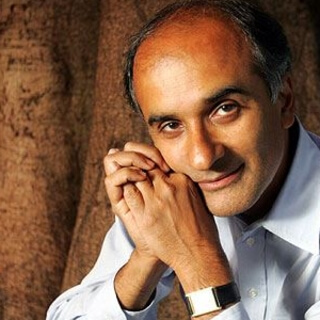
I'm James Shaheen,
Editor and publisher of Tricycle,
The Buddhist Review.
There's perhaps no idea more elusive in Buddhism than emptiness,
The understanding that all phenomena,
Including our own experience,
Are contingent and without fixed or separate existence.
In Emptiness,
A practical guide for meditators,
Long-time meditation teacher Guy Armstrong brings this otherwise complex idea into the very heart of our daily practice as an experience rather than an idea in a way that is both clarifying and useful.
Today,
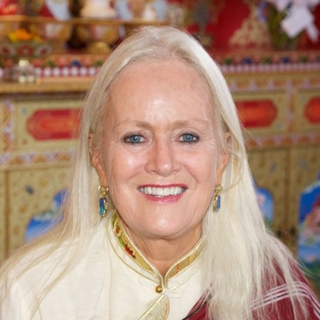
Contributing editor Amy Gross is speaking with Guy about his new book.
Let's listen now.
Hello,
Guy.
Thank you so much for joining me today on Tricycle Talks.
Thank you,
Amy.
I'm really happy to be here.
I want to introduce you to the Tricycle audience as one of the country's foremost teachers of insight meditation.
I want to give just a tiny little bit of background,
Guy,
Into your Buddhist history.
You started reading Buddhism in college where I think you were majoring in physics,
Is that right?
Yeah,
That's correct.
That's a classic combination of Buddhism and physics.
And you began sitting retreats at the age of 28 and then spent a year in Thailand as a monk in the very beautiful Thai forest tradition.
Yes,
That's right.
And then you started teaching meditation in 1984 and you left that to do a stint at Microsoft.
And then you resumed teaching meditation in 94.
You've been based in California the whole adult life.
Not quite.
In 94,
When I started teaching again,
I was in California and my stint with Microsoft was California,
But I lived on the East Coast in the Insight Meditation Society in Barrie.
I spent quite a bit of time in England.
That's actually where I started teaching around Thot Ness and Gaia House.
And then of course I was in Thailand for a year.
So I've jumped around a bit.
Yeah.
So now your first book,
And I'm thinking why of all the aspects of Buddhism and meditation did you choose emptiness?
Well,
For a few reasons,
Amy.
One is that it had been a really important concept in my Dharma practice,
Really from the very beginning as it touches on the emptiness of self.
It's a traditional Theravadan topic that meant a lot to me and brought a lot of insight.
And once I got involved in other kinds of practices,
Including some Tibetan practices,
I also saw how it applied to the phenomena of our senses and to practices based on awareness.
So it was an important topic for me to explore in my own practice.
Then when I looked around,
I was looking for a good general purpose book that would serve as an introduction for meditators who were kind of serious students of the Dharma and I couldn't find anything.
I thought if somebody has already done this,
I don't need to do it.
But I didn't see that anyone else has done it.
So I tried to write a kind of overview of the way I understood emptiness that could be helpful in people's meditation practice.
And I'm saying you have.
I read this and I poured over it,
Feeling that I was being transformed reading it because as much as you hear these ideas,
They're so counterintuitive that it takes time.
It's almost as your words,
Your explanations are rewiring the brain.
Well,
Thank you.
I hope that that would be the case.
There are a lot of theoretical books on the topic of emptiness written from what I consider kind of intellectual or theoretical point of view.
I wanted something that would really relate to how people experience themselves and experience the world and would help cause a shift combined with their meditation practice.
Yes.
So I want to track the path of emptiness from the cushion to one's daily life because it plays out along the way.
But let's start simply with a definition of emptiness.
Okay.
Well,
It is hard to pin down in words and any single definition I feel either doesn't give enough useful information or it later has to branch into a few more to cover all the bases of emptiness.
But let's start with saying something like in regards to our human experience,
It is empty of any abiding essence at the center.
And in regard to the objects of our experience,
They are empty of any inner essence or substance.
Okay.
So let's begin to unpack that.
I'm trying to unpack the idea of the self as anything substantial.
Your argument about choosing the phrase to say no self or not self caused a shift in me.
Yeah.
The poly term that the Buddha used over and over is anatta,
Which literally means negation plus the word for self.
So it could conceivably be translated as no self or not self.
In the early years when Buddhism came to the West,
It seemed like it was more being translated no self.
But in later years,
It's more been translated not self.
And I prefer that.
And the reason is that if we say there's no self,
It's just a philosophical proposition that one can either believe or not.
But the way the Buddha actually used it,
He said the body is not self.
Thoughts are not self.
Emotions are not self.
Consciousness is not self.
And that different language encourages us to investigate each of the aspects of our experience and see,
Oh,
Could that part of my experience actually qualify to be what I really am,
What the self really is?
So it lends itself more to an active investigation,
Which meditation is really designed to do.
Yeah,
It seemed like the no self felt like an object,
A thing.
But the not self is not this,
Not that,
And kind of left the inquiry open.
Exactly.
Yeah,
More a process.
So when I started reading the book,
I was thinking,
Wow,
This emptiness is not an easy sell.
And you write about it's not particularly,
Quote,
Inviting to newcomers.
It's not immediately apparent what's in it for me.
And it's also potentially scary.
Yeah,
Yeah.
Well,
Could I talk about that a little bit?
You certainly can.
So one of the reasons I wrote the book for meditators is that I think it's very,
Very helpful to put the understanding of self alongside our development in,
In my case,
Mindfulness meditation.
That's really at the center of insight meditation.
What mindfulness meditation does is it gives us a way to come fully into the present moment and connect with our experience of the body,
Of emotions,
Of thoughts,
Of sounds,
Et cetera,
In a way that possibly steps us out of the ongoing train of thinking,
Which we spend too much of our life involved in,
Especially we in the West spend way too much time involved in the flow of conceptualization.
So meditation gives us a way to step out of that.
And what we notice from that different perspective,
If we look back at our constant train of thinking from the point of view of a mind that's gotten collected in the present,
We see that most of the thoughts that we're engaged in and the reason they're so sticky is they all revolve around I,
Me and mine.
If we pay attention to the feeling of that,
When we go off on these thought trains from a straight connection with the present moment,
What they do is they stir us up.
The thought trains will revisit the past where there's been disappointment or where there's been the loss of pleasure.
It'll look into the future with some degree of hope or else anxiety.
So we see that what happens with this constant bouncing back and forth between past and future is we get involved in wanting stuff.
We get involved in regretting stuff.
We get involved in anger.
We get involved in fear.
Stepping out of that into the present moment is stepping out of the constructs of I.
So the liberation in seeing this clearly that there is no real ongoing I at the center of everything is to step into the present moment free of greed and fear and anger and confusion.
It's a huge turning in our life to do that.
And the potentially scary aspect of that?
Well,
This is interesting because I hear this in almost every meditation retreat.
Once people start getting calm in the present moment,
The thoughts tend to drop away and sometimes the thoughts get so quiet that people go,
Oh,
Where am I?
You know,
The thoughts aren't incessantly repeating the I,
Me,
My story.
And in the absence of those thoughts,
There's just body sensations,
Breath,
Sounds,
Emotions,
Open space,
Very,
Very spacious experience.
And people go,
Well,
Where am I in the middle of all this?
So it sometimes feels like the rug,
Which let's say metaphorically represents a self,
Has been taken out from under our feet.
We've based our life on this idea that there's a self within this mind-body process,
That there's an ongoing I at the center of it all that owns it or to whom it's all happening.
But experiences like this deep calm that come in meditation really show us that,
Oh,
That activity of selfing was just an activity and when it started,
It can also stop.
When the activity of self stops,
There's all this open space,
Oops,
Where am I?
You know,
Have I lost myself?
Am I ever going to be reshaped?
So sometimes the loss of the sense of self feels disorienting and sometimes frightening.
Yes.
I've had people look at me and their eyes widen and they say,
Who am I?
And they're not amused,
You know.
Yeah.
Yeah.
At first,
It's such a shock that it feels disorienting and there's some anxiety about it.
But the thing is that it's actually the most trustworthy space that is possible in our experience.
It just takes a little while to get used to it.
So when people start to feel afraid in meditation in this way,
The encouragement is,
Okay,
Notice the fear,
Allow that,
Let it wash through.
Don't hang on to the fear,
Let it wash through and trust in that space.
Just settle back in.
It's a place that can become very comfortable and a real refuge that's free of stress.
So this refuge,
You refer to it a lot in the book and it can feel like home.
So this is the refuge of awareness.
How would you describe this refuge?
Refuge is in awareness certainly and also the quality of mindfulness.
And I use those two words a little bit differently.
I use awareness to mean really this alive quality that brings in the objects of our senses.
It brings in thoughts and emotions and body sensations,
Sights and sounds.
And I use mindfulness to mean the very present moment quality of mind that understands this is the present,
This is a breath,
This is a sound,
This is a sensation,
This is a sight.
So really the two together,
When the awareness is fully in the present moment and mindfulness is there with it,
Then we have the sense of being completely here.
When we're completely here,
We're safe from the mind that's getting stirred up around all the greed,
Fear,
Anger,
Confusion about past and future.
So that's one of the ways in which it's a refuge.
The second way is that as the mind gets steady in the present moment,
It starts to see the nature of things.
This is the basis for insight meditation.
The insights in this tradition of Vipassana are to allow us to see what's the actual nature of our experience.
And it comes down to being three ways.
It's impermanent,
It's unsatisfactory,
And it's ultimately selfless.
So this word trustworthy is so touching because as the Buddha observed and made all of us see,
This world is unsatisfactory,
Unreliable,
Impermanent,
Constantly changing.
I can't count on myself in a certain way.
And yet here is the space that you're saying is trustworthy.
And that seems so beautiful and touching.
Yeah,
I think that's the function of a path.
And mindfulness is a central part of the meditation aspect of the path.
When we find a path,
It doesn't mean that the impermanent,
Unsatisfactory riskiness of the world goes away.
We're still subject to the same unpredictability as we were before,
But we find a way to steer through it.
When we have a path,
We know that we are doing the best job we can.
And that combines both attention to ourself,
To our experience,
Includes a factor of kindness to ourself and to others,
A life that's based in non-harming conduct toward all beings.
So when we establish ourself in that way of being,
We are creating in our life in this unpredictable world as much safety as it's possible to create.
You tempt us in right from the beginning with the sentence,
Many see the Buddha's teachings on emptiness as,
Quote,
The greatest gift he offered the world.
And you connect exploring emptiness to,
Quote,
Finding the highest levels of happiness and freedom.
So it's an interesting thought.
Emptiness leads to the highest levels of happiness and freedom.
And I wondered if this was a time to define happiness the way the Buddha might define happiness and freedom the way the Buddha might define freedom.
I'll take a stab.
It's hard to speak on behalf of the Buddha on such a broad topic.
But let me start with the happiness part first.
I think that the Buddha recognized several levels of happiness.
And there's a kind of happiness,
You might call it worldly happiness,
That comes out of basically living our life with a commitment to kindness and non-harming.
This kind of happiness,
This kind of lifestyle,
The Buddha said,
Leads to the arising in our life of conditions that are,
And I'm going to quote him here,
Conditions that are wished for,
Desired,
And agreeable.
So just on the level of good conduct,
Loving kindness,
Generosity,
Those kinds of very positive approaches to the world brings about a kind of life that has a basic level of contentment and good conditions.
The second kind of happiness the Buddha pointed to has to do with meditation development itself.
And it's the happiness that comes from the mind that is really collected in the present moment.
This is a fact of the Buddha called samadhi.
We usually translate it as concentration.
It's something that in my view only develops in a systematic way out of sustained meditation practice.
But when the mind is really fully collected into the present moment,
There's a delight that,
According to the Buddha's teaching,
Transcends the kinds of pleasures that come from worldly forms of happiness,
Including sense pleasures.
So these are deep states of concentration,
Sometimes called jhanas.
And then the third level of happiness that the Buddha pointed to is the happiness of freedom,
Of release.
And in this context,
The way I understand freedom is that it is freedom from suffering.
The Buddha said in a number of occasions,
I only teach suffering and the end of suffering.
So this is what the whole of the path is pointed to.
How does one end suffering in one's own life?
And then understanding that,
How can one help others to end suffering in their life?
So this is my understanding of what freedom is pointing to.
We step out of the possibility of suffering.
That's a very long-term goal,
But we get a lot of taste of it along the way.
These experiences that have the flavor of liberation,
The flavor of freedom,
Even though they may not be complete or totally lasting.
So we don't escape the pain that's inevitable.
We don't escape sickness,
Old age,
Or death.
And that implicitly is different from suffering.
Yeah.
The understanding that I have about our human life is that we will experience physical pain,
And the Buddha experienced physical pain,
But we don't have to suffer mentally on account of it.
We don't have to complain even to ourselves about the presence of the physical pain that may still continue.
So the kind of suffering that emptiness is saving us from,
That this practice is saving us from,
Is the kind we lay on ourselves?
You can see this.
Something comes along in life that isn't very pleasant.
There might be a conversation with someone where something hurtful gets said to oneself.
There might be worry about our financial situation.
There might be a pain in the knee that comes during a meditation.
If we just let the incident take place,
It will just pass beyond memory into the whole stream of things that have happened before in our life and go away.
But instead,
What we tend to do is when something painful happens,
We latch onto it and then we think,
Think,
Think,
Think,
Think about it with all the upset and stirring of emotions that is possible in those kinds of situations.
So the training of mindfulness meditation teaches us not to take up the unpleasant incident,
The prolonged thinking about what might happen in the future,
Minor aches and pains in the body,
Not to take them up and dwell on them with thought because that's what really involves us in an extra level of suffering that's not necessary.
You define emptiness elsewhere in the book as a mind empty of extraneous mental activity.
So this is the churning that you're talking about.
Yes.
Yeah.
And I'm wondering,
You know,
For someone sitting there on a cushion,
Do you have a way of explaining how do you spot the extraneous mental activity?
Banning thoughts doesn't work.
You know,
Not all thoughts cause suffering.
So when you say empty of extraneous mental activity,
How do you define extraneous mental activity?
Well,
This is not always an easy line to draw.
Let's start with the general instruction I would give in formal meditation practice when someone is sitting on a cushion or sitting in a chair and has committed to 30 minutes or 40 minutes or whatever of dedicated mindfulness practice.
During that time,
Any thought that arises,
Our basic meditation instruction is to let it go.
It arises.
If we let it,
It will also pass away and our attention stays completely in the present moment,
Ready for the next moment of experience,
Whether that's a sensation,
Another thought,
A mood or emotion or whatever.
So that's the first approximation,
Let's say,
To how to define extraneous mental activity.
Thoughts will go through,
But we don't have to pick them up and think more about them.
So we use our formal meditation time basically to train in just being in the present moment.
Okay,
Then we need,
This is just an approximation,
Then we need to revise it slightly.
Some of the thoughts that come up will relate to things that we may need to deal with in our life.
Oops,
I haven't paid the electricity bill this month.
Oh,
My son has an appointment with his teacher and I need to clear my schedule.
Okay,
These kinds of thoughts we need to retain somehow.
So it might mean writing them down in a notepad right by our cushion or we just file them in the right file drawer in the mind that we need to pick up later and work on.
But let's do that outside of our formal meditation practice.
Then what we notice is some of the events in our life that trigger deep emotions.
We get angry with somebody,
We have a lot of wanting in relation to someone else.
We will think about those situations over and over and over and at some point we recognize,
I've thought the same thing a dozen times and nothing is changing.
Why should I think that anymore?
It's basically just become kind of a sore point that's a source of friction,
Rubs on us,
Drains our energy.
We're not learning anything new and we're not resolving to take any new action based on it.
At that point we really recognize that is extraneous mental activity.
But in all what I recommend is that we use our meditation time to really explore,
Let's say the significance and the feeling of emptiness to train ourselves not to think more than we actually have to.
So to let thoughts come and also let them go.
That will give us the feeling of what it means to be in the present moment without extra mental activity.
Off the cushion,
Then we start to develop this good judgment about what thoughts are worth thinking about.
You know,
Maybe we want to make a contribution to a charity or a political cause or we want to take action in a political cause.
Oh,
Okay,
That's something I really want to follow through on.
How can I best do that?
And then we use thought in a directed way where it becomes a good servant.
But what we find is that thought is not a good leader or boss.
So we need to be the boss of thought,
Not the other way.
So I'm looking at something I wrote down from your book.
You had a dream in which you were standing in front of a full length mirror looking at your reflection and you asked,
So why is emptiness important?
And the answer was because it means that you don't exist.
So this is your reflection telling you that you don't exist.
So was that an insight for you?
Did it push your understanding of emptiness?
Or did you know that already that you didn't exist?
And could you explain to people who very much feel they exist how they don't exist?
Well,
This is really the question at the heart of emptiness of self and the question of not self.
First of all,
I was just tickled by the dream and that's why I put it in the book because the number one,
The mirror is often used as a symbol for emptiness because what appears in the mirror,
That image of me,
It doesn't exist.
It's just a play of light.
It exists as an image but there's nothing solid there.
You look in the mirror and you see the bathroom wall behind you.
That image of the bathroom wall doesn't have any solid existence.
So the image of me in the mirror was a reminder of that.
But actually,
It helped me to see my insubstantial nature also and that was the pointing of the comment from the image in the mirror.
When it said that I don't exist,
There is a way in which that is understood as really true.
I don't exist in the way that I had been considering myself to exist.
That has to be added to it.
You don't exist in the way you think you do.
And the way we think we do is we think there's some self,
Some entity that's in the center of this mind-body process that is owning it or to whom it's happening or that is doing the seeing or doing the thinking or doing the emotion or doing the sitting.
We think there's actually a small person inside of us that is doing it all and that's the self that's been there since second grade and is here now and is going to be with us on our deathbed.
That's the thing that doesn't exist.
This changing stream of mental and physical phenomena does exist,
But within that there is nothing we can really call the small I or self or center of it all.
They're just these changing impermanent processes going on.
Further down on that same page,
You say the reason to understand emptiness is not philosophical but practical,
To free ourselves from craving and clinging to what is in fact ungraspable.
Yes,
This is why I think the emptiness of self and the emptiness of phenomena need to be understood together.
The emptiness of self shows us there's no center inside that we need to keep feeding or protecting or defending or nourishing or cherishing.
It's really that construct of such a thing within us that constitutes the grounds for grasping.
I need to bring the self more pleasure.
I need to keep unpleasant happenings away from this self.
It's not possible to keep feeding anything with pleasure or keeping all unpleasantness away,
Yet we try all the time.
So the seeing the emptiness of self starts to relax a contraction that's at the center of our being that's built out of regret,
Anger,
Hope,
Fear,
Greed,
Etc.
It relaxes that and starts to open up much more space,
Much more ease,
Much more calm.
But at the same time we have to clarify the nature of the things that do come into our experience.
There are sights and sounds and smells and tastes,
Sensations,
Thoughts and feelings that come through 24 hours a day when we're awake.
So we need to clarify none of those things last more than a moment.
This is part of the seeing into emptiness that everything that exists arises and passes away moment by moment by moment.
And when we see that we really see,
Oh,
There's nothing that can be held on to.
Grasping is an attempt to freeze the flow of experience.
When we really see the nature of moment to moment experience,
We see it never stops.
It never stops arising and passing.
There's nothing that's solid enough to hold on to at all.
And so we see inside there's no center that needs to be fed.
We see in the outer phenomena there's nothing that is truly lasting.
So the two together release this tendency to cling,
Which we experience as a great contraction.
It could be a contraction of fear or contraction of resistance or contraction of wanting.
When we release that,
There's just a much greater sense of space and peace in life.
You say self is born again and again from specific acts of grasping and conceptualization called eye making or mind making.
So could you give an example of you're sitting there in a sense minding your own business and then suddenly something comes along that calls into being the eye or the mind?
Sure.
I mean,
It's happening,
You know,
Generally many times a day for most of us,
Both in meditation and outside in daily life.
So let's take a simple example.
In meditation,
You're sitting quietly,
You're attending to the present moment,
You know,
Breath or body or sound,
Something simple.
And all of a sudden this memory comes up.
You know,
Of a conversation that you had with someone a week ago and all of a sudden something pops out,
Something that they said to you that didn't feel good,
That didn't sit right with you.
Then very often we grab a hold of that thought.
We could just let it go through.
Okay,
They said something unkind or unskillful.
Okay,
We let that go back to the present moment.
Instead,
That thought starts to feel very sticky,
Like it's going to hang around for a while.
But in fact,
It's not that the thought is sticky is that we've stuck ourselves to it.
So we start turning it over in our mind.
Why did they say that?
What were they thinking?
How could they be that unkind?
What should I have said to them then?
How am I going to clear that up with them in the future and show them they were wrong?
So we've grabbed a hold of a thought and out of it now there are all these I-thoughts,
Some related to the past,
Some related to the future and with quite a bit of emotion.
You know,
There's some resentment or embarrassment or anger going on that could well play out in that relationship in the future.
This happens,
You know,
Again and again and when we're sitting quietly as you say,
Amy,
Minding our own business.
But then in daily life,
You know,
We're going along,
We're driving down a street in our neighborhood,
Somebody cuts right in front of us,
Somebody thinks we're going too slow and they pull out around us and cut right in front of us and all of a sudden,
Oh,
Why did they do that?
People in this town are driving worse and worse.
I'm just driving along,
You know,
Very steady pace,
Driving safely.
They could kill somebody driving like that.
They were lucky that there wasn't a child running out in the street.
So again,
We've taken a hold of a simple action and we build a whole storyline around it,
A lot of which,
If we look at the words closely,
Has a lot of I,
Me and my.
So this is really the clue.
When thoughts are coming that feel,
You know,
A little bit,
You could say heated or sticky or emotional,
Look for the presence of I,
Me,
My in those thoughts.
It's usually there,
You know,
Quite explicitly.
Sometimes it's a little bit more hidden,
But it's underneath the covers even then.
Mm-hmm.
Good.
That helps.
There's a wonderful story about a seeker named Bahia who wanted the answer,
Wanted the teachings pretty quickly and instantly,
The short form.
Do you want to tell that story and then I'll ask you about it?
Yeah,
Sure.
So Bahia was a seeker who had heard of the Buddha from a long way away.
He was living in southern India.
He heard about the Buddha.
He walked all the way up to northern India to meet the Buddha,
Came upon the Buddha while he was on alms round,
Asked the Buddha for his teachings in brief.
The Buddha said,
This is not the right time.
I'm collecting my midday meal.
And Bahia pressed him again,
Please,
Venerable sir,
Give me your teachings.
I've come a long way.
The Buddha said this is not the appropriate time.
Bahia pressed him one more time and said,
Please sir,
I've traveled all this way.
Who knows how long you may live or I may live.
Please give me your teachings in brief.
And so the Buddha gave this very short summation.
And he said,
Well Bahia,
This is how you should train when you're practicing meditation.
In the seeing,
Let there be just the seen.
In the hearing,
Let there be just the heard.
In the sensing,
This means the other physical senses,
Let there be just the sensed.
And in the cognized,
And this refers to the mind activities,
Let there be just the cognized.
When for you,
In the seen there is only the seen,
Etc.
He said,
Then you will not be in that.
When you are not in that,
Bahia,
You are not there.
When you are not there,
You are neither here nor there nor in between.
This just this is the end of suffering.
So Bahia heard that.
He was primed.
And as soon as those words went in,
He awakened.
He was liberated just on hearing that very brief teaching.
He bowed to the Buddha,
Great appreciation,
Went off on his own way.
And later that afternoon he was walking through a field where a mother cow was looking after a calf.
The cow got threatened,
Thought Bahia was a threat to the calf,
Gored Bahia and he died that afternoon.
So his request to the Buddha,
Who knows how long we have to live,
Was,
As it turned out,
Very prophetic.
He got the message that leave the eye out of experience and then suffering won't be there.
So you're saying it's just leave the eye out because every time I hear that or see that story,
I think,
Isn't art an elaboration?
Isn't art adding something to the seen,
To the heard?
It's actually creating what is seen or heard or sensed.
And that doesn't necessarily come from the eye,
But it is not this simple world or simple mind frame of in the scene there is just the scene.
I mean,
I think of Van Gogh painting a room.
It's not just the room.
He's adding something.
So is this a conflict with art?
Yeah,
No,
It's a good question.
I think absolutely not.
Because in my view of the world,
The best art doesn't come from a place of selfing or actually a lot of conceptualization.
I think the best art comes from a place of deep intuition.
In fact,
I think that the creative process is very similar to the meditative process.
When meditation takes us into a space where we're fully present and very open,
That's the place where meditative insight comes from.
And I think that's also a description of a place where the best creative art comes from.
So I think the two really share a foundation.
And just as you said,
Amy,
I don't think art has to be involved with a lot of I,
Me,
My thinking.
Really,
It's looking in a new way.
We're seeing in a new way.
And that's what the insight is in insight meditation also.
You're also making me think of that space,
That overlap,
That place of full presence.
I've often thought about the deliciousness,
The delicious fullness of emptiness.
And then I start wondering,
You know,
Is emptiness really the best word?
But anyway,
You know,
There it is.
Yeah,
No,
What you're saying is really true.
This dropping off of extraneous mental activity really opens us up to the world of the senses.
And the senses are where we're really alive.
This is what's happening in the moment that's new and fresh and has never been experienced before.
And when we can open to that without so much self-worry,
Self-concern,
Fear,
Resentment,
Desire,
It's very,
Very rich and very often beautiful.
And great beauty opens up.
And you can see the long tradition of artists and Buddhist artists in China and Japan,
The meditative monks and nuns who express this through haiku or through paintings.
That perception of beauty is right there from their meditative mind.
So I think it's absolutely right to talk about the fullness of emptiness when we're in the present moment and we feel its aliveness.
And you're making me think of the opposite of that,
Which is a kind of frantic reaching outward,
You know,
With our devices and every other kind of stimulation for a sense of fullness.
The state of the world right now,
The fast-paced nature of life in the West is concerning because we're losing the.
.
.
People used to have as a regular event in their lives a lot of time of not being stimulated.
And I think that allowed people to be more relaxed and to settle into the present moment more naturally through their living.
And today,
You know,
Society is so fast-paced.
Things are coming at us so quickly,
Not only in a work setting,
But also as you said,
Through all our devices,
The phone that's never off,
The internet that's always on,
The television that has 700 channels,
That people who grow up with this kind of expect that something from that realm should be impacting them moment after moment after moment.
And in that way,
I think we really lose this kind of sensitivity to silence,
The sensitivity to the unfolding process of life around us,
And maybe even a little bit of.
.
.
We lose touch with nature.
It takes a quiet mind to really tune into and appreciate the beauty of physical nature.
Yeah,
It's interesting using these metaphors because it does seem like emptiness scares people and yet the way most people try to fill themselves up creates,
Reinforces emptiness.
And what is the process of getting empty in Buddhism actually fills you?
Yeah,
That's a nice paradox,
Amy,
Nicely put.
There's a way that emptiness is understood in the West,
You know,
As a psychological term,
Which is that we've become emotionally somewhat numb.
We're somewhat closed off or disconnected.
And it comes,
As you say,
From the overstimulation,
The overactivity,
Too much going on all the time.
Whereas the emptiness that is pointed to in the Dharma is not an unhappy state at all.
It's not about being cynical or despairing or numb or shut down.
The emptiness that the Buddha is pointing to really takes some of the excessive self-concern out of our life.
That unburdens the heart and lets us meet the moment with a great,
You know,
Friendly and optimistic and kindly spirit that makes the world seem very rich.
You also say that that's when the beautiful qualities of mind can come forth.
Since I've raised that,
Why don't you just say what those beautiful qualities of mind are?
Sure.
Yeah,
The self,
As I mentioned,
Experienced energetically as a big contraction that's kind of based on greed and fear,
Resentment and confusion.
And that really narrows our vision.
When you think about a baby,
The baby's mind is so open,
So wide,
So universal.
And then you look over years and the activities of selfing again and again and again shrink down our horizons.
When we release that contraction,
A deep contraction at the center of what we imagine ourselves to be,
The horizons start opening back up again.
And as the horizons open up,
We start letting in the beautiful qualities of the world and the beautiful qualities within us start to flower.
So the sense of peace and calm start to get rooted in our being.
And from that,
There's a sense of trusting and faith that then opens the door to friendliness,
To compassion,
To love,
Patience,
Generosity.
Once we start to feel like we're filling up with all these good things,
We want to share them with others.
We want others to experience that freedom and happiness.
And it's also this absence of contraction that lets wisdom flower.
And in the end,
It's our understanding.
It's our potential for wisdom that really teaches us how to aim not to suffer and how to let go of the things that have led us into suffering.
So the freedom and happiness just continue to grow together.
Mm.
That's beautiful.
Guy,
You know,
I was implicit in what we're talking about,
You know,
Is the question,
What is the path of emptiness?
What is the path to happiness and freedom?
And you've talked about the letting go.
There's just one sentence you said that I want to make sure to bring in here,
Which is,
I realized I was tuning in to one basic choice point in each moment.
Is there freedom or is there grasping?
You know,
The path,
As the Buddha defined it,
Had these three aspects of ethical conduct,
Meditation and wisdom.
So we lay the foundation by behaving well in the world,
Not harming others in the world.
We develop meditation so that we can understand the mind very accurately on a moment-to-moment basis.
What's the mind doing in this moment?
Because suffering is created only in one moment and suffering is let go of only in one moment.
And then out of looking at the mind closely again and again and again,
The wisdom develops that sees,
Oh,
If I,
If I head in this direction toward fear or anger or greed,
I'm going to lead myself into more suffering.
How do I create those occasions for suffering?
I take hold of things and then I create a self around them.
Once we start to see this more and more clearly,
We don't want to pick those things up and construct I,
Me,
My around them.
So we see it starting to form,
We let it go.
And then that opens us back up into this space of openness,
Ease,
Relaxation,
Peace,
Spaciousness,
Where the suffering is absent.
So it really is the activity of wisdom that operates moment-to-moment on our experience based on the meditative training we've done to look closely at what's happening in this new moment,
In this new moment,
In this new moment.
And we just keep releasing the tendencies to hang on to things that will only stir us up.
And therefore we put ourselves back again and again and again in that basic place of peace and freedom.
I was surprised and I think this,
You know,
Is another discovery of,
You know,
One finds,
You know,
In your book,
Which is the centrality of emptiness,
Which is a note that I made to myself about your,
Your pointing out that emptiness is at the heart of the Buddha's meditations instructions to his son that he said,
Rahula,
Develop meditation that is like space,
Arisen agreeable and disagreeable contacts will not invade your mind and remain just as space is not established anywhere.
So to Rahula,
Develop meditation that is like space.
Yeah,
Lovely.
And that's pointing to that same phenomenon of how arisen agreeable and disagreeable contacts are the things that we cling to,
The things that we hold on to and then build a new self around and then establish a new sense of self,
You know,
In this new moment,
Which originally was pristine and open and uncluttered.
And then,
You know,
We clutter it up with this grasping tendency.
So there's this idea of people,
You know,
A kind of enlightenment or bust attitude that the rewards are at the end of the path and there can be a sense of urgency and rush and impatience and yet you write about this shift in perspective that really changes that notion for me.
You talk about the metaphor of if we're listening to silence and if we define silence as the absence of sound,
Then we're going to have very little silence in our lives.
But if we see silence as the space,
In effect,
In which sounds come and go,
Then silence is always there.
We just have to turn our attention to it.
So that's a pretty exciting notion.
But you use that to talk about objects of consciousness,
So thoughts arising don't void emptiness.
Yeah.
And I think this is a,
You know,
A direct pointing from a couple of the Buddha's discourses where he basically describes the nibbana as the locus,
The ultimate locus of all our sense experience.
So I think about that,
That nibbana,
The unconditioned piece that's a dimension of our being,
Is really there in every moment.
It's the context for all the things that come and go.
So once we start to get a sense of its presence,
The presence of that unconditioned piece as an available dimension in our being,
We are able to turn to it in any moment to rediscover it or to feel it,
At least as a latent context for everything that has a nature to arise and pass.
And it's there all the time.
Yes.
Yeah.
Nibbana is one element,
The one element that's not subject to arising and passing.
You quote Nargajuna as talking about the dangers of emptiness.
He said,
It destroys a dim-witted person and those who believe in emptiness are incorrigible.
And that's with emptiness viewed wrongly is dangerous.
So can you make sure we don't view it wrongly?
I think that the wrong use of emptiness is to take it to mean that nothing matters.
You may even have heard spiritual practitioners who will say things like this.
You'll say,
Oh,
You really hurt me with that comment you made about me the other day.
And they'll say,
Oh,
It's all empty.
That doesn't matter.
You know,
There's a little bit of pain.
That doesn't matter.
It's all empty.
And that essentially denies the impact,
The truth of the impact of suffering on all of us.
It's a way to whitewash it or disregard it.
So in a way,
What I feel happens is once you have a strong view about everything's empty,
It dulls you to the suffering that's going on all around.
We just have to open our eyes in any society on the face of the earth and look around at what people are going through.
There is suffering all around us,
All the time.
So emptiness is not meant to blind us to the truth of suffering.
And what that means is we have to stay open to the compassionate quality of our heart at every level of deepening in our meditation.
We never turn that off.
We never lose sight of compassion as the other most fundamental quality,
You know,
Along with wisdom.
So there's a special relationship between emptiness and compassion,
Isn't there?
Yes.
We talked earlier,
Amy,
You brought up this concept that when we can abide in emptiness,
The beautiful qualities,
That really the treasures of the heart are free to come out.
Basically,
When we're released more from the burden of selfhood,
This deep contraction,
Then the beautiful qualities come forth.
Compassion is one of those beautiful qualities that comes out of seeing emptiness.
So in some traditions,
It's said that emptiness is the womb of compassion.
It's born.
Compassion is born from emptiness.
Yes.
I remember a teacher answering a question about how can you bear the suffering of the world?
And he said,
Only the emptiness can bear it.
Yeah.
Guy,
There's a term you use that I haven't seen in such a long time that's not used much,
Suchness.
And you say it's often contrasted with emptiness,
But it is not used.
So I'd love you to define it and how you're using it and why isn't it used?
Yeah.
Well,
Suchness is,
As I understand it,
As I use it,
It refers to the individual characteristics of a person or of an object,
Like a flower or a tree,
The qualities of heart that make a child special.
This is the person's or the object's or the plant's suchness.
And it often evokes a sense of beauty and appreciation and kind of understood within that is something unique about that being.
There's a suchness there that no other created thing has had before.
So that's an important thing to see,
The individuality of what makes up the world.
Emptiness is a universal characteristic that refers to the lack of abiding substance.
So the problem is that we've grown up with an idea that there is an abiding substance within us,
The I,
That the world is solid around us.
So we really need to take up the medicine of emptiness in order to free ourselves from those really distorted views,
Misunderstandings of the way things are.
And as we free ourselves of those,
The heart opens naturally and there's more joy,
There's more kindness.
But we also shouldn't lose sight of the beauty that the emptiness teaching reveals.
And that's really shown through the suchness of people,
Of animals,
Of nature,
Of art and music and so on.
So we appreciate the individual expressions that come through in anything suchness.
And we also understand that also partakes of the same transitory,
Ephemeral,
Insubstantial nature that we've been learning about.
And it's beautiful.
It is beautiful.
Guy,
I want to ask you to read the last paragraph of your book,
If you would.
Sure.
The last paragraph is from a chapter on compassion and its integration with the quality of wisdom or the seeing of emptiness.
And so this paragraph goes like this.
As you journey along this path of awakening,
I hope that your heart will never stop responding to the many forms of suffering in this world and that you will always have faith in your ability to find inner freedom in the midst of it.
If you keep emptiness at the center,
It will show you the way to the greatest freedom and that will open the doors to a heartfelt connection to all of life.
When emptiness is possible,
Everything is possible.
Thank you.
Thank you,
Guy,
For your time and for your wonderful book.
There are riches here we couldn't get to,
But they are there waiting.
And I urge everyone to dive in for yourself.
And thank you.
Thank you,
Guy.
I look forward to seeing you at the next retreat.
I hope so,
Amy.
It's been a pleasure having a chat with you today.
So thank you for bringing me into the Tricycle family.
And I really enjoyed our conversation.
Thank you.
Okay.
Bye-bye.
You've been listening to Tricycle contributing editor,
Amy Gross,
Speak with Guy Armstrong about his new book,
Emptiness,
A Practical Guide.
If you've got feedback,
We'd love to hear from you.
Write to feedback at tricycle.
Org.
This is James Shaheen.
Thank you for listening to Tricycle Talks.