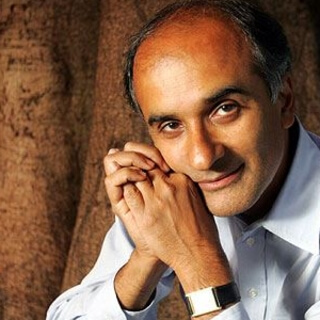
Welcome to Tricycle Talks.
I'm James Shaheen,
Editor and publisher of Tricycle the Buddhist Review.
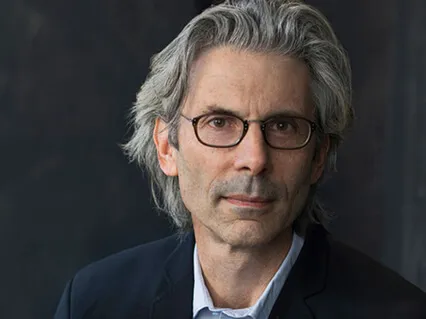
Today we'll be listening to Tricycle contributing editor Amy Gross chat with Buddhist psychotherapist and bestselling author Mark Epstein about his new book,
Advice Not Given,
A Guide to Getting Over Yourself.
Epstein's work has long found itself at the intersection of Buddhism and psychotherapy.
Advice Not Given is in many ways a reinterpretation of Buddhism's eightfold path in the light of therapeutic thought and practice.
At the heart of Epstein's book are reflections on what it means to be human and,
Of course,
Getting over ourselves.
Now let's join Amy and Mark in conversation.
Mark,
It is so great to be here talking with you about this book,
Your seventh in case you haven't been counting.
I'm counting.
You're counting.
It's a book that takes us into therapy sessions with you,
Shows us what's guiding you,
What's honed your intuitions,
Both your Buddhist training and psychotherapy experience.
The book's purpose,
You say,
Is to bridge the gap between psychotherapy and Buddhism.
It's about psychotherapy's purpose,
Yours and your own.
It's built around the eightfold path,
The Buddhist prescription to end suffering,
And you've expanded each fold to feed therapy influences,
Principles,
Expanding what we think of when we think of right view,
Right speech.
You're creating,
I think,
A new mix,
A new balance.
So let's start there and tell us about this title,
Advice Not Given.
The title came before the book.
So I was actually on a meditation retreat after my father had passed away.
And I'm sure there were influences,
But it felt as if out of the blue I had the thought,
Oh,
Advice not given,
Or I have advice I haven't been giving,
Came in some.
And I was sitting at the forest refuge where I've been trying to go every year on,
You know,
Silent retreat.
And my thoughts were reverberating with the title.
And I thought,
Oh,
Okay,
That's the title.
And then I had to find the book after the title.
What I was thinking was that,
Oh,
I've always been very careful about not laying a Buddhist thing on my patients,
You know,
Not wanting to coerce them in any kind of way with my Buddhism.
But maybe there's stuff that would be helpful to them that I've been keeping back a little too much.
So if I were to go ahead and be freer with what I was actually thinking,
What would I say?
That was the germ of the book.
And the subtitle?
The subtitle,
A Guide to Getting Over Yourself,
That came at the end after I had finished the book.
The subtitle was,
The working subtitle was something like notes of a Buddhist psychiatrist or something,
Because notes,
Like a psychiatrist is supposed to keep notes,
But it was also like musical notes,
You know,
Because the way I was thinking about what the book was,
It was sort of a collage of impressions that I was having from my work as a therapist.
I wanted to bring a more mature experience of actually having been a therapist for 30 years.
But thinking about Buddhism the whole time,
Like,
What did I have to say about that?
So that was my working subtitle.
And then when the book was all finished,
I was sitting in my office and I was puzzling over the subtitle and I just very impulsively wrote down a guide to Getting Over Yourself.
And I thought,
Oh,
Either my editor or publisher is going to love it or hate it.
And she loved it,
So it stuck.
So the colloquial expression,
Get Over Yourself,
Sounds like get over your inflated ego.
Now,
That is not at all what you mean,
I think.
Well,
Inflated or deflated.
Yeah.
The book ended up being a lot more about the ego than I knew it was going to when I started writing.
But after having completed the book,
Like a major theme was,
Oh,
That we get bad information about the ego.
The ego is not always your friend.
You can actually get control of your ego.
You can't get rid of it.
That's a sort of mistaken idea.
But you don't have to let it terrorize you.
You don't have to let it drive you totally.
You can start to doubt the ego when it's working against your best interests.
But the ego is nefarious,
Is that the word?
You know,
It's tricky,
The ego.
So it sometimes attaches to an inflated sense or a defensive sense of oneself,
But it can also attach to a deflated one where people are beating themselves up or just feeling bad about themselves.
And the attachment to that we call ego.
And that's as much of a problem.
The attachment to the negative view of oneself.
And also to the overestimation?
And any kind of ideas.
Well,
Ideas are important,
But realistic ideas.
So the ego likes certainty.
And so once it gets a thought in its head or once we get a thought in our head,
We tend to repeat it because we're like looking for some kind of security or stability that our intellect offers us.
And we have a habit of identifying with our thoughts,
Even if they're stupid or wrong or self-defeating.
So once we articulate an idea to ourselves,
We have a hard time unsticking from that articulation.
First of all,
What is the ego?
We talk about it as though it's an it,
But there isn't a box in the brain that's ego.
Yeah.
Freud said the ego was a necessary construction.
So whatever that means,
Like the ego from a psychoanalytic point of view or a psychotherapy point of view,
The ego is that which mediates between inner and outer.
It's the sort of executive function,
You know,
That hyperactive kids don't have supposedly.
It's what helps us regulate our internal drives,
Instincts,
Biology,
And reconcile that with the external demands that our family,
Our schools,
Our culture puts on us.
So it's sort of like the internal regulatory mechanism.
And we think that self,
Don't we?
We don't quite know what the ego is,
As your question makes clear.
So there's a lot of confusion,
Ego,
Self.
You know,
Freud used the word ego,
It just meant I.
The German word he used just meant the I,
Like the capital I,
And then that got translated into English as ego.
But we have some kind of subjective sense inside of us that is always telling us who we are and what we are,
That is involved with that kind of regulation or mediation that the ego comes to represent.
The ego is just a function,
Really.
It's not an entity.
It's much more a mechanism,
You know.
It's more of a verb than a noun.
But we're always looking,
The ego itself is always looking for certainty.
So it reflects on itself and then through our thoughts makes us think that that's who we are kind of thing.
And is the ego getting its information from this border patrol?
Yeah,
The ego is scanning both internally and externally.
But it's rooted in fear and in separation.
The ego is,
You know,
As a young child,
Two-year-old child,
Say,
Comes into self-consciousness,
You know,
When you start to realize that,
Oh,
I'm a person here,
I'm alone here inside myself.
That's the beginning of the ego.
So it's a very immature ego.
But the ego keeps that kind of immaturity.
It doesn't tend,
Unless it's educated,
Which is what psychotherapy can do and what meditation can,
What Buddhism can do,
Is,
You know,
Kind of education of the ego.
Unless it's educated,
It tends to stay in a kind of immature place where it sees itself or it sees the self as basically separate and where it's kind of covering over a sense of insecurity that comes when you realize that there's only one of you and billions of other people trying to get some of what you need kind of thing.
And something permanently two years old,
In a sense?
Something permanently two years old or at least rooted in our two-year-old experience is operating almost independently within us,
You know,
Kind of commenting or,
You know,
In the privacy of your thoughts when you're alone,
When you're going to sleep at night,
When you're in the bathroom,
When you're like worrying about what's going to happen to me,
You know,
That there's an element of ego in all of that.
I think of that as the drone of the internal monologue or for me it's like your own private hell station.
Yeah,
It can be that.
It tends to be repetitive and immature and anxious or defending against all of that.
So it can be the opposite of all of those things,
But I would see that as a defense against the primary anxieties.
You talk a lot about meditation as the good enough mother.
And that seems like a good fit for this insecure,
Frightened,
Defensive child.
Yeah.
Well,
That's been a recurrent theme of mine in all seven of the books,
You know,
As I've tried to reconcile what I've learned from being a therapist with what I've learned from Buddhism,
This idea of meditation or mindfulness as a kind of holding environment for all of the aspects of the self that we're most afraid of or most ashamed of,
That there's a safe place within the mind or it could be in a psychotherapy office or it could be on a meditation cushion or it could be in the arms of a lover or as a child it is the arms of the parent.
I drew a lot from Winnicott who wrote in the 50s who talked about the mother all the time,
But it could be any kind of caregiver,
You know,
But that there's a kind of safety that is created where even the most difficult kinds of feelings can be experienced in a safe enough,
Secure enough way.
And I have felt that if given a chance,
Meditation can resurrect that need.
And,
You know,
I did a whole thing in the trauma book about the Buddha's mother dying when he was a week old and why is that story there?
And maybe it was kind of set up in his life for him to have to find the mother within that he lost without.
And that rings true for me.
So Mark,
This is reminding me,
I don't know if I read it in a book of yours or if you said it,
But I remember you're saying something like therapy can expose the crack in a personality,
But only meditation can heal it.
Well,
I hope I didn't say that because I think fundamentally meditation and psychotherapy don't have to be thought of as different things.
They're just constructions also,
Ways of learning how to let go of various identities that we've become attached to.
The Buddhist stories are great because they show how it could happen anytime.
You know,
You could meditate and meditate for 30 years and nothing happens and then the guy drops the pen on the table,
You know,
Splat and boom.
So that could happen in a psychotherapy session too.
Or the Buddhist stories are often of a teacher saying just the right thing at the right moment to somebody that catches them in their misperception.
And that's just another kind of psychotherapy where the therapist knows you well enough and can see how you're misconstruing something and has the tact to say the right thing at the right moment that releases something.
It brought that up to me in my practice,
Feeling and getting into the world of compassion more rather than it being a concept,
Actual thinking,
This is what he must have meant because the flow of compassion is felt like nothing I've ever felt.
It's like bomb,
You know,
It's the soothing is it's,
It dissolves everything in its path.
There's some kind of beneficent love energy that seems to flow out naturally with the whatever the awareness is that's being cultivated in meditation.
It's sometimes talked about as if it's a separate thing.
But what if it's the same thing,
You know,
Which goes along with what you're describing,
You know,
That you don't have to cultivate compassion by itself,
It comes naturally.
And if you can tap into what that feels like,
Then it displays itself on every object,
Right,
Your own mind and other people,
Right,
Something like that.
Loving awareness,
Loving awareness.
I was struck by the quote from the Dalai Lama,
Ego is our greatest obstacle and greatest hope.
And that again seemed like a startling idea because I do think of ego is what gets me into trouble and the need to defend the need to be right,
The need to be certain,
The pride that you talk about is the hardest emotion probably to deal with.
And then the hope.
So the ego,
There's this possibility of the ego growing up.
Yeah,
Well,
I think the Dalai Lama is always very good about this because he talks about the intellect and the ego is rooted in the intellect.
The Dalai Lama is very,
Very clear about thinking is not the problem.
Thought is not bad.
Meditation is not about emptying the mind and being without thought.
Meditation is about honing your thinking,
Using your intellect,
Using reason to examine those places where we're being actually unreasonable.
And that's all ego.
That's an ego function that could use reason to examine unreasonable thoughts and constructs.
Understanding that freed me up that,
Oh,
I don't have to get rid of my intellect.
I could actually use my intellect in the service of something.
So yes,
That's all ego.
In your own life,
Your Buddhist practice,
Which you got to before you got to therapy and your experiences as a therapist,
Your experience as a person in therapy,
This book,
It has these nuggets of wonderful stories where you come to see that you don't have to maintain what you called once a false front.
And I think most of us,
Most of the time we don't even realize we're maintaining a false front.
We think we're acting properly or appropriately.
And I was struck by the story with Jack.
So you were at a retreat with Joseph Goldstein and Jack Kornfield.
You were driving back with them.
You were feeling quite special to be in the car with them.
Yes.
Well,
This is,
I think,
The first or second retreat that I ever did.
So I was about 21 years old or so.
And just having penetrated what I saw as the inner circle of these people who seemed so mature to me who were about 30 years old.
And they were teaching in Mendocino,
Which was very wild in those days.
Did a whole retreat at an old camp in Mendocino.
And then I got a ride with them back to San Francisco.
And we needed to stop for lunch.
And I was like so excited,
You know,
To be part of this new community.
And I was figuring,
Okay,
It's going to be a vegetarian lunch and so on.
And Jack Kornfield ordered a hamburger.
And I was like,
Oh my god,
You know,
He's a Buddhist teacher and he's ordering a hamburger.
And it stripped away,
You know,
Some ideas that I had about what made a Buddhist teacher a Buddhist teacher.
And I said in the book,
Which I think was true,
Like I didn't even want a hamburger.
But if I wanted one,
I could have one.
What I've always felt grateful for,
What that story was really about,
Is that in getting to know my various teachers who I really looked up to and idealized,
In getting to know them as people,
As friends,
I got to see that,
You know,
However accomplished they were as Buddhists,
As meditators,
They were still themselves.
And,
You know,
They weren't healed of their neuroses.
And one of the things that was refreshing about them was that they weren't putting on false fronts.
You know,
They were just themselves.
And that gave me tremendous freedom from a really early age to,
Okay,
The task is to be me,
Not to be some idealized version of who I think I'm supposed to be.
And that's been very useful,
Especially as a therapist.
Yeah.
The other story about false fronts and fear of being graded and,
Again,
These unconscious assumptions of how we're supposed to be,
Because I don't think we realize the rulebooks we have in our heads.
We just think this is how things should be.
The other story about a teacher who,
Before he was dying,
Behaved in a way that was perhaps disappointing to one of his students.
Yeah.
That story,
I think I deliberately,
At least when I initially was writing,
Paired with the Jack Hornfield hamburger story,
Because it was about stripping away idealized notions of who we're supposed to be.
And that came when I was,
I think,
On my first book tour,
Which was more than 20 years ago now.
And I went to Boulder,
And a very nice young woman picked me up at the airport and drove me to Boulder to the Boulder bookstore.
And on the way there,
She told me how a teacher of hers had come off of a three-year Tibetan Buddhist retreat,
A very accomplished man.
But on the retreat,
He had gotten colon cancer and not known.
He'd come out of the retreat and he was already too sick to get treatment.
And he came and lived with her,
And she took care of him until he passed away.
But she told me the most disturbing thing about all of that was she was with him when he died,
And his last words were,
No,
No,
No,
Help,
Help.
And she was confused and upset because he was an accomplished Buddhist teacher,
But he wasn't dying the way Buddhists are supposed to die,
You know,
Like going gracefully into the light and the bardo and so on.
My immediate reaction was,
Oh,
That's wonderful.
You know,
Like he wasn't hiding his fear.
He was as present with it as he could be,
And he was showing her something about,
We don't know what it's going to be like to die.
And any idea that we have of how it's supposed to be is very likely just to get in our way when it happens.
You lose control of that.
That's the ultimate loss of ego.
And that must be scary.
I bet it's scary.
And I wonder how many people in the backs of their heads fear how they're going to die and that they won't be able to bear it in a way that's going to be nice or easy for those around it or comfortable for them.
Well,
You know,
You were talking at the beginning about the advice not given and where that title came from.
And the other root of the title,
I think,
Was when my father was dying,
Which was eight years ago now,
So probably four or five years before I started working on the book.
My father was a doctor,
A research scientist,
Very accomplished academic scientist who I never had a conversation with about Buddhism or about my spiritual pursuits.
He was very happy that I went to medical school,
Relieved that at least I became a psychiatrist,
You know,
And proud of my writing books and so on.
But we never engaged in a conversation about meditation or what happens after death or any of that stuff.
But he had a malignant brain tumor that started on the non-dominant side of his brain,
The silent part of his brain that didn't affect his cognition.
So he worked as a doctor all the way until he couldn't anymore.
But he got lost driving home from the hospital,
The same route he'd taken for 30 years.
So he knew something was wrong.
But by the time he discovered it,
There was nothing to do about it.
So he knew what was happening.
I was in my office and I called him on the phone because I had had the thought,
You know,
I've never talked to my father about any of this,
But he's going to die.
And maybe there's something in,
You know,
That I've learned from Buddhism that might be helpful.
So that was the advice not given,
You know.
And I had this one conversation with him where I said something like,
You know,
The feeling inside of you that's always been the same from when you were a young man,
You know,
To when you're 40 and 60 and 80,
Like it doesn't really change.
You know you're still you,
But if you try to put your finger on what that feeling is,
It's kind of invisible.
What I understand from my Buddhist stuff is that if you can kind of relax your mind into that sort of invisible space when you're dying,
That that's the thing you can ride out when you're dying.
And he was very amenable.
He was like,
Oh,
Thank you,
Darling.
I'll try.
You know,
That conversation went well.
So I think that was one of the,
Oh,
If I can talk to my father like that,
Maybe I could write it in a book.
You're listening to Amy Gross in conversation with Mark Epstein about his new book,
Advice Not Given,
A guide to getting over yourself.
Tricycle Talks is sponsored by the Tricycle Foundation,
Publisher of Tricycle,
The Buddhist Review.
Subscribe to Tricycle and join a community of people who are interested in broadening their understanding of how Buddhist teachings and meditation can transform their lives.
Your subscription will give you access to our article archive,
As well as ebooks,
Our monthly video Dharma Talk series,
Feature films and discounts on our online courses.
And by the way,
If you'd like to read more by Mark Epstein,
There are plenty of his essays in our online archive.
Get to know us better.
Visit us at tricycle.
Org.
Now let's get back to the conversation.
I'm thinking about pride.
It's not how I think of the last better.
It's usually called conceit,
Thinking you're special one way or the other,
Especially wonderful,
Especially horrible.
And thinking about why it's so resistant.
You tell a story about one of your patients.
I think it's Miranda,
Who is like screaming at you about how unworthy she is.
She just keeps telling you who she is and how she is.
And you're saying,
Oh,
You're showing me is your self hatred,
Which is a wonderful line.
But I'm thinking,
What is the resistance to letting go of these horrible things,
These horrible phantom cells or images of oneself that people hold on tighter than to anything?
Well,
I'll tell you,
I had two therapists.
One was the teacher of the other.
So my first therapist I saw for a long time,
Then he sent me to his teacher,
A wonderful,
Wonderful therapist named Isidore Fromm,
Who was a teacher of Gestalt Therapists.
And one of Isidore's things was,
If you were telling him something good that had happened to you,
But you were kind of hesitating about being proud about it,
He would say something like,
Tell me that again,
But brag about it.
So he would like make you the patient brag to him to be proud.
So I think a lot of that self hatred kind of pride or conceit actually is a reflection of a failure to feel special enough in oneself.
You know,
Like from the Buddhist point of view,
They talk about precious human birth.
What an amazing accomplishment it is just to be in this body,
You know,
With this mind that's capable of self reflection,
You know,
That can accomplish so much with so little.
And that's sort of like ground level psychotherapy.
People come with their self hatred,
With their self loathing,
With their negativity,
With their sense of not being good enough,
With the kind of psychological emptiness,
Not necessarily Buddhist emptiness,
You know,
And with what psychoanalysis is called the basic fault,
You know,
Like some kind of crack,
Like you were saying some kind of,
You know,
What's something wrong inside.
And I think it's traditionally the realm of psychotherapy to try to bolster that or heal that or build that up.
And Buddhism historically never really addressed,
You know,
Early childhood experience and where that might come from and people's psychological negativity,
They talk about it as afflictive emotion or whatever.
But it's under the auspices of psychotherapy that we have to build up that kind of pride.
But I think one of the ways that meditation can work as like that good enough mother is that it makes us examine the repetitive and unconscious self hatred,
Self loathing,
Negativity that's circling inside of us that we're not really questioning.
So I think we can hit it from both sides.
But I think in order to undermine the conceit or the pride that we think about as the last fetter,
We actually have to feel good enough about ourselves in a way that doesn't necessarily go away.
Even with great meditative attainment,
You know,
I think there can be a sense of individual certainty,
Individual pride even that we would call self confidence,
Self esteem.
You know,
There's that famous story of the Dalai Lama sitting around with all the Western psychotherapists and people are start to talk about,
You know,
This one's low self esteem and that one's low self esteem.
And the Dalai Lama was incredulous that all these accomplished Westerners had this thing called low self esteem.
And he went and asked,
You know,
Do you have this?
Do you have this?
And they all said,
Oh,
Yes,
We have this.
And he,
It wasn't even something that was in his experience.
So all those lamas have either have or are pretending to have high self esteem.
I remember at one retreat,
Our Tibetan Buddhist teacher said,
I can't understand this.
And he said,
If anyone can explain this to me,
I would like you to come and you It was me who went And you went and what did you tell him?
I tried to talk to him about about Winnicott and about the intrusive or abandoning parent that when you know,
If the early experience is doesn't give enough room for the child to feel his or her feelings as like acceptable,
That the ego comes in and starts to think of oneself as unacceptable.
And that you know,
That kind of thing.
And he was like,
Oh,
Really?
And in Tibet,
Or in Nepal,
He was saying,
If the child is misbehaving or something,
We just like slap it and make it go sit in the corner for a while.
And yeah,
It was like the whole child book series.
So I wonder,
Hearing Miranda's voice in my head,
Is it possible that we hold on to these ideas?
Because there's a fear that would be nothing if we didn't have these ideas?
Yes,
I think very much so.
Again,
Not to reprise the ego thing too much,
But the ego needs an identity.
And that's an identity.
And the fear is that there's nothing underneath that that's really like emptiness,
Bad emptiness,
Nothing there,
You know,
Just a drain that we're going to go down.
And what's wonderful about Buddhism,
Buddhism knows that's not true.
Buddhism knows the mind is capable of so much,
You know,
That precious human birth is a real thing,
You know,
Enlightenment is possible for everyone.
Buddhism knows that psychoanalysis,
Psychotherapy has been,
You know,
Not so sure,
You know,
Coming around to it,
Maybe.
And I'm remembering in the story of Miranda,
You said underneath was a discovery waiting waiting to happen.
Yeah,
Discovery of her true nature.
Yeah,
Yeah,
Yeah,
Whatever true nature is,
But it has something to do with that compassionate love awareness thing that you were talking about.
So we don't have time to go through each and every of the eightfold paths.
That's what reading is for.
But let's focus first on impermanence.
I'm sorry,
On right view.
Okay,
Let's focus on impermanence,
Which is a central thing for right view.
Yes.
Yeah.
So tell me how like the classic Buddhist teacher would teach what right view is,
And then what you are doing with it.
Well,
I think the classical Buddhist teaching about right view,
They could come at it from a couple of different angles.
I think the the deepest expression of right view is the questioning of the absolute self.
So that immediately gets into all kinds of confusion because we don't know what the self is.
And we don't know what the no self is.
But the best teaching that I've gotten on that comes from Robert Thurman,
Who I've had the good fortune to teach with over the years,
You know,
A little bit every year.
And he talks about his Mongolian Buddhist teacher who he met in New Jersey in 1960 or something,
Saying,
It's not that your self is not real.
Of course,
It's real,
You know,
You have a self and so on.
But the problem with you people,
Sometimes when he tells a story,
It's like the problem with you.
But then when I tell it that way,
He says,
No,
He didn't say that anyway.
So the problem with you guys is you think you're really real.
So right view in its deepest expression is undermining that feeling that we all have of being really real.
And the understanding of right view,
The true understanding is not that we don't exist at all that say falling into the demon cave or something like they call it in Zen,
Because if you're not there at all,
Then what what are you know,
Just confusion,
But that you're willing to question the identities that you hold to in the in the most private thoughts that you have,
You know,
Where you're operating from that place we talked about before of fear and separation.
So if you're not really real,
If you're just like real,
But you're in relationship to a world that you're part of and other people that you care about,
Then your self starts to be experienced as more relational in nature,
Or more relative compared to the absoluteness that you're holding to when you're seeing yourself as completely separate.
I think that's the that's my understanding of,
Of right view from a purely Buddhist perspective.
I didn't want to have to try to explain all of that in the book,
Because it's alienating when you know,
When you're just starting.
So the kind of next level down from that is about impermanence,
Which you were telegraphing already when you asked the question.
And so that's again,
A basic Buddhist thing.
Everything's in flux,
Change is always happening.
Moment to moment,
There's change,
We all know,
We're,
We're not getting younger,
You know,
The body ages,
Death,
Old age,
Infirmity,
Illness,
Separation is part and parcel of experience.
That was like the trauma of everyday life,
We can't get away from it.
And we wish we could.
But right view says,
Of course we wish we could.
That's the thing about no,
No,
No,
Help help,
You know,
In the face of death.
Of course,
That's our habitual instinctive reaction.
But if we educate our minds,
It's possible to experience the change as music,
It's possible to experience it as we're part of a river that's flowing and we can float with it or we can fight against the current.
There's that famous story that I tell all the time.
I didn't tell it in this book.
I think it's the first book I didn't repeat it about the glass being already broken,
You know,
You want to tell the story?
When I was traveling in the early years of my Buddhist exploration with Jack Kornfield and Joseph Goldstein and so on,
We went to Jack Kornfield's monastery in Thailand where he had trained for two years to have a meeting with his teacher named Ajahn Chah.
And there were about 10 of us.
And we had to come up with a question that could get an answer that we could bring back to the West with his,
You know,
Wisdom.
And I can't remember the question but the answer he gave,
We must have asked about what is dukkha,
What is suffering,
What's your understanding of enlightenment,
Something.
He held up his drinking glass.
Do you see this glass?
I love this glass.
It holds the water admirably.
When the light strikes it,
It makes a beautiful,
It diffracts the light beautifully.
When I strike it,
It makes a beautiful sound.
But when the wind knocks it over or my elbow knocks it off the shelf and it falls and breaks,
I say of course,
Because for me the glass is already broken.
But when I know that it's already broken,
Every minute with it is precious.
And it's that last part.
It took me a long time to realize the wisdom is actually in the last part because it's like,
Okay,
The Buddhist,
You know,
The self is already broken,
Everything's going to die.
It's like,
Okay,
Too pessimistic.
But every minute with it is precious.
There's the love,
You know.
I don't think you should ever write a book without that story.
Just put it in a blog.
I'll just use it in every podcast.
I was thinking about impermanence,
About how much suffering is caused by resistance to it,
Fear of it,
Reluctance of buying into acceptance of how things are,
Habits of anticipating,
Catastrophizing,
Writing the story.
One example I had of this was an editor I used to work with,
Very fit Californian in New York,
Striding around the street and she tripped and fell into one of those open doors,
Cellar doors,
And broke her femur.
And she was in the hospital.
And I went to see her.
And the suffering that she was feeling was about this.
It's taking me so long to heal.
And I thought,
According to what?
You know,
Where is it written?
How long it should take?
So just the suffering of uncertainty,
Not knowing.
And the story,
You know.
That you start telling yourself.
The story.
So I'm so interested in stories and I was so interested in what you did with Right Speech,
Which is usually about lying,
Gossip,
Idle talk,
And harsh,
Harsh statements.
But you brought,
You're bringing the speech,
Right Speech,
Into approach how we talk to ourselves.
To ourselves,
Yeah.
Yeah,
The stories we tell ourselves.
You know,
Sharon Salzberg wrote one of her early books called Faith.
She was the most self-revealing that she's ever been in the beginning of that book where she talked about her own upbringing and how she was dressed in her ballerina costume,
You know,
When she was a young girl and sitting with her mother watching their favorite TV show and her mother started to bleed and Sharon had to go call an ambulance and her mother got taken away and she never saw her again.
And then how her father was crazy and came home and left and she was abandoned and the father got put in a mental hospital and she was raised by her grandparents and she just talked about the incredible suffering that was part of her upbringing.
And then the stories that she repeated to herself about what she didn't deserve,
You know,
And what was wrong with her.
And in general in my books I try to use myself as the major case study,
Although a couple of my patients were nice enough to let me use some of the material.
I'm always reluctant to do that.
But I thought since Sharon put it out there so beautifully and she started that book with we all tell ourselves a story and I thought,
Oh yeah,
That's the right speech that I'm interested in.
Not that the more classic right speech of how we talk to each other isn't important but we give ourselves a pass,
You know,
And we don't stop to question the stories that we've grown up with and it's a revelation when we do.
When I can show someone in therapy what that is that they're doing,
It's much more than,
Oh,
I said the right thing,
You know,
I gave the right interpretation or when I try to write it in a book it comes out as too fake,
You know,
But to actually be so engaged with someone that they can see themselves what I'm seeing about the way they're talking to themselves and,
You know,
Really see it,
Then that's a nice moment.
Very nice moment to see a picture of someone just ropes and nooses around a person falling.
Yeah,
Or something just getting loosened,
You know,
And falling.
Lighter.
If you want to use yourself.
.
.
Yeah.
Up to a point.
Yeah,
You talk about yourself building a story about separation as abandonment.
Yeah,
Turning separation into abandonment was sort of my thing,
That I didn't know it was my thing until I first got married and,
You know,
Was more complete unquestioningly in love and happier than I could ever remember having been and then managed to turn that into a problem by kind of attacking or feeling.
.
.
It was both,
The combination of attacking and feeling abandoned when we would just go to sleep at night or if my new wife wasn't like right there the way I wanted her to be for me in that moment,
You know,
I would feel it not just as a disappointment but as a rejection.
And so it's not like I'm completely free of that tendency now but I really know it and I could see the exaggeration and I talk about it in the book.
It took me therapy and meditation and dreams and some kind of confabulation of where that might have all been coming from,
From my early childhood to relax the intensity of it in myself.
But that's been a huge help to keep a marriage together.
Do you think people can begin to see the space between or create the space between what actually just happens and the story?
Yeah,
I think they can.
I think they can.
I think the difficult thing is that the affect,
The feelings that come can be so strong and seem so real,
You know,
And so important that there can be a real insistent,
An internal insistence like this is true,
This is right,
You have to acknowledge this.
And I see that in couples a lot and I know it in myself.
You know,
Like I'm not going to let go until you acknowledge the truth of my feelings.
I tell a story in the book like one of the first married people I ever knew who's whittled the Dharma down to one phrase which was letting go even though you know you're right.
That was in the context of him talking about his marriage,
You know,
The key to a successful marriage,
Letting go even though you know you're right.
But that knowing you're right is like that,
The affect,
The emotion,
Being so,
Seeming so real,
Like really real,
You know,
And why won't you acknowledge it,
You know.
And then just in an instant you can drop that,
Like you really can.
And I think a lot in the psychotherapy world what's become very popular is dialectical behavioral therapy,
DBT,
Which was started by a woman,
Marsha Linehan,
Who had Buddhist training but also was a behaviorist and a psychotherapist.
And she understood that a lot of the most disturbed,
Seemingly emotional patients who got into trouble because they're,
You know,
They felt stuff so strongly they had to cut themselves or starve themselves or whatever,
They actually weren't aware of their emotions as emotions,
You know.
They were taken over by intense feelings that made them act in certain ways but they didn't know,
They couldn't,
They weren't aware of the feelings as feelings.
And that's what dialectical behavioral therapy is.
It's like she made note cards like mad,
Sad,
Glad,
Like,
And then trained people to dehabituate themselves,
To desensitize themselves to the feelings,
To get to know them,
Just as we do in meditation.
So you know,
That's where it's helpful.
So you came up with another piece of advice for a woman who was furious that the house wasn't her partner,
Her husband.
Yeah,
Whoever he is.
Would cook and shop and everything but she'd come home and the house was messy.
And if he cared about her,
So there's a story,
If he cared about her,
It would only take 20 seconds,
Why couldn't he do that?
Exactly.
And then your advice given.
If it only takes 20 seconds,
Why don't you just do it and have a glass of wine or something,
You know,
Instead of making that the definition of a good relationship.
Because every time,
You know,
When she would get locked into that,
Then he would start in with you're not my mother.
And then she would go to well,
I'm not your maid.
And then,
You know,
She would end up in the bathroom smoking a cigarette or he would have to leave or,
You know,
It's like turned into a big fight.
So rather than setting up that condition,
You know,
Of this means you love me,
If you'll do that.
But that was very my just saying at that one time wasn't,
You know,
Like,
Letting go even though you know,
You're right.
It's not so easy,
Except it's very simple,
But it's not so easy.
It's so easy.
You know,
Sometimes I think when I think how important it is to be right,
How humiliating it is to be wrong,
That this whole,
You know,
Kind of pick up stick construction of me.
Yeah,
You know,
Well,
And on the other side of it,
It's not I don't mean to be promoting,
You know,
Like,
Oh,
Let him bully you.
Or,
Yeah,
But you know,
One,
There are plenty of people who are saints in their hearts and are allowing too much abuse,
You know,
Don't have the pride or the confidence or the self esteem or the strength or haven't figured out how to marshal their aggression in order to stand up for themselves.
And that's equally important.
So you define right,
What you mean by what right view,
Right?
It's all about balance.
Yeah.
So none of these are absolutes.
Well,
I tried not to make it right or wrong.
When we hear right,
We think wrong,
And then there's a right way to be but it's actually,
You know,
Like,
Just pay attention.
What I'm trying to say is that,
You know,
When we learn meditation,
We think it's just about paying attention,
We close our eyes and pay attention to our inner thoughts.
But we can pay attention in the same way to,
You know,
Our outward speech,
Our inward speech,
Our livelihood,
Our relationship to money,
You know,
Who's cleaning up when we come home,
How we're thinking about politics.
I mean,
Hopefully you can apply this everywhere and use it to stay balanced in a turbulent time.
So I see we're running out of time.
And I have something I'm going to ask you to read.
It's the last,
Slightly edited last page of your book,
Which I just loved.
And I thought we would give listeners the pleasure of that.
So if you would.
I would.
After 40 plus years,
I can say for sure that I am not cured,
Nor am I enlightened.
People continue to complain at times about my coldness,
My aloofness,
And my irritability.
I still have to deal with the various kinds of suffering that plague me,
With my own tensions and anxieties,
With my own need to be right and my own need to be liked,
Issues that have been with me for as long as I can remember.
And now in my 60s there are things to face I've never experienced previously.
But I do have something I did not have before.
Now I have the means,
Thanks to both Buddhism and psychotherapy,
To face whatever life throws at me.
While in many ways I have remained the same,
My personality as much as it ever was,
I am not the prisoner of my ego that I once was.
When the most difficult aspects of my character surface,
I know there is something I can do to not be at their mercy.
While my three-year-old,
Seven-year-old,
Or twelve-year-old selves may not have given up the ghost,
I do not have to be their helpless victim.
Years of engagement with both psychiatry and Buddhism have shown me where I have control over my own mind and where I do not.
And I do not have to be cured to be hopeful.
It is this optimism that I most want to make possible for my patients.
What I try to convey to my patients is that they can meet the challenges life throws at them by changing the way they relate to them.
This is advice I now feel free to offer.
The goal is to meet the challenges with equanimity,
Not to make them go away.
When Suzuki Roshi said not to be bothered by the waves,
Fluctuations,
He meant it.
And one thing we can say for sure,
Life gives us endless opportunity to practice.
Mostly we fail.
Who can say they are not bothered by anything really?
But when we make the effort,
The results can be astonishing.
In an insecure world,
We can become our own refuge.
Our egos do not have to have the last word.
Thank you,
Mark.
It's been a joy to talk with you.
I have a good friend who always,
When he looks at a book,
He looks at the last word in the book to see what it is.
So I was writing this for him,
Making last word the last words.
I'm sure he's grateful and I'm grateful too.
I wanted you to know that.
Thank you.
Thanks everyone.
You've been listening to Triscle contributing editor,
Amy Gross,
Speak with Mark Epstein about his new book,
Advice Not Given,
A guide to getting over yourself.
If you've got feedback,
We'd love to hear from you.
Write to feedback at triscle.
Org.
Triscle Talks is produced at Argo Studios in New York City by Paul Ruist.
This is James Shaheen.
Thank you for listening to Triscle Talks.