Just sensing the body at rest here with the feet on the floor.
Attention to the body as it's sitting in the chair.
Just feeling the weight of the body.
Those points of contact of the body in the chair.
And conscious of the legs as they make contact with the floor and then sensing down through the floor,
Down through this structure to the earth.
Feeling the planted feet on the floor,
You're reaching down and feeling contact with the earth itself,
That solidity under your feet.
This firm foundation in the soil stabilized,
Held in place by the rest of the earth.
And feeling into that connection between where the body ends and the earth is supporting you.
The earth as your firm point of contact.
And the earth down through the earth is planet that's moving through space right now.
And feeling too as you touch the earth,
You can feel how the earth meets you.
That the earth is made of the same elements as you,
The carbon,
The nitrogen,
The oxygen that we're drawing with our breath and releasing.
Getting thanks for this air that gives our body life and brings us back to life with each in-breath,
Each out-breath,
This never-ending cycle of breath from our first breath to our last breath.
This incredible gift of life that's freely given to us in every moment from the earth,
From the air,
Just pausing to offer gratitude.
How this earth sustains us,
Gives us everything we need to sustain our life.
Noticing the flow of the breath entering the body,
Moving through the nose,
Down into the lungs as the chest rises,
And then noticing that gentle movement of the breath as it's released and sending that carbon dioxide back to the plants and the trees that exchange it for the oxygen we breathe.
And all day long,
This exchange between us,
The plants,
The trees,
This mutual exchange,
Sustaining one another.
So just offering our gratitude,
Our thanks for this earth.
Supporting our feet as we walk upon it.
Just thinking about also the water that faces the,
Occupies the face of the earth,
The water that's used to cleanse us,
To refresh us,
Without which we could not live.
Maybe even imagining a body of water that you know,
It's a lake or the sea,
A river,
That flowing source of life to us,
To all plants,
Another gift of the earth that's freely given every day.
And conscious of the trees on this earth,
The families of trees,
Each with their use that provide shelter,
Shade,
Their fruits,
The beauty of the trees and the vast field of plant life,
Their fruits providing us our delicious food.
So gathering our minds together to,
Again,
Offer gratitude and greetings to all of this natural goodness of our earth.
The animal life,
Our friends and companions,
All those animals living in the deep forests,
They teach us so many things about life.
And together,
The earth giving us everything needed for us.
It's a miracle every day of being able to be here and to have this enormous,
Incredible gift of life sustained by the earth and through all generations,
Each generation caring for its newborns,
Nurturing,
Protecting them,
And then passing the blessing of life to those who follow.
Maybe recalling for yourself one place in nature which holds special meaning for you.
Could be in a forest or by a lake,
In the mountains,
Just one place that's special to you.
And just notice what happens in your heart when you return to this place,
The qualities of your heart,
Gratitude or love that you extend back to nature.
So we'll just relax back into this vast space that holds us for a few minutes and just allow your reflection to deepen.
Or if the meditation takes you elsewhere,
Just follow it wherever it goes.
So we'll just rest quietly for a few minutes together.
And if you find the mind wanders as it naturally will,
You can just reestablish that contact between the body and the chair and your feet to the floor and the floor down to the earth,
Regrounding yourself.
Nothing complicated about it,
Just feeling that very simple,
Direct connection.
And now in your own time,
You can come gently back.
As you're ready,
You can open the eyes,
Welcome in the whole visual field.
In 1969,
A remarkable senator from Wisconsin,
Gaylord Nelson was returning home from a trip to California where he had witnessed a major oil spill that had left miles and miles of beach covered in tar near the coast of Santa Barbara.
And he also witnessed at the same time,
Hundreds of people who had come to volunteer to help in the cleanup of the shoreline.
He was coming back on an airplane and he was reading about the teach-ins that were occurring across the United States about the Vietnam War at college campuses.
And it occurred to him,
Why can't we also have teach-ins about the earth and all that's living on it?
So it was that the next year on April 22nd,
1970,
He inaugurated the first Earth Day with this proclamation.
Our goal is not just an environment of clean air and clean water and scenic beauty,
While forgetting about the worst environments in America.
Our goal is an environment of decency,
Equality,
Mutual respect of all beings and all other living creatures.
Our goal is a decent environment in its broadest sense and it will require a long sustained moral,
Political,
And ethical commitment far beyond any commitment ever made by any society in the history of humankind.
On that day in 1970,
20 million people gathered across the United States.
At the time,
It was a 10th of the country's population and they gathered at 2000 college campuses,
At 10,
000 secondary and elementary schools and hundreds of other communities.
So to prepare to celebrate the 56th Earth Day,
This Wednesday,
April 22nd,
I'd like to spend some time with you reflecting on our connection to this earth and all of the beings on it.
One of the Artemis II astronauts,
Recently returned to earth,
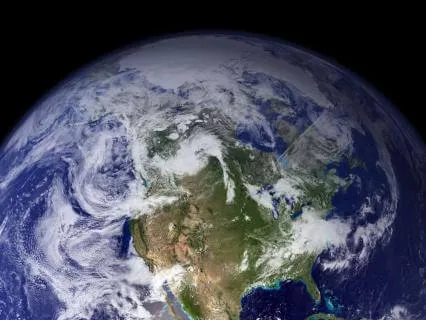
Remarked on being in this desolate space outside the earth's atmosphere and passing the earth to the dark side of the planet where all that could be seen was this corona of light around the sphere of the earth.
And there,
Said this,
That on the dark side of the earth,
You actually see this very thin green line encircling the earth that shows you where the atmosphere is.
And what you realize is that every single person that you know is sustained and inside of this thin green line,
Everything else above it is completely inhospitable.
And there you don't see borders,
You don't see religious lines,
You don't see political boundaries.
One of the Apollo astronauts,
Many years before,
Said this,
The thing that really surprised me when the earth appeared before me was an air of fragility.
I had a sense that it's tiny,
It's beautiful,
It's home and it's fragile.
And then finally this from a scientist on the International Space Station,
Who said,
When you are up in space and you can see back to earth,
Your eyes see nothing but the beauty of the earth.
Everyone who sees it cries.
It's heart-stopping,
It's soul-pounding,
It's breathtaking.
Another data point for you on a different perspective of this place,
Our place in the world.
Some years ago,
A good friend from Malawi in Southern Africa was traveling home to see his family and I convinced him that I was gonna go with him to spend some time with him in his village and also just to see the country.
And as part of our travels,
We also visited a large animal park and there were elephants and hippos and antelope,
Wild boar,
Huge variety of birds.
Walking out to the tent-like structure there where we would spend the night,
Enormous elephant appeared in front of us,
Maybe just 50 or 60 feet away,
Walking on the path in front of us.
And I felt for the first time in my life that I and all other humans were just guests here,
That this land actually belonged to the animals and the birds,
It was theirs and not mine.
My Malawian friend commented to me also when we were back in his village that at night you could often hear the sounds of the lions and this was not frightening.
In fact,
He just said it was a fact of life that they were sharing this same terrain.
You respected them and gave them whatever space they needed and they did the same with you because you were all living on this land together.
All of this is very different from my normal experience growing up.
I grew up entirely in the city.
I didn't even go camping.
My mother felt strongly that we should not have pets.
She liked to say that one of the earliest and greatest achievements of civilization was our ability to keep the animals outside.
And like most city dwellers today,
I get on the metro train in the morning.
I have,
As everyone does,
Their own personal space.
It's a little bubble surrounding me.
I get to work.
I have my own personal office that belongs to me and at home I have my personal space inside my house and my front yard,
My backyard,
And they're fenced and everything belongs to me and those who feel maybe exceptionally witty or interesting might feel like they have something to offer this world but for me,
You can feel very alone just being this me there inside that bubble.
In Buddhism,
There are three poisons.
They're called greed,
Hatred,
And delusion.
These are the negative energies in life.
They're the root of all suffering too so that's suffering just on a personal level and on a level of relationships but also in a level of society or the larger world.
We still get the Washington Post delivered to our house,
The hard copy,
And sometimes I open it in the morning and I just categorize the headlines.
You know,
There's the greed headlines,
There's the greed section,
There is the hatred section,
The delusion section.
That's what the entire front page is filled with and delusion in some ways is the biggest one.
This is where the sense of separation sinks in.
The delusion that I am this little separate self that I'm not connected to anything else.
And I really like this idea of delusion,
This concept,
Because what it says is that it's just confusion or it's just ignorance of really the truth of who we are.
That this truth of interconnection is much stronger than any sense of separation.
That we are in some ways already harmonized within the structure of the world and that this truth of who we are is self-reinforcing even if obviously at times we can become completely deluded that you know,
You have some sense deep in your bones of how true this sense of interconnectedness really is that in trying to get back there too,
You're not fighting one idea,
Idea of interconnectedness against the idea of separation or one opinion against another,
One ideology against another.
That this delusion is not the truth and that gives you a certain wind against your back to relax your grip and then start to see this connection everywhere.
You're not learning something new.
So you're remembering something that has always been true that you just somehow forgot.
This word mindfulness that we use so often is the translation of a word sati.
The translation mindfulness is in some ways a throwback.
It's a Victorian English term to try to capture this concept of sati.
Another translation that might be more accurate or at least gives you another flavor of what the meaning,
The original meaning of this word is,
Is remembering.
So we're remembering who we truly are.
So this is a good place to start.
Who are we really?
This is one of the keys to unlocking this sense of interconnection.
And a very powerful form of meditation which we've tried here before together is something called meditative inquiry.
You begin with a very simple question,
A spiritual inquiry,
And you just drop that inquiry down and see what happens.
It's not a situation where you're looking for a discursive answer to the question or the right answer or a philosophical inquiry where you're having your mind kind of chew on that question.
But it's really a question to explore what happens inside when you ask it.
And perhaps the question that has been most often used is this very simple question or who or what am I?
And we can just try it for a moment.
Just let that question drop down.
It's separate from any identity we have as young or old,
What we do,
Our opinions,
Our family,
All of our experiences.
Most fundamentally,
Who or what am I?
What is this basic experience of aliveness or just the simple experience of being?
It's not a meditative experience.
It's not a thought.
Who or what am I?
It can be confounding.
It's hard to talk about in isolation of thoughts.
It's not the content of experience but the frame or the context.
I'll offer another practice to try.
You can take your hand in front of you and focus on your palm.
Just focus attention there for a moment.
And then remove your palm,
Move your palm away.
Just feel what it's like.
You feel into this open space that's here instead of that focus of attention.
We can try it again.
So you place your palm,
You have a foot or 18 inches away and focus now directly on your palm.
Let your attention rest there and then remove your hand just feel into this open space here.
What is that experience of freedom or spaciousness?
And one more,
We'll try one more practice.
So take your attention,
Throw it into the corner of the room and have it look back at you.
Have a sense of this awareness that's not a thing that's located behind your eyes and moves out to attach to objects.
It's something that's out there and in here at the same time.
And part of some sort of whole.
So once more,
Let's try it again.
Throw your awareness into the corner of the room and have it look back at you.
Feel that sense of being included within the awareness.
That's a very alive space.
It's an interconnected space.
Space that's inside and outside at the same time.
And it's a field in which everything's happening right now.
This is part of the delusion,
This mistake and in feeling like the experience of attention where we fix our attention on an object,
Just one object of consciousness is really the nature of consciousness itself.
Instead of feeling the true nature of experience is this realization that consciousness is something that's all around and the difference between shining a flashlight from inside you out to make an object visible outside you to the notion of stepping out in the midday sun and having the light fill everywhere.
And the most obvious conclusion from all of this is that this consciousness is bigger than this little sense of me,
This little bubble,
That's me.
And that in focusing from the head onto a single object is really narrowing this consciousness down.
Not that that's not important or absolutely necessary really in life,
But that it's just one part of consciousness.
In fact,
Just one small part.
There's a wonderful book by Michael Pollan,
A World Appears,
It's on the bestseller list now about consciousness and I recommend the book to you if you're interested.
Entire book just trying to delve into sometimes what's called the hard problem of consciousness of trying to find words and concepts to capture this thing,
This somewhat mysterious thing called consciousness that we were just playing with a moment ago.
In the book,
There's many interviews that he does including with Matthew Ricard,
A French scientist who's turned a Buddhist monk and has been for decades one of the translators for the Dalai Lama.
And here in that interview it said,
In a world characterized by impermanence,
We assign qualities of permanence and autonomy to the self in the fervent,
Futile hopes that this bubble of ego will protect us from adversity,
Uncertainty,
Change.
If we believe there is an essence of my being that is autonomous,
Permanent,
Then what am I going to do?
I have to protect it,
I have to please it.
And so now attraction and repulsion set in and that is when I suffer.
A second key I'll offer to unlocking this interconnection which is the experience of the body that the only experience that we ever have of being alive or this is just fundamental sense of awareness or consciousness is an experience that's incarnate in this body.
It's the only experience we ever have is inside this body that the body itself receives this experience of the world.
There's interesting work being done now by neuroscientists using MRIs of long-term meditators and they have the long-term meditator go inside the MRI machine,
They have them all hooked up.
They're looking for different areas of the brain that light up as different things happen and the instruction to the meditators is just to quiet their mind and then they have a button to press every time they feel a thought arising within the mind.
And so the MRI then will track the areas of the brain that light up every time there's a thought that occurs.
So they're matching these two things.
The very interesting thing about this is that the area of the brain that lights up actually lights up before the meditator presses the button and then it is a period of three seconds between when they see that on the MRI and the meditator actually registers a thought.
So what does that mean?
And just to say three seconds in neuroscience is an eternity,
So what does that mean?
That means that the thought is experienced first in the body before it's registered in the mind.
And this is the same as prior research that's been done about anger and fear,
Other emotions,
The first manifest as feelings in the body and then the mind interprets those feelings to know that there is anger or there is fear.
And I'll say for me,
Working as I do as a lawyer,
I noticed this,
Started to notice this a few years ago that I could be reading a very technical legal brief and I'm reading along and everything is making sense and there's a certain experience in the body of everything making sense,
There being a sense of ease,
Settledness and then I'll come upon something that doesn't quite make sense and I experience it first in the mind,
I feel it first in the body,
So it's some subtlety experience of just unease and I'll go back and read it again and then unease and then I'll take that experience as a guide for the mind then to work on what's said on the page to try to figure out why is that not making sense or there's something that is not connecting in the argument itself and then slowly that'll kind of come into focus or the other example that we all know is a gut feeling,
You have a feeling,
Something is not right,
It's often hard to articulate first what that is and then slowly you start to realize or articulate with your mind what that is but first primarily experience in the body,
So this just reverses completely the sense that we're just a kind of a thought factory up in the head and gives us a sense that no,
No,
Actually we're a body that is experiencing life with attendant thoughts that follow that experience.
Here's a third key for unlocking this interconnection which is this,
Where we started today,
This deep connection with all of nature.
You go back through human history,
You think of what the default is for societal experience,
It's atomism,
That nature is alive,
That all living things and not living things are alive in some way.
I spent a few years in southern Mexico and when I would go out in the midday sun,
You could feel the power of that sun,
It had the power of life,
Also had the power of destruction or death,
It was so powerful and you can understand why people would believe that this was a living thing,
A god of some kind or at night there was no electric light,
There were no radios,
No televisions and so you would see just the complete starry sky,
There were children who sometimes on a clear night would put a blanket out on the dirt road,
There were no vehicles at night and just lie there and just watch the heavens with the same sense of wonder that this was a living being.
And I used to lie there at night sometimes with them and they would talk about the stars.
The Buddha in the first foundation of mindfulness starts with the body and with the awareness of the breath where all meditators are accustomed to or familiar with mindfulness of the breath but from there he continued and the next is mindfulness of the body whether it's lying down,
Sitting,
Standing,
Walking and then after that,
Mindfulness of natural elements.
So this connection to these natural elements that are inside and outside the body,
Earth,
Sense of hardness or solidity or softness,
Water,
Cohesion,
Moisture,
Fire,
Temperature,
Heat,
Cold or air,
Motion,
Pressure,
Buoyancy and then to meditate on these four elements they're not strictly as a sense of anatomy so much,
Not as a metaphor even but the realization that we are made of nature,
That we are one.
The astronomer Carl Sagan had this famous saying that we are made of star stuff and he was speaking again not as a metaphor,
He was talking about these chemical elements of the body that he reminded us were forged from stars that there's the oxygen we breathe,
The carbon in our body,
Iron in our body that was first synthesized in stellar interiors and those then were scattered across the entire universe by stellar winds or supernova explosions billions of years ago that this is us that we are made of star stuff and then our job is really just to relax,
To remember,
To drop the delusion and realize this interconnectedness.
This again from Carl Sagan,
The cosmos is within us,
We are a way for the universe to know itself.
It's not a individual confronting what is happening in the world that we are connected to this larger sphere of life and just the miracle of it all the Tibetans talk about this precious human birth,
They talk about of all of the incarnations that's possible for a being that this is a just very rare precious thing to experience this human incarnation.
They talk about the improbability of this among all incarnations is as likely as a blind turtle that's traveling throughout the sea and there's one yoke,
Little yoke that's floating on the surface of the sea and the likelihood of that blind turtle surfacing and having its head come directly within that little yoke on the surface of the sea.
But also from scientists,
This evolutionary perspective of coming to grips with what is the probability of human evolution that they're just the sheer number of coincidental genetic environmental factors that come together to have created humans and they say that there's a near zero probability that this would have happened and here we are.
Albert Einstein said,
A human being is part of the whole called by us universe a part limited in time and space.
Humans experience themselves and their thoughts and feelings as something separate from the rest,
A kind of optical delusion of consciousness.
This delusion is a kind of prison for us,
Restricting us to our personal desires and to affection for just a few persons nearest to us.
Our task,
However,
Must be to free ourselves from this prison by widening our circle of compassion to embrace all living creatures and the whole of nature and its beauty.
Nobody is able to achieve this completely but the strivings for such achievement is the foundation of our security.
And Rilke who said,
I live my life in widening circles that reach out across the world.
I may not complete this last one but I will give myself to it.
This connection with nature which is not a problem to be solved so much that it's just this mystery,
This experience that we come to with a sense of awe,
Amazement.
And I'll conclude with these five vows of Joanna Macy who I've spoken up before in these meetings.
Wonderful meditation teacher,
Systems thinker,
Environmental activist.
This is part of what she calls the work to reconnect ourselves and all of nature.
So her vows,
She said,
I vow to myself and to each of you to commit myself daily to the healing of our world and the welfare of all beings.
To live on earth more lightly,
And less violently in the food,
Products and energy I consume.
To draw strength and guidance from the living earth,
The ancestors,
The future generations,
And my siblings and kin of all species.
To support others in their work for the world and to ask for the help when I need it.
To pursue a daily practice that clarifies my mind,
Strengthens my heart and supports me in observing these vows.
And for this final meditation,
Using some of the words from Joanna Macy,
You can close your eyes or just find a neutral place to cast your gaze.
And you could ask yourself this question about what would it look like if this work that reconnects were wildly successful?
If there were a fundamental shift in consciousness regarding how we live on this earth and with each other,
Can we imagine what a different world would look like?
Feel within the body,
Feel the feet on the floor,
Feel the earth supporting us.
And then zoom out into the world,
Above the oceans and continents,
Viewing this world from space and then coming back to your home.
What does it feel like to wake up in the morning in this different world?
What food would you be eating?
Who lives with you and around you?
How do you interrelate?
What does your neighborhood look like?
How do children and elders relate?
And what kind of work do you do?
Life-sustaining,
Just.
And how does it feel to do this work?
How do you work together?
What's your place and role in this community?
And what does creativity and celebration look like for this new community?
What makes it beautiful?
How do you enjoy each other's company?
Then moving to the broader community,
Your city,
Your state,
How do people relate to one another here?
How do they interact?
How are their needs met for food,
Clothing,
Transportation?
How do people of different races and ages,
Genders,
Abilities,
How are they treated?
How do people relate to nature,
To plants,
Soils,
Water?
How do others justly and sustainably meet their needs?
How do people justly and sustainably meet their needs and resolve conflicts?
And then zoom out once more.
How do you know of and think about people beyond the borders of this country?
How does it feel to live in this world?
What do the people of this world regard as progress?
And as you open your eyes,
How do you feel after this journey?