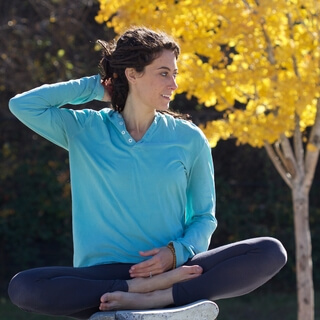
This meditation is an introduction to choiceless awareness.
Whereas breath and body scan meditations help focus our mind and our attention on a single point of awareness,
Be it the breath or a specific body part.
Choiceless awareness allows us to open to the expansiveness,
The spaciousness of awareness by bringing our attention to the whole experience of the present moment.
From breath to body sensations,
The soundscape,
Even an awareness of the mind.
Choiceless awareness grants permission to take in the whole of our experience without judgment or attachment,
Without I like this or I don't like that.
And it gives space for understanding of the changing experience of each moment.
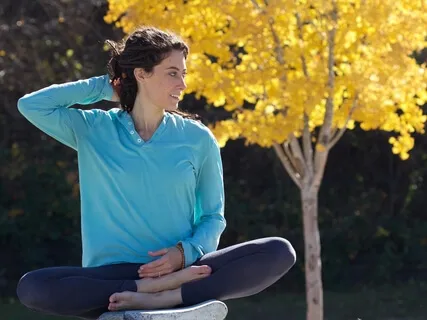
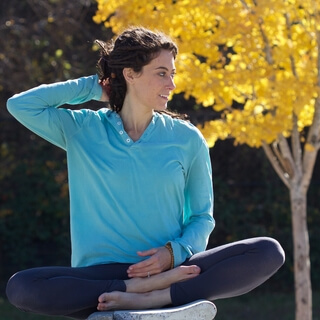
So we'll begin this meditation by coming into a comfortable seat,
Either in a chair or on a meditation cushion,
But allowing the body to be alert and erect,
Relaxed but aware.
And we'll start our meditation with the sound of three bells,
Allowing the sound of the bells to bring us here into this present moment.
We'll begin by taking a deep breath in through the nose,
Feeling the body rise and expand on the inhale and relax gently into your own space on the exhale.
It can often be helpful in our meditations to come into the feeling of the body in our seated posture,
Noticing the places the body makes contact with the floor,
With the chair,
Or if the legs are crossed where those points of contact occur between the legs,
The hands.
Noticing what it feels like to be here right now.
As we sit,
We give the body permission to have mass to take up space.
Feeling the support of the chair or the ground beneath us.
See if you can allow the body to relax just a little more.
Noticing if there's any places that we're still holding tension,
Knowing that you're fully supported,
Just letting that go.
We'll start by beginning to bring our awareness into the feet,
Noticing the sensations in the feet,
Perhaps the pressure of the ground on the bottoms of the feet or the feet pressing into one another in the legs,
If the legs are crossed.
Expanding our awareness from the feet to include the entire lower half of the body,
The shins and the calves,
The knees of both the left and right leg,
The thighs,
The hips,
The buttocks.
Just taking a moment to notice what's here right now.
Perhaps you can notice pressure,
A sense of heat or cold,
A tingling perhaps as the feet begin to fall asleep.
Just noticing,
Meaning inquisitive about our own experience.
Leaving that lower portion of the body behind,
We'll bring awareness into the torso,
The neck and the head.
Coming first into the pelvis,
The belly,
The organs of digestion and reproduction,
Noticing the sensations of breathing,
Rise and fall of the belly and chest.
Perhaps again there's a pressure here as the middle of the back makes contact with the chair,
Noticing the weight of the hands on the legs or as they make contact with one another.
Just taking a moment to notice if we're still holding tension here in the shoulders.
Just gently allowing and letting that go.
If the mind has begun to wander,
That's okay.
It's a part of our normal human experience.
Just acknowledging that,
Acknowledging as the thoughts arise and making the skillful choice to come back,
Come back to the breath,
That sensation of breathing,
Feeling as the air enters the nostrils,
Allowing the breath to be your connection point to this moment.
It doesn't matter if we come back a thousand times in one meditation.
Noticing that we've drifted is mindfulness in action.
Just noticing and making the choice to come back.
Feeling that full body experience of sensation from the crown of the head all the way to the tips of the toes.
Notice the expansiveness of that awareness.
Becoming aware even that we can know both the experience of breathing and the sensations in the body at the same time.
Letting the breath come and go as it pleases.
Noticing the changing sensations in the body.
Perhaps sensations of discomfort or ease.
You may even notice that as the body calms,
The mind begins to calm as well.
We'll take that expansive spacious awareness,
Begin to bring into the forefront of awareness the soundscape.
Noticing both the sounds that are close and far away,
Things that are loud and prevalent and the ones that are quiet and distant.
Remembering the impersonal nature of these sounds.
We tend to think sounds and other experiences are directed at us.
Just noticing how our awareness is part of the soundscape.
Relaxing that judgment,
That attachment to the sounds.
Noticing like sensation and like the breath,
How the sounds come and go.
And again,
If you've noticed the mind has wandered into thought,
Into the past or the future.
To that thing we forgot to get at the grocery store or planning our to-do list for this afternoon.
Just letting those go and coming back to right now.
Coming back to the breath.
It can be incredibly useful to narrow our awareness,
To focus on the breath when we come back.
And then gently allowing the awareness to expand to the full present moment,
Back into the breath and sensations in the body from the feet to the crown of the head.
To include the soundscape around us.
Becoming fully immersed in this vessel of sensation that we call our bodies and our minds.
Allowing our awareness to include the mind itself.
Noticing if there are thoughts or emotions.
Noticing if there's a general sense of agitation or ease and comfort.
Whether we're judging ourselves for the quality of this meditation.
Even that can be known.
Resting here in this spaciousness of right now.
Of this breath.
Of that sound.
The arising thought.
The tingling in the body.
And how each thing comes and goes.
Without personalizing.
Without attaching.
Without judging.
Just resting.
With the playful wonder of what's here right now.
Resting.