We curate our reputations on social media present to people only the level interesting funny parts of ourselves and this doesn't lead to any form of real connection.
Welcome to The One You Feed.
Throughout time great thinkers have recognized the importance of the thoughts we have.
Quotes like garbage in,
Garbage out or you are what you think ring true.
And yet for many of us our thoughts don't strengthen or empower us.
We tend toward negativity,
Self-pity,
Jealousy or fear.
We see what we don't have instead of what we do.
We think things that hold us back and dampen our spirit.
But it's not just about thinking.
Our actions matter.
It takes conscious,
Consistent and creative effort to make a life worth living.
This podcast is about how other people keep themselves moving in the right direction.
How they feed their good wolf.
Thanks for joining us.
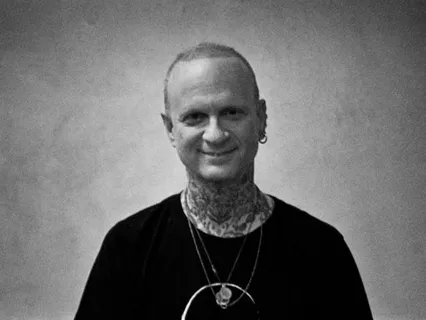
Our guest on this episode is Josh Korda,
The guiding teacher of Dharma punks in New York City and a fully empowered Dharma teacher in the Against the Stream lineage.
Josh has led online and residential retreats for Tricycle and Lion's Roar magazines and is also widely known for his podcast which has over 1.
4 million downloads.
He's also written numerous articles on insight meditation for Tricycle,
Lion's Roar,
Buddha Dharma and Huffington Post.
His new book is Unsubscribe,
Opt Out of Delusion,
Tune Into Truth.
Can you think of a time in your life when you've been helped along,
Supported or encouraged?
If so,
This is a time when you can choose to pay it forward.
A week ago,
I quit my day job to focus on the one you feed full time.
You might think since I chose to leave my job that the show generates enough income for me to live on,
But that's not quite the case yet.
Friends,
I am asking for your support today.
But you're not just supporting me.
You're actually furthering a tool that's helping thousands of people feed their good wolf and thereby making this world just a little bit better.
So if you've ever considered supporting the show via a monthly donation,
Please do so today.
Become a supporter at OneYouFeed.
Net slash support.
Thank you from the bottom of my heart.
And here's the episode with Josh Korda.
Hi,
Josh.
Welcome to the show.
Thanks for having me.
I'm happy to have you on and get a chance to talk about your new book Unsubscribe.
But before we get to that,
Let's start like we always do with the parable.
There's a grandfather who's talking with his grandson.
He says,
In life,
There are two wolves inside of us that are always at battle.
One is a good wolf,
Which represents things like kindness and bravery and love.
And the other is a bad wolf,
Which represents things like greed and hatred and fear.
And the grandson stops and thinks about it for a second and looks up at his grandfather and says,
Well,
Grandfather,
Which one wins?
And the grandfather says,
The one you feed.
So I'd like to start off by asking you what that parable means to you in your life and in the work that you do.
Well,
Obviously,
I've heard the two wolves analogy before.
It always strikes me as a bit of a Manichaean or,
You know,
Black or white parable in and of itself because it posits that there is something in us.
Some of our emotions are bad or that have to not be fed.
And that we only can feed what we consider to be the good parts of ourselves,
Which I gather would be the altruism,
The compassion,
The love,
The joy parts.
But in fact,
I found that in my work,
Which involves Buddhist chaplaincy,
You know,
Buddhist teaching,
That very often acceptance,
Self-compassion is also about learning to love and give attention to those parts of us that we might deem to be unacceptable.
So I guess I would come down to you try to feed both,
But not be driven by the part of oneself that is always lustful,
Thirsty,
Angry,
Frightened,
Which are natural emotions,
But you will learn to harness them in a skillful way.
So in life,
We're feeding them in ways that are both that are skillful.
I hope that made some kind of sense.
Absolutely.
Yeah.
Yep.
Now,
I think,
You know,
Lots of people pick up on that sort of black and white thing and the sense of about not repressing these key parts of ourselves and not running away from the parts of ourselves that are,
You know,
We would we might refer to as the bad wolf.
Now,
I know your history.
You've got drug addiction,
Alcoholism in your history.
I have the same,
You know,
And I first heard that quote when I was early in recovery.
And at that point,
Boy,
It made a lot of sense to me because I was like,
I'm not even sure I'm feeding the bad wolf.
I kind of feel like the bad wolf is currently eating me.
But it's that,
You know,
So well,
Let's start off talking here about you as a as a Buddhist teacher and the lineage that you're in.
I'm not sure that's the right word to use,
But you are part of the the Dharma punks program.
You know,
We've had Noah Levine on before.
And I just want to read something from early in your book because I think it speaks to kind of a lot of what I pick up in your work and a lot of what kind of drives the the Dharma punks perspective.
You say all of us suffer and by trying to achieve peace of mind and security by trudging down capitalism's yellow brick road of workaholism,
Careerism,
Consumerism,
Fame seeking and social media reputation fixation,
We waste what little time we have and wind up absolutely nowhere.
You elsewhere talk about that a key part of to you,
The Buddhist Dharma is saying no to a lot of those things.
Can you talk a little bit about that?
Yeah,
Well,
There's so much back into that.
Obviously,
The things I mentioned is what we're directed towards hegemonically by capitalism to try to find a sense of control or power or stability or happiness in our life.
Point says towards things like trying to secure financial security,
Which is almost from a psychological perspective.
That's never what it seems.
We are encouraged to worry about what people think about us.
We curate our reputations on social media,
Present to people only the lovable,
You know,
Interesting,
Funny parts of ourselves.
And this doesn't lead to any form of real connection,
Which for me is essentially where all healing derives from,
Which is learning to authentically connect with others.
And by which I mean authentically connect simply means being able to disclose whatever emotions one is feeling at any given time.
Now to bring that back to the idea about the lineage,
Which is absolutely true.
Noah and I have a lot in common.
We both were brought up by Buddhist fathers.
We both were not only very early on in life addicted to drugs and alcohol,
But we both had lifestyles that were,
Let's just say,
Very often on the other side of the law.
We were,
You know,
We had our transgressive sides.
We were both heavily into punk.
We're both completely covered with tattoos.
And we both got sober.
And so both of us,
When we got sober,
Were in no way receptive to the Judeo-Christian God parts of the 12-step community.
The idea of that our recovery would be dependent on turning over one's will to a higher power that was invisible to us was not feasible.
Both of us needed to have a recovery that was based on turning it over to principles that were consistent with our Buddhist practice,
Which we were raised in.
And,
You know,
For me,
Turning it over was a matter of learning to trust people again,
Learning to share with other people what I was experiencing emotionally,
Feeling.
And that created the lineage.
The Dharma Punx lineage is one of where the teacher presents the Dharma from a perspective of I'm not enlightened or,
You know,
Some kind of reified guru or somebody who's in some way above you or healed.
Or I'm the one whose refined position of tranquility and ongoing calmness who never knows anger,
Never has to struggle with anything.
We present from the perspective of AA or 12-step qualification,
Where a lot of disclosure,
A lot of,
Hey,
I'm,
You know,
As we say in 12-step program,
Sick and suffering too.
So it's I present in all my Dharma talks,
It's now been 13 years of I'm just as prone to obsessive worry or anxiety or depression.
I have these experiences and here's what I do about it.
And here's how I practice.
And I've gotten so much better over the course of my life because of these practices.
But I'm not presenting to you that these are not things that I ever have.
So the Dharma Punx lineage is one of disclosing and revealing and sharing and trying to build a relationship with students or practitioners who don't feel othered.
Don't feel like I'm saying,
Oh,
You know,
You poor struggling people.
I know what it's like to be blissful and peaceful because that's I'm not attracted to that.
I've never been attracted to the sort of overly tranquil,
Almost emotionally neutered voices that a lot of the Buddhist teachers when I was young gave talks in.
Noah had that.
Hey,
When you meet Noah,
You know,
For a fact,
This is a guy who's overcome a lot of challenges in his life that he's progress,
But that he's still working and stuff.
So you never feel that he's positioning himself in this unachievable plateau of calmness.
So another point that you make in the book,
And I think this is very interesting and you talk a little bit about Western mindfulness practice.
So mindfulness has become,
You know,
Very much in the popular culture over the last X number of years,
You know,
Continues to grow in in popularity and showing up all over the place.
And you say the big message of Western mindfulness practice often plays out like this.
If I find my work pointless,
I should continually recognize my version,
Label it,
Allow the experience to arise and investigate how I physically and mentally react to each moment of the experience.
It's all impermanent arising and passing after spending some time with contemporary mindfulness teachers,
A dispiriting realization began to take shape.
Buddhist practices grown rapidly in the West,
Especially in this country,
Partially because it's been revamped into a shape that's quite chummy with capitalism.
Talk to me a little bit about your experience with that,
Because certainly there are situations where recognizing our aversion,
Work with it,
Labeling it,
All that stuff is very much a useful way to behave.
So how do people go about finding out or understanding for themselves?
You know,
Is this a situation that I'm using mindfulness or meditation or spiritual principles to allow myself to stay in a situation I shouldn't or settle for less or call it what you want versus am I using those things as a way to help me make change?
Well,
It would be like in all 12 step meetings,
We do the basic serenity prayer at some point where we ask not just to accept the things we cannot change,
But the courage to change the things we can.
But it's a little bit like mindfulness is taking the shape of just the first accepting everything,
But never any courage to change what we can.
So I've been to so many Buddhist meetings with famous teachers.
I don't want to name names.
I don't want to needlessly just,
You know,
Disparage anyone.
But I've heard really highly regarded teachers when somebody says,
I'm in this job that's really stressful,
Really wearing me down through excessive hours.
And basically then the feedback they always get is,
Well,
Can you notice the aversion and be with it and breathe into it and give that aversion compassion?
When are these teachers going to say,
Hey,
It sounds like you're in a shitty job.
What about taking the steps to,
You know,
In our life,
It's not just about always accepting toxic relationships,
Toxic work environments.
It's not about settling,
Putting up with it's also the Buddha's life was one of he said no to what his father offered him.
He said,
I don't want to be in this life that you made sense for you,
But makes no sense to me.
He left all the wealth is home.
He went into the jungle and he found other spiritual practitioners and he embraced poverty and embraced things that meant something to him.
Giving help to others,
Being altruistic.
That was his authentic path.
He was willing to have the courage to change.
And so much of American mindfulness,
Though,
Has become very corporate friendly.
I know so many teachers that don't judge them that they go into corporate environments where people are working very stressful jobs and they're presenting tools to help people try to distress themselves,
Essentially make them more productive or make them at least not lose their minds.
A lot of my talks are taking the opposite tack,
Though,
Of telling people how explaining how to set boundaries,
How to say no,
How to recognize when a situation in life is not tenable.
And I think just like in 12 step communities where we need to have both,
We need to know when we're being needlessly triggered,
How to work with old triggers where we're now in safe spaces where we might be needlessly triggered because something in the past was dangerous.
And so we still fear it in our adult life to not run away from safe relationships simply because in the past we were in relationships that were toxic.
So there is a very important role for acceptance.
And in fact,
Acceptance should always be probably the first thing we practice,
But it should not be the only thing we practice.
If you're in a job where you do the breathing techniques,
The mindful awareness of what you're feeling,
How you're breathing,
How you're holding your body.
If you're saying meta phrases of kindness to yourself and others and still after doing the practice,
You're feeling worn down in meshed with others in a way that's not in any way healthy.
If you're still in an environment where there's not enough work life and not a healthy work life ratio,
Then maybe we also have to learn how to walk away.
And that's what my life was about.
I left a lucrative.
I mean,
I wouldn't say I was wealthy.
I was I was definitely surviving comfortably in advertising.
But after 9-11,
It became very clear to me that that was not emotionally nourishing for me.
And it wasn't something that gave my life any sense of purpose.
And so I over a number of years incrementally made it my goal to leave it and to do something that was financially completely insane.
But for me,
Added purpose for my life.
So now I live by donations and just teach the Dharma with a basket out of just where people throw dollars in.
You know,
And that's how I live.
And it's great.
I'm totally happy.
And,
You know,
So I didn't want to write a book about making significant life changes if I hadn't done it myself.
I think that a lot of people get trapped into either I am stuck in this awful crappy job forever or I have to quit tomorrow.
Neither of which seems tenable.
Right.
And they don't have to be.
There is a you know,
To use the Buddhist phrase,
Right,
There's a middle way,
Which is that you like you said,
You start making changes,
Small changes that that head in the direction that we want to go.
That's always been my experience of not getting stuck into like it has to be this way or that way.
Yeah,
Absolutely.
And for me,
One of that was was being open to one how little I could survive by knowing what my basic requisite needs were.
But also being willing to set boundaries.
I know people who get stuck for many years and toxic.
I can't use that word,
But these untenable work situations.
So they'll eventually have some kind of just break down or bust up at the job.
They'll leave the job and then they'll get another job that they'll fail to set boundaries,
Which would be like,
OK,
I'm only willing to work this amount.
I'm willing to work 40 hours a week.
I'm willing to do X amount of actions in my job.
I'm only going to be responsible for so much.
In other words,
Know what their limits are and communicate that.
And that was part of my incremental change.
I decided,
OK,
I'm no longer going to work full time.
I'm going to now limit myself to first.
It was something like,
You know,
32 hours a week.
And I knew that that would mean a drastic pay cut.
But that was still I'd have money coming in and I communicated I'm only going to be available work four days a week.
And I look for those freelance gigs.
Unfortunately,
I have to say I was lucky being an art director.
I could find those freelance gigs where I could work from home or work in agencies where they weren't expecting that much.
And then I gradually lowered and lowered and just found and I did it very,
Very slowly.
It wasn't until like 2008.
So seven years of just moving away and in the meantime,
Becoming a Buddhist,
Doing all the training to be a Buddhist teacher,
Becoming a Buddhist teacher,
Slowly getting enough donations through both offering spiritual guidance and teaching that I could make up enough that I could even walk further away from advertising.
I'm in the midst of that journey myself.
It's a great one.
I'm hoping I'm nearing the end of it.
But but we'll see.
Speaking of making change,
You talk about something in the book that I thought was really useful.
And you talk about,
You know,
One way people try and change themselves is sort of by berating themselves.
You know,
What's the matter with you?
Why aren't you doing better?
And you say that motivating yourself with this kind of internal prodding creates stress.
Eventually,
You come to associate that stress with the goal itself and you begin to procrastinate to avoid the discomfort.
I thought that was a very interesting insight into one of the reasons that people procrastinate.
Well,
There's a couple of reasons why people procrastinate,
But that whole thing about the inner critic,
Which is a layman's term for the superego.
The superego is a necessary function that we rely on in childhood.
When we are finally,
For the first time in life,
Separated from our parents,
We have this inner memories of our parents' instructions that we play back to ourselves as a way to give ourselves guidance when we're not with our parents.
So these are things like,
Don't speak unless you're spoken to,
Don't be loud,
Don't be awkward,
You know,
Be polite.
Basically,
Introject,
As I say,
We internalize the sort of guidelines that our parents give us.
And in early life,
It's helpful to have a superego.
It prevents us from acting out on really deeply antisocial impulses to be aggressive or to shout and disrupt classrooms or to constantly act on impulses.
So when we're in our early life,
We need to have impulse control,
And that's largely at first provided by that inner critic,
The superego.
But as we become adults,
We have developed so many habits and routines that guide us.
You know,
We wake up,
We brush our teeth,
We put on our clothes,
We shower,
Whatever.
We get used to not talking over people or lashing out,
Hopefully.
So we don't anymore,
Hopefully,
After a while,
Need that inner critic to tell us what to do.
Because we depended on it for so many years,
It becomes a legacy in the mind,
This,
You're doing it wrong,
You shouldn't have said that.
People were thinking of you that you're weird,
You're awkward.
Why did you say that?
What's the matter with you?
Look how much more money people are making than you.
Why are other people more successful?
Ad nauseam,
Because the superego or the ego ideals,
Freud used to refer to it,
Its role is simply to inform us that we're not doing it well enough,
That it's constantly there to prod us and poke us to be more socialized,
To look good to other people.
And it's our job as adults to essentially turn that function in the brain way down,
If not off entirely.
Because none of us,
By the time you're an adult,
Unless we're sociopaths or deeply disturbed,
We're not going to act anymore on those really aggressive,
Antisocial,
Antitribal impulses.
Even if we don't have that superego constantly saying,
You know,
Don't punch that person,
We probably are not going to go around swinging at people.
It's only necessary at one phase of our life.
But we do tend to try to motivate us to change or to move on or to develop new skills by relying on that inner critic.
And the only thing that inner critic does in adult life is make us avoid the very things that we want to grow towards.
So it's important to remove the inner critic entirely from anything that we want to learn in adult life.
For example,
I was in my late 40s when I learned to skateboard.
It had always been something that I wanted to do,
But informed myself that I was,
You know,
Just too gangly and uncoordinated to possibly try.
But I finally got to the point,
I was like 47,
Where I was like,
Okay,
I'll give it a go.
And,
You know,
It was quite in one way,
It was kind of humbling to be teetering,
Slowly pushing myself on something that 10 year olds were whizzing by me and laughing at.
At the same time,
I refused to in any way judge or criticize myself to be nothing but encouraging.
And because of that,
I never avoided doing it.
And I very quickly learned how to do it.
But now I don't do it anymore because I'm 57 and when I fall,
It really,
Really hurts.
So it's no longer really something that I do.
But I found that because of this rule that I have that anytime I want to develop something in my life,
Make a change,
Move towards it,
I'm never going to listen to that.
You're doing it wrong.
You should be doing better.
You should be faster.
You should be farther along in your life.
And I do in my spiritual counseling,
I hear people constantly saying to me,
Oh,
I'm 28 and I still don't know how to be in relationships or I'm 35 and I still don't,
I still haven't found the job where I feel taken seriously and trusted and where I'm really doing something that's meaningful.
And the first thing I want to help them with is that that very shaming thought,
I should be further along,
Is only going to make us avoid it because it's like in childhood when our parents are shaming,
We want to avoid them.
So we want to avoid anything that that inner critic,
That superego has latched on to.
Yeah,
I think that is great advice.
I want to talk about thoughts and feelings and impulses.
And you say that the Buddha noted in his causal chain of suffering that thought arrives after feeling and impulses.
Can you talk a little bit about that?
This has been in terms of Western psychology known since William James and the James Lang theory.
He proposed in the 1890s that many people think I'm walking in the woods.
I hear a rustling sound.
I see a bear.
I say,
Oh,
That's a bear.
I better run.
And then I run.
I think that's the causal chain.
But in fact,
William James said,
Well,
It actually doesn't work that way.
We hear the sound.
It triggers a pre-conscious part of the brain that recognizes we're in danger.
And then we start to run before we have the thought,
Oh,
I better run.
That thought is the last part of the process.
So this was then proven in the work of Benjamin Labette and other neurologists and neuroscientists who showed that in fact thought comes after emotional impulses.
That we first have a sensation,
Which means contact with stimuli.
And then we have an emotional response.
And Joseph Ledoux's work at NYU has gone deeply into the fMRI scans and the neuroscience of this process.
Before we think,
Oh,
I'm in danger.
I better act or oh,
This person is attacking me.
I better run or oh,
I'm in an overwhelming situation.
I better freeze.
We actually have the impulses and we start the behaviors.
Then we have thought.
So thought is basically just an annotation that tells us what's going on.
But it's actually not activating our behaviors.
Labette suggested and it was very interesting in his research in his book,
Mindtime,
That thought happens after the emotional impulse to act.
But before we fully complete the act.
So it allows us to override really bad ideas.
So the role of thought is not to come up with choices or behaviors.
It's actually to override really bad ones.
So he said we don't have free will.
We have free won't.
It was kind of clever.
And the work of the great neuroscientist Antonio de Macio,
Who's probably the most highly regarded figure in the field or amongst those.
He showed in his research that once you remove the pre-conscious emotional impulses from the right orbital frontal,
Which are before thought,
People don't make any decisions.
They don't make any behaviors.
They don't make any choices.
They just stuck because all of our behaviors are essentially triggered or activated before thought happens.
Thought is just the thing that says,
Oops,
This is why I'm doing it.
Or oops,
This is a really bad idea.
I better not do this.
But thought is never the thing that's making the decision,
Not coming up with the action itself.
I'm curious about the role also that a lot of times what we think is true then guides how we feel.
That seems to be that maybe that's not always the direction it flows from feeling to thought.
There does seem to be some degree of thought to feeling.
Well,
Thought,
Though,
If you have made an association.
Again,
The work of Jonathan Haidt,
Who wrote the book Happiness Hypothesis,
A brilliant figure.
He shows,
Though,
That how people's beliefs or what you just referred to as what we think are still emotional constructs.
So,
For example,
He uses a really wonderful story,
Which I'll just make short.
And he basically says there's a brother and sister,
And this is hypothetical.
They go on a trip to Europe and they have a discussion that they're really attracted to each other and that they want to have sex.
But they know that it's not something they should do more than once.
And so they do it.
And afterwards,
They're just as close and they're just as loving,
But they never do it again.
And they move on and it has very little effect on their ability to form relationships in the future.
And then he asks his graduate students,
What do you think about that?
And they all say,
Oh,
That's disgusting.
And then he says,
Well,
Why is that disgusting?
And they say,
Well,
It'll ruin their relationship.
And he said,
Well,
I just told you that it didn't in any way.
They wind up being just as friendly.
And I said,
Well,
It'll affect their ability to form new relationships.
No,
I just told you that it didn't affect their ability to form no other relationships.
And they said,
Well,
It's genetically irresponsible.
We said,
No,
As I told you in the story,
I should have mentioned this,
That they use birth control and everything.
So there is no possibility of conception.
And even after all that,
They still will say it's wrong.
It's disgusting because it's a belief that's been formed by our culture.
It's embedded into us by all the emotional context that we grow up in.
We grow up in belief systems that are not logically informed.
They're emotionally instilled in us,
And we turn them into beliefs and stories.
But they're still emotionally grounded.
They're just the story.
Oh,
That's wrong is just something that we add a left hemisphere justification.
But really,
It's just a deeply embedded cultural structure that we have been raised in that,
You know,
That that's wrong.
And so when we say,
Oh,
We act in accordance with beliefs,
We're generally acting in accordance with a bunch of emotionally instilled instructions.
Like,
For instance,
People grow up and they believe that monogamy is the only right way.
And for them,
That is true because their parents were monogamous and in deeply committed relationships.
Other people grow up in family systems where that's not the case,
And they believe monogamy is wrong because that's what they grew up in.
And they'll form all these beliefs and stories and justifications.
And then it will seem that their actions are in accordance with their beliefs.
But in fact,
The beliefs stem from emotions and from early ingrained behaviors.
You go on to say that thoughts fail to control addictions,
Ingrained habits,
Reactions,
Et cetera,
Et cetera,
Et cetera,
Because they arrive last in the causal chain of influences.
So based on what we just talked about,
Totally get that.
What do we do with that information then?
So if it's not a thought process that's helping to control an addiction or ingrained habit,
What are we working with?
Well,
There's different ways we can change behavior without relying on thought.
For instance,
Somebody's a war vet who in a tour of Afghanistan saw a horrific event where they were riding in a Humvee and they hit a roadside landmine and their buddy sitting next to them was blown to bits and they lost a leg in the explosion.
So they come back with PTSD.
And every time they're returned to a domestic setting,
Whenever they hear a truck backfire,
They jump and scream and run and duck and,
You know,
They're back in the war because it's re-triggered.
We want to help them de-trigger that response,
But we don't do it by simply saying you're not at war anymore.
That's the PTSD trauma responses embedded in a pre-conscious area of the brain called the amygdala.
And that's completely impervious to language.
But what you can do is you can walk with that person down the street and tell them to deeply breathe in and out,
Relax their shoulders,
Soften their belly,
Open up their chest.
And in so doing,
You're speaking to the pre-conscious region of the brain saying,
I'm safe.
Now,
You're not using thought or language.
You're simply using the body to essentially inform the right amygdala that they're in a situation where they're not under attack.
There's nobody in a tour of Afghanistan when they're exposed is breathing comfortably their shoulders or relax their belly or soft.
So just that technique using the body can actually speak to these pre-conscious parts of the brain and change over time behavioral responses to stimuli.
Now,
Another way we can do that is if people have been in really threatening,
Unskillful and meshing engulfing abusive relationships,
They'll expect every relationship subsequently to be the same emotionally and they'll respond as if they're still in the unsafe relationship.
And so and sometimes they even gravitate to choose partners that are unsafe.
So the work of somebody who's a wise counselor,
Friend,
Therapist is to give them what's called the corrective emotional response.
It's not based on language.
It's just you give them empathy and compassion and you listen to them and you create a safe environment and you give them the experience of what it's like to be with someone who's caring.
And when they have that experience over time,
They will start to choose compassionate partners in the future.
So,
Again,
We're not using language.
We're not using you shouldn't feel this way or you're no longer in that relationship.
We're not trying to talk sense into them.
We're giving them the experience of safety.
And when they have that experience and they make safe choices,
Make sense,
Taking the subject a little bit further.
You know,
Where do you see the role of of cognitive behavioral type therapies?
Because that's mostly working on a thought or is it really working on the emotional belief that we just talked about?
Well,
All therapies have been found to be equally pretty much effective.
There was actually a study,
I think it was by Seligman,
Where they contrasted a whole wide variety of therapeutic modalities.
And they found that so long as the therapist is empathetic and safe,
That it works.
And so CBT,
DBT and depth therapies and gestalt therapies and emotion focused therapies and somatic therapies all work.
And they work because they create a safe environment where somebody can be with triggers,
Whether it's relationship triggers or other triggers that in the past were threatening and dangerous.
And now they can talk about those issues in ways that are safe.
And so through exposure and a safe environment,
These memories are reconsolidated or essentially they are triggered.
And so CBT works brilliantly,
But it doesn't necessarily work brilliantly because the therapist is showing them what are skillful thoughts and what are unskillful thoughts.
It's because the therapist is listening and creating a safe environment where the individual talks about their stressors or the events of their life and doesn't get the same judgmental,
Abusive,
Abandoning experiences they've had in the past.
Excellent.
Well,
Josh,
I think we're about out of time.
So let's we're going to wrap up.
You and I will continue to talk for a couple of minutes in the post show conversation listeners.
You can go to one you feed dot net slash support if you want to learn more about how to get involved in those Josh.
Thanks so much for taking the time to come on the show.
I really enjoyed talking with you.
Yeah.
Can I add just to any of your viewers?
If you ever want to hear the Dharma talks,
They're all on Dharma punks,
NYC dot com.
You're all welcome to listen.
If you ever want to hear they're all available for free.
It's not really a podcast,
But you can listen to a Dharma talk and see if you like it.
Yeah,
I will link to that in the show notes and I'll also link to your book.
So listeners,
If you want to find any of that or go right there directly.
Thanks.
Thank you.
Bye.
Music If what you just heard was helpful to you,
Please consider making a donation to the one you feed podcast.
Head over to one you feed dot net slash support.
The one you feed podcast would like to sincerely thank our sponsors for supporting the show.