The world’s largest free audio library for everyday wellbeing
Lifestyle-Integrated
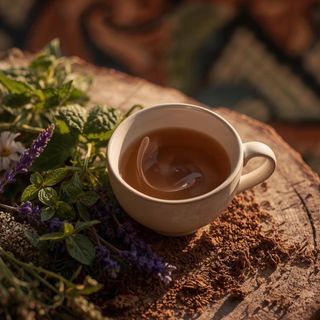
Tea Meditation is a contemplative practice of preparing and drinking tea with full, deliberate attention to breath, feeling, and each step of the ritual (Choe, 2017).
Last Updated
3 Jul 2026
We are still reviewing this page. Our research team checks every technique page for accuracy and evidence quality before final release. Details may change as that review completes. The evidence badge shows our current reading of the published research.
RECOMMENDED DOSE
No direct dose evidence; editorial synthesis. A short, low-commitment session paired with a single mindful cup of tea is an achievable starting point for someone new to the practice.
No direct dose evidence; editorial synthesis. Once the habit is established, a slightly longer session and higher weekly frequency support a more settled, focused attention on the full brewing and sipping ritual.
No direct dose evidence; editorial synthesis. A longer daily ritual reflects a maintenance-level commitment for experienced practitioners who wish to make tea meditation a consistent part of their routine.
Session length
Session length: 5–10 minutes
5
MIN
How long each individual practice session should last from start to finish.
Frequency
Frequency: 3–4 days
3
DAYS
The number of days per week to fit a session into your routine.
Session length
Session length: 10–20 minutes
10
MIN
How long each individual practice session should last from start to finish.
Frequency
Frequency: 4–5 days
4
DAYS
The number of days per week to fit a session into your routine.
Session length
Session length: 20–30 minutes
20
MIN
How long each individual practice session should last from start to finish.
Frequency
Frequency: 6–7 days
6
DAYS
The number of days per week to fit a session into your routine.
About this card. No direct dose-response literature exists for tea meditation; these recommendations are based on general practice conventions for contemplative meditation and should be treated as starting points only. These recommendations are not a substitute for personalised guidance from a qualified practitioner.
Quick answers to what people most often ask. Each card links to the deeper section below.
evidence
Small, early studies report that people who practice Tea Meditation feel more focused, better able to work through everyday problems, steadier in mood, and more willing to accept the present moment. All findings come from small, self-reported, uncontrolled studies, with no randomized trials, effect sizes, or physiological measurements specific to the practice yet.
Read moregood for
Tea Meditation suits anyone wanting a simple, low-demand way to slow down and return to the present, especially people who feel scattered, restless before a task, or run through the day on autopilot. Studied mainly in adolescents, young adults, and Buddhist practitioners, it offers gentle daily support, not treatment for diagnosed anxiety, depression, or trauma.
Read moresafety
Most healthy adults can practise Tea Meditation without special precautions. People managing diagnosed anxiety, depression, or trauma should treat it as a complement to professional care, not a substitute, since no clinical outcomes are established. Anyone sensitive to caffeine, or limiting it during pregnancy or for heart or sleep reasons, may prefer low-caffeine or herbal tea.
Read morehow it works
Turning each step of preparing and drinking tea into an anchor for attention keeps the mind from drifting into worry, while a built-in pause between wanting and getting builds the ability to watch a craving pass rather than act on it. The slow pace, warmth, and aroma may shift the body's rest-and-recovery system toward calm.
Read moreTea Meditation is a contemplative practice of preparing and drinking tea with deliberate attention to breath, sensation, and each step of the ritual, making an ordinary cup an anchor for present-moment awareness (Choe, 2017).
A session follows the everyday act of making tea, slowed down and attended to step by step: heating the water and listening to it come to a boil, measuring the leaves, watching and steadying the pour, inhaling the rising aroma, then sipping with full attention to warmth, flavor, and breath. Each stage acts as a natural anchor, a cue to bring attention back to the present whenever the mind wanders. In its simplified meditative form it can take just a few minutes and needs no special equipment, unlike the multi-hour formal tea ceremony.
Tea Meditation differs from casual tea drinking in its deliberate, ceremonial attention; the point is not the beverage but the quality of presence brought to each step. It is also distinct from formal Chado (Chanoyu), the multi-hour Japanese tea ceremony with its elaborate choreography and etiquette, keeping the contemplative spirit while staying simple and accessible. It is not a caffeine or herbal remedy, a medical treatment, or a substitute for care for a diagnosed condition, and it differs from seated silent meditation by anchoring attention in an active, sensory task.
Not to be confused with
Casual tea drinking
The same cup drunk on autopilot while scrolling or working is not the practice. What makes it Tea Meditation is the deliberate, sensing attention given to each step, not the beverage itself.
L-theanine or tea's chemical effects
Some of tea's mild calm is often credited to compounds in the leaf, but Tea Meditation is the attentional ritual around brewing and sipping, distinct from any pharmacological effect of what is in the cup.
Plum Village tea meditation (Thich Nhat Hanh)
A parallel, independently taught form of tea meditation from the Plum Village tradition; it shares the contemplative aim but comes from a different teaching lineage rather than being the same codified practice.
Tea Meditation works by turning each step of preparing and drinking tea into an anchor for attention, a steady sequence of things to notice that keeps the mind from drifting into worry or distraction (Choe, 2017). As attention settles, the practice also cultivates decentering, the ability to watch a craving or restless thought pass by rather than being swept into it, because the ritual builds in a small pause between wanting and getting. Slowing a routine normally run on autopilot re-engages deliberate attention, and the unhurried pace, warmth, and aroma may shift the body toward the parasympathetic nervous system, its rest-and-recovery branch. The direct research behind these pathways is early and descriptive, so they are best understood as plausible explanations rather than settled findings.
Warmth spreading through the hands, the pull of a slow breath, a small settling in the chest: Tea Meditation turns each step of preparing and drinking tea into a cue to sense what is happening inside the body, a skill researchers call interoceptive awareness (Choe, 2017). Early descriptions suggest this inward attention may make it easier to observe and accept what you are feeling, though the evidence is still preliminary.
Noticing that you are noticing is the quiet shift this practice trains. As you follow each step of making and drinking tea, attention begins to observe itself, catching where the mind has wandered and gently returning, so passing thoughts feel less like instructions to obey and more like weather moving through (Choe, 2017). Early work on tea meditation is descriptive, so hold this as a promising idea about how the practice works, not a settled finding.
Preferences and impatience lose some of their grip when the tea ritual sets a pause between wanting and getting. Decentering means watching a craving or a restless thought pass by rather than being swept into it, and the deliberate steps of preparing and drinking tea give that observing stance something concrete to practice on (Choe, 2017).
Instead of running through the routine on autopilot, each step of the tea, measuring, pouring, inhaling, sipping, becomes a cue to notice what you are actually feeling. This is self-inquiry, the act of turning attention back on your own thoughts and reactions; one descriptive study frames it as how the practice supports clearer recognition and acceptance of the present moment (Choe, 2017).
The rising steam, the sound of water coming to a boil, the warmth of the cup in your hands, the aroma, and the first taste give attention a steady sequence of external details to rest on, which practitioners often describe as the surrounding moment becoming sharper, richer, and more present (Choe, 2017).
Making tea is usually something the hands do on autopilot. Tea Meditation slows each step, measuring, pouring, steeping, sipping, so attention returns to an action you'd normally run without thinking, which practitioners often describe as feeling more awake inside an ordinary moment (Choe, 2017).
What most people notice in the body is a gradual settling: the shoulders drop, the breath lengthens, and the warmth of the cup in the hands becomes something to rest attention on. These changes fit a shift toward rest-and-recovery physiology, but that shift is inferred from the practice's slow pace rather than measured in tea meditation itself, so no heart-rate or blood-pressure changes have been recorded for this specific practice. What the early studies do report is subjective: participants described feeling calmer, steadier in mood, and less caught in anxious or negative thinking (Choe & Choi, 2020).
Limited–emerging evidence, all from small, descriptive studies, is what supports Tea Meditation today. One study of adolescents and young adults reported better self-rated problem-solving, more self-confidence and sense of self-identity, and less anxious or negative thinking after they took up the practice (Choe & Choi, 2020); another, in ascetic and non-ascetic practitioners, described a greater willingness to recognize and accept present experience rather than avoid it (Choe, 2017). These are self-reported gains from uncontrolled studies with no comparison groups or effect sizes. Not yet supported: randomized trials, long-term follow-up, physiological measurement in tea meditation specifically, or any claim that it treats a diagnosed condition.
When a problem keeps looping in your head, stepping into the slow rhythm of measuring, pouring, and sipping tea with full attention can make it feel less tangled and easier to approach. In one early study, young people who took up tea meditation reported that their problem-solving improved and that they felt a firmer sense of who they are (Choe & Choi, 2020). This is an early signal, not settled proof.
Slowing down over each step of making and drinking tea can make it easier to notice what is actually happening right now and to meet it without pushing it away. Early work on the practice links this to acceptance, a willingness to observe your present experience as it is rather than avoid it, and describes it feeling less like forcing calm and more like letting the moment be what it is (Choe, 2017).
Small, early studies report that people who practice Tea Meditation feel more focused, better able to work through everyday problems, steadier in mood, and more willing to accept their present experience (Choe & Choi, 2020), (Choe, 2017). Alongside these, historical and conceptual writing traces the practice to Buddhist and Confucian self-cultivation and discusses it as a path toward identity and character (Yi et al., 2025), (Choi & Heo, 2026). The main limit is that this research is early-stage, with small samples, self-reported outcomes, and no randomized trials or effect sizes specific to tea meditation. It is fair to treat it as a low-risk practice with early promise whose measurable benefits are still being mapped.
0
Meta-analyses
0
RCTs
0
Systematic reviews
0
Observational
4
Pilot
Studied populations
Outcomes measured
A Study on the Effect of Tea Meditation on Enhancement of Problem-Shooting Abilities
2020
Finding: In this observational study, adolescents who took part in a tea meditation program described becoming better at identifying and facing their problems, and recovering a stronger sense of self-identity and self-confidence after periods of quiet introspection. Several who had been struggling with low mood, anxiety, and negative thinking reported shifting toward more positive ways of thinking over the course of the program. These are the participants' own descriptions rather than measured clinical results: the study reported no sample size, no comparison group, and no numerical scores, so it points to tea meditation as a promising practice to explore rather than a proven treatment.
See full citation in referencesReality Recognition and Acceptance through Tea Meditation
2017
Finding: In this study, people practised tea meditation, a Buddhist Yeomjigwan approach that turns each step of making and drinking tea into a chance to notice your breath and feelings, and afterwards they were better able to see their present experience clearly and accept it. Both experienced practitioners and everyday participants reported this shift, which suggests the practice may help you meet what is happening in the moment with less resistance. This was an early, exploratory study that compared people before and after practising without a comparison group or any measured effect sizes, so treat it as a promising description of the experience rather than firm proof of a benefit.
See full citation in referencesTea Meditation grows out of East Asian contemplative culture, rooted in Zen Buddhism and the Japanese Way of Tea (Chado) codified by tea masters such as Sen no Rikyu, and shaped by four guiding principles: harmony, respect, purity, and tranquility. In this lineage the practice also draws on Buddhist Yeomjigwan meditation (Choe, 2017), and East Asian tea texts such as the 15th-century Korean Dabu by Yi Mok treat preparing and receiving tea as a form of self-cultivation (Yi et al., 2025). These roots help explain the practice's form, its slow, ordered, sequential placement of attention, rather than proving any clinical effect. Thich Nhat Hanh teaches a parallel, accessible version in the Plum Village tradition, distinguishing meditative tea drinking from both casual sipping and the multi-hour formal ceremony.
For most healthy adults, tea meditation is a low-risk practice you can take up without special precautions, it asks only for a few slow minutes and a cup of tea. Two situations call for a lighter touch. First, because the direct research is still early and descriptive, treat the practice as a supportive daily ritual rather than a treatment for anxiety, depression, or another diagnosed condition, and keep it alongside professional care rather than in place of it. This is a practice-informed caution, not a documented safety risk. Second, if caffeine tends to leave you wired and restless, choose a low-caffeine or herbal tea so the alerting lift of the leaf does not work against the calm the ritual is meant to build.
Tea meditation is safe for most people, and a few groups will want to approach it with extra care. If you are managing diagnosed anxiety, depression, or trauma, treat tea meditation as a complement to professional treatment rather than a substitute, since the research is early-stage and no clinical outcomes are yet established; this is a practice-informed caution. Anyone sensitive to caffeine, or advised to limit it during pregnancy or for certain heart or sleep concerns, may prefer a low-caffeine or herbal preparation so the stimulant does not undercut the settling the practice is meant to offer.
If you are managing diagnosed anxiety, depression, or trauma, keep tea meditation as one supportive daily ritual alongside professional treatment rather than a replacement for it. The research specific to tea meditation is early-stage and descriptive, so no clinical outcomes are yet established for these conditions. This is a practice-informed caution, not a documented safety risk.
If caffeine tends to leave you wired or restless, choose a low-caffeine or herbal tea, such as rooibos, chamomile, or a decaffeinated option, so the alerting lift of the leaf does not work against the calm the ritual is meant to build. This is a comfort adjustment drawn from how caffeine generally works, not a risk measured in tea meditation itself.
| Technique | Best for | Use with care | Evidence strength | Distinction |
|---|---|---|---|---|
| Formal Japanese Tea Ceremony (Chado / Chanoyu) | People drawn to the full ritual tradition, guest etiquette, aesthetics, and lineage instruction of the Way of Tea. | Requires training, time, and specific equipment; a poor fit if you want a quick, low-barrier daily practice. | emerging EVIDENCE | Formal Chado is a codified, often multi-hour ceremonial performance with prescribed utensils, choreographed movements, and defined host-and-guest roles, learned over years under a teacher. Tea Meditation distills that lineage into a short, solo, repeatable sequence where the point is present-moment attention rather than ceremonial mastery or etiquette. |
| Mindful Eating | Bringing awareness to appetite, hunger and fullness cues, and habitual patterns around food. | EVIDENCE | Mindful eating brings the same deliberate, sensing attention to food across a whole meal, working closely with hunger, fullness, and eating behavior. Tea Meditation narrows that stance to the single, contained sequence of preparing and drinking tea, giving a shorter and more repeatable anchor rather than a meal-length practice. |
The attention, not the tea. Tea meditation brings deliberate, sensing focus to each step, heating, measuring, pouring, inhaling, sipping, where casual tea drinking runs on autopilot (Choe, 2017).
+
The attention, not the tea. In tea meditation, each step of preparing and drinking becomes an anchor for attention and self-observation, so an ordinary cup turns into a contemplative practice rather than a background habit (Choe, 2017). This is a distinction in how you attend, not a claim about a chemical effect of the tea or a proven clinical benefit.
No. Tea meditation is the simplified, accessible form, distinct from the multi-hour formal Chado ceremony. It needs only a cup of tea and a few unhurried minutes of deliberate attention to each step of making and drinking it (Choe, 2017).
+
No. The formal Japanese tea ceremony (Chado) uses prescribed utensils, choreographed movements, and years of training, but tea meditation asks only that you attend closely to your breath, your feelings, and each step of preparing and drinking an ordinary cup (Choe, 2017). No special equipment or ceremonial mastery is required, this is a practice-and-tradition distinction, not a claim about how well it works.
The Japanese tradition of preparing and serving tea as a contemplative and aesthetic discipline, guided by principles of harmony, respect, purity, and tranquility. Tea Meditation borrows its spirit in a simplified, accessible form.
Resting attention on a clear, steady target, here the steps of making tea, so the mind is less likely to wander into worry or distraction. It tends to feel like sharper focus and fewer spiraling thoughts.
Stepping back to watch a thought or craving pass by rather than being swept into it, so a passing feeling stops seeming like a command you have to obey.
Also termed cognitive defusion: the shift from being immersed in mental content to observing it as transient events, creating psychological distance and reducing automatic reactivity.
Noticing what your five senses take in from the world around you, like the sound of water, the warmth of the cup, and the aroma of the tea. It shows up as the surrounding moment feeling sharper and more vivid.
Exteroception: conscious perception and interpretation of external environmental stimuli across sensory modalities, distinct from interoception, which senses internal body states.
The ability to notice signals from inside the body, such as breath, warmth, or tension, that usually go unnoticed on autopilot. Attention settles inward and small bodily shifts become easier to feel.
Doing an automatic routine, like making a drink, with full deliberate attention, so an action the brain normally runs without thinking becomes conscious again. An everyday act can feel newly vivid and chosen.
Deautomatization: disruption of habitual behavioral loops with re-engagement of prefrontal executive monitoring and reduced striatal automaticity.
Hyegyeong Choe, Hye-Gyeong Choi (2020). A Study on the Effect of Tea Meditation on Enhancement of Problem-Shooting Abilities. https://doi.org/10.21483/qwoaud.48..202006.143
Cited in: Benefits, Research, What happens in the body
Hyegyeong Choe (2017). Reality Recognition and Acceptance through Tea Meditation. https://doi.org/10.21483/qwoaud.37..201709.253
Explore guided sessions to deepen your Tea Meditation technique.
The research is useful for setting expectations, but study methods and participant groups vary. Treat the findings as general guidance rather than a promise about any single session, and not a replacement for clinical care.
Confucian Self-cultivation through Tea Meditation as Explored in Hanjae's Dabu and Husil-shaengbaekbu
2025
Finding: This scholarly analysis traces tea meditation as a path of self-cultivation back to Korea's oldest known tea text, the Dabu (Rhapsody to Tea), written by Hanjae Yi Mok in the late 1400s. It shows how that text maps the tea ceremony into a structured meditative practice, laying out stages of cultivation and personal virtues so that drinking tea becomes a form of mindfulness woven into everyday life. For someone considering the practice today, this offers a rich historical and cultural grounding rather than proof of any health benefit; it explains where the tradition comes from and how it was meant to be lived, not what it does to the body or mind in measurable terms.
See full citation in referencesThe Role of Character Literacy and Tea Meditation in the AI Era
2026
Finding: This is a conceptual essay rather than a study that measured outcomes, and it argues that sitting with tea can serve as a cultural practice for reconnecting with a sense of self and personal identity. The author's case is that the ritual carries mental and symbolic meaning, positioning tea meditation as a way to cultivate presence and self-understanding. Because the paper is speculative and measured nothing, it offers a thoughtful perspective rather than evidence that the practice produces any specific psychological benefit. If the idea of tea as a moment to reconnect with yourself appeals to you, treat it as a well-reasoned argument, not a tested result.
See full citation in referencesThe attentional practice itself, slowing down and attending to each step of making and drinking tea, has no documented pregnancy-specific risk; the caution belongs to what is in the cup. Choose a low-caffeine or herbal preparation, keep your intake within the limits your clinician recommends, and check specific herbal ingredients with your obstetric care provider, since some are not advised in pregnancy.
Tea meditation is best approached as an unhurried daily ritual rather than a fix for any diagnosed condition, so give yourself a few quiet minutes and let it sit alongside professional care rather than replacing it. A gentle starting format is a single cup in a calm moment when you are not rushed, using a low-caffeine or herbal preparation if caffeine tends to leave you wired so the drink supports the settling the practice is meant to offer.
If caffeine tends to make you jittery or disrupt your sleep, reach for a low-caffeine or herbal tea so the drink supports the calm you are building rather than competing with it.
Set aside a few quiet minutes when you will not be rushed, so heating, measuring, pouring, and sipping can each unfold slowly instead of on autopilot.
Take care with hot water, steam, and warm vessels, and let the warmth of the cup and the rising aroma become anchors for attention rather than hazards to hurry past.
If restlessness or a difficult feeling surfaces as you slow down, simply notice it and let it move through, the way you would watch steam rise, rather than pushing it away or judging the session.
If you are managing a diagnosed condition such as anxiety, depression, or trauma, use tea meditation as one supportive ritual among your tools, not as a replacement for treatment, and check in with your clinician about how it fits your care.
This information is educational and is not medical advice. This practice is not a substitute for professional care and should not replace prescribed medication or treatment for any medical or mental-health condition. If you are managing a health condition or taking medication, talk with a qualified health professional before changing your practice. If you are in distress or crisis, seek professional support.
| Focused-Attention (Breath) Meditation | Building sustained concentration through a formal, seated practice with minimal props. | EVIDENCE | Focused-attention meditation anchors on the breath or a chosen object in seated stillness, with no external ritual. Tea Meditation uses the sensory steps of heating, pouring, and sipping as its anchor, so the same attention training happens inside an everyday activity rather than formal sitting. |
It is more than a ritual, but the evidence is early. Small, descriptive studies report people feeling steadier in mood, better able to problem-solve, and more accepting of present experience (Choe & Choi, 2020), (Choe, 2017). These are self-reported gains, not proof it treats any condition.
+
It is more than a ritual, but the support is suggestive rather than settled. Early studies describe better self-rated problem-solving and self-confidence, steadier mood, and a greater willingness to accept present experience after people take up the practice (Choe & Choi, 2020), (Choe, 2017); some writers also frame it as a way to reconnect with a sense of self (Choi & Heo, 2026). The honest limit is that this research is early-stage and descriptive, with small samples, self-reported outcomes, and no randomized trials or effect sizes specific to tea meditation (Choe & Choi, 2020), (Choe, 2017). Treat it as a low-risk supportive practice whose measurable benefits are still being mapped.
Likely both, but the practice itself points to the ritual. Tea meditation is defined by the attentional ritual, using each step as an anchor to settle the mind, rather than by the tea's chemistry (Choe, 2017). This is a working explanation, not an empirically separated split.
+
Likely both, though tea meditation itself refers to the attentional ritual, not the leaf's pharmacology. The practice uses each step of preparing and sipping, measuring, pouring, inhaling, tasting, as an anchor for attention and self-observation, which is where the calm is thought to arise (Choe, 2017). Compounds like caffeine and L-theanine may add mild effects of their own, but no study has separated the ritual from the beverage in tea meditation, so this ritual-versus-chemistry split is best read as a plausible explanation rather than a measured finding.
Possibly, but this is best understood as a mechanism rather than a proven outcome. By turning each step of brewing and sipping into an anchor for attention, tea meditation builds a small pause between wanting and getting, so a restless thought or craving can be watched as a passing mental event rather than acted on (Choe, 2017).
+
Possibly. The proposed pathway is decentering, stepping back to observe a thought or craving instead of being swept into it, supported by the ritual's steady sequence of things to notice, which anchors attention and inserts space between an urge and a response (Choe, 2017). One small, uncontrolled study reported that practitioners became more willing to notice and accept present experience rather than avoid it (Choe, 2017). This is an early, descriptive mechanism, not evidence that tea meditation stops or treats cravings, intrusive thoughts, or addiction, and it is not a substitute for professional care.
Choose a low-caffeine or herbal tea. If caffeine tends to leave you wired or restless, a gentler brew keeps the alerting lift of the leaf from pulling against the calm the ritual is meant to build. This is a comfort adjustment, not a documented safety risk.
+
Choose a low-caffeine or herbal tea. The heart of tea meditation is the slow, attentive ritual around brewing and sipping, not the stimulant in the cup, so a caffeine-sensitive practitioner can settle more easily with rooibos, chamomile, or a decaffeinated option. This is a practice-informed, physiology-based suggestion drawn from how caffeine generally works, not a finding measured in tea meditation itself. If you are limiting caffeine for pregnancy, sleep, or heart reasons, a herbal preparation is a sensible fit.
Use it alongside care, not instead of it. For most healthy adults tea meditation is low-risk, but if you are managing diagnosed anxiety, depression, or trauma, treat it as a supportive ritual that complements professional treatment rather than a substitute, since the evidence is early-stage with no established clinical outcomes (Choe & Choi, 2020), (Choe, 2017).
+
Use it alongside care, not instead of it. Tea meditation is generally low-demand and low-risk, but the research specific to it is early-stage and descriptive, so no clinical outcomes are established for anxiety, depression, or trauma (Choe & Choi, 2020), (Choe, 2017). This is a practice-informed caution rather than a documented safety risk. Keep the practice as one supportive daily ritual among your tools, and stay with professional treatment. If caffeine tends to leave you wired, a low-caffeine or herbal tea can keep the drink from working against the calm the ritual is meant to build.
The attentional ritual itself carries no documented pregnancy-specific risk, but the caffeine in tea does. If you are pregnant, choose a low-caffeine or herbal preparation and follow the caffeine limits your clinician advises rather than treating the drink as unlimited.
+
The meditative practice itself, slowing down and attending to each step of making and drinking tea, has no documented pregnancy-specific risk. The caution belongs to what is in the cup. Caffeine is the relevant concern in pregnancy, so the practical step is to use a low-caffeine or herbal tea and keep your intake within the limits your clinician recommends. Some herbal preparations are also not advised in pregnancy, so check specific ingredients with your obstetric care provider rather than assuming any tea is fine. This is a practice-informed, physiology-based caution; defer any specific caffeine amounts to your clinician.
A few slow minutes is enough. Tea meditation fits the natural length of preparing and drinking one cup, and it works well as a flexible daily ritual rather than a fixed dose. This is practice-informed guidance, not an evidence-based duration.
+
A few slow minutes is enough to start. No studied or prescribed session length exists for tea meditation, so treat this as practice-informed guidance. Let a session last as long as it takes to heat the water, measure the leaves, pour, breathe in the aroma, and sip with attention. A regular daily ritual tends to help more than any single long session, since the sense of settling usually deepens with repetition rather than arriving all at once. No study establishes a specific duration, frequency, or dose-response, so choose a rhythm that fits your day.
The difference is mainly the anchor, not the goal. Tea meditation rests attention on the sensory steps of brewing and sipping within an everyday activity, while seated breath meditation anchors on the breath in stillness (Choe, 2017). Both train present-moment attention; neither has been shown more effective in a head-to-head study.
+
The core difference is the vehicle, not the underlying skill. Tea meditation uses each step of preparing and drinking tea, heating water, watching the pour, inhaling the aroma, sipping, as a moving anchor for attention, whereas focused-attention breath meditation anchors on the breath in seated stillness (Choe, 2017). Both cultivate the same present-moment attention and self-observation, so this is shared mechanism through a different form rather than one being superior. No head-to-head trial compares them, and tea meditation's own evidence is still early-stage and descriptive, so choose whichever anchor you are more likely to return to.
Noticing your own thoughts and attention as they happen, so you can see a thought instead of only thinking it, and catch the mind drifting sooner.
A shift toward the body's rest-and-recovery branch, largely through vagal pathways, that eases the body out of fight-or-flight. It usually feels like being more settled, less tense, and more able to relax.
Increased parasympathetic (vagal) tone associated with reduced heart rate, increased heart-rate variability, and lower blood pressure.
A Buddhist contemplative method of sustained, reflective observation of experience that the supplied tea-meditation research draws on as a framework for recognizing and accepting the present moment.
Cited in: Benefits, How it works, Research, Roots and tradition, What it is
Hyo-Jeong Yi, Suk-hwan Hong, P. Yi (2025). Confucian Self-cultivation through Tea Meditation as Explored in Hanjae's Dabu and Husil-shaengbaekbu. https://doi.org/10.29225/jkts.2025.31.2.13
Cited in: Research, Roots and tradition
Hyeokjin Choi, Cheol-gyu Heo (2026). The Role of Character Literacy and Tea Meditation in the AI Era. https://doi.org/10.21483/qwoaud.71..202603.167
Editorially curated. Tracks are not themselves clinically studied; evidence on the page applies to Tea Meditation as a technique.
Beginner content for Tea Meditation

★ 4.8
·
Talks
·
63 min
JuneB
How hard is Tea Meditation?
Tea Meditation should remain low and life-integrated, with a slight ritual burden acknowledged but not over-weighted.
2
Mental Effort
2 / 4
▾Emotional Depth
1 / 4
▾Physical Intensity
1 / 4
▾Prior Knowledge
2 / 4
▾