The world’s largest free audio library for everyday wellbeing
Attention & Awareness
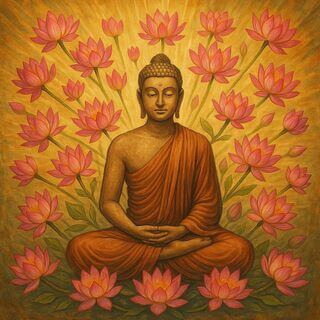
Shikantaza, or "just sitting," is a Soto Zen meditation of alert, upright sitting held without any object of focus, technique, or goal (Austin, 2009). Rather than a method aimed at a result, its tradition understands it as sitting that is already complete in itself, which is why there is no breath to count and no state to chase.
Last Updated
3 Jul 2026
We are still reviewing this page. Our research team checks every technique page for accuracy and evidence quality before final release. Details may change as that review completes. The evidence badge shows our current reading of the published research.
RECOMMENDED DOSE
No direct dose-response literature exists for Shikantaza. These beginner figures are based on general practice conventions for seated meditation and should be treated as a gentle starting point only. No direct dose evidence; editorial synthesis.
No direct dose-response literature exists for Shikantaza. This intermediate step reflects a common progression in seated meditation practice once sitting becomes comfortable. No direct dose evidence; editorial synthesis.
No direct dose-response literature exists for Shikantaza. This extended level mirrors the length of a traditional Zen sitting period and suits established practitioners, but is not backed by measured dose-response data. No direct dose evidence; editorial synthesis.
Session length
Session length: 5–10 minutes
5
MIN
How long each individual practice session should last from start to finish.
Frequency
Frequency: 3–5 days
3
DAYS
The number of days per week to fit a session into your routine.
Session length
Session length: 15–25 minutes
15
MIN
How long each individual practice session should last from start to finish.
Frequency
Frequency: 5–6 days
5
DAYS
The number of days per week to fit a session into your routine.
Session length
Session length: 30–40 minutes
30
MIN
How long each individual practice session should last from start to finish.
Frequency
Frequency: 7 days
7
DAYS
The number of days per week to fit a session into your routine.
About this card. No direct dose-response literature exists for Shikantaza; these recommendations are conservative starting points based on general seated-meditation conventions. These recommendations are not a substitute for personalised guidance from a qualified practitioner.
Quick answers to what people most often ask. Each card links to the deeper section below.
evidence
No controlled trial has tested Shikantaza directly; the honest headline is that its support is indirect. Broader meditation science links open, objectless practices to shifts in self-referential brain networks and to noticing when the mind has wandered. For just sitting itself, settling and spaciousness remain plausible and theory-supported, not yet confirmed.
Read moregood for
Shikantaza may suit people drawn to a quiet, unstructured practice who are comfortable sitting without a breath or mantra to return to, especially anyone wanting to loosen the grip of busy, self-focused thinking. Because direct study is absent, who benefits most is genuinely unknown rather than measured.
Read moresafety
Most healthy adults can practise Shikantaza with no reported serious harms. People living with trauma, PTSD, acute anxiety, or prominent intrusive thoughts should approach with care, since attention held with nothing to return to can intensify looping distress. Sitting still for long stretches can strain the back, hips, or knees, so adjust posture or use a chair.
Read morehow it works
Shikantaza appears to work by removing every anchor, so attention widens from a narrow point into an open field where sounds and sensations register without effort. With nothing to chase, thoughts can be met as passing events rather than facts, and just sitting is thought to quiet the brain's self-referential system, softening inner self-talk.
Read moreShikantaza, meaning "just sitting," is a Soto Zen meditation of alert, upright sitting held with no object of focus, no technique, and no goal, simply resting in bright, awake presence.
You sit upright in a stable meditation posture and stay present without a breath, mantra, image, or any other object to hold. Attention is left open rather than pointed anywhere, and you neither follow thoughts nor push them away, neither slide into drowsiness nor strain to concentrate. The Zen teacher Uchiyama Roshi called this quality "opening the hand of thought", a wakeful presence that rests with experience as it unfolds rather than working on it.
Shikantaza differs from concentration practices, which anchor attention on a single object like the breath, because it uses no focal point at all. It also differs from noting-based vipassana, since nothing is labeled or investigated as it arises. Do not mistake the stillness of just sitting for relaxation or drowsiness; the practice stays wakeful and alert even as effort falls away. It is a specific Soto Zen form, not a catch-all term for any seated meditation.
Not to be confused with
Koan practice (Rinzai Zen)
Koan practice engages the mind with a paradoxical question and sustains an intense, effortful inquiry into it. Shikantaza has no question and no inquiry, resting instead in bright, goalless sitting. Both are Zen, but one drives toward a breakthrough while the other simply sits.
Relaxation or quiet sitting to unwind
Shikantaza is not a relaxation exercise or a drowsy rest. It is a quality of alert, upright presence that neither slackens into sleepiness nor strains with effort, which is quite different from sitting quietly to calm down or drift off.
Dzogchen or non-dual resting (rigpa)
Non-dual resting practices from Tibetan traditions can feel similar in their objectless, effortless quality, but they belong to a different lineage with its own instructions and view. Shikantaza is specifically the Soto Zen form framed by Dogen's practice-realization.
Shikantaza appears to work by removing every anchor, so attention widens from a narrow point into an open field, a spacious quality where sounds and sensations register without effort. Meditation theory frames this open monitoring as loosening habitual, self-referential thought (Laukkonen & Slagter, 2021). Because there is nothing to chase, thoughts can be met as passing events rather than facts, a decentering shift that reviews of mindfulness link to less automatic reactivity (Britton et al., 2021). Sitting also draws on meta-awareness, the quiet capacity to catch yourself in the act of thinking; mind-wandering research shows this background noticing is a distinct mental skill (Christoff et al., 2009). These accounts come from meditation broadly, not from shikantaza specifically.
Catching yourself with "I just drifted off into thinking" is a real mental skill, and just sitting exercises it through the quiet alertness of staying present with no technique or goal. Research on mind wandering shows this noticing, called meta-awareness, can be separated from the thoughts it observes (Christoff et al., 2009), and meditation theory describes open, objectless practices as gradually strengthening it (Laukkonen & Slagter, 2021).
A thought can feel less like a fact you are trapped inside of and more like weather passing through, when you simply sit without chasing it or pushing it away. Researchers call this decentering, and reviews of related meditation practices suggest it may be one of the ways just sitting loosens the grip of anxious or repetitive thinking (Britton et al., 2021), (Laukkonen & Slagter, 2021).
When the mind is clamped onto one worry or task, just sitting with nothing to focus on lets attention widen into an open, panoramic field that takes in the whole of experience at once. Meditation theory describes this diffuse, open quality of attention as part of how open-monitoring practices loosen the grip of narrow, effortful focus (Laukkonen & Slagter, 2021).
When you sit with nothing to fix and no object to hold, attention can settle into its own undirected rest instead of being steered, a state researchers call effortless resting. Meditation theory describes open-monitoring and non-dual practices like this as loosening the habitual effort of managing the mind, though the account is still theoretical (Laukkonen & Slagter, 2021).
In shikantaza, awareness rests without narrating or labeling what arises, so experience is met directly rather than through a running commentary of thought. Meditation theory describes this open, non-conceptual awareness, a state that meets experience without naming or judging it, as gradually loosening habitual thinking and self-focus, and people often describe a quiet, spacious clarity that no longer needs an object to hold onto (Laukkonen & Slagter, 2021).
In the brain, shikantaza is thought to quiet the default mode network, the self-referential system that hums during rumination and self-focused thinking, so inner self-talk softens and thoughts feel less personal (Cooper et al., 2022). This system normally trades off with outward-facing attention networks (Fox et al., 2005), and just sitting is proposed to tip the balance toward open, alert presence. Shikantaza itself has not been imaged, so these directions are inferred from wider meditation research rather than measured for just sitting.
During just sitting, people often describe inner self-talk quieting and thoughts feeling less personal, a spaciousness where the mind stops circling on itself. That felt shift is linked to the default mode network, the brain's self-referential background system that runs busiest during rumination and self-focused thought; broader meditation research ties regular practice to lower activity here (Cooper et al., 2022), though shikantaza itself has not been imaged, so this direction is inferred rather than measured for just sitting (Fox et al., 2005).
Just sitting can quiet the constant inner commentary about yourself, the replaying of the past and rehearsing of the future. That running story runs on the default mode network, the brain system most active during self-referential thought, and imaging of meditation broadly links practice to lower activity there (Cooper et al., 2022). Shikantaza itself hasn't been scanned, so this is expected from related open-monitoring practices rather than measured for just sitting; practitioners often describe the self-focused chatter easing and awareness feeling more open.
The steady stream of self-referential thought, the mental narration of 'me' and 'my day,' runs largely through the default mode network, a set of brain regions most active when attention turns inward. Broader meditation imaging suggests this self-focused network quiets during practice, though the shift has not been directly measured for shikantaza itself; people often describe the felt result as the inner commentary loosening its grip and a busy sense of self settling (Fox et al., 2005), (Cooper et al., 2022).
That running inner commentary about "me" and "my problems" that won't switch off comes largely from the default mode network, the brain regions that light up when attention turns inward. Brain-imaging reviews of meditation link regular practice with lower activity in this self-referential network (Cooper et al., 2022), a shift shikantaza is thought to share and one practitioners often feel as the sense of a separate, narrating self growing quieter and more transparent.
Left to idle, the mind tends to loop through self-focused, rehashing thought, the felt signature of the default mode network, a set of brain regions linked to mind-wandering and rumination. Broader meditation and network research points to lower activity in this system during open, objectless attention, which can feel like thoughts about yourself loosening their grip and the mind growing quieter and wider (Fox et al., 2005).
Emerging, indirect evidence is all that currently exists, and no controlled trial has tested shikantaza for any specific outcome. Drawing on the same broader meditation and mindfulness research described above, open and objectless practices may plausibly support decentering, less self-focused rumination, and clearer noticing of one's own mind, though these remain inferences for this technique rather than measured results (Britton et al., 2021), (Christoff et al., 2009). Not yet supported: symptom-reduction claims, effect sizes, large trials, or any suggestion that just sitting replaces treatment for a diagnosed condition.
Almost no research has studied shikantaza directly. What can be said is drawn from broader meditation science, which links open, objectless practices to shifts in self-referential brain networks and to skills like noticing when the mind has wandered (Cooper et al., 2022), (Christoff et al., 2009). A theoretical synthesis of meditation also models how such practices may disengage habitual, anticipatory thought, though as theory rather than an outcome trial (Laukkonen & Slagter, 2021). The main limitation is directness: these findings were measured in general meditators and healthy adults, so for a practitioner the settling and spaciousness that just sitting can bring is plausible and theory-supported, not yet confirmed for this practice.
0
Meta-analyses
0
RCTs
0
Systematic reviews
0
Observational
6
Pilot
Studied populations
Beyond the veil of duality—topographic reorganization model of meditation
2022
Finding: This brain-imaging review maps how experienced meditation appears to reshape the networks tied to our sense of a separate self, quieting the "default mode" circuitry that hums along during self-focused thinking while stepping up the networks we use to stay attentive and engaged. The authors connect this shift to the dissolving of the usual boundary between self and surroundings that some seasoned practitioners describe. It is worth knowing that this is a proposed model of what meditation does in general, drawn from studies across many practices rather than a direct measurement of shikantaza, so it offers a plausible picture of the mechanism rather than proof that just-sitting produces these changes.
See full citation in referencesFrom many to (n)one: Meditation and the plasticity of the predictive mind
2021
Finding: This is a theoretical paper, not a trial, so it measures no outcomes; instead it lays out a model in which focused attention, open monitoring, and non-dual practices like shikantaza sit along a single continuum, each one gradually letting go of the brain's habitual predictions, including its ongoing prediction of a fixed self. On that view, "just sitting" works by loosening the anticipatory mental habits that pull us out of the present, potentially opening into a more spacious, present-centred awareness. For a practitioner, this offers a plausible explanation of why objectless sitting can feel like resting rather than doing, but it describes a proposed mechanism, not a proven effect. It is worth knowing that shikantaza itself has not been directly tested here; this framework applies to meditation broadly, so treat it as a way of understanding the practice rather than evidence of specific results.
See full citation in referencesShikantaza is the central "just sitting" practice of Soto Zen, traditionally traced to the 13th-century Japanese teacher Eihei Dogen, who described sitting not as a means to produce enlightenment but as the direct expression of an awakened nature already present, what he called practice-realization (Austin, 2009). These roots help explain the practice's distinctive objectless, goalless form, not any clinical effect.
For most healthy adults, shikantaza is a low-risk practice with no reported serious harms. A few situations call for a gentler approach. Because just sitting removes the usual anchor of a breath or mantra, that openness can let difficult memories, restlessness, or intrusive thoughts surface more strongly rather than settle. This caution comes from teaching experience and from how objectless attention works, not from studies that measured harm. Sitting still for long stretches can also strain the back, hips, or knees, so adjusting the posture or moving to a chair is sensible; this too is practice-informed rather than an evidence-based safety finding.
People living with trauma, PTSD, acute anxiety, or prominent intrusive thoughts should approach shikantaza with care. Without an explicit focus to return to, unstructured, self-directed attention can intensify rumination, the looping of distressing thoughts that is hard to interrupt. This is a practice-informed, mechanism-inferred caution rather than a measured harm, so its likelihood and severity for any one person are unknown; working with an experienced teacher or a mental health professional can make the practice steadier. Shikantaza is not a treatment for any mental health condition and should complement, not replace, professional care.
If you live with trauma, PTSD, acute anxiety, or prominent intrusive thoughts, approach just sitting with care. Because shikantaza removes the usual anchor of a breath or mantra, that openness can let difficult memories or looping distressing thoughts surface more strongly rather than settle. This is a practice-informed, mechanism-inferred caution rather than a measured harm, so its likelihood and severity for any one person are unknown. Keep a light anchor within reach, work with an experienced teacher or a mental health professional, and treat just sitting as a complement to care, not a replacement for it.
| Technique | Best for | Use with care | Evidence strength | Distinction |
|---|---|---|---|---|
| Focused-attention meditation (concentration, breath or mantra) | Beginners or restless minds who find an explicit anchor steadying and want a clear point to keep returning to. | moderate EVIDENCE | Focused-attention practice rests the mind on a single anchor, such as the breath or a repeated word, and gently returns to it whenever attention drifts. Shikantaza removes the anchor entirely: there is no object to hold and nothing to return to, only an alert, open sitting. The felt difference is between narrowing onto one point and letting attention stay wide and undirected. | |
| Vipassana / noting meditation | People who want a structured way to examine the moment-to-moment texture of experience through noting and inquiry. | emerging EVIDENCE | Vipassana adds active investigation: the practitioner notices and mentally labels each sensation, thought, or feeling as it arises. Shikantaza does neither, it neither notes nor examines what appears, simply letting experience come and go without commentary. One leans toward analysis; the other toward bare, non-labeling presence. |
It literally means "just sitting," or "nothing but precisely sitting." Shikantaza is the objectless, goalless practice of alert, upright sitting central to Soto Zen, with no focus to hold, no technique to apply, and no state to reach (Austin, 2009).
+
It literally means "just sitting," sometimes rendered "nothing but precisely sitting." In the Soto Zen tradition, traced to the 13th-century teacher Dogen, shikantaza names a form of zazen in which you sit upright and awake with no object of attention, no method, and no goal, neither chasing thoughts nor pushing them away (Austin, 2009), (Laukkonen & Slagter, 2021). This is the traditional, etymological meaning of the term rather than a claim about any clinical effect.
Yes. Shikantaza is a recognised Soto Zen meditation defined precisely by having no object, technique, or goal; the alert, upright "just sitting" is itself the practice, not the absence of one (Austin, 2009).
+
Yes. In Soto Zen, shikantaza, or "just sitting," is a distinct form of meditation whose whole instruction is bright, upright presence with nothing to focus on and nothing to achieve (Austin, 2009). Its tradition, traced to the 13th-century teacher Dogen, frames sitting as practice-realization, an expression of an already-present awakened nature rather than a method aimed at a result (Austin, 2009). That objectless form is what sets it apart from focused-attention practices, which rest on a breath or mantra, and from noting-based vipassana, which labels experience (Laukkonen & Slagter, 2021). This lineage explains what the practice is, not that it produces any clinical effect.
A Zen meditation meaning 'just sitting,' in which a person sits with alert, open presence and no object of focus, no technique to apply, and no goal to reach.
The central objectless meditation of Soto Zen, an open-monitoring practice held without a focal anchor, investigation, or intended outcome.
The seated meditation posture and practice of Zen Buddhism. Shikantaza is the particular form of zazen central to the Soto Zen school.
Dogen's teaching that sitting is not a means of producing enlightenment but is itself the direct expression of an awakened nature already present, so there is nothing to attain by practising.
Uchiyama Roshi's phrase for the shikantaza attitude of neither following nor suppressing thoughts, letting them arise and pass without grasping or pushing them away.
A style of meditation in which attention stays wide and receptive to whatever arises, rather than being fixed on a single object such as the breath. It feels like a spacious, panoramic awareness.
A meditative attentional style characterised by diffuse, non-selective monitoring of the perceptual and cognitive field without a focal anchor.
The shift from being caught inside a thought or feeling to observing it as a passing mental event, so there is a small gap between noticing an emotion and being swept up in it.
A metacognitive process, also termed cognitive defusion, of relating to internal experiences as transient mental events rather than literal truths, reducing automatic reactivity.
Knowing what your own mind is doing right now, such as quietly noticing that you were just lost in thought or that attention has drifted, without that noticing disrupting the experience.
Austin Clinton Cooper, Bianca Ventura, Georg Northoff (2022). Beyond the veil of duality—topographic reorganization model of meditation. https://doi.org/10.1093/nc/niac013
Cited in: How it works, Research, What happens in the body
Ruben Laukkonen, Heleen A. Slagter (2021). From many to (n)one: Meditation and the plasticity of the predictive mind. https://doi.org/10.1016/j.neubiorev.2021.06.021
When you're caught in loops of self-focused thought, returning to the present can feel almost impossible. The brain runs an inward-facing network tied to that mind-wandering alongside an outward-facing attention network, and the two normally see-saw; shikantaza is thought to make moving between them more fluid, though this has not been measured during just sitting itself (Fox et al., 2005).
You might notice thoughts arising and passing without getting pulled into them, a quiet, watchful clarity. Brain imaging shows the mind runs on two systems that take turns: an inward, self-focused network and an outward, present-focused one, each quieting as the other engages (Fox et al., 2005). During objectless sitting, related meditation research suggests the balance may tip toward that alert, monitoring side, though this has not been measured in shikantaza itself.
Outcomes measured
The research is useful for setting expectations, but study methods and participant groups vary widely. Treat the findings as general guidance rather than a promise about any single session, and not a replacement for clinical care.
From Self-Esteem to Selflessness: An Evidence (Gap) Map of Self-Related Processes as Mechanisms of Mindfulness-Based Interventions
2021
Finding: This wide-ranging map of how mindfulness practices might work sorted the evidence for different mind-and-self changes, and found that reducing rumination, the loop of repetitive negative thinking, has the strongest support, especially for easing depression. Building self-compassion showed up reliably during training but didn't consistently translate into better outcomes, while the shifts most often linked to just-sitting practice, stepping back to observe your own thoughts and tuning into body sensations, are still early and not yet well proven. For someone drawn to shikantaza, this suggests the practice may help by loosening the grip of rumination, though the study looked at mindfulness broadly rather than just-sitting itself, and it openly flags how much about these mechanisms remains uncertain.
See full citation in referencesExperience sampling during fMRI reveals default network and executive system contributions to mind wandering
2009
Finding: Using brain scans paired with well-timed check-ins during a task, this study caught healthy adults in the act of mind wandering and found that drifting off engages both the brain's "default" daydreaming network and the regions we use for focused control, and it was strongest when people hadn't yet noticed their minds had wandered. That points to meta-awareness, the simple act of catching yourself off-task, as a distinct mental skill in its own right, which is exactly the muscle open-monitoring practices like shikantaza ask you to exercise. Worth being clear about the limits, though: this research studied mind wandering during an ordinary task, not shikantaza itself, so it explains why noticing matters rather than showing that just sitting sharpens that noticing.
See full citation in referencesThe human brain is intrinsically organized into dynamic, anticorrelated functional networks
2005
Finding: Using brain scans of healthy adults lying quietly at rest, this study mapped two large brain systems that work in opposition: one that switches on when we focus outward on a demanding task, and another, the default mode network, that takes over when attention turns inward toward self-reflection and mind-wandering. When one ramps up, the other quiets down, and this back-and-forth is built into the brain's baseline organization rather than something that only appears during effort. For a shikantaza practitioner, this offers useful background for why sitting practice is often described as a shift between inward absorption and open, outward awareness, though it's worth being clear that this research looked at the general resting brain and did not measure meditation itself.
See full citation in referencesFor some people, sitting with no anchor lets restlessness or anxious thoughts surface more strongly instead of settling. If that happens, gently rest attention on the breath or the sensation of sitting, shorten the session, or stop for now. This caution comes from teaching experience and from how objectless attention works, not from studies that measured harm, so its likelihood for any one person is unknown.
Sitting still for long stretches can strain the back, hips, or knees. Adjust the posture freely or move to a chair whenever the body complains. This is practice-informed guidance rather than an evidence-based safety finding.
Shikantaza is gentlest when you approach it as something to grow into slowly rather than push through, giving open, anchorless attention time to feel familiar instead of overwhelming. A sensible way in is a brief seated session in a stable, comfortable posture, with a light option like the breath or the feeling of sitting kept within reach for moments when the openness feels destabilising. If you live with trauma, acute anxiety, or intrusive thoughts, it helps to have an experienced teacher or a mental health professional alongside you, and to treat just sitting as a complement to care rather than a replacement for it.
Begin with five to ten minutes of just sitting and lengthen sessions only as the practice feels steady, so open, anchorless attention has time to become familiar rather than overwhelming.
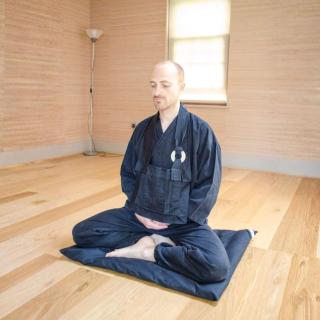
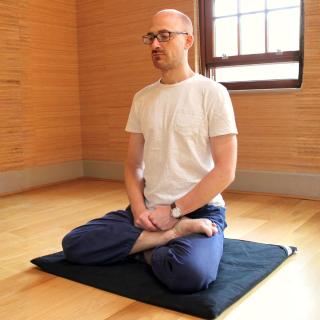
Sit upright on a cushion or a chair with the spine tall and the body settled. Adjust freely or move to a chair if your back, hips, or knees complain, since sitting still for long periods can strain the joints.
If thoughts grow loud or the openness feels destabilising, gently resting attention on the breath or the sensation of sitting gives you something to return to. This is a steadying option, not a failure of the practice.
Notice what arises and let it move through, the quality Uchiyama Roshi called opening the hand of thought, rather than chasing or suppressing any thought.
If sitting reliably stirs up distressing memories, rising anxiety, or a sense of feeling detached from yourself, shorten the session, add an anchor, or pause the practice.
If you live with trauma, acute anxiety, or intrusive thoughts, practise alongside an experienced teacher or a mental health professional, and treat just sitting as a complement to care rather than a substitute for it.
This information is educational and is not medical advice. This practice is not a substitute for professional care and should not replace prescribed medication or treatment for any medical or mental-health condition. If you are managing a health condition or taking medication, talk with a qualified health professional before changing your practice. If you are in distress or crisis, seek professional support.
| Mindfulness-Based Stress Reduction (MBSR) and other mindfulness-based interventions | Those seeking a structured, time-limited program with taught skills and a research base oriented to stress and mood. | moderate EVIDENCE | Mindfulness-based interventions are secular, curriculum-based programs, typically eight weeks, that teach attention and awareness skills for stress and mood, often with a breath or body focus. Shikantaza is a religious Zen practice with no curriculum, no goal, and no anchor, framed as an expression of already-present awakened nature rather than a stress-reduction method. |
| Open monitoring / choiceless awareness | Understanding where just sitting fits within the wider landscape of open, objectless attention practices. | emerging EVIDENCE | Open monitoring is the broader research family of practices that keep attention wide and receptive rather than fixed on one object. Shikantaza is one traditional Soto Zen form within this family, distinguished by its explicit removal of any goal or technique and its Zen framing as practice-realization rather than a method aimed at a result. |

Only indirectly. No controlled trial has studied shikantaza itself, so the support comes from broader meditation research rather than measured results for just sitting (Laukkonen & Slagter, 2021), (Austin, 2009).
+
Only indirectly. Direct scientific study of shikantaza is essentially absent, so its proposed effects are borrowed from wider meditation science: reviews of mindfulness link open practices to decentering and less rumination (Britton et al., 2021), mind-wandering research treats meta-awareness, noticing when attention has drifted, as a distinct skill (Christoff et al., 2009), and brain-imaging models tie meditation to shifts in self-referential networks such as the default mode network (Cooper et al., 2022). Read these as plausible, theory-supported accounts of how just sitting may work, not confirmed effects for this practice (Laukkonen & Slagter, 2021).
Possibly, but only indirectly. No trial has tested shikantaza for anxiety, so any benefit is inferred from broader meditation research, where open practices are linked to decentering and less rumination (Britton et al., 2021), (Laukkonen & Slagter, 2021). If anxiety is acute, objectless sitting can intensify looping thoughts, so added support may fit better.
+
Possibly, for a busy, self-focused mind, though this is a plausible inference rather than a proven effect. Broader meditation and mindfulness research links open, objectless practices to decentering, the shift from being caught inside a thought to observing it, and to reduced rumination, and meditation theory describes such practices as loosening habitual, anticipatory thinking (Britton et al., 2021), (Laukkonen & Slagter, 2021). Shikantaza itself has not been studied in any trial, so it cannot be called a treatment for anxiety (Cooper et al., 2022), (Austin, 2009). When anxiety is prominent or acute, sitting with no anchor can make looping thoughts louder, so a more anchored practice or professional support may suit better.
The proposed reason is that with no anchor to hold, attention widens into an open field so thoughts can be met as passing events rather than facts, a shift called decentering that meditation models link to quieter self-referential brain activity (Britton et al., 2021), (Cooper et al., 2022). This is an indirect inference from broader meditation research, not measured for shikantaza itself.
+
Removing the usual focus point is thought to let attention broaden into a panoramic, open awareness, and meditation theory frames this open monitoring as loosening habitual, self-focused thinking (Laukkonen & Slagter, 2021). With nothing to chase, thoughts can be observed as they come and go, a decentering shift that mindfulness reviews associate with less automatic reactivity and rumination (Britton et al., 2021), alongside reduced activity in the self-referential default mode network (Cooper et al., 2022) and a strengthening of meta-awareness, the skill of noticing when the mind has wandered (Christoff et al., 2009). These accounts are drawn from meditation broadly, so read the resulting calm as plausible settling and perspective rather than a proven, measured effect for just sitting.
No one knows for certain, because shikantaza itself has not been brain-scanned. Broader meditation research suggests just sitting may quiet the default mode network, the self-referential system active during rumination, and shift the brain's balance between inward and outward attention (Cooper et al., 2022), (Fox et al., 2005).
+
Honestly, shikantaza specifically has not been imaged, so brain effects are inferred from broader meditation and healthy-adult neuroscience rather than measured for just sitting. Models of meditation link practice to quieting the default mode network, the connected regions most active during self-focused thought and mind-wandering, so inner self-talk may soften (Cooper et al., 2022). That inward system normally trades off with outward-facing attention networks, and just sitting is proposed to tip the balance toward open, alert presence (Fox et al., 2005). Treat these as plausible directions, not confirmed findings for this practice (Laukkonen & Slagter, 2021).
Use care. Shikantaza is low-risk for most healthy adults, but if you live with trauma, PTSD, acute anxiety, or intrusive thoughts, anchorless sitting can surface difficult memories and intensify rumination, the looping of distressing thoughts. Keep a light anchor, work with a teacher or mental health professional, and treat it as a complement to care, not a substitute (Britton et al., 2021).
+
Use care. This is a practice-informed, mechanism-inferred caution rather than measured harm, because no trials or adverse-event studies of just sitting in trauma or intrusive-thought populations exist, and its likelihood and severity for any one person are unknown (Britton et al., 2021), (Austin, 2009). Because shikantaza removes the usual anchor of a breath or mantra, that openness can let distressing material surface more strongly instead of settle; resting attention lightly on the breath, shortening sessions, or pausing gives you somewhere to return. Shikantaza is not a treatment for any mental health condition and should complement, not replace, professional support.
Ground and shorten. If open sitting stirs up restlessness or anxiety, gently rest attention on your breath or the feeling of sitting, cut the session short, or pause. This is practice-informed guidance, not a tested safety finding, and shikantaza is not a treatment for anxiety.
+
Ground and shorten. Because shikantaza removes the usual anchor of a breath or mantra, that openness can let restlessness or anxious thoughts surface more strongly for some people rather than settle; a practical response is to bring in a light anchor such as the breath or the sensation of sitting, shorten the session, or stop for now. This caution comes from teaching experience and from how objectless attention works, not from studies that measured harm, so its likelihood for any one person is unknown. If distress keeps returning, work with an experienced teacher or a mental health professional and treat just sitting as a complement to care, not a replacement for it.
Start with about five to ten minutes. Beginners can sit for a short, comfortable stretch and lengthen sessions gradually as anchorless, objectless attention becomes familiar. This is practical, teaching-informed guidance, not an evidence-based dose, since no trial has tested session length for shikantaza.
+
Start with about five to ten minutes and extend only as the practice feels steady. Because shikantaza removes the usual anchor of a breath or mantra, giving open attention time to become familiar rather than overwhelming matters more than hitting a target duration; a stable upright posture, a chair if your back, hips, or knees complain, and a light anchor to return to if openness feels destabilising all help. Treat these as practice-informed suggestions from teaching experience, not a measured dose, and don't tie any specific length to a particular benefit.
The main difference is the anchor. Breath-focused meditation rests attention on a single object and gently returns to it when the mind drifts; shikantaza removes the anchor entirely, sitting in open, undirected awareness with nothing to return to (Laukkonen & Slagter, 2021). Neither is may work better, and no head-to-head trials exist.
+
The core distinction is structural, not a matter of which is more effective. Focused-attention practice keeps attention on one anchor, such as the breath or a mantra, and returns to it each time the mind wanders, while shikantaza, or "just sitting," is a Soto Zen practice of alert, objectless sitting with no anchor, technique, or goal (Austin, 2009). Meditation theory frames these open, objectless practices as gradually loosening habitual, self-focused thought rather than concentrating it on a single point, an account that is suggestive but not yet confirmed for shikantaza specifically (Laukkonen & Slagter, 2021). No direct comparative trials have tested one against the other, so choose by fit: an anchor tends to steady restless or newer minds, while anchorless sitting suits those comfortable resting in open awareness.
Metacognitive monitoring of the current state and processes of one's own mind, including detection of mind-wandering and the quality of present awareness.
A set of connected brain regions most active during self-referential thought and mind-wandering. When it quiets, people often describe inner self-talk settling and thoughts feeling less personal.
An intrinsically connected set of cortical regions associated with self-referential processing, autobiographical memory, and mind-wandering, and anticorrelated with outward-facing attention networks.
An experience in which the usual boundary between a separate observer and what is observed softens, often described as a spacious, open clarity without a clear sense of standing apart from experience.
Cited in: How it works, Research, What it is
Willoughby B. Britton, Gaëlle Desbordes, Rebecca L. Acabchuk, Sarah Peters, Jared R. Lindahl, Nicholas K. Canby (2021). From Self-Esteem to Selflessness: An Evidence (Gap) Map of Self-Related Processes as Mechanisms of Mindfulness-Based Interventions. https://doi.org/10.3389/fpsyg.2021.730972
Cited in: Benefits, How it works, Research
James H. Austin (2009). Selfless Insight: Zen and the Meditative Transformations of Consciousness.
Cited in: Research, Roots and tradition, What it is
Kalina Christoff, Alan Gordon, Jonathan Smallwood, Rachelle M. Smith, Jonathan W. Schooler (2009). Experience sampling during fMRI reveals default network and executive system contributions to mind wandering. https://doi.org/10.1073/pnas.0900234106
Cited in: Benefits, How it works, Research
Michael Fox, Abraham Z. Snyder, Justin L. Vincent, Maurizio Corbetta, David C. Van Essen, Marcus E. Raichle (2005). The human brain is intrinsically organized into dynamic, anticorrelated functional networks. https://doi.org/10.1073/pnas.0504136102
Cited in: What happens in the body
Editorially curated. Tracks are not themselves clinically studied; evidence on the page applies to Shikantaza (Just Sitting) as a technique.
Beginner content for Shikantaza (Just Sitting)

★ 4.7
·
Guided
·
21 min
Julian Daizan Skinner
How hard is Shikantaza (Just Sitting)?
Shikantaza keeps a meaningful floor because it removes ordinary meditation supports and carries a light subtlety burden around what just sitting actually means, while the reviewed modality defaults still fit.
3
Mental Effort
3 / 4
▾Emotional Depth
1 / 4
▾Physical Intensity
1 / 4
▾Prior Knowledge
2 / 4
▾Explore guided sessions to deepen your Shikantaza (Just Sitting) technique.