The world’s largest free audio library for everyday wellbeing
Attention & Awareness
Tonglen, meaning "sending and taking," is a Tibetan Buddhist compassion meditation in which the practitioner breathes in others' suffering and breathes out relief, warmth, and wellbeing (Andreu et al., 2025).
Last Updated
2 Jul 2026
We are still reviewing this page. Our research team checks every technique page for accuracy and evidence quality before final release. Details may change as that review completes. The evidence badge shows our current reading of the published research.
RECOMMENDED DOSE
A randomised study in healthcare workers (Andreu et al., 2025) found that a single 15-minute guided Tonglen session increased heart rate variability and compassion states versus an active control, supporting a short introductory session. That study tested only one session, so the suggested weekly frequency is an editorial starting point rather than a tested dose.
The 15-minute lower bound reflects the session length tested by Andreu et al. (2025); extending toward 20 minutes and building to a near-daily rhythm is an editorial step-up, as no study has tested longer sessions or repeated Tonglen practice.
No direct dose evidence; editorial synthesis. Longer daily practice reflects general compassion-meditation conventions for experienced practitioners and has not been tested for Tonglen specifically.
Session length
Session length: 10–15 minutes
10
MIN
How long each individual practice session should last from start to finish.
Frequency
Frequency: 3–4 days
3
DAYS
The number of days per week to fit a session into your routine.
Session length
Session length: 15–20 minutes
15
MIN
How long each individual practice session should last from start to finish.
Frequency
Frequency: 5 days
5
DAYS
The number of days per week to fit a session into your routine.
Session length
Session length: 20–30 minutes
20
MIN
How long each individual practice session should last from start to finish.
Frequency
Frequency: 7 days
7
DAYS
The number of days per week to fit a session into your routine.
About this card. Only a single 15-minute Tonglen session has been directly tested; longer sessions and weekly frequencies are editorial starting points, so treat higher stages as provisional. These recommendations are not a substitute for personalised guidance from a qualified practitioner.
Quick answers to what people most often ask. Each card links to the deeper section below.
evidence
One small randomized trial found a single 15-minute Tonglen session left healthcare workers feeling more compassion and more emotionally open to others' suffering, and raised heart rate variability, a sign of the body settling. A separate two-week study linked it to greater wellbeing. Evidence stays early, with small samples and mostly immediate effects.
Read moregood for
Tonglen suits adults who regularly meet other people's suffering—healthcare workers and caregivers at risk of burnout or compassion fatigue—for whom turning toward pain rather than away can feel sustaining instead of draining. It cultivates a modest, in-the-moment lift in compassion, but is not a substitute for care when grief, trauma, or harsh self-criticism runs high.
Read moresafety
Most healthy adults can practise Tonglen with low risk, and the small studies so far report no harms. Because it deliberately turns toward suffering, breathing in another's pain can stir sadness, which usually eases with gentle pacing. Take extra care during acute grief, unresolved trauma, or strong self-criticism, and work with a teacher or clinician.
Read morehow it works
Tonglen works by deliberately cultivating compassion, so facing another's pain turns into a steadier wish to help rather than a pull to shut down. Pairing an in-breath that takes in suffering with an out-breath that sends relief gives wandering attention a vivid anchor. In one trial this raised heart rate variability, a marker of the body's rest-and-recovery branch.
Read moreTonglen is a Tibetan Buddhist 'sending and taking' meditation in which you breathe in others' suffering and breathe out relief, warmth, and wellbeing (Andreu et al., 2025).
A session pairs breath with vivid imagery: on the in-breath you take in another's suffering, often pictured as dark, heavy smoke, and on the out-breath you send out relief and wellbeing as bright, warm light. It is usually guided and can run for a few minutes or longer, often widening from one specific person to larger circles of others. The defining move is turning deliberately toward pain rather than away from it.
Tonglen is a compassion practice, not a relaxation or breath-control technique, and it is not a positive-visualization exercise that avoids difficulty; its defining move is turning toward suffering rather than away. It differs from loving-kindness (metta) meditation, which mainly sends goodwill outward, in that Tonglen also takes suffering in. It is not a distant-healing ritual, and it is not a substitute for treatment of a medical or mental-health condition.
Not to be confused with
Empathy training
Tonglen cultivates compassion, a warm and resourced wish to help, rather than raw empathy that simply mirrors another's pain. Broader research finds empathy alone can amplify distress, while compassion training shifts responses toward steadier, more resilient engagement.
Distant or psychic healing
Tonglen is an inner training of the practitioner's own attention and compassion, not a claim to heal others at a distance. A trial of distant Tong Len practiced on behalf of cancer patients did not show clear benefit over a control condition.
Tonglen appears to work by deliberately cultivating compassion, so that the distress of facing another's pain can turn into a warmer, steadier wish to help rather than a pull to shut down or look away. The paired rhythm of breathing in suffering and breathing out relief also gives wandering attention a vivid target to hold, and it asks you to keep steering focus back each time it flinches from difficult material. Research on compassion training broadly, not Tonglen specifically, suggests this kind of practice can shift responses to suffering toward positive, resilient engagement (Klimecki et al., 2014), (Klimecki et al., 2013).
Sitting with another person's pain can tip into feeling swamped by it. Tonglen's rhythm of breathing suffering in and relief back out builds active compassion, an emotional stance that broader compassion-training research links to warmer, steadier engagement rather than shutting down or looking away (Klimecki et al., 2014), (Klimecki et al., 2013).
In Tonglen, breathing suffering in as dark smoke and relief out as bright light gives a restless mind a vivid, multi-part target to hold, which many people find more absorbing than watching the breath alone. Compassion-training research suggests that this kind of engaged focus can turn distress at others' pain into steadier, warmer attention rather than a pull to look away (Klimecki et al., 2014), (Klimecki et al., 2013).
Breathing in someone else's pain makes attention want to flinch away and fix on the discomfort. Tonglen trains the skill of catching that pull and steering focus back to the breath and the image, and broader compassion-training research suggests this repeated redirection can help turn distress at others' suffering into steadier, more resilient engagement (Klimecki et al., 2014), (Klimecki et al., 2013).
Difficult feelings can feel less sticky when you watch them arrive and pass instead of being swept into them. By deliberately turning toward others' suffering rather than avoiding it, Tonglen may strengthen this observing stance, which broader compassion-training research links to turning distress into steadier, more resilient engagement (Klimecki et al., 2014), (Klimecki et al., 2013).
When emotions run high, it's easy to lose track of what the body is doing. Breathing suffering in as heaviness and relief out as warmth keeps attention tied to those internal signals, so you often notice constriction, warmth, or lightness shift in real time as the visualization unfolds. Broader compassion-training research links this kind of deliberate practice to steadier engagement with hard feeling rather than turning away (Klimecki et al., 2014), (Klimecki et al., 2013).
Taking in someone else's pain can leave you tense and depleted. Deliberately cultivating compassion, as Tonglen asks you to, may instead engage the body's affiliative soothing system, the warmth-and-safeness response tied to feeling connected, so that caring can feel sustaining rather than draining (Klimecki et al., 2014), (Klimecki et al., 2013).
Breathing steadily while you turn toward someone's pain can leave the chest loosening and the breath lengthening on its own, even as attention stays with something hard. That shift may reflect a rise in heart-rate variability, a marker of the vagus nerve, the main pathway of the body's calming, rest-and-recovery system; in one small trial a single Tonglen session raised it (Andreu et al., 2025).
Sitting with someone else's pain can leave the body braced and wired. In one guided Tonglen session, heart rate variability rose (Andreu et al., 2025), a sign the body's calming, rest-and-recovery branch is coming more into balance with its activating branch, so breathing may steady and the body may settle even while attention stays with something hard.
The most directly measured change is a rise in heart rate variability, the beat-to-beat variation that signals the body's calming, rest-and-recovery branch coming forward; in one small trial, a single 15-minute session increased it in healthcare workers compared with a control condition (Andreu et al., 2025). In the body this may feel like the chest loosening and the breath lengthening on its own, even while attention stays with something hard. Broader work on compassion and feelings of safeness, not Tonglen itself, links this vagal shift to a sense of being soothed rather than threatened (Petrocchi & Cheli, 2019).
When the body feels wired and braced even as you try to settle, that tension reflects sympathovagal balance, the moment-to-moment tug-of-war between the nervous system's stress-mobilizing branch and its rest-and-recovery branch. In one single-session trial, heart-rate variability rose during Tonglen (Andreu et al., 2025), a shift toward the recovery side that broader compassion research links to feeling safe rather than threatened, though the balance itself has not yet been measured directly in the practice (Petrocchi & Cheli, 2019).
After contact with other people's distress, the body can start to feel less guarded and more settled, a sign of rising parasympathetic tone, the nervous system's rest-and-recovery branch that slows heart rate and lets the breath lengthen. Heart-rate variability, its main marker, was measured to increase during a single Tonglen session (Andreu et al., 2025), and compassion research links this vagal regulation to a felt sense of safeness (Petrocchi & Cheli, 2019).
You may feel another person's pain register in your own body while still staying settled, a resonance linked to the insula, the brain region that turns body sensations into felt emotion. Its activity hasn't been measured directly during Tonglen, but in one small trial heart-rate variability, a marker of autonomic balance, rose during a single session (Andreu et al., 2025).
Being able to stay present with another person's pain, rather than flinching away from it, is thought to draw on the anterior cingulate cortex, a brain region that weighs emotional signals and helps hold both attention and heart rhythm steady. Its role in Tonglen is inferred rather than directly measured, though one small trial found that a single session raised heart-rate variability, a marker of autonomic balance this same region helps regulate (Andreu et al., 2025), (Petrocchi & Cheli, 2019).
Limited, early evidence supports Tonglen for cultivating compassion: in one small randomized trial, a single 15-minute session left healthcare workers feeling more compassion and more emotionally responsive to others' suffering rather than numb to it (Andreu et al., 2025). A separate short, uncontrolled two-week study linked a Tonglen-informed compassion breathing practice to greater wellbeing, positive mood, and a sense of connection (Gilbert et al., 2023). What is not yet supported: large or long-term trials, lasting change beyond the immediate session, and any claim that Tonglen treats a diagnosed condition.
Turning toward another person's pain instead of away from it is the heart of Tonglen, and in one small trial healthcare workers felt more compassion and more emotionally responsive to suffering right after a single 15-minute session (Andreu et al., 2025). People often describe this as the heart feeling less braced, more able to stay present with someone who is struggling rather than needing to look away.
A single 15-minute Tonglen session left healthcare workers feeling more compassion and more emotionally open to others' suffering, and it raised heart rate variability, a marker of the body settling, compared with a control condition (Andreu et al., 2025). A small two-week study also linked a Tonglen-informed compassion practice to greater wellbeing and connection (Gilbert et al., 2023), while broader compassion research, not Tonglen itself, helps explain how turning toward suffering may build resilience rather than overwhelm (Klimecki et al., 2014). This is early work: the samples are small, most effects were measured right after practice, and the authors describe the findings as preliminary, so Tonglen can support compassion and settling but is not a replacement for clinical care.
0
Meta-analyses
1
RCTs
0
Systematic reviews
0
Observational
8
Pilot
Studied populations
Paul Gilbert, Jaskaran Kaur Basran, Ptarmigan Plowright, Hannah Gilbert (2023). Energizing compassion: using music and community focus to stimulate compassion drive and sense of connectedness. https://doi.org/10.3389/fpsyg.2023.1150592
n = 43
Finding: Over two weeks, 43 members of a compassion-focused community practised a Tonglen-informed exercise of breathing in and breathing out compassion, paired with energizing music and a focus on their community, and afterwards reported higher wellbeing, more positive feelings, and a stronger sense of social safety and connection. Many described the practice itself as energizing and socially connecting, which suggests this style of compassion breathing can leave you feeling both uplifted and more bonded to others rather than simply calm. Keep in mind this was a small, short study with no comparison group, and it combined breathing with music and community focus, so we can't separate out which part drove the change. It is an encouraging early signal, not firm proof.
reported narratively
Catherine I. Andreu, Joana Vidal, Ylenia D’elia, Oscar Lecuona, Rosa Baños, Gonzalo Brito-Pons (2025). Investigating the Psychophysiological Effects of Tonglen Compassion Meditation in Healthcare Workers. https://doi.org/10.1007/s12671-025-02601-z
n = 60
Finding: In this trial, 60 healthcare workers listened to either a 15-minute guided Tonglen session or a story recording, and those who did Tonglen came away with a stronger sense of compassion, more openness to others' suffering, and higher heart-rate variability, a sign that the body's nervous system was actively engaged during the practice. For someone drawn to Tonglen, this hints that even a single short session can shift how connected and emotionally responsive you feel toward others in that moment. Keep in mind the scope is narrow: this measured only the immediate effect of one sitting in a small group of healthcare workers, so it says nothing about lasting changes or longer-term benefits like protection from burnout.
Tonglen means "giving and taking" in Tibetan and comes from Atisha's 11th-century Lojong, or mind-training, teachings, later brought to Western audiences largely through the teacher Pema Chodron. Its form, taking suffering in on the breath and sending relief back out, reverses the instinct to avoid pain and seek comfort. These roots help explain why the practice takes the shape it does, not that lineage proves a clinical effect.
For most healthy adults, Tonglen is low-risk, and the small studies conducted so far report no harms. Because the practice deliberately turns toward suffering, breathing in another person's pain can stir up sadness or other difficult feelings, a practice-informed caution that usually eases with gentle pacing rather than a sign that anything is wrong. People who tend to be highly self-critical may also find offering or receiving compassion uncomfortable at first, an observation drawn from research on fear of compassion rather than from any Tonglen safety finding (Gilbert et al., 2011).
Take extra care if you are in acute grief, carrying an unresolved trauma history, or moving through a raw loss, since turning toward pain can surface strong emotion; going slowly and practising alongside a teacher or clinician helps here. People who are markedly self-critical, or who find closeness and care hard to trust, may feel uneasy with compassion at first, whether it is given or received, and often benefit from added guidance or support as they begin (Gilbert et al., 2011).
Because Tonglen deliberately breathes in another person's pain rather than steering away from it, it can bring up sadness or a sense of heaviness as you practise. This is expected and usually eases with gentle, repeated practice rather than signalling that anything is wrong. Go slowly, and if a feeling starts to build, pause, rest your attention on an easy sense of the breath or the ground, or send warmth to yourself before continuing.
People who tend to be markedly self-critical, or who find closeness and care hard to trust, may feel uneasy with compassion at first, whether it is offered or received. This is common and often eases with time or support; easing in slowly and working with a teacher can help. This observation comes from research on fear of compassion rather than from any Tonglen safety finding.
| Technique | Best for | Use with care | Evidence strength | Distinction |
|---|---|---|---|---|
| Loving-Kindness Meditation (Metta) | Building a steady baseline of warmth and goodwill when moving straight toward suffering feels like too much. | If deliberately generating warmth feels hollow or stirs self-criticism, ease in slowly. | moderate EVIDENCE | Both practices cultivate warmth toward others, but loving-kindness meditation repeats silent phrases wishing wellbeing and steers gently toward good feeling, while Tonglen deliberately breathes in another's suffering before breathing out relief. Metta reaches toward good wishes; Tonglen turns directly toward pain and offers relief on the out-breath. |
| Compassion Cultivation Training (CCT) | People who want a structured, secular, multi-week program to build compassion and buffer caregiver burnout. | Asks for more time and sustained commitment than a single Tonglen session. | emerging EVIDENCE |
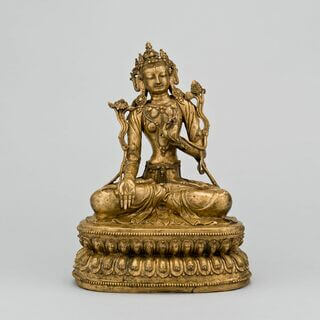
Tonglen is Tibetan for "giving and taking," also rendered "sending and taking": a Buddhist compassion practice in which you breathe in another person's suffering, imagined as dark, heavy smoke, and breathe out relief and wellbeing, imagined as bright, warm light (Andreu et al., 2025).
+
Tonglen means "giving and taking" in Tibetan, and it names both the practice and its core movement: on the in-breath you take in another's pain, visualised as dark, heavy smoke, and on the out-breath you send back relief, warmth, and wellbeing as bright light (Andreu et al., 2025). It comes from Atisha's 11th-century Lojong mind-training teachings and was brought to Western audiences largely by the teacher Pema Chodron. That lineage explains why the practice takes its counterintuitive turn-toward-suffering shape; it is background context, not proof that the practice treats any condition.
The point is to turn toward suffering instead of flinching away from it. Breathing in another's pain deliberately reverses the ego's self-protective instinct, aiming to transform overwhelmed empathic distress into warmer, steadier care rather than numbness, a rationale drawn from broader compassion research, not proven for Tonglen itself (Klimecki et al., 2014), (Klimecki et al., 2013).
+
The aim is not to absorb harm but to change how you meet it. Tonglen comes from the Tibetan Lojong mind-training tradition, where voluntarily moving toward pain is meant to loosen the reflex to avoid discomfort and chase only comfort. Broader compassion-training research, not Tonglen specifically, suggests that deliberately cultivating compassion can shift empathic distress, the depleted, overwhelmed feeling of soaking up another's pain, toward resilient, affiliative engagement rather than shutdown (Klimecki et al., 2014), (Klimecki et al., 2013). This is the practice's rationale, not a claim that breathing in pain treats a condition or literally relieves another person's suffering.
A Tibetan Buddhist compassion practice whose name means 'giving and taking': you breathe in another's suffering as dark, heavy smoke and breathe out relief and wellbeing as bright, warm light.
The tradition of Tibetan Buddhist 'mind training' from which Tonglen comes, traced to Atisha's 11th-century teachings. It is a set of practices for reshaping habitual attitudes toward self and others.
The overwhelmed, depleted feeling that can come from absorbing another person's pain without a sense of being able to help. Compassion practice is thought to shift this toward warmer, steadier engagement.
The emotional exhaustion and numbness that can build in caregivers and healthcare workers from repeated contact with suffering, a state Tonglen is often used to help buffer.
The small beat-to-beat variation in heart rhythm, used as a marker of how active the body's calming, rest-and-recovery branch is. Higher variability generally reflects a more settled, adaptable nervous system.
Beat-to-beat variation in cardiac interval, used as a noninvasive proxy for cardiac vagal (parasympathetic) regulation.
The activity of the vagus nerve, the main pathway of the body's calming system, which slows the heart and supports a settled, socially connected state. It is often estimated from heart rate variability.
The ability to sense and read internal body signals such as breath movement, tension, warmth, and heaviness. Tonglen's imagery keeps attention on these shifting sensations throughout the practice.
Stepping back to watch thoughts and emotions arrive and pass as transient mental events rather than being swept into them, which tends to loosen automatic reactivity.
Paul Gilbert, Jaskaran Kaur Basran, Ptarmigan Plowright, Hannah Gilbert (2023). Energizing compassion: using music and community focus to stimulate compassion drive and sense of connectedness. https://doi.org/10.3389/fpsyg.2023.1150592
Catherine I. Andreu, Joana Vidal, Ylenia D’elia, Oscar Lecuona, Rosa Baños, Gonzalo Brito-Pons (2025). Investigating the Psychophysiological Effects of Tonglen Compassion Meditation in Healthcare Workers. https://doi.org/10.1007/s12671-025-02601-z
Outcomes measured
| Outcome | Effect size | 95% CI | N | Comparator | Source |
|---|---|---|---|---|---|
| depression (POMS) | reported significant; P=.003 | — | 103 | control condition | Pagliaro et al., 2016 |
| stress | reported significant; P<0.05 | 95% CI 2.2-2.4) | — | — | Myhren et al., 2013 |
Research directly on Tonglen is limited to small, mostly acute or short-term studies, and the strongest mechanism findings come from broader compassion-training research rather than Tonglen itself (Dam et al., 2018), (Andreu et al., 2025). Samples have been small and often self-selected toward caregiving or compassion, some results are reported only as p-values, and long-term or generalizable effects have not been established.
reported narratively
Gioacchino Pagliaro, Paolo Pandolfi, Natalina Collina, Giovanni Frezza, Alba Brandes, Margherita Galli (2016). A Randomized Controlled Trial of Tong Len Meditation Practice in Cancer Patients: Evaluation of a Distant Psychological Healing Effect. https://doi.org/10.1016/j.explore.2015.10.001
2016
Finding: This trial tested an unusual version of the practice: experienced meditators performed Tong Len on behalf of 103 cancer patients they had never met, to see whether "distant" practice could help from afar. Patients in the meditation group showed a clear drop in depression scores, but the people in the comparison group improved on most measures too, and actually gained more in energy and activity, so the study found no reliable advantage from the distant practice overall. For anyone considering Tonglen, this tells us little about doing the practice yourself; it specifically found no evidence that meditating for a stranger heals their illness from a distance.
reported significant; P=.003
Paul Gilbert, Kirsten McEwan, Marcela Matos, Amanda Rivis (2011). Fears of compassion: Development of three self‐report measures. https://doi.org/10.1348/147608310x526511
2011
Finding: This study built and tested a set of questionnaires to measure how much people fear compassion, whether that means giving it to others, receiving it from others, or extending it to themselves. The researchers found that fear of compassion is real and measurable, and that people who are highly self-critical are often the most uneasy about being kind to themselves or letting kindness in. For someone drawn to a practice like Tonglen, which asks you to open toward suffering and offer care, this is a useful reminder that resistance or discomfort early on is common rather than a sign you are doing it wrong. Keep in mind this was a measurement-development study, so it maps out where the difficulty lies rather than testing whether any particular practice reduces it.
See full citation in referencesNicola Petrocchi, Simone Cheli (2019). The social brain and heart rate variability: Implications for psychotherapy. https://doi.org/10.1111/papt.12224
2019
Finding: This review traces how heart-rate variability, a measure of how flexibly your nervous system shifts between alertness and calm, is shaped by the vagus nerve and by whether we feel socially safe and connected. The authors argue that warm, prosocial states like compassion register in the body through this same pathway, which offers a plausible reason why practices such as Tonglen can produce felt shifts toward calm during a session. Keep in mind this is a broad theoretical review of how the social nervous system works, not a study of Tonglen itself, so it explains a likely mechanism rather than proving the practice changes your physiology.
See full citation in referencesOlga M. Klimecki, Susanne Leiberg, Claus Lamm, Tania Singer (2013). Functional Neural Plasticity and Associated Changes in Positive Affect After Compassion Training. https://doi.org/10.1093/cercor/bhs142
2013
Finding: In this study with healthy adults, people who first learned to share in others' pain felt more negative emotion when witnessing distress, but a follow-up round of compassion training reversed that dip and raised their positive feelings instead, alongside measurable shifts in brain activity linked to warmth and connection. For a practice like Tonglen, this points to a plausible mechanism: deliberately cultivating compassion may help you stay open to another person's suffering without being pulled down by it, which is part of why such practices are drawn on in caregiving. Keep in mind this was a compassion-training study in healthy volunteers rather than a test of Tonglen itself, so the link is suggestive rather than direct.
See full citation in referencesOlga M. Klimecki, Susanne Leiberg, Matthieu Ricard, Tania Singer (2014). Differential pattern of functional brain plasticity after compassion and empathy training. https://doi.org/10.1093/scan/nst060
2014
Finding: In this study, adults first trained to empathise with others' suffering felt more negative emotion when watching videos of people in pain, but a follow-up round of compassion training reversed that rise in distress and lifted their positive feelings instead, and brain scans showed the two kinds of training activated different networks. That points to a way that deliberately cultivating compassion, rather than just absorbing another person's pain, can turn distress at suffering into warmer, more resilient engagement, which is part of what practices like Tonglen aim for. Keep in mind this was a small study of healthy adults using a related compassion program, not Tonglen itself, so it hints at a plausible mechanism rather than proving that Tonglen delivers the same effect.
See full citation in referencesNicholas T. Van Dam, Marieke K. van Vugt, David R. Vago, Laura Schmalzl, Clifford D. Saron, Andrew Olendzki (2018). Mind the Hype: A Critical Evaluation and Prescriptive Agenda for Research on Mindfulness and Meditation. https://doi.org/10.1177/1745691617709589
2018
Finding: This critical review of the meditation research field flags a recurring problem: many studies use weak methods, define practices inconsistently, and rarely track possible negative effects, so popular claims often run ahead of solid proof. It doesn't test Tonglen itself, but it's a useful reality check, meditation research as a whole is younger and messier than the enthusiasm around it suggests. For someone considering Tonglen, the practical takeaway is to treat confident promises with healthy skepticism and to notice how the practice actually affects you, including any moments of distress, rather than assuming the science has settled.
See full citation in referencesHilde Myhren, Øivind Ekeberg, Olav Stokland (2013). Job Satisfaction and Burnout among Intensive Care Unit Nurses and Physicians. https://doi.org/10.1155/2013/786176
2013
Finding: This survey of 145 intensive-care nurses and physicians at a single Oslo hospital looked at how job stress relates to burnout and job satisfaction, and found that higher stress went hand in hand with more burnout symptoms among these frontline staff. Because it was a one-time snapshot of a specific high-pressure workplace rather than a test of any practice, it maps the problem of chronic work stress but does not measure Tonglen or show that meditation changes these outcomes. Read it as background on why demanding caregiving roles can wear people down, not as direct evidence for what this technique can do.
reported significant; P<0.05
Take extra care if you are in raw grief or carrying an unresolved trauma history, since turning toward pain can surface strong emotion. Keep sessions brief, ground yourself or send warmth to yourself if it becomes overwhelming, and practise alongside a meditation teacher or clinician. Treat any feeling that stays overwhelming after practice as a cue to seek support rather than to push through. Tonglen is not a substitute for clinical care.
Tonglen is best approached gently, giving yourself permission to keep sessions brief and to work with pain you can comfortably hold before turning toward more overwhelming situations. A sensible starting format is just a few minutes with the rhythm of the breath as your anchor, staying attentive to what stirs in the body so you can soften or pause when feelings build. If grief, trauma, or a harsh inner critic makes the practice heavy, it helps to go slowly with the support of a teacher or clinician.
Begin with just a few minutes. If turning toward suffering feels heavy, practise on behalf of someone whose pain you can comfortably hold before working with more overwhelming situations.
Let the rhythm of breathing in darkness and breathing out light give your attention a clear place to rest, so that when a feeling starts to pull you under you have somewhere steady to return to.
Notice interoceptive cues, the internal signals of constriction, heaviness, warmth, or lightness, so you can feel early on whether sadness is building rather than being caught off guard by it.
If breathing in pain tips into feeling swamped, stop, rest your attention on an easy sense of the breath or the ground, or send warmth to yourself before continuing.
For strong grief, trauma, or a persistent, harsh inner critic, work with a meditation teacher or a clinician, and treat any feeling that stays overwhelming after practice as a cue to seek help rather than to push through.
This information is educational and is not medical advice. This practice is not a substitute for professional care and should not replace prescribed medication or treatment for any medical or mental-health condition. If you are managing a health condition or taking medication, talk with a qualified health professional before changing your practice. If you are in distress or crisis, seek professional support.
| CCT is a structured, secular multi-week course that trains compassion through a graded sequence of guided steps, whereas Tonglen is a single Tibetan Buddhist breath-and-image practice that can stand alone or sit inside a broader curriculum. Tonglen is one focused technique; CCT is a whole program. |
| Mindfulness meditation | Building general present-moment attention and reducing reactivity without focusing specifically on others' suffering. | moderate EVIDENCE | Mindfulness meditation trains open, nonjudgmental attention to present-moment experience without deliberately generating an emotion, while Tonglen actively cultivates compassion and pairs breath with vivid dark-to-light imagery. Mindfulness is primarily an attentional practice; Tonglen is a directed compassion practice. |
Yes, there is genuine, if early, research behind it, not only tradition. In one small randomized trial, a single 15-minute session raised healthcare workers' sense of compassion and their heart rate variability, a marker of the body settling (Andreu et al., 2025). This supports in-the-moment compassion and calming, not treatment of any diagnosed condition.
+
There is real, if early, research behind it. In a small randomized trial with 60 participants, a single 15-minute Tonglen session left healthcare workers feeling more compassion and more emotionally responsive to others' suffering, and it raised heart rate variability, the beat-to-beat variation in heartbeat that signals the body's calming branch coming forward (Andreu et al., 2025). A separate two-week study linked a Tonglen-informed compassion practice to greater wellbeing and connection (Gilbert et al., 2023). The evidence is genuine but not yet established: samples are small, most effects were measured right after practice, and one trial of 'distant' Tong Len for cancer patients showed no clear benefit (Dam et al., 2018), (Pagliaro et al., 2016).
Possibly, but indirectly. No trial has measured burnout or compassion fatigue directly, though small studies show Tonglen can acutely lift compassion and wellbeing, the capacities that help caregivers stay present rather than shut down (Andreu et al., 2025), (Gilbert et al., 2023).
+
Possibly, but the evidence is early and indirect. In one small randomized trial, a single 15-minute session left healthcare workers feeling more compassion and more emotionally responsive to suffering rather than numb (Andreu et al., 2025), and a short two-week study linked a Tonglen-informed compassion practice to greater wellbeing and connection (Gilbert et al., 2023). These are the very capacities burnout erodes, so Tonglen may support them, but no study has directly measured burnout or compassion-fatigue outcomes, and the samples so far are small and mostly acute (Dam et al., 2018). Treat it as a supportive practice, not a treatment for burnout.
Early evidence suggests it can. In one small trial, a single 15-minute Tonglen session raised healthcare workers' heart rate variability, a marker of the body's calming rest-and-recovery branch, even as attention stayed with suffering (Andreu et al., 2025).
+
It appears so, though the evidence is early rather than settled. In one small single-session trial with 60 healthcare workers, a 15-minute Tonglen practice acutely increased heart rate variability, the beat-to-beat variation in heartbeat that signals the body's calming, rest-and-recovery branch gaining ground, compared with a control condition (Andreu et al., 2025). Broader compassion research, not Tonglen itself, links this kind of vagal shift to feeling soothed rather than threatened (Petrocchi & Cheli, 2019). This is a modest, in-the-moment change measured right after one session, not lasting change or a substitute for clinical care.
Yes. Feeling sadness or heaviness as you breathe in another's suffering is a normal, expected part of Tonglen, and it often softens into warmth on the out-breath. This usually eases with gentle pacing; if the feeling stays overwhelming, slow down or seek support, especially amid acute grief or trauma.
+
Yes. Because Tonglen deliberately turns toward pain rather than away from it, breathing in suffering can stir sadness or a sense of heaviness. This is a practice-informed caution, not a sign that something is wrong, and the small studies so far report no harms. The discomfort usually eases with gentle, repeated practice, and pausing to send warmth to yourself can help. People who are highly self-critical may find compassion uneasy at first; if grief or trauma runs high, or a feeling stays overwhelming after practice, go slowly and consider working with a teacher or clinician.
Use care. Tonglen is low-risk for most adults, but deliberately breathing in suffering can surface strong sadness, so in acute grief or with a trauma history, start short, go slowly, and practise alongside a teacher or clinician.
+
Use care. Because Tonglen turns toward pain rather than away from it, taking in another's suffering can stir up grief or difficult feelings, and people who are highly self-critical may find offering or receiving compassion uncomfortable at first (Gilbert et al., 2011). This is a practice-informed caution, not a clinical safety finding, and there is no trauma- or grief-specific trial of Tonglen. If you are in raw grief or carrying unresolved trauma, keep sessions brief, ground yourself or send warmth to yourself if it becomes overwhelming, and seek qualified support rather than pushing through. It is not a substitute for clinical care.
Start short and gentle: breathe in someone's suffering as dark, heavy smoke and breathe out relief and warmth as bright light, using that breath-and-image rhythm as your anchor (Andreu et al., 2025). Notice what arises in your body, and if it feels like too much, pause, send warmth to yourself, or open your eyes.
+
Begin with just a few minutes, and if turning toward pain feels heavy, practise on behalf of someone whose suffering you can comfortably hold before working with harder situations. Let the dark-in, light-out breath imagery give your attention a clear place to return to, and track bodily cues like constriction, heaviness, or warmth so you notice early if sadness is building. A wave of sadness on the in-breath is a normal part of the practice, not a sign something is wrong. If feelings become overwhelming, it is fine to stop and rest, and for strong grief, trauma, or a harsh inner critic, work alongside a meditation teacher or clinician rather than pushing through.
The main difference is direction: loving-kindness meditation repeats silent phrases wishing others well and steers gently toward warmth, while Tonglen deliberately breathes in another's suffering as dark smoke and breathes out relief as bright light, turning toward pain rather than away (Andreu et al., 2025).
+
Both practices cultivate compassion, but they get there differently. Loving-kindness meditation, also called metta, reaches toward good wishes by silently repeating phrases such as "may you be well," whereas Tonglen pairs the breath with vivid dark-to-light imagery, taking in suffering on the in-breath and sending out warmth on the out-breath (Andreu et al., 2025). This is a difference in method, not a ranking: no direct head-to-head trial has compared the two, so neither can be called more effective. Loving-kindness may suit building a baseline of warmth gently, while Tonglen is chosen when the aim is to stay present with pain rather than turn from it.
No. Tonglen is an inner training of your own attention and compassion, not a proven way to heal someone else's pain from a distance. A randomized trial of "distant" Tong Len on behalf of cancer patients showed no clear benefit over a control condition (Pagliaro et al., 2016).
+
No. Tonglen means "sending and taking": you breathe in another's suffering and breathe out relief and warmth, but the measurable changes happen in the practitioner, not the other person (Andreu et al., 2025). When researchers tested Tong Len practised at a distance for cancer patients, it did not clearly outperform a control condition (Pagliaro et al., 2016). It is best understood as a way to stay compassionately present, not a distant or psychic healing method, and it is not a substitute for clinical care.
Cited in: Benefits, Faq, How it works, Research, What happens in the body, What it is
Gioacchino Pagliaro, Paolo Pandolfi, Natalina Collina, Giovanni Frezza, Alba Brandes, Margherita Galli (2016). A Randomized Controlled Trial of Tong Len Meditation Practice in Cancer Patients: Evaluation of a Distant Psychological Healing Effect. https://doi.org/10.1016/j.explore.2015.10.001
Paul Gilbert, Kirsten McEwan, Marcela Matos, Amanda Rivis (2011). Fears of compassion: Development of three self‐report measures. https://doi.org/10.1348/147608310x526511
Cited in: Faq, Research, Use with care, Who should use care
Nicola Petrocchi, Simone Cheli (2019). The social brain and heart rate variability: Implications for psychotherapy. https://doi.org/10.1111/papt.12224
Cited in: Faq, How it works, Research, What happens in the body
Olga M. Klimecki, Susanne Leiberg, Claus Lamm, Tania Singer (2013). Functional Neural Plasticity and Associated Changes in Positive Affect After Compassion Training. https://doi.org/10.1093/cercor/bhs142
Cited in: Faq, How it works, Research
Olga M. Klimecki, Susanne Leiberg, Matthieu Ricard, Tania Singer (2014). Differential pattern of functional brain plasticity after compassion and empathy training. https://doi.org/10.1093/scan/nst060
Cited in: Faq, How it works, Research
Nicholas T. Van Dam, Marieke K. van Vugt, David R. Vago, Laura Schmalzl, Clifford D. Saron, Andrew Olendzki (2018). Mind the Hype: A Critical Evaluation and Prescriptive Agenda for Research on Mindfulness and Meditation. https://doi.org/10.1177/1745691617709589
Hilde Myhren, Øivind Ekeberg, Olav Stokland (2013). Job Satisfaction and Burnout among Intensive Care Unit Nurses and Physicians. https://doi.org/10.1155/2013/786176
Cited in: Research
Explore guided sessions to deepen your Tonglen (Sending and Taking) technique.
Editorially curated. Tracks are not themselves clinically studied; evidence on the page applies to Tonglen (Sending and Taking) as a technique.
Beginner content for Tonglen (Sending and Taking)

★ 4.8
·
Guided
·
17 min
Ram Dass Legacy - The Love Serve Remember Foundation
How hard is Tonglen (Sending and Taking)?
Tonglen uses a shared Play Page Large Label profile so duplicate taxonomy placements produce one public effort assignment.
3
Mental Effort
3 / 4
▾Emotional Depth
3 / 4
▾Physical Intensity
1 / 4
▾Prior Knowledge
2 / 4
▾