The world’s largest free audio library for everyday wellbeing
Somatic & Body Based
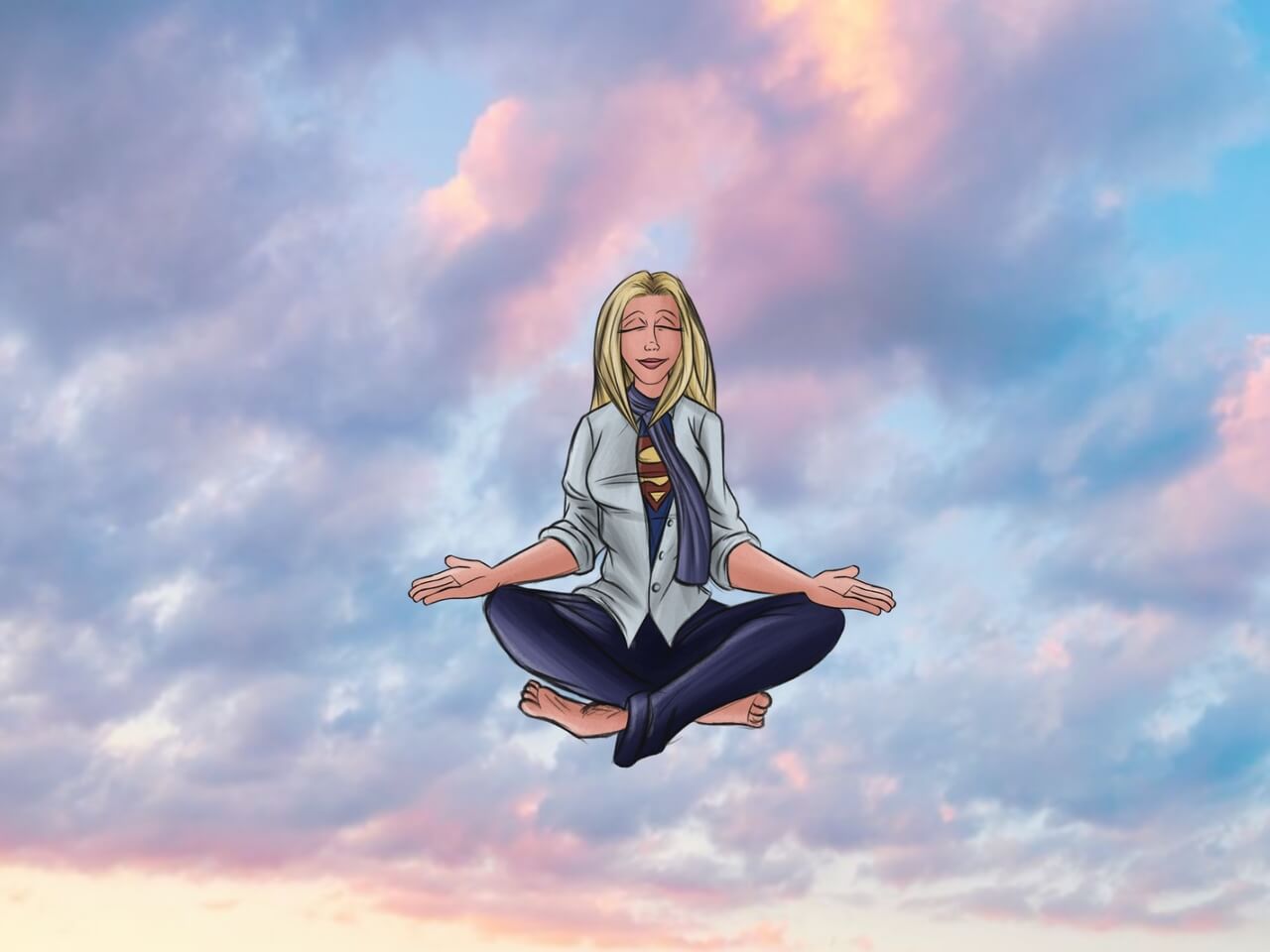
Aura Sensing is a receptive attention practice of extending awareness just beyond the skin to notice subtle sensations such as warmth, tingling, or a felt sense of space around the body.
Last Updated
4 Jul 2026
We are still reviewing this page. Our research team checks every technique page for accuracy and evidence quality before final release. Details may change as that review completes. The evidence badge shows our current reading of the published research.
RECOMMENDED DOSE
No direct dose evidence; editorial synthesis. The available references describe smartphone sensor and mood-monitoring studies unrelated to this contemplative practice, so a short, low-commitment introductory session is suggested to build the perceptual attention habit without fatigue.
No direct dose evidence; editorial synthesis. A moderate step up in session length and frequency reflects general contemplative-practice conventions for consolidating a routine once the basics feel comfortable.
No direct dose evidence; editorial synthesis. A near-daily, longer sitting reflects typical maintenance-level practice conventions and should be approached gradually and only if it remains sustainable.
Session length
Session length: 5–10 minutes
5
MIN
How long each individual practice session should last from start to finish.
Frequency
Frequency: 3–4 days
3
DAYS
The number of days per week to fit a session into your routine.
Session length
Session length: 15–20 minutes
15
MIN
How long each individual practice session should last from start to finish.
Frequency
Frequency: 4–5 days
4
DAYS
The number of days per week to fit a session into your routine.
Session length
Session length: 20–30 minutes
20
MIN
How long each individual practice session should last from start to finish.
Frequency
Frequency: 6–7 days
6
DAYS
The number of days per week to fit a session into your routine.
About this card. No direct dose-response literature exists for Aura Sensing; these ranges are conservative starting points based on general contemplative-practice conventions. These recommendations are not a substitute for personalised guidance from a qualified practitioner.
Quick answers to what people most often ask. Each card links to the deeper section below.
evidence
No randomized trials, controlled studies, or systematic reviews have tested Aura Sensing, so its benefits rest on tradition and practitioner report rather than measured outcomes. Its plausibility leans on interoception research from other body-attention practices showing that attention to internal signals can be trained, while its energy-field claim remains scientifically unverified.
Read moregood for
Aura Sensing may suit people who want to build body awareness, feel more present, or explore a subtle-energy practice within a tradition that gives it meaning. It offers a felt sense of embodiment and calm curiosity, not a treatment for anxiety, trauma, depression, or medical conditions, and has not been studied in any specific group.
Read moresafety
Most healthy adults can explore Aura Sensing safely, with no known physical risks. Turning attention to faint sensations beyond the skin can occasionally feel unsettling or ungrounding, particularly for people with a trauma history or a tendency to feel detached from the body. If dizziness or strong emotion arises, open the eyes and feel the feet on the floor.
Read morehow it works
Aura Sensing is thought to work by training interoceptive awareness, the skill of reading the body's own signals, as attention rests on faint sensations at and just past the skin. Directing awareness to warmth, tingling, or a sense of space may engage the brain regions that map body sensation, though this remains a proposed mechanism rather than a measured one.
Read moreAura Sensing is a receptive practice of extending attention just beyond the skin to notice subtle sensations such as warmth, tingling, or a felt sense of space around the body.
You sit or stand quietly and rest attention at the surface of the skin, then let it reach outward into the space just beyond the body. Rather than scanning methodically, you hold an unforced, receptive orientation, noticing warmth, tingling, density, spatial extension, or fleeting color impressions at varying distances. Sessions are gentle and self-paced, meeting whatever arises with curiosity rather than effort.
Aura Sensing differs from Energy Field Scan, which moves through the body in a directed sweep, by keeping a receptive, open-awareness orientation instead. It also differs from Biofield Sensing, which attends to the zone right at the body's boundary, by reaching for the outermost perceived layers of the field. It is a traditional, experiential practice, not a diagnostic method or a verified way to detect physical energy.
Not to be confused with
Aura photography and aura reading
Aura photography or Kirlian imaging claims to capture or diagnose an energy field on camera or by inspection. Aura Sensing makes no such claim; it is a first-person practice of noticing subtle felt sensations, not a technology or a way to see or diagnose another person's aura.
Reiki and hands-on energy healing
Reiki and similar modalities involve a practitioner working on another person's energy to produce healing. Aura Sensing is receptive and self-directed: it develops your own felt perception of the space around the body rather than treating anyone or channelling energy to them.
Medical or energetic diagnosis
Aura Sensing is not a diagnostic method. The warmth, tingling, or spatial impressions a practitioner notices are subjective felt experiences, not readings of health, illness, or another person's condition, and should never replace professional assessment.
Aura Sensing is thought to work by training interoceptive awareness, the skill of reading the body's own signals, as you direct attention to faint sensations at and just past the skin. Practitioners often describe feeling more present and more settled in their own skin, noticing early flickers of tension or ease sooner. The practice also cultivates what several traditions call subtle energy awareness, a trained felt sense of warmth, presence, or space beyond the body's edge, which for now stays a lived, subjective experience rather than a measured one. Both explanations are hypotheses drawn from the practice's own lineage, not from direct study of Aura Sensing itself.
You may feel more present and more settled in your own skin as you turn attention to the faint sensations at the body's surface and just beyond it, such as warmth, tingling, or a felt sense of space. That noticing is a way of practising interoceptive awareness, the skill of reading the body's own internal signals.
Some people describe a felt sense of warmth, tingling, or presence just beyond the skin, and Aura Sensing treats that perception as something attention can develop over time. In several spiritual traditions this refined sensing of a subtle energy field is the heart of the practice, though for now it stays a lived, subjective experience rather than a measured one.
No study has measured what Aura Sensing does inside the body, so its physical effects stay unmeasured rather than established. Research on related body-attention practices, not Aura Sensing specifically, points to the insula and somatosensory cortex, the brain regions that map internal and skin-surface sensation, which may become more engaged when attention rests on subtle bodily signals. In felt terms, people more often report a gentle warmth, tingling, or a sense of spaciousness at the body's edge than any dramatic bodily change.
Limited–Emerging evidence to date: no clinical trials have tested Aura Sensing, so its traditionally associated benefits, body awareness, deep presence, emotional grounding, and a felt sense of energy or vitality, rest on lineage teaching and practitioner report rather than measured outcomes. What people most consistently describe is feeling more embodied and present, while the underlying idea, that attention can be trained toward subtle body signals, has only indirect support from interoception research on other practices. What is not supported: any claim that Aura Sensing treats anxiety, trauma, depression, or medical conditions, and any evidence that it detects a measurable energy field.
There is almost no direct research on Aura Sensing. No randomized trials, controlled studies, or systematic reviews have tested what practitioners describe, noticing warmth, tingling, density, or space at the body's edge, so its plausibility leans on adjacent interoception research showing that attention to internal body signals can be trained, and on long-standing descriptions in Theosophical, Vedantic, and energy-healing traditions. Its energy-field component overlaps with biofield concepts that remain scientifically unverified, so any claim about it is best read as early and tradition-based rather than demonstrated.
Aura Sensing has not been studied directly, so there is little to set expectations from. The nearest evidence comes from interoception research on other body-attention practices, which suggests attention to body signals can be trained but says nothing specific about this practice. Treat any description of its effects as early and tradition-based, and not a replacement for clinical care.
Aura Sensing traces to Theosophy, Vedanta, and contemporary energy-healing traditions, each of which describes a subtle field surrounding the physical body. These roots help explain the practice's form, its receptive, open-awareness reach toward the outermost perceived layers, rather than proving any clinical effect. It is often distinguished from more systematic scanning practices by this unforced, listening orientation.
Aura Sensing is a gentle, receptive practice that most healthy adults can explore safely, with no known physical risks. Because it has been studied very little, there is no evidence that it treats anxiety, trauma, or any medical condition, and it is not a substitute for professional care. A few situations still warrant care, all drawn from practical experience rather than safety trials. Turning attention to faint sensations at and beyond the skin can occasionally feel unsettling or ungrounding, especially for people carrying a trauma history or a tendency to feel detached from the body. If strong emotion, dizziness, or unease arises, it helps to open the eyes, feel the feet on the floor, and pause until the body steadies.
People working with active trauma, intense anxiety, or a tendency toward dissociation, feeling detached from the body or surroundings, should approach Aura Sensing gradually and, ideally, alongside a qualified practitioner, since reaching attention outward can feel disorienting. This caution comes from how open-attention practices sometimes heighten distress in these groups rather than from safety studies of Aura Sensing itself. Anyone using the practice to cope with a diagnosed condition should treat it as a support alongside established mental-health care, not a replacement for it.
Reaching attention outward past the skin can occasionally feel disorienting or bring up strong emotion for people carrying a trauma history or who tend to feel detached from the body. Start with short sessions, keep the eyes open if that helps, and practise gradually and ideally alongside a qualified practitioner. This caution comes from how open-attention practices sometimes heighten distress in these groups, not from safety trials of Aura Sensing itself.
| Technique | Best for | Use with care | Evidence strength | Distinction |
|---|---|---|---|---|
| Energy Field Scan | People who want a structured, step-by-step way to survey the body and its perceived field from head to toe. | The systematic sweep can feel effortful or clinical if you are seeking an unforced, curious kind of attention. | emerging EVIDENCE | Energy Field Scan moves attention through the body's energy field in a deliberate, systematic sweep, checking one region after another. Aura Sensing instead holds a receptive, open-awareness posture, resting attention at the skin's edge and letting sensations of warmth, tingling, or spaciousness arrive rather than hunting for them area by area. |
| Biofield Sensing | Practitioners drawn to the felt qualities right at the body's surface and the immediate boundary between self and space. | emerging EVIDENCE | Biofield Sensing focuses on the zone right at the body's boundary, the immediate layer where skin meets surrounding space. Aura Sensing reaches further out, giving its attention to the outermost perceived layers at varying distances from the body rather than the close boundary zone. |
Aura Sensing is a receptive attention practice of extending awareness just beyond the skin to notice subtle sensations such as warmth, tingling, or a felt sense of space around the body. It comes from Theosophical, Vedantic, and energy-healing traditions and is a felt practice, not a proven treatment or a way to measure an energy field.
+
Aura Sensing is a gentle, self-paced somatic practice in which you rest attention at the skin's surface and let it reach into the space just beyond the body, staying curious about faint qualities like warmth, tingling, density, or spaciousness. Rather than a systematic scan, it holds a receptive, open-awareness posture and lets sensations arrive on their own. Its form comes from Theosophical, Vedantic, and contemporary energy-healing traditions that describe a subtle field around the body, rather than from clinical study, so it is best understood as a tradition-based practice description, not evidence that it treats any condition or reveals a measurable energy field.
Both, in a sense. The warmth, tingling, density, or felt sense of space people report near the skin are genuine subjective experiences. Whether they perceive an actual energy field is scientifically unverified, so the aura is best treated as a tradition-based interpretation rather than a measured signal.
+
The sensations are real as experience. Practitioners consistently notice warmth, tingling, density, or spaciousness at and just beyond the skin, and Aura Sensing is defined precisely as resting receptive attention there. What stays unconfirmed is the explanation. The idea that these sensations detect a subtle energy field around the body comes from Theosophical, Vedantic, and energy-healing traditions, not from controlled study, and no research has shown a measurable aura. So the experience is genuine, while the energy-field framing remains an interpretive lens rather than a demonstrated perception.
The skill of noticing and making sense of the body's internal signals, such as tension, temperature, pressure, and the movement of breath. Strengthening it often shows up as feeling more embodied and catching early stress cues sooner.
Interoception, or visceral afferent processing: the perception and interpretation of internal bodily states, associated with insular and somatosensory processing.
The trained ability to notice faint qualities of energy, flow, or presence in and around the body, described in several spiritual traditions. In practice it feels like warmth, tingling, density, or a sense of space extending beyond the skin.
Subtle body or biofield perception: a proposed sensing of non-ordinary energetic phenomena, framed in source-context tradition and not confirmed as a distinct sensory channel by controlled study.
In the traditions behind this practice, a layered energy field said to surround the physical body and extend beyond the skin. It is the interpretive frame practitioners work within, not a verified physical signal.
An umbrella term used in energy-medicine literature for a proposed field of energy surrounding and permeating the body. Reviews of the concept exist, but it remains scientifically unverified.
A way of paying attention that waits and listens rather than searching, letting sensations arrive on their own. It is the unforced, curious posture that distinguishes Aura Sensing from a systematic scan.
Lucy MacLeod, Banuchitra Suruliraj, Dominik Gall, Kitti Bessenyei, Sara Hamm, Isaac D. Romkey (2021). A Mobile Sensing App to Monitor Youth Mental Health: Observational Pilot Study.. https://doi.org/10.2196/20638
Cited in: –
Jonah Meyerhoff, Tony Liu, Konrad P. Körding, Lyle Ungar, Susan M. Kaiser, Chris Karr (2021). Evaluation of Changes in Depression, Anxiety, and Social Anxiety Using Smartphone Sensor Features: Longitudinal Cohort Study.. https://doi.org/10.2196/22844
Cited in: –
Turning attention to faint sensations at and beyond the skin can sometimes feel unsettling. If strong emotion, dizziness, or a sense of detachment arises, stop the outward reach, open your eyes, feel your feet on the floor, and reorient to ordinary sight, sound, and touch until the body steadies. Begin future sessions with just a couple of minutes and build slowly.
Aura Sensing has been studied very little, and no evidence shows it treats anxiety, trauma, depression, or any medical condition. If you are using it to cope with a diagnosed condition or significant distress, treat it as a support alongside established mental-health care, not a replacement for it, and seek a qualified practitioner or clinician when working with trauma, dissociation, or intense anxiety.
Aura Sensing is best approached in a comfortable seated or standing position, somewhere you can let attention move outward slowly and keep a light, curious hold on whatever you notice. A sensible starting format is just a few minutes at a time, especially if you are new to body-awareness work or carry a trauma or anxiety history, always keeping ordinary contact points like the feet on the floor within easy reach so you can steady yourself if anything feels unsettling.
Sit or stand comfortably and let the breath find its own pace. Take a moment to feel ordinary points of contact, the seat beneath you or the feet on the floor, before turning any attention outward.
Rest awareness at the skin's surface first, then let it reach into the space just beyond the body, noticing warmth, tingling, or a felt sense of space without forcing any particular experience.
Treat whatever you notice as something to observe rather than a result to achieve. The receptive, unforced orientation is part of the practice and keeps it gentle.
If strong emotion, dizziness, or a sense of detachment arises, stop the outward reach, open your eyes, and return to ordinary senses, sight, sound, and the touch of the floor, until you feel steady again.
Begin with a few minutes, especially if you are new to body-awareness work or carry a trauma or anxiety history, and lengthen sessions only as the practice keeps feeling comfortable.
Use Aura Sensing to build body awareness and felt presence, not as a treatment for any condition, and seek a qualified practitioner or clinician if you are working with trauma, dissociation, or significant distress.
This information is educational and is not medical advice. This practice is not a substitute for professional care and should not replace prescribed medication or treatment for any medical or mental-health condition. If you are managing a health condition or taking medication, talk with a qualified health professional before changing your practice. If you are in distress or crisis, seek professional support.
| Body Scan meditation | Anyone wanting a widely taught, secular route into body awareness and settling without an energy-field framing. | For some people with trauma histories, sustained inward scanning can heighten distress; introduce it gradually and with grounding. | moderate EVIDENCE | Body Scan meditation keeps attention inside the physical body, moving through internal sensations of tension, temperature, and weight. Aura Sensing shares the same interoceptive skill of reading subtle body signals but extends that attention outward, to the surface and the space just beyond it, and carries a subtle-energy meaning frame that Body Scan does not. |
There is almost no direct science. No randomized trials, controlled studies, or reviews have tested Aura Sensing, so any claim that it works is tradition-based and unproven rather than demonstrated. It is not shown to treat conditions, and no evidence shows it detects a measurable energy field.
+
There is almost no direct science on Aura Sensing itself. Its plausibility leans only on adjacent interoception research, the study of how attention to internal body signals can be trained, and on long-standing descriptions in Theosophical, Vedantic, and energy-healing traditions, not on any study of this practice. The idea that resting attention at and just beyond the skin sharpens body awareness, and that it builds a felt sense of subtle energy, remains a mechanism hypothesis drawn from lineage rather than a measured outcome. Treat any claim that it works as early and unproven: it is not shown to treat conditions, and no evidence shows it detects a real energy field.
No. Aura Sensing is not a way to detect or measure a physical energy field; the warmth, tingling, or sense of space you notice are subjective felt experiences, and the biofield idea behind them remains scientifically unverified.
+
No. Aura Sensing is a first-person practice of noticing subtle sensations at and just beyond the skin, building a felt sense of energy or presence rather than measuring anything outside the body. The framing comes from source-context traditions such as Theosophy, Vedanta, and energy healing, and the underlying biofield concept has not been confirmed by controlled study, so the experience is best read as tradition-based rather than demonstrated detection. It offers no objective reading of an energy field and is not a diagnostic tool.
No one has measured this directly for Aura Sensing, so the brain basis is a hypothesis, not a finding. Research on related body-attention practices suggests the insula and somatosensory cortex, brain regions that map internal and skin-surface sensation, may engage more when attention rests on subtle bodily signals.
+
No study has imaged the brain during Aura Sensing itself, so any account of brain activity stays a mechanism hypothesis rather than a demonstrated effect. Evidence from adjacent body-attention practices points to the insula and somatosensory cortex, the areas that process internal and skin-surface sensation, becoming more engaged when attention settles on faint bodily signals, an idea drawn from interoception research on other practices, not from Aura Sensing. This is suggestive, not confirmed, and it does not mean the practice detects a measurable energy field.
Use care. Aura Sensing has no known physical risks for most adults, but it is largely unstudied, and turning attention outward can feel ungrounding if you carry a trauma history or tend to feel detached from your body. Go gradually, ideally with a qualified practitioner, and treat it as a support alongside care, not a replacement for it.
+
Use care. This caution comes from practical experience rather than safety trials, because Aura Sensing has had very little scientific study to date and none testing trauma or dissociation-prone groups. For people with a trauma history or a tendency to feel detached from the body, extending attention past the skin can occasionally feel disorienting or bring up strong emotion, so start with short sessions, and if distress arises reground yourself by opening your eyes and feeling your feet on the floor, ideally working alongside a qualified practitioner. It is not a treatment for trauma, dissociation, or any condition, and should be an adjunct to, not a substitute for, professional care.
No. Aura Sensing is not a treatment for anxiety and cannot replace therapy or professional mental-health care. It may support body awareness, presence, and grounding, but no study shows it treats anxiety, so treat it as an optional add-on to care, never a substitute.
+
No. Aura Sensing has not been tested in clinical trials, and no evidence shows that it treats anxiety or any condition; its traditionally described benefits, like feeling more embodied and present, rest on practitioner report rather than measured outcomes. It may gently support body awareness by resting attention on subtle sensations at and beyond the skin, though that possibility points in a promising direction rather than an established one. If you are working with active anxiety, trauma, or dissociation, a sense of being detached from your body or surroundings, approach it gradually and ideally alongside a qualified practitioner, and keep any established mental-health care in place.
Start by settling into ordinary contact points, then slowly extend attention just past your skin, noticing warmth, tingling, or a sense of space with a light, curious hold. Begin with just a few minutes and lengthen sessions only as the practice stays comfortable. If anything feels unsettling, open your eyes and reorient to the floor and your senses.
+
As a beginner, keep it simple and gentle. Sit comfortably, let the breath settle, and feel grounded contact points before turning attention outward to the skin's surface and the space just beyond it. Hold a receptive, unforced posture, treating whatever you notice as information to observe rather than a result to chase, and stop to reground if strong emotion, dizziness, or detachment arises. This guidance reflects how the practice is traditionally taught rather than clinical trials; it builds body awareness and felt presence, not treatment of any condition, and it does not detect a measurable energy field. If you carry a trauma, dissociation, or significant anxiety history, start especially briefly and ideally alongside a qualified practitioner.
Stop the outward reach and reground. Open your eyes, feel your feet on the floor, and reorient to ordinary sight, sound, and touch until you feel steady. This guidance reflects how the practice is taught, not safety trials; if dizziness, strong emotion, or a sense of detachment keeps returning, keep sessions short and seek a qualified practitioner or clinician.
+
Stop the outward reach and come back to what is solid. Practitioners commonly suggest opening your eyes, pressing your feet into the floor, and naming a few things you can see, hear, or touch until the unsettled feeling eases. Next time, start with just a couple of minutes and build slowly. This grounding advice reflects how open-attention practices are taught rather than findings from safety trials, and persistent distress, active trauma, or a tendency to feel detached from the body warrants working with a qualified practitioner or clinician rather than using the practice alone.
Both train the same skill of reading subtle body signals, but a body scan keeps attention inside the physical body, while Aura Sensing extends attention to the skin's surface and the space just beyond it, framed by a subtle-energy tradition that a body scan does not carry.
+
The core difference is where attention goes and what meaning frame it carries. A body scan moves through internal sensations of tension, temperature, and weight, and is widely taught as a secular route into body awareness. Aura Sensing shares that interoceptive skill of reading the body's own signals but reaches outward to the skin surface and the felt space beyond it, interpreted through Theosophical, Vedantic, and energy-healing traditions. That subtle-energy framing is source-context tradition and practitioner report, not clinical proof: neither practice treats any condition, and Aura Sensing is not a way to detect a measurable energy field.
George P. Chrousos (2009). Stress and disorders of the stress system. https://doi.org/10.1038/nrendo.2009.106
Cited in: –
Melo Mariana Cardoso, da Silva Vallim Julia Ribeiro, Garbuio Silvério, Soster Leticia Azevedo, Sousa Ksdy Maiara Moura, Bonaldi Renata Redondo (2024). Validation of a sleep staging classification model for healthy adults based on two combinations of a single-channel EEG headband and wrist actigraphy.. https://doi.org/10.5664/jcsm.11082
Cited in: –
Lange Rael T, Sullivan Karen A, Scott Clinton (2010). Comparison of MMPI-2 and PAI validity indicators to detect feigned depression and PTSD symptom reporting.. https://doi.org/10.1016/j.psychres.2009.03.004
Cited in: –
Rector Neil A, Bagby Robert Michael, Huta Veronika, Ayearst Lindsay E (2012). Examination of the trait facets of the five-factor model in discriminating specific mood and anxiety disorders.. https://doi.org/10.1016/j.psychres.2012.04.027
Cited in: –
Philip I. Chow, Karl C. Fua, Yu Huang, Wes Bonelli, Haoyi Xiong, Laura E. Barnes (2017). Using Mobile Sensing to Test Clinical Models of Depression, Social Anxiety, State Affect, and Social Isolation Among College Students.. https://doi.org/10.2196/jmir.6820
Cited in: –
Kangas Maria, Milross Chris, Taylor Alan, Bryant Richard A (2013). A pilot randomized controlled trial of a brief early intervention for reducing posttraumatic stress disorder, anxiety and depressive symptoms in newly diagnosed head and neck cancer patients.. https://doi.org/10.1002/pon.3208
Cited in: –
Choi Adrien, Ooi Aysel, Lottridge Danielle (2024). Digital Phenotyping for Stress, Anxiety, and Mild Depression: Systematic Literature Review.. https://doi.org/10.2196/40689
Cited in: –
Kaneda Y, Fujii A (2000). The relation between anxiety and depressive symptoms in normal subjects and patients with anxiety and/or mood disorders..
Cited in: –
Lee Rebecca Anne, Jung Mary Elizabeth (2018). Evaluation of an mHealth App (DeStressify) on University Students' Mental Health: Pilot Trial.. https://doi.org/10.2196/mental.8324
Cited in: –
Sinclair Peter, Kable Ashley, Levett-Jones Tracy (2015). The effectiveness of internet-based e-learning on clinician behavior and patient outcomes: a systematic review protocol.. https://doi.org/10.11124/jbisrir-2015-1919
Cited in: –
Daniel Di Matteo, Kathryn Fotinos, Sachinthya Lokuge, Geneva Mason, Tia Sternat, Martin A. Katzman (2021). Automated Screening for Social Anxiety, Generalized Anxiety, and Depression From Objective Smartphone-Collected Data: Cross-sectional Study.. https://doi.org/10.2196/28918
Cited in: –
Skyler Place, D. Blanch-Hartigan, Channah Rubin, Cristina Gorrostieta, C. Mead, J. Kane (2017). Behavioral Indicators on a Mobile Sensing Platform Predict Clinically Validated Psychiatric Symptoms of Mood and Anxiety Disorders.. https://doi.org/10.2196/jmir.6678
Cited in: –
Rona Roberto J, Burdett Howard, Khondoker Mizanur, Chesnokov Melanie, Green Kevin, Pernet David (2017). Post-deployment screening for mental disorders and tailored advice about help-seeking in the UK military: a cluster randomised controlled trial.. https://doi.org/10.1016/s0140-6736(16)32398-4
Cited in: –
Whitney R. Ringwald, G. King, Colin Vize, Aidan G.C. Wright (2025). Passive Smartphone Sensors for Detecting Psychopathology. https://doi.org/10.1001/jamanetworkopen.2025.19047
Cited in: –
Yao S-N, Cottraux J, Note I, De Mey-Guillard C, Mollard E, Ventureyra V (2003). [Evaluation of Post-traumatic Stress Disorder: validation of a measure, the PCLS]..
Cited in: –
Joanne R. Beames, Jin Han, Artur Shvetcov, Wu Yi Zheng, Aimy Slade, Omar Dabash (2024). Use of smartphone sensor data in detecting and predicting depression and anxiety in young people (12–25 years): A scoping review. https://doi.org/10.1016/j.heliyon.2024.e35472
Cited in: –
Naragon-Gainey Kristin (2019). Affective models of depression and anxiety: Extension to within-person processes in daily life.. https://doi.org/10.1016/j.jad.2018.09.061
Cited in: –
Jennifer Nicholas, Katie Shilton, Stephen M. Schueller, Elizabeth Gray, Mary Kwasny, David C. Mohr (2019). The Role of Data Type and Recipient in Individuals’ Perspectives on Sharing Passively Collected Smartphone Data for Mental Health: Cross-Sectional Questionnaire Study. https://doi.org/10.2196/12578
Cited in: –
Dror Ben‐Zeev, Emily A. Scherer, Rui Wang, Haiyi Xie, Andrew T. Campbell (2015). Next-generation psychiatric assessment: Using smartphone sensors to monitor behavior and mental health.. https://doi.org/10.1037/prj0000130
Cited in: –
Mack Dante L, DaSilva Alex W, Rogers Courtney, Hedlund Elin, Murphy Eilis I, Vojdanovski Vlado (2021). Mental Health and Behavior of College Students During the COVID-19 Pandemic: Longitudinal Mobile Smartphone and Ecological Momentary Assessment Study, Part II.. https://doi.org/10.2196/28892
Cited in: –
John M. Hettema, Michael C. Neale, John Myers, Carol A. Prescott, Kenneth S. Kendler (2006). A Population-Based Twin Study of the Relationship Between Neuroticism and Internalizing Disorders. https://doi.org/10.1176/ajp.2006.163.5.857
Cited in: –
Wright Margaret O'Dougherty, Crawford Emily, Del Castillo Darren (2009). Childhood emotional maltreatment and later psychological distress among college students: the mediating role of maladaptive schemas.. https://doi.org/10.1016/j.chiabu.2008.12.007
Cited in: –
Nadia Alam, Mohsin Surani, Chayon Kumar Das, Domenico Giacco, Swaran P. Singh, Sagar Jilka (2025). Challenges and standardisation strategies for sensor-based data collection for digital phenotyping. https://doi.org/10.1038/s43856-025-01013-3
Cited in: –
Doane Leah D, Gress-Smith Jenna L, Breitenstein Reagan S (2015). Multi-method assessments of sleep over the transition to college and the associations with depression and anxiety symptoms.. https://doi.org/10.1007/s10964-014-0150-7
Cited in: –
Silva Almodovar Armando, Surve Swatee, Axon David Rhys, Cooper David, Nahata Milap C (2018). Self-Directed Engagement with a Mobile App (Sinasprite) and Its Effects on Confidence in Coping Skills, Depression, and Anxiety: Retrospective Longitudinal Study.. https://doi.org/10.2196/mhealth.9612
Cited in: –
Parrish Emma M, Depp Colin A, Moore Raeanne C, Harvey Philip D, Mikhael Tanya, Holden Jason (2020). Emotional determinants of life-space through GPS and ecological momentary assessment in schizophrenia: What gets people out of the house?. https://doi.org/10.1016/j.schres.2020.10.002
Cited in: –
Jai Eun An, Kyung Ho Kim, Seon Joo Park, Sung Eun Seo, Jinyeong Kim, Siyoung Ha (2022). Wearable Cortisol Aptasensor for Simple and Rapid Real-Time Monitoring.. https://doi.org/10.1021/acssensors.1c01734
Cited in: –
Buhmann Caecilie Böck (2014). Traumatized refugees: morbidity, treatment and predictors of outcome..
Cited in: –
Juengst Shannon B, Graham Kristin M, Pulantara I Wayan, McCue Michael, Whyte Ellen M, Dicianno Brad E (2015). Pilot feasibility of an mHealth system for conducting ecological momentary assessment of mood-related symptoms following traumatic brain injury.. https://doi.org/10.3109/02699052.2015.1045031
Cited in: –
Nicholas C. Jacobson, Berta J. Summers, Sabine Wilhelm, Jacobson Nicholas C, Summers Berta, Wilhelm Sabine (2020). Digital Biomarkers of Social Anxiety Severity: Digital Phenotyping Using Passive Smartphone Sensors.. https://doi.org/10.2196/16875
Cited in: –
Kitazawa Momoko, Yoshimura Michitaka, Murata Mayu, Sato-Fujimoto Yuka, Hitokoto Hidefumi, Mimura Masaru (2018). Associations between problematic Internet use and psychiatric symptoms among university students in Japan.. https://doi.org/10.1111/pcn.12662
Cited in: –
Hopko D R, Bourland S L, Stanley M A, Beck J G, Novy D M, Averill P M (2000). Generalized anxiety disorder in older adults: examining the relation between clinician severity ratings and patient self-report measures.. https://doi.org/10.1002/1520-6394(2000)12:4<217::aid-da5>3.0.co;2-6
Cited in: –
Wuthrich Viviana M, Johnco Carly J, Wetherell Julie L (2015). Differences in anxiety and depression symptoms: comparison between older and younger clinical samples.. https://doi.org/10.1017/s1041610215000526
Cited in: –
Enrique Garcia-Ceja, Michael A. Riegler, Tine Nordgreen, Petter Jakobsen, Ketil J. Øedegaard, Jim Tørresen (2018). Mental health monitoring with multimodal sensing and machine learning: A survey. https://doi.org/10.1016/j.pmcj.2018.09.003
Cited in: –
Campanini Rosaly F B, Schoedl Aline F, Pupo Mariana C, Costa Ana Clara H, Krupnick Janice L, Mello Marcelo F (2010). Efficacy of interpersonal therapy-group format adapted to post-traumatic stress disorder: an open-label add-on trial.. https://doi.org/10.1002/da.20610
Cited in: –
Blaskovich Borbala, Bullón-Tarrasó Esteban, Pöhlchen Dorothee, Manafis Alexandros, Neumayer Hannah, Besedovsky Luciana (2024). The utility of wearable headband electroencephalography and pulse photoplethysmography to assess cortical and physiological arousal in individuals with stress-related mental disorders.. https://doi.org/10.1111/jsr.14123
Cited in: –
Dalbudak Ercan, Evren Cuneyt (2014). The relationship of Internet addiction severity with Attention Deficit Hyperactivity Disorder symptoms in Turkish University students; impact of personality traits, depression and anxiety.. https://doi.org/10.1016/j.comppsych.2013.11.018
Cited in: –
Otto Michael W, Henin Aude, Hirshfeld-Becker Dina R, Pollack Mark H, Biederman Joseph, Rosenbaum Jerrold F (2007). Posttraumatic stress disorder symptoms following media exposure to tragic events: impact of 9/11 on children at risk for anxiety disorders.. https://doi.org/10.1016/j.janxdis.2006.10.008
Cited in: –
Sujen Man Maharjan, Anubhuti Poudyal, Alastair van Heerden, Prabin Byanjankar, Ada Thapa, Celia Islam (2021). Passive sensing on mobile devices to improve mental health services with adolescent and young mothers in low-resource settings: the role of families in feasibility and acceptability. https://doi.org/10.1186/s12911-021-01473-2
Cited in: –
Paola Pedrelli, Szymon Fedor, Asma Ghandeharioun, Esther Howe, Dawn F. Ionescu, Darian Bhathena (2020). Monitoring Changes in Depression Severity Using Wearable and Mobile Sensors. https://doi.org/10.3389/fpsyt.2020.584711
Cited in: –
Sijbrandij Marit, Olff Miranda, Reitsma Johannes B, Carlier Ingrid V E, de Vries Mirjam H, Gersons Berthold P R (2007). Treatment of acute posttraumatic stress disorder with brief cognitive behavioral therapy: a randomized controlled trial.. https://doi.org/10.1176/ajp.2007.164.1.82
Cited in: –
Macatee Richard J, Albanese Brian J, Allan Nicholas P, Schmidt Norman B, Cougle Jesse R (2016). Distress intolerance as a moderator of the relationship between daily stressors and affective symptoms: Tests of incremental and prospective relationships.. https://doi.org/10.1016/j.jad.2016.07.035
Cited in: –
Boukhechba Mehdi, Chow Philip, Fua Karl, Teachman Bethany A, Barnes Laura E (2018). Predicting Social Anxiety From Global Positioning System Traces of College Students: Feasibility Study.. https://doi.org/10.2196/10101
Cited in: –
Cameron O G (1985). The differential diagnosis of anxiety. Psychiatric and medical disorders..
Cited in: –
Allan Nicholas P, Cooper Danielle, Oglesby Mary E, Short Nicole A, Saulnier Kevin G, Schmidt Norman B (2018). Lower-order anxiety sensitivity and intolerance of uncertainty dimensions operate as specific vulnerabilities for social anxiety and depression within a hierarchical model.. https://doi.org/10.1016/j.janxdis.2017.08.002
Cited in: –
Cheng Shu Hui, Sun Zih-Jie, Lee I Hui, Lee Chih-Ting, Chen Kao Chin, Tsai Chung Hung (2017). Factors related to self-reported social anxiety symptoms among incoming university students.. https://doi.org/10.1111/eip.12247
Cited in: –
Jennifer R. Melcher, Ryan Hays, John Torous (2020). Digital phenotyping for mental health of college students: a clinical review. https://doi.org/10.1136/ebmental-2020-300180
Cited in: –
Attridge Mark D, Morfitt Russell C, Roseborough David J, Jones Edward R (2020). Internet-Based Cognitive-Behavioral Therapy for College Students With Anxiety, Depression, Social Anxiety, or Insomnia: Four Single-Group Longitudinal Studies of Archival Commercial Data and Replication of Employee User Study.. https://doi.org/10.2196/17712
Cited in: –
Editorially curated. Tracks are not themselves clinically studied; evidence on the page applies to Aura Sensing as a technique.
Explore guided sessions to deepen your Aura Sensing technique.
How hard is Aura Sensing?
You extend your attention just past your skin and notice what shows up in that outer space: warmth, tingling, density, or a sense of edges.
2
Mental Effort
3 / 4
▾Emotional Depth
2 / 4
▾Physical Intensity
2 / 4
▾Prior Knowledge
3 / 4
▾