The world’s largest free audio library for everyday wellbeing
Breathwork
Extended Exhale Breathing is a slow-breathing practice in which the out-breath is deliberately lengthened beyond the in-breath, typically in a 1:2 or 1:3 ratio (Birdee et al., 2023).
Last Updated
3 Jul 2026
We are still reviewing this page. Our research team checks every technique page for accuracy and evidence quality before final release. Details may change as that review completes. The evidence badge shows our current reading of the published research.
RECOMMENDED DOSE
Single, short sessions of slow breathing with a longer exhale have produced measurable reductions in state anxiety and stress: a study of 828 people used a 10-minute guided session, a brief slow-paced breathing trial used a one-time longer-exhale session, and a school programme used 5-minute sessions. Near-daily practice reflects the ~10-minute-per-day schedule tested over several weeks.
The largest slow-breathing trial to date had participants practise roughly 10 minutes per day over 4 weeks, and a 12-week randomised trial specifically compared longer-exhale slow breathing at an established daily practice level. A daily 10-minute session is a well-tested, sustainable step up from the introductory dose.
Longer-term benefits were assessed in trials running 6 to 12 weeks with daily practice, supporting sustained daily frequency at this stage. The specific 15–20 minute session length is an editorial extension for experienced practitioners; the trials did not report per-session durations beyond the ~10-minute doses tested.
Session length
Session length: 5–10 minutes
5
MIN
How long each individual practice session should last from start to finish.
Frequency
Frequency: 5–7 days
5
DAYS
The number of days per week to fit a session into your routine.
Session length
Session length: 10 minutes
10
MIN
How long each individual practice session should last from start to finish.
Frequency
Frequency: 7 days
7
DAYS
The number of days per week to fit a session into your routine.
Session length
Session length: 15–20 minutes
15
MIN
How long each individual practice session should last from start to finish.
Frequency
Frequency: 7 days
7
DAYS
The number of days per week to fit a session into your routine.
About this card. These recommendations are drawn from breathwork trials but per-session durations for longer-term practice are partly editorial and should be treated as starting points. They are not a substitute for personalised guidance from a qualified practitioner.
Quick answers to what people most often ask. Each card links to the deeper section below.
evidence
Meta-analyses of randomised breathwork trials find small, fairly consistent reductions in stress, anxiety, and low mood, with similar easing among people managing cancer. Most research covers slow breathing broadly rather than the longer-exhale ratio, and one trial found lengthening the exhale did not calm the body more than an equal-length breath.
Read moregood for
Adults who feel stressed, anxious, or keyed-up and want a portable way to settle benefit most, and slow breathwork has been studied in healthy adults, college students, and people managing cancer. Effects are modest and build with repeated practice. It does not replace care for severe anxiety, depression, or respiratory conditions.
Read moresafety
Most healthy adults can practise Extended Exhale Breathing safely almost anywhere, with no harm reported in reviews of breathing practices. A longer out-breath can feel effortful or leave you slightly short of air at first. Take extra care with panic disorder, asthma, other respiratory conditions, or low blood pressure, and start with gentler ratios.
Read morehow it works
Lengthening the out-breath tilts the body toward its rest-and-recover mode, because the calming vagus nerve becomes more active during exhalation and a longer out-breath extends that phase. Breathing slows and quietens, the heartbeat settles, and muscles loosen. Resting attention on the breath also builds awareness of internal body signals, so rising unease is noticed earlier.
Read moreExtended Exhale Breathing means deliberately making your out-breath longer than your in-breath during slow breathing, often on a counted 1:2 or 1:3 ratio such as a 4-count inhale and an 8-count exhale.
A session centres on a counted breath cycle in which the exhale is set longer than the inhale, commonly 1:2 or 1:3, for example, inhale for four counts and exhale for eight. You breathe slowly through several cycles with attention resting on breath sensations, adjusting the counts to stay comfortable. The pattern works seated or lying down, for a minute or several, and needs no equipment. The same structure appears as standalone Western breathwork, as a recovery technique in Buteyko, and as the basis for various yogic pranayama ratios.
The practice is defined by the ratio between out-breath and in-breath, not by fast or forceful breathing. It differs from high-ventilation or holotropic breathwork, which speed the breath up, and from breath retention or box breathing, which hold the breath for equal counts. It overlaps with slow, diaphragmatic, and coherent breathing but specifically emphasises a longer exhale rather than an even in-and-out rhythm. Research often studies these slow-breathing forms together, so evidence for the longer exhale on its own is hard to separate from slow breathing in general.
Not to be confused with
High-ventilation breathwork (e.g. Wim Hof style)
High-ventilation breathwork uses fast, forceful breathing followed by breath-holds to stir up arousal and altered states, the opposite direction to Extended Exhale Breathing, which slows the breath and lengthens the exhale to calm the body down.
Buteyko breathing
Buteyko focuses on reducing overall breathing volume to retrain breathing patterns, often for respiratory conditions. Extended Exhale Breathing borrows a longer exhale as a recovery move but is aimed at calming and stress relief, not at correcting a breathing disorder.
Breath-focused meditation
Breath-focused meditation rests attention on the natural breath without changing its rhythm, so the breath is an anchor for awareness. Extended Exhale Breathing deliberately alters the breath, lengthening the exhale to shift the nervous system, rather than simply observing it.
Extended Exhale Breathing works mainly by shifting the autonomic nervous system toward its parasympathetic branch, the rest-and-recover side that slows the heart and lets tension drop. Vagal activity naturally rises during the out-breath, and a longer exhale lengthens that calming phase. In one small study of healthy college students, people breathing slowly held on to more of this calming activity even while bracing for a stressful event, which can feel like staying steady rather than tipping into alarm (Sakakibara & Hayano, 1996). A drawn-out exhale is also thought to strengthen vagal tone, how firmly the vagus nerve steadies heart rate and stress recovery, though this comes from reviews of slow pranayama rather than trials of the ratio itself (Sharma et al., 2025). Resting attention on breath sensations may add a second thread by building interoceptive awareness, the skill of reading your body's internal signals, so rising unease can be noticed and steadied earlier rather than after it has taken over (Paulus, 2013).
When stress hits, a slow breath with a longer out-breath can help you stay steady instead of tipping into alarm. Lengthening the exhale raises activity in the body's rest-and-recover branch, the part of the nervous system that eases heart rate and lets tension drop. In one study, people breathing slowly held on to more of this calming activity even while bracing for a stressful event (Sakakibara & Hayano, 1996).
When you draw the out-breath longer than the in-breath, you may find you recover from tension a little faster and settle into calm more easily. This is thought to strengthen vagal tone, how firmly the vagus nerve slows the heart and steadies the body after stress (Sharma et al., 2025).
Anxious tension often builds in the body before your mind puts a name to it. Resting attention on each inhale and longer exhale may sharpen interoceptive awareness, your ability to read internal signals like a tightening chest or quickening heartbeat, so unease can be noticed and steadied early rather than after it has taken hold (Paulus, 2013).
The most consistent bodily change is a slower breathing rate. As the exhale lengthens, breaths grow longer and quieter, and reviews of slow, diaphragmatic breathing measure respiratory rate dropping alongside lower cortisol, the body's main stress hormone, and lower blood pressure (Hopper et al., 2019). A single session of deep, slow breathing has also been measured to raise high-frequency heart-rate variability, a sign that the calming vagus nerve is gaining influence, while self-reported anxiety fell (Magnon et al., 2021). In the body this tends to feel like the heartbeat settling, muscles loosening across the chest and shoulders, and a sense of downshifting out of high alert. One caution on scope: most of this evidence is for slow breathing in general rather than the longer-exhale ratio specifically, so the slowing itself may carry much of the effect.
When stress hits, breathing tends to turn fast, shallow, and high in the chest. Extended-exhale practice slows that pattern down, so breaths grow longer and quieter, and reviews of diaphragmatic breathing measure respiratory rate, the number of breaths you take each minute, dropping with regular practice (Hopper et al., 2019).
As the out-breath lengthens, many people feel the heartbeat settle and the body ease out of a keyed-up, on-alert state. That shift lines up with higher vagal tone, meaning the calming vagus nerve gains more influence over heart rhythm, which slow, deep breathing has been measured to raise during a single session (Magnon et al., 2021).
Many people feel the body settle after slow, deep breathing, with the breath slowing on its own and tension easing across the chest and shoulders. In younger and older adults, a single session raised high-frequency heart-rate variability, a sign the calming rest-and-digest branch of the nervous system is taking stronger hold (Magnon et al., 2021).
When the out-breath grows longer and the pace slows, the body starts to settle, with muscles loosening and breathing turning slower and steadier. This is a shift in sympathovagal balance, the tug-of-war between the body's stress-readiness system and its rest-and-recovery system, and studies of slow, deep breathing measure it as more parasympathetic activity alongside lower cortisol and blood pressure (Magnon et al., 2021), (Hopper et al., 2019).
Many people feel a loosening across the chest and shoulders and a sense of the body downshifting as the out-breath lengthens. In that settling, blood pressure, the force of blood pushing against artery walls, tends to ease, with reviews of slow, diaphragmatic breathing reporting lower readings alongside a slower breathing rate (Hopper et al., 2019).
After a stressful day the body can stay wired and on alert, a state driven partly by cortisol, the body's main stress hormone. Reviews of slow diaphragmatic breathing find that cortisol tends to fall with regular practice (Hopper et al., 2019), a shift many people feel as the shoulders dropping and the sense of being on guard easing off.
When you feel wired and braced, slow breathing helps the body ease off high alert: tight muscles start to soften and the heartbeat settles. That change reflects lower sympathetic arousal, the fight-or-flight activity that keeps the body keyed up, alongside lower blood pressure, slower breathing, and reduced cortisol (Hopper et al., 2019), (Magnon et al., 2021).
Moderate evidence supports slow breathwork for stress, anxiety, and low mood, and Extended Exhale Breathing is one accessible form of that practice. A meta-analysis of randomised trials found modest reductions in stress, anxiety, and depressive symptoms versus non-breathwork controls (Fincham et al., 2023), with comparable easing of anxiety and low mood in people managing cancer (Hu & Kim, 2025). Limited, early evidence suggests a single session with a longer exhale can briefly lift mood and focus in college students (Pilcher et al., 2025). Most of this evidence, though, is for slow or diaphragmatic breathing in general, not the extended-exhale ratio specifically. What is not yet supported: any claim that lengthening the exhale beats an equal-length breath, durable long-term change, or that the practice replaces treatment for a diagnosed condition.
Stress tends to loosen its grip as the out-breath lengthens and the body downshifts out of high alert. Across breathwork trials, regular slow-breathing practice produced a modest drop in self-reported stress (Fincham et al., 2023), though lengthening the exhale specifically has not been shown to lower stress more than an equal-length breath.
That racing, keyed-up anxiety can start to loosen its grip when you draw the out-breath longer than the in-breath, giving the nervous system a slower rhythm to follow. Across pooled breathwork trials, this kind of slow breathing was linked to modest reductions in anxiety and stress (Fincham et al., 2023).
Low mood can flatten motivation and make ordinary effort feel heavier than it should. Across breathwork trials, regular practice was linked to a modest easing of depressive symptoms (Fincham et al., 2023), and a slower, longer out-breath gives that practice a simple, repeatable shape you can return to on hard days.
A single short round of slow breathing with a longer out-breath left students feeling a little brighter, steadier, and sharper on a memory task in one study (Pilcher et al., 2025), the kind of small lift that can help when you feel flat or foggy and want a quick reset. Early evidence suggests this boost is real but short-lived, so it works best as a moment-to-moment tool rather than a lasting fix for low mood.
Facing cancer often brings waves of anxiety and low mood that arrive without warning. In trials with cancer patients, breathing exercises have been linked to meaningful drops in both, giving you a portable, low-effort way to steady yourself between appointments and through the harder stretches (Hu & Kim, 2025).
Keyed-up, anxious feelings may begin to settle with slow, deep breathing. In one study of younger and older adults, a single session raised high-frequency heart-rate variability, a marker of the calming vagal system coming online, alongside lower reported anxiety (Magnon et al., 2021).
Regular slow breathwork produces small but fairly consistent reductions in stress, anxiety, and depressive symptoms in adults. In a meta-analysis of randomised trials, breathwork lowered stress with a Hedges' g of -0.35 versus non-breathwork controls, a small effect, meaning the typical practitioner ends up calmer than roughly three in five people who did not practise, with similar small effects for anxiety and low mood (Fincham et al., 2023). Physiological studies add that slow, deep breathing can raise heart-rate variability, a marker of calming vagal activity (Magnon et al., 2021), and lower cortisol and blood pressure (Hopper et al., 2019). The main limit is directness: almost all of this research is on slow or diaphragmatic breathing broadly, and a randomised trial found a longer exhale did not calm the body more than an equal-length breath (Birdee et al., 2023), while a large study found slower overall breathing rate, rather than the exact ratio, tracked with lower anxiety (Czub et al., 2024).
2
Meta-analyses
0
RCTs
2
Systematic reviews
0
Observational
10
Pilot
Studied populations
Outcomes measured
| Outcome | Effect size | 95% CI | N | Comparator | Source |
|---|---|---|---|---|---|
| stress (exhale>inhale vs exhale=inhale) | Cohen's d = 0.2 | — | 100 | exhale equals inhale | Birdee et al., 2023 |
| psychological stress (PROMIS Anxiety, slow breathing overall) | reported narratively | [-5.60, -3.00] | — | — | Birdee et al., 2023 |
| stress | Hedges' g = -0.35 | 95% CI -0.55 to -0.14 | 785 | non-breathwork controls | Fincham et al., 2023 |
| anxiety | Hedges' g = -0.32 | — | — | — | Fincham et al., 2023 |
| depressive symptoms | Hedges' g = -0.4 | — | — | — | Fincham et al., 2023 |
| anxiety | effect = -0.49 | 95% CI -0.68 to -0.30 | 1,067 | control interventions | Hu & Kim, 2025 |
| depression | effect = -0.38 | 95% CI -0.53 to -0.23 | — | — | Hu & Kim, 2025 |
| subjective stress (group x time) | reported non-significant; p=0.765 | — | 400 | — | Fincham et al., 2023 |
The research is useful for setting expectations, but study methods and participant groups vary. Treat the findings as general guidance rather than a promise about any single session, and not a replacement for clinical care.
Benefits from one session of deep and slow breathing on vagal tone and anxiety in young and older adults
n = 47
Finding: In a single session with 47 adults (25 younger and 22 older), a stretch of slow, deep breathing raised one key marker of the body's calming, rest-and-digest activity and lowered in-the-moment anxiety across both age groups, with the older adults showing the larger calming shift. That points to a practical payoff: even one focused breathing session may leave you feeling less on-edge and shift your nervous system toward calm, and it may be especially worthwhile later in life. One nuance worth knowing is that not every measure of heart-rate variability moved, since the breathing here used an uneven inhale-to-exhale rhythm, so how you pace the breath appears to shape which calming responses kick in. This was a short, single-session study, so it shows what happens in the moment rather than how the practice pays off over weeks or months.
reported narratively
A slow diaphragmatic breathing intervention for anxiety: How do respiration rate and inhalation/exhalation ratio influence self‐reported anxiety?
n = 828
Finding: In this large single-session study, 828 adults across Poland and Spain did a 10-minute guided slow-breathing exercise, and those who breathed more slowly reported feeling less anxious afterward, in a steady, dose-like way. Notably, how long people stretched their exhale compared to their inhale made no measurable difference to anxiety; the overall slowing of the breath, not the exhale-to-inhale ratio specifically, tracked with the calmer feeling. For your own practice, this suggests the key may simply be easing into a slower breathing pace rather than fixating on a precise exhale length. Keep in mind this measured a single short session and relied on how people rated their own anxiety, so it speaks to immediate effects rather than lasting change.
reported narratively
THE BREATHING CONUNDRUM-INTEROCEPTIVE SENSITIVITY AND ANXIETY
2013
Finding: This review of breathing and anxiety argues that changes in how we breathe act as a physical signature of anxiety, and that breathing itself can become a way to work on that anxiety by shifting how the brain reads signals from inside the body. For someone drawn to breath-focused practice, it offers a plausible reason why slowing and lengthening the breath might help: paying attention to the breath can sharpen your ability to notice and settle an anxious body state. Keep in mind this is a theoretical review that maps out how breathing and anxiety may be linked, not a trial of extended-exhale breathing, so it explains a possible mechanism rather than proving the technique reduces anxiety.
See full citation in referencesSlow breathing for reducing stress: The effect of extending exhale
n = 100
Finding: In a 12-week trial with 100 healthy adults, one group breathed with a longer out-breath than in-breath while the other kept the two roughly equal. Both approaches lowered anxiety over the three months, but the longer exhale did not beat an equal-length breath; the small edge it showed was too slight to be meaningful. The practical takeaway is that regular slow breathing itself appears to ease stress, so if lengthening your exhale helps you settle into a steady rhythm, that is reason enough to use it, though this study gives no evidence that the longer exhale is what does the work.
Cohen's d = 0.2
Brief slow-paced breathing improves working memory, mood, and stress in college students
n = 139
Finding: In this study, 139 undergraduates were randomly assigned to either a single brief session of slow breathing with a longer exhale or a mind-wandering control, and those who did the breathing scored better on a working-memory task and reported small lifts in mood and lower stress right afterward. In practice, this suggests a few minutes of extended-exhale breathing may work as a quick reset before a task that needs focus. The gains to mood and stress were short-lived, though, fading after a demanding task, so a single session is best seen as an in-the-moment coping tool rather than a source of lasting change. It was also a one-time session in college students, so we can't say how repeated practice would hold up over time.
reported narratively
Panic disorder and control of breathing
2008
Finding: The specific details of this study, including its design, size, and what it measured, aren't available in our records yet, so we can't responsibly summarise what it found about extended exhale breathing. Until those details are confirmed, treat this entry as a placeholder rather than as support for any particular benefit of the practice.
See full citation in referencesImpact of breathing exercises on anxiety and depression in cancer patients: A systematic review and meta-analysis
n = 1,067
Finding: This review pooled 14 trials with 1,067 cancer patients and found that regular breathing exercises measurably lowered both anxiety and depression compared with people who did no such practice, with a moderate effect on anxiety and a somewhat smaller one on low mood. For someone managing the emotional strain of illness, that points to breathing work as a realistic way to take the edge off worry and heavy feelings alongside standard care. One caveat: the studies looked at breathing exercises in general (yoga breathing showed the strongest anxiety benefit), so this is not direct evidence for extended-exhale breathing on its own, and the practice is a support rather than a treatment for the illness itself.
effect = -0.49
Effect of coherent breathing on mental health and wellbeing: a randomised placebo-controlled trial
n = 400
Finding: In a four-week trial with 400 adults, one group breathed at a slow, coherent pace of about 5.5 breaths per minute while a closely matched comparison group breathed at 12 breaths per minute, both for roughly 10 minutes a day. Both groups improved similarly on stress, anxiety, mood, and overall wellbeing, and the slower pace showed no added benefit over the well-matched comparison. For someone practising extended-exhale or slow breathing, this is a useful reality check: the calming benefit of a daily breathing routine may come from the regular practice itself rather than from hitting one precise "correct" pace, so it is worth choosing a rhythm that feels sustainable rather than chasing a specific number.
reported non-significant; p=0.765
A Systematic Review of Breathing Exercise Interventions: An Integrative Complementary Approach for Anxiety and Stress in Adult Populations.
2024
Finding: This review gathered research on slow, controlled breathing exercises and found that regular practice tends to lower anxiety and help people handle stress more steadily. For someone trying extended-exhale breathing, that points to a simple, self-directed tool you can use to settle a racing mind and feel more physically at ease, without any special equipment. Because it draws together many separate studies rather than a single controlled trial, and the underlying research spans different techniques and settings, treat it as broad support for the practice rather than a precise measure of how much any one person will benefit.
See full citation in referencesSlow-Breathing Curriculum for Stress Reduction in High School Students: Lessons Learned From a Feasibility Pilot.
2022
Finding: This small pilot tested a five-minute slow, extended-exhale breathing routine delivered by video to 12th-grade students over five weeks, comparing it with students who carried on as usual. It was designed mainly to see whether teenagers would actually stick with the practice and find it manageable in a school setting, rather than to prove long-term benefits. For someone considering this technique, it offers early, encouraging signs that a brief daily breathing habit is easy to fit into a busy day, but because the study was short, small, and limited to high school students, it can't yet tell us how much it eases anxiety or how well it works for other age groups.
See full citation in referencesTherapeutic potential of slow pranayama in anxiety
2025
Finding: This narrative review of slow yogic breathing describes techniques with a longer, drawn-out out-breath as one way to strengthen the body's vagal "brake," the calming branch of the nervous system, and to nudge the balance between the body's stress and rest systems back toward rest. The authors link this pattern to greater heart-rate variability, a sign of a more flexible, adaptable nervous system. For someone trying extended-exhale breathing, this offers a plausible explanation for why a slower out-breath can feel settling. It is worth knowing, though, that this is a proposed mechanism drawn together from existing research rather than a direct test of extended-exhale breathing itself, so it points to a promising idea rather than a proven result.
See full citation in referencesEffect of Slowed Respiration on Cardiac Parasympathetic Response to Threat
1996
Finding: In this randomized experiment, 30 healthy college students faced a stressful moment (anticipating a mild electric shock) while breathing either slowly, quickly, or at their natural pace. Those who breathed slowly held onto the activity of the body's calming branch of the nervous system, while the fast and unpaced breathers saw it drop off as the threat approached. For someone practising extended-exhale breathing, this hints that deliberately slowing your breath can help keep your nervous system steadier under pressure, though this was a small, one-off lab test in healthy young adults rather than a study of long-term stress or real-world calm.
See full citation in referencesEffectiveness of diaphragmatic breathing for reducing physiological and psychological stress in adults: a quantitative systematic review.
2019
Finding: This review gathered the available research on slow, diaphragmatic breathing in adults and found that regular practice lowered several stress-related body measures, including salivary cortisol, breathing rate, and blood pressure, alongside lower self-reported stress. For someone drawn to extended-exhale breathing, that points to a plausible calming effect on the nervous system you can feel and, in some cases, measure. Keep the scope in mind, though: only three small studies with quite different methods qualified, so the results describe slow breathing broadly rather than extended exhale specifically, and they are best treated as an encouraging early signal rather than firm proof.
See full citation in referencesEffect of breathwork on stress and mental health: A meta-analysis of randomised-controlled trials
n = 785
Finding: Pooling controlled trials of breathwork, this analysis found small-to-moderate reductions in stress, anxiety, and low mood compared with people who did no breathing practice; the stress result drew on 12 trials and 785 participants. For someone considering extended exhale breathing, that points to a modest but real lift in how you feel day to day, in the same direction the practice aims for. Keep the scope in mind, though: these results cover breathwork as a broad family rather than extended exhale specifically, and the authors flagged that many of the underlying studies carried a moderate risk of bias, so it is best treated as encouraging support rather than proof of a treatment.
Hedges' g = -0.35
Extended Exhale Breathing draws on several traditions rather than a single origin, appearing as the basis for various ratio-based pranayama practices in yoga, as a recovery technique within the Buteyko method, and as a standalone tool in modern Western breathwork. In its yogic form it sits inside a pranayama worldview, where the breath carries prana, a life energy, and regulating the breath is a way of working with that inner force. These roots help explain the practice's form, the counted ratio and the deliberately lengthened exhale, rather than proving any clinical effect.
For most healthy adults, Extended Exhale Breathing is a low-risk practice you can do almost anywhere. The main thing to expect is that a longer out-breath can feel effortful, or leave you slightly short of air, while you find the pace. That is a matter of comfort and effort rather than danger: systematic reviews of breathing practices in adults report no harm in healthy people (Morgan et al., 2024), and a feasibility study of a slow-breathing curriculum found that some participants simply experienced the extended exhales as challenging at first (Bentley et al., 2022). Because that evidence comes from breathing practices broadly rather than this exact technique, ease in gently. If you notice strain or air hunger, shorten the count and let your breathing settle before lengthening the exhale again.
Take extra care if you live with panic disorder or anxiety that centres on the breath. Resting attention on internal body sensations and shifting your carbon dioxide levels can briefly heighten the very unease you are trying to settle, a caution reasoned from how the breath and anxiety interact, not a documented harm (Nardi et al., 2008). People with asthma or other respiratory conditions, and anyone prone to lightheadedness or low blood pressure, are wise to keep to gentle ratios and return to normal breathing if they feel faint or short of air; this precaution follows from the physiology rather than from a measured adverse event. These are cautions about comfort and fit, not signs that the practice is unsafe for most healthy people.
A deliberately longer out-breath can feel effortful at first, or leave you slightly short of air, while you find the pace. This is about comfort and effort, not danger: systematic reviews of breathing practices in adults report no harm in healthy people (Morgan et al., 2024), and a feasibility study of a slow-breathing curriculum found some participants simply experienced the extended exhales as challenging early on (Bentley et al., 2022). If you notice strain or air hunger, shorten the count and let your breathing settle before lengthening the exhale again.
Take extra care if you live with panic disorder or anxiety that centres on the breath. Resting attention on internal body sensations and shifting your carbon dioxide levels can briefly heighten the very unease you are trying to settle. This is reasoned from how the breath and anxiety interact rather than a documented harm (Nardi et al., 2008). Begin with a mild ratio, stop if you feel faint or breathless, and treat the practice as a support alongside care for panic, not a replacement for it.
People with asthma or other respiratory conditions, and anyone prone to lightheadedness or low blood pressure, are wise to keep to gentle ratios and return to normal breathing if they feel faint or short of air. This precaution follows from the physiology of slow, exhale-emphasised breathing rather than from a measured adverse event, so ease in slowly and check with a clinician or an experienced teacher if a condition applies.
Extended Exhale Breathing is best approached gently, in a supported seated or lying position where you feel stable and at ease. A sensible starting point is a ratio that stays comfortable rather than forced, kept to just a few minutes at first, with the out-breath lengthened only as the pace comes to feel effortless. If any strain or air hunger shows up, treat that as your cue to ease back to an even rhythm and let your breathing settle.
Make the out-breath only slightly longer than the in-breath, such as a 4-count inhale and a 6-count exhale, so the pace feels easy rather than forced. A ratio you can hold comfortably is already doing its job, even before you lengthen it.
Sit or lie somewhere your body is fully supported, so that if any lightheadedness arises — the sense of the room tilting or going briefly hazy — you are already stable and can pause safely.
Across several sessions, add a count or two to the out-breath only once the current pace feels effortless. Building slowly lets your breathing muscles adapt without the strained, breathless feeling that comes from stretching the count too far too soon.
If you notice air hunger, a tight chest, or a sense of not quite getting enough breath, shorten the exhale and return to an even in-and-out rhythm. Breathing usually settles within a few cycles.
Start with a few minutes and stop while it still feels pleasant, rather than pushing to the point of effort or dizziness.
If you have panic disorder, asthma, another respiratory condition, or very low blood pressure, check with a clinician or an experienced teacher before practising, and treat the practice as support alongside — not a replacement for — any care you already receive.
This information is educational and is not medical advice. This practice is not a substitute for professional care and should not replace prescribed medication or treatment for any medical or mental-health condition. If you are managing a health condition or taking medication, talk with a qualified health professional before changing your practice. If you are in distress or crisis, seek professional support.
| Technique | Best for | Use with care | Evidence strength | Distinction |
|---|---|---|---|---|
| Coherent / Resonant Breathing | Steady daily practice at a fixed, even pace, and for people who find an equal in-and-out rhythm easier to sustain. | In one placebo-controlled trial coherent breathing did not beat a well-matched comparison practice, so treat the exact pace as flexible. | moderate EVIDENCE | Coherent breathing keeps the inhale and exhale roughly equal at a slow pace of about five to six breaths a minute, aiming to maximise heart-rate variability. Extended Exhale Breathing instead makes the out-breath deliberately longer than the in-breath. Both slow the breath and lean on the same vagal, rest-and-recovery pathway, so what a practitioner feels, the body settling and the heartbeat easing, is similar; the difference is whether the two phases are balanced or the exhale leads. |
| Box Breathing | People who like a highly structured, symmetrical count and find breath-holds settling rather than activating. | The added holds can feel demanding or air-hungry for beginners or during anxious, breathless moments. | emerging EVIDENCE | Box breathing uses four equal phases, inhale, hold, exhale, hold, each for the same count, so it builds in breath-holds that Extended Exhale Breathing does not. Extended Exhale Breathing has no holds and simply lengthens the out-breath relative to the in-breath. Both are counted, portable calming tools; box breathing adds structure and pauses, which some people find grounding and others find effortful. |
| Diaphragmatic (Belly) Breathing | Learning the basic mechanics of a slower, fuller breath before adding a deliberately extended exhale. | moderate EVIDENCE | Diaphragmatic breathing emphasises breathing low into the belly rather than the chest, focusing on where the breath moves rather than on lengthening the exhale. Extended Exhale Breathing is about the timing of the out-breath and often layers naturally onto belly breathing. Much of the calming physiology reviewed for slow breathing, lower breathing rate, cortisol, and blood pressure, comes from diaphragmatic-breathing research, so the two practices overlap heavily in what the body does. | |
| Slow Pranayama (yogic breathing) | Practitioners who want the counted exhale held within a yogic or contemplative tradition and its wider breath practices. | emerging EVIDENCE | Slow pranayama is the yogic tradition that Extended Exhale Breathing partly grows out of, working with counted breath ratios inside a framework where breath carries prana, or life energy. Extended Exhale Breathing is the same physical move, a prolonged exhale, stripped of the spiritual frame and described in nervous-system terms. The felt practice can be identical; what differs is the meaning system a practitioner brings to the counted breath. | |
| HRV Biofeedback | People who want measurable feedback and a device-guided pace, often in a clinical or coaching setting. | Requires a sensor and app, so it is less immediately portable than a counted breath you can do anywhere. | moderate EVIDENCE | HRV biofeedback pairs slow breathing with a live display of heart-rate variability, so the device guides you toward the pace that most strengthens the calming vagal response. Extended Exhale Breathing works from a counted ratio alone, with no equipment. Both train the same vagal, rest-and-recovery pathway; biofeedback adds real-time feedback and typically a personalised pace, whereas the extended exhale relies on a simple internal count. |

Any pattern where the out-breath is deliberately longer than the in-breath, typically a 1:2 or 1:3 ratio such as a 4-count inhale and an 8-count exhale (Birdee et al., 2023). Beginners can start gentler, like 4 in and 6 out, and lengthen from there.
+
Extended Exhale Breathing means deliberately making the out-breath longer than the in-breath during slow breathing, most often on a counted 1:2 or 1:3 ratio like 4 counts in and 8 counts out (Birdee et al., 2023). A gentler starting point such as a 4-count inhale and 6-count exhale can feel easier before you lengthen further. This describes the form of the practice rather than proof that a longer exhale calms you more than an equal-length breath; a controlled comparison found no added benefit from the ratio itself, so treat the exact numbers as a flexible starting frame.
Not that we can show yet. A randomised trial found a longer exhale gave only a small, non-significant edge over an equal-length breath, and breathing more slowly overall, not the exact ratio, tracked with feeling less anxious (Birdee et al., 2023), (Czub et al., 2024).
+
Not that the research can show yet. In a randomised comparison, extending the exhale beyond the inhale produced only a small, statistically non-significant advantage over breathing with an even in-and-out rhythm (Birdee et al., 2023), and a large study of 828 adults found that a slower overall breathing rate, rather than the specific inhale-to-exhale ratio, was what tracked with lower self-reported anxiety (Czub et al., 2024). The evidence points to the slowing itself carrying most of the calming effect, so a longer exhale is a fine option that has not been shown to beat a balanced slow breath.
Moderate but indirect. Meta-analyses find slow breathwork produces small reductions in anxiety, yet most of that evidence is for slow breathing broadly, and a randomised trial found a longer exhale did not calm the body more than an equal-length breath (Fincham et al., 2023), (Birdee et al., 2023).
+
Moderate but indirect. A meta-analysis of randomised trials linked breathwork with modest drops in anxiety, stress, and low mood, and breathing exercises eased anxiety in people managing cancer (Fincham et al., 2023), (Hu & Kim, 2025), while a brief slow-breathing session with a longer exhale gave a small lift in mood and focus in students (Pilcher et al., 2025). The key limit is directness: a randomised trial found a longer exhale did not reduce stress more than an equal-length breath, and a large study tied slower overall pace, not the exact ratio, to lower anxiety (Birdee et al., 2023), (Czub et al., 2024). So for the ratio specifically the benefit is not established, the effects are modest, and it is not a substitute for treating a diagnosed anxiety disorder.
Mainly because calming vagal activity naturally rises during the out-breath, so drawing the exhale out extends that settling phase, slowing the heart and easing tension (Sakakibara & Hayano, 1996). This is a plausible mechanism drawn from slow breathing broadly, not proof that a longer exhale beats an equal-length breath.
+
The likely reason is autonomic: during exhalation the vagus nerve, the main nerve of the body's rest-and-recovery branch, exerts more influence and heart rate naturally slows, so lengthening the out-breath stretches that calming phase and can help the nervous system stay steadier under pressure (Sakakibara & Hayano, 1996). Reviews of slow pranayama suggest a drawn-out exhale supports vagal tone, meaning how firmly the vagus steadies heart rate and stress recovery (Sharma et al., 2025), and a single session of slow, deep breathing has been measured to raise heart-rate variability, a marker of calming vagal activity (Magnon et al., 2021). Resting attention on the breath may add a second thread by building interoceptive awareness, the skill of reading internal body signals, so rising unease is noticed sooner (Paulus, 2013). This is a plausible mechanism, not a settled one, and it draws mostly on slow breathing in general rather than the exhale ratio itself.
Usually, yes. For most healthy people, mild air hunger as the exhale lengthens is a common comfort-and-effort sensation that settles within a few breaths once you shorten the count and return to an even rhythm. It is not a sign of harm, but if you have panic, a respiratory condition, or low blood pressure, ease in gently and seek guidance.
+
Usually, yes. A deliberately longer out-breath can feel slightly effortful at first, giving a sense of not quite enough air, and this is generally a matter of comfort and pacing rather than danger; it tends to ease within a few cycles once you shorten the exhale and let your breathing settle into an even rhythm. This reassurance applies to healthy adults who are simply learning the pace. If you live with panic, asthma or another respiratory condition, or low blood pressure, treat air hunger as a cue to return to normal breathing, build up slowly, and check with a clinician or experienced teacher.
Use care. For most healthy adults extended exhale breathing is low-risk, but if you are prone to panic, focusing on the breath and shifting your carbon dioxide levels can briefly heighten unease. Start with gentle ratios, ease off if you feel strained or short of air, and treat it as a support alongside, not a replacement for, care for panic.
+
Use care. Extended exhale breathing is low-risk for most healthy adults, and a longer out-breath can feel effortful at first, a matter of comfort rather than danger, so easing in gently and shortening the count if strain or air hunger appears usually settles it. If you live with panic attacks, though, resting attention on internal body sensations and changing your carbon dioxide levels can briefly amplify the very unease you are trying to settle, so begin with a mild ratio such as a slightly longer exhale, stop if you feel faint or breathless, and check with a clinician or an experienced teacher. Treat it as a support alongside panic care, not a replacement for it and not a proven treatment for panic.
Often within a few breath cycles. Many people feel a small settling quickly, and a single short session may briefly lift mood and focus (Pilcher et al., 2025), but there is no fixed dose; broader calm builds with regular practice (Fincham et al., 2023).
+
Often within a few breath cycles, though there is no proven minimum time. A single short session of slow breathing with a longer exhale has been linked to a brief, modest lift in mood and focus in college students (Pilcher et al., 2025), and the steadier reductions in stress seen across breathwork trials tend to build with repeated practice rather than one sitting (Fincham et al., 2023). A practical approach is to begin with a few minutes and stop while it still feels pleasant, easing the count if a longer exhale feels effortful, since the settling usually deepens over repeated sessions.
The main difference is structure: box breathing uses four equal counted phases with two breath-holds (inhale, hold, exhale, hold), while Extended Exhale Breathing has no holds and simply draws the out-breath longer than the in-breath, often on a 1:2 or 1:3 ratio (Birdee et al., 2023). Both are counted, portable ways to slow the breath and settle.
+
The core contrast is form, not effectiveness. Box breathing holds the breath twice per cycle and keeps all four phases equal, which some people find grounding and others find effortful; Extended Exhale Breathing skips the holds and lengthens only the exhale, such as a 4-count inhale and 8-count exhale (Birdee et al., 2023). No head-to-head trial has compared them, so neither can be said to calm better than the other. The added holds in box breathing can feel demanding or air-hungry for some beginners, so choose whichever pace feels comfortable.
A slow-breathing practice in which the out-breath is deliberately drawn out longer than the in-breath, often on a counted ratio such as a 4-count inhale and an 8-count exhale, to encourage the body to settle.
A shift toward the body's rest-and-recovery branch of the nervous system, which slows heart rate and lets tension drop. It tends to feel like the body settling and becoming less braced.
Increased parasympathetic (largely vagal) outflow that moves autonomic balance away from fight-or-flight toward recovery.
How strongly the vagus nerve, the main nerve of the calming system, influences the heart and how quickly the body settles after stress. Stronger vagal tone often feels like faster recovery and an easier downshift into calm.
Cardiac vagal control, commonly indexed by heart-rate variability measures such as high-frequency HRV power.
The natural variation in time between heartbeats, used as a signal of how flexibly the nervous system is regulating the body. Higher variability generally goes with a calmer, more adaptable state.
The normal rise and fall of heart rate across the breath, speeding slightly on the inhale and slowing on the exhale. A longer exhale draws out the slowing part of this cycle.
The ability to sense and read the body's internal signals, such as breath movement, heartbeat, and muscle tension. Building it can feel like noticing early stress cues sooner and steadying yourself before they escalate.
Visceral afferent processing and its integration in the brain, linked to insular activation and to anxiety regulation.
The moment-to-moment balance between the body's stress-readiness system and its rest-and-recovery system. Tipping toward recovery feels like muscles loosening and breathing slowing on its own.
The relative length of the in-breath and out-breath, such as 1:2 or 1:3. In this practice the exhale is the longer phase, though research suggests overall breathing pace may matter more than the exact ratio.
The body's main stress hormone; when its output eases, the stress response is settling. People often experience that drop as shoulders lowering and a sense of no longer being on alert.
Valentin Magnon, F. Dutheil, G. Vallet (2021). Benefits from one session of deep and slow breathing on vagal tone and anxiety in young and older adults. https://doi.org/10.1038/s41598-021-98736-9
Cited in: Benefits, Faq, Research, What happens in the body
Marcin Czub, Marta Kowal, Rosa Esteve, Elena R. Serrano‐Ibáñez, Gema T. Ruíz‐Párraga, Carmen Ramírez‐Maestre (2024). A slow diaphragmatic breathing intervention for anxiety: How do respiration rate and inhalation/exhalation ratio influence self‐reported anxiety?. https://doi.org/10.1002/smi.3496
Martin P. Paulus (2013). THE BREATHING CONUNDRUM-INTEROCEPTIVE SENSITIVITY AND ANXIETY. https://doi.org/10.1002/da.22076
Cited in: Faq, How it works, Research
Gurjeet S. Birdee, Katrina Nelson, Ken Wallston, Hui Nian, André Diedrich, Sachin Y. Paranjape (2023). Slow breathing for reducing stress: The effect of extending exhale. https://doi.org/10.1016/j.ctim.2023.102937
Cited in: Comparison, Faq, How it works, Research, What happens in the body, What it is
June J. Pilcher, Kaileigh A. Byrne, Skylar E. Weiskittel, Emma Clark, Madelyn G Brancato, Margaret L. Rosinski (2025). Brief slow-paced breathing improves working memory, mood, and stress in college students. https://doi.org/10.1080/10615806.2025.2505897
Antônio Egídio Nardi, Rafael C. Freire, Walter A. Zin (2008). Panic disorder and control of breathing. https://doi.org/10.1016/j.resp.2008.07.011
Cited in: Research, Use with care, Who should use care
Mingyue Hu, Tae-Ho Kim (2025). Impact of breathing exercises on anxiety and depression in cancer patients: A systematic review and meta-analysis. https://doi.org/10.18282/po3618
Guy W. Fincham, Clara Strauss, Kate Cavanagh (2023). Effect of coherent breathing on mental health and wellbeing: a randomised placebo-controlled trial. https://doi.org/10.1038/s41598-023-49279-8
Cited in: Research
Sandra P. Morgan, Cecile A. Lengacher, Yaewon Seo, Morgan Sandra P, Lengacher Cecile A, Seo Yaewon (2024). A Systematic Review of Breathing Exercise Interventions: An Integrative Complementary Approach for Anxiety and Stress in Adult Populations.. https://doi.org/10.1177/08980101241273860
Cited in: Research, Use with care
Bentley Tanya G K, Seeber Cerena, Hightower Emily, Mackenzie Brian, Wilson Rob, Velazquez Aly (2022). Slow-Breathing Curriculum for Stress Reduction in High School Students: Lessons Learned From a Feasibility Pilot.. https://doi.org/10.3389/fresc.2022.864079
Cited in: Research, Use with care
Neena Sharma, Kamlesh Jha, Chandrakanta Munni (2025). Therapeutic potential of slow pranayama in anxiety. https://doi.org/10.4103/jfmpc.jfmpc_570_25
Cited in: Faq, How it works, Research
Masahito Sakakibara, Junichiro Hayano (1996). Effect of Slowed Respiration on Cardiac Parasympathetic Response to Threat. https://doi.org/10.1097/00006842-199601000-00006
Cited in: Faq, How it works, Research
Hopper Susan I, Murray Sherrie L, Ferrara Lucille R, Singleton Joanne K (2019). Effectiveness of diaphragmatic breathing for reducing physiological and psychological stress in adults: a quantitative systematic review.. https://doi.org/10.11124/jbisrir-2017-003848
Cited in: Research, What happens in the body
Guy W. Fincham, Clara Strauss, Jesús Montero‐Marín, Kate Cavanagh (2023). Effect of breathwork on stress and mental health: A meta-analysis of randomised-controlled trials. https://doi.org/10.1038/s41598-022-27247-y
Editorially curated. Tracks are not themselves clinically studied; evidence on the page applies to Extended Exhale Breathing as a technique.
Explore guided sessions to deepen your Extended Exhale Breathing technique.
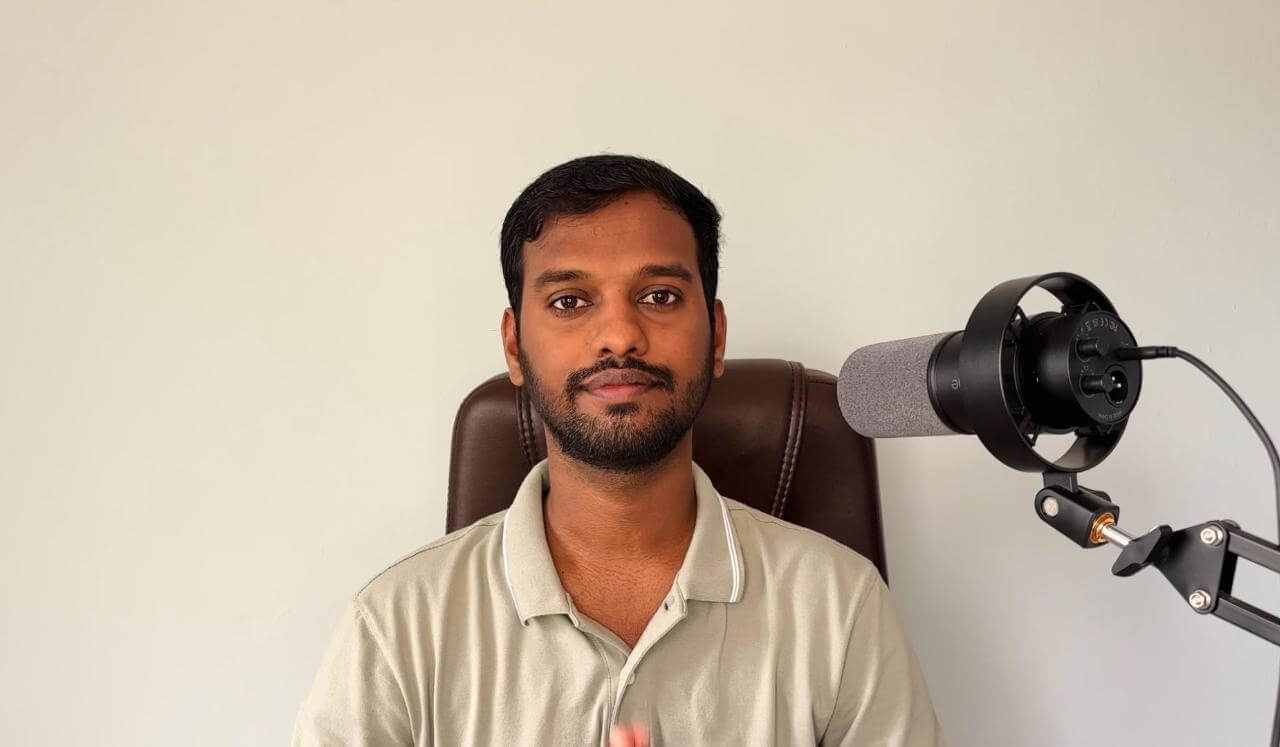
Beginner video for Extended Exhale Breathing

★ 5.0
·
Guided
·
6 min
Aswathaman Achu
How hard is Extended Exhale Breathing?
This stays light because the technique is deliberate but built for calming rather than challenge.
2
Mental Effort
2 / 4
▾Emotional Depth
1 / 4
▾Physical Intensity
2 / 4
▾Prior Knowledge
2 / 4
▾