The world’s largest free audio library for everyday wellbeing
Breathwork
Pursed-lip breathing is a breathing technique in which you inhale gently through the nose and exhale slowly through pursed lips, creating a light back-pressure that lengthens the exhale and slows the breathing pattern (Huang et al., 2024), (Spahija & Grassino, 1996).
Last Updated
3 Jul 2026
We are still reviewing this page. Our research team checks every technique page for accuracy and evidence quality before final release. Details may change as that review completes. The evidence badge shows our current reading of the published research.
RECOMMENDED DOSE
No direct dose evidence; editorial synthesis. The available studies describe pursed-lip breathing protocols and multi-week programmes but do not report a specific session length or weekly frequency, so this conservative starting dose is a first-principles suggestion for someone new to the technique.
No direct dose evidence; editorial synthesis. Home pursued-lip breathing programmes in the literature are delivered over several weeks, but no explicit minutes-per-session or times-per-week values are reported. This near-daily practice level is a general-practice convention for building a breathing habit.
No direct dose evidence; editorial synthesis. Longer studies followed participants for up to 12 weeks but did not specify a maintenance session length or frequency, so this upper-range guidance reflects general breathwork practice conventions rather than a tested dose.
Session length
Session length: 5 minutes
5
MIN
How long each individual practice session should last from start to finish.
Frequency
Frequency: 3–5 days
3
DAYS
The number of days per week to fit a session into your routine.
Session length
Session length: 5–10 minutes
5
MIN
How long each individual practice session should last from start to finish.
Frequency
Frequency: 5–7 days
5
DAYS
The number of days per week to fit a session into your routine.
Session length
Session length: 10–15 minutes
10
MIN
How long each individual practice session should last from start to finish.
Frequency
Frequency: 7 days
7
DAYS
The number of days per week to fit a session into your routine.
About this card. No direct dose-response literature reports a specific session length or weekly frequency for pursed-lip breathing; these recommendations are based on general practice conventions for breathwork and should be treated as starting points only. These recommendations are not a substitute for personalised guidance from a qualified practitioner.
Quick answers to what people most often ask. Each card links to the deeper section below.
evidence
A meta-analysis of 19 randomized trials in people with COPD found pursed-lip breathing reliably slows respiratory rate and deepens each breath, and a crossover trial showed people walked about 35 metres farther with slower breathing. Benefits for healthy people seeking calm remain untested, inferred from the breathing mechanism rather than measured directly.
Read moregood for
Adults with COPD or other lung conditions benefit most, where pursed-lip breathing eases breathlessness and steadies the breath during rest and activity. Healthy people who feel wound up or short of breath from stress may find the longer exhale helpful too, though it is a self-management aid, not a replacement for medical care.
Read moresafety
Most healthy adults can practise pursed-lip breathing safely, and a review of 73 trials found no adverse events linked to breathing techniques. Running many cycles back to back may make the heart work harder, so keep sets short—around seven breaths—and rest between them. People with lung or heart-rhythm conditions should be clinician-guided.
Read morehow it works
Breathing out slowly through pursed lips creates a light back-pressure that lengthens the exhale and slows the whole breathing rhythm. A longer out-breath most engages the vagus nerve, the main channel of the body's rest-and-recovery system, which small COPD studies link to a steadier heartbeat, higher heart-rate variability, and the chest working less hard.
Read morePursed-lip breathing is a technique in which you inhale gently through the nose and exhale slowly through pursed lips, lengthening the out-breath and slowing the overall breathing pattern (Huang et al., 2024).
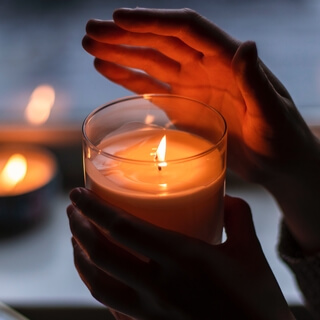
You inhale gently through the nose, then exhale slowly through pursed lips as if blowing through a straw, cooling hot food, or steadying a candle flame, so the exhale lengthens against a light back-pressure at the lips. It is usually done in short sets of a few breaths with rests between rounds. Respiratory rehabilitation and emergency care teach it as a portable bedside and home drill, and general breathwork borrows it as an exhale-lengthening cue.
Pursed-lip breathing is defined by controlled resistance at the lips on the exhale, which sets it apart from diaphragmatic or belly breathing, where the emphasis is on where the breath is drawn rather than how it leaves. It is often combined with diaphragmatic breathing but is not the same practice, and it is not a breath-hold, hyperventilation, or fast-breathing technique. Despite its clinical origins it is a self-management aid, not a treatment that replaces medications or medical care for lung or heart conditions.
Not to be confused with
Hyperventilation-based breathwork (e.g., Holotropic or Wim Hof style)
These practices deliberately speed up or deepen breathing to drive strong physiological arousal and altered states, the opposite of pursed-lip breathing, which slows the breath and lengthens the exhale to help the body settle.
Incentive spirometry
Incentive spirometry uses a handheld device to encourage slow, deep inhalations and re-expand the lungs after surgery or illness; pursed-lip breathing needs no device and works on the exhale rather than a measured inhale.
Forced or pushed-out breathing
Pursed-lip breathing is a gentle, relaxed exhale against light lip resistance, not a hard forced blow; straining to push all the air out defeats the purpose and can leave breathing feeling more effortful.
Pursed-lip breathing works mainly by lengthening the exhale. Breathing out slowly through pursed lips creates a gentle back-pressure that stretches the out-breath and slows the whole breathing rhythm (Spahija & Grassino, 1996), (Gail & Wilson, 2004). A longer exhale is the part of the breath cycle that most engages the vagus nerve, the main channel of the body's rest-and-recovery system, which practitioners often feel as the heartbeat easing and held tension loosening (Ramos et al., 2009). These autonomic measurements come from small studies in people with COPD, so the calming shift is best read as a plausible mechanism rather than a proven effect in healthy practitioners.
A long, slow out-breath through pursed lips can leave the heartbeat easing and the body loosening some of the tension it was holding. That happens because a lengthened exhale engages the vagus nerve, the main pathway of the body's rest-and-recovery, or parasympathetic, system, though the direct measurements so far come from small studies in people with COPD (Spahija & Grassino, 1996), (Ramos et al., 2009).
Stretching the exhale out through pursed lips lengthens the part of each breath when the vagus nerve, the body's main rest-and-recover brake, is most active, which can leave you feeling steadier and less keyed up (Spahija & Grassino, 1996), (Gail & Wilson, 2004). In one small study, heart-rate variability rose during practice, an early sign of that calming shift (Ramos et al., 2009).
When you feel keyed up and your breathing is fast or shallow, a longer, slower exhale through pursed lips helps the body settle. That settling is arousal downregulation, the shift out of a keyed-up, fight-or-flight state; stretching the out-breath slows your breathing rhythm and can make each breath feel easier (Spahija & Grassino, 1996), (Gail & Wilson, 2004).
When breathing feels shallow or stacked, breathing out slowly through pursed lips leaves more time for stale air to clear before the next breath, so fresh, oxygen-rich air has room to enter and carbon dioxide can leave. For some people with COPD, this reduced air-trapping during activity can make each breath feel fuller and less rushed (Cabral et al., 2015).
The most reliable change is a slower breathing rate, with studies in people with COPD measuring fewer, longer breaths during practice, often felt as the chest working less hard (Jones et al., 2003), (Ramos et al., 2009). The same resting study also found higher heart-rate variability, the beat-to-beat flexibility in the pulse that signals more rest-and-recovery activity, while a separate COPD study measured modestly improved oxygen saturation and a slightly slower pulse (Ramos et al., 2009), (Sakhaei et al., 2018). In the body, this tends to register as a settling, a steadier heartbeat, and breathing that feels easier to move. Because nearly all of it was measured in small COPD samples, the direction of change is clear while its size in healthy practitioners is not yet established.
When breathing feels fast, shallow, or like hard work, pursed-lip breathing slows it down: you take fewer, longer breaths, which often feels like the chest working less hard and air moving more easily. Studies in people with COPD have measured this drop in respiratory rate, the number of breaths you take each minute, while the technique is being used (Ramos et al., 2009), (Jones et al., 2003).
As you breathe out slowly, the body often settles, the pulse steadies, and the breath starts to feel easier (Sakhaei et al., 2018). Those are signs that heart-rate variability, the beat-to-beat flexibility in your pulse that reflects the rest-and-recovery branch of the nervous system, is rising during the practice (Ramos et al., 2009).
Breathing often feels a little easier and less effortful during pursed-lip breathing. In small studies of people with COPD, that eased breathing went along with a modest rise in oxygen saturation, the amount of oxygen the blood carries to the body's tissues, and a slower breathing rate (Sakhaei et al., 2018), (Ramos et al., 2009). The measured gains were small and came mostly from people with lung disease.
When your pulse slows, it can feel like the body settling and the chest loosening, with more room opening up between each breath. In a small study of people with COPD, pursed-lip breathing edged heart rate down by roughly 1.6 beats per minute, alongside slightly slower breathing and better oxygen levels (Sakhaei et al., 2018).
Breathing can feel like hard work when the airways are narrowed. In a small study of people with COPD, pursed-lip breathing lowered the oxygen cost of breathing, the energy the body burns just to move air, and slowed the breathing rate compared with normal breathing (Jones et al., 2003). Many practitioners feel this as breathing that takes a little less effort and settles more easily.
When stress keeps the body braced, slowing the exhale can leave the chest less tight and the whole body feeling like it is settling. Blood pressure is one signal researchers have tracked during pursed-lip breathing in small groups of people with COPD, where the lengthened exhale shifts the nervous system toward its rest-and-recovery mode; a slight drop in pressure fits that shift, though studies have not yet isolated a reliable decrease (Ramos et al., 2009).
Moderate evidence, concentrated in people with COPD, supports pursed-lip breathing for steadier, easier breathing: a meta-analysis of 19 randomized trials found it reliably slows respiratory rate and deepens each breath (Ubolnuar et al., 2019). Limited evidence links it to walking farther with slower breathing during activity (Bhatt et al., 2012) and, when paired with supportive body positioning, to less breathlessness and lower anxiety (Mohamed & Mohamed, 2019). What is not yet supported is any of this in healthy people seeking calm, focus, or anxiety relief, where benefits are inferred from the breathing mechanism rather than tested directly (Holland et al., 2012).
Breathing feels slower, deeper, and less effortful as each exhale lengthens through pursed lips, the light back-pressure holding the airways open a moment longer. Reviews of clinical trials find this steadies the breathing pattern in people with COPD, slowing the rate and deepening each breath (Ubolnuar et al., 2019), though most of this evidence comes from people with lung disease rather than healthy practitioners.
Across 19 randomized trials in COPD patients, pursed-lip breathing reliably slows and deepens the breathing pattern (Ubolnuar et al., 2019), and a randomized crossover trial found it helped people walk about 35 metres farther with slower breathing compared with breathing normally (Bhatt et al., 2012). Small resting studies also measured a rise in heart-rate variability, an early sign of rest-and-recovery activity (Ramos et al., 2009). The picture is not uniform, however, and effects on the sensation of breathlessness and on walking distance during exercise vary between studies (Fleig et al., 2018). A large review of breathing techniques reported no adverse events, but nearly all of this evidence comes from respiratory-disease populations rather than healthy adults seeking calm or focus (Burge et al., 2024), (Holland et al., 2012).
3
Meta-analyses
3
RCTs
1
Systematic reviews
0
Observational
11
Pilot
Studied populations
The effects of positioning and pursed-lip breathing exercise on dyspnea and anxiety status in patients with chronic obstructive pulmonary disease
n = 60
Finding: In this study, 60 people with chronic obstructive pulmonary disease (COPD) practised pursed-lip breathing together with a forward-leaning body position, and they reported less breathlessness and lower anxiety both right after the program and again three months later, along with steadier heart rate, blood pressure, and breathing rate. For someone living with breathing difficulty, this suggests that combining slow, pursed-lip exhales with a supportive posture may make air feel easier to move and help settle the nervous system. Because the breathing and the positioning were taught as one package, the calming effect can't be pinned on pursed-lip breathing by itself, and these results reflect situational anxiety in COPD rather than a treatment for a diagnosed anxiety disorder.
reported significant; p<.05
Influence of pursed-lip breathing on heart rate variability and cardiorespiratory parameters in subjects with chronic obstructive pulmonary disease (COPD)
n = 16
Finding: In a small study of 16 adults with chronic obstructive pulmonary disease resting quietly, pursed-lip breathing raised a heart-rate-variability marker tied to the body's "rest-and-digest" system, slowed the pace of breathing, and nudged oxygen saturation upward, while blood pressure stayed the same. In plain terms, the slow, controlled exhale appears to shift the nervous system toward a calmer, more balanced state and helps the lungs work a little more efficiently. Because the group was small and limited to people with a specific lung condition measured only at rest, these are early signals rather than proof of a lasting effect, and the study did not show any change in blood pressure.
Pursed-lip breathing comes from respiratory medicine rather than a contemplative tradition, developed as a breathing-retraining and self-management tool in pulmonary rehabilitation, emergency care, and respiratory physiotherapy. The American Lung Association recommends it as a first-line strategy people can reach for during breathlessness. These clinical roots help explain the practice's form, its extended exhale against light lip resistance used in short, paced sets, rather than proving it produces calm in healthy practitioners.
For most healthy adults, pursed-lip breathing is a low-risk practice, and a broad review of breathing techniques across 73 randomized trials found no adverse events linked to them (Burge et al., 2024). One practice-informed caution is worth knowing: running many pursed-lip cycles back to back can leave the heart working a little harder instead of settling, because a small study of people with COPD saw heart rate creep upward across repeated rounds (Buranapuntalug et al., 2022). This is a modest, temporary change rather than a safety event, and pausing to breathe normally between short sets keeps it from building.
A few people should practise with a little more attention. People with COPD or other lung conditions usually learn this technique inside pulmonary rehabilitation, and are best guided by the clinician overseeing their care rather than practising long unsupervised sets. Those with a known heart-rhythm or autonomic condition may feel the pulse quicken during many repeated cycles instead of easing, so keeping rounds short and resting between them is a sensible, practice-informed precaution (Buranapuntalug et al., 2022). Anyone who feels lightheaded, more breathless, or more anxious while practising should stop and return to easy, natural breathing.
Running many pursed-lip cycles in a row can leave the heart working a little harder instead of settling. In a small study of people with COPD, heart rate crept upward across repeated rounds, and the authors suggested capping continuous sets at around seven breaths. Keep rounds short and pause to breathe normally between them so the effect does not build. This is a modest, temporary change rather than a safety event.
People with COPD or other lung conditions usually learn this technique inside pulmonary rehabilitation. If that applies to you, follow the guidance of the clinician overseeing your care and use it as a self-management aid rather than practising long, unsupervised sets.
| Technique | Best for | Use with care | Evidence strength | Distinction |
|---|---|---|---|---|
| Diaphragmatic (belly) breathing | Deepening the inhale and recruiting the diaphragm when breathing feels shallow or sits high in the chest. | moderate EVIDENCE | Diaphragmatic breathing draws the breath low into the belly by engaging the diaphragm, so the inhale deepens, while pursed-lip breathing works mainly on the exhale, creating light back-pressure at the lips to lengthen the out-breath. The two are often taught together rather than as rivals, and many rehabilitation programs pair them. | |
| Alternate-nostril breathing | A slow, attention-focused nasal breathing practice when the goal is a calm, meditative rhythm. | emerging EVIDENCE | Alternate-nostril breathing alternates airflow between the nostrils with the fingers to pace and balance the breath, a practice rooted in yogic pranayama, whereas pursed-lip breathing simply lengthens the exhale through the lips and comes from respiratory physiotherapy. |
No. Anyone can practise pursed-lip breathing, a gentle nasal inhale followed by a slow exhale through pursed lips, and this exhale-lengthening effect has been measured in healthy people too (Spahija & Grassino, 1996). Most direct efficacy research is in people with COPD, so calming or focus benefits for healthy practitioners are inferred from the mechanism rather than tested (Holland et al., 2012).
+
No. Pursed-lip breathing is a simple, equipment-free technique: you breathe in gently through the nose and exhale slowly through pursed lips, which lengthens the out-breath and slows your breathing rhythm (Huang et al., 2024), (Spahija & Grassino, 1996), (Gail & Wilson, 2004). It grew out of respiratory care, so most of its efficacy evidence comes from people with COPD, but the underlying slow-exhale mechanism has also been measured in healthy subjects (Spahija & Grassino, 1996). For a healthy person wanting calm or focus, that benefit is a reasonable expectation from the breathing mechanism, an early promise rather than something directly tested (Holland et al., 2012).
Not proven. Pursed-lip breathing is plausible for everyday calm because a longer exhale engages the body's rest-and-recovery response, but this has not been tested directly in healthy people (Holland et al., 2012). The one anxiety signal comes from COPD patients, where it was paired with supportive positioning (Mohamed & Mohamed, 2019).
+
Not proven for healthy people seeking calm. The calming use rests on the breathing mechanism, a slower and longer exhale, rather than on direct anxiety or stress trials outside respiratory conditions (Holland et al., 2012). The only anxiety-related finding comes from COPD patients, where pursed-lip breathing paired with supportive body positioning was linked to less breathlessness and lower anxiety, so the anxiety effect there cannot be separated from the positioning (Mohamed & Mohamed, 2019). Treat it as plausible but untested for everyday stress relief, and not a substitute for care when anxiety is significant.
A breathing technique in which you inhale gently through the nose and exhale slowly through pursed lips, as if blowing through a straw, so the out-breath lengthens against a light resistance at the lips.
Increased activity in the body's rest-and-recovery branch of the nervous system, which slows the heart and eases tension. It tends to feel like the body settling and breathing coming more easily.
Heightened parasympathetic (vagal) outflow shifting autonomic balance away from sympathetic dominance, often inferred from heart-rate variability.
The main nerve pathway of the body's rest-and-recovery system, most active during a slow exhale. Engaging it is associated with a steadier heartbeat and a calmer, less keyed-up feeling.
The natural beat-to-beat variation in the timing of the heartbeat; higher variability generally signals more rest-and-recovery activity. A rise during practice is often felt as the pulse steadying.
Variation in intervals between heartbeats; RMSSD is a time-domain HRV marker weighted toward parasympathetic (vagal) modulation.
Air becoming trapped in the lungs during activity because there is not enough time to fully breathe out before the next breath, which can make breathing feel stacked and short. Lengthening the exhale can reduce it.
The medical term for breathlessness, the uncomfortable sense that breathing is hard work or that you cannot get enough air.
The gentle back-pressure created when you exhale against pursed lips, which helps hold the small airways open a little longer so more air can leave the lungs.
The amount of air moved in and out with each breath; a larger tidal volume means fuller, deeper breaths rather than fast, shallow ones.
S. A. Mohamed, Salwa A. Mohamed (2019). The effects of positioning and pursed-lip breathing exercise on dyspnea and anxiety status in patients with chronic obstructive pulmonary disease. https://doi.org/10.5430/jnep.v9n6p41
Cited in: Benefits
EMC Ramos, LCM Vanderlei, Dionei Ramos, L.C. Teixeira, Fábio Pitta, Mariana Faria Veloso (2009). Influence of pursed-lip breathing on heart rate variability and cardiorespiratory parameters in subjects with chronic obstructive pulmonary disease (COPD). https://doi.org/10.1590/s1413-35552009005000035
Explore guided sessions to deepen your Pursed-Lip Breathing technique.
When the body feels wired and stuck in high alert, pursed-lip breathing appears to quiet its fight-or-flight sympathetic activity: one small study measured a rise in vagal heart-rate variability, the beat-to-beat flexibility in the pulse that signals rest-and-recovery, which points toward lower sympathetic tone during practice (Ramos et al., 2009). Many people feel this as the body becoming less keyed-up, the breath slowing, and a sense of settling. Because this comes from a single small study in people with COPD, read it as an early, limited signal rather than a certain effect.
As the exhale lengthens, many people feel the chest loosen, the breath slow on its own, and the urge to breathe fast start to fade. That settling reflects a shift in sympathovagal balance, the moment-to-moment tug-of-war between the body's stress and rest-and-recovery systems, which one small study of people with COPD measured moving toward the calmer side during practice (Ramos et al., 2009).
Outcomes measured
| Outcome | Effect size | 95% CI | N | Comparator | Source |
|---|---|---|---|---|---|
| heart rate variation inspiration vs expiration | reported significant; p<0.05 | — | — | — | Ramos et al., 2009 |
| 6-minute walk distance | mean difference (meters) = 34.9 | — | — | spontaneous breathing | Bhatt et al., 2012 |
| respiratory rate post-6MWT | reported significant; p=0.003 | — | — | — | Bhatt et al., 2012 |
| SpO2, RR, pulse rate in COPD group | reported significant; p≤0.05 | — | — | — | Sakhaei et al., 2018 |
| respiratory rate, tidal volume, inspiratory time, total respiratory time | reported significant; p<0.001 to p=0.007 | — | — | — | Ubolnuar et al., 2019 |
| heart rate during repeated PLB | reported significant; p<0.05 | — | — | — | Buranapuntalug et al., 2022 |
| dyspnea (mMRC) and 6MWT | reported significant; p=0.033 (mMRC); p=0.020 (6MWT) | — | — | PLB alone | Riaz et al., 2024 |
| dyspnea and anxiety | reported significant; p<.05 | — | 60 | — | Mohamed & Mohamed, 2019 |
The research is useful for setting expectations, but study methods and participant groups vary. Treat the findings as general guidance rather than a promise about any single session, and not a replacement for clinical care.
reported narratively
Volitional pursed lips breathing in patients with stable chronic obstructive pulmonary disease improves exercise capacity.
2012
Finding: In this crossover trial, adults with stable COPD who don't naturally use pursed-lip breathing walked farther during a 6-minute walk test when they used it, averaging about 35 meters more than when breathing normally, and their breathing slowed by roughly 4 breaths per minute. The biggest gains showed up in people whose walking was most limited to begin with, suggesting the technique may be most useful when activity feels hardest. Notably, participants didn't rate their breathlessness as any better, so pursed-lip breathing here supported how far and how steadily they could move rather than how short of breath they felt. These findings apply to people managing COPD during activity and shouldn't be assumed to boost exercise in otherwise healthy people.
mean difference (meters) = 34.9
Cardiorespiratory and metabolic stresses during repeated pursed-lips breathing in chronic obstructive pulmonary disease
2022
Finding: In a small crossover study of 16 people living with moderate to severe COPD, repeated pursed-lip breathing at rest produced a measurable shift in heart rate compared with ordinary breathing, a sign the practice engages the body's cardiorespiratory system rather than just feeling relaxing. For someone managing a chronic lung condition, this suggests pursed-lip breathing can be a genuine physical tool for steadying breath and heart rhythm at rest. Because the study was small and limited to COPD patients tested in a single session, the results speak most directly to that group, and they don't tell us how the effect holds up over weeks of regular practice.
reported significant; p<0.05
Pursed lip breathing improves exercise tolerance in COPD: a randomized crossover study.
2015
Finding: In a randomized crossover trial of 40 people with stable COPD, pursed-lip breathing during exercise reduced the amount of air trapped in the lungs and improved how much fresh air they could draw in, along with better blood oxygen levels and a steadier breathing rhythm. For those who responded, this meant more comfortable breathing while staying active. The benefit was not universal, though: some participants saw no improvement and instead breathed less efficiently, so pursed-lip breathing appears to help certain people with COPD more than others, and it is worth testing whether it works for you rather than assuming it will.
See full citation in referencesIMPACT OF DIAPHRAGMATIC BREATHING WITH PURSE LIP BREATHING VERSUS PURSED-LIP BREATHING ALONE ON DYSPNEA AND EXERCISE CAPACITY AMONG COPD PATIENTS
2024
Finding: In a small trial with 32 adults living with moderate-to-advanced COPD, pairing pursed-lip breathing with diaphragmatic (belly) breathing eased breathlessness and let people walk farther in a timed walking test more than pursed-lip breathing on its own. Both approaches helped, so pursed-lip breathing remains worthwhile, but adding the deeper belly-breath appears to give it an extra edge for daily activities. If you already practise pursed-lip breathing for shortness of breath, layering in diaphragmatic breathing may be worth trying, ideally alongside a rehab program. Keep in mind this was a single, small study, so the findings are early rather than definitive.
reported significant; p=0.033 (mMRC); p=0.020 (6MWT)
The effects of pursed lip breathing combined with diaphragmatic breathing on pulmonary function and exercise capacity in patients with COPD: a systematic review and meta-analysis
2020
Finding: This review pooled several trials of people with chronic obstructive pulmonary disease (COPD) and found that pairing pursed-lip breathing with diaphragmatic breathing, where you breathe deeply using the belly and lower ribs, improved lung function and let participants walk noticeably farther in timed walking tests. In practice, this suggests that combining the two techniques may ease breathlessness and build stamina more than pursed-lip breathing on its own, though pursed-lip breathing still helped when used alone. Keep in mind the evidence here comes specifically from adults living with COPD, so it speaks to managing a diagnosed lung condition rather than general breathing practice.
See full citation in referencesDevelopment and Validation of an Evidence‐Based Home Pursed Lip Breathing Protocol for Improving Health Outcomes in Patients With Chronic Obstructive Pulmonary Disease
2024
Finding: This study set out to turn pursed-lip breathing into a clear, structured home routine for people living with chronic obstructive pulmonary disease (COPD), spelling out a practical protocol: breathing in for one count and out through pursed lips for two, in three 10-minute sessions a day across eight weeks, with an emphasis on emptying the lungs fully on each exhale. For someone considering the practice, it offers a ready-made way to build the habit rather than guessing at timing or frequency. Keep in mind this was work to design and validate the protocol itself, not a trial measuring how much breathing eased or exercise improved, so it shows how to practise consistently rather than proving the size of the benefit. It is also a support for prescribed respiratory care, not a replacement for it.
See full citation in referencesAn evaluation of the acute impact of pursed lips breathing on walking distance in nonspontaneous pursed lips breathing chronic obstructive pulmonary disease patients.
2005
Finding: In this trial, 69 people with chronic obstructive pulmonary disease (COPD) walked a timed course both with and without pursed-lip breathing. Adding the technique slowed their breathing during the effort, but it did not reliably help them walk further or feel less breathless. If you have a lung condition, this suggests pursed-lip breathing can steady your breathing rhythm during exertion, though you shouldn't expect it to consistently ease breathlessness or boost how far you can walk. These results come from a single trial in people who didn't already use the technique naturally, so they speak to that specific group rather than to breathing practice in general.
See full citation in referencesBreathing exercises for chronic obstructive pulmonary disease
n = 60
Finding: This review of breathing exercises for people with chronic obstructive pulmonary disease (COPD) found that in one 60-person study, pursed-lip breathing helped participants walk about 50 metres farther in six minutes, a meaningful gain for someone whose breathing limits how far they can move. Results were less consistent for breathlessness and overall quality of life, which varied from trial to trial, and because most studies did not hide who received which treatment, the benefits may look larger than they really are. No notable side effects turned up, so the practice appears safe to try. Keep in mind that nearly all of this evidence comes from people with COPD rather than healthy adults, so the same gains are not yet established for the general population.
reported narratively
The Impact of Pursed-lips Breathing Maneuver on Cardiac, Respiratory, and Oxygenation Parameters in COPD Patients.
2018
Finding: In a clinical trial of 60 people that included patients with chronic obstructive pulmonary disease (COPD), pursed-lip breathing raised blood-oxygen levels by about 2 percent on average and slightly slowed both breathing and heart rate. For someone living with a lung condition, that points to a simple, no-cost technique that can help you draw in more oxygen and settle your breathing without any equipment. Keep in mind the improvements were modest and measured in people with respiratory disease, so they may not carry over to healthy breathers, and this is a single small study rather than definitive proof.
reported significant; p≤0.05
Effects of pursed-lips breathing and expiratory resistive loading in healthy subjects
1996
Finding: In a small study of 11 healthy adults, breathing out slowly through pursed lips lengthened each exhale and stretched out the whole breath, shifting people into a slower, deeper rhythm both at rest and during light cycling exercise. Because slowing the breath this way eases the pressure and narrowing in the airways as you exhale, it can make each breath feel less effortful, which may help explain why people often report breathing feels easier during the practice. Since this was a small experiment in healthy volunteers rather than a large clinical trial, it tells us more about how pursed-lip breathing changes the mechanics of a breath than about long-term benefits for any particular condition.
See full citation in referencesEffects of Breathing Exercises in Patients With Chronic Obstructive Pulmonary Disease: Systematic Review and Meta-Analysis
n = 745
Finding: Pooling 19 controlled trials with 745 people living with COPD, this review found that pursed-lip breathing measurably reshaped the breathing pattern: it slowed the breathing rate, deepened each breath, and lengthened the time spent breathing in and out compared with people who did not use the technique. In practice, that means the method can help someone with COPD settle into a slower, fuller breathing rhythm rather than short, rapid breaths. The same body of research was more mixed on breathlessness itself and on how far people could walk, so pursed-lip breathing reliably changes how you breathe but does not consistently improve those outcomes. The evidence was also rated low to moderate in quality, so these results are best treated as promising rather than settled.
reported narratively
Effects of acute use of pursed-lips breathing during exercise in patients with COPD: a systematic review and meta-analysis.
2018
Finding: This meta-analysis pooled 8 studies of people with COPD using pursed-lip breathing during exercise, and found that the technique reliably slowed their breathing, lowering both breathing rate and the total volume of air moved per minute. Even so, it did not translate into a meaningful gain in how far people could walk in six minutes compared with exercising without it. So if you find pursed-lip breathing steadies your breath during activity, that effect is real and consistent, but you shouldn't expect it to reliably extend your walking distance. Keep in mind this looked only at short, in-the-moment use during exercise in adults with COPD, not at longer-term training.
reported narratively
Breathing techniques to reduce symptoms in people with serious respiratory illness: a systematic review
n = 5,479
Finding: This review of 73 randomised trials, covering 5,479 adults living with serious respiratory illness such as COPD or asthma, found that breathing techniques including pursed-lip breathing consistently improved quality of life, with no adverse events linked to the practice. For someone managing breathlessness, that points to a low-risk technique that may help you feel more in control of your breathing day to day. The evidence comes from people with diagnosed respiratory conditions rather than the general public, so it speaks most directly to that group, and a clean safety record across trials does not guarantee the practice suits every individual or medical situation.
reported narratively
Pursed-lip breathing
2025
Finding: This study helped define a structured way to practise pursed-lip breathing at home: you breathe in gently, usually through the nose, then breathe out slowly through pursed lips so the exhale lasts about twice as long as the inhale, in three 10-minute sessions a day over eight weeks with an emphasis on emptying the lungs fully. For someone considering the practice, it offers a clear, repeatable routine to follow rather than guessing at timing or frequency. It describes how to structure the exercise rather than proving specific health outcomes, so treat it as a practical template and not as evidence that the technique replaces prescribed respiratory care.
See full citation in referencesEvidence underlying breathing retraining in people with stable chronic obstructive pulmonary disease.
2004
Finding: This review of studies in people with stable chronic lung disease (COPD) found that pursed-lip breathing lengthens the out-breath and the whole breath cycle, shifting people toward a slower, deeper pattern. Slowing the breath this way appears to ease the pressure and narrowing in the airways as you exhale, which may be why some people say their breathing feels easier. The evidence here is still limited and mixed rather than conclusive, so treat this as a technique worth trying for comfort, not as a treatment that changes the underlying lung condition.
See full citation in referencesComparison of the Oxygen Cost of Breathing Exercises and Spontaneous Breathing in Patients With Stable Chronic Obstructive Pulmonary Disease
n = 30
Finding: In a small study of 30 adults with stable, moderately severe COPD, pursed-lip breathing slowed the breathing rate to about 13 breaths a minute, down from roughly 17 during ordinary breathing, while also using slightly less oxygen. In practical terms, this suggests the technique can make each breath more efficient and ease the effort of breathing rather than adding to it. Because the study was small and limited to people with a specific lung condition, it tells us most about how pursed-lip breathing works for those managing COPD, and it does not show any boost to overall energy or fitness.
reported narratively
If you have a diagnosed heart-rhythm or autonomic condition, you may feel your pulse quicken during many repeated cycles rather than easing. Keep rounds short and rest between them, a sensible practice-informed precaution, and check with your clinician if you are unsure.
Anyone who feels lightheaded, more breathless, or more anxious while practising should stop and return to easy, natural breathing. The intended effect is feeling steadier and less keyed up, not more strained.
Pursed-lip breathing is best approached in a relaxed, supported position where you can let your shoulders drop and give the breath room to move. A sensible starting format is brief rounds rather than many cycles strung together, breathing normally for a few breaths in between so your body stays settled. If you have a lung, heart-rhythm, or autonomic condition, it is wisest to keep rounds short and follow the guidance of the clinician overseeing your care.
Sit or stand in a relaxed, supported position and let your shoulders drop, so the breath has room to move without strain. Take a moment to notice how your body feels before you begin.
Take an easy, unforced inhale for about two counts, letting the belly rise rather than pulling the breath high into the chest. There is no need to fill the lungs completely.
Purse your lips as if you were about to blow through a straw or steady a candle flame, then let the out-breath flow out slowly and smoothly for roughly twice as long as the inhale. This lengthened exhale is what tends to feel calming, like the body loosening its held tension.
Practise in brief rounds and breathe normally for a few breaths between them rather than stringing many cycles together without a break. One small clinical study found heart rate rose across repeated cycles and suggested capping continuous sets at around seven breaths so the heart is not left working harder {{cite:TECH_119_REF_006}}.
Notice whether you feel steadier and less keyed up, which is the intended effect. If instead you feel lightheaded, more short of breath, or your pulse feels like it is climbing, ease off and let your breathing return to its natural rhythm.
This information is educational and is not medical advice. This practice is not a substitute for professional care and should not replace prescribed medication or treatment for any medical or mental-health condition. If you are managing a health condition or taking medication, talk with a qualified health professional before changing your practice. If you are in distress or crisis, seek professional support.
| Expiratory muscle training | Progressively building expiratory muscle strength as part of a structured rehabilitation program. | emerging EVIDENCE | Expiratory muscle training strengthens the muscles of exhalation by breathing out against a resistance device, building capacity over weeks, while pursed-lip breathing is an unequipped technique used in the moment to slow and extend the breath. |
Moderate, but concentrated in COPD. A meta-analysis of 19 randomized trials shows pursed-lip breathing reliably slows and deepens breathing, and a large review found no adverse events (Ubolnuar et al., 2019), (Burge et al., 2024). Benefits for healthy people seeking calm are inferred from the mechanism, not yet directly tested.
+
Moderate, and strongest for the breathing pattern itself. Across 19 randomized trials in people with COPD, pursed-lip breathing reliably slows respiratory rate and deepens each breath (Ubolnuar et al., 2019), and a large review of breathing techniques reported no adverse events (Burge et al., 2024). Downstream outcomes are less settled, with effects on breathlessness and walking distance varying between studies (Fleig et al., 2018). Because most research is in COPD populations, calming or anxiety-relief benefits for healthy people rest on the breathing mechanism rather than on direct trials (Holland et al., 2012).
Because the slow exhale lengthens the out-breath and eases the breathing rhythm, and a longer exhale most engages the vagus nerve, the body's rest-and-recovery pathway (Spahija & Grassino, 1996), (Ramos et al., 2009). This is a plausible mechanism drawn from small COPD studies, not a proven calming effect in healthy people.
+
The calming feeling is best explained by the mechanics of the exhale. Breathing out slowly through pursed lips creates a light back-pressure that stretches the out-breath and slows the whole breathing pattern (Spahija & Grassino, 1996), (Gail & Wilson, 2004). A longer exhale is the part of the breath cycle that most engages the vagus nerve, the main channel of the parasympathetic, rest-and-recovery branch, and small resting studies in people with COPD have linked the technique to higher heart-rate variability, an early sign of that activity (Ramos et al., 2009). This is a reasonable inference from the breathing mechanism rather than a directly measured calming effect in healthy practitioners.
Possibly, though the direct measurements come from people with COPD, not healthy practitioners. Small resting studies found a slightly slower pulse and higher heart-rate variability, the beat-to-beat flexibility in the pulse that signals rest-and-recovery activity, during the practice (Ramos et al., 2009), (Sakhaei et al., 2018).
+
Possibly. In small resting studies of people with COPD, pursed-lip breathing was linked to a modestly slower pulse and higher heart-rate variability, so the direction of change points toward a steadier, slightly slower heartbeat (Ramos et al., 2009), (Sakhaei et al., 2018). Because those samples were small and drawn from a patient population, the size of any effect in healthy people is not yet established. One practical caveat: running many cycles back to back can raise heart rate rather than lower it, so short sets with rests between them are what tend to feel calming (Buranapuntalug et al., 2022).
It can, mildly. Running many pursed-lip breaths back to back may leave the heart working a little harder rather than settling, so keep sets short and breathe normally between them (Buranapuntalug et al., 2022).
+
It can, mildly. In a small study of people with COPD, heart rate crept up across repeated pursed-lip cycles, and the authors suggested capping continuous sets at around seven breaths (Buranapuntalug et al., 2022). This is a modest, temporary shift observed in a clinical group rather than a safety event, and it has not been tested in healthy practitioners, so treat it as a practical, practice-informed cue rather than a proven risk. Pausing to breathe normally between short rounds keeps it from building.
Keep it short. Practise in brief rounds and breathe normally for a few breaths between them rather than stringing many cycles together. There is no tested ideal length for healthy people, but one small COPD study suggested capping continuous sets at around seven breaths, since heart rate crept up across repeated cycles (Buranapuntalug et al., 2022).
+
Keep it short. No trial has established an optimal session length or breath count for healthy practitioners, so treat pacing as a sensible precaution rather than a fixed dose. The practical guidance is to work in short rounds, resting with normal breathing between them; a small study in people with COPD found heart rate rose across repeated pursed-lip cycles and suggested limiting continuous sets to roughly seven breaths to keep the heart from working harder (Buranapuntalug et al., 2022). If you feel lightheaded, more breathless, or your pulse climbing, ease off and let your breathing return to its natural rhythm.
The main difference is where each works: pursed-lip breathing acts on the exhale, using light lip back-pressure to lengthen and slow the out-breath, while diaphragmatic or belly breathing deepens the inhale so the breath drops low rather than high in the chest (Spahija & Grassino, 1996). They are complementary and often taught together rather than as rivals.
+
The main difference is which part of the breath each shapes. Pursed-lip breathing works on the exhale: you breathe in gently through the nose, then out slowly through pursed lips, creating a light back-pressure that lengthens and slows the out-breath (Spahija & Grassino, 1996), (Huang et al., 2024). Diaphragmatic or belly breathing instead deepens the inhale by engaging the diaphragm, so the breath sits low in the belly rather than high in the chest. The two are complementary and often paired: in stable COPD patients, combining them eased breathlessness and improved walking capacity more than pursed-lip breathing alone, though that combined-benefit evidence is bounded to COPD populations rather than healthy people seeking calm (Riaz et al., 2024), (Yang et al., 2020).
A long-term lung condition, most often linked to smoking, that limits airflow and causes breathlessness. Most research on pursed-lip breathing has studied people with COPD.
How much oxygen the blood is carrying, usually read with a fingertip sensor. Small rises during pursed-lip breathing tend to accompany breathing that feels a little easier.
Cited in: How it works, Research, What happens in the body
Surya P. Bhatt, T K Luqman-Arafath, Arun Kumar Gupta, Anant Mohan, Jill Stoltzfus, Tanujit Dey (2012). Volitional pursed lips breathing in patients with stable chronic obstructive pulmonary disease improves exercise capacity.. https://doi.org/10.1177/1479972312464244
Sasipa Buranapuntalug, Rungchai Chaunchaiyakul, Amornpan Ajjimaporn, Prapaporn Pornsuriyasak (2022). Cardiorespiratory and metabolic stresses during repeated pursed-lips breathing in chronic obstructive pulmonary disease. https://doi.org/10.5114/pq.2023.117307
Cited in: How to practice safely, Use with care, Who should use care
Leandro Ferracini Cabral, T Da Cunha D'Elia, D De Sousa Marins, Walter A. Zin, Fernando Silva Guimarães, Cabral L Ferracini (2015). Pursed lip breathing improves exercise tolerance in COPD: a randomized crossover study..
Cited in: How it works
Hifza Riaz, Amina Amjad, Nimra Mustafa, Amon, Ahmad Ammar Asif, Muhammad Ahsen Tahiri (2024). IMPACT OF DIAPHRAGMATIC BREATHING WITH PURSE LIP BREATHING VERSUS PURSED-LIP BREATHING ALONE ON DYSPNEA AND EXERCISE CAPACITY AMONG COPD PATIENTS. https://doi.org/10.71000/m66c1140
Cited in: Comparison
Ying Yang, Liuyi Wei, Shizhen Wang, Li Ke, Huimin Zhao, Jing Mao (2020). The effects of pursed lip breathing combined with diaphragmatic breathing on pulmonary function and exercise capacity in patients with COPD: a systematic review and meta-analysis. https://doi.org/10.1080/09593985.2020.1805834
Cited in: Comparison
Houqiang Huang, Jun Da, Roger Watson, Mark Hayter, Min Huang (2024). Development and Validation of an Evidence‐Based Home Pursed Lip Breathing Protocol for Improving Health Outcomes in Patients With Chronic Obstructive Pulmonary Disease. https://doi.org/10.1111/opn.12627
Cited in: What it is
R Garrodl, Kate Dallimore, Jill N. Cook, Victoria Davies, K Quade, Garrod R (2005). An evaluation of the acute impact of pursed lips breathing on walking distance in nonspontaneous pursed lips breathing chronic obstructive pulmonary disease patients.. https://doi.org/10.1191/1479972305cd068oa
Cited in: Research
Anne E. Holland, Catherine J. Hill, Alice Jones, Christine F. McDonald (2012). Breathing exercises for chronic obstructive pulmonary disease. https://doi.org/10.1002/14651858.cd008250.pub2
Shahriar Sakhaei, Hassan Ebrahimpour Sadagheyani, Soryya Zinalpoor, Abdolah Khorami Markani, Hossein Motaarefi, Sakhaei Shahriar (2018). The Impact of Pursed-lips Breathing Maneuver on Cardiac, Respiratory, and Oxygenation Parameters in COPD Patients.. https://doi.org/10.3889/oamjms.2018.407
Cited in: What happens in the body
Jadranka Spahija, A. Grassino (1996). Effects of pursed-lips breathing and expiratory resistive loading in healthy subjects. https://doi.org/10.1152/jappl.1996.80.5.1772
Cited in: How it works, What it is
Nutsupa Ubolnuar, Anong Tantisuwat, Premtip Thaveeratitham, Somrat Lertmaharit, Chathipat Kruapanich, Witaya Mathiyakom (2019). Effects of Breathing Exercises in Patients With Chronic Obstructive Pulmonary Disease: Systematic Review and Meta-Analysis. https://doi.org/10.5535/arm.2019.43.4.509
Mayer Anamaria Fleig, Karloh Manuela, Dos Santos Karoliny, de Araujo Cintia Laura Pereira, Gulart Aline Almeida (2018). Effects of acute use of pursed-lips breathing during exercise in patients with COPD: a systematic review and meta-analysis.. https://doi.org/10.1016/j.physio.2017.08.007
Cited in: Research
Angela T. Burge, Adelle M. Gadowski, Alice Jones, Lorena Romero, Natasha Smallwood, Magnus Ekström (2024). Breathing techniques to reduce symptoms in people with serious respiratory illness: a systematic review. https://doi.org/10.1183/16000617.0012-2024
Cited in: Research, Use with care
Unknown author (2025). Pursed-lip breathing. https://doi.org/10.12968/ippr.2025.0020
Cited in: What it is
Dechman Gail, Wilson Christine R (2004). Evidence underlying breathing retraining in people with stable chronic obstructive pulmonary disease..
Cited in: How it works
Alice Jones, Elizabeth Dean, Cedric CS Chow (2003). Comparison of the Oxygen Cost of Breathing Exercises and Spontaneous Breathing in Patients With Stable Chronic Obstructive Pulmonary Disease. https://doi.org/10.1093/ptj/83.5.424
Cited in: What happens in the body
Beginner content for Pursed-Lip Breathing

★ 4.5
·
Guided
·
1 min
Aicha Mckenzie
How hard is Pursed-Lip Breathing?
This remains light because the technique is corrective and calming even though the exhale is deliberate.
2
Mental Effort
2 / 4
▾Emotional Depth
1 / 4
▾Physical Intensity
2 / 4
▾Prior Knowledge
2 / 4
▾Editorially curated. Tracks are not themselves clinically studied; evidence on the page applies to Pursed-Lip Breathing as a technique.