Hey there everybody,
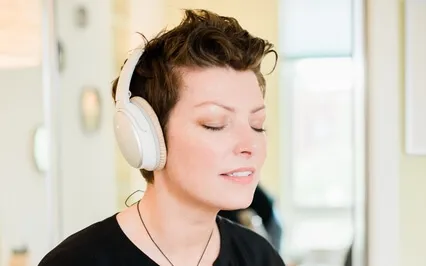
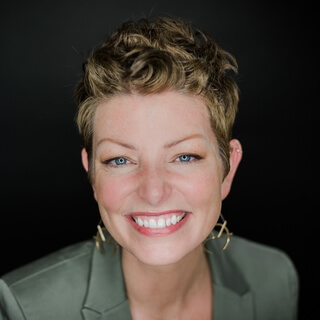
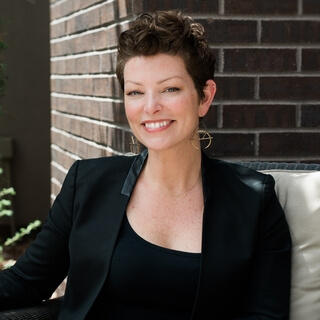
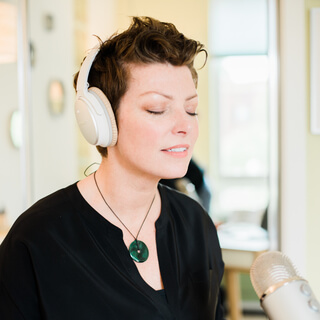
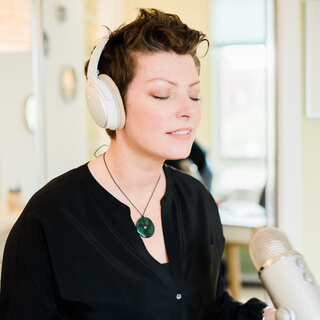
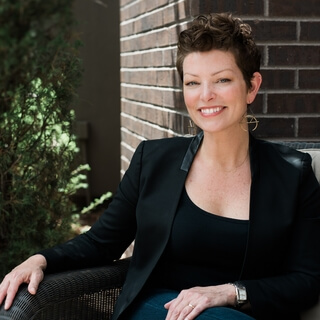
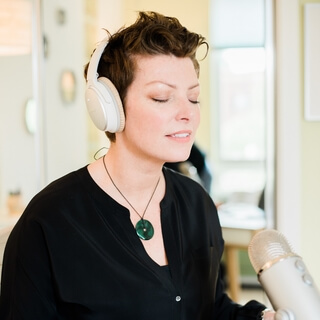
This is Kristen from Teaching Balance and I am here with you for this week's mindfulness meditation practice.
And we've been talking about self-compassion and one of the things that I believe we spoke about recently is the idea that self-compassion is really a combination of self-acceptance and self-kindness.
And so I wanted to focus on the self-kindness piece for today's practice.
It's interesting because of course it's easy to say like,
Oh we should be kind to ourselves.
But what exactly does that mean?
Is it about not believing that inner critic,
Which of course is useful,
But it could also be about being kind to ourselves when it comes to taking time to prioritize our self-care for example.
And that's the direction actually that I'd like to go in.
So what I'd like to do is have us do our meditation and then at the end just respond to a couple of questions that might help you to find some clarity about how you can be a little bit kinder to yourself,
At least in terms of the choices that we make.
So let's go ahead and get started.
I'm going to set my timer for 10 minutes,
Allowing yourself just to settle in,
Eyes closed or gaze lowered,
Sitting upright but not rigid,
Shoulders back and down.
So we expand the chest to get ready for the three wonderfully deep breaths that we're about to take.
So to the best of your ability,
Go ahead and fill the lungs.
From the bottom of the lungs to the top and then emptying them from the top all the way down to the bottom.
Knowing some days it's easier than others,
Just trying to do the best that you can right now in this moment.
And then after you've taken those several deep belly breaths,
Allowing your breathing to resume its natural rhythm,
Noticing where you feel the breath,
The gentle rising and falling on the inhale and the exhale.
Knowing also you can rest your awareness on sounds,
Observing from moment to moment whatever sound waves make contact with your eardrums.
And then of course you can also rest your awareness on physical sensations in the body.
One part perhaps like the hands or feet or you can hold your body in its entirety in your awareness.
Whatever feels good for you.
Letting go of any expectations about this whole experience,
Not comparing it to a previous practice or thinking about what you wanted to get out of it and instead just accepting and surrendering to however it is.
Wherever you are,
Whatever you're coming to the table with,
Allowing all of it and just observing whatever is observable in relation to being present in this moment right now.
So I'm going to ask us just to sit in silence for a while and then I'll come back with the self-kindness piece of our practice.
Ready?
.
.
.
So noticing where the mind is now.
And if it's lost in thought,
Remembering that's not a problem.
You just observe that you were lost in thought and bring your attention back to the present.
And I would like for us to begin this self-kindness piece which will be focused on prioritizing your self-care.
First,
Just by remembering why you need to do that.
Remembering that self-care is not selfish.
And that you need to take care of yourself first so that you can be better at doing all you need to do to take care of your students,
Friends,
And family.
The other why it's important that you prioritize your self-care is so that you can keep doing it so that you don't burn out and get so exhausted or even get sick that you can't function and do what you need to do anymore.
And the third reason to prioritize your self-care is modeling what healthy balance looks like to your students,
To your own children,
And perhaps even friends and colleagues.
That when you sign up to be an educator,
It doesn't mean that you have to sacrifice your happiness and your health.
That you can still make a difference in the world,
But make sure that you're taking care of yourself too.
So if those are the reasons why,
Now I'm going to invite you to consider how.
How to prioritize your self-care.
And I'm going to ask you first just to ponder what are the things that you love to do,
The things that fill your bucket and rejuvenate you.
What are the things that you love to say yes to because it really feeds your soul?
It could be a hobby,
Being in nature,
Being alone or being with friends.
It's whatever you need it to be,
Just identifying your yes,
What you want to say yes to.
You've heard all the metaphors about you can't pour from an empty cup,
You have to put your own oxygen mask on first.
And this is true.
So for the remainder of this practice until the final bell,
I want you to bring to mind what are the things,
As we said,
That fill your bucket,
That restore you and rejuvenate you and sustain you so that you can keep going.
Turn those over in your mind until meditation is complete.
.
.
That is 10 minutes.
So you may have found that many things came up for you when you were thinking what fills your bucket,
What rejuvenates you,
What sustains you and revitalizes you.
And you may have found that actually it was a little difficult.
And so remembering that there's no right version of this for me,
Just sitting by myself reading a book is very restorative and really just gives me a chance to just chill,
Not take care of anyone or anything and just relax.
As well as,
Of course,
For me being out in nature.
I think that's a rather universal appeal for most people.
But it's about making the time to do that and carving out that time and being uncompromising about it.
So in a sense,
What I'd love for you to take into this week is a promise to yourself to really try to identify and get clear what are the things that you need to sustain you and to keep you going.
And then how do you make sure that you make that time in whatever way so that you get what you need to keep going.
So I hope that was helpful for you.
I hope you enjoyed this practice today.
Thank you,
Of course,
For taking this time to practice.
And thank you so much for allowing me to be a part of your journey.
I can't wait to see you next week.
And until then,
Take care.
Bye.