Hey there everybody,
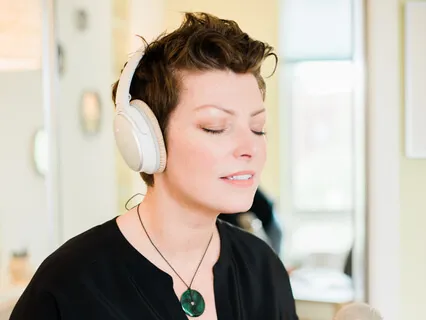
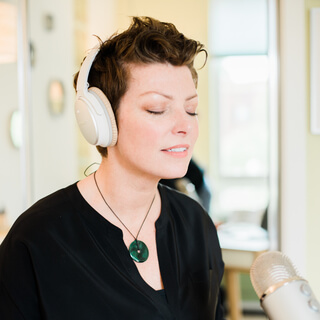
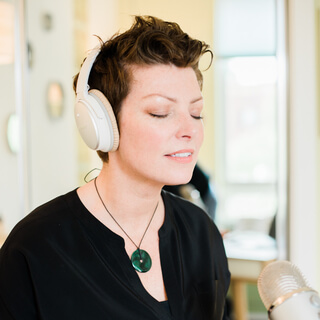
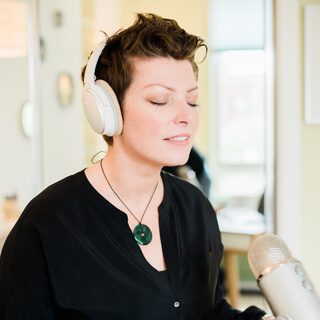
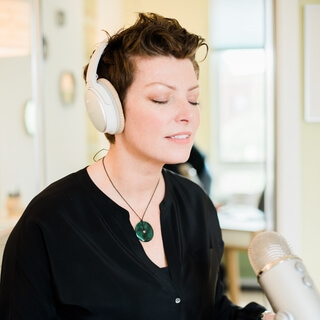
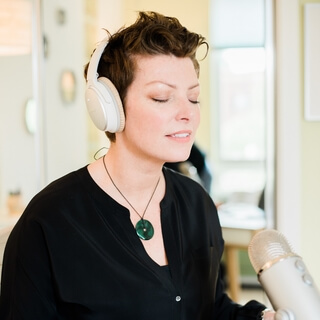
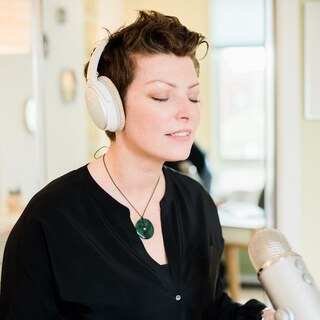
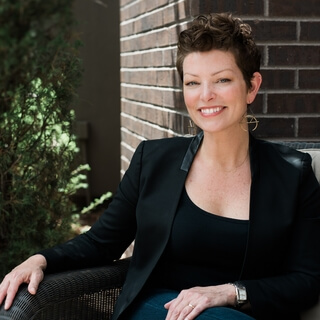
This is Kristen from Teaching Balance and I am here with you with this week's mindfulness meditation practice.
We are in the month of August and the Teaching Balance theme for August is self-care.
The extended remix version of that is self-care is not selfish,
Which as I've been saying in a lot of my posts and the previous practices,
I'm very,
Very pleased that this message of self-care not being selfish is becoming more mainstream.
And it's certainly people in the mindfulness community but also people in the mental health arena who are perpetuating the truth that self-care is not selfish.
If anything,
It is a bold act of selflessness because people are making choices that support them so they can better support others.
And of course,
That is why we are here.
So for this week,
My invitation to you is around the idea of extreme self-care.
So there's a few ways I've seen it online,
Extreme self-care,
Radical self-care,
Whatever phrase or terminology appeals the most to you.
What the essence of that is,
As far as I'm concerned and what I'm going to invite you to do,
Is just to go above and beyond when it comes to taking care of yourself and your needs.
Now,
I know that sometimes things are completely beyond your control.
If you're in a caregiving role dealing with a health crisis,
I mean,
I get the truths of all of that.
And of course,
Extreme self-care for you might look different than someone who has complete agency over their schedule,
Their choices,
And that sort of thing,
And doesn't necessarily have to make as many accommodations.
But nonetheless,
The premise behind this is that now more than ever,
You've been hearing me say that phrase obviously quite a bit,
It really is necessary.
So any quality of guilt that might be arising around whatever it is that you're doing,
To me is actually a really good sign.
So let me just expand on that briefly before we get to our practice.
I am not the originator of this idea.
I got the concept of guilt is a good sign from,
I think it's Cheryl Richardson,
Who is a coach and author,
One of the people that I follow as a mentor and someone to learn from.
And I love this idea of if you're feeling guilty about the fact that you,
And then fill in the blank,
Decided to get a massage or went to bed early instead of finishing some chores or some schoolwork,
Or decided to just say no to something,
That it would have been in some ways much easier to say yes to,
When that guilt arises,
I'm going to invite you to really just embrace it because the guilt arising is the indicator that you are headed in the right direction.
So I know that when it comes to self-care and all of the mindfulness-based self-care that we're doing,
We're trying to cultivate self-awareness,
We're trying to cultivate self-compassion,
We're going to talk more about that in the coming weeks too,
Really just circling back to that because it's so important,
Particularly at this time of year of back to school.
But all of those things are important and in addition to taking time for yourself,
Establishing healthy boundaries,
Having your own way of rejuvenating yourself,
One of which of course is meditation like we're about to do,
You also know all the other ways that help to soothe you,
Help to support you,
And I want you to really seek those out with a vengeance and embrace them because this is a very difficult time right now on so many levels,
You know what's up and I want you to really do something that really kind of does bring up and elicit a quality of guilt for you because then you'll know you're in the right direction.
So on that note,
Let's go ahead and transition into our practice for today.
We're going to do our 10 minutes,
Allowing yourself just to settle in,
Whether you're seated in a chair,
On a cushion,
Or perhaps even lying down.
And I really want to spend a little time in our meditation practice today really grounding ourselves.
I've been reading quite a bit about the value of feeling physically grounded and supported and how that really can translate to allowing you to feel more grounded and stable in the non-physical elements of your life.
So what I'd like for you to do in the spirit of this,
First of course,
As always,
Is just take a few of those deeper breaths.
And with each breath,
See if you can elicit a quality of settling,
Physical settling in to whatever position you find yourself in.
It doesn't matter,
Nose,
Mouth,
Whatever.
Taking as many of those deep grounding breaths as you would like to.
And then when you're ready,
Allowing your breathing to resume its natural rhythm.
And hopefully those breaths did create a quality of settling in your body,
A little bit of a calming.
And I'd like for you to begin just by noticing where your body makes contact with whatever surface is supporting you.
So if you're sitting in the chair,
Feeling the support of the seat of the chair underneath you,
Noticing how far out the seat of the chair makes contact with your hamstrings,
And then when it ceases to do so.
And also noticing the contact that your feet make with the ground.
If you're in a chair,
I'm going to invite you to have both feet flat on the ground with your legs uncrossed.
And you may even decide to widen your stance slightly to create almost more of that tripod feeling,
Which can make you feel even more supported.
And if you are smaller like me,
You might need to scooch up in your chair to have that full contact with the ground and your feet.
If you're on a cushion,
As I am,
Making sure that there's a quality of stability,
Really just settling in.
And instead of having the tripod of your butt and feet like a chair,
In this case it would be butt and knees and whatever is making contact with the primary surface other than the cushion.
And because we're really looking for that stability,
I'm also going to encourage you to take a look at or reflect on your posture.
If you can,
You want to be upright but not rigid,
Not leaning forward or back.
You've heard me say most likely before that you can think of your vertebrae as coins stacked one upon the other.
If the tower of coins leans too much in one direction or another,
It'll fall.
So just allow them to support one another all the way up from the base of your spine until where it goes up to the back of your skull.
And you'll also notice this might invite a quality of tilting your chin down slightly.
And if that's so,
That's kind of what we're looking for,
Not down,
Down,
But just so that the vertebrae up into the neck and the back of the skull is straighter and more upright.
And because hunching can also create this quality of tiltedness,
I'm also going to invite you to roll your shoulders back.
And it might feel like you're sticking your chest out,
And that's fine.
It's weird,
But it's an unfamiliar sensation.
But really,
We want to open that chest up actually.
And again,
Creating this more balanced and stable and grounded posture.
Your hands can rest wherever it feels comfortable that is conducive to this.
And you can either lower your gaze or you can close your eyes completely.
Normally,
I would invite you to choose one of our typical objects for your awareness,
Either the breath or the body or sounds.
And of course,
You can do that.
But in the interest of cultivating the stability,
I'm going to invite you to try just resting your awareness on whatever feels stable physically,
Whatever feels grounded.
It could be your pelvic floor,
It could be the contact of your feet.
It could just be an awareness of your posture.
And if you find that your posture shifts over time,
Which of course is rather likely,
Don't feel bad about it.
Just gently readjust and shift and not feeling like you have to grip through some discomfort.
So if need be,
Shifting your position.
But the key here is stability and groundedness,
As I've been saying.
So we did a lot of setting up.
Now I'm just going to invite you to sit and rest your awareness on the present moment,
Whatever anchor feels appropriate to you,
Coming back to this quality of stability,
And ultimately just resting here,
Letting go of expectations,
Doubts,
Thoughts.
And let's just rest until the final bell.
Thanks.
.
.
.
.
So,
In a nutshell,
The invitation this week is to embrace the idea of extreme self-care,
Making choices that support you to such a degree that you actually notice a quality of guilt arising.
And when you notice that quality of guilt arising,
That that is a sign that you're headed in the right direction,
As counterintuitive as that might seem.
So,
As always,
Thank you so much for taking this time for yourself,
And thank you for allowing me to accompany you on this journey.
And I will see you next week.
Take care.
Bye.