Hello,
Welcome to Serenity Wellness Podcast.
My name is Nicole White and I'll be your host.
This podcast is dedicated to helping you tap into your full potential of how you can heal and balance your mental,
Emotional,
And physical wellbeing.
Together let's explore inner self,
Connect to our strength,
And manifest your true nature,
One full of love,
Purpose,
And passion.
Welcome to episode 16,
Creating Sacred Space.
Thank you as always for spending some time and space with me,
And I hope you continue to find these podcasts helpful in developing your wellness toolbox,
As well as expanding your own awareness of the many ways you can heal and balance your whole self.
I've been getting lots of questions on how to develop a meditation practice.
We have been talking about mindfulness and the connection to the here and the now and being more present in what we're doing and trying to be one mindful,
So doing one thing at a time with non-judgment of our thoughts and trying to connect more again back to what we're doing in the moment and the many ways that helps us in our connection,
Not only to ourself,
But also to those around us.
And we've looked at how that also helps us in terms of emotion regulation and thought regulation when we get our connection back to presence and back to the here and the now.
And the questions have been about how to develop more of a sitting meditation practice and some of the benefits that can come with that as well.
So we have all those benefits we get with mindfulness when we have that sitting meditation practice.
And then also it just helps us to get into a little bit more of a stillness and connection more into our deeper self.
Over time,
It can help elevate our vibration or frequency that allows us to get into a deeper state of consciousness and can help us to download different information is the best way I'll put it right now until we get into those episodes down the line when we look at more vibration and energy body and energy work and metaphysics and how all those things collaborate and correlate together.
But just knowing that a sitting practice can also get you into a deeper sense of stillness,
It allows for sometimes more awareness of where our thoughts take us and what they mean,
But also it sometimes just helps us to release things that are stuck in our system to allow for more space for other stuff to come through.
So today we're going to talk some about some considerations that you can take into mind on creating a sacred space,
How to find your sweet spot,
Some effective ways to get started,
And then I'll take you through a brief meditation.
To start,
Let's talk a little bit about how to create your space.
When you're thinking about creating a space for yourself,
You want to try to find a space in your home where it's semi-quiet.
So you might not want to pick the room where your kids are bouncing around all over the place or your roommate's practicing their drums,
Somewhere that is semi-quiet.
Oftentimes people will choose like a corner of their room or sometimes people even have a certain room that's dedicated to more of a quiet space for reading and meditation and such.
But creating or finding this space that's semi-quiet and knowing and recognizing that you're going to have noises around you.
Even when I record these podcasts,
I'm often recording at home.
So I'll have dogs here or there's dogs outside barking or there's loud cars going by or trucks,
And that's just part of the nature of being here where we live.
But also those things can just be incorporated into awareness practice in meditation.
But you want to just try to find a space in your home that's semi-quiet.
And then in that space,
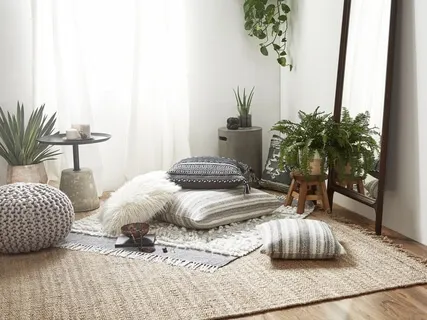
You want to create a little bit of a meditation cove or zen space,
If you would.
Sometimes people will put a piece of art on the wall in that space or have a little statue or something or something on the shelf if there's a shelf nearby.
But finding this little space in your place and then thinking about what you want to sit on what's comfortable for you.
So you can use a meditation cushion or a meditation bench.
You can use a backjack.
That's often what I use.
You can use just a regular chair or a blanket or a cushion of some sort,
Whatever is going to be most comfortable for you.
You can also think of having what I'll call a meditation pouch.
And in this,
It's going to hold different items that can be part of your meditation practice or ritual of starting,
Being present in meditation,
And then wrapping up and ending your meditation.
So what some ideas of what you might put in that pouch,
You might have a candle.
And with this candle,
You can light it at the beginning of your meditation and blow it out at the end as far as that ritual practice.
You might have an incense in there or some essential oils that the essential oils,
Maybe place them on your wrists or maybe have them diffusing during the meditation.
Some common incense and essential oils that are used in meditation are sandalwood,
Cedarwood,
Palisanto,
And frankincense,
Among many others,
But those are some common ones that are often used.
You might also have some white sage or sweet grass that you burn as part of the ritual of preparing your space.
Or you might have some crystals,
Amethyst and quartz crystals are common ones also that are used in meditation practice.
You might have a little book of some sort that has like a daily mantra in it or affirmation or gratitude statement.
Sometimes people will use oracle cards or something like that that they'll read a card before their meditation.
You might also have some mala beads in there,
Which are meditation beads that you can use to help focus in your meditation practice.
So having this meditation pouch in your meditation space,
And you're not going to maybe use all of these items every time you meditate,
It's about having some tools available for you to create a ritual and what you're looking for.
And we'll talk about how to get that started when we talk about the process.
So creating this space,
Having what you want to sit on,
Having it be like a little Zen pocket corner in your home,
And then having this meditation pouch that has several different things in it that you can use.
Then you want to think of,
Beyond creating your space,
You want to think of creating this sweet spot for yourself of time.
So what is your sweet spot to get started?
You want to think of this in terms of morning,
Afternoon or evening,
And maybe that varies too.
Maybe you're typically in a more of a morning practice,
Which tends to be what I do.
I'm kind of getting in this great structure of morning routine of juicing and then meditating,
And that seems to work well for me.
But also sometimes I do evening meditation where it's really about getting more into that deep relaxation and Zen space of more guided towards sleep.
So even the time or that sweet spot of time might vary some,
But when you're thinking about routine and structure,
Trying to choose something that you want to do each day or maybe three times a week,
Thinking about what that looks like realistically for you.
But also in terms of that sweet spot of time,
You want to think about the ideal amount of time.
If you are new to this,
Start small.
Start with maybe seven to 10 minutes.
Don't try to jump in and do 30.
You're going to maybe feel depleted or feel like it's too much,
Or you'll easily be able to talk yourself out of having the time to do that.
Seven to 10 minutes is pretty doable.
I mean,
Think about it.
Seven to 10 minutes,
How many times do you waste seven to 10 minutes on Facebook or Instagram looking at something that you've already looked at 10 times because there's nothing new on there?
So I think if you look at how you spend your time,
You might find seven to 10 minutes that you can pluck away from a different time waster that is just wasting time and doing nothing to help develop your mental,
Emotional,
Or physical well-being.
So seven to 10 minutes,
Start with that sweet spot,
What time of day and how long.
And when you start small with the seven to 10 minutes,
It allows then for the creation of desire.
Do the seven to 10 minutes for a little while,
And then you start longing to meditate more.
I can't wait for tomorrow morning to meditate again.
That felt really great.
And then you'll know when it's time for you to increase that a little bit,
And maybe just increase it by five minutes.
So starting small and figuring out what that sweet spot of time is for you.
Then you want to think about what you want in terms of do you want to listen to some music,
Some meditation music in the background?
You can listen to a short guided meditation.
You can have silence and practice really that deeper inner awareness of the space between thought and being.
And so that might be something that you incorporate as well.
But maybe you start with just some music or some guided meditation to help you.
There's no right or wrong.
Allow yourself to do what's going to help you best and not try to create the most amount of resistance.
And then you might also want to consider having a timer of some sort so that your mental mind is not wrapped up in trying to keep time.
Insight Timer is an app.
It's a great app that you can use.
It does lots of different things.
But one of the many functions is that it has a timer function.
So you can create a timer for seven minutes in this example and a little gong will go off to let you know you're done.
It also has over I think 3,
500 guided meditations on there.
Mine are starting to get on there too.
These ones that you're listening to through these episodes.
But there's over like 3,
500 guided meditations on there.
You can select what it is you're looking for specifically.
There's even courses on there that you can take.
It links you up to your meditation community.
It'll tell you how many people around the world are meditating with you at that time.
You can also do some journal entries about your meditation among a lot of other things.
So some cool features on Insight Timer.
But the whole point of me bringing it up is well all of those cool things.
But also you can use the timer function so that if you're doing this seven to 10 minutes,
Set your timer and let your mind be free.
So having that timer and then thinking about what it means in terms of the practice itself when we look at all of this creating space,
Having that sweet spot of time,
Thinking about background music or quietness,
Guided meditation and then having a timer of some sort as needed.
And what you do in terms of bringing all this together with the practice itself.
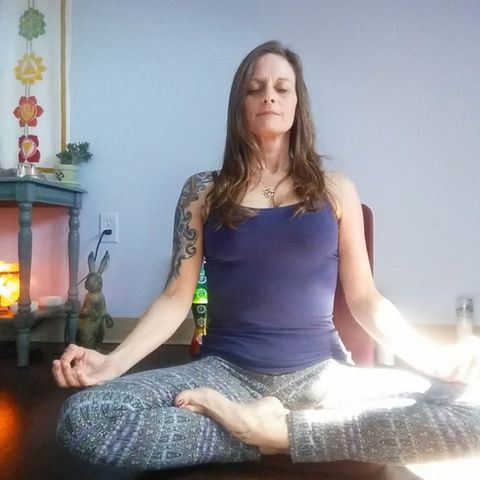
So you would start getting into your corner or your space that you have designed and created for yourself,
Getting yourself settled in your seating position and then starting with preparing your space.
So you might again like that candle or maybe you'll light an incense.
Maybe you'll say a brief mantra or have an intention in your mind of something you'd like to focus on in the meditation or maybe you're just going to let yourself just be and you won't have any of that thought stuff come through and just kind of more of the ritual of lighting the candle,
Lighting the incense.
If you're lighting an incense maybe,
If you're holding a crystal maybe you hold the crystal in your hand or you do some smudging with the white sage or the sweet grass.
Just allowing yourself to create a brief ritual of I am getting myself ready to just be in this space and it starts to kind of let your whole system know you're giving yourself permission to just be right now.
If you think about organized religion it's a ritual and that ritual gets people longing to go back each week and being a part of it.
So you're doing this for yourself.
You're creating a sacred space and you're creating a ritual so that you also desire to continue to do this and incorporating something small like this of lighting of a candle or an incense and creating that space for yourself it can do a lot in terms of allowing yourself to connect more to the ritual and the longing and desire to continue it.
So you're going to get yourself settled in your space and then maybe light that candle incense,
You know diffuse the essential oil if that's what you're feeling,
Whatever it is for you to get it ready and started and then you're going to start your timer.
And again maybe considering just that seven to ten minutes to begin.
With it you can do a closed eyes meditation or you can also do open eyed meditation with an open eyed meditation you're going to be you know connecting with the senses so connecting with what you see in your in your room,
What you hear,
What you feel in the space and then that closed eye you're going to go more maybe internal or within.
With either direction you go recognize thoughts are going to come.
They're going to come,
They'll be back to back but the idea is non-judgment so remembering you're not going to judge your thinking you're going to be aware but you are not going to judge the best that you can.
And then recognizing that you are going to practice being the observer so you're just going to practice noticing those thoughts being the observer of the thoughts that come and allowing them to float away.
They can float away down the river on a leaf,
They can go up in the sky on a cloud gently floating by.
I tend to put my thoughts out on into the ocean.
Some people tell me you know well then that brings them back but again the ebb and flow seems to resonate more with me of the oceans tides because that tends to be the ebb and flow of our emotions and of life.
But whatever it is for you just allowing yourself to practice being the observer without judgment as thoughts will come and you might notice initially as you have that thought gently float away it comes right back again or you're judging yourself two minutes later because you're still wrapped up and trying to allow this thought to float away.
So you want to also let go of that resistance trying to not think will make you think more.
So just observing it's okay if that thought comes back this is all part of this mental training the more you train the more you let go the more you become aware the easier it becomes the more space you begin to have.
Again it's not about not having thoughts it's about being aware and being the observer so that we're not participating and the more you practice you'll get to the layer underneath.
We have that first layer of jibber jabber that's jumping around in our mind that monkey mind just keeping us scattered and busy but the more you practice observation and floating away the more space the more space the deeper we go the deeper we go then we can see what's underneath we can see what's underneath those thoughts but we can also allow space for other things to come through.
So just practicing and recognizing that thoughts are going to come you're going to float it away and it's going to come right back and that's all part of the process try not to judge and the more you practice the easier it will become.
So that is the teaching or learning part of today and just remembering that in that process your breath is always an anchor.
You can always connect back to breath to bring your body into stillness and awareness.
I am going to now take you through a brief meditation just to help you get into some stillness.
You can go ahead and get yourself comfortable in whatever that is for you as we begin to go through a brief meditation to allow yourself to get into relaxation.
You can begin by just getting settled into your space gently closing your eyes and allowing yourself to connect to the rhythm of your breathing.
Connecting gently to the rise and fall of your breath.
Any thoughts that come through simply allowing yourself to observe and allow that thought to float away connecting your awareness back to your breath or back to my voice.
Knowing that your breathing is deep and relaxed allowing yourself to relax your head behind your ears,
The space between your brows and your cheeks,
Gently releasing and relaxing your jaw,
Releasing the tongue from the roof of your mouth.
Your breathing is slow and steady,
Guiding that relaxation and the release of tension in the back of your neck,
Your shoulders.
Simply breathe as your thoughts come and go.
Getting go of tension as your body falls into a state of peaceful quiet.
Your heartbeat and breathing are serene and steady.
Relax.
Feel your arms and hands getting warm and heavy.
Begin your elbows,
Your wrists,
Your fingers,
Feeling relaxed.
Your breathing is deep and steady.
Feel your breath sink lower and lower into your lungs.
Your abdomen is soft and warm.
Your limbs are heavy.
You are relaxed,
Calm and centered.
Feel your legs get heavy and warm.
Relax your toes.
Relax your knees.
Relax your feet,
Your ankles,
Connecting it back to that relaxation in your toes.
Feeling your breath slow and steady as it grounds and relaxes your whole body.
Feeling its vibration,
Continue to feel and relax,
Grounding you,
Calming you,
Allowing it to create further space as your thoughts begin to quiet.
Hearing the silence grow as your mind hushes.
The thoughts that come simply notice and allow them to float by as you reconnect to the space between them.
Allow your breath to anchor you.
You can feel your body heavy and relaxed,
Noticing space in your thinking,
Quietness and stillness within.
As your body continues to feel grounded and still,
Heavy,
At peace.
Gently allow yourself to begin to connect back to your body and the gentle rhythm of your breath.
The rise and fall of your body as you breathe.
Gently wiggling your fingers and your toes,
Reentering and feeling,
Connecting,
Bringing with you this awareness of calmness within you,
This anchoring that your breath is in,
And allowing space,
Allowing calmness and knowing it is always with you.
And as you're feeling ready,
Opening your eyes and reentering your space wherever that is that you are today with me.
Take a nice stretch,
Maybe a nice deep breath,
And allowing yourself to just check in for a moment and notice if you feel less busy.
Notice if maybe the jibber-jabber in your mind is a little slowed down.
And perhaps noting anything you noticed in the meditation itself in terms of your ability or resistance,
Your comfort or hesitation,
And maybe even taking a few notes about it.
And if you're choosing to start to create a routine of meditation,
You can maybe take some notes here and there and start to see how your own growth begins to unfold.
Because again,
This is just a practice.
And the more you practice,
Along with anything else you practice,
The better you get.
Meditation is no different.
It's those of us who are,
You know,
Pretty skilled at meditation isn't because we have some kind of magic.
It's just because we've dedicated our practice and dedicate some practice time.
And you're going to also notice that it becomes easier and that you will develop potentially just a love for it in itself.
And that creates its own motivation to continue the practice.
With that,
We are done with today's episode.
I hope you find it helpful and some considerations of how you might begin to create your meditation space,
How to find that sweet spot for yourself,
And some things to start that practice and routine.
In terms of how you would close,
If you were doing this as one of your routines or practice,
You might then blow out that candle if you had your candle lit,
Or you know,
Your incense,
Or maybe you'll put away your mala beads or your crystal if you're holding it.
Maybe you'll say a little closing intention for yourself,
Asking for that peacefulness or quietness to go with you through the day or an intention of connecting to gratitude through your day.
Just something to help you kind of close out and close up that space for yourself.
And again,
Reminding yourself that this can be just a beautiful routine,
That if you start to just allow yourself permission,
This little bit of time and space each day,
Or maybe every other day,
To have that seven to 10 minutes.
And again,
If you look at your day,
You might find it's easier than you think to find seven or 10 minutes that you're wasting time and space on things that really don't mean a whole lot to you and give meditation a try because that might mean more than you realize when you start to feel and experience the benefits that it does in your whole mind-body system.
With that,
Everybody,
I hope you have a wonderful day and I look forward to spending some more time and space with you and what we have in store in the future for these podcasts.
Thanks so much.
And if you want to learn more about what's going on,
You can check us out at serenitywellnesscenter.
Com or serenitywellnesstools.
And you can check us out on Facebook and Instagram at serenitywellnesscenter.
As always,
Thanks for your continued encouragement,
Support,
And sharing this podcast with others.
I appreciate you all so very much.
Please continue to send me your feedback and your questions and I'll continue to get that information out to you.
And again,
Thanks everybody for continuing to expand and help me share this information with others.
Have a great day.
Talk to you soon.