Welcome to the mindfulness meditation podcast.
I'm your host,
Dawn Eshelman.
Every Wednesday at the Rubin Museum of Art in Chelsea,
We present a meditation session led by a prominent meditation teacher from the New York area.
This podcast is a recording of our weekly practice.
If you would like to join us in person,
Please visit our website at rubinmuseum.
Org slash meditation.
We are proud to be partnering with Sharon Salzberg and teachers from the New York Insight Meditation Center.
The series is supported in part by the Hemera Foundation.
In the description for each episode,
You will find information about the theme for that week's session,
Including an image of a related artwork chosen from the Rubin Museum's permanent collection.
And now,
Please enjoy your practice.
Good afternoon.
Welcome.
Welcome to our weekly mindfulness meditation here at the Rubin Museum in partnership with the Hemera Foundation,
Presenting partner Sharon Salzberg,
The Interdependence Project and Parabola Magazine.
My name is Tashi Chodron.
I host a monthly program called Himalayan Heritage.
It's every first Wednesday of each month.
And so that being said,
September 5th is the next one,
And we'll be celebrating Ganesha's birthday called Ganesh Chaturthi,
Partnering with India Home from Queens.
I do have a secret discount code to share,
And the secret $5 discount code is Ganesha.
Easy to remember,
Right?
And then I also host a selected Saturday meditation in the shrine room on the fourth floor,
And that's also coming up in September.
So September is going to be busy.
Some of you have asked when the next set is starting,
So it is happening in September.
Tickets should be available,
And it's for limited seatings as well.
Sorry,
I don't have a discount code for that.
So the theme for the meditation is intentionality or intention.
And intention in Tibetan Buddhism,
So as a Tibetan,
I like to share that part of the story,
Is considered one of the most important thing,
Having right intention,
Having pure intention,
Which then leads to motivation,
Right?
And then the other intention is like at the end of the day,
Sort of dedication.
So what I have learned from the great Tibetan masters and my Tibetan elders is that when you wake up in the morning,
It's very,
Very important to have good intention,
Intention that whatever you do today,
That you will try to help others to not say harmful things,
To then lead to mindfulness,
Right?
And we are all here to,
You know,
Having a good intention of trying to have some kind of a positive feeling and positive energy.
And then at the end of the day,
It's very,
Very important to have this whole positive thing that you've gone through during the day to have a dedication,
Something called Gewa Magin Dodu Kunlangu,
Which means dedicating all this merit to all sentient beings benefit.
So with that in mind,
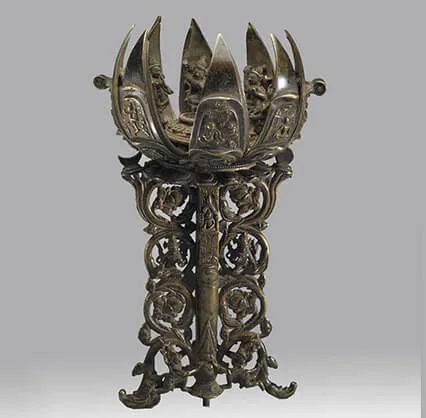
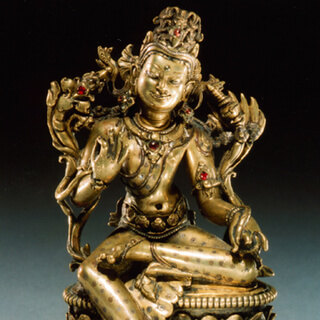
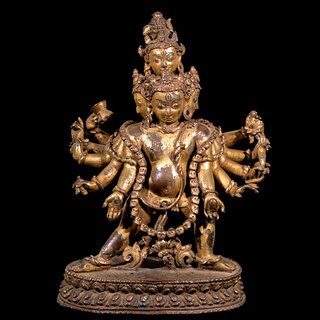
The art connection for today's meditation is this beautiful,
As you see,
The lotus object,
Lotus sculpture.
It has eight petals.
Eight can be very symbolic.
There is eight auspicious symbols.
There is eight bodhisattvas.
There is a lot of symbolic meaning in this number eight.
It's I believe is a 12th century piece.
And it's also symbolic of the mandala,
Which in Tibetan called Kil Kor means perfect center and circle or a perfect palace.
So the mandala,
We are all in this mindful meditation mandala as well.
I'll tell you more later when we go up on the galleries because I will be Jeremy today too after the meditation.
And so today's teacher,
I'm so honored to introduce Rebecca Lee.
I've heard great things about Rebecca's teaching in the past.
And Rebecca is a Dharma hair in the lineage of Chan master Shen Yang.
She started practicing meditation in 1995.
She began her teacher's training with Master Shen Yang in 1999 to become a Dharma and meditation instructor,
Then trained with Simon Child to lead intensive retreats and received full Dharma transmission in 2016.
Rebecca currently teaches meditation and Dharma classes,
Gives public lectures and leads retreat in North America and in the UK.
Rebecca's talks and writings are found at rebeccalee.
Org.
Please help me in welcoming Rebecca Lee.
Thank you,
Tashi,
For your introduction.
It's nice to be back and practicing with everyone here.
Today's theme I've been thinking about,
Intentionality,
Like Tashi shared,
Is really important for those of you who are familiar with the teaching of Four Noble Truths,
The Fourth Noble Truth,
The Eightfold Path,
Right Intention.
Right Intention is one of the eight.
What that means is that having Right Intention,
Cultivating Right Intention,
Is an integral part of our practice.
Along with that,
Right Mindfulness,
Right Concentration that you cultivate in meditation,
Those are also part of the Eight.
Eightfold means they are an integrated aspect of our practice.
So it's not a menu of eight.
You pick one that you like the most and only do that.
It's really important,
Really important to keep that in mind because if we only have some of the Eight and completely neglect the aspect,
Some of the Eight aspects of our practice,
Our practice will be,
Will have some problem.
We will have some misunderstanding in the practice and kind of go astray in our practice.
So I'm so happy to have the opportunity to talk about Right Intention.
And Tashi is right.
Right Intention,
What's the word right mean?
Right means in accordance with wisdom and compassion.
So it's not like right because I believe it's right or you believe it or somebody believes it's right.
Right of the Eightfold Noble Path of each one of them refers to whether it is in accordance with wisdom and compassion.
So having the Right Intention when we go about our practice is crucial.
Why are we practicing?
Do you ever ask yourself,
Why?
Why do I do meditation?
This is very important,
Maybe in the beginning your friend brought you or maybe your doctor said oh it's good for your blood pressure.
Well that's good.
So that's how many people approach meditation as a means for stress management,
Relaxation,
Indeed meditation.
When done correctly,
I want to emphasize that because you can get more and more anxious if we don't do meditation correctly.
When done correctly can have the effect of stress release and relaxation.
However that's not all Buddhist meditation,
Chan Buddhist meditation has to offer us.
If that's all we are after,
Then after a while you'll be wondering why am I sitting here?
Because if it's just for stress release I can go get a massage.
There are many people who tell me why do I just sit here and deal with this back pain,
I can just go take a walk and I can deal with my stress and you're absolutely right.
You're absolutely right.
So what did Shakyamuni Buddha,
Why did he spend his life teaching how to practice?
It's not just stress management.
It is about offering a way for us to free ourselves from our habitual tendencies to cause ourselves the problem of suffering.
We are really expert at getting in the way of ourselves from being at ease.
We have this body sitting here,
Everything is lush,
It's basically here,
I'm alive,
What's the problem?
That we find problems.
I'm not good enough,
I'm not skinny enough,
My spouse is not good enough,
My kids are not good enough,
My life is not good enough.
We find something wrong to be unhappy with.
So it's either something we have to get rid of in our life or something more,
My house needs to be bigger,
My car needs to be nicer,
My paycheck needs to be bigger.
Whatever it is that we think,
That is not good enough.
Now it doesn't mean that we don't try to study and learn and improve ourselves,
That's not what we're talking about.
But right here,
Right now,
Do we know how we are causing ourselves problems?
Very often we don't even know.
And actually that's what meditation can do for us,
Is to cultivate this clarity in our mind to see how we have been conditioned,
Conditioned to generate these habits of craving,
Craving,
Never enough,
This mindset of never enough,
Never enough,
Never enough.
Or resisting,
Resisting whatever that's happening right now.
And when we resist what's happening right now,
We generate dukkha,
What Shakyamuni Buddha called the first noble truth.
And what is that?
It's often translated as suffering,
And you might say that doesn't make any sense,
I'm not like suffering.
A better translation is the sense of unsatisfactoriness,
That whatever is happening right here,
Right now,
Is not good enough.
Or is not how it's supposed to be in my mind.
You may not know how it's supposed to be exactly,
But you just feel that it's not right.
Something's missing.
It's not good.
And you relate to that experience.
You sign yourself up,
You pop a ticket to sit here,
It's like,
Ah,
Like,
When it's over.
And you wait a week to come,
And it's like,
Oh,
You go on vacation,
Are you so excited,
Go there,
Ah,
Okay,
A few more days,
And I go home.
Go back to sleep on my bed.
Or the other way would be,
Ah,
This is so fun,
I wish this could last forever.
And you come home,
It's like,
Oh,
My life is so horrible.
Was this vacation helping you,
Or making you more unhappy?
We're really good at causing problems for ourselves,
Aren't we?
So the purpose of the practice is to discover that we really do this.
We really do this.
Most of you is like,
She's talking about someone else.
She's not talking about everyone else but me.
I don't do that.
That's silly.
Yeah,
Of course I don't do that.
And everybody,
When they really engage in the practice,
Using the meditation to really see into what they do in meditation,
They will say,
Yeah,
I do that.
And how do we do that?
It's my understanding that this is the purpose of our practice,
Is to discover how we cause ourselves suffering,
And really discovering not just intellectually or conceptually,
It's like,
How I,
How I cause myself,
The sense of this is not enough.
And this is what we can do in our practice when we look at,
When we are sitting here with our breath,
You'll be like,
What are their thoughts?
Thoughts come through.
There's no good.
I need to get rid of it.
Who gave you the idea that thoughts are no good?
You have a brain,
Of course there are thoughts.
But we somehow come up with the idea that it's a problem.
It's not supposed to be here.
My meditation is not how I think it's supposed to be.
So see if you have this idea in your mind that,
Oh,
I'm here to sit with a certain mind.
Your mind is your mind this moment,
And then the next moment,
And then the next moment.
There's a lot of thoughts,
Maybe because you have been very busy this morning.
You've been nonstop talking to people.
If there's a lot of images,
A lot of very strong images,
Maybe because you've been binge watching Netflix.
And they affect our mind.
And that's what happened,
And that's why it is.
This is the moment,
Whatever is coming through our mind is what's coming through our mind.
And when we resist the present moment of what's going on,
We are giving rise to aversion.
We hate our thoughts.
Or we notice that there are angry thoughts arising.
It's like,
Oh,
I hate that I'm angry.
So we hate that we are hateful.
And then,
Oh,
No,
I can't believe that.
I hate my anger.
So how do I get rid of it?
Now I hate that I hate that I'm angry.
You can see how it's pretty endless.
And we can sit here and be really upset that we are angry,
That we are angry,
That we are angry.
And we can notice that it's good.
You can laugh at yourself.
That's what I'm talking about.
We have cultivated these habits,
Lifelong habits of making things worse for ourselves.
There's a thought that I'm upset about something.
Oh,
I noticed that.
That's it.
But then when we say,
Well,
I'm meditating,
I'm not supposed to be angry,
Then now you create a new thought of anger.
Instead of,
Oh,
You noticed that.
Okay.
Everything goes away that arises in the mind.
No problem.
So this kind of way to approach our practice is what my Master,
Master Shen Yan,
Talked about as purposeless practice.
Purposeless practice,
Which is very different from I sit down,
Okay,
I sit down,
I buy a ticket and want,
I'm ordering 20 minutes of calm mind,
No thoughts.
That's my purpose.
The more we sit here and think that that's what I want,
That's what I want,
And when we don't get it,
We are getting more agitated.
And I want this,
I want this.
So we are cultivating this craving mind that causes us problem.
But when the beginning will notice,
That's what we do.
That's what we do.
It's like,
Oh,
Wow.
And then we will notice that is not right intention because it's not in accordance with wisdom and compassion.
When we approach meditation thinking that I am supposed to get something,
Get peace,
Get calm,
Get a still and silent,
Quiet mind from my meditation,
That's what I'm ordering,
We are cultivating this craving for something.
Maybe we have tasted a little bit more of that.
And also we're resisting.
And I had a student in the meditation workshop one time told me,
He said that,
I don't understand.
I feel that this meditation makes me more loving,
More open.
But my grandma,
She loves meditation.
She meditates all the time.
And she's like the most nasty person I know.
She said,
I don't understand.
And he explained to me how his grandma always told them that,
Your kids go away.
You're bothering me.
I'm trying to meditate.
When we set the intention in our mind that the meditation is for me to be peaceful and quiet and calm,
That's the intention we've got.
That's about me feeling a certain way.
That's what we are cultivating,
Rejecting the world,
Rejecting others,
Setting ourselves up thinking everyone else,
Everything else is in my way,
Is my enemy.
And so the right intention is very important here.
Why do we practice?
We practice to cultivate a more stable mind so that we can see more clearly how we cause our self-problem and also how when we are agitated,
We are more likely to hurt other people.
And when our mind is more stable,
We can see how we think and save and do things that are very self-absorbed and at the expense of others.
We don't notice that most of the time when our mind is agitated and distracted.
And so what the intention is,
In accordance with wisdom and compassion,
Is so that we cause ourselves less suffering.
We generate less of this craving and resistance in our mind.
We stop perpetuating these habits and as a result,
Mainly,
Our mind is so that we can be more loving and open and available for others,
First by being less,
Less hurtful to others,
Less hurtful for others without our intention.
We think that we are doing something good for them,
But we are actually causing problems for them.
We have no idea because we don't have enough clarity.
So right intention,
Do we know what we are doing?
Why are we meditating?
Why are we meditating?
Do we know that we have these cravings and these aversion towards what we think is unpleasant?
And as we begin to meditate,
We set our mind remembering that the practice allows me to know more clearly how I cause myself pain and cause other people pain,
And I'm doing this so that I can cause other people less pain.
And as I do that,
I'm also causing myself less pain.
And that's,
This mentality can be cultivated without practice.
And so we will start our practice here in our meditation.
Practice our body and remind ourselves we are here practicing to lessen our suffering,
To give rise to these unhelpful habits of craving and resisting so that people in our life will benefit from our peace of mind.
Feel the relaxation of the top of our head like melting butter.
And feel the relaxation spread to our forehead.
Check to see if we're holding tension there by habit from all the worrying,
Anxiety,
And we can give that a rest now,
Allow the tension to melt away.
And feel the relaxation spread to the eyeballs and eye muscles.
And feel the relaxation spread to the facial muscles and our whole head.
And feel the relaxation spread to our neck muscles,
Allowing the tension we hold there by habit to melt away.
Feel these muscles soften.
And feel the relaxation spread down the shoulder muscles.
And feel that we habitually tighten these muscles and remind ourselves that we don't need to do that.
We can allow that to be relaxed,
Allowing the tension to melt away.
And feel the relaxation spread down the arms,
All the way down to the fingertips.
And feel the relaxation of the chest area.
Check to see if we have the habit of tightening the chest area,
Maybe from anxiety,
Fear,
Worries.
Right now,
We're safe here.
There's nothing.
We need to worry about right here,
Right now.
So we can allow this anxiety to take a rest and allow the tension to melt away.
And feel the relaxation spread down the torso to the lower abdomen.
We often hold these muscles with a lot of tightness.
Right now,
We're supported by our chair.
We can give these muscles a vacation and allow the tension to melt away.
And feel the relaxation spread to the upper back.
And feel these muscles that we tighten up my habit softening,
Like melting butter.
And feel the relaxation spread down the back.
And continue down to the buttocks,
Down the thigh muscles,
And down the legs,
And all the way down to the toes.
And feel the relaxation of the entire body sitting right here,
Right now.
Allow ourselves to be fully here,
Appreciating,
Enjoying this moment with our body and mind as it is,
Nothing missing.
Appreciating that the body is breathing to keep us alive.
You notice the subtle movements of the body.
Subtle changes as the body moves to breathe.
We can use these subtle changes in bodily sensations to anchor our attention.
Anchoring doesn't mean holding tightly.
All we need to do is just to be here,
Wakeful,
With this wakeful,
Relaxed mind.
We are already capable of being in contact with these changing sensations of the body breathing.
Just allow the body to breathe on its own.
It's been doing a good job since the moment we were born.
We don't need to do anything.
All we need to do is just to be here,
To experience it.
And if we notice thoughts or memories or images coming through,
Allow it to be there because it already is.
Touch our urge to want to get rid of it.
Practice remembering to just allow it to be there.
That moment we are releasing our unhelpful habits of resisting,
Hating.
We might notice the mind saying,
Oh,
This feels really good,
I want more of this.
And remind ourselves that it's okay.
Whatever happens in this emerging present moment,
Releasing ourselves from the unhelpful habit of craving and craving.
Whatever is happening right here,
Right now,
It's okay.
Therefore this moment has tri passively.
.
.
.
.
.
.
.