Welcome to the mindfulness meditation podcast.
I'm your host,
Dawn Ashwaman.
Every Wednesday at the Rubin Museum of Art in Chelsea,
We present the meditation session led by a prominent meditation teacher from the New York area.
This podcast is a recording of our meal and practice.
If you would like to join us in person,
Please visit our website at rubinmuseum.
Org slash meditation.
We are proud to be partnering with Sharon Salzberg,
The teachers from the New York Insight Meditation Center,
The Interdependence Project,
And the Shambhala Center.
In the description for each episode,
You will find information about the theme for that week's session,
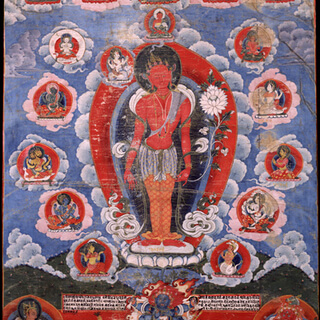
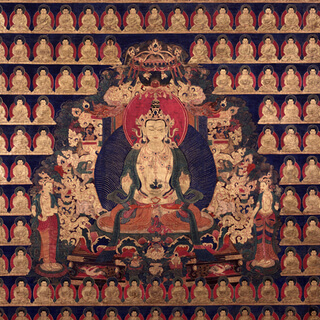
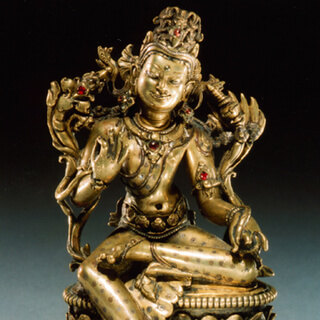
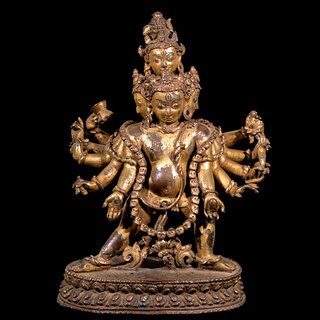
Including an image of a related artwork chosen from the Rubin Museum's permanent collection.
And now,
Please enjoy your practice.
As human beings,
We naturally live our lives wanting belonging,
Connection,
A home in this world.
We yearn for warmth,
For possibility,
And for the more abundant life that love seems to promise.
We sense there is a quality of real love that is possible beyond the narrow straits we have been told to navigate,
A possibility that's not idealized or merely abstract.
We have an intuition that we can connect so much more deeply to ourselves and to one another.
One of my own turning points came in 1985,
Writes Sharon Salzberg,
Our beloved teacher today.
When I did a meditation retreat in Burma,
I was practicing intensive loving-kindness meditation,
Offering phrases of wishing well to myself and others all day long,
Like,
May I be happy?
May you be happy?
As I practiced,
At one point,
It felt as though I came to a threshold.
On one side was the conventional idea of who I had thought myself to be,
That is,
Someone completely dependent on another person to feel any love in my life.
It was as though I considered love to be like a package in the hands of the all-powerful delivery person.
And that if that person changed their mind at my doorstep and walked away,
I would be bereft,
Irredeemably incomplete,
Lacking the love I so longed for.
On the other side of the threshold was the reflection of who I suspected I actually was.
Someone with an inner capacity for love,
No matter who was present or what was happening,
Someone who could access love that another person might enhance or challenge.
But there was no one who could either bestow that capacity on me or take it away.
I stepped over.
So this is the book that I'm reading from.
It is called Real Love,
The Art of Mindful Connection.
And yes,
It is by our beloved teacher today,
Sharon Salzberg.
And it is what is really catapulting us to talk about this fabulous subject of love,
Not only today,
But throughout the month.
How could we resist?
For those of you who are new to this program,
Welcome and welcome to everyone.
Welcome to those folks who are joining us from Facebook Live.
My name is Dawn Eschelman.
We are here at the Rubin Museum of Art in the Chelsea neighborhood of New York City.
And we are Museum of Himalayan Art.
This is our weekly mindfulness meditation practice.
And it's great to have you all here.
Each week,
We,
Along with our teachers,
Select an artwork to frame our discussion for for the day.
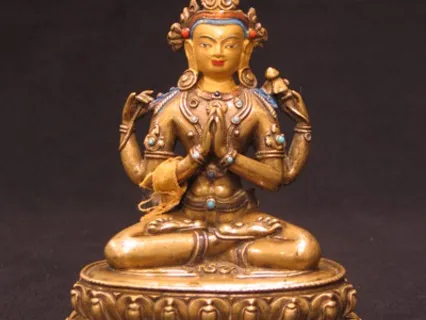
And I think that every every opportunity we give Sharon to select Avalokiteshvara,
She goes for it.
I think that if there were a mascot for love in the Buddhist canon,
It would be Avalokiteshvara.
So you're looking at this figure right here behind me.
And this is,
Of course,
The Bodhisattva of Compassion.
And we've looked at Avalokiteshvara a few times in in our series here.
This is a unique one because he's holding he has four hands,
Right,
And he's holding two of them in front of his heart in what looks like prayer gesture.
But in fact,
His fingers are kind of bowed slightly.
And he is it is meant to be suggested that he is holding a wish fulfilling jewel or a Chintamani,
Which is not seeable because it is transparent.
And this wish fulfilling jewel is some some like to describe it as the equivalent of the philosopher's stone in the kind of Western canon as it provides these essential benefits to our lives.
Ultimately,
It can be seen as a metaphor for the Buddhist teachings in that it fulfills our greatest collective wishes for an end for suffering and the experience of real love in our lives.
So Sharon Salzberg joins us to lead our meditation.
And as many of you know,
She is the co-founder of the Insight Meditation Society in Berry,
Massachusetts,
Where she has been studying and teaching for many years.
She is the author of many wonderful books,
And they are truly a joy to read.
And this includes the most recent book,
Real Love,
Which just is hot off the presses as of last night.
So so this is a really a special edition here for us today,
Because after our program,
Sharon will be signing books over in the spiral lobby.
If you'd like to pick up a copy,
You can do that by going to the shop,
Purchasing a copy and then head over to the spiral lobby just right across the way there.
And she will sign books for you then.
Also,
Before I bring her up on stage,
I want to mention,
Oh,
Just a bit of housekeeping,
Actually,
If you don't mind turning your phones completely off.
That will be a great expression of love to this group here.
And what else was I going to mention?
Oh,
This is really exciting.
So at the end of the month,
This is on Thursday,
June 29th,
Sharon will be here in conversation with the great Grammy award winning Roseanne Cash.
And they will be talking about love and creative expression as a form of love.
So don't miss it.
And without further ado,
Let's congratulate Sharon on her new book and welcome her back to the ribbon.
Sharon Salzberg.
Hello.
I told Donna feels like it's my birthday and I couldn't figure out why.
Oh,
That's why.
The book is out.
Just came out yesterday.
Isn't that amazing?
Yeah.
It's so exciting because I get to talk about part because I get to talk about love all the time.
That's all anyone asked me about now.
It's really great.
And it's wonderful to be here,
To be back here in this beautiful place as part of this beautiful community and a series of events and to have a look.
He touched far behind me.
Still there.
Yeah.
When I first went to India in 1970 in order to learn how to meditate,
My earliest teachers were Burmese or they had studied in Burma.
But pretty soon I was also practicing with Tibetan teachers.
And this was my first meditation was Aviloke Tishvara,
The manifestation of compassion.
So it does have a very special,
Special feeling for me as does love.
So I was thinking about actually an earlier book I wrote this book on faith.
And one of the things I've thought of lately,
Because I'm looking back over this is my 10th book,
Is that something that seems to excite me or inspire me is looking at words that I feel have gotten to great.
It in some way or used in some way so that we no longer have such ready access to their power and their transformative power in our lives.
So happiness most recently,
You know,
A lot of people had real happiness and had real happiness at work.
And people were like,
Really?
Like,
That's kind of petty,
You know,
Like,
Or people with real happiness at work.
Somebody said,
You know,
We don't call it play.
We're supposed to be happy.
We call it play.
We call it work for a reason.
Things like that.
And before that,
Faith.
I wrote a book called Faith and even my friends couldn't figure out why I was doing that.
Because for so many,
Faith had come to mean being silenced or not being able to ask questions and losing a sense of self respect.
But I have a story in faith that makes me think about my newest word,
Which is love and the ways in which I feel we can recapture and redeem the actual power of love and not be subject to some of the myths and the downright lies that we're told and that we tend to to imbibe and embody.
So in faith,
I tell a story about a conversation I was having with a psychiatrist and here in New York City and looking back,
It was a little bit funny because the conversation seems quite oversimplified.
But the topic of the conversation was what is the single most healing element in the psychotherapeutic relationship as though they were just one.
And I also think it's it's symbolic of a very big conversation like how do we get on in a time of adversity or challenge or difficulty?
What is the element that is onward leading?
So the psychiatrist I was talking to said he said.
The single most healing element in the psychotherapeutic relationship is love.
He said if you put any good therapist up against the wall,
They'd have to say it was love.
And I said in response once again,
As many of you have heard me say many times,
I kind of watched the words come out of my mouth.
I said,
Well,
For all we know,
The single most healing element in the psychotherapeutic relationship is the fact that someone showed up for their appointment.
Because that in a way was how I was defining faith.
Right.
Not a question of belief or dogma,
But what gets us out of bed and willing to try and willing to move into uncertain terrain and take some risks.
It's something inside of us that says maybe not for sure,
But maybe even that's a big deal.
So that book came out on one of my birthdays,
My actual birthday.
And the psychiatrist came to the reading at the bookstore.
So I read that passage in his honor and he came up to me at the end and he said,
I've been thinking about it and I think you're wrong.
It's love.
So I signed his book with a big it's love Sharon.
And then somebody gave me a birthday party that night.
And the psychiatrist came and he came up to me hours later and he said,
You know,
I've been thinking about it and I think you're right.
So I said,
Give me back the book.
But now I would like to say I think he was right.
Because this look at the elements of love for ourselves that has us have that much quivering of faith,
Of a sense of possibility that has us think I am going to show up for that appointment.
I'm going to try.
So should I see him again?
I will definitely say I think you're right.
Of course,
There is no single element and we can say these truths in many,
Many ways,
But it's a powerful thing to show up for that appointment.
And if we look at the heart of that,
We do see this quality of care for ourselves and a sense of possibility is very easy just to stay in bed.
I think it's getting increasingly easy just to stay in bed.
Right.
So it's a very potent exploration to kind of redeem the word or reclaim the word because,
Of course,
Of all words,
Love is used.
You know,
I love my cappuccino and I love my New York City apartment,
Which I actually do.
And we go through so many states of fragility and vulnerability and loneliness and so many things.
There's some astonishing statistic,
Which I can't remember quite the moment of how many people in this country in or out of relationships say they're very lonely.
You know,
It's amazing.
And the myths,
You know,
The pop songs,
The lyrics,
The beliefs.
It's also amazing.
And so what would it be like just to kind of clear the decks and take a look at that power because it really is a power.
I'd say that in my years of teaching loving kindness meditation,
There are probably two main controversies I've encountered.
One is the idea of loving kindness or love or compassion as being weak.
Many people think that's the road to folly.
That's the road to,
You know,
Not standing up for yourself,
Not standing up for others.
You just enter this kind of saccharine sweet,
You know,
World where everything's fine.
And you know,
Really woo woo and strange.
And I have a friend who was reading my first book,
Which was called Loving Kindness on the subway.
And he told me he was so embarrassed to be seen reading a book called Loving Kindness that he would cover the cover.
And he told me that at first I thought he meant with his fingers,
You know,
And then I looked at the actual book and those letters are like big.
And he was covering the cover.
And I thought,
My God,
It's like pornography or something,
You know.
How embarrassing to be interested in love.
Like,
What?
And I hear that all the time.
You know,
I don't know about developing more loving heart.
Then I could only say yes or let people take advantage of me or it would be too hard.
I'd be too open.
I'd feel too much.
It's kind of interesting that that notion.
So that's an exploration.
You know,
What is our experience of strength?
What is our experience of happiness?
What happens when we are filled with what is normally seen as strength,
Like vengefulness?
What happens really in our experience?
What happens when we're filled with compassion?
Do we really lose discernment and intelligence?
And we take a look and that's what mindfulness serves for,
Is to really see for ourselves.
And the second great controversy is this idea that love or loving kindness or compassion can be trained.
Sometimes I think we think of it as a gift.
And if you've got it,
You're in luck.
If you don't have it,
You're out of luck.
Or we think of it as a kind of very immediate emotional response.
But from the Eastern point of view,
From the point of view of Eastern psychology,
Absolutely these things can be trained because they are emergent properties of how we pay attention.
You know,
If you think about being in a conversation with somebody that you don't really know.
And you're not really listening.
You're not taking them in.
You're not paying attention because you're absorbed in thinking about your emails or looking around,
Trying to see who might be more interesting to talk to.
There's not really the ground out of which a sense of connection can grow,
Right?
Whereas if you simply pay attention,
If you're not so fragmented,
You're not so distracted,
You're kind of really there.
You have started to create the ground out of which connection can happen.
And that connection is very close to what I'm calling love.
It doesn't mean liking somebody.
It doesn't mean approving of them.
But it's really having this deep sense our lives have something to do with one another.
Like here we are.
So instead of being so lost in the kind of rigid,
Calcified world of self and other and us and them,
We really do have a sense of the interconnectedness of life,
Which is very different than liking somebody or wanting them to come over for dinner.
And it also happens to be the truth of how things are.
Our lives are interconnected.
We are kind of in this together,
Like it or not.
The sense of self and other and us and them,
While a useful construct in some contexts,
Is a construct.
And herein lies so much of our loneliness,
Right?
There gets to be a great big other out there.
And we feel more and more alone.
So if we really look at people instead of through them,
That's a very different way of paying attention out of which connection can come,
Which is the,
It's like that really is the ground of what I'm calling love.
And so here we are,
Practicing meditation,
Which is the training of attention.
That's exactly what it means.
And even if you're not setting out to become a more loving person,
A kinder person,
A more compassionate person,
You kind of do,
Actually,
Because that's just the kind of shift.
And what's interesting to me is that it's not labored.
It's not like you give yourself a lecture,
Like,
I got down to the Rubin every Monday for,
You know,
Every Wednesday,
You know,
For all those weeks in a row.
And like,
I better act like I care,
You know,
When this person comes into the elevator.
It's like,
I don't really care at all,
But what to do?
You know,
What if anyone found out,
You know,
Like,
It just changes within you.
And so you are different in the nicest possible way,
Which makes you stronger and makes you happier as you find yourself more and more connected.
So let's sit together and do the thing.
If you want to just sit comfortably,
You can have your eyes open or closed.
Let your attention settle into your body.
You can take a few deep breaths and then allow your breath to become natural.
And for this sitting,
Why don't we do a little bit of loving kindness meditation?
You can start with offering some loving kindness to yourself with two or three phrases,
Maybe four,
That are elements of life you would wish for yourself.
This is gift giving,
It's offering.
Common phrases are things like,
May I be safe,
Be happy,
Be healthy,
Live with ease.
Live with ease means the things of day to day life like livelihood or family.
May it not be such a struggle.
May I be safe,
Be happy,
Be healthy,
Live with ease.
You can use these phrases or any phrases that come to mind that seem to work for you.
Just repeat them over and over again with enough space and enough silence so that it's a rhythm that's pleasing to you.
This is like the song of the heart.
This is gift giving,
You are bestowing this upon yourself.
And when you find your attention has wandered,
Truly don't worry about it.
See if you can gently let go,
Bring your attention back to the phrases.
Thank you.
Thank you.
Think of someone who's helped you.
Maybe they helped you be here today,
They've helped you directly,
They've helped pick you up when you've fallen down in some way.
Or maybe you've never met them but they've inspired you from afar.
It's like an embodiment of the force of love for you.
It could be an adult,
It could be a child,
It could be a pet.
So if someone comes to mind you can bring them here.
Get an image of them,
Say their name to yourself,
Get a feeling for their presence,
And offer the phrases of loving kindness to them.
Even if the words don't seem quite right,
They're like a vehicle for the heart's energy so they're serving us.
You can offer the phrases of loving kindness to them.
Thank you.
Thank you.
And someone you know is hurting,
Who's struggling right now,
Bring them here.
Offer the phrases of loving kindness to them.
And someone you know is hurting,
Who's struggling right now,
Bring them here.
And all beings everywhere,
All people,
All creatures,
All those in existence,
Near and far,
Known and unknown,
May all beings be safe,
Be happy,
Be healthy,
Live with ease.
Thank you.
Thank you.
So thank you.
All beings thank you.
Thank you.
I hope you're happy and well.
See you again.
That concludes this week's practice.
If you'd like to attend in person,
Please check out our website,
Rubinmuseum.
Org,
Slash,
Meditation,
To learn more.
Sessions are free to Rubin Museum members,
Just one of the many benefits of membership.
Thank you for listening.
Have a wonderful day.