Hi,
And welcome to Pressing Pause.
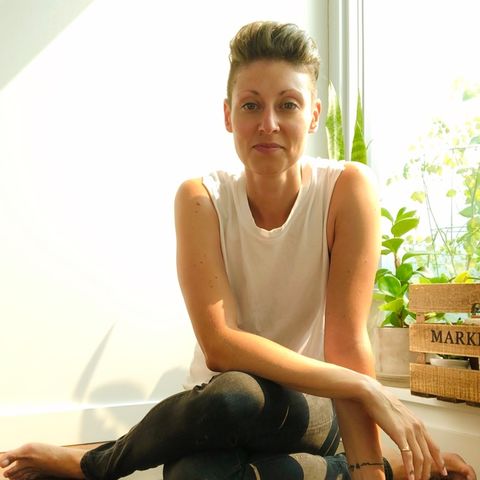
I'm your host,
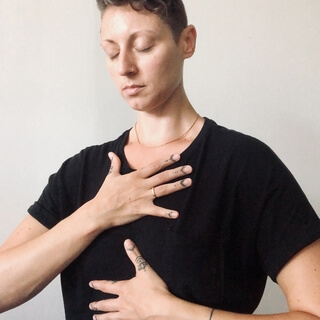
Rae Louise,
And today's session will focus on soothing the nervous system from sensory overload and releasing bodily tension.
As we get started today with our practice,
I want to invite you to consider all of your senses and how they are affected by the space around you and the way that you set up your practice area and the support for your body.
So firstly,
You might consider just the light in the room around you.
Notice if you need it to be a little brighter,
A little darker.
That might include closing blinds or opening them,
Turning lights on or off,
Or even the use of an eye pillow or something to just gently block the light.
You might also consider the sound coming into or around your space.
We cannot always completely protect ourselves from noise,
From distressing sound,
But as you set up for your practice today,
Consider windows being opened or closed.
Consider perhaps even putting in earplugs that you might turn the volume up or down of this recording or listen to it through ear pods to try and buffer the sound of our session together from the sound of any external noise.
You might also consider scent in the space that you are in,
And that might mean wanting to close or open windows or doors to just separate the space that you are in from other scents in your house or in this area.
It might mean adding to it by lighting a scented candle or an incense that you enjoy,
Or it might cross over with considering the textiles that are close to you right now.
So it might be the smell of fresh laundry,
Something that you are wearing.
And you might start to also consider what is on and around your skin.
Maybe the temperature in the room is a little too much or a little too little for you.
You might add or remove layers.
You might choose to have blankets or pillows around you that are comforting or to put on a favorite sweater or pair of socks.
As you move towards settling into your space,
Know that you can have this practice time today seated,
Reclined,
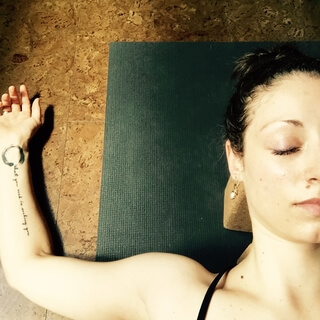
Laying down in any way that feels right for the body that you are in right now.
If you are seated or laying down,
You might consider how you could best support and create balance and steadiness for this body today.
And that might mean using some props,
Blankets,
Pillows,
Bolsters,
Even a wall to help support the spine or the pelvis,
The weight of the legs,
The head,
The arms,
So that you have as much length and space in your spine as you can right now with as little effort as possible.
So that you can have as much stability and balance in your body right now with as little tension as possible.
So take some time,
You can be particular,
Until you wiggle and shake and settle your way into a posture that feels as sustainable as you can right now.
And just know that as we carry on in our practice today,
What you need in order for the body to feel steady and at ease might shift and change.
And that's okay.
So let yourself add or remove support or layers as often as you need to and just let that be part of your practice today.
So as you settle into your posture,
We might begin with a little bit of gentle movements just to help connect our attention to parts of the body that might be holding tension or bracing or protection more so than we might need right now.
You might begin that just by paying attention to the muscles of your face.
Just noticing if there is tension or bracing in and around the eyes,
Through your jaw or your tongue or across your forehead.
And if it feels possible to relax some of those muscles just by paying attention to them,
That's wonderful.
Or you might need a little bit more tactile help today and that might look like gently massaging those areas of your body.
Changing the forehead with your fingertips gently or your jaw,
Your cheeks,
Maybe even gently massaging the ears,
A little gentle pull on your earlobes.
Take as much time with that as you need.
You might start to just let that softening in your face,
Your jaw,
Your ears begin to move your awareness down into your neck and your throat.
You might take a couple of swallows here just to encourage your throat muscles to relax.
You might even let that massaging carry on down into your neck.
You might let the neck gently move laterally from side to side.
You might circle the head very,
Very slowly just to allow the muscles of your neck a little bit of gentle stretch and movement,
Maybe allowing the weight of the head to then eventually rest a little more softly on the spine or on the support of the pillow or the wall underneath you.
You might let that awareness begin to move downwards into your shoulders,
Letting them shrug up toward your ears and roll down into your back a few times just very slowly and gently opening up a little bit of motion,
A little bit of stretch there.
Lying out some kinks or tension in the shoulders,
The upper back,
Even through that shrugging and rolling just reminding the chest,
The collarbones that they can open and widen a little bit here,
Just making a little more room for your lungs and for your diaphragm.
And when you feel it just letting the shoulders and then the whole weight of the arms settle down into the body and into the supports around you.
As you let the arms release and you let the spine start to settle,
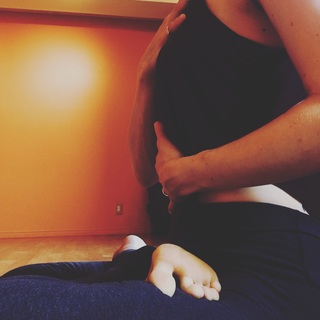
You might move that movement down into your pelvis.
Just letting the pelvis rock and tilt and circle,
Very gently moving the lower back,
Very softly mobilizing the hips as you move the pelvis.
As you explore that gentle oscillating of your pelvis,
Just gradually working your way towards a position where your pelvis feels balanced and supported and where you can let go of any tension or excess effort in your lower back,
In the creases of your hips.
You might let that awareness move down the legs and along the spine so that you arrive in your hands and in your feet and you might give them each a squeeze tensing and curling the fingers and the toes and then releasing them.
You might do that a few times,
Squeezing and releasing the hands and the feet.
Naturally just letting them fall into their most relaxed place right now.
Letting the soles of the feet and the palms of the hands rest.
Letting the fingers and the toes relax naturally.
And bringing your attention towards your breathing,
You might take a few deep sighing breaths with me.
Inhaling if possible through the nose and then exhaling through the mouth and we'll take these exhales if you can with a little bit of sound,
Really allowing that feeling of release to happen on your out breath.
So I'm going to take several and you can take them with me but be mindful to let your body take these sighing breaths at your pace.
We'll come back together in a moment.
So breathing in through the nose and out through the mouth.
And again,
Deep,
Deep breaths filling up and a big sigh out.
And again.
Just one or two more at your own pace.
If your body is craving more of that,
If you're feeling a yes response to that,
Take more.
Take as many of these big sighing breaths as you need.
And when you feel ready to just letting your last exhale empty out and gradually let your breathing just fall back into its own natural tempo.
Whatever that is right now.
And as you let the body just take care of the breathing on its own again,
You might let your attention gravitate towards wherever the breathing is feeling most neutral or even pleasant.
Wherever it feels most vivid to you.
It might be at the nostrils,
It might be in the sensations in your chest or in the ebb and flow of your belly.
Just letting your mind's eye move into that corner of your body.
And you don't need to do anything to the breathing right now.
You don't need to make it bigger or different in any way.
Just letting it be.
Just letting the waves of breath move through you.
Feeling however subtle,
Just that little bit of widening and softening that happens each time your body takes breath in and lets breath out.
Feeling the body expanding ever so slightly and relaxing a little bit more with each wave of breath that moves through this body.
Breath by breath,
Just noticing where you could soften,
Where you could settle,
Where you could let the body come to the ground even a little bit more.
Where you could let the body relax onto the bones a little bit more.
Where you could let the massage of your breath stretch out to.
Just taking a few more moments with this subtle ebb and flow of your breath.
Expanding and relaxing.
Expanding and softening.
And when you feel ready,
You might turn this off and let yourself stay resting here as long as you like.
Or if you're feeling ready to just let the body come back into the day,
You might let the arms and the legs stretch and let the fingers and the toes wiggle.
You might take another big sighing breath in through the nose,
Out through the mouth.
And at your own pace,
Just slowly beginning to let your senses come back into the room,
Letting your eyes very gradually open.
If they're covered,
You might let the covering come off slowly,
Just not startling the eyes.
If you're wearing earplugs,
Just letting them come out,
Letting the sound back in a little more,
Letting the body shift or move and wake and just taking in the space around you again for a moment.
As you move from here back into the rest of your day or into your evening,
I hope that the goodness and the slowness of this can go with you.
Thank you for joining me today.