G'day,
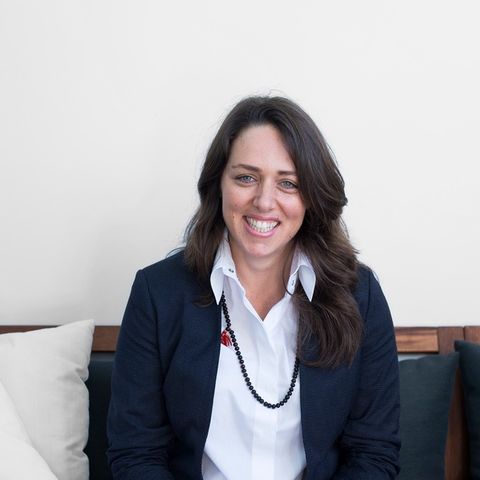
My name is Rachel Grace.
Thanks for joining me for this practice entitled,
Resting in Open Awareness.
As leading meditation teacher John Kabat-Zinn says,
Mindfulness is the awareness that arises from paying attention on purpose,
In the present moment,
And non-judgmentally.
There are two primary mindfulness meditation practice techniques we can use for developing mindfulness.
One strategy is directed awareness,
The other is open awareness.
Many of us begin learning mindfulness meditation by doing directed awareness practices.
This is where we direct our awareness towards paying close attention to a primary object of attention,
Like the breath,
The body,
Or sounds.
In directed awareness practice,
We focus our attention on our preferred anchor,
This preferred object of attention,
And whenever some other experience unrelated to our anchor or this object of attention turns up and grabs and takes away our attention from that,
Like a train of thought or an emotion,
A strong body sensation or a noise out in the environment,
Grabs our attention and takes it away,
We simply notice that our mind has wandered from focusing its attention on our anchor,
Our primary object of attention.
We accept that and acknowledge that briefly before we gently and kindly bring our attention back to the anchor,
To this primary object of attention.
And then we start again feeling and noticing the sensations or the sounds and experiences there as they unfold at that location from moment to moment.
This type of practice has many benefits,
For example it builds the capacity to concentrate and focus the mind.
So through directed awareness practice we increase our capacity to access a state of being both focused and relaxed within our meditation and out in our day-to-day life.
There's also another option for developing mindfulness and as I said earlier it's called open awareness.
In open awareness practice we start as usual by focusing our attention on a specific anchor,
A specific object of attention,
But then as other objects of experience become predominant,
Like a train of thought,
An emotion,
A strong body sensation or a noise in the environment around us,
Rather than gently retrieving our attention back from those experiences to our preferred anchor object of attention,
In open awareness we practice consciously receiving those experiences and pay close attention to whichever arising experience is most predominant in our field of open awareness.
When that experience,
Whatever it may be,
Fades away and is no longer predominant we can either come back to paying attention to our preferred anchor again for a time and we stay there until another experience becomes predominant for us to pay attention to.
Or equally we can simply continue to remain being open to and continually aware of whatever is arising,
Whatever is predominant in our field of awareness.
We can continue to notice how one predominant experience that we've been paying attention to,
For example a sound outside,
How that fades away just as another experience,
Perhaps for example a pain in the left knee,
Then arises as the most predominant experience in the field of awareness and we pay attention to that mindfully,
Non-judgmentally,
Before that too fades away as another experience for example perhaps thoughts about what's for lunch arises.
And when that becomes predominant in our field of awareness we notice that with curiosity and acceptance,
Not getting caught up in it either,
But just noticing it just as it is,
Just as another experience emerging in this moment in this field of open awareness.
So in open awareness practice the emphasis is on noticing the process,
The constant flow of ever-changing experience,
Either with or without intermittently coming back for a time of directed awareness,
Focusing attention on an anchor or primary object of attention.
The spacious quality of mind we access in open awareness practice grows within us a really beneficial state of mind,
One that builds our capacity to not get disturbed quite so easily by passing thoughts and feelings and by what's going on around us.
This means we're better equipped to be clear and non-reactive,
Not just in our meditation practice but even in the midst of demanding home situations,
Tight work deadlines,
Challenging conversations and as we navigate the new challenges of a COVID world that is more volatile and uncertain,
Complex and ambiguous than ever.
But sometimes in open awareness practice,
Especially when we're new to it or when we're under a lot of pressure,
It can be all too easy to get lost in a train of thought or spaced out a little bit as we're opening to all different kinds of unfolding experience.
So in open awareness practice one technique we can use to help ensure we don't lose that connection to being really mindful of what's arising and what's becoming predominant from moment to moment is something called a noting technique.
With the noting technique we practice making a soft little mental note in response to whatever experience has become predominant in our field of awareness using just a word or two to simply acknowledge,
To non-judgmentally label whatever is arising in this field of open awareness in this moment.
This mental noting technique can be really helpful in sustaining a mindful attention of these changing objects of attention.
As the wonderful teacher Joseph Goldstein says,
We could say the note anchors our attention to the flow of changing objects moment after moment.
For many of us open awareness practice becomes more accessible and manageable once we have established a more concentrated and calm mind through directed awareness practice.
But open awareness practice isn't superior to other types of practice it's simply another perspective,
Another technique and approach we can consciously apply in our practice to keep developing our capacity to be mindfully aware and at ease with the flow of experience not just in our practice but in our day-to-day life.
And the great thing is that once we've become comfortable with both directed awareness and open awareness techniques we can skillfully interweave times of open awareness with times of directed awareness into our practice anytime.
This is really great because skillfully using these techniques in tandem interweaving them can really help us to keep our practice unfolding in a balanced and profoundly helpful way.
So in this practice you'll be invited to access and strengthen the natural underlying capacity that you have that I have that we all have for maintaining a spacious open awareness.
So let's begin.
To prepare for this practice I invite you to find a sitting posture where you feel comfortable but also alert and relaxed.
Then as you settle into this posture I want you to take a moment to just notice the environment around you looking around at the space you're in noticing the sounds around you allowing yourself to just arrive at the space and the place you're in.
Then I invite you to join me in taking a deep breath in filling the lungs and then as you exhale gently and slowly releasing all the air from your lungs allowing your eyes to gently close or if you prefer letting your eyes be downcast with a soft gaze towards the floor and we'll begin the practice with the ring of a gong.
GONG Just noticing yourself breathing in a natural and gentle rhythm noticing how it feels in the body as you breathe in and out.
Noticing too how the body feels sitting here.
Then becoming aware of whatever physical sensations are calling your attention whatever's most predominant.
You might notice tension or warmth vibrational pressure just notice whatever's most predominant.
GONG Become aware of those sensations and notice what happens to them as you become aware of them.
Do they get stronger or weaker?
Do they fade away?
Do they disappear quickly?
GONG When they're no longer predominant again return to the breath or return to awareness of the body sitting.
When thoughts arise in the mind or images arise in the mind just make a soft mental note of that using a simple note for example thinking or seeing.
GONG And then notice what happens to the thought or the image as you become aware of it.
GONG When the thoughts or images are no longer predominant no longer pulling your attention.
Again return to the breathing returning to your body posture.
You can become aware of different emotions too so noticing for example if sadness arises in the mind or boredom or peace or happiness or anger noticing whatever emotions may arise they too can become the object of meditation.
Make a note of the particular emotion as it arises.
Content,
Worried,
Sad,
Happy whatever it might be.
Noting whatever emotions are present as you become aware of them.
GONG Opening to the feeling of the emotion noticing how it feels in the body too.
GONG Receiving the whole experience of the emotion in the open field of awareness.
And again whenever it's no longer predominant when an emotion or emotions no longer calls your attention.
It's returning to the breath returning to noticing the body sitting.
GONG Now I invite you to experiment with interweaving times of more open awareness into your practice so where you no longer return to the breath or to the body sitting after you've been mindful of a different predominant experience.
So just allowing yourself to experiment now with simply being mindful and aware moment by moment of whatever may be arising.
GONG Becoming aware of whatever experiences become predominant from moment to moment.
GONG GONG GONG As each new experience presents itself surrendering to the flow of experience knowing it with awareness.
GONG GONG Continually being attentive in each moment to whatever is arising in the body and in the mind.
GONG If at a certain time you feel the mind is getting less focused,
Getting increasingly lost in thoughts and the wandering mind is getting too scattered.
You can always return again to directed awareness refocusing on feeling and noticing the sensations of the breath.
To sensing and feeling how the body feels sitting.
And when you're ready,
When there's a sense of concentration,
You can return your attention to noticing different objects as they arise,
Noticing them,
Feeling them,
Hearing them,
And then again returning to the breath or to noticing and sensing yourself sitting.
Experimenting with this interweaving of directed and open awareness.
GONG GONG As we learn to interweave these two strategies of directed awareness and open awareness,
Our practice becomes ever more steady and balanced and open to the flow of changes as they're happening moment after moment.
As we start to move towards the end of the practice now,
I invite you to bring attention back to the breath,
Noticing how it feels in the body as you breathe in and out.
Now bringing your awareness to the body,
Noticing how your body feels in this moment,
Opening to all the different sensations that are present throughout the body.
And then I invite you to join me in taking a deep breath in,
Filling your lungs right up.
And then exhaling gently and slowly,
Releasing all the air from your lungs,
Allowing your body and mind to relax as you breathe out and let it all go.
And we'll finish the practice with the ring of the gong.
Bringing your eyes to open,
Gently bringing your attention back up into the environment around you.
I invite you to take a moment to notice and savor the impact of this practice on the state of your body and mind.
You can practice alternating between direct awareness and open awareness any time during your day-to-day life.
Certain times,
Like when we're working,
Writing,
Listening,
Reading,
Or eating,
Where direct awareness is of most benefit.
There's other times when we're walking,
Transitioning between meetings,
Waiting in line,
Or on hold on the phone.
But these times,
Open awareness may be most beneficial to sustaining our mindfulness in the moment to staying present.
So experiment with interweaving directed and open awareness into your day-to-day life continually so the techniques can help you to be more present and at ease with life as it's unfolding from moment to moment.
May mindfulness positively impact you,
What you do,
And all of those around you.
Thank you for practicing with me.
I hope you'll join me again.