Shalom,
Shalom,
Shalom,
Baruchim Habaim,
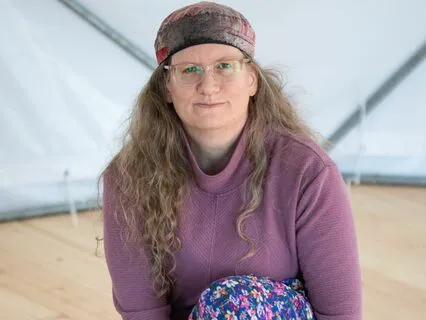
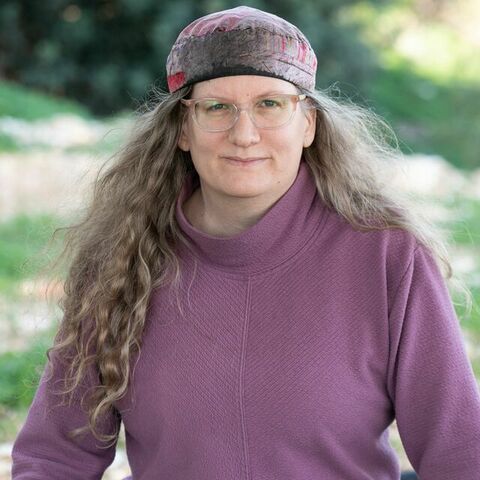
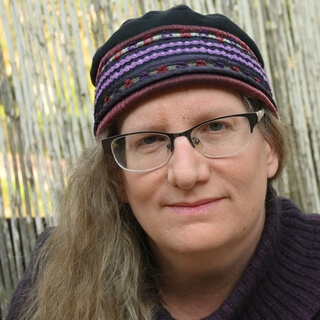
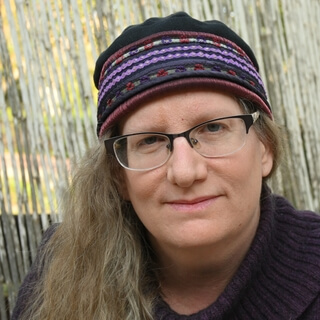
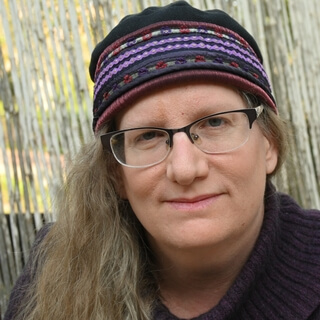
I am Rabbi Echfastia Uriel Steinbauer,
The founder and director of the Institute for Holiness,
Kehillat Musar Mindfulness.
Welcome to our weekly free public offering called Awakening Torah Musar Mindfulness.
I'm delighted that you've joined us.
We will be looking at the Torah portion from yesterday and more on Shabbat and the Jewish Sabbath of the Parsha,
The weekly Torah portion called Ki Tavo in the book of Devarim,
Known as Deuteronomy in English.
Before we begin,
We always begin with our dates and our Kavanot,
Our intentions for today's session.
So please join me as I move through this before we begin learning together and then engaging in mindful meditation together as always.
So,
Today is Sunday,
September 3rd,
2023.
We are covering the Torah portion from Shabbat,
Saturday,
September 2nd,
2003.
On the Jewish calendar,
Today is the 17th of Elul,
So yesterday was Tet Dvav,
The 16th of the Hebrew month of Elul,
And the year of Shempeg Gimel,
5783.
And before we begin,
We enter our Kavanot,
Our intentions for today's session.
If you are watching live stream or on video,
You will see the Kavanot,
The intentions before you on the screen.
And if you are listening by audio or podcast,
You will hear me recite them.
So we see this weekly awakening series as an act of radical self care.
You are taking this 45 minutes with me on this journey to strengthen yourself on the path to take refuge and community in the teachings of Musa and mindfulness.
And this is always for the benefit of the other,
But we also need to be strengthening ourselves to do so.
So we say,
Before doing acts of caring for the self,
Which this is today,
This is something I'm doing to strengthen my own soul in order to be of benefit to others in the future.
And we also see this act as doing it on behalf of others.
This is something I'm doing to strengthen my relationship to others,
So I can be a better conduit of God's good to others when they need me.
And finally,
We see this time together as strengthening our relationship with the divine.
So we say as our final intention,
Our final Kavanot together,
This is something I'm doing to strengthen my relationship with the divine,
So I can be a better conduit of God's good to others when they need me.
So may we really merit these today as we jump into Ki Tavo and explore how we can practice during the week and strengthen each other in the process.
So today I'm actually just going to dedicate today's teaching in honor of all those who are trying to bring less suffering,
Less harm into the world,
Less what we call dukkha in Theravada Buddhism,
Less real pain.
And if you don't know what's going on here in Israel,
On Shabbat yesterday,
Some of the migrant community refugees,
Some of them from Africa,
Apparently two different groups from the location,
Ended up committing great violence against each other on the streets of Tel Aviv.
Shocking to most people,
Maybe not to all.
So today's teaching is really to all those in their communities and in Tel Aviv,
The police,
The military,
The people on the ground,
The care workers,
All the medical staff that are taking care of all those who were injured during the violence,
Who are bringing comfort and the opposite of dukkha,
Who are really stopping the pain and suffering.
So may we merit that today in honor as we explore Ki Tavo.
All right,
So what happens in Ki Tavo today?
Hopefully you had a chance to look at this.
It comes in chapter 26 of Deuteronomy,
And it continues,
Just to cover the pages with you,
All the way through chapter 29,
Verse 8.
Okay,
So this is a brief summary,
What goes on in Ki Tavo.
And Eretz Yisrael,
Our ancestors,
Who were farmers,
They bring the bikurim,
The first fruits,
The first crops,
To the place that Hashem,
God,
Will choose,
And the Torah ends up being Jerusalem.
And they say a special declaration,
Thanking God,
Showing gratitude for freeing us from the institution of slavery in Egypt.
And this declaration is actually famous because it's the central part of our master narrative of the Pesach Haggadah,
The story we read on the festival of Passover during the Sidarim,
The Passover Seders in English.
Farmers also give matzer,
A tithe,
From their crops to members of the tribal levy.
We covered this earlier in the varim,
You may recall.
They also have to give to other people who need it,
Such as the ger,
Stranger,
A widow,
El almana,
And also to orphans,
Yatom,
Yatomim.
So there's also a declaration for this occasion.
So we're now seeing,
We've always had these type of mitzvot,
Commandments of how to care for those who are most vulnerable in our society.
And now we're actually seeing a verbal declaration that must be included with the intention and the covenant,
With the actual mitzvah,
With the deed.
So this is a development in which the practice now,
The path must not only include deed,
Which must have,
Of course,
Intention and covenant thoughts,
But now is matched with speech,
With wise speech,
With what might be called right speech.
So after our ancestors crossed the Yarden,
The Jordan River,
Bnei Yisrael are supposed to inscribe the words of the Torah on stones,
And there will be a ceremony on two mountains,
And the leaders are to announce blessings and curses.
And everyone responds,
Amen,
Meaning I agree.
So if Bnei Yisrael follow God and the rules,
The mitzvot,
The commandments,
They will be raised high.
And if they do not,
The curses could come their way,
And they will be brought low.
And like the curses in Bechukotai,
This section is also called Tocheach,
Which means a rebuke.
So Bnei Yisrael have experienced amazing miracles during this 40-year journey.
And since they were freed from slavery in Egypt and Mitzrayim,
So even after 40 years in the desert,
We are taught that their shoes and their clothing haven't worn out,
Not one bit.
Which makes me think and always smile that we wish we had access to such clothing and shoes,
Because ours run out.
They're made,
Right?
They're like plan of celebs,
I think it's called.
Like our clothing and items are made today,
So they'll run out in a year or two or three.
And so,
Of course,
I understand this is the miracle of Hashem,
But I like to joke that we wish that we had our ancestors' clothing and shoes.
Okay,
What else is going on with this summary that I need you to know before we jump in?
Let's see if there's anything else I want to share with you.
I just want to point out that the verbal declaration for the bikurim,
The first fruits,
Have several features in common.
These declarations that need to be cited on giving donations.
The first is that it must be before the Lord your God.
So it's acknowledging this is what this declaration and to whom this is really for.
And it describes the land.
The land is really recited here.
This is very important.
The land is flowing with milk and honey.
And each refers to these recitations,
Declarations,
Each refers to the land as a gift,
As a matanah from God in fulfillment for His promise to our ancestors.
Like Avraham,
Yitzhak,
Yaakov,
Sarah,
Rivka,
Rachel,
And Leah,
Belha,
And Zilpah.
So this is very important,
Something I wanted to point out with you.
And there's also this beautiful mirroring going on.
I talked about mirroring back in Bereshit and Shemot.
That when God does,
With a certain verb used,
It gets mirrored by either it's Avraham,
Or it could have been Noach,
Or it could have been Adam.
And mostly in the case of Avram and then Avraham,
This beautiful kind of mirroring,
One does one thing and one does the other.
So here we have it too.
In the ceremony of bringing the bikurim,
The first fruits,
It says that G-d gave,
Assigned,
Imposed,
Bestowed.
It appears seven times,
This verb.
It's very important in the Hebrew to pay attention to which verbs and how many are being used.
Six of them are referenced to G-d giving Israel,
Our ancestors,
The land and its bounty.
And this emphasis on the land is a gift from G-d.
It's not something that Israel possessed naturally or by our ancestors' own actions.
We must remember this even today.
That forms of the root,
Bo,
Enter,
Go,
Right,
In the causative form.
Bring,
Harvest,
Bring in,
These appear also six times.
K expresses the idea that the farmer goes to the priest,
Right,
And brings the first fruits.
Because G-d brought that farmer and our ancestors into the land and enabled all our farmers to harvest the crop,
Right?
So there's this exact mirroring.
G-d says enter,
Go,
Bring,
Harvest,
And then the farmer goes and brings and harvests.
It's quite beautiful.
And it's more than just verbs or deeds.
This is what we need to realize on this path towards holiness,
Is that these are done with great intention,
And it is part of the path.
It is something done with great purpose of cultivation of who our ancestors wanted to be in service of G-d and be in relationship,
And be full of what's called chakarata tov,
Of recognizing the good and giving thanks,
Of what we might call gratitude,
Right?
The sense of recognizing the land is G-d's gift to us that we,
In turn,
Give back and to honor and to acknowledge.
This is huge.
It's how we build the fabric of our society so that we are people who are open with expansion,
With an open heart,
One that can acknowledge and to give,
And give in spirit,
Give actual first fruits,
Physical,
Beautiful gifts from the land,
And verbal declaration.
And this is all a practice,
Part of the path of what it means to be a Jew,
Is this deep intention to live this out.
And this is very important.
It's very important to all of us because we must,
Every day,
All the Bitzvot,
But particularly these ones,
Are really meant to cultivate this open heart,
This heart that knows.
And this goes back,
If you want to remember,
Back in Bereshit and the stories in Shemot,
Where our ancestors began to know G-d,
This Yeda,
Right?
They had a heart that knew,
And they knew they feared G-d.
To fear G-d meant,
It's like the definition of religion back then.
The sense of what it meant to fear G-d is that you had an internal moral compass that knew right from wrong and lived by it.
It wasn't just,
Oh,
I know that,
And then I turn the other way.
It was,
It directed all my deeds,
It directed my limbs to perform,
To be,
To do.
And this is the essence of what it means to practice and live as a Jew.
And anyone who follows us in our path and sees this as a wisdom path,
That we are people who do.
And this is how we cultivate and learn and move the heart towards expansion instead of constriction,
Right?
So,
There's a key thing that happens in this parasha today.
With it,
We must acknowledge something that most of us do face,
But some people kind of have a hard time and turn away from.
Which is the saddest part,
Some of the saddest parts of the whole Torah is when Moshe Rabbeinu,
Our beloved teacher and leader,
He's not allowed to enter the Promised Land,
Into what we call Israel today,
Right?
The Land of Canaan.
This is after he leads our ancestors,
Bnei Yisrael,
With tremendous dedication and strife.
After 40 years,
It's been a loyal and difficult marriage.
And there's a Midrash that tells us that Moshe Rabbeinu was upset with Bnei Yisrael for not praying on his behalf.
So,
Before we get to that Midrash,
I just want to touch on where is this coming from?
So,
If you follow me,
If you're with me,
You look to the verses,
The text in question,
Chapter 29,
One through three,
Right?
Chapter 29,
Verses one through three.
Okay,
And it says here,
So,
Moshe called on to Israel and said to them,
You have seen all the Lord did before your eyes in the land of Egypt unto Pharaoh and unto his servants and unto his land.
And the great trials with your eyes saw the signs and those great wonders.
This is really intense.
Okay,
Listen to this.
But the Lord,
Hashem,
Did not give you a heart to know,
Eyes to see,
And ears to hear until this day.
This is hard for me to read.
It might be hard for you to listen.
You can imagine our ancestors,
Right?
And our people coming out of the institution of slavery are not going to be a people for many generations,
Probably even more than 40 years.
To be a people who can have a heart that knows,
That have eyes that see,
That have ears to hear.
Because of the trauma of slavery,
And even the ongoing violence and trauma that happened during the 40 years,
It causes unbelievable pain and suffering.
And that gets passed on intergenerationally,
Transgenerationally.
It goes on,
And we witness this.
We witness,
Even though there's now a whole new generation,
All the generation that was brought out of the slavery,
Out of Mitzrayim,
Have passed away.
Have gone to the ancestors on the other side of the Arden,
In the wilderness.
Now a new generation,
Their children,
Those who are 20 and under,
Are now ready to cross the Arden and enter the land.
And now Moshe is saying that this group here,
These new children,
Great-grandchildren,
Great-grandchildren,
They have a heart to know.
They have eyes to see,
They have ears to hear.
Surprising after 40 years,
But the Torah necessarily is not a book that gets the historical number perfect.
So our ancestors,
Our parshanim,
Our chazal,
Our rabbis,
They go back and forth on these verses.
Meaning,
Though,
They felt that our ancestors,
The Israelites,
Did not.
.
.
All the signs and wonders that they had experienced with God in Egypt and in the wilderness was not enough to acknowledge their creator.
I think it's more than acknowledge.
To acknowledge someone means that you.
.
.
Here it means that you will obey,
That you will follow the rules and live the way Hashem wants you to.
It's not just acknowledgement,
Right?
So they were not ready to do that fully.
Some of them were,
Obviously,
Or they wouldn't have made it as far as they were.
So we have to remember that it's not black and white,
It's gray.
And then you have.
.
.
So that was.
.
.
Who brings that?
Trying to make sure that I.
.
.
I think it was Abravanel.
Yes,
He brings that.
And then we have,
You know,
Hundreds of years later,
Right?
19th century Rabbi Meir Simchal-Dvinsk.
He sees that the issue was that they made the mistake of attributing divine powers to Moshe,
Which in some ways kind of explains why Moshe had to pass away and not enter the land.
I think when we witnessed this,
It was actually during the Golden Calf,
And I've brought this up before,
Is that I think what they were crying over and fearing,
When Moshe didn't return on what they thought was on time,
They were really crying for their leader.
And maybe they were mistaking the leader for God.
But I think it had much to do with that.
So he acknowledges it as such as that.
And then.
.
.
But what I love about this is,
Of course,
Our beloved teacher,
May her memory be for a blessing,
Hama Levowitz says,
All of our common.
.
.
And this is not like her.
So this is a key blessed moment,
A sheikhianu for us to see her bring this.
This is on page 293 of her studies in Tevarim.
It's not really hers.
Her students made this book for her because she had already passed by then.
But she says here in her notes that all the explanations of Chazal and the Parshanim,
They missed the point in our text,
Which is quite profound for her to say.
And she says,
Because they failed to detect the sign of disappointment behind Moshe's words.
And what the problem with Chazal was,
And with the Parshanim,
Our commentators,
Was that they regarded them as a statement of fact.
What she's picking up on and noticing,
And I think she's getting this from our Midrash,
Even though she doesn't tell us this and quotes it,
She is picking up the emotion behind his words and doesn't see them necessarily as fact.
So what are the emotions behind it?
So this is the Midrash.
It comes from Tevarim Rabbah Kitavot,
Chapter 7,
Number 10.
Parashat Zayin Siman Yud.
So it goes on to say that Rav Shmuel Bar Yitzhak said,
He says,
When Moshe was starting to die,
The Bnei Yisrael didn't pray for him to enter the land.
In the Torah,
They don't pray for him.
We don't hear that.
So we don't know if they did or they didn't,
But it's definitely not in the Torah.
So they didn't pray.
They did not pray for him to enter the land.
And he gathers them.
He gathers them.
And he began to give them Tochacha,
Which is the rebuke that we had learned about in the Torah.
What does he say?
The sum here is 600,
000.
One person,
One among us,
Meaning myself,
Saved 600,
000 people,
From the sin of the golden calf.
That was him.
He's saying that.
But 600,
000 people,
Not one of you,
Is what he's saying,
Could help save one person.
And then here we have the quotes.
And this is the quote from our Torah portion.
It's not just a love,
As we saw there.
It's also,
Eyes to hear and eyes to see.
So he says,
God did not give you a loving heart.
And so,
This is what I think Nakama Levowitz is picking up on,
Is this Midrash.
She's seeing that the emotion behind it,
Why Moshe even says this before he passes away.
He's trying to say to the people,
This full time,
And even though this is not the people,
But he speaks to them as if they are.
The whole time,
Your parents,
And grandparents and great grandparents,
Did not pray for me,
Did not pray that I would be able to enter the land.
And here I prayed for you on your behalf.
So what does that teach us today?
It teaches us a lot of things.
The first is that we want to honor and recognize and let Moshe Rabbeinu hear and know that we see him,
And we see his pain.
We also have to forgive our ancestors if they really did do this,
That they didn't pray on his behalf.
There's pain there.
There's sadness.
And,
I think what is very important,
Which ties to the Bikurim,
Ties to Hakarat Hatov,
Recognizing the good.
You can't recognize the good in your life if you don't have a lev le'at,
A heart that knows,
A knowing heart.
A naim le'rot,
Eyes that see,
And oznayim le'shmoa,
Ears that hear.
You can't be awake to that which is good around you,
That Hashem,
God has given you.
Right?
And so the Bikurim,
The bringing of the first fruits,
Is again this deep spiritual practice on the path of right deed,
Right,
And right speech,
And all of it's tied together.
That we move forward with an actual deed and act of giving up something that is God's gift anyway that comes from the land,
And we acknowledge.
We acknowledge that we have a heart that knows,
That we have eyes that see,
And we have ears that hear.
And this is so important.
And again,
This ties to us cultivating the heart that is open,
That is not constricted,
That is expansive,
That can acknowledge the pain and suffering in the world,
And say,
I can be with this.
I can be present for this.
And what is an appropriate response?
Because now with my heart that knows,
And my eyes that see,
And my ears that hear,
I am prepared to serve.
Serve God and serve others.
So as I said with our original Kavanah,
Our intention today,
And in honor of those who are caring for the migrants and refugees who are causing harm and suffering to one another,
And the destruction and damage to so much in southern Tel Aviv,
That we have an appropriate response,
That we have a heart that sees,
A heart that knows,
Eyes that see,
And ears that hear,
So that we cause less harm and suffering,
That we can move towards addressing whatever pain and suffering there is,
Whatever,
Bring justice,
Bring harmony,
Address this issue that is something that I'm sure is long-term.
So please look into what you can do,
Whether it's giving,
It might be helping out the businesses recover that were damaged,
It might be giving tzedakah,
It might be giving money,
It might be supporting legal advocacy for those who were not involved at all to make sure that they don't get prosecuted or threatened to be,
You know,
Sent back to Africa.
There's a lot that we have to look to see how we can respond.
So with that,
We're going to move into our mindfulness meditation practice today to continue to cultivate that expansive heart,
The knowing heart.
So please join me in one of your four postures,
Whether it is walking,
Standing,
Lying down,
Or in a seated position in which I am in.
I am grounding my feet so that I'm really held.
This is very important,
Especially if you have any trauma in your background,
That you really be held on you,
You really feel your sit bones sitting,
That you're full,
Upright,
Full of dignity,
Because you are created in the image and likeness of the divine.
It's that amazing paradox to be totally upright and at ease.
And I invite you to inhale,
Inhalation,
The gift of oxygen from God.
And exhalation.
Inhalation.
And exhalation.
And finally,
One last one,
The gift of fully arriving,
Bring your full attention to right here and right now.
Inhalation.
And exhalation.
Allowing yourself to fully arrive,
To be present,
To be at ease,
To invite that stillness that really allows you to hear,
To be able to see clearly,
Even with your eyes closed,
To really cultivate that knowing heart.
All of this.
Deep inhalation.
And then finally,
Allowing your breath to settle.
No need to control it anymore.
Allowing the own,
Your own natural rhythm,
Just settle whatever is here.
And we're going to go deeply into our grounding meditation.
If you are new to mindfulness meditation,
You're really just developing and cultivating the ability to be present with whatever is,
Without reactivity.
Whatever arises,
Whether it is in your words,
Thoughts,
Or deeds,
And the sensations in the body,
And the thoughts that are going on in your head,
Or some of us,
We might be planning for the future,
Or kind of going over something that happened in the past.
We invite ourselves to settle fully here in the present moment,
Tapping into the felt sense of the body,
Sitting here and breathing.
It is so helpful to receive support from a sense of groundedness of the feet and the sit bones,
Heavy in the seat,
Appreciating these sensations of contact,
Welcoming the support that they give,
Befriending the textures of touch,
Pressure,
And tingling.
Allowing these sensations also support the uprightness of the body.
Can you appreciate the capacity for wakefulness?
Dignity,
And presence.
Letting these orientations to grounding and to uprightness support a friendly sensitivity to the whole field of sensations of what we call body in this moment.
Experiencing,
Really allowing and cultivating that expansion heart,
One that knows,
Is really an act of befriending.
It's loving kindness,
It is metta.
So it's allowing and breathing with however your body feels in this moment as an attitude and practice of kindness of a heart that knows.
Truly allowing things to be as they are right here,
Right now.
You may find it helpful to use a simple word or phrase as an encouragement,
As an invitation to embody this attitude of friendly allowing.
It might be the word safe.
May I be safe.
May I be well.
Allowing the meaning and the sound resonate in the textures of the body.
Invite the knowing embodied hearts to sense the possibility of resting here in safety and wellness.
Something many did not feel yesterday on Shabbat in southern Tel Aviv.
So in the midst of this safe and well moment,
Allow us to experience that full gratitude,
The awakening to the good and giving thanks.
And you quietly repeat after me.
May I be safe and well.
May I be safe and well in the midst of this.
May I be peaceful in the midst of this.
I live with ease and kindness in the midst of this.
It's helpful sometimes to place a heart at the heart center on the belly,
A support for an attitude of caring and kindness.
For this knowing heart,
Sensing the contact of hands as friendly as kindness,
A support.
And if this moment is difficult in any way,
Really lean into those parts of the body that are supportive,
Steady and grounding,
And allow them to be the foundation of the parts of you that are difficult right now.
May we all be safe and well in the midst of this.
May we all be peaceful in the midst of this.
And we all live with ease and kindness in the midst of this.
May we have an appropriate response in the midst of this.
May wisdom guide us instead of reactivity in the midst of this.
May compassion and kindness,
Loving kindness and metta,
Guide us in the midst of this.
Coming again to the grounding of the body,
Sending our appreciation and our knowing heart to someone else right now.
Holding in your heart,
Those that are in need of less suffering,
Less pain.
Allow whoever comes to mind,
Seeing them in your mind's eye,
Remembering this person,
Feeling them in your body,
Maybe in your heart's eye,
The heart that knows,
The eyes that see,
The ears that hear.
Noticing as you bring this person into your mind,
The effects on the body,
Really carrying a sense of kindness,
Friendliness and appreciation.
May you kindly whisper to them,
May you be safe and well.
May you be peaceful.
May you live with ease and kindness.
From time to time your mind may wander.
That is completely healthy,
Normal and natural to the minds.
It is the practice to just,
When we wake up to this,
To simply begin again and bring the mind to our practice,
To the moment,
That sense of grounding,
Seeing this person's face as clearly as possible,
Allowing this knowing heart,
The eyes that see,
The ears that hear,
Renewing your connection of wishing them well and everyone in need of compassion and love and care.
Let the goodwill and intention towards all Now we turn our intention to all those who caused harm and who were harmed in Southern Tel Aviv yesterday.
May we hold them all while wishing.
May you be safe and well.
May you cause less harm and suffering.
May you get the care that you need.
May you be at peace.
May you live at ease and with kindness.
May you take responsibility and begin healing doing Teshuvah,
Full repentance.
May you ask with right efforts,
With wise deeds and wise speech,
Always attempting to practice and ask with expansive heart,
Expansive heart,
A heart that knows what is needed right here and right now.
Breathing this,
Coming back to the felt sense of the body as you sit here,
Breathing,
Dwelling in this attitude of kindness,
Sensing the possibility of cultivating this practice and seeds of goodwill in the midst of however conditions are for you right here and right now.
We move into a minute of silent meditation.
I will ring the bells when we are done.
If your eyes were closed,
Gently and slowly open them to allow the light back in.
Joining us back on this sacred Zoom screen here for Awakening Torah,
Musar Mindfulness.
Thank you for joining the Institute for Holiness,
Kehillat Musar Mindfulness.
I'm Rabbi Chassi Uriel-Steinbauer,
Founder and director.
And I am deeply grateful for your practice today,
Taking refuge in the teachings of Musar and mindfulness of the Dharma,
Taking refuge in God,
Taking refuge here with me as your teacher here in the community,
Taking refuge and sitting in the practice and the path together.
May you continue with a heart that knows with eyes that see and ears that hear that are so badly needed in today's world.
I thank you again.
Look forward to seeing you.
B'ezrat Hashem Sunday,
The 10th of September.
The schedule changed a little bit this month.
Later on,
As we enter the Chagim of Rosh Hashanah,
Yom Kippur,
Sukkot,
Shemini Atzeret,
Choshen Rabbah,
Simcha Torah,
All of them.
So I will definitely give you notification as things change and they will be updated with all information here at our Institute.
Thank you for joining either live streaming at Insight Timer wherever you may be joining us today.
Be safe and well.