The following is a conversation between Alexandra Pfohlmann and me.
We explore an experiential approach to meditation.
Not a technique for achieving calm or stillness,
But meditation as a living process.
We share with you how this process unfolds in stages.
We've been talking.
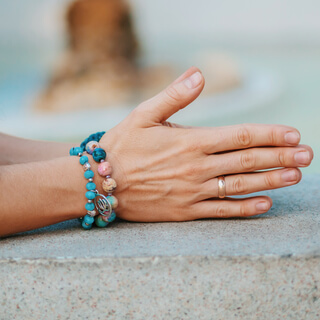
About a process and and this process essentially starts from noticing how much in life we tend to grasp we tend to hold and the the fist tight that's representing both the physicality and the emotionality of coping with the changeability the impermanence of life and its interactions how It's wonderful to actually come to us.
Open up to let go.
But that we can't do that by forcing it,
You know,
It just doesn't work.
Because essentially there's so much.
There's so much fear.
That we can't do that.
So we talked about a process.
That it starts with showing up.
And that showing up has a physicality.
It's the groundedness.
It's that sense of paying attention,
Say,
To posture,
Not for the sake of posture,
But simply for being present.
As we are present to our experience,
Say in a meditation mode,
What's happening is we observe what is happening.
But the words here do not do justice to that experience.
Because observing what's happening implies a difference between me and what I'm observing.
And it's actually something that happens in in a different space.
Like,
For instance,
If I'm observing my posture,
I'm not detached from it.
I'm observing it by paying attention to,
Say,
How my spine is or how it changes a little bit when I do something and how my experience changes there.
So we were talking about this kind of gesture of the hands opening,
Coming closer,
A sense of sensing what's happening in the interaction,
Sensing the interaction of me with the situation,
But also sensing me,
I have a sense of who I am as I sense.
Mm-hmm.
Then we talked about the third stage,
Which is as this is happening,
There is a felt quality that I have,
Maybe I could use the word control,
But it's very misleading because control implies this.
And it's actually a very,
Very different sense from that,
But a sense that,
You know,
There is a safety of being in the environment and that something that you would call faith,
But a sense of that trust and faith in our ability to interact.
And as this experience grows,
Then naturally there's no longer the need for the grasping.
And the fist.
That tension releases and there is the letting go that happens organically as we engage with our experience instead of forcing it to happen.
Hmm.
And so in as we were talking it was a very creative process where each of us was coming up and so having described the process as a whole i'm inviting you for each stage to bring your comments so of how it starts first with this and the first stage is actually the coming into presence by just bringing our body showing up in a physical and emotional way.
Okay.
So um i think i would use also a little bit different words so but i'll go along so we start with here so this fist this holding this tightness is also kind of representation for suffering.
So there is something.
And the first step,
Which is named like showing up.
Is like I'm here.
It could be this posture.
I'm here.
Whatever will come,
I'm here.
Listen to you.
I just noticed that I'm here has also something for me with this.
I'm here.
Something like this.
And.
It is also a little kind of awakening.
It's a kind of wake up.
From what is happening all the time.
This showing up is,
I would say,
A tiny step to wake up.
What is really happening in my experience?
I'm here.
And then the second aspect is seeing.
You used the word observation and said that it doesn't mean that you have an object here and here.
I would prefer the word sensing,
Which you also use,
Because sensing means I don't make the thing to an object and separate myself from whatever is happening.
The sensing gives space that I really can realize what is there.
But it also makes very clear already there is a kind of interaction in between what I perceive and what I'm noticing.
So I prefer this word.
Totally with you there.
So this is because it makes it a little kind of different and it invites the experience of interaction first.
Yes.
You know,
But not mixing everything together,
You know,
It's not like everything is now the same.
Wonderful quality of awareness.
And then we had this.
Noticing,
Seeing,
Recognizing,
And we had also this movement of that in this whole process It's a kind of movement.
And in this movement,
Of unfolding or flowing there is a kind of Now I would say of stability and stillness of war,
Although it is a movement.
But this movement is creating something,
Holding the process or becoming aware that the process is happening.
And then there was the third aspect,
The letting be.
Which is also we had in our conversation before this.
Opening,
Letting be,
Giving space what is there.
But also to notice it's not static,
It is a.
.
.
Movement Letting be the acceptance.
It's what kind of adjustment does it need?
More distance?
Do I have to come closer to the experience?
What is necessary in this acceptance?
I think that is this.
And coming back to this gesture where is usually we have this holding which is tensing us up and For me also,
It is.
Including.
It should go the way I think.
And if now somebody would say,
Oh,
Relax and open,
And I would do it from this kind of state of mind,
I would try to do it with force.
Okay,
I open the fingers.
You know,
But this is not a natural,
You know,
Natural movement.
It's really forcing again and again,
Much more.
So,
But coming back to these movements.
To be showing up,
To noticing and the acceptance and the letting be.
Then,
The more you do,
There comes something like trust.
Through your own experience,
That you can trust the experience of the process and the movement.
And then you could say,
Maybe faith is born.
This is a little tricky expression,
But you know,
It's like there is a kind of opening.
And what I notice right now just.
.
.
Tiny thingies.
Some say maybe sometimes opens because you have tried so much this to open it and sometimes you're so exhausted.
That you just have to let go.
And then I wonder,
Can it happens?
Yes,
I don't know if this makes sense,
But this is what I've got.
The last part to me is like the koan,
That you bang your head trying to control it until at some point you realize in this capability of enable,
And that in itself is where you relax.
But yes,
So very nice.
So what I wanna do is maybe invite people who are watching this to experiment with this as a way of saying,
For instance,
When you sit in meditation,
To think of it as a process of meditation.
And so to relate it to,
Say,
Buddhist concept of suffering is that sense that,
You know,
Life presents us with plenty of things that are difficult.
And so very naturally,
Our human reaction to it is to tense up.
Uh even without the notion of suffering we tend to function in a world that wants to has to have certainties and so for instance we just oh the word has one meaning this is one way to think of it and so we we have that kind of grasping attitude or that kind of anxious attitude of holding on to things and to say the meditation is a moment where we can practice doing something differently.
But the practice,
As you described,
Is not something where we force it,
But there is an entering.
And so the entering starts with that intention and that intention is by sitting by having an intentional posture is I signal.
That I want to have a moment where I'm going to be present to my experience.
And so then.
.
.
We enter.
The process of sensing.
And I like very much,
And I think this actually started this whole conversation,
Started with us talking about sensing and how important it is.
And so as you bring it back here,
The sensing is a word that has that bridge.
It's not I watch this as the observing self concept is for mindfulness,
But is actually I'm engaging in a process that simply cannot be logically described because it's not just noticing,
But is also doing something.
And it's not necessarily doing.
It can be even having an intention or an idea of,
Oh,
What if I straighten up and my spine straightens?
Or sometimes it could be that,
Say,
The spine straightens a little bit,
And then I have the concept coming back.
There is kind of a merging of me,
What I'm doing,
What I'm noticing.
And so the word sensing kind of conveys that.
Yeah and in that sensing is actually progressively a sense of letting the process be.
And learning to that there is a different kind of quote-unquote control.
It's not a control in a traditional sense,
But it's not a collapse.
You know,
Things are happening.
I am very,
So it's a sense of I can be alive without being like this.
And not being like this does not mean i'm totally collapsed but actually it's actually amazing how alive i can feel while not having the kind of control that I'm accustomed to having.
And so as I have this experience,
Then I don't need that kind of control.
And the grasping dissolves by itself for a moment,
Because it will come back.
Um because it is actually having that experience of life in interaction where,
Um,
I have that felt experience of it happening by letting it be and being part of it and entering into that flow and no longer needing that to control it.
Yeah,
I like that.
So shall I respond what I've got?
Please,
Please.
So but what I just realized when you said this was this,
Oh,
I'm showing up.
I think.
In the meditation posture itself.
It is like you don't meditate in that way.
You know,
You don't do that.
You're sitting on your chair or your cushion,
Something like this.
And this is a tremendous courage step.
Because You said,
I'm sitting here upright.
I don't cross my arms.
I just symbolize through my body,
I am here.
Open.
I'm showing up.
And this is a tiny little step starting from letting go.
Of course,
When we start to meditate,
We are tensed up and it's not so easy.
But despite that,
I think this is a tremendous step to becoming aware.
Just taking in the posture is a form by itself.
Of letting go to protect myself and to be open whatever is there.
And,
You know,
I just noticed that.
The suffering is,
You know.
.
.
Of course meditation could be very nice.
But it's also the reality that we don't like to be confronted with our suffering.
And it's also courage to,
Needs courage to,
I think you need this posture to say,
Okay,
Where I am suffering,
Where is the other person suffering?
Can I hold it?
I made this scent sink.
And just when I listened to you and the whole conversation,
I just became aware.
How much important the sensing is.
Also to face suffering,
Because just the sensing your posture,
Then you sense your breathing,
This is already an opening.
Maybe you just sense the air on your skin.
And through that,
You become more aware of the interaction that is already there.
Where you don't have to do anything for it.
And then you get it.
Moral.
And now I'm lost.
I'm lost what to respond to you.
I think I stop here.
I could go for something,
But I would like to stop here.
Yeah.
So I think I'm also going to just say a little something just to kind of get close.
But what I liked about what you were saying is when you start with the posture,
The initial posture of meditation is what we're doing is we're inviting people to have a little bit of an experimental attitude and explore.
Or some of the things we're talking about in their meditation.
And so what you're describing is that from the very beginning,
As you take the posture,
You're already engaging in that sense of what we captured with the movement of the hands,
With that process.
And so that meditation is something where stuff is happening.
And so that curiosity about that stuff happening And so that's what we're inviting people to do.
Yeah,
Yes,
I like this.
Going back I really notice how deep this gesture is because you know Although you think you're still sitting in stillness,
It's not stiff.
Your body is always moving.
Your breath is always moving.
There is so much tremendous.
I would say.
Movements like this.
And to bring this into meditation,
I think that is,
Just this gesture,
I think this is tremendous enriching.
It brings back from,
I now have to be silent,
I have to find a straight posture,
I have to do this instruction,
I have to do,
Do,
Do,
Do,
Do.
But coming back.
.
.
Maybe one could say.
Meditation is becoming the movement of life.
Again or becoming noticing the movement of life sensing sensing sensing the movement of life yes yeah so i love that you know so we're inviting you to sense the movement of life That is beautiful,
You said.
So thank you.
Thank you.