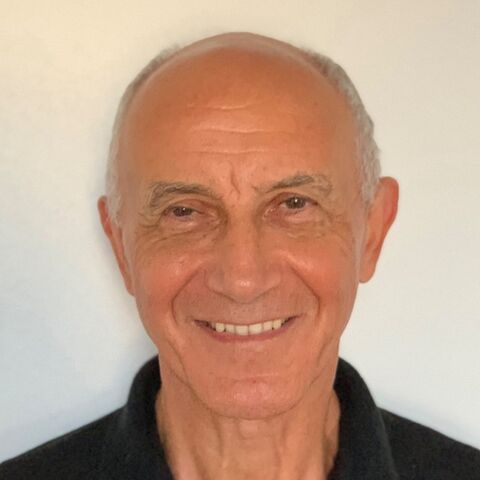
You call your work the realization process?
Yes,
Yes.
The realization process is a series of practices,
Of subtle inward attunement practices for actually,
I call it realizing,
But really it's uncovering a dimension of ourselves,
A way of experiencing ourselves on a very subtle level.
And that feels like the experience is of,
This is if we have a ground of being.
Now that's a term from philosophy,
And I'm not meaning it as a philosophical entity,
And certainly not as a metaphysical entity,
But we can in fact experience ourselves in much the same way as the traditional Buddhist,
Some of the traditional Buddhist and Hindu teachings have described,
And some of our Western philosophers have described.
As a pervasive dimension of consciousness,
Very,
Very subtle consciousness,
Not consciousness of,
But a ground consciousness within which all of our experience seems to emerge very clearly and spontaneously.
So you mentioned something at the beginning,
Where you say it's some subtle attunements.
And so I want to relate the process of the subtle attunement to the result,
And so that the result is not just an abstraction,
But it starts with a very,
Very specific way of thinking about attunement in a practice.
That's right,
That's right.
It starts with inhabiting the body,
And inhabiting the body is a very interesting thing.
We talk a lot about embodiment,
But it has different meanings for different people,
And this is not an experience of being more aware of the body,
Which of course in itself is a good thing.
But of actually living within the body,
So that it feels like we're present in our feet,
We're as present in our feet as we are in our chest or in our head,
Present in our whole body,
Our legs,
Our arms.
So it's an attunement of knowing that we're actually living there,
Experiencing that we're actually living there,
Within,
First within each part of our body,
And then within our body as a whole.
And today we're going to focus,
I'm going to focus mostly on the relational aspect of this work.
So let me say right from the beginning,
That everywhere that we inhabit the body,
That we experience ourselves as present within the body,
We're actually open to the environment around us.
It's a very interesting thing,
Right?
So if we're living within our chest,
And we actually can experience ourselves as living within our chest,
Then the boundary between inner and outer of our chest dissolves,
Actually dissolves,
And we feel continuous with the space outside of us,
But not merged with it.
It's not at all a leaving of our body.
In fact,
It requires,
It depends upon our deep internal contact with ourself.
So again,
I want to slow down a little bit.
Okay.
That you're talking about what happens,
And the kind of consciousness of just noticing the,
No longer the presence of that boundary.
But what we're talking,
You're talking about that sense of inhabiting that sensation,
And that sense,
So that we don't normally perceive,
But being a little bit curious about the idea that it might be there.
Do you want to talk a little more about how we go from it being an idea,
To going into that experience?
Yeah,
I mean,
It's something I can teach better than explain conceptually.
For example,
If you just take a moment to feel that you're aware of your hands,
Right?
And you just sit with that for a moment,
Being aware of your hands.
Now you might know this,
That they're warm or they're cold,
Or they're a little stiff.
And then enter into your hands,
Actually feel that you're inside them.
You'll feel quite a shift there,
Right?
So it's not that kind of top down,
I'm aware of my body,
I'm aware of my feet on the ground,
I'm aware of my breath.
But it's actually,
I am the internal space of my body.
That's the feeling of it,
Right?
It feels like I am the internal space of my hands.
In fact,
One of the traditional names of this is I am,
Right?
There's that basic fundamental I am in the whole body that we can actually experience.
So we're changing the traditional way of thinking and the relation we have with our body,
Instead of identifying with the mind,
Observing self,
And saying,
Oh,
I am curious about what's happening in my hand.
There's a start,
Maybe it starts there,
Curiosity,
What's happening in the hand?
Is it warm?
Is it cold?
Is it tense?
Whatever.
But then you say,
Entering into the hand,
Being the hand,
So you no longer have that separation.
That's right,
That's right.
And that word being becomes very important.
It's a sense of being in our body or being that internal space of our body.
You know,
The application to psychological healing is really obvious.
When we actually experience ourselves as existing as that internal space of the body,
We experience that we take up space so that then when we relate to another person,
Whereas previously we might have felt like,
Oh,
We might be annihilated,
Overpowered by that other person,
Or we might spill out our own being into that other person,
Abandon ourself and our own preferences and so forth to relate to that other person.
Now we have an actual experience of inhabiting and knowing ourselves,
Being this internal space of the body as we relate to another person.
So there's a safety in that,
An actual feeling of safety,
That we don't lose contact with ourselves,
Even though this turns out to be the deepest,
Finest,
We can say,
In the sense of most subtle,
Context that we can have with another person.
It's a context that's based on contact with the internal space of our own body.
Yeah,
Yeah.
So in a way,
Until we do that,
We are essentially disembodied because we're not aware of inhabiting the body or of being the body.
And doing that,
You know,
Gives a sense of being embodied.
And so you're not empty when somebody,
You're confronting somebody,
You're aware there's something there.
That's right.
There's a being that can meet that other being.
Yeah.
But so that you're talking about that experience of being is not an abstraction.
You kill yourself as a being.
That's right.
That's right.
In fact,
We can even say that it's a shift from an abstract experience of ourselves,
You know,
I am a teacher,
I'm this,
I'm that,
To that being experience of ourselves that's primary to all of those abstractions.
It's about ourselves.
Yeah.
Yeah.
Yeah.
So we're talking about how being in the body or being the body or being aware of being the body changes the way we can relate to another person.
Yes.
Yes.
So another amazing thing happens when we actually inhabit our body,
When we live within our body,
And that is that we come into contact with qualities that seem to be innate,
Qualities of our being that seem to be inherent in our body in the sense that we don't create them,
We don't have to imagine them.
The more we have contact with ourselves,
The more we actually experience ourselves as made of these qualities.
So,
You know,
Of course,
They're qualities.
So if we put words to them,
That's a little shift away from them.
I do put words to them just to help people attune to them as we're inhabiting the body.
But,
You know,
Just so you're aware,
Of course,
They're my own words,
You can find your own words for them.
But as we come into the pelvis,
You may feel a quality of your sexuality,
Even a quality of your gender,
However you experience your gender.
As we come into the midsection,
You can experience a sense of personal strength,
Actual quality of power.
These qualities,
For one thing,
Are very important for our personal healing,
Because when we squelch ourselves,
When we constrict ourselves in reaction to abrasive circumstances,
Especially in our childhood,
We squelch these qualities,
Right?
We're overpowered by another person.
I don't know if there's a single person on Earth that's not overpowered in some way as a child.
But of course,
If we're overpowered traumatically,
We will go a long way to losing our actual felt experience of power in ourselves.
But there it is.
It's just waiting there for us to recover it.
Yeah.
So what we're talking about is that as we're inhabiting these places,
It's also a way to inhabit some qualities or some functionality of being human that can have,
In a way,
Gotten out of use or that we don't go to from experiences that made them traumatic or made it difficult to go back there.
And inhabiting these places is a way to reconnect with these qualities or these functionalities.
Yes.
I love that you bring in the term functionality,
Because here's another very interesting thing about the internal,
You know,
These are things we don't know about ourselves until we actually inhabit ourselves.
But the quality,
The experience,
For example,
Of the quality of our sexuality is also at the same time an improvement and enhancement of our functioning sexually,
Our ability to experience pleasure,
Our experience to be responsive to other human beings in that way.
Same thing when we inhabit our chest and we actually feel,
We can actually feel the quality of love.
That's a wonderful thing to feel,
Because we all grow up to some extent,
I think,
I haven't done a study,
But I think anecdotally that we all grow up to some extent not entirely loving ourselves,
You know,
That punishment that we took in,
You know,
That we that we interjected,
All of that.
We come up feeling not fantastic about ourselves,
But when we actually feel love right there in our chest,
It doesn't even need an object,
Then it becomes more difficult to dislike ourselves and feel that we're made of love.
Now at the same time,
The functioning of love,
The responsiveness,
The spontaneous welling up of love to other human beings and all of nature is more fluid,
Is more accessible.
Same thing with the voice,
The quality of voice that we can uncover,
Right?
There's an actual quality of our voice,
And at the same time,
A more freedom to express ourselves.
And the same thing within our brain,
That we can actually feel the quality of our intelligence,
Quality of our understanding.
Once again,
Harder to think of ourselves as stupid when we actually experience the quality of our intelligence.
And we seem to function more creatively,
A little more sharply when we inhabit our brain.
So this quality and function are hand in hand as we know ourselves in that way.
Yeah,
And so as you're talking about quality and function,
I notice you're bringing in different parts of the body,
Including the brain.
So we're not in that dichotomy between brain versus body or mind versus body,
But we're really reclaiming all of our parts,
All of our regions,
All of our possibilities.
Yeah,
Absolutely,
Absolutely.
The brain is very important.
And all of the kind of old fashioned spiritual instructions to get out of our head,
Of course,
That just meant to,
You know,
Not to conceptualize so much,
But people actually tried to get out of their head.
Well,
The head is part of our wholeness.
And we need it very,
Very,
Very much.
Same thing with our emotions.
We're not,
We're not eliminating our emotions.
In fact,
The more we actually experience ourselves,
And here's the thing,
When we inhabit our body as a whole,
We get to this very,
Very subtle consciousness that I began to describe at the beginning.
I call it fundamental consciousness.
But again,
I don't mean it as a metaphysical reality.
I have no idea about metaphysical realities.
But we can experience it.
And it's experienced as this unified contact within our whole body.
When we know ourselves as that very,
Very subtle consciousness,
Actually,
All of our experience moves more fluently through us.
So we don't lose our emotions at all.
Far from it.
They go through us more deeply,
And we feel everything more deeply,
Maybe not with that extra wallop of childhood trauma,
But certainly what's appropriate for us to be feeling as we respond to the world around us now.
And so you're talking about fundamental consciousness,
But being very careful to say,
If we make it into some kind of a statue carved in stone or a big concept,
It's intimidating,
It becomes something that is difficult to really conceptualize.
But you're really using it to say that's quality or that's the experience of actually paying attention or inhabiting all of the parts of ourselves.
That's right.
It's an experience that we uncover.
So it does seem to be like some sort of inborn part of ourselves.
We don't invent it.
We uncover it.
And because of that,
It feels authentic.
Now,
We can't say it is authentic.
But it feels authentic.
We feel like,
Finally,
The masks,
All the social formulations and so forth have fallen away,
And here I am actually responding,
Actually who I am.
That's the feeling of it because we uncover it.
Now,
It has been— When you use that metaphor of uncovering,
There's something very interesting that comes to mind for me is you see,
Say,
Imagine that a movie where you have people entering into a big room in a mansion,
Abandoned mansion,
And all the furniture is covered with sheets or with draperies or covers,
And little by little,
You open them.
And so from that ghostly appearance,
You start to have something coming back to life.
That's right.
That's right.
And now we talk about relationship.
The most fascinating thing to me is that when we know ourselves,
When we inhabit our body as a whole,
And we find this very subtle level of our being,
This very subtle experience of our whole being at once,
We also experience this very subtle consciousness pervading the world around us.
Here's a very—this sounds kind of far out,
But in fact,
It happens.
And these days,
Many people can experience this and have experienced this.
Everything around us feels not just solid but also permeable,
Permeated,
Just the way our own body feels,
Not just solid but permeable,
Made of this consciousness.
And then,
Yes,
Everything we perceive feels more vivid,
This experience is more vivid,
So all of our perceptions become more vivid.
Again,
We can't say,
You know,
We're too sophisticated,
We know everything is subjective,
We've learned the world,
We know that.
So we can't say,
Oh,
Now we're seeing things as they are.
But we're certainly seeing things more clearly than previously.
Yeah,
But so interestingly,
You make the distinction between the solid and the permeable.
And essentially,
When we are in that duality,
It's either solid or permeable.
But what you're talking about is actually having the experience that it can be both.
Both.
Both at once.
Because it's an experience.
We're not talking about trying to demonstrate that physically it is solid or permeable.
But the experience is that it can be both.
That's right.
And this experience has been described in the spiritual literature of,
Certainly of both Buddhism and Hinduism,
Where they interpret it differently,
What it is,
You know,
To a large extent.
So,
You know,
For example,
Many of the Buddhist teachings will say that this is our own mind that we're experiencing,
Along with the contents of our mind.
And many of the Hindu teachings will say this is the nature of the universe that we're uncovering.
Finally,
We're experiencing the actual nature of the universe,
Everything really is made of consciousness.
Well,
There's no way we can know which of those is correct.
So we need,
In my experience,
In my opinion,
To put that metaphysical,
That hope that we're finally going to know what it really is,
Aside,
And just focus on uncovering this very wonderful experience of being both whole within ourself and in some sense,
In some experienced sense,
Unified with the world around us.
So the experience itself is to be both whole and unified with the rest,
With what is outside.
And what you're talking about is to not get hung up on the explanation or trying to put some kind of a bunch of explanation behind it,
But to actually stay with the experience itself.
That's right.
That's right.
You know,
We have a natural desire to know,
Well,
What is the actual nature of the universe?
What,
You know,
Is there a ground of being?
But so far,
We haven't been able to establish that scientifically or in any way that is really satisfying.
So I think it's very important to live with that uncertainty,
To live with that question,
And to keep knowing ourselves as this fundamental,
What feels like this fundamental ground.
So there's a tension that's inherent in us about wanting to know,
Wanting to resolve uncertainties.
And on the other hand,
That staying with this and in staying with the experience of letting experience carry ourselves forward.
That's right.
That's right.
So I wanted to say one more thing about the experience of embodiment as what I'm calling fundamental consciousness.
And that is because it's everywhere in the body at once,
Because it's the basis of our experiencing our whole being at once.
Function comes into this at the same time.
It means that we can function more as a whole,
Right?
Means we can think and feel at the same time,
Right?
For example,
We can experience sexual pleasure and emotion and even cognition all at the same time.
We're doing everything that we're doing.
We're doing more as a whole being,
Right?
So then when we get to experience another human being and there are specific practices in the realization process for doing these attunements with another person.
Very important because we have made all that fragmentation in ourselves and protection against the environment in relation to other people for the most part,
In relation to our parents as very young children,
Primarily.
So,
We can sit on our meditation pillow or do these attunements along in our room or in nature and feel just wonderful.
And then as soon as we see another human being,
Voom,
We're back in this divided space,
This protected way of being.
So in this work,
I go right away to doing these attunements with a partner,
Right?
Two people doing it at the same time or even a whole group at the same time.
And then we find that we can actually experience that the same very subtle consciousness is pervading our own being and the body of the other person at the same time.
So we're talking about the fact that the functionality of relating or of the functionality of experiencing ourselves as a whole and functioning as a whole,
As opposed to being fragmented is something that depends on circumstances when we're alone and we're safe.
It might be easier to access that,
But that we tend to lose it when with the stress of interacting with others.
That's where you approach,
Your approach is to practice it,
These attunements.
In the context of being with another person.
That's right.
That's right.
Because that's the most challenging.
And it remains the most challenging part of the work.
I have people who've worked with me a couple of years and they're still like,
Oh,
I still can't quite heal that.
It depends where people start out,
But it is the most challenging part of the work.
When two people experience fundamental consciousness together,
It's a very deep contact.
It's like contact,
Not just surface to surface,
But all the way through my inner being to that person's inner being.
And then there's,
For one thing,
There's a resonance in these qualities,
You know,
That I was talking about,
Power to power.
You feel that power to power resonance.
It's a very deep intimacy in another human being,
Even though we can experience it with any human being,
Right?
Someone we don't know at all.
It's just simply the characteristic of fundamental consciousness that it allows us this very,
Very deep internal to internal contact with another person.
Yeah,
And that's where maybe that quality of solid and porous comes in.
That's right.
Makes it possible to have intimacy without being absorbed.
That's right.
That's right.
So there's no loss of our being.
These are like our true boundaries because we still have that internal contact with our own being all the way through ourselves.
So,
We're not,
As many sensitive people do,
We're not losing ourselves in the other person.
We're protecting against that loss of self by walling ourself off.
But we can maintain that internal contact at the same time as we feel as open,
Really completely open,
To the other human being.
Then there's a natural exchange.
Then,
You know,
Where do we go from here?
Where do we go from here?
There's a natural exchange.
Then,
You know,
We're talking about fundamental consciousness as it's really experienced as stillness.
But when we know ourselves as that stillness,
The energy part of our being moves more fluidly.
And then there's just a natural,
Spontaneous exchange,
An energetic exchange.
Talk a little bit more about the experience of stillness while the energy is moving.
What do you mean by stillness as an experience?
Right.
Well,
That's how fundamental consciousness is experienced as stillness.
Now,
We can,
One of the things I ask people to do at the beginning of doing this work is to first experience themselves as physical matter,
Right?
We can experience ourselves as physical matters made of muscle and bone.
And if you ask a whole roomful of people to do that,
You may notice that everybody,
You know,
Separates into separate little clumps of matter,
Right?
As matter,
We're really quite separate from each other.
Again,
We never lose being matter.
You know,
That's not something we lose as long as we're alive.
But we can then experience ourselves on a more subtle level as energy.
And energy is everything that moves.
It flows,
It streams,
It vibrates,
It pulses,
Right?
And many sensitive people grow up naturally experiencing themselves as energy.
As energy,
We merge with everything around us,
Right?
We look at the tree,
We are the tree.
We go to a party,
We come home,
We don't know who we are because we merge with so many other human beings,
Right?
And so as we become even a little bit more sensitive,
It becomes actually problematic to know ourselves just as energy.
And then we can attune to ourselves on an even more subtle level,
Which I'm calling fundamental consciousness,
As many names in the spiritual literature.
And that's experienced as stillness,
Actually a stillness.
And it pervades all of the movement of life.
We don't think there's anything that doesn't move in life,
And yet we can uncover this experience in ourselves,
Which is stillness.
And it's that stillness.
It does have a little,
Just to be a little more complicated,
That's a little shimmer on it.
It can be experienced as luminosity,
A little shimmer on it.
But it's experienced as stillness pervading the streaming and the pulsing and all of that,
That we've spent maybe the last century studying and uncovering,
Both in physics and in psychology.
Here's another level that pervades that and allows the energy actually greater freedom.
Yeah.
So that sense of not just being matter,
But also not just experiencing ourselves as energy,
But finding that place where there is a stillness in the energy.
It's not an energy of being being pulled outside of ourselves.
Yes.
And not even an energy,
Those circles are streaming,
So forth.
But actually a level that's experienced as stillness.
Yeah,
It's an interesting thing to attune to,
Right?
Well,
I have a metaphor,
Which is probably imperfect in doing it,
But a sense of say,
When we get a little agitated and you have a sense of the energy leaking all over,
And then coming grounded and having a sense of energy being inside,
As opposed to leaking all over and feeling the power of it.
So I know it's a small part of what you're talking about,
But kind of does it give a little bit of a sense of that?
Yes,
That's certainly part of it,
In that we then embody our energy.
We don't lose it.
Yeah,
That is definitely certainly part of it.
And then there's the actual kind of ground of stillness within that movement,
Fundamental consciousness.
Now,
The very interesting thing about this fundamental consciousness,
Because it's stillness,
It can't be injured.
You know,
We talk about it as space.
In fact,
Space is the most common metaphor for it,
Space,
Because it's experienced as an expanse,
Experienced spatially,
Pervading everywhere.
But it is just,
You know,
It's quality rich,
But it's empty.
You can put your hand right through it.
So it's never been injured.
When we find it there within ourselves,
We have a sense,
An experience that we have never been injured.
We've never been irreparably injured.
There's always been this very deep,
Subtle part of ourselves beyond injury.
Yeah.
So maybe there's another dimension to the word stillness there,
Because it's also the part that has not been hurt,
That has not been injured.
That's right.
That's right.
That intactness.
Yes,
That's right.
Yes,
There's a deep sense of internal volume and intactness.
And it's an inner ripening as an individual.
You know,
There's also been,
You know,
In the spiritual field,
A kind of sense that one loses one's individuality or one has to lose that in order to progress spiritually.
And here we find that when we get to this most subtle experience of ourselves,
I think it's our most subtle experience of ourselves,
And certainly the spiritual literature backs me up on that.
When we get to this most subtle experience of ourselves,
We don't eradicate ourselves.
We mature as that separate individual at the same time that we're open to the environment.
Yeah.
So that quality of maturing,
Being more of ourselves at the same time as being more open to the environment.
Yes,
That's right.
So that quality we described before as intimacy,
Solid and porous,
You know,
All of these are different dimensions of that experience.
That's right.
That's right.
Yeah.
So even if we touch another person,
We're touching all the way through them,
You know,
Many of us have had that experience,
Right?
That we're not just touching the surface of the person,
Especially if it's someone we love,
We know that we can actually touch the being that that person is,
What they feel like,
Right?
We can see even to some extent,
Right,
Into the internal being of that person.
And we can definitely contact.
So intimacy is a wonderful word,
And so is contact.
There's actual,
Which is very hard to describe what contact is,
But we know it when we feel it,
And we crave it,
Right?
It's something that we long for.
We know that how we,
You know,
That we've lost it early on to some extent,
And we love when we get it back.
Yeah,
Yeah,
Yeah.
Contact.
Contact.
Contact.
And so we started that with the notion of body,
Being yourself,
Relationality,
And in some way,
It seems that maybe the word contact captures a lot of that,
Because the experience of being yourself is,
In a way,
We're always in contact in some way or another.
And so that's very central,
We're not functioning alone.
And so,
You know,
Kind of,
It's improving our ability to function in contact and be ourselves in contact and feel ourselves in contact.
Yes,
Exactly.
Yes,
That's exactly right.
Yeah.
So does this feel like a good place to stop?
Or would you want to.
.
.
Yes,
Yeah.
Yeah,
I think we've run the gamut.
Okay.
Thanks,
Judis.