Hi,
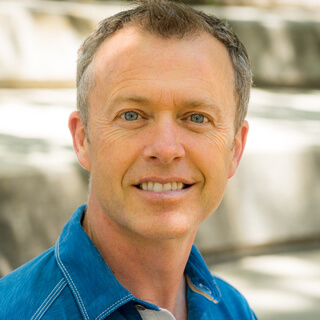
My name is Sandeep Dhau and I work for Verizon Media.
I'm also a member of Mindful Workplace Alliance.
Congratulations on making this far on your journey.
This will be the last week of your month-long challenge,
And let us recap the journey so far.
We started with the basics.
Learned how to incorporate mindfulness into workday.
We also talked about how mindfulness can build focus and make you more resilient.
Now remember that mindfulness is moment-to-moment awareness without any judgment.
If there was one key takeaway from all the talks and meditations,
What would it be?
For me,
It is the non-judgmental awareness.
As we stick to the practice,
This non-judgmental awareness becomes a habit.
The science of neuroplasticity suggests that the structure of the brain is malleable and can be changed.
With mindfulness meditation,
New neural pathways are created,
And with repetition,
These pathways are strengthened.
Research shows that a simple mindfulness of breath practice for 6-8 weeks can change the neural pathways of the brain.
This means the way we feel,
Think,
And emote to any situation can be altered.
This non-judgmental awareness from the daily practice will naturally overflow into your everyday activities.
Being non-judgmental will become your second nature.
This does not mean that you become lifeless and not react to anything at all.
Rather,
You will start to respond skillfully as opposed to reacting blindly.
You are more grounded and centered and are capable of making better decisions.
Better decisions within the workplace context will create cohesive teams and better working environments.
This not only improves the individual performance and well-being,
But also improves organizational performance and well-being.
The benefits do not stop here.
Being non-judgmental also helps to be less critical of ourselves and everyone around us.
You will start developing compassion towards the self and compassion towards others.
Mathieu Ricard is a French writer,
Photographer,
Translator,
And a Buddhist monk.
He is the happiest man ever measured by science.
Scientists have identified that the left prefrontal cortex is activated when we are happy,
And Mathieu's happiness measure is off the charts.
What was he thinking while being measured?
When asked,
Mathieu shared that he was meditating on compassion.
Mathieu's own experience is that compassion is the happiest state ever.
Being compassionate to yourself allows you to stop the negative self-talk and helps build positive attitude.
Being compassionate to others helps gain their trust.
We all know being kind and compassionate to others makes others happy.
The new research suggests that these states of mind actually helps us to be happy too.
So if you are kind,
You are the one who will be happy.
If you are compassionate,
You are the one who will be happy.
We need to come out of resentment,
Anger,
Guilt,
And into kindness,
Gratitude,
And compassion.
I am part of Mindful Workplace Alliance that consists of leaders who are working at some level to bring mindfulness into their respective organizations.
Most of the members of Mindful Workplace Alliance go above and beyond their regular jobs to bring mindfulness into their organizations.
I wonder what drives them to take up so much responsibility without being asked to and maybe without even being recognized within their own organization.
There is nothing in common between the members with respect to their regular jobs.
So what is that common thread that keeps this group together?
The more I think about it,
The obvious the answer.
It is compassion.
Compassion to share the benefits that they have experienced.
It is compassion.
Compassion to share the benefits that they have experienced from the practice.
On a lighter note,
I think this group is selfish.
Selfish for the happiness that they will receive from being compassionate.
Kindness and compassion can be cultivated.
One of the best ways is to cultivate a gratitude practice.
Here are some that come to my mind.
At the end of each day,
Write down three things that you are grateful for.
Show gratitude for even the small things in life.
Incorporate some random acts of kindness into your daily routine.
This could be allowing someone to go ahead in line.
Don't be mad when someone cuts you in traffic.
Pay it forward by paying a parking ticket for someone behind you when you come out of a parking garage or a toll booth.
Remember,
When we do acts like these,
We are changing the structure of our brains.
We are creating new neural pathways.
And through repetition and daily practice,
These pathways are strengthened.
All of these changes start with the daily mindfulness meditation practice.
The daily practice helps in cultivating the non-judgmental awareness during the practice at first and into everyday activities as we keep up with the practice.
This awareness helps us to identify the unconscious unwanted negative thoughts and replace them with positive affirmative thoughts through gratitude,
Kindness and compassion practices.
This will allow us to change our perspective to life and this is how we create our own reality.
Try it out.
It works.
It worked for me.
Now I invite all of you for a loving kindness meditation.
Begin by finding a comfortable position that allows you to be alert and yet relaxed at the same time.
Take a few deep breaths to settle your mind and ground yourself.
Just be with your body.
Now bring your attention,
Your awareness to your breath.
As you breathe in,
Become aware of your in-breath.
As you breathe out,
Become aware of your out-breath.
Try to observe the sensations as the air moves through your nostrils.
As you breathe in,
Become aware of the in-breath.
As you breathe out,
Become aware of the out-breath.
If your attention,
Focus wanders away,
Gently bring it back and start observing the breath again as you breathe in and as you breathe out.
Compassion starts with ourself.
Now in your mind's eye,
Imagine a very happy image of your own self.
Mentally repeat these phrases in your mind.
May I be happy.
May I be peaceful.
May I be free from suffering.
May I be happy.
May I be peaceful.
May I be free from suffering.
May I be happy.
May I be peaceful.
May I be free from suffering.
As you say each of these phrases in your mind,
See if you can imagine breathing warmth and compassion into your heart space.
And then breathing out warmth and compassion towards yourself.
As you say each phrase in your mind,
See if you can identify any changes in your body sensations.
Maybe warmth in your heart.
Maybe you can even imagine compassion towards yourself.
And allow this compassion,
This warmth to permeate through your body.
Next,
Bring to your mind's eye someone who is very dear to you,
Who you care a lot and who you interact quite often during your daily life.
Now repeat these phrases.
May you be happy.
May you be peaceful.
May you be free from suffering.
May you be happy.
May you be peaceful.
May you be free from suffering.
Now as you repeat these phrases in your mind,
Become aware of any sensations in your body.
It could again be warmth in your heart or just compassion or some tingling sensation permeating through your body.
Just become aware of whatever it is.
May you be happy.
May you be peaceful.
May you be free from suffering.
Now pick a person or a group you don't know.
Perhaps it is someone random from the October Mindfulness Challenge.
Or you can pick the whole group that is participating in the challenge.
And then repeat the same phrases again.
May you be happy.
May you be peaceful.
May you be free from suffering.
May you be happy.
May you be peaceful.
May you be free from suffering.
Become aware of any sensations in your body.
As you repeat these phrases,
May you be happy.
May you be peaceful.
May you be free from suffering.
Now in your mind's eye,
Pick a person that you have difficulty dealing with.
Now as you bring this person into your mind's eye,
Try to observe the sensations in your body.
How do you feel?
Maybe some tightness.
Or maybe you're starting to feel disturbed.
It is okay.
Now mentally repeat these phrases again.
May you be happy.
May you be peaceful.
May you be free from suffering.
As you repeat these phrases mentally,
Observe the sensations on your body.
May you be happy.
May you be peaceful.
May you be free from suffering.
May you be happy.
May you be peaceful.
May you be free from suffering.
Now gently let go of all the images in your mind.
And just sit in silence for a minute.
Just using the breath as the anchor to be in this moment.
Becoming aware of the sensations within your nostrils as the breath comes in and comes out of the nostrils.
Gently make your way back.
Just by becoming aware of your body.
Becoming aware of your hands,
Of your legs.
Maybe even wiggling your fingers,
Your toes.
Gently opening your eyes if they are already closed.
Gently opening your eyes if they are closed.
And returning back.
And returning back from the meditation.
Thank you.