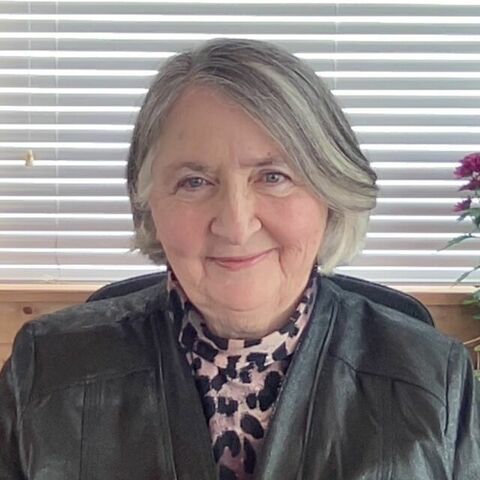
This is the first in a series of talks and guided practices around healing ordinary trauma.
I say ordinary trauma not because we haven't also experienced big T trauma.
I say that because it's helpful to normalize that we live in a world where most of us experience fear.
Many people have experiences of being abused,
Being hurt.
We live in a culture where there's a lot of systemic oppression and systemic harm.
We have a nervous system that developed over millennia for a very different world than the one we live in now.
Many people are feeling pretty overwhelmed.
There's a lot of polarity.
A lot of people are going way to one side or the other,
Finding it hard to connect with ourselves,
To connect with each other.
When we reach out for the people who we've always relied on,
Often they are not there for us.
They too are experiencing a lot of nervous system dysregulation.
They might be in fight,
Flight,
Or freeze.
This is the world that we live in now.
It's common to look around and see how much trouble there is here.
How much harm?
How much there is to be afraid of?
How much regret?
Why did we not see earlier what's happening with the environment,
For instance?
So much anger.
How could they think that way?
How could they believe that?
People who are adamantly convinced that the other side is being fed false news and that they are the only ones who are seeing clearly.
The world is high stakes right now.
We could look into the systemic nature of income inequality,
Of racism,
Sexism,
A lot of the things that are contributing to our distress.
That's something we could do another time.
One place where we could begin,
Though,
Is to understand the basics of how trauma works,
What happens when we feel overwhelmed,
We don't have enough resources to meet the moment as it is,
And how we can build resilience and strength in our nervous system so that we can come back into a stronger,
More grounded environment in our personal life and in our relationships.
One of the principles of healing trauma is that we need to be grounded in the safety of the present moment in order to heal.
We can have resources that help with that.
Our own practices are the most beneficial.
Although a good friend,
A therapist,
A group that we do this with,
Those can really help.
People who care about us or who are paying attention can notice when we sound scared,
We might be holding our breath.
Their presence,
Their voice,
The security,
The co-regulation we experience with them brings us back.
We have to find ways to know in our body and in our nervous system that even when we're having a flashback or a traumatic memory,
That we're not anymore in the situation.
The danger that we might be experiencing in our body right now is not a present moment danger,
It's something from the past.
We can be that grounded,
Mindful presence for ourselves,
And in some ways that is the most reliable presence.
We can always be here for ourselves.
With time and practice,
Understanding,
We develop the capacity to be kind,
Patient,
To work effectively with ourselves.
Even when we get taken off track and get a bit dysregulated,
We've developed this habit of mindfulness.
We notice,
Oh wow,
I'm holding my breath or my shoulders are around my ears.
I'm clenching my teeth.
I've got a heaviness in my chest.
I'm scared.
My gut's in a turmoil.
And then we know what to do.
We come back.
We do cyclic sighing.
We hold our own hand.
We look around for cues of safety.
And with this comes confidence that we're actually not at the mercy of our nervous system and that we can handle our life now in a way that we couldn't at the time when we were traumatized.
There's still difficulty that's happening now.
We might still feel overwhelmed or disappointed or depressed about what's happening in our life and what's happening in the world.
And we also have the resilience and the strength to meet that in a way that we didn't before.
One of the most important aspects of healing trauma is to connect with ourselves,
To be on our own side,
To cultivate unconditional acceptance and kindness and compassion.
We develop confidence that we can keep bringing ourselves back to the present.
We notice sooner when we're getting dysregulated.
Partly we notice that because it's not our usual anymore.
Perhaps we've healed that habit of holding our breath and we now breathe diaphragmatically,
Continuously,
Smoothly,
Most of the time.
So we notice when we're holding our breath.
Maybe it's that we used to be full of catastrophic thoughts.
We were always being dragged into a trance of,
What if that happens?
And I don't know how I'm going to manage that.
I'll never be able to make it through if that happens.
Or what if that person turns against me?
Or what if?
And we imagine the worst case scenarios.
Now we notice I'm not usually that engaged with that.
So when something comes in,
I notice,
Wow,
I haven't been caught in that trap.
I don't go down that rabbit hole so much.
So when I do,
I notice that I bring myself back into this moment in time.
I acknowledge that something's going on that I could work with.
It's not like we're happy all the time.
Life is not a Hallmark movie.
And actually,
Life is pretty difficult.
When we believe that we should always be happy,
That our families and relationships should always be positive and kind,
That's actually not really dealing with reality.
People have a hard time getting along.
And there's something in it for us.
There's something we long for that we really need to be cared about and to care for others.
We're in this together.
So isolation and loneliness can also be really hard for us to handle.
During this series of talks and guided practices,
We're going to look at many of the elements of healing trauma,
How trauma is stored in our body,
What we can do to improve the situation for ourselves,
To cultivate that kindness,
The unconditional acceptance,
To notice if we're shaming ourselves,
And to be able to see the through line for that.
Okay,
When I was younger,
And this was happening,
I blamed myself.
As children,
We can't afford to turn against our caregivers.
And we falsely believe that we're the problem.
We're being hurt because we're unlovable or broken.
Our defense mechanisms of court efficiency beliefs will soften as we start to feel safer.
And we begin to welcome ourselves.
We really want to know who we are,
And to be present with all of who we are.
This series will help you support yourself.
It's an ongoing somatic mindfulness inquiry.
Once we have some of these tools,
We can use them on the fly,
But definitely we want to use them as a practice.
We begin with relaxing our physical body and rest with a smooth continuous breath.
This helps to allow our mind to settle.
Bring your awareness to your whole body from head to toes.
Soften your forehead and your eyebrows,
The small muscles around your eyes.
And as you bring your attention to your forehead,
Notice as well the thoughts behind your forehead.
You might be noticing content,
And we can also notice the energy.
Are there a lot of thoughts?
Are they quite compelling?
Are they kind of neutral,
More in the background?
Just for several breaths,
Soften your forehead as you're observing or witnessing thoughts in your mind.
And if you notice that your attention has gone off with a train of thoughts,
That's very common.
One layer of the mind does that.
Bring yourself back.
And as you're breathing out,
Soften the muscles of the forehead and the eyes.
As you're breathing in,
Focus your attention there.
Stay present.
As you're breathing out,
You can soften a little bit more deeply and then maintain that awareness on the inhale.
Next exhalation,
Soften a little bit more.
And then bring in awareness of the sensations of air in your nostrils.
Notice how the breath is a bit cooler as you breathe in.
It's a bit warmer as you breathe out.
What's going on in your mouth and jaw?
You could roll your lower jaw around a little bit,
Release tension from the hinges of your jaw.
And especially if you're clenching your teeth,
Put a bit of space between your upper and lower teeth.
Allow your jaw to relax,
Your mouth to soften.
Let your sense of speech come to stillness.
And bring your attention to the sides and the back of your neck as well.
On an inhalation,
You could bring your shoulders up just a little bit.
And then on the exhalation,
Release,
Soften,
Allow the large muscles of your upper back to let go and soften.
Release any burdens that you're carrying in your back,
Your shoulders.
Use these micro movements of inhaling and bringing your shoulders up.
Exhale,
Let your shoulders move away from your ears.
Let your whole upper body soften.
And as we're tuning into relaxing the muscles of the body,
We also notice there's energy,
Sensations,
Feelings in our body.
Some of these are not precisely physical.
We have the energy of our upper back of protecting ourselves,
Bracing against trouble.
When we move our awareness around to the front of the chest,
Sometimes we notice an energy in the throat,
Down into the chest.
If we're feeling particularly sad about something,
We might notice a heaviness in the chest.
As you're breathing out,
Let your muscles soften and begin to notice how your body's moving with your breath.
When we breathe diaphragmatically,
It feels like an expansion of the stomach area as we breathe in and a softening back towards the spine as we breathe out.
Ideally,
Our breath is diaphragmatic,
Smooth,
Continuous.
And if you're noticing that the movement is more in your upper chest,
Then you might put a hand on your chest and a hand on your stomach area and allow the breath to move deeper.
One of the first things we learn about trauma and the breath is that we often tighten up through our body and we start to hold our breath.
We start to breathe more in the chest instead of diaphragmatically.
As we relax our body,
Our breath will naturally soften,
Become more continuous and smooth.
You might also notice that it's a bit uncomfortable to pay attention to your breath.
We're not going to stay here long this time.
Just notice your relationship right now though.
Does it feel okay to pay attention to your breath,
To the way your body moves,
To allow your stomach muscles to soften as you breathe out?
Or is that a bit uncomfortable?
There are reasons for that in the nervous system,
Which we'll talk about later more.
Bring your awareness to your legs,
Down to your toes,
From your hands up through your arms,
And be aware now of your whole body again from head to toes.
We need to know that we have a body and not be disconnected from it in order to heal.
Dr.
Gabor Mate,
A medical doctor who many of us are familiar with through his work around trauma,
Talks about how one of the results of trauma is that we disconnect from ourselves,
Our sense of value and from the present moment.
We also know that trauma is stored in our body as sensations,
Energy,
Along with associated thoughts and memories.
And that is what makes it uncomfortable for us to be present in our body.
That's why we disconnect.
Part of the journey of healing trauma is to gradually come back into connection in a way that feels safe enough.
And we resource ourselves to that connection through these practices.
It becomes a journey of connection and welcoming,
Where we really do want to know all of who we are.
We want to connect with the parts of us that are still hurt,
Or scared,
Or angry.
We come into presence with ourselves,
Into awareness.
And this is possible.
This is something that we can all do.
It's not a five-minute practice.
It's something that takes a bit of time.
But over several days and weeks and months,
We see a huge difference in how we feel,
In our connection with ourselves.
This is something that we can all do.
Our nervous system has been damaged by our experiences,
By the trauma,
The hurt,
The abuse,
The disconnection.
And now we can come back in and build a stronger nervous system,
Widen our window of tolerance,
Open our hearts to ourselves,
And then to each other.
Once we are in our body,
We can heal.