Welcome to Breakdown to Breakthrough,
The podcast that empowers you to transform your life by awakening to your true,
Authentic self.
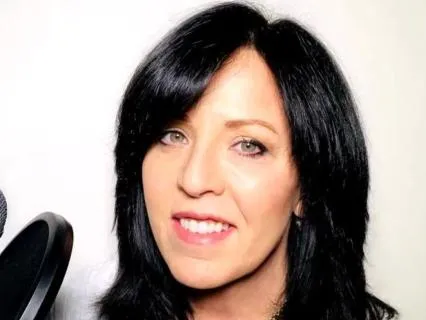
I'm Lisa A.
Romano,
Your host.
As an award-winning author and certified life coach,
I've dedicated my life to helping others understand the incredible power of an organized mind.
I believe that true empowerment begins with awakening to our false self.
My mission is to support you on your journey toward mental and emotional regeneration through conscious and deliberate awakening.
In this podcast,
I'll share insights,
Tools,
And transformative stories that illuminate the path to healing and self-discovery.
So today we're going to be talking about some of the ways that we talk ourselves into staying in toxic relationships,
Which can be tied back to codependency,
Which can be tied back to issues inside of our childhood that live way below the veil of consciousness and are now wired in our nervous system and will remain there until we become conscious of how we are keeping ourselves stuck.
In order to have a boundary,
You have to be able to understand that you have a self.
It's sort of like,
Can you open a door to a house that you can't see?
No.
Can you lock a door that you can't see?
No.
You can't set a boundary unless you have a psychological and internal psychological North Star called the self.
Now,
If you come from trauma,
Meaning emotional neglect,
And what that basically means is if you came from a home,
And I would dare to say most of us came from a home like this,
Where our parents were busy,
Or maybe our parents were more malevolent,
And maybe they were more intentionally aggressive,
Or maybe they were alcoholic,
Or maybe they were narcissistic,
Whatever the case is.
If you grew up in a home in which your experience was,
I am unseen,
I am unheard,
I do not feel safe to express my emotions.
I need to edit myself to keep my mother calm.
That equates to trauma,
Because on the flip side of that,
What you should have experienced in a healthy home,
Which again,
Many of us did not experience that,
And that's okay.
We've lived obviously to tell the tale,
We're just trying to break through it now.
But when we come from these types of homes,
We have to understand there was a consequence.
On the flip side of that,
If we come from a healthy home,
Then we grew up feeling seen,
We feel heard,
We feel understood,
And we were not responsible for regulating our parents' emotions.
So if we dropped something,
The response was,
That's okay,
Don't worry about it,
We'll clean it up,
It was a mistake,
Versus what many of us experienced was our mother's pitching a fit or our father's pitching a fit,
Because there was this blip on the radar screen,
And many of us can relate to that.
So codependency can be traced back to feeling as if you needed to regulate others in order to feel safe.
I can relate to that completely,
Because my mother was so emotionally dysregulated.
She was a woman that I would dare say spent her daily life pretending she was more okay than she actually was,
Which is so sad for her.
But again,
On the flip side of that,
There were many consequences,
And I as her oldest daughter,
In my humble opinion,
And it was my life experience,
And no one can argue with my life experience,
This was how I experienced my mom.
She was anxious,
Dysregulated,
She was suppressed,
Repressed,
She was angry,
Extremely frustrated,
And she took it out on me as the oldest.
And that was my experience.
And I learned throughout my life that when my mother was highly agitated,
I often felt responsible for calming her down,
Which meant that I always felt guilty and I always felt ashamed when I couldn't regulate her,
When I couldn't get her to calm down,
Which often required me to pretend that I wasn't having feelings,
That I had no needs,
And that while she was raging at me,
I could take it.
And it sounds so crazy,
But there was a part of me that felt like I'm doing my duty by allowing her to rage at me and I'm going to take it so she can feel better.
It sounds crazy,
But that's literally how I felt as a little girl.
Now if that resonates with you,
I want you to understand that one of the hidden beliefs that we have as codependents is this.
If I take care of his mess,
If I take care of her mess,
If I pick up all their broken pieces,
Then they will love me.
I have coached men and women who have gotten into situations that really required them to give themselves up to manage their boyfriend's divorce or to manage their girlfriend's children's issues with their father.
I have coached so many people that have this undercurrent of a belief that if I can find a way to be useful to this person,
Then they will never leave me.
If I can find a way to be useful to this person,
Then they will pat me on the back and I will feel seen and I will feel needed and then I will feel safe.
So I wasn't intending for this to be a long session because I really want this point to be driven home.
That if you come from a home,
You have to be objective when you think about this because a lot of people are so immediately loyal to their family and they don't recognize it's a form of denial.
They won't even let themselves go there and ask the question,
Did I feel safe as a child?
Emotionally did I feel safe?
And I'm not talking about physically safe,
Where your parents never harmed you physically,
Which is great.
In some cases,
Lots of cases,
That's not the truth,
Unfortunately,
But there is a whole segment of a population of people who are wounded,
Who have anxiety,
Who have codependency.
They're in pain,
They're hurting,
But they're trying to fix the wrong problem.
So I always say you can't fix a hole in the wall that you can't see.
Well,
They're trying to fix the wrong hole.
So a big issue with that is that people are suffering,
But because they have loyalty to their families,
They're in denial.
So they don't even allow themselves to ask an incredibly healthy question,
Which is,
Did I feel safe when I was a child?
When I say safe,
I mean,
Did you feel emotionally safe?
Could you,
To help you answer that question,
Could you go to your parents and say,
I feel scared,
Or I don't like when you yell at me,
Or I don't like the way that I feel,
Or I don't want to wear that,
I'd prefer to wear that,
Or I'm feeling like I need a hug.
Did you feel like you could say to your parents,
I'm angry,
Or I'm frustrated?
Were you allowed to be authentic in your emotions?
Were you given the impression that you were too much,
Or your parents had no time for your emotions?
Were your emotions minimized?
Were they devalued?
Really important question,
Because if that's the case,
Then you were not able to then validate how you feel and then operate in the world from true autonomy,
Because you had to pretend that you were okay when you weren't,
So you're still masquerading,
You're still pretending that you're okay when you're actually not okay.
And that's a great place to be,
If you can tell yourself the truth,
Because at least now we're getting somewhere,
Now we can say,
Okay,
Yeah,
You know what,
Lisa,
I did grow up feeling like I needed to pretend.
I didn't really feel like I could be real with my mom.
I always felt like I had to act like I didn't have emotions.
I always kind of felt like my emotions were a burden to her.
I always kind of felt like she could have emotions,
She could blow up,
But I couldn't.
I always kind of felt that way.
Great,
Dear one,
That's awesome,
That's truth,
And the truth shall set you free.
Then what you want to do is you want to ask yourself,
How might that feeling of feeling unsafe with my emotions and needing to pretend,
How might that be affecting me today in relationships?
Because oftentimes that correlates to associating being needed with love versus being in love with myself,
Not in a narcissistic way or to the exclusion of others,
But really honoring myself and feeling good about myself and being able to be present in a relationship without needing to sell myself or pretend my way through a relationship.
Now,
If we grew up feeling like we need to pretend,
Then we play sort of subconscious games with ourselves because we don't have self-worth.
And one of those games is that I'm going to associate need with love.
So I falsely presume that you need to need me to keep me around.
And so I don't know yet how to operate from I'm enough as I am,
And I'm deserving of respect,
And I'm deserving of kindness,
And I'm deserving of someone being interested in me.
I'm deserving of that,
And so is whoever I engage with.
They are deserving of my love and my respect and my goodwill and me being interested in them.
And that's what I'm holding out for.
I really want that experience.
But until we develop a healthy sense of self and until we recognize the many ways in which we self-abandon and until we're willing to ask some really hard questions and be honest about it and take that journey,
We tend to stay stuck.
Now,
That's not because we're broken.
It's because we're unaware,
And that's the way the human mind works,
And that's the way the nervous system works.
The nervous system and the mind basically say,
I'm going to keep you in survival until you convince me that I don't have to stay in survival.
That's where the work is.
That's why I've always said for the past 20 years,
It's not you.
It's your programming,
And I'm so grateful that it seems like I would say like we've shifted in talking about codependency.
We're understanding that it's not a weakness.
It's tied to survival.
I've been saying it for 20 years,
And that's amazing.
But until we're really willing to do that deep dive,
Then we can't uncover what's keeping us stuck.
So I really wanted to help everybody think about this one key idea.
What do I associate love with?
What game do I play with myself?
Do I think,
Like so many of my clients think,
That I have to prove myself worthy to keep someone around?
If I pick up the pieces,
I'm assuming that they'll keep me around.
If I solve their problems,
If I pay their rent,
If I focus entirely on them,
If I ask a bunch of questions about them and figure out what they need,
And then I become the epoxy and the sticky glue,
And I'm the thread,
And I'm the nurse,
And I'm the therapist,
And I'm the Uber driver.
If I fill all this person's needs,
Am I then assuming that this person will love me in return?
And if that's you,
Your nervous system might start to get activated when that conscious awareness comes online.
When it finally becomes unconscious and conscious,
Then that's when you're going to become activated.
And that's when real recovery tools could be so helpful.
Because when you start to see what's been buried,
That's when your nervous system starts to kick in,
And you start to get all nervous and anxious.
And there'll be a part of you that wants to run and hide,
Like,
No,
Don't say that I need a boundary.
I can't.
Because in this work,
What we're trying to do is we're trying to release our attachments to survival-based patterns that we no longer need that are keeping us stuck.
And that's where the work is.
That's where a support system is really important.
That's where a roadmap is really important.
So you know what the next step is.
And what you need is,
Yes,
To set the boundary,
But you also need to feel safe,
And you need to know how to regulate your nervous system,
And you need to learn and know how to think when you are interrupting and breaking these codependent survival patterns.
The good news is you are enough.
You always have been.
And it was never you.
It was just your programming.
Bye for now.