12:53

Zazen (Zen Meditation) And Self-Acceptance And Peace

by Ishar Keshu

Rated
4.8
Type
talks
Activity
Meditation
Suitable for
Everyone
Plays
420

I explain how the Zen seated meditation practice, known as Zazen, can help you experience greater levels of self-acceptance and inner peace. This practice can also help you get rid of any personal baggage or insecurities that you may be holding on to. In order, I go over: 1. How zen differs from other meditative schools of thought, and how this relates to self-acceptance 2. Practical ways to practice zazen (so you have the technique down) 3. The bigger implications of a continued practice

ZazenZen MeditationSelf AcceptancePeaceAwarenessTaoismDaily LifeEmotional DetachmentTheravadaMahayanaShamathaVipassanaOpen AwarenessTaoist InfluenceDaily Life IntegrationTheravada Vs MahayanaShamatha MeditationWalking Meditations

Transcript

Hey this is Ashar and in today's talk what I want to go over is how the practice of Zen and in particular the seated practice of Zazen can help you experience complete self-acceptance,

Weight or peace,

And also gets rid of any kind of insecurities that you may have.

So does this sound too good to be true?

Actually not really and I'll be explaining why.

So in this talk specifically my main points are I'll be going over how the practice of Zen differs from other meditative styles and how this directly impacts and relates to self-acceptance.

I'll also be going over some practical ways to practice Zazen so you actually have the technique down and then lastly I'll be going over the bigger implications behind this practice,

So how this practice actually affects your life once you practice long term.

So let's start off with describing how Zen differs from other meditative styles and practices.

So Zen is a branch of Buddhism and Buddhism originated in India and when it had traveled from India to China it was known as Chan and when the practice itself and the traditions had migrated from India to China it adopted some of the influences from China at the time and in China they were heavily influenced by Taoism.

So you might have heard the Tao Te Ching by Lao Tzu and these teachings all emphasize simplicity and a state of naturalness so there's nothing to add on in your practice.

Rather it encourages removing unnecessary things and it really encourages a simplified state where you don't have to do anything.

I'll be describing how this relates to self-acceptance in a minute.

So there is a huge emphasis on the potential of things and also simplicity and the culture of Buddhism really changed because before this the Theravada school or the original school of Buddhism found in India had a emphasis on personal achievement.

So there was a lot of strict rules that a lot of monks will have to follow and even if you look at the rules in place for monks in Theravadan schools there are a lot more strict than the rules that Zen monks will have to take for instance in the Mahayana schools.

And going further with the personal achievement,

A lot of the monks under the Theravadan system spend a lot of hours trying to achieve high meditation states like the jhanas and then also doing a lot of hours of vipassana and the end goal is to become an arhant where you achieve enlightenment for yourself and this is a different approach that is taken from the Mahayana school in which Zen is influenced from.

So with the jhana states they are you know they aren't easy so you do have to take you know a lot of hours of meditation every single day to achieve this state and even the Buddha himself had discovered that these very high states of meditation called jhanas won't directly lead you to liberation because basically once you leave this very blissed out state where you know you don't feel any kind of negativity but once you leave that state and come back to the daily your daily life your life problems are still there.

So in response to that the Buddha had discovered and developed the vipassana insight based practice.

So with Zen the Zen response to vipassana practice is zazen so it's actually this unique practice combines shamatha practice which is a calming practice born out of concentration and it combines that with vipassana which is an insight based practice but in addition to that there's a slight added twist of Taoist influences where we allow things to be as it is and we're not trying to change anything or wish things to be different rather the content of whatever is going on can be your object of meditation.

So when really stressful things happen in your meditation great that's actually wonderful because that provides you an opportunity to practice and this actually creates self-acceptance in your meditation because you realize that hey there's nothing to change or push away because I can just allow things to be as it is.

Now this is a slightly different approach from their older schools because if you had certain problems going on you would briefly put it aside and focus back on your concentration or vipassana or label things or look into things but with this practice there's nothing to do so you're just sitting there with all your problems and you can start to see how this really changes your whole life when you practice in this way of zazen.

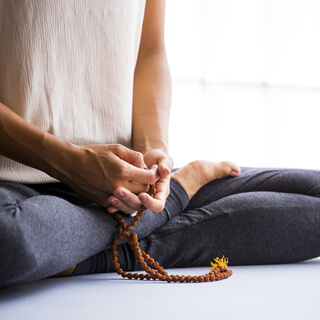
So going over the practical ways to practice zazen meditation the way this is done is that you'll find a comfortable position and when you meditate you will keep your eyes open and the reason why we do this and how this relates to our practice is that we open up our senses and we are we're not shying away from the world by closing our eyes but rather we are keeping our eyes open and taking things in but we're at the same time not getting lost in our contents of our thoughts.

So we basically open up our awareness and it can be helpful for beginners to have a slight part of your attention on your abdomen so just focusing on your breath at the abdomen just very lightly especially if you're new otherwise you'll get completely lost in the contents of your mind but you have a slight focus on your abdomen and then the rest of your attention is just open so whatever comes up whether it's you know knee pain or happiness or sadness or something you're thinking about at work or something serious or maybe you just got in a car crash whatever it is that content is fine so whatever is happening going on in your life that is your meditation so you're just opening it up you're opening up your thoughts and you're opening up your hearing and your sights and just letting everything be and like I mentioned in other forms you block out insecurities or distractions because that will really affect your concentration but in this form of meditation it's more of an open awareness rather than a narrow attention so what this means is that your awareness is very open and you're taking everything in and in the zen practice they really like to use analogies or stories to really describe the essence of this practice because with zen you know it can be kind of hard to interpret sometimes just because it is such an open-ended approach that you know it can be some confusion so they do include these kind of stories or analogies to help you really understand the essence of this practice so how you can think of this practice of zazen is think of it like your mind is like a sky so it's very vast and open and the thoughts or content in your mind are just clouds so anything that's going on is just simply clouds that are to be watched and you simply just watch it come and go or even disappear or you can also use the analogy of sitting on a riverbed so you're sitting up on top of the hill and you're watching you know the stream of river go by you sitting on top is kind of like your mind or your awareness and the content such as what you're thinking about or what you're thinking about what you're gonna eat for dinner or you know different things going on or maybe you know you feel uncomfortable whatever it is your content in your mind is just stream so that just passes by so you can notice it's sort of like having a observer like quality where you simply just watch the different things in your life come and go and this obviously has a bigger implications which i'm going to talk about in a second and also in the zen practice we also incorporate walking meditation known as kinhin and you also will try to have this hits of presence outside your cushion so when you're not formally practicing a seated meditation or walking meditation can you still bring the bring forth this open awareness in all your activities in your life and the zen approach is very you know unique in this aspect because unlike the buddha's time where a lot of the bunks will spend hours and hours in seated meditation with this style of meditation and zen you're actually encouraged to incorporate this practice with all of your life because that is part of your life so you know washing your dishes is meditation uh driving your car is meditation having a difficult conversation is meditation talking to your spouse is meditation so why can we bring that same level of open awareness to all our activities in our life so that's kind of the idea behind this so let's go over the bigger implications of practicing so let's just say you practice this meditation say for an hour a day you're practicing just keeping an open awareness and maybe doing walking meditation and then maybe throughout your day you have little reminders or micro hits as shins and young calls it where you bring some of your awareness or mindfulness in daily activities so let's just say you keep this up day by day so at first you will experience this inner peace or spaciousness just in your formal seated practice or standing practice so you you know train yourself and you learn wow i can really be with my thoughts without you know pushing it away or getting involved with it and this actually gives you a lot of confidence acceptance and greater peace because you learn to just be with whatever's happening without pushing it away and your charged content actually loses its charge because you're just simply just observing things as it is and when you can see things without resistance it starts to lose its charge as well because you're simply just noticing it and this is actually something you can actually experiment with and see for yourself so rather than taking my word for it you can practice this to really see how you can do this and really see the effects manifest in your life so i'll give you like just a broad example that many people may understand so let's just say you are currently dealing with a lot of issues and you have a lot of thoughts of insecurity so you know you have thoughts of saying that you're not good enough and you know you're saying i'm not good enough at this i'm never good enough i can never amount to anything and you have all these thoughts in your mind so it kind of goes off all the time now before doing this meditation practice these thoughts really control your life so the minute your thoughts happen you just get sucked into it right and then you start to practice this zazen practice then what will happen is that you get a little bit of space but then you lose it but then you keep coming back to the practice then eventually over time when you have these thoughts come up you may just say oh there goes the chatter and you just notice it and notice how you just notice it and watch it just go away you're not trying to push it away but you're just observing it with a slight detachment so you might notice the first thing is that your emotion emotional intensity of your thoughts will kind of just die down or at least reduce so it's less of a pull and this is because you have like more of a calming effect due to your practice and you have more of that open awareness and space around your thoughts so it doesn't really pull you as much so whereas before when you said i have not good enough and you got all emotionally heated and you you know you just lost all control now you just have a bit of space but let's say now you keep continuing to practice next you might notice that you just observe chatter so it's like oh okay they're just my thoughts going again oh i'm not good enough okay whatever and your story behind it disappears so the story of i'm always like this and blah blah blah blah and you know this is because when i was 12 my parents said this to me and they told me i'd never be good enough that all just disappears right so that you have more of that space involved you're not really attached to your whole life story and that's really good that's a good thing here so then you continue with the practice and you know long term then what'll happen is that there's a slight shift and now you might notice that these thoughts are very minimal it might be like residual it might be there here and there or it may even disappear altogether and that's kind of crazy to think about and you may not even think about those same thoughts anymore and you know the best way it may be hard to comprehend especially if you're going through you know a lot of personal turmoil at this moment but if you do practice this long term you'll actually get to a point where you don't even relate to these things and you're not going to relate to these thoughts or very heavy emotions before because you have completely accepted it and the best way i can really describe this kind of response of how you change is you know think of the time where you're like an angsty teenager and you know you thought everything was so serious and everything was a big deal it's kind of the same way and the same approach or the same way you look at these look at yourself back when you were a teenager or younger is the same way you're having all your very hard problems so they're very personal very important baggage that you may have in this present moment will actually be just something that's really funny to laugh at in a later time now this may be very hard to believe but it's i find that this is very true and this is actually something you can experience on your own so this practice of zazen can really change you in a lot of different ways and the reason why is because you're completely looking at it without pushing it away so i definitely recommend practicing zazen meditation so just having an open awareness and letting things be as it is and you'll be very surprised of how this specific style of meditation can really transform you because you're not pushing anything away so resistance is really key so i hope you like this talk thank you

Meet your Teacher

Ishar KeshuAustin, TX, USA

4.8 (61)

Recent Reviews

Richard

June 18, 2024

Thank you for this talk. Very helpful for

Fernanda

January 25, 2023

That was very helpful. I’m on my way of understanding Zazen. It can be challenging. Thank you!

More from Ishar Keshu

Loading...

Related Meditations

Loading...

Related Teachers

Loading...
© 2025 Ishar Keshu. All rights reserved. All copyright in this work remains with the original creator. No part of this material may be reproduced, distributed, or transmitted in any form or by any means, without the prior written permission of the copyright owner.

How can we help?

Sleep better
Reduce stress or anxiety
Meditation
Spirituality
Something else