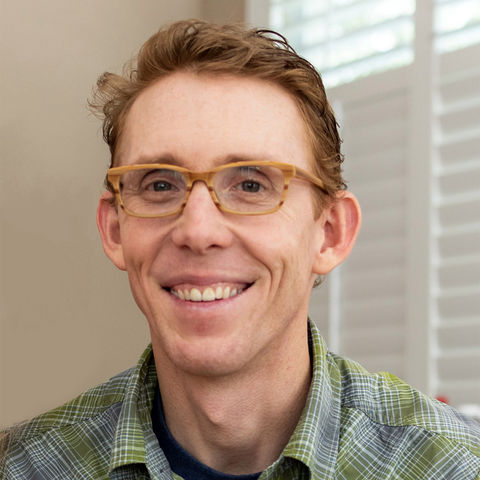
And a warm welcome to the program Dan McGann who's joining us from a suburb of Ontario Mississauga and He has started a program with young people and their families in Ontario province of Canada Which has gained a lot of notoriety and spread the word across the country and we're so excited to have him I've been looking forward to this interview for a long time Thanks so much for joining us down Thanks so much for having me mark Appreciate it definitely and as we get started I just like to ask So I just wanted to ask you kind of how you get started running personally and you know how you found your way to To using this in your therapy Well,
I guess it's a bit of a long story I started running when I was a young kid Growing up in a small town in northern,
Ontario calling wood and First I was running from bullies as I told you before and then later I used running as a way to Sort of cope with stress and to deal with challenges that were in my life at that time Both my parents struggled with mental health issues My dad particularly with addiction He left my mother with four boys All by herself when I was just eight years of age And another brother who passed away So there was a lot of stress and challenging in my life early on and for my family God bless my mom who's worked really hard to sort of keep it all together,
But Often as a as I do presentations in the community on de stigmatizing mental health I Share my own personal story.
So I then I'm not I'm not embarrassed or Feel any kind of shame because of what I went through.
In fact,
I think it's part of The juice and the energy that motivates me to do what I do I often say that I started my career as a therapist when I was eight because I had to work very very hard as a young guy the oldest of five boys just To keep it all together and part of what I did to do That was I was on the track team cross-country team and I ran a lot Often very late at night around the night or so when it was all quiet and everybody was asleep and I would just run along the shores of Georgian Bay and Find a rock and just sit there and meditate for a while then run home.
So I always had that fond memory and then Going through high school.
I was a bit of a I was a bit of a challenge behaviorally but I managed to do that and I got into university and struggled through my BA in psychology and then worked for a few years and got married started did graduate work at University of Toronto and in social work and You know started my career from there and then I about my late 30s early 40s.
I Got nailed with a major depressive episode.
I hadn't run for years I hadn't barely been doing any kind of exercise.
So I pretty much neglected my Myself for a number of years and just pushed,
You know It's even in my career and taking care of my kids and my my wife so kind of lost focus But the the depression that I went through refocused me And my doctor at the time said,
You know get back into some sort of physical Exercise to help you with your mood and that's when I started with the If you have them,
I think you do down in the states the running room Okay.
Yeah,
It's so I started that with that just to learn to run 5k and that that felt great So I never thought I could do a 10k.
So I pursued that I did a 10k and then Next thing you know a half marathon becomes possible And then after a half marathon My coach said well,
Hey,
There's this this 30k around Hamilton Bay that we could do which is a It's a warm-up To the Boston Marathon.
It's it's quite a challenging 30k run around Hamilton Bay lots of hills It's a lot of people who are prepping to go to Boston.
We'll do this run.
Yeah So I did that and that would just was amazing And so my coach says well if you can do a 30k around the bay,
You can do a full marathon so I did my first full marathon in May of 2006 and at that time I was just my depression had lifted.
I was feeling really good I was feeling really connected to my life and my family at that time So I went to the chief of psychiatry at the time at the hospital where working in Mississauga the credit Valley Hospital Trillium health partners is what they call it now and said I like to do a project where I take depression teens with depression and anxiety and take them running twice a week for 12 weeks and finish with a five kilometer run and see what happens and he gave me his blessing and We started that back in September of 2006 and We've grown from like nine or ten teens now up to like as high as 45 Great,
And we've included families as well.
So it's really sort of branched out and It's been quite the success And it's been quite a joy and a great experience for me,
Too Yeah,
I've seen the joy and I've seen some of the videos that you all have produced including the the feature-length film rxrun and The kids seem so and their families seem so grateful and joyful,
You know It's almost as if they've discovered this hidden,
You know,
This hidden gem that nobody knew is there You know that if I run I can somehow Get past these obstacles and I can somehow feel better about myself and just I guess some things that come in two intuitively for Those of us in the in the running world.
Maybe we even take them for granted,
You know,
Yeah You know when you're running with your buddies and you know,
Sometimes if you like you're training for a marathon you're out there for a couple hours it would struck me as a Psychotherapist is that what we talk about on the road.
We talked about some pretty intimate and personal stuff right there And I think it's it's just naturally therapeutic for us not just the from the physical aspect from the psycho-spiritual Aspect of it as well,
You know what we say is what we you know What we say in the road stays on the road kind of thing But to your point in terms of the kids and the teens and the families really connecting in a different way Emotionally and psychologically through the run program I What what's really I think is key to this is That often developmentally you think about it when you're teenagers your personality your confidence in yourself that vulnerability is Is pretty prevalent and therefore difficult for young people to be Motivated or willing to go sit down in a chair in front of a therapist and to talk about Their depression and their anxiety their addiction their struggles.
It's it's really it's really quite a courageous thing when you think about it to expect that these young people would willingly engage in such a Risky task So I think it's hard for a lot of adults to do that to admit I got a problem want to sit down and talk about it.
So the with the run Group therapy program does is it it creates a health-based approach?
So I'm not forcing anybody to sit down in a chair and talk about their problems But we're coming together to focus in on something where we're moving forward to feel feeling better we're still addressing the the The therapeutic ideas in cognitive behavioral therapy and how to examine issues and and deal with them and moving forward But it's a it's it's not an in-your-face kind of thing and it's it's it's couched in a real positive energetic Activity that gives them a sense of at the end of each group group Hey,
Look what we did today that feels good and we do that continuously over the course of 12 weeks I think it makes a difference.
Yeah,
Definitely and I Dan I have to say looking at your you know Your fall line up here.
You've got this down to a science.
I mean you've got twice a week young people in their families joining for very inspirational talks on everything from you know from finding the magic within you to setting goals to Overcoming obstacles and in between there I as I understand it You know after they talk they go out for a run at their own pace.
They have people to talk to Questions to focus on is that kind of the the flow of the group?
Absolutely.
So every Tuesday night we meet And I have a speaker every Tuesday night usually someone That is not only a professional But somebody who's gone through some significant mental health challenges Themselves,
So I've had police officers Journalists firefighters nurses doctors and also You know personal trainers and Quite often a lot of my graduates now because I've been doing the group for 14 years A lot of my teen graduates that have gone off to university and now are in careers themselves I have come back and said hey,
I was exactly where you are and This is what we what I did to get through So there's a sort of a connection a validation a sense of hope that's created with these speakers So yeah every Tuesday night we have a speaker and then right after we go for a look at 20 minute half hour Jog or walk and then we meet again Saturday morning,
Which is real challenge for teenagers You know,
They get 830 a.
M I think it's kind of a validation for me as a clinician if I can get you know 2025 teenagers and their families out at 830 on a Saturday morning that something's working.
Yeah,
Sure So when they come on Saturday morning I I do a little bit of a what we call mindfulness meditation or in other words bringing everybody into this moment Not being caught up in you know the trials and tribulations of yesterday and the worries of tomorrow and I say hey the creative process is right here right now and Let's get in contact with that what you can intentionally create today that I'll make this day a good day And even if it's snowing or raining or blowing or it's cold outside We're running and I use those in fact those opportunities when the weather is the most miserable to say Hey,
We have an opportunity here.
This is not a bad thing This is a good thing that we have this adversity outside because that's what it's all about How do we build confidence in running towards adversity and not just pulling the sheets overhead and avoiding it?
We're gonna get the most strength We're gonna get the opportunity to really define ourselves or realize who we are who we can be When we get out there and we hit you know,
Those hills in the snow and the rain in the wind They think I'm a bit crazy at first As it is often up there I'm I'm from Michigan just over the border from Ontario and you guys are leading up to I think your your race is at the end of November this fall the Unbreakable bold and cold so I'm sure it's quite cold by then That's that's a great thing to lead up to and a great thing for them to learn Dan would you say that the the film?
Rx run is that a pretty candid and and Accurate portrayal of kind of how the how the program goes and how the weekly runs go Yeah,
Absolutely.
I think what Bruce Baklarian the producer and director wanted to do is he wanted to show the sort of the meat of the group and How it's structured and what kind of speakers we have and That kind of thing.
So yeah,
The group I think is a good representation of the kinds of things that happens in the group what we discuss and the kinds of Young people that are participating in in the group program That in that documentary you see we follow three young people and their parents Emily who struggles with depression and who's had feelings of suicidal ideation from time to time and and Another young man Who lost his girlfriend while walking across the street she was hit by a car and killed and then Mackenzie who's had a lot of pain related to anxiety in her struggles and how the three of them really kind of confront those issues and And Proceed through or pursue through the the run program So I but that that's sort of it like that was one group What I was telling to I was talking to one of the coaches the other day is,
You know after 14 years What really strikes me is that?
Every group has a different dynamic Because of course it does right because we're gonna have even though we have that that common issue of everybody having a mental health depression anxiety addiction issues self-esteem that kind of thing There's very different kind of challenges and personalities that kind of just makes us so much more fun And interesting for sure and to see them overcome those challenges so so different and so to make those friendships that are so unique So it's really a gift okay So the quote that that I've seen a few times and that that you actually sent me connected to The current project is the worst thing you can do in the face of adversity is nothing You need to move to overcome to get moving what you know,
How have you seen that?
You know kind of play forward and I know that this this movement has grown Into what's called unbreakable and you know,
How is that moving forward and what what is the concept behind that?
Well,
I guess the concept in that is that When we stand still or do nothing or Retreat in the face of adversity it We surrender to the negative energy that goes with that Only when we move forward when we face those issues that are challenging us that are Pursuing us that we have an opportunity to really make changes to really create something that's new or better I think that when you're referencing the term unbreakable or team unbreakable that origin comes from a one of the girls in our one of our first groups Haley and She She was a young girl who struggled a lot of depression and low self-esteem and she was actively Self-harming herself as a way to cope And That sort of retreat or surrender into the problem just made her feel felt feel worse and she just continued to spiral in that place of retreat and And self-destruction with herself on She tried a number of different psychotherapies medications none of them seemed to work she'd been hospitalized and one of her doctors who had known about my group referred her to me in the run group program and with She would tell you was a lot of hesitation she She agreed to do the group and then after a period of time she she really started to connect with the whole idea movement of Engaging in the face of her struggles and it started to give her a sense of accomplishment a sense of growth and she She started to feel and she used that term I started to feel unbreakable When I'm moving when I'm engaging and I'm not surrendering I feel unbreakable This is you know,
It's interesting.
I'm just reading David Goggins book.
You can't hurt me.
Oh,
Yeah Right now and he has a similar message where he says,
You know like you can't hurt me if you like if you face your fears if you face and You accept that,
You know,
There are challenges there You don't run from them then you get stronger and I think Haley is service is a good Example of that courage and moving forward and in dealing with it to that point where you just feel unbreakable That's my hope that and the idea I think behind the group is that when when everybody gets moving and they they intentionally run in the Unclimate weather weather and up those hills and they face that adversity that that it you have this generalized effect You know,
It's not just the running experience.
It's it just it's it's it has a tidal wave of Connecting and validating.
Hey,
I can do this if I can do this here Maybe I can do this in the classroom or in my relationships or in my job So that's the whole idea behind it and and without knowing so she you know I I don't know all the details but without knowing so she kind of coined the the name or the term that would help This running group to spread throughout Canada and into the States in some cases exactly My hero David Harris,
He's a he's a dad that I met in In 2007 at the one of the marathons I was running a Mississauga Marathon and he shared his story that he had lost his son in 2005 to suicide And part of what he was doing to cope was was to run and so I told him about this group and he was just like Wow,
I want to do this So he which was very courageous for him that the first couple of groups for him were just overwhelming as you can imagine He had his son had struggled with depression for a lot of years and ended up taking his life So to be in a group environment where he was volunteering as a coach it was he had a few shaky nights where he He was feeling a bit overwhelmed But he he took that and he developed his own Non charitable organization on was it his own organization charitable organization called At the time was called Cameron helps because his son's name was Cameron and that morphed and after Haley story He really identified with Haley story And so he could he developed the term team unbreakable So the funding that he was generating To replicate the the run program and as many schools and agencies agencies community agencies as he could Took on that label team unbreakable so he he really pioneered that a number of years ago and spreading the word such that they were in like 40 to 60 schools across Toronto and the various suburbs and in other provinces even as far as Victoria BC.
Wow,
That's great.
And as a sidebar I should note that anyone listening who has some connection to to educational programs or therapy programs and would like to find resources the Unbreakable website is is really wonderful.
It's got some really practical tools and ways to connect with you guys And get one started Absolutely That's a really good point.
And I think if you reach out to them they have developed a Like a template a startup kit for anybody who's interested in starting their own community based or school based run program They'd be willing to share that template with you and That is it's based on the program that I'm doing through Trillium Health Partners Hospital so it has the same structure it has the same idea in terms of presenters and The concepts that are taught throughout the group so,
You know by all means reach out to them and and they'll be happy to help you out.
That's fantastic and that track record of experience and You know what has worked and what they've learned that's that's invaluable You know I think it'll help a lot of young people and I hope I hope we'll spread even more into the states because it's it's sorely Needed as as you know in so many communities Yeah,
Absolutely All right.
Well,
Let's let's shift gears a little bit.
I'd like to ask you about kind of you know as compared to traditional therapy You've mentioned a little bit about how your methods and your vision has changed a bit over time the trial and error You know,
Would you like to share anything about what that's been like and in any of your your own challenges and in putting this together?
I I guess if you would look at The way I work just generally as a psychotherapist.
I'm fairly eclectic.
I'm pretty much Focused in on strength.
I'm a strength based therapist.
So I focus on what we call the 20-80 rule.
So you look at overall people statistically that have a Good rating of their life satisfaction They generally don't perseverate on the problem.
They don't spend more than 20% of their focus on the problem They put 80% of their attention on the solution.
So that's the way I practice so I try to To yes address the struggle and then emphasize the how and what questions how are we gonna make this better?
What can we do today to make today a better day?
So it's a whole mind by kind of thing but to the physical stuff.
Are you getting a good night's sleep?
Are you eating properly?
Drinking plenty of water.
Are you engaging?
Intentionally your body in a way that it makes it feel better and a lot of this is in sports psychology,
Right?
And you warm up before a game,
You know,
You get everything moving in your body so that when you hit the basketball Court or you're on the golf green that you're just you're engaged,
Right?
So I really promote a lot of that in terms of how you work your body move your body to feel better and Similarly with the mind how you focus you intentionally focus habits and focus that Contribute to your sense of well-being is what I call And brain brushing.
So right your teeth every because it's a habit and so you often use this in there in the group of reference to the Habit of brushing your teeth and that What they want to do is develop a habit of also starting each day brain brushing in other words clearing out all the crap of yesterday and the words of tomorrow and Intentionally decide three things.
How am I going to grow today?
How am I going to get back and?
What's at least one thing I'm grateful for?
And if they if they can focus on those three things first thing in the morning We'll find that it increases the potential of them having a better morning Because they're deciding Deciding intentionally I'm taking control of the steering wheel of my life and my feelings of my emotions and my thoughts And I'm moving in this direction.
I'm not being pushed around You know by you know My horoscope the weather or what's going on in politics or whatever,
You know,
I'm deciding what I want to do and creating that Muscle developing that muscle of the tension intentionality of deciding.
This is what I want to do today I'm gonna go for a run.
I'm gonna notice how good it feels how I'm growing How I'm being there for my fellow runners,
You know as a supportive person and what I'm grateful for to have this experience Because it's the opposite right when you're depressed or you're anxious all your focus goes in you it goes into this black hole of Darkness so when you can focus in on those ideas of growth Giving and gratitude then it really starts to make a difference So that that kind of concept is has evolved over the years for more that Traditional kind of approach just the basic CVT which I use that stuff as well like using logic questions To evaluate our fears because often when we get depressed or anxious everything gets magnified,
But we can break it down using You know certain questions to evaluate it so Sure,
It's a very solution based Strength-based approach that I use in in the run group and that's where basically where it is now and in my psychotherapy as well There's I really like those three big G's because we hear about them all the time You know people in in in therapy or in meditation whether or not they they recognize it that growth and that Gratitude and that giving back.
They're always you know,
They're kind of always part of it So there's three questions.
I think are a good way to start Where I take that another step further in the run group is I don't think I've mentioned it before but after the teens have completed a two group series I give them the opportunity to come back and volunteer So so it's another step up for them in terms of their sense of mastery and a sense of contribution their sense of well-being to have an opportunity after they've you know run a couple of groups and completed a couple of five or ten K Runs that they can come back and help other young people coming in.
I think that's just that's another powerful level of Experience for them that really puts them in a much better place Yeah,
Young people always listen much more to their peers than they listen to us.
Okay,
So that's That's a good reality to you know to recognize they're they're gonna be turned on and hearing 80 to 100 percent of what you know What someone that is recently their age and has been through it has to say So I think that's that's an awesome tool for the kids and then of course also the number You know if you're giving back you're doing healing for yourself So that's you know,
I'm sure that that that helps a lot of people who are graduated from the program Yeah,
Absolutely you know Dan,
I I've often said that Canada's like the the California In that it produces it's only got 10% of the population of the US but it produces so much innovation and So many people doing amazing things and I think this unbreakable program is is definitely a great example of it you know just the the support the that Canada has provided through as you said the willingness of a major health care program to to engage in this type of therapy is this tells volumes about the willingness of communities to engage with this Do you see it spreading?
You know further afield to other parts of the world Do you think it would work in other other contacts or other health care systems?
Yeah,
Absolutely I Mentioned there have been a few places I've been contacted in the States and Great Britain was the last That was reaching as somebody reached out for me from From Great Britain a little while ago.
So it I think it you know,
It's you know I mark as runners a key you said earlier kind of Intuitively makes sense right that this would help and we know that just as being a part of the human race that When we engage and we exercise and we move in a positive way We move our bodies in a positive way and we're with positive people and we're in generally runners are pretty positive people I think I think there's a few us out there that struggle but most of us are pretty positive when we're out there and we really support of each other along the journey and it's like a band of brothers and Sisters we like we really support each other,
You know to get to that finish line it's the that experience of Accomplishing something like you know doing a 5k to running a marathon or a Niner man.
There is something quite transformational that happens there so I I Just think this is just a natural thought moving more from the the medical model of just treating with medicine and sitting in a chair and reflecting on ideas and in the form of therapy that when we connect those ideas of movement and health and the ideas of medicine and and therapy they all get they all have a an impact That's beneficial so yeah,
And the you know,
The idea I think that streams through this for me is that You know mental health services are a basic human right,
You know for young people and that they should have the opportunity to To engage physically,
You know tears at your heartstrings when you hear,
You know Like phys ed or sports programs being cut which are some of the big means that that young people have to to move and express themselves and I just hope that You know American health care and American schools take take notice and that more and more More and more people are able to connect to unbreakable and able to do similar work To what you all have done in your in your town I'm sure that any youth that needs to be served and wants to be engaged with this program has the opportunity in Mississauga Yeah,
Absolutely the only thing is that you just have They just have to be cleared for the better physician.
There's just certain Basic things that we do to make sure that everybody's okay to participate So I ask that all my participants see their family physician and you know,
Just wave off that there's no sort of medical issues that might Make participating in the program a risk for them like,
You know heart issues or other medical conditions then You know we need to be aware of Yes,
But it generally I at the credit Valley Hospital if You know a young person between the ages of 14 and 25 are struggling with a mental health issue They're eligible to participate.
So that's amazing.
It's amazing dad And you know,
I really as I've said several times I really appreciate you coming up with this and just being there for all of us that want to learn about it I mean I reached out to you and the very next day you said okay,
Let's do it.
You know,
Let's let's spread the words I'm so grateful for that and being such a great evangelizer of mental health for young people Just totally excited about it.
I mean I am evangelical I guess Getting the the word out to as many people as possible and and really do highly recommend anybody out there Who's who's looking to develop a similar program?
You won't regret it.
Number one.
It will have an impact on the young people and the families that you you engage with and Don't hesitate to reach out to team unbreakable the Their website and David Harris there and his team they will give you the information support you in any way that they can to To help you get started Awesome,
And I'll be sure to post all those links as well as links to your film and short videos That people can engage with and and learn more That's great.
Thanks very much.
Well,
Thanks for thanks for you.
Thanks for your hope for the future I appreciate your time and happy running My pleasure you too.
Thanks,
Dan