Welcome to this yoga nidra practice.
Please settle into a posture of rest,
Lying on your back in Shavasana.
Place your arms alongside your body,
Palms facing up,
With space between your arms and torso.
Let your upper back broaden into the floor.
Allow your legs to rest slightly apart,
Letting your feet fall outward in a natural way.
Use blankets and pillows to support your body as needed,
Ensuring you're warm and very comfortable in your pose.
You may also want to place an eye mask or soft piece of clothing over your eyes.
Take your time to make any final adjustments.
Once you're ready,
Gently close your eyes in a simple,
Yet intentional,
Act of turning inward,
Releasing yourself now from the pull of external activity,
Settling into stillness.
The practice that follows is an invitation to arrive fully in your body,
Quiet the mind,
And reconnect with the steady ground of your own being.
Through stillness,
Breath,
And awareness,
You will be guided layer by layer into deeper presence,
Settling into the support beneath you and the aliveness within.
Let's take three deep breaths here.
Inhale deeply through your nose,
Filling your lungs completely,
And exhale through your mouth,
Letting go.
Once again,
Breathe in through your nose,
Feeling your body expand,
And exhale through your mouth,
Releasing tension.
One last time,
Inhale deeply,
And as you exhale fully,
Allow your body to sink even deeper into the support beneath you.
Now bring your attention to the points of contact between your body and the surface you're lying on.
Notice the weight of your heels,
The backs of your thighs,
Your pelvis,
Your shoulder blades,
And the back of your head.
Feel the steady support of the ground beneath you.
Let your body fully release into that support.
Now begin to draw your senses inward.
Let your eyes turn toward inner vision.
Let your hearing become inner listening.
Your sense of smell,
Your sense of taste,
Draw them inward too,
And your sense of touch,
Let it rest in the subtle sensations within.
This quiet turning inward is pratyahara,
A soft withdrawal from the outer world,
And a return to your inner landscape.
Set aside any expectations or attachments to the outcome of this practice.
Allow yourself to fully let go into the process,
Knowing there is no right or wrong way to experience yoga nidra.
Simply follow my words and remain awake and aware as you settle more deeply into stillness.
The practice of yoga nidra begins now.
It's time for your sankalpa,
A short,
Positive statement that reflects your deepest intention for your life.
If you already have a sankalpa,
Prepare to repeat it silently to yourself three times,
Phrased in the present tense,
As though it is already true.
If you don't yet have a sankalpa,
You might use the phrase,
I am grounded and present,
Or simply connect with your purpose for practicing today.
Please,
Silently repeat your sankalpa three times now.
Let go of your sankalpa as we prepare for the rotation of consciousness,
A practice that guides your awareness through different parts of the body.
This technique helps anchor the mind,
Calming restless thoughts,
And creating a bridge between the physical body and the deeper layers of your being.
By bringing attention to the individual parts of the body,
We stimulate the sensory motor cortex of the brain,
Promoting deep relaxation and balance within the nervous system.
Send all of your attention to the right hand.
Feel your right hand from the inside.
Now to the right hand thumb.
Index finger.
Middle finger.
Ring finger.
Pinky finger.
Palm of the hand.
Backside of the hand.
Wrist.
Forearm.
Elbow.
Upper arm.
Right shoulder.
Right hip.
Right thigh.
Knee.
Lower part of the leg.
Ankle.
Heel.
Sole of the right foot.
Top of the right foot.
Big toe.
Second toe.
Third toe.
Fourth toe.
Fifth toe.
Become aware of the whole right side of the body resting in stillness.
Sense and feel the whole right side of the body.
Now shift your attention to the left hand.
Feel your left hand from the inside.
Now to the left hand thumb.
Index finger.
Middle finger.
Ring finger.
Pinky finger.
Palm of the hand.
Backside of the hand.
Wrist.
Forearm.
Elbow.
Upper arm.
Forearm.
Left shoulder.
Left hip.
Left thigh.
Knee.
Lower part of the leg.
Ankle.
Heel.
Sole of the left foot.
Top of the left foot.
Big toe.
Second toe.
Third toe.
Fourth toe.
Fifth toe.
Become aware of the whole left side of the body resting in stillness.
Sense and feel the whole left side of the body.
Now send your attention to your feet.
Feel your feet from the inside.
Right heel.
Left heel.
Back of the right knee.
Back of the left knee.
Back of the right thigh.
Back of the left thigh.
Right sit bone.
Left sit bone.
Right hip.
Left hip.
Right kidney region.
Left kidney region.
Right shoulder blade.
Left shoulder blade.
The whole spine.
Back of the neck.
Back side of the head.
Crown of the head.
Forehead.
Right eyebrow.
Left eyebrow.
The eyebrow center.
Right eye.
Left eye.
Right temple.
Left temple.
Right ear.
Left ear.
Space between the ears.
Bridge of the nose.
Right nostril.
Left nostril.
Right cheek.
Left cheek.
Upper lip.
Lower lip.
Upper jaw.
Tongue.
Chin.
Throat.
Right collar bone.
Left collar bone.
Right side of the chest.
Left side of the chest.
Middle part of the chest.
Right rib cage.
Left rib cage.
The lower abdomen.
Feel the whole right leg from the hip to the toes.
The whole left leg from the hip to the toes.
Feel both legs together.
Feel the whole right arm from the shoulder to the fingertips.
The whole left arm from the shoulder to the fingertips.
Feel both arms together.
Feel the whole backside of the body from the back of the head down through your heels.
The whole front side of the body from your face to the tops of your feet.
Feel the whole of your neck and the whole of your head.
Feel the whole body together from the inside.
Sense and feel your whole body together.
Your body is now resting in stillness,
Supported and at ease.
This completes our journey through Anamaya Kosha,
The physical body.
From here,
We begin to move inward.
With the physical body now resting in perfect stillness,
We move to the energy body.
Gently shift your awareness to the ebb and flow of your breath.
Feel the natural rhythm of each inhale and exhale.
Notice how the breath moves,
Where it begins,
How it travels through your body,
And how it leaves.
Allow your breath to be just as it is,
Without needing to change it or control it.
As you continue to follow your breath,
Begin to sense the subtle aliveness within you.
Notice the sensations of life flowing through you,
The gentle pulses in your fingertips,
The soft rise and fall of your chest,
The quiet hum of energy beneath the surface.
This aliveness is always here,
Sustaining and supporting you.
Rest here in this awareness,
Continuing to attune to the subtle vibrations within.
Now begin to attune to a more refined sensation,
A subtle upward movement of energy within the central channel of your body.
This is Shashumna Nadi,
The central pathway that runs from the base of the torso to the crown of the head.
Let your awareness settle at the bottom of your torso,
Just in front of the base of the spine.
Stay here for a few moments,
Breathing gently and quietly settling into this space.
Now,
Without any effort,
Allow a subtle current of energy to begin rising from this point.
There's nothing to imagine or pull,
Just sense and feel.
Now bring your awareness to the crown of your head,
Right at the center of the top of your head.
Hold both points in your awareness,
The base of the torso and the crown,
And allow the subtle upward movement of energy to travel through your body,
Rising from the base and flowing out through the crown.
Simply notice what sensations arise as you attune to the energy moving through this channel.
Let your body remain completely relaxed,
No thinking,
Just feeling.
Now gently release your focus on these two points.
Rest in the spacious field of your body's breath and energy system.
This is the subtle realm of pranamaya kosha,
The breath and energy body.
From within this internal spaciousness,
We will now begin to explore opposite sensations.
This practice engages manomaya kosha,
The layer of mind and emotion.
By consciously welcoming contrast,
We strengthen our ability to stay grounded amidst the fluctuations of life.
We learn to experience without resistance or preference,
To feel without being overwhelmed.
We will begin with the feeling of being settled.
Sense a deep,
Grounding presence in your body as though you are firmly rooted into the earth.
Feel the weight of your body supported completely as if the earth itself is holding you steady.
Let this sensation of groundedness expand,
Bringing with it a sense of steadiness and stability in your mind and body.
Now release the feeling of being settled and shift into the opposite sensation,
Being unsettled.
Imagine a restlessness or unease within,
As if the ground beneath you is shifting or uncertain.
There is a sense of insecurity.
Notice how this unsettled feeling manifests in your body and mind.
Perhaps there is tension or movement or a lack of clarity.
Simply observe the sensation of being unsettled without judgment.
Now return to the feeling of being settled.
Deepen your connection to the sensation of stability and calm.
Feel its steady,
Reassuring presence.
And now gently invite the feeling of being unsettled.
Allow yourself to hold both sensations simultaneously.
Use the power of your mind to notice the qualities of each.
How groundedness brings stillness and strength,
While restlessness invites movement and change.
Observe how these opposites interact and how you have the capacity to hold them together at the same time.
This capacity to observe without attachment and without judgment belongs to vijnanamaya kosha,
The wisdom body.
It's the layer of deep knowing,
Of intuitive insight,
The part of you that witnesses all experience with clarity and spaciousness.
Now release the opposite sensations and return to whole body awareness.
Let your attention expand once again,
Sensing your body as a unified field of presence.
We will now enter the practice of visualization,
A way of focusing the mind and deepening your connection to the subtle realm.
Bring your awareness to the space between your eyebrows in front of your closed eyes.
Notice anything you see there in the darkness.
You may see shapes,
Colors,
Images,
Patterns,
Flashes of light,
Or maybe nothing at all.
Keep watching this space and connecting to your creative intuition.
As I name images,
Allow them to rise spontaneously in this space.
Focus,
But do not strain,
And trust what comes up.
Allow the following images to emerge in your mind without effort.
A stone path.
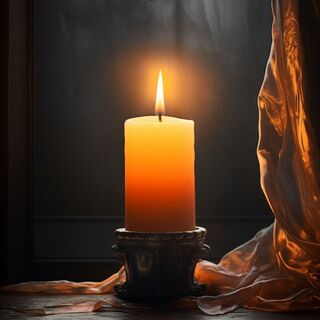
A flickering candle in the middle of a dark room.
A river winding through a canyon.
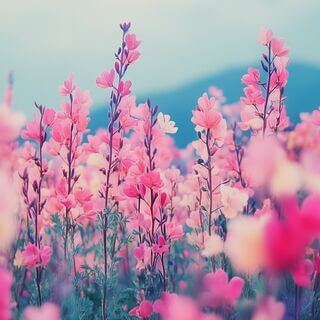
A colorful field of wildflowers.
A colorful field of wildflowers.
A colorful field of wildflowers.
The peak of a very tall mountain.
A bird in flight.
A desert in the midday sun.
Footprints in the sand.
Footprints in the sand.
Footprints in the sand.
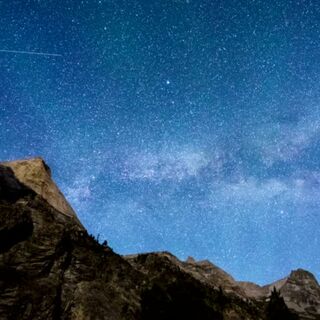
A starry night sky.
A wooden bridge.
A large and ancient tree.
Hold on to the image of your tree and begin to bring it into focus.
This tree has been around for hundreds of years and has witnessed generations pass.
It has withstood countless storms,
Only to grow more resilient through the years.
See its strong,
Wide trunk and deep roots spreading far into the earth.
Imagine yourself sitting beneath this tree,
Feeling its solid presence.
Now begin to merge with the tree,
Feeling the same stability and strength within yourself.
Spend some time here,
Immersed in the qualities of the tree,
And create the felt experience of these qualities in your body,
Becoming a part of who you are.
Now release all images and rest with a clear and open mind.
In this state of deep stillness and openness,
We arrive at Anandamaya Kosha,
The bliss body.
Bring your awareness back to your entire body,
Feeling the gentle rhythm of your breath.
Sense your body as whole and connected.
Softly begin to open yourself from within.
With each breath,
Feel space forming inside you,
Dissolving any sense of separation between yourself and the world around you.
Imagine your protective armor falling away,
Leaving you open,
Unguarded,
And free.
Feel the subtle pulse of life moving through you and beyond you.
There is nothing you need to hold on to,
Nothing you need to resist.
Rest here,
In this grounded and expansive state,
At one with all of life.
Slowly bring your awareness back to your breath.
In this state of receptivity,
Bring to mind your sankalpa,
Just as you did at the beginning of the practice.
Allow it to arise in your awareness,
Clear and strong.
Prepare to repeat it to yourself three times,
As if it is already true.
Please silently repeat your sankalpa three times now.
Let go of your sankalpa and begin to visualize the room around you as you prepare to return to wakefulness.
When you feel ready,
Begin to gently stretch your body,
Perhaps reaching your arms overhead or bringing the soles of your feet together.
Let this transition be slow and mindful,
And once you're awake,
Take a few moments to reflect on your experience.
You may wish to write about it in a journal,
Or simply sit quietly to notice how you feel.
These insights can deepen your connection to the practice and help you carry its benefits into your life.
Thank you for being here with me today.
The practice of Yoga Nidra is now complete.
Hari Om Tat Sat Hari Om Tat Sat Hari Om Tat Sat Hari Om Tat Sat