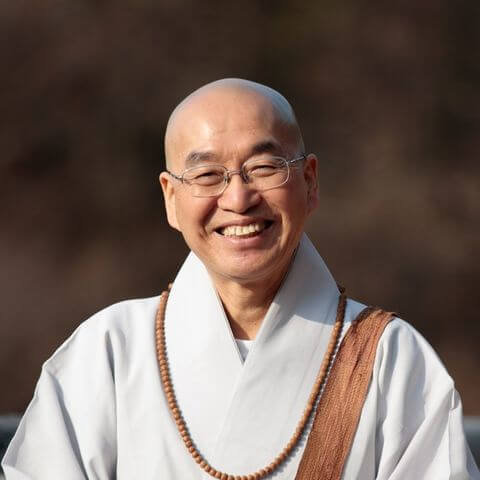
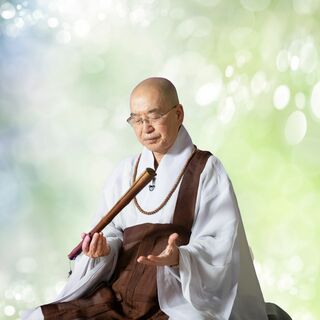
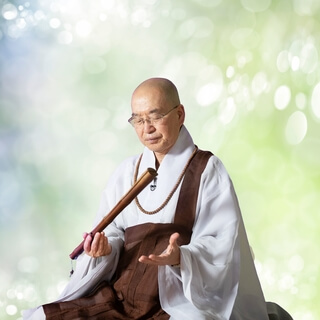
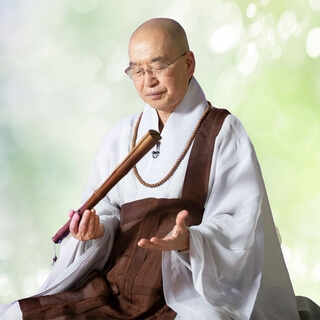
I'm going to talk to you about my meditation session.
Hello.
Hello.
I'm going to be listening to you.
Would you like to share your meditation session?
It's been 17 weeks since we started this meditation session.
Would you like to share your meditation session?
After 17 weeks,
I expect some of us are more familiar with this.
I've been living in Korea for a long time.
I've been living in the city of Jipjong.
I've been living in Hongsu-Pye.
In this place where I am staying in South Korea,
In the southern part of South Korea,
There is a severe monsoon season with severe thunderstorms and rains that's leading to flooding.
Yes,
But we are not as bad off as China or Japan.
I think the weather is very bad.
So with the monsoon tapering down,
The weather has come back,
The heat has come back.
The heat has come back,
And the weather has come back.
So from Celsius,
About 33 degrees Fahrenheit,
It's above 90,
95.
The heat has come back,
And the weather has come back.
But regardless of the heat,
It's up to us to maintain the calmness,
The equanimity of the mind.
Yes,
We are not as bad off as China or Japan.
Before we begin the meditation,
Let us address several questions we got.
Many times in our modern culture,
We are looking for a quick fix to our problems.
Today's session was fine,
But for anyone who was expecting to be transformed,
It may have been disappointing.
I can see how in the long run such training will be useful,
But I still feel essentially like the same person I was at the beginning of the session.
No startling transformation.
I am very happy to be able to be here today.
I am very happy to be able to be here today.
I think the people here usually help us spend more money on what is gonna happen in the future.
When will the project begin?
After some time.
So habits are ingrained in us,
In our habits,
In our body,
In our minds.
In Indian language,
This is called karma,
And this is very tough to change.
So this is so tough to change that people used to say that this is something that you inherited from your previous incarnation,
Or this is something that was given to you at birth.
So basically the ancients said,
You know what,
This cannot be changed,
This karma.
However,
When Buddha came along,
He basically said,
Even karma is something that's constructed,
And once it's constructed,
It can be removed or reconstructed.
That was the biggest breakthrough in Buddha's teaching.
So it is possible to change it,
However,
Gotta admit,
It is very difficult to do so.
So the fact that it can be changed gives us hope.
However,
The fact that it's very difficult to change necessitates that we consistently and continually,
In a sustaining fashion,
Strive to change it.
So as we focus and sustain our focus on the process of change,
Without us knowing that we are there,
We realize one day that we have changed.
So one of the practice or workshop sessions that I offer,
That our organization offers,
Is called a forum for enlightenment.
The gathering of enlightenment basically is a session over a few days in which you are able to experience a certain transformation,
A certain change.
However,
Although you may experience a quick change or sense of change,
It's not sustainable.
So therefore you need both.
You need something that will give you a quick fix to get you going.
However,
You also need a practice session which is more sustainable and consistent over time.
So meditation is something that invites a natural transformation and requires sustainment over time.
So I understand your impatience and your need to see the fact that certain changes in a short time,
But I wish for you if you could just let go of that impatience and just focus on this process and you soon start to see the effects.
The second question.
In general,
I have huge problems with sleep,
So I am generally very sleepy.
How can I fight it?
As soon as I calm down and feel comfortable,
I start to doze off.
It's normal for you to feel sleepy when you are comfortable with your eyes closed.
First,
You might be tired.
Second,
You haven't had enough sleep.
And in these two cases,
If you engage in continuous meditation,
The two days or so,
They actually help solve themselves.
When I say two days,
I mean two days straight of meditation.
But of course,
There are people who actually have health issues or medical issues with sleep and these people are continuously drowsy.
So there are several examples of this,
But however,
One example is that if your stomach doesn't really move well,
If the stomach doesn't naturally engage in its natural movements,
Then you tend to doze off when meditating.
In this case,
During breaks in meditation,
Massage your own stomach vigorously so that you get it moving,
So that you allow it to kind of refer to its natural motions.
That relieves it somewhat.
And finally,
If you have a lot of problems,
You can do this.
If you have problems,
You can do this.
So to summarize,
If you are drowsy because you lack sleep or you have sleeping issues,
It takes a little bit of meditation,
But they tend to resolve themselves.
But if you have other health issues,
You actually need an intervention to help with those health issues.
So if you are drowsy because of lack of sleep,
Or because you're tired,
Just because you actually lay down and sleep doesn't mean it's solved.
It actually continues.
So you allow it to resolve itself after meditating continuously for over days.
Not focus,
Maintain your focus on the breath,
Even in the midst of drowsiness,
And you'll see it resolve itself.
And with that,
Let us begin the meditation.
As I always say this.
Focus your mind on the tip of your nose.
And be awake,
The breath going in and going out.
So when you become aware,
It's not a matter of seeing it or smelling it or hearing it.
It's a matter of feeling the touch of the breath of the air as it moves in and out of your nostrils.
So in the beginning,
When your breath is still kind of rough,
It's easier for you to sense your breath and be awake to the breath.
But after 20 minutes or so,
When your breath becomes calm,
You have to pay even more attention to not lose that attention,
That focus on the breath.
So you can maintain that deep focus so that you are aware of the really subtle and nuanced sensation of the breath.
That sensitivity will allow you to also sense really nuanced changes throughout your body.
Then we turn to meditation.
If you develop the capacity to sense even the subtlest sensation of the breath,
You can actually use that same capacity to sense these subtle changes that happen in your body in everyday life,
When your feelings,
When your desires,
When anger,
When those things start to emerge.
The most important thing is to be able to sense in the subtlest indicator of emotions moving basically a little heat,
A little roughing of the breath,
A little stimulation or sensation throughout whatever parts of your body.
And knowing that,
You'll know that your emotions have been engaged and as it emerges,
It makes it easier for you to know that early on to be able to control.
So you might be asking yourself,
You know,
What the stress is.
Because it gets me,
You know,
Being aware of the breath.
But know that being aware of the breath is a capacity building mechanism for you to be aware of where your mind goes and allows you to kind of control and regulate your mind.
And as we practice,
I know you'll be distracted by these random thoughts,
Random external factors.
So even in the midst of this,
Try to maintain the focus on the breath.
That's the practice.
The most important point about this is allow your body and mind to be calm and peace.
And don't make an effort to be aware of the breath.
It's a matter of just laying your focus on the tip of your nose.
Allow these sensitivities to occur naturally.
And if you lose the focus,
Restart,
Lose it,
Restart again,
Without judgment,
Without despair or disappointment.
Let's try for 40 minutes today.
Now that you experienced it,
How was it?
If you're an English speaker,
Please go ahead and feel free to share your experiences in the chat window.
So we extended the time that we usually meditate by 10 minutes.
If you do it by yourself at home,
Maybe a little difficult.
Please go ahead and share your thoughts and feelings on the chat window.
Thank you.
Yes.
40 minutes wasn't that tough.
Wolfoberman It was peaceful,
But my mind was overwhelmingly filled with creative thoughts and ideas.
Still,
I am happy to have spent this time in practice.
I am very happy to be able to speak with you today.
I hope you will be able to speak with me in the future.
I hope you will be able to speak with me in the future.
I hope you will be able to speak with me in the future.
It is true that during meditation we often engage in very creative good thoughts.
I hope you will be able to speak with me in the future.
But we cannot allow our focus to be distracted by those thoughts.
I hope you will be able to speak with me in the future.
Because despite how creative those thoughts are,
They are just distractions.
I hope you will be able to speak with me in the future.
It doesn't mean you did anything wrong.
I will speak with you in the future.
Because it's a phenomenon that occurs naturally.
I hope you will be able to speak with me in the future.
So even in the midst of those productive creative thoughts,
You can't allow yourself to sink into those,
But remain focused on the breath.
Yes,
But when you are in the midst of those productive creative thoughts,
You can't allow yourself to be focused on the breath.
And the more you focus on that,
You will actually be experiencing even better thoughts,
More creative thoughts.
Yes,
I hope you will be able to speak with me in the future.
Next please.
Today it was hard.
Everything I had to do was interrupting my meditation.
I came back to my breath as much as I could.
How can I better prepare for meditation?
I guess these are difficult times.
I have to be careful.
I have to be careful not to be afraid of my own thoughts.
I have to be careful not to be afraid of my own thoughts.
I have to be careful not to be afraid of my own thoughts.
I have to be careful not to be afraid of my own thoughts.
Yes.
I think that meditation is a way of life.
I think that meditation is a way of life.
I think that meditation is a way of life.
I think that meditation is a way of life.
I think that meditation is a way of life.
So the fact that you actually tried and spent effort to try to focus on your breath,
Even in the midst of these distractions you speak of,
That in itself is meditation.
It's not just the focus that's meditation.
It's the attempt to do so.
That's the meditation.
Yes.
I understand that.
One more.
I saw that my mind was busy with future plans and worries.
Back and forth.
Future now.
Future now.
It's started small.
Yes,
My father was a witness.
Otherwise,
I could Originally look at the horizon.
So there are different sorts of translator elegant.
I might want to speak pitchers.
Those are all good examples.
So this meditation is a matter of you referring back your focus to the breath as you are distracted by your thoughts about the future and try to do that again and again without an exertion and without judgment or disappointment.
That's meditation.
So,
You know,
Do not try to tense and do not try to be disappointed but continually and consistently try to refer back your focus to the breath.
Now that's how you engage in meditation.
And we'll conclude with that today.
And I'll see you again next week.
Thank you.