Hello,
Everyone.
Happy to be here.
Welcome to the first Wake Up Call of 2021.
I hope everyone is safe and well and maybe got a little sleep last night.
Yesterday was pretty long.
And yeah,
A lot happened in the US.
We,
Let's say we avoided a coup.
We elected the first black senator from the state of Georgia.
We gave Democrats control of the US Senate.
And then,
Of course,
Throughout the world,
The COVID cases and deaths continued their upward spiral,
Although we have a slow but steady vaccine rollout.
So yeah,
It was a long day yesterday.
And given that and everything that's happened in the last 10 months,
Let's start the year with a check in about practice.
Why we practice,
How mindfulness practice can support us,
How our practice can support those we work with,
Those we love.
So one of the oldest,
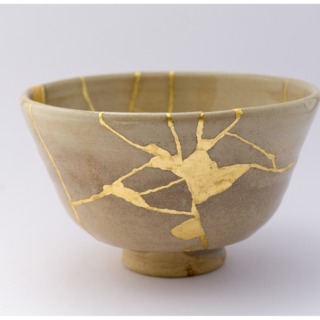
Here's our broken party slide,
Which I love,
One of the oldest mindfulness instructions,
And supposedly one of the instructions that the historical Buddha offered on his deathbed is to be the change.
And of course,
It's on every t shirt now.
So the meaning has become dead,
But let's look at it.
To be the change really means to understand our own experience first.
And that's the gift our solitary practice offers,
Isn't it right?
The moment we turn out our timer,
Sit down,
And begin to follow our breath or pay attention to sound,
Or begin to let go,
We can see where we are.
Now we can see our own experience right in that moment.
So mindfulness is often compared to a snow globe where we're walking through the world through the day and the snow globe gets shaken up and the snow is falling chaotically,
And it's obscuring the scene inside the globe.
And I know for me yesterday,
That was certainly true.
And then we sit down for a few minutes,
Or we take one or two conscious breaths,
And the first thing we can see is the chaos.
And then slowly,
The snow begins to fall to the bottom of the globe,
The mind settles down,
The heart settles down.
So over the last few days,
And especially yesterday,
I would sit down and initially all I would see were the flurries.
How much agitation was present,
How much fear,
Concern,
Despair,
Also hope,
Shock,
Nausea,
Everything,
All the things.
And of course,
Not that any of these sightings is a sighting of something that's stable,
Right?
We're paying attention when we sit down to changing scenery of the mind and heart.
So it's more like an animated snow globe,
One where inside maybe there's a constantly changing scene.
And yet one in which when we finally sit down or take a few breaths,
The scene isn't obfuscated by the snow,
The blizzard subsides.
There is concern,
There's hope,
There's fear,
There's curiosity.
But there's just that.
There's just concern,
Hope,
Fear,
Fear,
Curiosity,
Or whatever is happening.
There's not the additional agitation on top of that.
Which means there is no problem.
Which doesn't mean there's no problem in the world.
There are a lot of problems in the world.
But there's no problem with our old internal experience.
So our first task in being the change is to see that experience clearly and then to not judge it,
To not assess it,
To not put an overlay on top of our experience of some kind of negative emotion.
So you could take right now,
If you want,
And see what's happening in your own experience.
You might be sitting in an office,
You might be driving,
You might be making breakfast with kids,
Whatever you're doing,
But take a moment,
Just a breath,
And see what's happening in your own experience.
What's present?
Are there emotions?
Are there worries?
Are there thoughts?
Are there concerns?
And then as the poet Rumi says,
Welcome them all.
This house is a guest house,
He says.
And so we can think of the mind and heart that way as a guest house,
Where we can welcome whatever is happening.
And so the first piece to being the change is to be curious about what's happening,
And then to welcome whatever our internal experience is.
And what this does is it gives us a kind of steadiness,
A kind of a thoughtfulness,
A kind of a non-reactivity.
And we can take that steadiness,
We can take that thoughtfulness,
And we can turn it towards ourselves,
But we can also turn it towards everything else.
We can turn it towards this very chaotic and often seemingly dangerous world in which we live.
And this is really helpful.
This is really helpful to ourselves,
And this is really helpful to the people we work with,
The people we love.
Then there's a second piece,
And the second piece is to begin to steer the ship,
If you will.
So each time I sat down yesterday or took one or two breaths,
I noticed agitation,
And it was up to me.
It was incumbent on me.
And I think all of us as legal professionals,
Right,
To begin to steer the ship,
To steer the mind,
To steer the heart into a curious and peaceful place.
Or as the great meditation teacher Ajahn Chah used to say,
To let go,
To relax and let go in that moment.
And so we can let go in that moment and to touch into the peace and openness that's available.
Because that peace and openness is really only available in the moment,
Right?
We're not in this world,
In this time,
Able to manufacture a sustained peace,
A sustained safety in the world.
So we have to find that in our internal experience in each moment,
Bring that to our moment-to-moment interactions with other people.
And there are so many stories of mindfulness practitioners who are doing this in the law,
You know,
Taking a breath in stressful,
Dire circumstances,
PDs,
Public defenders,
Taking a breath in the courtroom,
You know,
Corporate lawyers taking a breath as they turn on their screens or walk into a tense meeting,
Even politicians taking a breath before casting a vote.
We saw some of that,
Yes.
And tapping into the peace of the moment,
Tapping into the wisdom of the moment.
If peace means anything in this context,
Really,
I think it means wisdom.
Tapping into the wisdom,
The clarity that's available when we stop and we allow the snow flurries to subside and we allow ourselves to see what's happening internally and then steer the mind and heart in the direction of peaceful abiding.
Know where we are,
Know what is happening,
And know how to articulate that or sometimes just model it,
Be the change.
And one other piece that I find really essential in all of this is something that the Zen students call don't know mind,
Which I really love.
And,
You know,
We're lawyers,
We're law professors,
We're other legal professionals,
We're all really smart,
We're really well educated,
We're energetic,
We're aggressive,
We're paid to be right.
We're definitely not supposed to not know.
So how do we think about don't know mind?
What is don't know mind?
And how can it help us to be the change?
Well,
I'm sitting right now,
This month,
The Yupaya Zen Center's Winter Practice period and Roshi,
The Roshi Abbot,
Roshi Joan,
Roshi Joan Halifax has been talking a lot about this and she calls it grandmother mind.
And what she says is,
It's the mind that is wide open,
Wide open,
And very loving.
The heart and mind that doesn't have preconceived notions and that is open to seeing and being with whatever shows up.
And,
You know,
Once we check in and see what's happening in the moment,
Whether that's we're sitting down in a solitary practice or just taking a breath and we begin to steer the ship of the mind and heart towards peace or peaceful abiding or wisdom or clarity.
Don't know mind is the mind,
Our grandmother mind is the mind that sees that open-mindedness and peace are always possible,
Not just for ourselves but for everyone.
So,
For example,
You might see Raphael Warren's election as the first ever Black senator from Georgia as something that's long overdue and celebrated that way,
Or you could celebrate that open-mindedness and peace was present in enough hearts and minds in the state of Georgia to make that happen,
Or you could celebrate both.
You can think you know who you are,
You think you know who someone else is,
Who certain politicians are even,
Or you can stay as much as possible in don't know mind and take each moment as it comes and then move forward with the information you perceive plus of course your own intellect,
Your own finely tuned intuition,
But setting aside assumptions and judgments and assessments.
And as always as much as you can,
You know,
Bringing into the mix that open and peaceful heart.
Okay,
So let's sit with all that.
Or maybe a better idea would be to sit by letting go of all that and just see what's here.
So taking a few deeper,
More conscious breaths.
Settling in.
Relaxing the body as much as is available.
So you're just beginning to notice what's present.
So you are and whatever is there,
Whether it's peace,
Lullaby,
Or very much the opposite,
Agitated sensation,
Distraction,
Whatever,
Whatever is there,
Can you turn towards it with a sense of peace,
With a sense of curiosity,
With a sense of kindness.
Kindness.
Oh,
This is just,
This is just my experience right now in this moment.
Okay.
We don't get to choose so much the experience that we are having,
What's coming up,
What's arising and passing away in the field of our experience,
But we do get to cultivate our relationship to our experience.
And the power of mindfulness,
The magic really of mindfulness,
Is that as we meet our experience in a peaceful and loving way,
We strengthen,
Where we open our capacity to begin to experience the world that way more automatically.
More consistently.
So you so in the last moments of our practice together today,
Just seeing if you can like just a tiny bit more and sometimes it's helpful to turn the corners of the mouth up upwards into a smile.
Can be very helpful.
Thanks everyone for being on the wake-up call today.
It's lovely to see you all.
Be safe,
Be well,
And yeah,
Bring as much peace and joy into your day as you can.
And I'll see you all next Thursday.