This practice is called choiceless awareness,
Also often called open awareness or the practice of presence.
So like many of the practices we are doing on this course,
You can work with this practice either standing,
Sitting,
Walking or lying down.
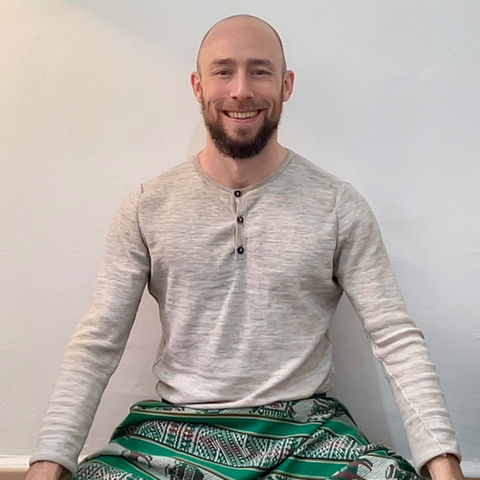
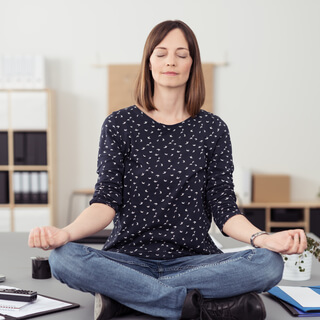
But for the purposes of this exercise I'll ask you now to come into a comfortable seated position.
So let's start with the first exercise,
Which is called the open awareness.
So this is a very basic exercise,
You can do it on a chair or on a cushion.
As usual this can be on a chair or on a cushion on the floor,
Just making sure you are supported.
If you are on a chair,
I suggest you have your soles of the feet firmly on the floor,
This allows a very stable base for the upper body to be supported and to lift out of this base in an effortless way.
So just taking a moment to gently sway the body from side to side and forwards and backwards to find a nice centered position,
Resting somewhere in the middle,
Allowing our spines to be long,
Back of the neck to be long,
Chin slightly tucked under,
Allowing our bodies to sway this way just allows ourselves to find our natural center and where we can feel the most balanced and upright.
Now unlike other mindfulness practices we've been doing on this course,
This practice has no particular focus.
So if we are thinking about it in terms of the intention,
Attention and attitude model,
We would say the intention of this practice is to bring kindness and awareness to the whole range of our experience and to rather than need to manipulate or direct our attention in any particular way,
Such as in the body scan where we move our attention through the different parts of the body,
We're rather seeing if we can become aware of where our attention naturally would like to go.
This is a more challenging practice,
But it's something that we're cultivating throughout any type of mindfulness practice we do.
The attention aspect of this practice would be to attend to the breath,
The body,
Sounds,
Thoughts and emotions,
Not as fixed solid objects in the mind of the mind,
But rather as emotion as events sorry,
That are arising and passing.
As you can see here,
We're working more with allowing ourselves to become aware of the patterns of experience and the container within which everything every experience we have arises and passes.
So the attitude aspect is also incredibly important.
We want to again bring curiosity and openness to whatever experience that may arise,
Whether it be difficult or pleasant or something in between.
Another name for this practice is just sitting.
So what we're doing is we're becoming aware of what draws us away from this ability to just sit with our experience,
Just sit and be as we are.
The curiosity aspect of our attitudinal foundations,
This allows us to acknowledge,
Become aware of our reactions to particular experiences that may arise.
So this is a challenging practice,
As mentioned.
We often even in meditation would like something to do.
But here we are freed of any any any kind of direction.
And this can come with all sorts of all sorts of,
Let's say challenges,
Whether it's boredom or mind wandering,
Or generally just spacing out and not being particularly aware of where where our attention is.
So if you find this happen in your practice,
Just knowing that this is perfectly normal,
The goal of the practice,
If there is a goal,
It's not to try and make these experiences go away to try and be completely perfect in how we we can just sit without experiencing any sort of difficulty or challenge.
Rather,
By just sitting,
We are becoming aware of these experiences,
Allowing things to flow freely,
And just being relaxed and present to what whatever we may find,
Knowing we can turn back to the anchor at any moment.
So if we find our attention being drawn to any particular sensation or experience,
Not needing to get involved in any way,
But just seeing if we can observe,
Just allowing them to be there with the same quality of awareness that we've been cultivating,
And practicing presence itself as a quality.
So if there was one attitudinal foundation to sum this practice up,
It would be letting go or letting be.
So you may have become aware of the sensations of breathing,
Or you may have chosen a particular anchor and have begun to gather your attention there.
Just taking a moment,
Take a kind of snapshot of how your experiences,
How your experience is in this moment.
You may find things are very quiet,
Not much is happening,
Things are very still.
Or you may find that feelings and thoughts are crowding in and it's a very busy,
Busy experience.
Neither situation tells you how good or bad your meditation is or becoming.
Simply noticing how the experience is in this moment,
And how you are relating to the arising and passing of things.
We're not trying to empty the mind,
We're not trying to be void of all experience and thought.
Just seeing if we can allow,
Bring an allowing relationship to what we find in this moment.
At moments when we're not trying to allow,
We're just letting go of the moment.
At moments we can find we drifted off,
That our posture may have slumped,
That our breath may be become really shallow and controlled.
Just seeing if we can hold all of these aspects of our experience in our awareness,
And checking in to be relaxed,
But alert attention.
Another reason this practice is often called just sitting,
Is because it's said that just sitting,
Just being aware of our posture,
And allowing our body to be relaxed but alert,
Can bring the same quality to the mind,
And nothing more needs to be done.
As you sit as this space,
Different experiences may arise and pass.
That's fine.
Not needing to get involved again and not needing to attribute any meaning to these experiences.
The common experiences of doubt,
Wondering if we're doing the practice right,
Wondering if anything's happening at all.
This is something else we can become aware of.
It's very common to feel like we have no clue what we're doing or if we're really meditating or not.
Just knowing that you don't need to worry.
If you're aware and relaxed and allowing things to arise and pass,
Then this is all that needs to be done.
Nothing particularly complex or complicated needs to happen.
We're just continually bringing our attention back to our anchor,
Back to this present moment,
And noticing when we're restricting or trying to control our experience in any particular way.
Oftentimes strong emotions or feelings of suffering can arise in the space.
Knowing again that these experiences arise and pass,
And you don't have to do anything in particular to change them.
They don't have to mean anything in particular about how the meditation is going.
Just seeing if rather than getting involved in the content of these experiences,
Seeing if we can rather notice them as changing events.
Likewise,
We may notice when we're becoming attached to any particular pleasant feelings or any thoughts that we may want to hold on to.
Knowing that we don't need to store any of these things,
And if we allow them to come and go,
Then anything you need to know will stay with you long after the meditation.
Noticing if our mind has wandered off or if we've got caught in any particular sensation or feeling.
Just gently bringing your attention back to your anchor,
And knowing this isn't a sign that the practice is going wrong,
But rather a sign that you become more aware of how the mind may wander and these different patterns of experience.
The more we practice choiceless awareness,
The more we allow ourselves to notice any particular thoughts,
Patterns of thinking that we have,
Any ways of judging our experience that may be there.
Rather than trying to suppress them or hold them back,
We are rather opening up to them.
And through doing this,
We come to see that we are not our thoughts,
We're not our feelings.
These are also experiences that arise and pass.
And rather we are this spacious awareness in which everything arises and comes and goes.
Remembering to revise our posture,
Making sure we're not slumping down,
Or likewise becoming too rigid and tense.
And knowing that we're not trying to make our experience any particular way or achieve any particular state.
The practice of presence is exactly that,
We're practicing being present with what's here in this moment.
Now as this practice is coming to a close,
I'd like you to just gently bring your attention back to your anchor.
Just gathering your attention once again at this anchor point.
Now we are going to gradually expand our awareness throughout the body,
From the soles of the feet to the tip of the head.
Just gently and gradually moving the attention through the body to encompass all sensations,
Particularly noticing any areas that you may not want to be aware of,
Any discomfort,
Any pain.
Seeing if you can hold them in this alert and kind attention that you've been cultivating,
Knowing that it's also okay if you can't,
If it feels too much.
And now continuing to expand the attention outwards,
To include the sounds in the room,
Maybe gently opening the eyes and looking around the room to take in the sights.
And also bringing some movement into the body,
Maybe stretching the toes,
Ankles,
Legs,
Fingers,
Hands and wrists.
And we could finish the practice as we began,
Just gently moving the body from side to side,
Maybe allowing yourself a good deep stretch and just getting yourself ready to bring this attention and this alert,
Relaxed,
Kind awareness into the rest of your day.