Okay,
Well,
Welcome back for another episode of What Is Now.
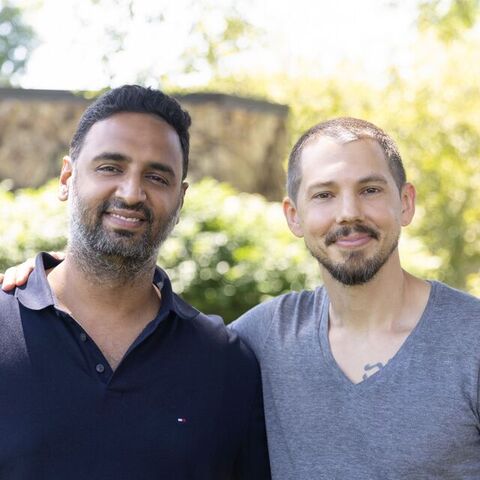
I'm Charles and this is my good friend,
Sakib.
Hello,
Charles.
Hello to listeners.
So good to be here.
Yeah,
It's always really great to be here with you,
Sakib,
And with you,
Whoever you are that is listening.
We're excited to have you with us.
And so if you've been with us before,
You know that each time we begin by taking a minute to just kind of sit in silence and return to what is happening,
What is really going on for you right now in this present moment experience,
Maybe letting go of interpretation and thoughts about the experience,
Coming back to a real curiosity about what is this present moment experience actually like,
Just for a minute.
And then after that's done,
Sakib and I just kind of become aware of what our experience is and see whatever arises in the moment.
And we go from there.
And then Sakib tends to finish with a guided meditation at the end based on whatever themes and topics arise.
So we'll go ahead and start with a minute of silence together,
And then see whatever happens.
Sounds good.
Okay,
We'll start and end with the sound of a bell.
Posters.
Thank you.
Okay,
That's a minute.
Anything arising for you in particular right now.
It was like a conflict that I had today between my thoughts and the idea of just being in the present moment.
And,
You know,
It is,
It is something which usually we don't do in podcast because we have a lot of knowledge in our mind that we want to speak out.
And we want to present to the world.
But then again,
I,
This one minute reminded me of the topic of our podcast,
Which is what is now.
And that brought me again to the present moment and just being here,
Rather than,
You know,
Having those thoughts about what I want to say today in this session.
So it was a conflict and for the initial,
I think,
Few seconds,
It was my knowledge that was coming into my mind,
This urge to say what I already know.
But then the rest 30 seconds or so it was just being here in the moment.
How was that for you?
I'm just kind of soaking that in.
I wonder what that's like for the listener to this.
I could imagine a feeling of like not being taken care of by us or something or being there being something exposed.
Maybe it like reveals you and me as simply people to like outside of a potential role as like a teacher or a quote unquote healer or something like that.
I noticed that in the description of the podcast that I wrote,
Kind of had to describe us as something.
And I think that's something that is limiting,
I think,
Particularly through the lens of what we're trying to do here.
To totally kind of break through any sort of role or expectation about who you are or who I am and open up to something really raw.
And I'm just curious to hear what you think about that,
Like what that experience is like not only for you and me,
But for the listener.
Yeah,
Because all that description that you know that we have,
For example,
Have written in our bio that I am this and you are that.
That is the past actually.
It is the past and it is gone.
But what is now?
The question is,
What am I in this particular moment rather than just that idea of,
You know,
Having that degree and done so many things.
Being a meditation teacher,
A student or whatever it is.
And that also reminds me of a story of Buddha in which I think there was this man who spat on Buddha's face.
But then he had a realization and the next day he came and he apologized to Buddha.
And Buddha's response was that you are apologizing to the wrong person because the person I was yesterday that person is gone.
And today it's a person so maybe you are encountering the wrong person.
I'm not that person.
So it makes me wonder that how we are so much attached to this idea of our past,
This notion of our past that I am this,
I am that.
But the reality is I was that.
I was that teacher.
I was that person holding that university degree or whatever is this.
But in this moment,
It's like a new birth to me.
I'm newly born right now.
I just need to know in this moment what am I,
What I am.
It feels very revealing.
I'm just as you're describing like all of those things are what I was.
And in this moment,
They are so insubstantial.
Like,
This is a feeling like a physical feeling kind of and a thought that I've had several times.
This.
It's almost as if maybe for everyone,
But for me,
Like,
It's like I have this kind of structure that maybe exists sort of behind my head in some way.
And it's like this building of who I am.
And it has all of the stories and like the memories and the like the narratives of what I what I'm like maybe how I perceive other people to perceive me like all of these.
It's like this massive kind of thing that I sort of take for granted its existence in some way.
But then there have been moments when I'm kind of looking back inside and looking for that thing or looking directly at that thing and then it's like,
It's,
It's vanished.
Like it's totally insubstantial and there's actually nothing there at all,
Which is,
It can be kind of like a scary feeling cycle.
It's there's there's nothing,
But then really potentially liberating because if none of that stuff is there at all right now in this moment that I'm so free to just respond to this experience without any weight of these other things that limit like who I am and what I can be right now.
Yeah.
Does that feel like a burden?
The holding of the past identity?
Does it feel like a burden and do you like physically feel a release when you let go of that?
Yes and no.
I think,
I think it feels like a burden through the lens of like the deeper me that maybe has been the same since the moment I was born and beyond that and and knows that somehow I'm my who I really am is beyond this structure.
But I think through the lens of me and like my personality,
And this life that I've had.
It's,
It's kind of a scary notion,
And it grasps to hold on to that structure.
Yeah,
Because that is the whole.
That's what supports its existence,
Like my personality.
And so like,
There's these two ways that can go one which is so liberating and then one which is like destabilizing to a certain degree.
Yeah,
Yeah,
I can resonate with that because a lot of times and many of us do that and we have like this sense of pride of the things we have done in the past,
You know,
And we carry that pride with us throughout our lives.
Let's say we did something great maybe we were,
You know,
We got the best grades in a university,
Or maybe we were working for a great company in a great position.
Maybe we,
You know,
Were able to create a successful business in the past,
Whatever it is,
We kind of hold on to that identity,
We kind of hold on to that achievement.
And we carry that achievement with ourselves throughout our lives,
Although we might change as a person,
Maybe that achievement is not there anymore.
Because there is this idea of me presenting myself to someone as someone who is a successful person.
I would carry that achievement from my past,
But what that does is that doesn't give me the opportunity to do something in the present here,
You know,
Just be raw in the present and present myself as someone who is absolutely a newborn in this moment.
And yeah,
It's,
I noticed that everywhere we,
A lot of us carry that achievement,
All those achievements with us.
And although it is,
It's almost impossible not to,
To some degree,
To like exist in society,
Maybe to have a job,
To have these interactions that have some sense of like structure and predictability to them.
It's almost like,
It's like,
It has to sort of be that way.
I don't know,
What do you think about that?
Yeah,
It actually reminds me of our previous session,
And the session we did on Insight Timer today,
How are you feeling?
And the way we ask someone that,
How are you feeling and the way we just went,
Came into the present moment and asked ourselves that,
How am I feeling right now?
And we came with that genuine response,
Rather than a preconceived idea that I'm feeling good or just for the sake of it that I'm feeling good.
But when we came with that genuine response,
I felt really good about that and it felt really authentic.
So I was thinking that,
Let's say someone asks a similar question that,
Who are you?
Who are you?
And what if rather than bringing our past and all those preconceived ideas about ourselves,
What if we just go in the moment and ask ourselves,
Who am I in that moment?
In this particular moment,
Who am I?
What do you think about that?
That's really interesting,
Because I feel like the instinctive sort of scramble to put together,
Like a combination of things to answer that question like,
Oh,
Well,
I come from this place,
This is where I was born or grew up,
I live in this place,
This is my job.
This is so on and so forth.
These kind of things that represent who I am that I can give to you.
But maybe those are,
Well,
They certainly are past based responses.
And I don't know,
How would you answer the question?
It's making me think of when I go to this,
I think I've told you about this before,
I go to this Zen Buddhist monastery.
It's called Daibosatsu.
And anytime I go,
I,
You know,
Each time I've gone,
It's probably been like,
Like five or six times at this point now.
But I'm asked that question,
Like when I come into a group or there's some like introductory meeting.
And I've been asked that question,
I've kind of over time have realized what the question really means,
And have attempted to let go of the response that is,
This is where I come from,
Or this is what I'm working on right now.
Because I see that like the trick question nature of it,
And it's really maybe there is no answer,
But it's a way of like,
Getting you to flip out of that habitual way of responding.
It's kind of making me think of like a koan.
Are you familiar with the notion of koans?
So in Zen Buddhism,
A koan is like one of these,
It's almost like a riddle that you're given by a teacher or a master,
The student is.
And then you're,
As the student,
You then sit with,
Meditate with,
And on this,
This koan.
So it could be like a story or a question,
Or something like that.
And so a really famous one is,
You know the sound of two hands when they clap together,
Was the sound of one hand.
And so that that would be a koan.
And the thing with those is that there is no right answer,
There's no conceptual answer to that question,
You have to find out whatever is your live answer to present back to the teacher.
And then it's up to them to gauge whether your answer represents like a genuine understanding,
Like a real lived experience and then,
And then the teacher would be maybe have you go and continue with that koan or they present you another one,
And then you keep going.
And the idea is that this sort of problem switches you out of the like conceptual,
Intellectual,
Instrumental way of approaching things.
And it's like it's like it short circuits your thinking mind,
And then pops you open to just like awareness of this present moment experience.
And then you present an answer that is just a genuine expression of it,
Even if it doesn't make any conceptual sense,
Maybe that's importantly that it doesn't make any conceptual sense,
But it expresses like this.
So I'm kind of experiencing that question now as like a koan.
Yeah,
I think what we are doing in our sessions are similar to that right?
Koan is asking and that what is now and what am I feeling right now what is happening right now.
And I think today this new question arises that,
Who am I,
You know,
Who am I like someone asks me and as you asked me that what is my feeling and what,
How do I experience that when someone asks me that,
Who am I?
And it made me realize that we have our conditioning is so common for each one of us,
For most of the people that we have like similar answers,
Most of us,
You know,
So if someone asks me that,
Who am I or you are,
If you ask anybody,
Their answer would be most probably,
They will tell you,
They will tell you their name,
They will tell you the work that they're doing.
They will tell you maybe the relationship they have with their children or their parents or their partners,
Or they will tell you their past achievements that they have studied here or you know work here and all that.
So this is so common.
I was realizing that this is like a,
You know,
Very common conditioning.
It's not even like there is not much difference in the kind of answers that people give to each other and this shows that how it is all preconceived,
How it is deeply conditioned in us that we have to respond in a certain way.
But now I'm just kind of bringing myself in the present moment here if you are asking me,
Who am I?
And I'm sensing that if I'm not,
If I'm into my body right now,
Totally,
Then my body is responding that I am the body.
And when that is switching,
Maybe when I'm more connected to my awareness right now,
So then my awareness is responding,
I am awareness.
So it's kind of switching for me right now.
Between the body and between this awareness,
Between the thoughts,
I am the thoughts.
I am the mind.
It's not,
I think this is my discovery in this moment that it is not fixed.
It's changing for me.
That was something I was feeling as you were describing that like how incredibly fluid who I am,
Quote unquote,
Is relative to what feels like the complete opposite of that which is this very fixed notion that I have and that I can package and deliver to someone.
If they ask the question I have these things that represent who I am,
Relative to what you're just describing which is like,
It's changing constantly.
It's this constant flow,
It's like a river versus like a rock,
I guess,
That who I am is just this is movement.
And the thing,
As you were talking and I was kind of gauging for myself too.
I think that's the thing that I'm really engaged right now.
I guess the answer that I keep coming back to is just I don't know.
And that's kind of a nice thing.
There's almost a relief to that.
I think that's the way that that could be destabilizing versus the way that that could be really liberating.
It's destabilizing based on a me that kind of relies on those things.
But it's liberating based on a me that doesn't need an answer to that question.
And then I'm just like,
I feel like a giving up and then just an openness,
Which maybe goes back to what you're saying is then I'm just open to what is constantly flowing through me,
Which is my feel like what I would call conceptually my foot,
But that's just energy that is all of me in the moment that I feel it.
Or I'm looking at you and you're filling up my world and I am you right now in this moment.
And it's kind of cool too because you're in my ears.
I have these headphones on.
And so there's this other layer of like you're actually filling up my entire present moment experience in a way.
But yeah,
It's kind of there's a relief that I'm feeling of the answer I don't know and and that being a totally fine.
Yeah,
Making you more than fine answer.
Yeah,
I think that makes makes you just open in this moment to experience whatever that is.
Yeah,
That's a wonderful notion because we when someone asks this question to us,
Who,
Who are you,
We kind of fix our awareness to this self of me,
You know,
And the way I was responding that I'm the body and awareness I'm past my experiences like because of my conditioning,
My experience is fixed to this,
My own vicinity,
My own body,
My own awareness,
My own thoughts,
But then if I'm truly open to this moment,
I'm also experiencing you as you said,
You know,
I'm also experiencing you in this moment.
So then this notion of I'm this body I'm awareness or whatever,
This goes away and then the experience becomes more open.
And rather than trying to answer that question that who am I maybe just be open to the experience what what is it that is in my experience right now because there are so many things I can experience right now.
And I just had to well,
It's about a thought is that who I am,
Maybe it can also be a thought,
Like,
I'm speaking right now.
And since I have a tendency to like kind of view,
I have this weird relationship with words I think because I view them with some resentment in a way because they take this,
This massive experience and then they,
You know,
Make it so narrow.
But then also,
There,
There's this beautiful tool that we have to to share meaning with each other.
And so they can also be in the same playing field,
A thought or a word,
Like in that moment,
I am this sound and,
And then the shared meaning that I have through this sound.
I noticed that for myself maybe like the attempt to move away from the thinking mind and words and,
And thoughts,
Almost in a way it's like everything is is better than them,
Or in some way,
But maybe at the same time.
It's like,
It's really just evening the playing field between thoughts and words and everything else versus how maybe there's a tendency to put thoughts in the thinking mind above all other experience.
And then that is like what is that's that's the seat that's in control.
But I guess it's making sense in my mind to just move that down on the same playing field as a sensation or as my experience of you in this moment or whatever it is that's just another like part of this constant movement that is equally who I am in that moment.
Yeah,
This reminds me of like an experience that I would have with my partner.
And the sense of I kind of melts away when I am with my partner.
So,
You know,
When the intimacy and in love.
So sometimes I would get this experience that I am my partner,
Maybe because of that energetic connection that,
You know,
That flowing of maybe that mixing of consciousness or whatever we can call it.
But that particular moment is a lot of times I've had this experience when I would actually think that I am my partner,
I will actually experience my partner totally.
And I think this is something we can think about in terms of empathy when we have for someone that,
You know,
People who are very empathetic,
Empathetic,
They would just meet someone they can really feel the pain the person is going through or their own,
You know,
The other person's experience they can really feel that.
So maybe that is the point when this sense of self and I being in this body dissolves and then there is a merging and mixing of consciousness.
It makes me think of what we talked about in the session of this where anger became a topic and the ability to be because I'm sort of envisioning anger now as a way that that sense of that sort of fixed sense of self feels like an injury,
And it's responding in this really tight way.
It's like you've hurt me and I'm gathering all of myself and I'm pushing back against you.
But then the possibility of kind of pausing,
And even if like maybe that comes still comes back,
Like moments at a time of allowing for something to open in that rigid sense of self,
And then you let like all of them come in.
And then by doing that you maybe allow yourself to see something new about what their perspective is and that informs what your perspective is because you've allowed them to fill you up for a few moments.
It's like putting that sense of self to the side,
And then just being completely open to what this other person has to offer and I wonder how much they might also really feel that you're doing that.
Which can change their whole sense of protection.
Yeah,
Yeah.
This is so wonderful.
And this really puts into question this idea of my,
This,
In this individual individuality this identity that we have.
And as you mentioned,
You know,
When we are angry we kind of want to protect that identity,
But maybe if we were not conditioned in that way maybe when if we were not told that you are in this particular body,
And you have to protect your identity,
This is what you are.
Maybe our experience would have been universal I'm just guessing that right now,
I have not experienced that totally maybe I experienced that in moments with my partner or with someone whom I'm deeply connected.
But this idea of me being everywhere,
And in every person.
And in every experience that is there.
It is still a,
You know,
Concept to me which is distant which maybe I have not experienced to that level.
And if this may be,
Let go of this notion of me being in this body,
Then maybe we can start experiencing that.
How has been your experience regarding this in terms of this letting go of this idea of me being in this body and maybe connecting to something greater,
Or something else.
It's also fleeting in nature I mean I feel like I've,
I've had moments of it and those moments come more and more.
But I just,
I think just by engaging in the world and receiving so much of the input that's maybe pushing in the other direction,
Which is reinforcing that we are separate it's hard to continue to have those experiences.
But I think they can come more and more the more that you engage this type of energy,
The more you find opportunities like this like we're somehow we met,
And we have prioritized making time and space for each other in our lives which I feel like is so nourishing of this thing,
And then that helps us to practice again later today just because it's so kind of vivid in our current experience.
Another thing there.
Just in terms of where my philosophy is currently,
I'm kind of seeing this as an inevitable part of human development,
Like,
I mean maybe there's a way that that's just part of the kind of beauty,
And maybe like the ugly beauty of what it's like to be a human you just you sort of inevitably develop this attachment to me.
And then there's,
And then you can unravel the whole thing and then it's like you develop a conscious awareness that's so powerful but it's,
It's,
It's also because it's so powerful it's like really kind of damaging to your ability to experience the simple beauty of all this.
And then there's maybe a way that you start to become aware and and kind of unravel it while also still maintaining your ability to,
To communicate and like do all these cool things but then you maybe feel less and less attachment to those things and you're more and more free to just play,
And then have some of those moments of just like wow,
Just,
Just being alive like a child awareness with no concept of words or anything like that.
Yeah,
Yeah,
You,
That you reminding me of this child awareness thing makes me think of children,
You know,
Babies who are just maybe who have,
We still don't have,
Have not developed that idea of this I,
You know,
Being the separate being in my body.
Maybe they are just open to that and maybe they're just open to that experience that they are having in that moment when they are just curious about the world curious about their existence.
Maybe when they are sharing with someone else sharing their food with another child,
They are playing around.
Maybe their sense of self is not yet that developed because of the conditioning.
And that reminds me of bringing ourselves to a child like awareness and openness and curiosity,
In which we are just experiencing that,
You know,
Rather than having this notion of this fixed being there.
Like the question of who are you,
It wouldn't make any sense to ask a child,
I mean they might say their name or something like that but yeah,
Who they are is just their experience.
Yeah,
I think a child would laugh at that question.
Yeah,
What a maybe a beautiful response.
But as we grow up we develop this,
You know,
We work on this question actually consciously that I have to say these things when someone asks me who am I,
And that kind of limits our experience of that.
How would you feel about maybe finishing with something experientially in that realm?
Yeah,
That would be wonderful.
Let's see what comes through.
Let's do that meditation now.
Sounds good.
So for the listeners who are listening you,
We will do a meditation now we will end this session with a short meditation you can gradually get into your comfortable position and just make sure that your back is straight but is relaxed at the same time.
And you can gradually close your eyes.
As you close your eyes you can bring your awareness to the breath,
The flow and the outflow.
Maybe you can just place your awareness on your nostrils.
And with each breath you can feel your body relaxing.
Okay.
Now if I ask this question to you.
What is your experience of that?
If you have to let go of all the answers that you already have in your mind from the past.
And just experience this in this present moment by asking this question to yourself.
Who am I?
What is that experience?
And maybe just take a few minutes to experience that.
Okay.
Okay.
Okay.
Now you can bring your awareness.
To the body.
To your surroundings.
Gradually in your own time,
You can open your eyes and come out of the meditation.
And then you can just let go of all the answers that you already have in your mind.
I think this will be interesting to stay with me for the rest of the day and beyond that.
And then possibly opening up to how just what's happening in this moment is sort of creating constantly who I am.
Yeah.
And just knowing the meditation,
I had a similar experience to what you had previously of this thought coming to my mind that I don't know.
And that brought me just to experience so many things,
Not just this body,
But the traffic outside,
The experience of the walls surrounding my house,
The experience of this other person who is living with me in the house.
And even the entire city that I'm living in right now,
A moment of expansion,
When I believe the sense of self was dissolving and moving beyond that.
I think this might be a cool one for us to do a live session about in the future,
Kind of similarly to what our last one of these led to could be a nice little progression of how am I feeling,
And who am I?
Yeah,
That's wonderful.
Looking forward to it.
Absolutely.
Sounds good.
All right.
Well,
I always really appreciate these and appreciate the listener,
You giving yourself and your presence to this experience and maybe letting us kind of fill up who you are in this moment in a way.
And I look forward to being with you soon.
I'm here and I love the way you began with the conversation and I love the silence part initially because that actually brings us to experience this moment and what is now.
So great for that and I'm looking forward to our next podcast episode together.
See you soon.
Take care.