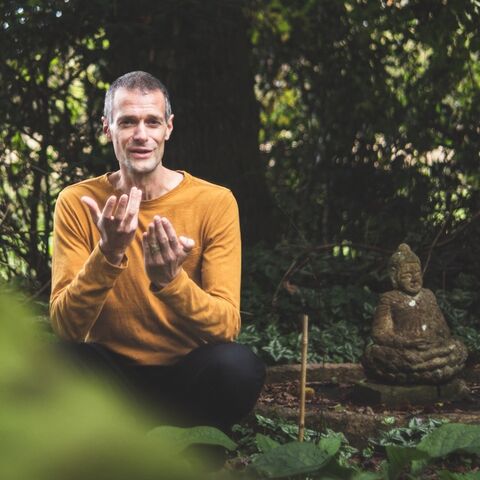
My wholeness welcome.
This is Josh Dippold of integratingpresence.
Com.
Today again,
I have the lovely Wendy Nash with me.
Wendy,
How's it going?
Yeah,
Good.
We did not get any questions to start off with,
Which is okay because I have plenty of great questions to start us off with.
And so the first one is the most basic and obvious,
Right?
And I'll drop the question in the chat too.
What is meditation?
Actually,
I led a retreat the other day.
It was just a half one with beginner people.
Okay.
And that's a common question.
And I've been really reflecting what is it because there's a whole lot of info out there and people have ideas about it.
One time I had a neighbour and she said,
My kind of meditation is reading a book.
And that is relaxation.
So that is not meditation.
So I can say that is not meditation.
Somebody else I know said,
My form of meditation is to take a stroll along the beach.
And I'm like,
That's not meditation.
That's relaxation.
Somebody else said,
I like to sit on the bank and watch the waves go by and just let my thoughts,
You know,
Come and go and all the rest.
And that is also not meditation.
That is contemplation.
So slightly different,
But similar.
Somebody,
So somebody else said,
You know,
I get when I'm in a bad mood,
I sit at the piano for a couple of hours and then my thoughts clear.
And I come out and I'm like a new person.
And I said,
Yeah,
That's flow.
That's not meditation.
And he also said,
You know,
I used to get really angry in the traffic.
And when somebody went past,
I'd be like,
Rah,
I'm really angry.
But I'm training myself so that every time a car goes past,
I just don't react.
And I said,
That is meditation because it's training the mind.
So even though it's a very short moment,
It's just an instant.
It's this guy driving past.
He's really making the effort to think,
How do I want to be in the world?
And bringing consciousness and awareness to his behavior to retrain the mind to be less angry.
So that's what I would say.
What about you,
Josh?
You know,
You think that if I would ask this question and I'm going to co-host this show,
I would have a better answer.
And I love this answer,
Wendy,
How you gave real life examples of working with people of their definition of meditation.
And if I can just jump on and amplify the mind training aspect of it.
If we were to look at the attention or awareness aspect of meditation in a way,
The prior examples.
I've heard someone say before that we're always meditating on something,
Meaning that our,
It's probably not a good definition,
But our attention is somewhere all the time.
So we can test this out right now with this classic example.
Okay,
I want you to just stop paying attention for a second.
Just stop being aware.
Just cut it out and stop it altogether.
Okay.
Give a few seconds here.
Like it's impossible,
Right?
There's no way we can really do that.
And even when we're lost in thoughts or entangled,
There's some kind of attention going on.
And this is a fascinating thing too.
I'd like to maybe pick up on like,
But then we kind of like wake out of,
Wake up out of it.
And then we're like,
Oh wow,
I've just been lost in thoughts for like five minutes or 10 minutes or who knows how long,
Or I've been just entangled in this emotion.
I didn't even really realize it until I've got this reference point of,
Oh yeah,
That's not happening now.
So yes.
So I think I've kind of,
Kind of skirted the question here just a little bit.
But if you'd want to pick back up on that.
I think that is consciousness.
Like there is always consciousness and consciousness and awareness are not the same.
So for me,
They are really different and focus is not the same.
So I guess I think for me,
I like the,
I like the Tibetan Buddhist approach,
Sort of idea of it.
So the Tibetan Buddhist word for meditation is gom,
Which is familiarization,
You may know,
Which is how familiar are you with the mind?
And their definition is that it is about mind training.
Because,
You know,
I've thought about if you sit on the side of the,
There are people I know who,
The person I know who said,
Oh,
I sit by the side of the river and water and watch the,
You know,
Just let my thoughts subside is to me,
The problem with that is it's not actually thinking ahead.
How do I want to be in my life ahead?
What sort of qualities of heart?
What sense of wisdom?
How can I learn from this?
What can I change?
What can I develop?
And I guess that's a bit kind of what do they call that?
Self-helpy,
Which is sort of a little bit where we're at.
But to me,
I guess the really big thing is,
Is it addressing the ego's yearning for control?
That's,
That's big.
But remind me of that again,
I wanted to pick up on some of the things you said there and what,
Yes,
It's,
There's got to be a point to it,
Right?
I mean,
There's so many pointless things we do in our lives are seemingly pointless.
It seems like there's an intent and a goal involved,
Right?
A reason,
A purpose for meditation.
And I think a distinction that might be relevant to be brought in here is Samatha Vipassana in Theravada things.
And I'm not going to go too much into the Vipassana,
But from what I understand with just the Samatha training is it is just bringing the attention back over and over again.
So it is a type of training,
Right?
So there is,
Even though it's very simple,
You're doing one single thing over and over again,
There's a point to it.
It is to increase concentration or Samadhi to cultivate Samadhi and it's like unifying the mind,
Gathering the mind,
Collecting the mind.
And I guess,
Yeah,
Unifying and calming as well.
And this is for at least in the Buddhist perspective,
It's not just because it just feels good,
Which it does.
And this also relates to what Wendy was talking about earlier about,
You know,
Reading a book,
Why these things often feel good is because we keep our attention focused on one thing over and over again.
Not exactly the same thing here though,
But this is in service to building up the mind strength so it can be,
So it can focus like a laser sometimes.
That's one perspective of it.
Another way is it just to kind of unify,
Gather,
Collect the mind and feel good,
You know,
A pleasant abiding.
So,
But on the laser approach,
When that's built up,
That faculty is built up,
Then it can be aimed at things for investigation,
Like things in Vipassana,
Right?
So it's often like into a tripod and maybe I'm going too many different directions here,
But the stabilization of Samatha is like having this firm grounding and base to able to aim that attention wherever we want.
That's one approach of it.
Now,
Wendy's comments about addressing the ego,
Was it at the end there?
Yeah,
Like the point isn't to get to a particular state of mind.
That's right.
So,
Because I just want to say something that my understanding of Samatha Samatha is that it's not about,
It's not concentration as in super tight narrowing,
It's concentration as in it's centering in the midst.
So think of the eye of the storm.
Beautiful.
And that's that gathering fusion kind of thing.
So it's not excluding,
It's just holding still in the midst of the storm.
And I quite like that.
That,
And I would say that is that I personally don't like,
I got to Samatha this morning,
Samatha meditation this morning and I was going,
This is kind of boring.
I'm full on an insight person.
I love the,
The past and the style of like investigation and inquiry because I really,
I used to be really angry and I,
And I want to understand how to not be angry anymore,
Like that driver.
So anyway,
I digress.
Same way because it's,
I find it boring as well and just have to know that this is a training and it's a very important point because a lot of teachers say they,
Because this Western notion of concentration,
You really got to bear down and tighten up and focus really tight on one thing.
So I did this con centration,
Right?
Like you're centering yourself.
It's such a beautiful way.
So yeah,
It's kind of a quick and dirty interpretation to say concentration.
It's not what we usually mean here in the West,
But by that as well.
So,
And that's the thing.
So a lot of times we'd like to go with our strengths and there's this notion that we should continue with our strengths,
Right.
And,
And build them up because,
You know so we don't get too distraught and discouraged on the,
On the other hand though,
You know,
Those weaknesses also need to be addressed somehow I feel.
So this is something I probably ought to do more of as well as this Samatha practice.
And yeah,
Because it can,
I mean,
This is the thing that goes in,
Can go into Jhana too,
Which I'm going to put set aside because there's so,
I mean,
It's like a Buddhist trigger word.
I think we've mentioned this before.
So many people have so many different ideas about what Jhana is and what isn't.
Things like this.
Of course,
I'm always open to hearing people's.
I just hesitant to say myself just because it's so,
No,
That's not,
That's not,
That's not Jhana,
You know.
Okay.
And the monastics in the Theravada tradition,
From what I understand,
They're not allowed to disclose their attainments anyway,
Right.
So they can't say if they've had second Jhana,
Third Jhana.
And we,
I've talked about this before,
The pros and cons of that as well.
Yeah,
Yeah.
So I think,
You know,
Like there are,
I heard about this,
These retreats that the CEOs and,
You know,
San Francisco,
Like tech gurus,
They go on like a week,
They get all wired up in the mind,
And then they get into these blissful states.
And so they have this idea that this is enlightenment,
That enlightenment,
They have done nothing about the sort of egoic yearning for control,
For engaging,
For being right,
For having a very dualistic mind.
So the ego will divide into good and bad,
You know,
When you're at the second level of Jhana.
So Jhana,
Just to unpack that for people,
Because I see we've got four meditators here.
So thank you very much to our four meditators for joining this call.
But Jhana is a sort of a particular,
I guess,
Way of,
Sort of a particular spaciousness in the mind,
A quality of spaciousness,
And there are different,
They call them attainments,
It sounds so like you've got a merit,
You know,
It's all these,
These funny words that had this,
We're so driven,
We think,
Okay,
You've got to be a good person,
And you've got to attain this,
As if it's some sort of university degree or something like that.
So I think it's just,
It's not,
Whatever we think it means in English,
It doesn't.
So,
So it just,
It's just like something that happens.
And,
You know,
You can train the mind to have that,
But I often wonder how much of that can still keep the ego in check,
Because as Eckhart Cole says,
The ego can sneak in via the back door.
And I know that from my own self,
And I know that from others.
So,
Yeah.
So I want to pick up though on the Jhana thing,
And as attainments,
And then ego too,
So these are really big topics.
Attainments,
I totally agree,
Everything Wendy said.
At the same time,
On the other end of the spectrum,
The polarity of this is,
Well,
You know,
The positive side of attainments,
If there can be one,
Is that it keeps people that are goal-driven,
And something to look forward to.
However,
Just that in itself can be a challenge for some people because they don't know how to help.
I think that there can be challenges in trying to set goals in meditation,
Although I think they sometimes are needed to keep people on track,
Right?
These different stages of enlightenment,
Things like that,
They can be helpful reference points or markers or things to,
I guess,
Benchmarks in order to talk to teachers and friends about.
But it's,
Yeah,
Before all that,
Have to look at,
Am I clinging to attain this?
Am I overly striving to attain something?
Am I putting the importance on the attainment or lack of attainment?
So those are all issues and potential trouble spots.
At the same time,
If those are very helpful,
If those attainments are something that help the practice overall and lead towards addressing the ego properly,
Lead towards our long-term happiness and wellbeing and the happiness and wellbeing of others and everyone,
Then I would say,
Yes,
Just be careful how you go about these attainments that are mentioned that you hear meditators talk about.
And at the same time,
It's really tricky because one of the reasons I'll just say now that monastics don't talk about their attainments is because it can get into competitions.
If you have one monk that's more attained than the others,
Well then they might give him more food,
They might pay more attention to him and neglect others.
So there's,
It's a whole big ball of wax.
I would just say,
Investigate this for yourself.
And the human,
It just,
What it says is the human condition is the human condition.
And just because you've been meditating for 20 years and you're a monastic doesn't say anything about whether,
You know,
Your dirty tricks,
You know,
Tibet was a feudal system.
The government was,
You know,
All Buddhist,
But it was very feudal and lots of murders and skullduggery by the senior community.
Yeah,
People in the community.
And,
You know,
We all know that there have been misbehaviours by senior monastics.
And actually I had an interesting,
So here's one for you,
Josh,
Just on a slightly different note.
So I signed up for a retreat and it cost quite a lot of money and the retreat got canceled because something big happened by the people and they said,
Actually,
We're going to have to not only postpone this,
But we're going to cancel the retreat.
And they aren't holding another one,
So there's nothing else to do.
And I have a bit of a deadline with regards to it.
I can't go into it,
But just that.
And so they refunded everything but $100 US dollars.
They said,
We're not going to do that because it's an unrefundable registration.
That's what you ticked when you signed up.
Of course,
I thought,
Well,
If I opt out,
That means I won't get a refund of $100.
And that's,
I kind of get that,
But they canceled it and they're saying,
No,
We're not going to give that back.
So it's very interesting to look at that from a Dharma perspective.
So this is a Dharma organization offering a Dharma Buddhist retreat and I'm a Dharma practitioner.
And I'm going,
What do I,
How do I respond to that actually?
Because,
You know,
Like $100 in Australian dollars,
That's $150.
It's like $158 for us.
That's,
You know,
Like three weeks of food for me.
So that's a lot of money.
And so I've got that,
But then I'm thinking,
Well,
It's the Dharma,
But then they haven't given me a choice.
And it's very interesting to have to sit here and go,
Well,
How much am I identifying with it?
How much am I going,
This is my right,
This is unacceptable,
Which is plenty.
And it's a complicated question.
So yeah,
I would,
I would,
I mean,
I've said,
This is just really not the go,
You cannot do that.
Like really,
I'd like my money back.
You,
You guys canceled it and I get it.
I understand.
And,
But your insurance is going to cover it.
So we live in this commercial world where this is what is the deal.
So yeah,
Cough up.
And so,
But it's interesting to see that.
So you too have that response.
And I was telling my partner and he too had that response.
But,
But sort of what is acceptable,
If I had given an option for it,
If they had said,
Okay,
We'll take $5,
$10,
You know,
As just to cover our costs because it has cost a bit of money to set up.
But it,
But there was something a bit hard line about it,
Which made me feel that the ego,
You know,
The ego,
We talked about the ego before,
Rises up.
And when I feel like I've met the ego,
I too rise up with the ego and it becomes this kind of kabang in the middle.
And what was interesting for me is historically,
I've always kind of yielded because I thought,
Ah,
Well,
I can't ask and they've decided that and I'll just get angry and whatever,
But I'll just walk away.
And this time because of my Dharma practice,
I said,
I am not happy with that outcome.
And this is not right.
So it's interesting to look at the role of money in this world and the Dharma,
Which says you shouldn't be attached to money and material goods,
But we need money because we've got to go out of the supermarket and buy things.
So I've got to pay rent,
All that.
And that's a very fascinating question with something that doesn't interest me too much.
However,
In this case is,
Is extremely important.
I feel because yeah,
Well,
On so many levels as well.
Then we bring in the spirit of generosity,
Right?
In the Dharma practice,
Right?
You're giving from the spirit of generosity.
We're talking about a deposit here,
Right?
We're not talking about,
Okay,
We're asking for donations here,
Right?
Not at all.
We're talking about,
Okay,
Well,
You know,
Who does the onus lie on,
You know?
So this,
The obvious to jump right to a fix,
You know,
Cause I like to fix things,
Right?
So this is something I haven't seen people written in right into their policy.
This needs to be addressed.
I feel it's,
It really would be simple,
Plain as day to write it in there.
If the retreat is canceled by any reason,
So and so this is how it works out,
Right?
If you don't agree to those terms and conditions,
Not.
So it seems like it happened upon a gray area where they hadn't written that into the agreement,
Right?
I think that is to jump to the,
To the end here.
They didn't say anything about,
Okay,
If we cancel,
This is what happens.
Or did they,
Did they say that?
They may have said,
You know,
It's a couple of months ago.
I don't really remember.
And,
And you know,
Whatever.
And for me,
I have to do this retreat because it's part of some other part of process and I have to do it by a particular deadline.
And they aren't offering an alternative retreat and all,
You know,
So it's basically,
They're not offering an alternative retreat.
So yeah,
So it's very interesting to kind of sit here going,
Actually,
I'm really not happy about this.
I'm really,
Really not happy.
And so I have a,
I have an expressive kind of clingy character and I have an aggressive tendency and an angry tendency.
So I'm sitting here kind of,
I'm really pissed off.
You know,
And I've worked with anger for 20 years and just to sort of see that arise.
But what I do notice is that even though I'm very angry about that decision,
There is nonetheless still something which feels calmer than it would have been,
Less temper tantrum-y than it would have been.
So yeah,
It's,
It's a,
It's a,
It's a complex,
It's an interesting situation.
Yeah,
The sort of the basic understanding is that when you sign up for retreat,
If the retreat is cancelled,
Of course they will fully refund.
That's right.
And so because you can't just go setting up retreats and can't,
I mean,
If there's no,
Not,
Nothing to address that,
Then people can set up retreats all the time until people catch on and nobody joins them because they're canceling their treats and taking all the,
Taking the deposit money.
So that's this,
The obvious,
Like realistic part of this,
But like when he's talking about the even deeper significance of this is when we're tested in life and this comes up,
Right?
And then this ties into the ego too.
One way to look at ego is like a positive ego and a negative ego.
And even further is a,
By negative I mean,
By positive ego,
I mean,
So we can walk around in life and our name,
Like our social security number in the States,
Right?
And we can,
We know that we're like interacting with people and that this is called Josh or whatever people call this Josh,
Things like that.
Right.
And then,
But there's also like an inferior,
Inferior ego and a superior ego.
And then we get into spiritual egos too.
So I like this delineation as well.
So,
So then we can see this when things like this happen and how we respond.
And Wendy,
I would say,
You don't seem like there's any kind of trace or shred of anger from this at all.
It seems like at the same time,
It's not like you're cold and emotionless either.
It seems like this is really a well-balanced process.
It was,
It was viewed and responded to,
You know,
Very healthily.
So we've got personality types that are,
They need more assertiveness than we have some personality types that they're sort of way too much,
Right?
They probably need to maybe back down a little bit or,
You know,
So that goes with this inferior and superior ego.
And which I feel this type of meditation practice helps first see that very clearly and know this and then also kind of course correct or bring it more into balance as well.
And then when we set that aside,
Well then we've got,
Or I've got spiritual ego now,
Right?
So that's a whole nother ball of wax.
Yeah.
Yeah.
Actually,
You know,
That,
That's one thing I've been,
I've been really thinking about because,
Because I know somebody and he is very,
Very clear.
And yet we have these conversations and I'm like,
That's pure ego.
So it's this very strange conundrum where he,
He sees the ego in its fullness and yet his character is kind of hooked in.
And here's a question for you.
He says,
Emotions are thoughts.
Now I kind of go,
Actually there's a physicality to it.
So some new research has came out the other day.
I was reading it and it said that when dogs are rejoined with their owner after a time apart,
They get tears to me.
So they cry when they see their owner because they're so delighted.
And physical tears watering?
Yeah.
So they have physical tears of joy when they see their owner,
They are connected with them.
And I think,
Okay,
Well,
If a dog has got the capacity for joy and,
You know,
And my partner once saw,
I was like cockatoos or galahs or something like that,
Parrots.
And they had apparently just had sex.
He really said,
Wow.
And what,
And,
And,
And he,
And this cockatoo just went woo with delight,
You know.
And he was just like,
Woo hoo,
This is a great old time.
This is,
My partner's very,
Very sensitive and he listens to the birds and he's really good.
And he goes,
Oh,
They're having a gnarkey time today,
Aren't they?
So he's really good at,
At kind of understanding what birds are saying and animals and how they're saying.
I think actually if animals have got emotions and we are animals,
How can an emotion just be a thought?
Is that the labelling of the emotion or is that the emotion?
So I was just curious,
Do you have a perspective on that?
Labelling,
So that's right.
I see a delineation,
Right?
And not going into the whole state where there's no discern,
You're not giving distinctions to anything,
Right?
I'm not talking about this state of consciousness.
And by the way,
We could maybe backpedal and define consciousness,
Awareness,
And attention,
Which I feel is helpful.
But for this particular thing,
It's a fascinating thing.
I obviously,
I would say this is an outlier.
I like to hear what he says about this because I've never come across this before.
And it just,
It makes me think about when I overly identified with thinking so much that it was that the predominant,
Predominance.
And it's almost like,
I wonder if this meditator lives in the mind pretty much and that's where they're comfortable and that's where they think everything is related to that.
And there are schools where it's consciousness only,
Mind only,
Things like that.
So I'm not talking about that either,
Really,
Because,
Yes.
So what is even more fascinating about this is how can we,
I guess we,
Wendy,
A meditation teacher,
Address this so it can be experienced for oneself,
Right?
So I wonder,
I mean,
Just as an example,
I'm not encouraging to hit someone,
But like if he experiences pain or something,
Okay,
Is that a thought?
I mean,
Do you have an emotion of hurt or pain?
Is that a thought?
I wonder what he would say about that,
Just a practical example.
Yeah,
You know,
He is,
So he,
When we were talking about it,
I would say he has the,
And this is,
So apologies to people,
This is the Chittamatra school,
The mind only school.
He really,
You know,
I am,
Is the only single thing that you can say for sure,
I exist.
That is true.
That's the only thing you can be sure of.
It is a very Cartesian perspective.
I would say not,
It would just be existence because who's the I,
But we won't go into that now,
I guess.
Yeah,
Well,
You know,
But that's right.
But,
You know,
He says that,
But everything else is kind of,
You cannot be sure of.
And so that's why he says that.
Oh,
So he is in the school then.
He is in the school.
I thought he was like a new meditator or something.
Oh,
No,
He's like,
And he's very clear,
Like he's very,
Very advanced.
So I'm always really curious in terms of my own Dharma practice about my own blind spots and where you can get caught.
I'm always curious,
Not so much about what is the theory of meditation because it's great.
You can read it from a book,
You listen to a talk and yeah,
I'm meditating.
But then when it's like,
How do you apply that?
What is that?
Where do we get stuck?
Where are our blind spots?
So these questions that I'm asking and I'm kind of these topics are raising that grey line between,
Well,
Is it,
Isn't it?
How do you respond?
So I'm a full human being.
How do I navigate this space?
It's very experiential.
Sorry,
Josh,
You go.
Very,
Very much so.
Maybe we can invite him on to talk because I really haven't studied this school much,
You know.
And I guess we could look at this as perception as well.
So he's well,
We're perceiving that there are the perception of feeling and emotion as well as the perception of mind and thinking.
But then he's only perceiving everything as mind or thoughts,
Right?
In a way,
Right?
So that's in a way,
Maybe this is more of a talk about perception than it is those things as well.
So the perceptual level gets very,
Can get very,
Very subtle as well.
So yeah,
I haven't studied this much.
It would be fascinating to have maybe a dialogue about this or talk about this maybe.
Actually,
This is exactly what he says.
He says it's all perception.
So this is exactly,
You've hit the nail on the head.
So thank you very much,
Josh.
You kind of answered my question because I feel like he's very egoic in the middle of it.
And yet he has this phenomenal capacity for awareness.
So I think it's such a conundrum to be in his presence.
And I fully,
Like when I'm in his presence and I just go into this full awakened state,
You know,
It's really lovely.
And I'm like,
Oh,
This is all ego.
This is really interesting.
I'm kind of really receptive to his way of being.
But I feel like he's not relating.
He also doesn't relate to people.
So he's not listening to people in a really hard way.
So,
You know,
Into the emotional landscape.
Yeah,
You go.
Maybe he might ask you,
Well,
Why do you think it's ego?
You know,
And it just I wonder if he has never said that,
But that's true.
So how would he how would the school address the heart,
You know,
Heart qualities as well?
So that it seems like because this seems more on a wisdom level where it's if it's not balanced with heart quality,
It gets really cold and like disconnected from reality.
And this is where the true truths teaching,
I feel can be very helpful to.
There's the conventional truth and then there's an ultimate truth.
Right.
Yeah.
So that that explains so I mean,
It explains so much and can be applied so many different places to gain clarity.
Now,
How that's how that teachings laid out.
There's there's there's levels of helpfulness about how it's done to.
Yeah.
So I just want to just say for our 12 meditators who are listening here that wisdom in this term is not about how much knowledge do you have or anything like that.
Wisdom is a technical term and it means the capacity to see the interrelatedness of everything and that everything nothing has an inherent quality in and of itself.
It is empty of any particular quality and that to have a quality it arises dependent on other things.
So everything is contextual and that is what how we gain meaning.
And so when you see that you become wise to the kind of foolish errands that we are all on thinking things make us happy.
And that thing can be a person or it can be a relationship or a car.
Not not necessarily materialistic in terms of a car house,
Whatever.
But there was a time about 10 years ago,
I was in a different relationship and we came out of a supermarket and I said it was my birthday,
I think.
And I said,
Wow,
I've got a good relationship.
I've got a job I like.
I have friends I like.
I'm getting on well with family.
I have good health,
Physical and mental,
But I'm still unhappy.
And and so what I realized is that I had been quite materialistic at some level about those things that they would give me happiness.
Now,
None of them are technically materialistic,
But I realized that I had actually been expecting those things to give me happiness.
So that shift of like that's outside me and it's going to make me happy,
I think is the materialist perspective in some kind of way.
Is that what you feel?
Absolutely.
And I hear this more and more.
I've had at least one guest in my podcast that come to this realization.
She had everything that society told her that she should have to be happy.
And they were kind of external things.
And so she dropped all those.
Yeah,
It's just it really is the case as far as I'm concerned.
Then I wonder if this even touches on spiritual materialism as well.
I'm forgetting how some people define that.
But that's what came to mind when you were talking to.
Yeah,
I think my understanding of spiritual materialism,
That's a term that Chogyam Trungpa came up with.
And so he's in the Tibetan tradition,
Just to let people know.
And that was something that we talked before about the Jhanas.
A controversial figure,
By the way.
A very,
Very controversial figure.
He was chucked out of the Samyaling in Scotland.
And that's why he ended up in America.
But he actually went from Tibet to India.
He fled part of the occupation,
The invasion of Tibet.
He ended up in India.
And because of Frida Bedi,
She had connections with Oxford because she'd been to Oxford.
And so she got him and another one called Akong Enpoche up into Oxford.
And then they actually started a Tibetan Buddhist monastery called Samyaling in Scotland.
But Chogyam Trungpa was such a drinker and womanizer.
They just said,
We cannot have you here.
And so he was like smack bang at the time of the sexual revolution in the 60s.
And he was having a whale of a time.
And so that,
Yeah,
It was all kind of hard.
I've heard even like worse accusations or not.
I don't even know if they're accusations,
If they've been proven or not.
I won't go into that now.
But yeah,
I mean,
If that wasn't enough,
What Wendy just said,
I've heard things that are go beyond that even far into the unskillful side.
You know,
What that says is,
You know,
There are many charlatans and many scoundrels in the spiritual world.
Don't be foolhardy and just leap in,
Not witnessing,
Not keeping your wits about you.
Because some people are very charming and they have a certain level of accomplishment and attainment and clarity.
But that doesn't mean to say they don't have jinx in their behavior.
Including me for sure.
Yes.
Yeah,
Yeah,
Yeah,
Yeah.
So,
You know,
You and me,
We're,
You know,
I am deeply flawed.
Yes,
Well,
Yeah,
Well,
I mean,
A little bit of tongue and cheek there,
But no,
I mean,
So yeah,
We haven't reached full awakening yet,
If it's not obvious.
So until we do,
Right?
I am deeply flawed.
I am deeply flawed.
I am so far from being perfect,
Let me tell you.
But in the normal way though.
Yeah,
But to go back to spiritual materialism,
What,
You know,
Think about,
To me,
It reminds me of that question that we had about the jhanas,
These states of presence of the mind,
Which is what a jhana is or a dhyana,
It's also called,
Just according to the language.
And that's really saying,
I've reached the first one,
So therefore I've got this kind of,
I'm this kind of quality of good.
That is spiritual materialism.
I've had this kind of,
You know,
You meditate and you have a particular level,
Something arises.
Experience or state,
Yes,
Yeah.
Exactly.
And then you say,
Well,
I'm a better person than you because I've had that.
And it's very subtle,
You know,
It's super subtle.
I've been totally caught there.
I totally,
I still get caught there.
It's so irritating.
Well,
You know,
It's like,
Yeah,
So it's just like the,
Where did this capacity and habit for comparing ourselves and,
You know,
Because the Buddha said that,
You know,
Thinking I'm greater than someone is conceit.
Well,
That's obvious,
Right?
Thinking I'm less than someone,
That's conceit too.
And this is the people with like the inferior ego.
I'm not good enough.
I'm not as good as them.
But the most subtle is thinking I'm just as good as someone,
Right?
That's this,
Oh,
I'm just as good as that person.
You would think,
Well,
Maybe there's some equality there.
Well,
It's subtle,
But I could say this time and time again.
I could never match Wendy's unique brilliance,
Nor could she match mine.
And that is,
We're all the greater for that because if we were all on the same level,
It would just be like this gray blob hive mind of how boring and homogenized that would be as well,
Right?
So it was very interesting as you said,
You know,
Wendy's amazing uniqueness and I was going,
Well,
I'm not really amazing,
But I'm definitely more amazing than you,
Josh.
It was just like quick as a flash.
So you had both,
You had inferior ego and superior ego,
Right?
And equal.
Right,
So,
Okay,
That's right.
But wow,
It was quick as a flash,
It just arose.
And I'm only saying this because,
You know,
It's just like,
This is just the nature of we are kind of,
You know,
I'm deeply floored.
I'm not there.
I guess the only thing I would say is,
You know,
I call it out and I'm like,
Yeah,
I'm a doofus.
You know,
My favorite line is,
You know,
About the great master,
It's his birthday today.
And he said,
Last year,
Old fool,
This year,
No change.
And I definitely feel that that's,
It's more that I become more aware of how foolish I am,
I suppose that's what I do.
Well,
Then I would say that,
Well,
I also,
I obviously did the same thing.
It's like when I look at Wendy,
Oh,
I've,
You know,
I'm here and she's there,
She's here and I'm there and it's like,
Oh,
But we're here,
You know,
So,
But the foolish thing is,
I love the way they put it.
I mean,
It brings it right down to earth.
And at the same time,
Just seeing that you're,
Just because you can see that you're no fool.
Well,
I'm still,
You know,
Like,
You know,
But it's,
It's just,
It's like the ego.
And why do we have this thing?
You know,
I,
Everybody has an ego.
Everybody has it.
So there has to be a developmental component to it.
So that I really was like,
Wow,
Everyone's there.
And I've been really thinking a lot about this and going,
Actually,
What,
What I was on retreat one time,
And I know we've only got one minute and 56 seconds left.
Yes.
But I was on retreat one time and what I realised is that it's,
The ego is a response to seek social connection in order to remain part of the group,
To have that sense of belonging.
And when we have the emotional mirroring to support our sense of failure,
Of not working out,
You know,
We sort of feel ashamed or guilty or,
Or just shame,
Humiliated,
Whatever it is,
Disappointed.
Then the ego comes in and says,
No,
You still belong anyway.
But you need to,
If you have somebody to unpack the emotional part of it going,
It's very hard,
Actually,
When we care about something and it doesn't quite come together.
So,
But if,
But you can get it later.
So just because I used to have quite a strong narcissistic experience where I,
And I would say my,
My thing is,
My reference points were external to me.
And that to me is a marker of where the ego is at.
Now I'm conscious we're less than one minute.
So what do you want to do,
Josh?
Oh yeah,
Another thing that came to mind with that as well is that it could be also trying to control things in order to belong,
Right?
Trying to,
Yeah,
To have control over things or that illusion.
So yeah,
I guess we'll wrap it up here.
Thank you all for joining and thank you,
Wendy.
And see you again next time,
Guys.
And thank you to all our 16 meditators who came.
So thank you very much for all being part of this.
And 35 on WisdomApp.
Bye now.