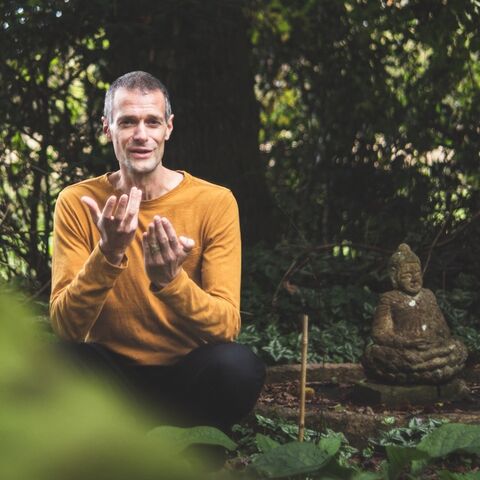
The easiest way Wholeness welcome.
This is Josh stippled of integratingpresence.
Com today.
I have with me Rob You just told me how to pronounce it Rob Creak right creep recheck.
It's right.
It doesn't look like it's sound at all.
All right,
Rob.
How's it going today?
It's going great Josh.
Thanks so much for having me and grateful to be able to chat with you today.
Cool So what I usually do especially for folks,
I haven't talked too much before Is just toss it back to them and say,
You know,
Who is Rob?
What does he do and what does he do?
What kind of work do you do?
Who are you and what kind of work do you do?
Yeah.
Well,
I'm a Midwestern boy I was born and raised in Milwaukee and You know,
I fit my my parents have lived in the same house almost their whole lives My mom has only been in two houses her entire life my her childhood home and then the home with my dad and Big Ben Wisconsin but yeah,
I you know really enjoy spending time with my wife Nikki,
You know working out traveling self-improvement a kind of a productivity junkie and one of the things that I'm really excited about is my new company humans first were a consultancy that helps people with technology mindfulness and I define technology mindfulness as Using technology in a way that serves you well you and your life Well,
And our mission at humans first is to help humanity understand how technology impacts mental health relationships and productivity at work so I I guess maybe the The question why the name why would you pick that name?
And then I guess what gives kind of not I don't not too crazy about the word authority But like what is the expertise?
For such a thing too,
Right?
Yeah,
Those are great questions Josh And so the reason that I named the company humans first is this and this is a statistic from before COVID So we can't say oh we can blame COVID on this Americans are now spending an average average of 12 hours and 21 minutes a day in front of screens and media Put it to you another way.
We are now spending three-quarters of our waking lives in front of technology.
And so Unfortunately in our world today technology is first We are putting technology first about how as evidenced by how we're spending our time And if you think about you know,
How did humans exist 50,
000 years ago and we were cavemen and cave women Well,
We did three main things we hunted we gathered and we socialized and that's what life consisted of And so we've basically done the reverse of what we used to do when we were cavemen and cave women about 90% of the time we spent was with other people and now it's almost completely the opposite because we're spending almost all our time with Technology and so humans first is a reminder to everyone that we get the most meaning and joy And purpose in our lives by connecting with other people not with technology.
All right on this then So it's looking through your website and briefly it talks about how to help folks achieve a four-day workweek And I this reminded me of Tim Ferriss's book the I'm guessing maybe if I had to take a wild guess They're maybe ripping riffing off not ripping off.
Of course a different title This for our workweek and that that was a radical book I guess in the I guess mid-2000s So is it with that and then I guess you know if there are comparisons to this book,
Too And then I guess how do you help people achieve that or help companies achieve that too?
And then I after that I do want to go into kind of Topics more geared towards what I write about it in on Integratingpresence.
Com too.
So yeah,
Of course Yeah,
So I mean there's definitely a parallel to the four-hour workweek Tim Ferriss's book Which is one of my absolute favorites,
You know And I think when that book came out a lot of people recognize that that was obviously very incredibly catchy title But also more of an aspirational,
You know thought right but this four-day workweek This is a very real thing that hundreds and hundreds of companies around the world are now doing and I you know Want to help people be at the forefront of this what's interesting is only or less than 1% of US companies are offering a four-day workweek as one of their you know main perks and so if a company can Adopt a four-day workweek they instantly and their employees instantly become part of the 1% with this regard And this is one of the most incredible employee benefits that you can offer anyone and so you might ask yourself Well,
How is that even possible?
How because a lot of people say to me like well How could I do five days of work in four days when I'm barely can get through five days of work right now?
And you know,
There's a couple main categories of well Just say buckets of time where people don't realize that they're spending an insane amount of time The first one not surprisingly is meetings,
Right?
You know,
There's so we have so many meetings and you know,
Sometimes they're necessary Sometimes they're not but what really sucks up even more time than meetings is email So the average white-collar worker sends and receives 126 emails per day And if they're just taking two minutes per email that right there is literally half of their workday So if you're spending four hours per day in email and let's just say an average of two hours per day in meetings That leaves you with just two hours per day to do your actual job or whatever The activities are related to your actual job and you know,
That's not very realistic for most people And so a lot of my you know,
The way that I help people with technology mindfulness is to eliminate distractions And help them focus on what matters most and what a lot of people don't realize is there's so many times That you just spend a few seconds here or a couple minutes there doing something But those seconds and minutes added up over a week are incredible I had one client she did my initial client intake survey and then she worked with me for just two hours So I just coached her for two hours now to be fair she was super open-minded She implemented every single thing that I suggested to her We measured her screen time on her phone a couple weeks later and I was able to save her over 40 hours of screen time per week So I saved her literally a work weeks time a week every single week by implementing some of these strategies Well cool I guess what I'm interested too and what inspired you to do this is it from personal experience Is it just kind of seeing the kind of logic behind it was there burnout involved I guess what got you into this line of work Yeah so I would say that much like Tim Ferriss I'm kind of a I like to be my own experiment And so this system and these techniques are results of hundreds and hundreds of experiments I've ran on myself over the past decade To try to figure out what works and I have ADHD so I am much more inclined to be distracted And not focus compared to the average person not surprisingly and so you know I have found that I need to structure my day And structure my technology use in a way that is conducive to helping me be productive Otherwise I just can you know get distracted by a shiny object and it's three hours later and I haven't accomplished anything that I really needed to do And I should also say at other points in my life I have also been addicted to video games when I was in high school And then I was also addicted to Facebook and email and so I have personally seen the negative effects of technology in my own life And I've you know learned from that and I want to share that information with other people so that in the hopes that they would not be addicted Or have the negative repercussions like I did in my life and I think I could you know save them from doing that Wild and I thanks for sharing that yes it's and that's one of the best ways to know is from personal experience obviously right You hear these stories how these social media networks are designed for addiction basically to keep as many eyeballs I mean it seems so obvious now but when they first came out right and then this all became public and and whatnot it's pretty wild Yeah I've been saying for four or five years that that social media was causing depression and anxiety and no one believed me And now that there's proof there's very strong proof that that's happening now you know all of a sudden I look like I know what I'm talking about But I just wish people would have listened to me about five years ago but what I always say is I truly believe that social media is the cigarette of the 21st century I believe in 10 years from now we're gonna look at this and saying what on earth were we thinking giving a 12 year old with a cell phone and you know Social media accounts and just telling them hey we just want you to use this to keep in contact with your friends but don't become addicted like that's totally crazy And I think in 10 years we're gonna think that that's true but right now we're still people are just like kind of waking up to this This thought It is yes for sure and so but to even go further since you saw this coming a while back I guess it makes sense or I'm curious now to well what is the next thing What is the next thing where we can derail humans I mean what comes to mind for me is artificial intelligence and of course I was gonna ask your take on that anyway And how that if you use that in your work in your company as well Yeah so I literally right before this call I was just reading a study about it was a long a longer duration study of people using AR Augmented or excuse me VR VR virtual reality and so this was a study of people using VR for an entire week you know like replicating a work week And of the it was an 18 person study so it wasn't that large but two people dropped out of the study immediately and every single other person in the study said that they came out of it Worse in some way or many ways compared to before like they had headaches they had nausea they had an increased anxiety they were exhausted so basically you know and it's ironic right that Mark Zuckerberg the guy who has kind of destroyed society with Facebook is now trying to push this new BS on us And I truly believe that it is not good for humanity for us all to exist in metaverse and of course that's what he wants because that's you know the next phase of his company and the value of it just got cut in half because people realize that Facebook isn't what it used to be And so my I guess caution to people is think about this right let's just pretend that you're walking through a buffet line and you see your favorite dessert and the first time you go through the buffet line You know you resist taking your favorite dessert but you go through again and second time you're like man that dessert that chocolate chip cookie looks really good but I'm gonna I'm gonna stop I'm not gonna eat it right Well by the third time you go through the buffet line you're like you know okay I'm just gonna have one chocolate chip cookie because you know of all the other things there you like the chocolate chip cookie the most that happens to us all right it happens to me too But now think about that if you have an alternative life online in the virtual world that's better than your own don't you think that you're gonna want to go to that life at some point especially when your own life isn't going the way you want in real life That to me is really scary to think about so we're just creating this world where we can essentially be or do whoever you know exist however we want and yes there's many positives to that but when that's competing with your identity in the real world I think there's an entirely separate list of considerations that we haven't even contemplated that are not good for humanity that we need to think now start thinking about because the reason that I got addicted to video games when I was in high school is because I had extremely bad acne and I was playing this role playing game that allowed me to have a different identity and so I again see saw when it was a you know a very primitive game how being in that world could you know help me feel better about myself what's how's that going to happen when we can look like anyone else and be as rich as well however we want I mean it's a totally different world It really is wild I love the metaphor too and to take it in another step and maybe to riff on a pun the meta version of that would be like well even if this doesn't stick they've been doing different iterations of this I remember Second Life I was just briefly just trying to check out what that was and stuff you know never spent much time but just because it was such a hype and I was in a kind of a tech job too so I had to kind of keep up on what was going on and I don't know what game you're referring to but I'm trying to think of some other ones and so you know it will keep evolving whether it's successful or not unless whoever's behind it really doesn't have any incentive to do this but I don't know if I see it the attempts are this type of thing slowing down anytime soon anyway so the way you approach it the way I approach it's different than trying to go up against you know huge corporations or something like that I mean this makes the most sense to address it this way right Well I think you know what I'm trying to do is I'm not trying to tell people what to do what I'm trying to do is help generate awareness and and some education about what's happening to them and what you know sometimes what you're even doing to yourself one of the you know,
A common example that I always give people is checking email right like I used to be so addicted to my email I had a Blackberry when Blackberry first came out for my job and you know what people don't realize is when you check your email it's very highly correlated with greater stress and anxiety because it's overwhelming a lot of the time and so what happens is so let's just let's just say for instance let's say give a hypothetical example let's say it's 9pm and you're getting ready to go to bed and you're like oh I'm just going to check my email one time right you check your email and you see this email from your boss and it pisses you off and so now you're like okay now I want to respond I want to say all these things now you're like amped up your sympathetic nervous system is activated.
Well not only are you going to feel helpless because you're probably not going to respond to that email at nine o'clock at night but the other thing is because your nervous system is so amped up you're definitely not going to bed at the same time as you would have if you didn't check that email and your sleep quality is probably going to be way worse even though you don't realize it because you're sleeping right and so that one simple thing just checking your email before you go to bed could absolutely destroy your sleep.
Destroy your sleep for the night and then what does that do that destroys your entire next day because if your sleep is an on point then everything else in your life could be worse because you know lack of sleep is associated with you know tons of different medical conditions especially cancers and other things and so it's not surprising to think that if your technology uses interfering with your sleep it literally is affecting every single part of your life.
These are just the things of that like a simple things that people aren't even registering but it's happening.
Yeah people this is a huge one because I remember when I used to work in online marketing I had my email account linked to my work email account to my phone at home and so it was just and it was like you had access to it at any time of day and.
I can't remember now if we were required to or not didn't matter I still had it on there right well it does it did matter but I've grown so much and realize so much since then but it absolutely this is the work life balance and you can.
I'd like you to talk about that in a little bit to hear even more if you'd like others mentioned real briefly a few things that I've done now I don't have that kind of pressure worth working in the corporate world anymore but what I've done is.
Just simple things I just don't like this my cell phone all on all the time so I work from a laptop and when I'm in my apartment I have a wired connection still it's an old school laptop so it still has yeah so I don't get the EMF stuff at the Wi-Fi is off.
My cell phone is forwarded to my Google Voice number or I actually have a landline you know most people like what's that but it will either forward to the landline or the computer the Google Voice on the computer so I don't have to have any kind of wireless on because there's so much wireless pollution.
You know the people don't need they're not using as much myself our cell phone and all electronics go off when I sleep I know a lot of people can't do that because they have family they have commitments and stuff but I think the first step to that is just putting your cell phone outside your bedroom.
So you can still hear it if it rings you know you still be able to get it but just how many people go to bed holding their cell phone and looking through that too you know.
There's a blue light well now actually the computer companies have that built into a lot of devices to get rid of the blue light at night I think it's called Flux this plug-in I have for Mac and yeah as the sunset goes it changes gradually so if you're on it longer the blue light that tricks the mind into thinking it's daylight will go down and down so that doesn't cut into the easily falling asleep.
I've got a few other things but those seem like the more common ones people can relate to right as yeah like to get your take on any of those or any other just technology hacks in general like that and then the work life balance too.
Yeah well I applaud you Josh for you know being mindful of these things and you know using these interventions because I think a lot of people you know they just they're you know they're not mindful of how this technology is affecting them and you know how could they be I guess if they didn't know the stuff like we're talking about but seems like you've done a lot of you know research on your own and I really like that.
A couple things I would say about the first of all like email on your phone so and even within that we'll call it like this technology mindfulness community right some people still this blows their mind when I tell them this but I haven't had my email on my phone at all for years in any way not even my personal email no email at all no email app no Gmail no mail app nothing and I almost play this it's sort of a dangerous game in some ways because I don't know how to do this.
I almost play this game or like I kind of go and see how long I can go without checking my email and honestly I went like six or seven business days and not on vacation I was just like I just didn't check it because I didn't want to check it and honestly nothing bad happened.
I'm not saying that there was no not a single negative repercussion because like yeah occasionally something happens but honestly what we think is a big emergency it just isn't like 99% of that stuff.
It isn't an emergency but we just think it is because all these everything is trying to notify us think think about this though this is why this is why this happens the business model of most not all but most tech companies is to get as much of your time and attention as possible human time and attention is now more valuable than oil.
It is the most valuable resource on the planet.
And so if these in so think about it technology is infinitely scalable and it costs the tech company zero dollars to pop up a notification on your phone zero it doesn't cost them anything.
And so they every single company has an incentive to notify you as much as possible or get you on their platform or app or whatever as much as possible because then you spend more time on there they make more money and the company becomes more valuable.
And so if you're not directly paying for a product like Facebook.
You are the product,
You are the product when you use Facebook,
It's not it's not the advertisers you are the product.
And so I think people start to realize that and they're like oh my god there's so many apps that I have where I don't pay anything it's a freemium or,
Or,
You know,
I use this website and it's,
It's free.
It's nothing is free,
Like there's the company has to make money in some way.
And so I think just by having that awareness of what the business models of these companies are and that your time and attention is their number one asset that they're all trying to monopolize that all of a sudden makes it much clearer how they're trying to get your time and attention and how you can resist that or maybe,
You know,
Consider stopping using some,
Some of the websites or apps or whatever,
Depending on if it's serving you or not.
Sure,
You know I somehow I got out of not being on Facebook I still have Twitter and Instagram but like,
Well I won't I mentioned my Instagram habits before,
But I won't go into that now.
The notifications Yes,
Like how many notifications can we turn off on our phones.
For me,
I think I only have on the messages apps like if I get a text message I think that's our phone call miss phone call I'm trying,
There might be a couple others but most everything else is off.
Yeah,
So what's interesting Josh is 85% of people who have a cell phone have not adjusted their notifications at all,
Which to me is mind blowing,
Right.
And so,
The average person and again it like depends on how you measure it and all these things but the average person gets about 64 notifications per day,
Which is one notification every 15 waking minutes.
And so,
If you think about that.
I mean we're just constantly being dinged and buzz and all that stuff.
And so my personal strategy and obviously each person can you know decide what they want to do but my personal strategy has been to eliminate all notifications except for calls,
Texts,
And then travel apps,
You know like,
For instance my Southwest app in case my flights delayed,
Which is you know is important and timely.
Yes,
But otherwise,
I have every single other notification turned off all of them.
And,
You know,
That has saved just so much time and interaction with my phone and just makes me able to be so much more present.
It's incredible and it's really simple to do it literally takes five minutes you just go into settings and the notification menu,
And then you just go down and just shut them all off,
It really isn't even hard,
And folks that have a meditation practice you can feel into this just pay attention to what everybody starts,
Or you get a ding ding,
Then there's these phenomenal like phantom phone.
I mean I've started to go.
I mean,
For many years now this I've done this is what go,
Go outside the house with my without my cell phone and go on walks without it.
At first it was just like you feel naked or something's really missing how these things have really kind of bonded to us and us to them.
But eventually it just energetic wise it just feels so much more freeing,
You know,
Unless it's like somebody poking you on the shoulder with these notifications,
You know,
Yeah well Josh you said something interesting and I wanted to bring I think your listeners might be interested to hear this so you said you mentioned meditation I'm assuming you're a pretty big meditator Oh yes,
Yes daily since 2012.
That's super impressive and I meditate not,
Not that long and not as often as you most likely but I do meditate and what's interesting is,
If you look at meditation as a whole and why it's useful to humanity.
One of the main reasons that the only reason but one of the main reasons is it pulls us into the present and allows us to be here and now and not worry about the future and not ruminate about the past and looks like you're agreeing with that big time.
So,
So okay if you if you believe that that's true which I do and I think that the science is there to believe that are to to to to,
You know,
Hold that.
If you think about what technology is,
It's like the anti meditation,
Every single time you get a notification,
It pulls you out of the presence,
It pulls you into this other world that you're now worried about you're now anxious about.
And so if you think about all this technology use as the anti meditation.
It kind of makes sense why we all feel like a lot of people feel like crap all the time.
We're constantly pulling ourselves out of the present with our technology use and it's like we're it's again like the opposite of meditation all the time.
Oh yeah,
Big time and you know mindfulness of the body,
The body can only be in the present moment,
Our body can't be in the future of the past right,
But everything else in our mind.
Well,
I mean we live in a virtual world in our mind about what you were talking about.
Another further take a step further though with the perception of all the thought and interaction of the future all the thoughts of the past,
They're actually only just thoughts in the mind.
But it seems so real,
It seems like so much in the future so much in the past but every time we think about the future.
It's a thought right here and now,
Every time we think about the past it's a thought right here and now,
But it takes awareness of that too right.
So I wanted to pick up on a couple other things of what you said before about the email and work.
This is when I was I think I was like a project manager or at least the office manager and I was trying to get people on base camp I think when it first came on a project management software instead of just email because it was just a that would at least cut down on some of the emails.
Now I don't know if you recommend project management software or whatever but before you know I don't even I don't even know if they're still doing that or whatever but the amount of email it was just email everything everything everything and I know I guess kids younger generations today.
I don't know if they do as much email as as that and I also want to say about my own personal email.
That's right that is one decent thing about it is it doesn't require an immediate response from somebody right where you just give it unless I guess some things will be but it's just kind of given it's not as immediate as a phone call or a text right.
And so just real briefly my mom she's like every time I don't answer her text right away she's like you know catastrophizes not every time but sometimes I go I had to keep a reminder oh you know in the 90s we didn't even have cell phones it was a huge thing when people got pagers and wouldn't have to drive around my small town to try to find people so car culture is all gone now because that's a thing of the past you know where everybody's at all the time you just have to call their cell phone right.
But I mean people before that you would write a letter it take weeks to get overseas and stuff like this you know but there's plenty there to pick up on.
Yeah well I think you you you you hit on something that I see very frequently companies is the root cause of a lot of the problems not all but a huge number of problems is that there are no written standards of communication that have been disseminated to employees.
So let me just give you this as an example obviously you know whether each company there's different ways to execute this but a written standard of communication would look something like this and obviously would be written not spoken at this company we we expect that all communication is answered between 9am and 5pm local time.
We expect that business emails will be responded to within 24 business hours we expect that slack messages will be responded to within three business hours and anything requiring more than three hours of urgency would be necessitated or facilitated by a slack phone call or a voice voice call on a cell phone.
And so imagine if for instance your company,
You in the,
You know,
The management of your company agreed on all those standards and then you disseminated them both to your employees and to your clients.
Well what does that do that completely changes how everyone does their job.
So,
Right now today in America,
The average person checks their email and slack once every six minutes,
Every six minutes.
We are interrupting ourselves continuously throughout the day,
Because we don't know,
Because there are no written standards of communication like I just described.
So,
If you now have these written standards and they're disseminated to everyone,
And of course they are abided by and endorsed by management which is very important.
Then all of a sudden,
Now instead of checking my email and slack once every six minutes,
I could check it once every couple hours so maybe three or four times a day,
And still be well within those communication tolerances that I just outlined,
But not have to be glued to my slack and email,
Which means that then I can set aside some dedicated time to focus on the work that I really need to do and get done some high quality work and be productive.
That was the biggest impetus for me trying to get off email and doing these types of things I know slack is the big thing now,
But it was those interruptions,
I could not get anything done it's constant interruption,
And we all know now that the multitasking thing is kind of a joke it's kind of a myth right because we can only really focus on one thing at a time.
And so every time that workflow,
You know that progress of progression gets interrupted,
Then it takes time to kind of go back to where you were review where you're at and keep going depending on the complexity of the project right or whatever task you're doing.
Yep,
Hugely.
Totally.
Totally.
So not totally resonate with everything you just said Josh,
We only 2% of people can successfully multitask and even those people if they can do it.
You know they it's very mentally taxing for them and they can't do it you know for a full work day right.
But here's another interesting thing which again people don't realize is when,
Like let's pretend you're having an amazing day at work,
You were just crushing it like everything is going your way.
You're just you're getting a ton of stuff done like everything is just moving amazingly well that state is called flow.
And so when you're in flow at your job,
You are up to 500% more productive than when you're not in flow.
And so what that means is you can accomplish more in two hours and flow,
Then you could in an entire day when you're not in flow.
Well here's the other thing that people don't realize is when you're in flow and you get interrupted it takes you 26 minutes to get back into flow.
And so if you're checking your email once every six minutes,
And then you're getting a smartphone notification once every 15 minutes.
It's pretty obvious that the average person is never ever in flow,
Which means that they're never doing high,
High quality work as they could and they're never being nearly as productive as they could.
And so by eliminating by doing a counter intuitively by by doing less and get eliminating distractions and focusing,
You can actually get way more done and way higher quality work done in a shorter amount of time than if you're trying to do all these different things and check your email and all the lots,
Lots,
A lot less stressful to and that written communications policy is brilliant.
I don't know how I haven't heard of that before now,
But I mean,
It just lays stuff out so clearly,
You know,
And everybody's on the right,
There's no squabbling anymore of,
You know,
What's allowable,
What shouldn't be done,
You know,
There it is clear as day,
Right?
Well,
One thing I'd be happy to do for you and the listeners,
Josh is I can provide a template that it's free for you and you know,
Anybody to use.
I actually,
You know,
Sent this to a lot of people and it seems like it's been very well received.
So I'm happy to send that to you.
And if you want to put it in like the show notes or something please do yes,
For people to download.
And so I guess I just have a couple more questions here.
You know,
For me,
Well,
I was going to,
It was just kind of fun to say,
Well,
What,
What do you suggest people do with the extra time you help them free up?
Right.
And then also for me,
The big thing now,
If I'm not interacting with technology like this is no big deal for me,
But when I'm actually on the keyboard,
Moving the mouse and doing tasks,
You know,
With blogging and podcasting and editing and stuff,
That's when I,
That is my,
My,
My,
My,
My,
My,
My,
My,
My,
My,
My,
My,
My,
My,
My,
My,
My,
My,
My,
My,
My,
My,
My,
My,
My,
My,
My,
My,
My,
My,
My,
My,
My,
My,
My,
My,
My,
My,
My,
My,
My,
My,
My,
My,
My,
My,
My,
My,
My,
My,
My,
My big issue still,
Because what happened,
What tends to happen is I get so involved in the work that my body will tense up and I'll realize that.
And sometimes I will just ignore that and keep going.
And the bodies will still keep,
You know,
Clinching tents around that.
And I know that I should take breaks,
You know,
Just even a breath break,
Even just for a moment and relax.
But for whatever reason,
It's just like this thing is like sucking me in.
There's just so much,
You know,
Draw to it or whatever.
Yeah.
So Josh,
I can actually,
And if I told you how long it took me to realize this and how many dozens of books I had to read,
You would not believe me,
But I can explain to you what's happening and you know,
Not only to you,
But to the 4.
2 billion people connected to the internet.
So here's what happens whenever we interact with technology and obviously it changes depending on how we interact with it and what our tolerance levels are and things like that.
But what's generally happening is when we interact with technology,
It activates our sympathetic nervous system.
This is the fight or flight system that keeps us alive.
And so in caveman days,
If we were attacked by a saber tooth tiger,
The fight or flight system gets activated because we either need to fight the tiger or run away.
Right.
And that keeps us alive as a,
As a species.
And so it is a good thing in very small or limited time duration doses and very short durations.
It's good.
But what happens is when you get that notification on your smartphone,
When you check your email,
When you think about all your million projects that you have to do and look at your project management software and say,
Oh my God,
There's 25 tasks that I haven't done.
You,
This sympathetic nervous system is activated and we get amped up.
And this,
This all happens like subconsciously.
It's not even like,
This is not even like most 99% of this is not in your conscious business.
And so,
Or not in your awareness,
I should say not,
It's not,
Not in your consciousness,
Not in your awareness.
And so the,
The,
The,
The,
The really unfortunate part is when this sympathetic nervous system is activated,
It takes over 30 minutes to downregulate.
Well,
Obviously if we're checking where our email once every six minutes,
We're getting a smartphone notification once every 15 minutes,
We're doing all these other things in technology pretty much continuously.
And for a lot of people,
It's literally from the moment they get up until the moment they go to bed,
You're never,
You're,
You're,
Your central nervous system is never having a chance to fully recover and downregulate.
And this is why most of the people in America feel incredibly stressed out and why anxiety and depression are at an all time high.
I believe that this is the,
This is the root cause of not all of it,
Of course,
But a lot of it that people aren't even aware is happening to them.
I truly believe this.
I,
I believe this with every cell in my body.
And and so my hope is that when people have extra time,
When I can help them get a workday back,
Or sometimes way more that they spend that time with friends and family and people that they care about,
Because what's happening is if you think about what technology is doing,
If I could summarize my last four years of work and reading over a hundred books,
It would be this simultaneous technology is simultaneously increasing the day to day and sometimes minute to minute stress we experience while at the same time degrading our ability to deal with that stress because our social support systems,
Communities,
And relationships are being deteriorated by technology.
Oh,
Big time.
So are there any kind of like general usage that you have?
I mean,
You've mentioned a bunch of things too,
But some things that apply to most people,
It just,
It baffles my mind that just any kind of regular use would trigger our our flight or flight,
But it seems to be that the case,
I know there's some things that contribute way more to it,
But just some just some basic things that apply to everybody for usage.
Well,
Again,
Disabling those notifications,
Both on your computer,
On your desktop and your phone is huge.
Another thing though,
Is just as a very general rule of thumb,
Anything that you're doing on your phone,
You could do in half the time on a desktop computer.
So for instance,
If you do a ton of email from your phone and you spend seven hours,
Let's say eight hours a week doing that,
You could literally save half a workday if you just answered all your email from your computer like I do now.
And so,
So,
And so what you have to realize is when you use your cell phone,
You're trading convenience for productivity.
You're saying I value the convenience more than the productivity.
And sometimes that's appropriate,
But for most of the time,
We're just,
You know,
We,
We,
We could be doing almost everything on our phone,
On our computer.
We just are choosing not to because we're lazy or because we don't re we don't are not aware.
And so that's me,
I think is the biggest thing that any person can do is try to offload as much of the tasks as possible from your phone and do them instead on a computer,
Because that is way,
Way more helpful.
The other thing I know we are almost at a time here,
But the other thing is adding a second monitor to your work setup increases productivity by 25%.
You can get a second monitor for 200 weeks.
You can,
And it will literally pay itself back in productivity in one week,
Less than a week.
Yeah,
It's huge.
We had those at our old workplace and now I've got a,
Yeah,
The phone thing like I mentioned earlier.
So Rob,
What would you like to leave folks with and how can they get ahold of you in anything else you'd like to plug?
Yeah,
Well thank you Josh so much for the opportunity to chat with you.
You know,
You guys can find out more about my company,
Humans first at humans first.
Us.
And then one other thing that I just wanted to offer all the listeners is I'm happy to give you a free 30 minute technology mindfulness consultation call with me.
All you need to do to redeem that is just email me.
My email address is Rob Rob at humans first.
Us and just mentioned that you heard me on this podcast and I'll set up a call with you.
Thanks so much,
Rob.
And may you may all the listeners out there.
I wish you all an ideal and optimal energy and consciousness for the rest of your day.