Welcome,
I'm Helen a kinesiologist and today we are talking about circulation.
Healthy circulation literally means that blood flows smoothly throughout the body and of course this is necessary for the health and well-being of all of our organs,
For our limbs,
For our emotions and our mental health as well.
Some symptoms of poor circulation is cold hands or feet,
Swelling in the legs,
In the feet,
Constriction of veins and difficulty breathing.
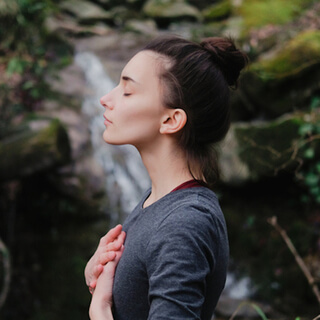
And breath work is where we are going to start with activating and nourishing our circulation because breath has been found as the number one support for improving circulation.
No matter what the issue or concern is,
We need to make sure that we are breathing correctly and enough.
And when I say enough,
I am referring to equal breathing.
In other words,
Breathing equally in,
Out and also giving enough time,
An equal amount of time for rest or pause breaths.
So we're going to do a few rotations now of taking the breath in for a certain number of counts and then pausing the breath for the same number,
Exhaling for the same number and pausing again for the same number of counts.
And then we're going to repeat that cycle a few times.
Now the number of counts is going to depend on you and you want to make sure that your number of counts are comfortable for you.
So please start by taking yourself into a position where the posture is aligned and you are feeling grounded,
Supported,
Relaxed.
Take a moment to intentionally relax the body,
Relax the mind.
We're going to breathe in through the nose.
So when you're ready,
Slowly start to breathe in through the nose for as long as is comfortable for you and then once you have your number of counts,
Please pause the breath.
Now exhale and pause the breath again.
And let's repeat that.
Breathing in,
Pausing the breath,
Exhaling and pausing again.
As you continue in this rhythmic cycle of equal breathing,
Check to see how the movement is taking place in the upper chest area and the abdomen area.
In other words,
You are wanting to feel movement in the abdomen area and not only in the chest area.
You also don't want to have shoulders lifting up as you breathe in.
And sometimes we need to practice this if we've been used to shallow breathing.
Then it takes a little bit of training to breathe deeper,
Breathe so that the ribcage expands outwards in all directions and breathe calmly.
And if along the way you find you need to change your number of counts,
Know that you can do that.
This is completely led by you.
The most important thing is to keep the focus on the equal number of counts in,
Equal number of counts out and the same pace for pause breath.
Now doing this for three to five minutes a day is going to over time benefit the circulation throughout the body.
So even if one can't exercise,
One can still support the circulatory process with the deep equal breathing.
And for those days that you can't exercise,
Then do repeat the three to five minutes of breathing three times a day.
Now we're going to move to doing some walking.
Walking on the spot.
But this walking that we're going to be doing is walking with a flat foot because we want the whole foot to pound onto the ground and that jarring motion allows an activation to happen through the blood vessels in the lower extremities.
And when this is repeated,
Now this starts to move the circulation in that area.
Because we have something that we're dealing with called gravity.
So blood will easily and naturally flow down the body.
But when it is struggling to flow up,
That's when we can experience pain or inflammation in the lower legs and in the feet.
So for this it is ideal to be barefoot or have socks on.
But you want your feet to be flat level with the ground.
And of course to be pounding,
Marching on something that is firm,
Stable,
But also not too hard because of the repetitive motion.
Okay,
So now that you're in position,
Use the in-breath to lift up the one leg.
Bring the knee as high as you comfortably can.
Now exhale as you take the foot to the floor and let it land with equal intensity on the floor with the balls of the feet and the heel of the foot.
Now you want this to have a pounding action without being painful and too jarring.
Once you've done it with the one leg,
Now we're going to repeat with the other leg.
Breathe in,
Lift up the other leg,
Taking the knee as high as you can.
Exhale and take the foot down to the ground and let it pound down and it stays on the ground.
Breathe in,
Lift up the first leg,
Exhale,
Pound that foot into the ground and it stays there.
Breathe in,
Lift up the other leg,
Exhale and pound the foot into the floor and let it stay there.
And just keep repeating that.
Breathing in,
Lifting the first leg,
Exhale,
Pound into the ground.
Breathe in,
Lift the other leg,
Exhale and pound into the ground.
And repeat in your own rhythm,
In your own time.
It doesn't have to be fast.
Keep your rhythm going.
Keep the posture aligned.
And if you feel comfortable enough to,
You can start to deepen the breath,
Breathing in through the mouth and out through the mouth.
This helps to deepen the oxygenation.
But if this is not comfortable,
Then breathe in through the nose and out through the mouth.
Do two more rounds on each leg.
And then on your last position,
End with both feet on the ground.
Take a moment to find your center.
Just align the body,
Left and right,
Front and back.
And let everything settle.
And for this next exercise,
You can be seated on a chair,
Seated on the floor or standing.
And if you find that you're struggling with circulation in the arms,
Then please use the arm muscles.
If you're struggling with circulation in the legs,
Then please use the leg muscles.
So we're going to be tensing into the muscles of the limbs.
You can choose either to work with legs or arms.
And we're going to start on the one side,
Let's start on the left side,
With the left upper part of that limb.
Breathing in,
Tensing into those muscles,
Either at the top leg,
Top of the arm,
Hold it,
And then slowly exhale and release those muscles.
Let's do that once more.
Breathe in,
Tense the muscles,
Either the thigh or the biceps and the triceps,
And then exhale and release.
Do that once more.
And now we're going to do the same on the other side.
So right leg or right arm,
Breathe in and tense those muscles in the upper part of the leg or the arm,
Pause the breath,
And then exhale.
Let those muscles relax and be released.
And again,
Breathe in and release.
And once more,
Remember to tense as much as is comfortable,
And then slowly exhale.
Let's take a moment now to shake out the left leg or the left arm,
Whichever you were working with,
Just for a few counts,
And then shake out the right leg or right arm.
Now we're going to work the bottom part of that limb that you were working with.
Going back to the left side,
Breathing in and tensing into either the calf muscle or the forearm,
And exhale and release.
If it helps you to tense into the hand or the foot as well,
You can do that.
Just don't over tense.
So you want to create contraction,
But not to overdo it.
So in your own time,
Again,
Repeating that,
Breathing in,
Contracting,
Holding,
And then slowly releasing as you exhale.
Do one more round for the left side,
And then prepare to move on to the right side.
So when you're ready,
Using the in-breath to stimulate and support the activation of either the forearm or the calf muscle in the leg or the arm,
And then pause the breath before exhaling and releasing that tension.
And again,
Let's repeat,
Breathing in,
Holding,
Contracting,
Exhaling,
And letting that go.
Do one more round,
And you can shake out the legs,
Shake out the arms,
Give them a nice wobble all the way up and down.
That also helps to stimulate the blood,
But also the blood vessels.
Because it can sometimes be the blood vessels that are creating the difficulty of blood flowing through.
There are tiny little muscles in the blood vessels,
And when they become enlarged,
Then the blood struggles to move through easily.
These exercises help those muscles in the blood vessels to relax,
And it feels like then there is space for the blood movement.
And another way to support that is beetroot juice,
Because beetroots have nitrates in them,
And when in the system,
It turns to nitric oxide,
And nitric oxide is what the blood vessels need for vasodilation.
It's also really supportive for heart health,
And it's a wonderful energy boost,
Or pick-me-up.
So if you can make a beetroot juice,
You can add or taste some honey,
Some lemon,
Which is also wonderful for heart health,
With the vitamin C.
You can add pineapple,
Because the enzymes in pineapple are going to help with the absorption.
And one glass of beetroot juice a day is going to stimulate the circulation.
If you're really struggling with circulatory issues,
You might want to have two glasses a day,
But listen to the body.
Beetroot sometimes can be quite rich,
And if one is not used to that,
Maybe you need to start slowly,
And then build it up.
Another exercise one can do,
Which is really helpful and supportive to get that circulation going,
Is squatting.
Put the timer on for two to three minutes,
And using deep,
Slow breathing,
In and out through an open mouth.
Move through a series of squats,
Even if you can't reach all the way down.
Even engaging with the movement 75 percent,
Or 50 percent,
Or even 25 percent.
It is 25 percent more than doing nothing.
So start where you can,
And build that up over time.
For this last exercise,
You will need to please have a small table,
Or you can put together some books,
Or magazines,
Or blocks,
Approximately half a meter in height,
And then position it on the floor,
So that you can lie comfortably on the floor,
With your legs over the little table.
You want your ankles to be hanging off the other side,
So your calves,
The lower legs will be on the table.
And when you are in that position,
We're now going to flex the feet,
And move the ankles from side to side,
In a windscreen wiper motion,
Left to right,
And back again.
Breathing deeply,
Use the equal breathing at the same time.
So breathing in slowly,
Pausing the breath,
Exhaling for the same number of counts that you inhaled,
And then pausing the breath again,
And repeating.
And once you've done that a few times,
Then we're going to relax the ankles,
So let the legs relax,
Flopping out to the side,
The one foot pointing the one way,
The other foot pointing the other way,
And now we're going to tense into those calf muscles,
Just like we were tensing earlier,
But now it is in a different position.
Having the legs just slightly raised above heart level,
This is now using gravity to assist the circulation,
To flow from the feet up the legs.
And while we are in this position,
We are engaging in an exercise which helps vasodilation,
So we are getting a double benefit.
So let's use the breath as we breathe in,
Contract the calf muscles,
Hold them,
And then exhale,
Release,
Pause the breath,
And again,
Breathe in,
Tense those calf muscles as much as you can.
Pause,
Exhale,
Release,
Pause the breath,
And then repeat.
And do this again for a few times on your own,
In your own rhythm.
And if you are struggling to tense into the calf muscle area,
Just know that with practice,
And with focused intention,
Eventually it will start to take place.
It's just a matter of training the mind-body connection.
You can now complete the cycle that you're on,
And then just let the whole body relax,
And remain in this position for a few minutes.
Having the legs slightly raised every day for 20 to 30 minutes is highly important for supporting circulation,
Along with the equal breathing,
And then also being mindful of one's diet.
Because most often,
Circulatory issues stem back to the root cause of eating habits that are not completely aligned with one's chemical system.
Please look out for the PH Balance course,
Which is to be released on Insight Timer January 2025.
And in this course,
We will be discussing how to improve or balance one's eating plan to support the circulatory system,
The digestive process,
Elimination,
Assimilation,
And much more.
I wish you well with your journey of your health and your well-being,
And until we meet again,
Do take care.