In a world that often focuses so much on what we lack,
It's easy to overlook the incredible internal strengths that each of us possess.
Grounded in ancient philosophy and modern science,
This series invites you to reconnect with the innate strengths that make you who you are,
Promoting balance and harmony in everyday life.
Whether you're looking to boost your confidence,
Overcome negative self-talk,
Deepen your relationships,
Or simply invite a greater sense of well-being,
My hope is that this series offers a practical and uplifting path to personal growth.
Hello beautiful people and welcome back to our character strengths affirmation series I have been gone for a minute.
So if you have been keeping up with these Things got very busy And I have there's been a lot going on.
I'll just keep it real with you life has been lifing But what's really interesting?
Is that a lot of what I experienced in the last six months?
Has really informed the way that I see the next virtue that we're going to be moving into.
So if you're new here,
Each session we explore one of the 24 character strengths identified by positive psychology.
All of which fall under the virtues of courage,
Humanity,
Wisdom,
Justice,
Temperance,
Or transcendence.
These strengths and virtues are universal and they form the foundation of our best selves.
Today we are beginning our journey into the final virtue on the list,
The one that I was referencing earlier,
Which is transcendence.
This is the family of strengths that connect us to something larger than ourselves.
They allow us to find meaning,
Experience awe,
And achieve a greater or deeper perspective on life,
Even if it's just for a moment.
The strengths in transcendence include gratitude,
Hope,
Humor,
Spirituality,
And today's strength,
Which is appreciation of beauty and excellence.
The Values in Action Institute defines this strength as the ability to notice and value beauty,
Excellence,
And skilled performance across any range of the areas in our lives.
So this could be the arts,
Dance,
Writing,
A movie.
It could be photography.
You know,
It could be in the sciences.
It could be in athletics.
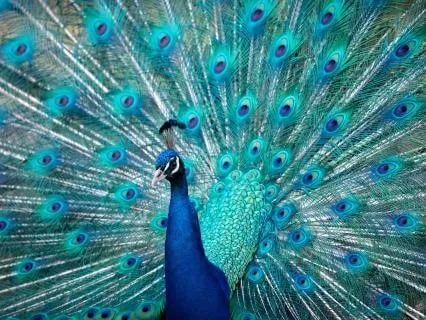
It could be in nature and just appreciating the natural creation.
Happening all around us.
It's less about the thing.
It's more about our ability to notice and to feel and to be moved by something that we experience as meaningful or admirable in some way.
It reflects a heightened awareness of the world around us.
We've all heard the saying,
Beauty is in the eye of the beholder.
I think it might be more accurate to say that beauty is in the heart and mind of the beholder.
It's something that shakes us awake to the moment if we let it.
So although there are many,
Many different manifestations of that which can be admired,
There are three easy categories that we can think of this in terms of.
There's the physical beauty,
A sunset,
A piece of music,
The feeling of water on skin,
The way light moves through leaves,
An expression on the face of a person you love,
These are things that we see that make us stop and soften and open us to the present moment.
There's also excellence in skill.
So this is more,
In my experience,
This is more like the energizing appreciation of beauty and excellence.
It's witnessing someone's mastery or dedication or talent.
And it motivates us towards our own growth.
Again,
If we let it.
I think that the Olympics is a really cool example of this.
I don't know anything about bobsledding or really sports in general.
I don't really know anything about sports.
I understand running and track to the extent that it's about who gets there first.
And that's about as much as I can offer you.
But I tear up watching the Olympics because it's more so about watching someone who has devoted their entire life to this single pursuit,
To this single area of expertise.
And we get to collaborate collectively witness their triumph.
Or witness their challenges and then witness them persevere through it.
The third category is moral beauty.
These are the things that we see in others or maybe in ourselves,
Maybe in a book character,
Maybe in a movie,
Maybe in our recollections of history or in our spiritual or religious figures,
Where we can recognize such true integrity in their character.
Maybe it's kindness,
Maybe it's courage,
Maybe it's love,
Maybe it's the pursuit of fairness.
It's the ability to recognize that that too took a tremendous amount of cultivation and pursuit of self-mastery.
And it often inspires us to want to be better ourselves.
Really the strength is about being able to recognize that there is beauty happening and greatness happening all around us and allowing ourselves to be comforted,
Put at peace,
Moved by or inspired by these moments.
Don't get me wrong,
There is obviously misuse of this strength.
We will talk about that.
It's very easy to misunderstand this strength,
Especially in a culture where appreciation can quickly turn into comparison or consumption or vanity.
Where beauty becomes something to curate or perform or measure,
We will get into all of that.
But I really just want to recognize that this isn't about perfection.
Good luck.
I mean,
It's maybe the pursuit of it.
But knowing that that starts with presence.
It starts by allowing ourselves to be impacted by life and allowing it to move through us in a way that changes us.
Okay,
We'll dive in to the conversation about balance and the importance of balance.
Talk about this in a lot of the episodes,
But if you know my story,
I've been working with character and character strength work in mental health for years,
Trying to have more of like a positive psych approach and a dual continuum of health approach to working with trauma or mental illness or whatever it might be,
Just alongside other forms of treatment.
And also,
I've been working with character strengths and virtue in my own life a lot and trying to figure out how I could use my strengths to figure my life out and then I had like an existential crisis when I realized that I was overusing my top strengths.
And in a way that wasn't like super helpful.
And then I was like,
Why is nobody talking about this?
And then I did some research and then it turns out that lots of people have been talking about this for like a really long time.
I use Aristotle's golden mean because it's very simple.
It's the idea that virtue exists in the balance between two types of vice,
That of underuse and that of overuse.
But,
You know,
Confucius talked about this,
Epictus talked about this,
All the religions,
A lot of times there's stuff in there where they talk about the importance of balance.
So anyway,
When it comes to appreciation of beauty and excellence,
The same is true.
You can underuse it,
You can overuse it.
When this strength is underused,
Life can start to feel flat or rushed or disconnected.
Beauty could be all around us and we're just not available or taking the time to notice it and savor it and experience it.
I've tried to organize some archetypes that I think could be helpful.
These are not from any kind of research.
These are just my attempt to organize some examples that I have seen in the world,
And in myself,
And in my clients.
So you know,
Take them for what you will.
The first one is the distracted mind.
You know,
This is somebody who is constantly seeking stimulation or multitasking and it makes it difficult to actually notice and experience anything deeply.
We're just moving through and nothing is actually landing.
Most of us are doing this all the time,
All the time.
I will literally be walking on the Beltline in Atlanta.
And there's wildflowers,
Yellow wildflowers that are growing on the side of the Beltline now,
And they are beautiful.
Gorgeous.
I don't know who made that urban planning decision,
But thank you.
Thank you very much.
People are,
No one's looking at the flowers.
I'm like,
You guys,
Like,
Has anybody seen these beautiful,
Have you?
Here's the thing,
If we actually chose to gaze upon a beautiful thing for a moment,
Do you understand what that does to our nervous system?
You know what I'm saying?
Do you understand what that does to our general experience of reality?
To just for a moment,
Slow down and prioritize cultivating the experience and normed experience of there are beautiful things in my life.
And they're small.
They're like the wings on a bird or the flecks of gold in someone's eyes.
We have to care to look.
The next one's going to be an interesting one.
I think I'm going in a direction with this that's kind of going to surprise you guys because it's not about It's not about the thing that we're noticing,
It's about the mindset that we're in that's keeping us from being able to actually appreciate beautiful things and admire things.
So this next one is the always on achiever.
Listen guys,
I'm just here to keep it real with you.
I'm just here to keep it real with you.
And I see this one because I see it in myself.
I see it in me.
Everything becomes about productivity.
And what's next?
This might look like finishing one goal and then immediately moving to the next.
It could look like feeling guilty for resting or savoring something.
It could look like measuring value primarily through achievement rather than through the pursuit of excellence.
If this one hits you the way that it hits me,
The temptation now is going to be to try and treat appreciating beauty and excellence as just another thing to accomplish.
As just another box to check.
I know that because that's what I did.
That's literally what I did when I was living in Madison,
Wisconsin.
One of those things about Madison in the summertime.
Is that it will pop off with a sunset over Lake Mendota like I don't know what the weather is during the daytime but in the evening there will be So many colors.
So many colors.
And I.
.
.
It actually,
This is how,
I'll be so for real with you guys,
This is how it started.
It started as a mindfulness practice where I held myself to a standard of if there is a sunset,
I will stop everything that I'm doing and I will set my timer for two minutes and I will just take in the sunset.
It really did start as just a box to check for me so that I could normalize and get used to like,
Oh,
Oh,
This is actually quite nice.
Like I had to I had to teach myself.
How to admire the sunset.
The trick is to use the strengths that come naturally to us and that we may even overuse because we've become reliant on them.
To actually find more balance.
So this is a good example.
I was underusing appreciation of beauty and excellence because I was overusing perseverance.
I redirected my perseverance to engage in practices that would allow for me to better refine appreciation of beauty and excellence.
Just a reminder,
You know,
I'm not affiliated with the Values in Action Institute at all,
Except for the affiliation that I've created through using their framework for this series.
But you can take an empirically validated survey on their website that will rank order your strengths.
There's also the opportunity through that to participate in some of their research.
You certainly don't have to do that.
It's good insight.
It's good insight.
Another archetype in underuse would be the cynic,
Which is the tendency to explain away beauty or excellence rather than allowing ourselves to be impacted by it.
So this is about dismissal,
Reduction,
Devaluation.
It could look like immediately pointing out flaws instead of appreciating what is actually quite lovely about something or working really well in something.
It could be responding to someone else's skill with criticism instead of admiration.
Could be about assuming excellence is mostly luck,
Talent,
Or privilege.
Moral goodness might be even seen as naive instead of inspiring.
At the end of the day,
It's basically like beauty is overrated.
Excellence is unimpressive.
And instead of asking,
What can I appreciate here,
The mind automatically looks for reasons to address the problems.
And to be clear,
The cynic isn't always wrong.
You know,
Sometimes beauty is packaged and sold.
Sometimes excellence is totally influenced by privilege.
And sometimes admiration gets tangled up with celebrity culture,
Status,
And unrealistic standards.
Those critiques are very important,
And I share a lot of them.
However,
If we're not careful,
We can become so focused on deconstructing beauty and excellence that we lose our ability to be inspired by them.
And that comes at a cost,
Man,
Because inspiration is one of our primary fuels for growth.
It's what makes us actually want to create things and learn and improve and care.
When we witness excellence,
We often become more motivated to pursue our own potential.
I spoke to this a little bit earlier.
When we encounter beauty,
We remember what we're trying to protect and build or contribute to.
And when we lose access to awe and admiration and inspiration,
It's easy to slide into exhaustion or resignation.
And yeah,
What this is called,
Which is cynicism.
The invitation isn't to stop thinking critically.
It's to learn how to hold both,
Right?
To recognize complexity while still allowing ourselves to be moved.
To see the flaws and still appreciate the beauty.
To acknowledge the barriers and still celebrate excellence.
Really what I'm trying to get across here is that these things are not frivolous.
They're not just add-ons or extras.
They have a role to play in our success as good people.
Other people say it better than I can,
Okay,
You guys.
There's a quote by,
I believe his last name is pronounced Uli,
Joel Uli,
Last name U-I-L-I.
The quote goes,
They'll tell you that the arts and humanities aren't practical,
And then read poetry at funerals and weddings,
Cry over films,
And search for meaning in ancient philosophy.
Surviving is one type of practicality.
Knowing why we bother is another.
I mean,
Like,
Joel,
Come on.
Well said,
Joel.
That's it,
Right?
The strength isn't about making life more aesthetic,
Per se,
Although I,
As much as the next person,
Love a good vibe.
It's about recognizing that these things are not luxuries.
They're part of what makes life feel like life.
They're part of what make life feel worth living.
And I'll tell you what,
The research supports this.
You already know I'm going to come incite my sources.
Moments of awe,
Like experiencing nature or art,
Have been shown to reduce stress,
Lower inflammation,
And even shift our sense of perspective so that we feel less overwhelmed by our own problems.
There's actually a lot of research on something called awe walks,
Which is exactly what it sounds like.
It's intentionally stepping outside and allowing yourself to notice and be moved by what's around you.
And what's really interesting is what happens to the mind and the body when we do this.
Researchers like Sturm and colleagues in 2020 found that experiences of awe could lower cortisol,
The hormone associated with stress.
So here,
Even briefly shifting our attention outward to something lovely can help calm the nervous system and reduce anxiety.
Buy-in colleagues in 2021 found that people who engaged in awe walks reported increased feelings of joy and contentment.
There's something about noticing the vastness of nature that naturally lifts the mood and creates a sense of wonder.
Over time,
These moments can also build resilience.
When life feels overwhelming,
That felt sense of being a part of something larger can bring perspective and comfort and steadiness.
And maybe one of my favorite parts is that awe doesn't only change how we feel internally,
It changes how we show up for other people.
This is from research back in 2003,
So it's kind of old research.
It's by Keltner and I believe Haidt is how you would pronounce the last name.
And they found that awe was linked to increased compassion,
Connection,
And pro-social behavior.
When we experience something vast,
It softens the ego a little bit,
You know what I'm saying?
It creates more space for some of our other strengths like humility and love and a deeper desire to connect.
Regularly engaging with beauty,
Whether it's music or nature or meaningful experience,
Is associated with improved mood,
Greater life satisfaction,
And a stronger sense of meaning.
So when we disconnect ourselves from beauty,
When we say,
Ah,
Not necessary,
We're not just missing out on something that's quote,
Unquote,
Nice.
We're missing out on something that is regulating and grounding and connecting us to our humanity,
Which from where I'm standing,
We could all use a little more of.
Okay,
Y'all,
Let's transition into what this can look like on the other side of the spectrum when appreciation of beauty and excellence becomes overused.
Instead of connecting us to the world,
It pulls us into comparison,
Performance,
Or hyperfixation on image.
The first archetype in overuse is the curator.
This is where life becomes something to capture,
Filter,
Or perform.
There's more focus on how things look.
Than how they actually feel.
We'll be appreciating the moment for half a second.
And then appropriating the next moment for our own uses,
Leading us to experience it through a lens rather than with our whole bodies.
If you go to a concert these days,
And you look out,
It's just like a sea of cell phones.
I'm going to be honest with you guys,
I don't really go to concerts because I get anxious in crowds.
I get it from my father.
I don't really know what else to say about that.
But I can only imagine what it's like to be the musicians nowadays.
Where it's like you guys like we're filming this for a documentary,
Like we'll have way better footage than you get.
Video one song.
And then be at the concert,
Like you paid money to be at the concert.
There's a movie called The Secret Life of Walter Mitty.
And it's it's one of my favorite movies of all time.
It's such a good movie.
And I'm gonna give away something about the very end of the movie.
It's not like the big secret,
You know,
It's I'm not giving away the movie.
So you should totally go out and watch this movie.
It's so good.
But there's a photographer,
A very famous photographer in this movie who's like known for unorthodox approaches to getting his shots and just being,
You know,
You can't even reach him by email,
You have to like get him by carrier pigeon.
And he has been trying to capture the snow leopard.
And spoiler alert,
At the very end,
He sees the snow leopard and the person who's there with him is like,
So you gonna like take this shot or like you've been out here in the mountains,
Rough conditions,
All for this moment.
And Sean Penn,
Who plays this character,
With such sincerity is like,
Yeah,
Like,
Ah,
Sometimes moments are just so beautiful.
I don't want to experience it through a lens.
Like,
I just want to take it in.
I want to be clear.
I personally,
I love photography.
Another thing I get from my father.
There's nothing wrong with taking a photo.
The question is,
Did you experience the thing also?
Sometimes a simple practice is to just pause before reaching for our phone,
Take a breath,
Notice what's happening in our body,
Let the moment actually be enjoyed before we try to turn it into content.
The next archetype is the comparer.
This is where beauty or excellence in others immediately turns into self-evaluation and honestly self-devaluation,
Where someone else's talent or discipline or creativity or beauty or success or moral capacity becomes evidence that we're behind.
It might sound like,
What am I doing wrong?
Why am I not there yet?
Could lead to some resentment,
Like,
It must be nice.
And then we start getting into that underuse,
You know,
Getting more into the cynic,
Where we're putting so much value on beauty and excellence,
That all of a sudden,
Now we have to defend ourselves by devaluing it.
Sort of like the swinging between the two ends.
What's unfortunate is that the comparison robs us of the very thing this strength is supposed to offer,
Which is inspiration.
Instead of allowing excellence to expand us,
It contracts us.
The practice here is to shift from comparison to admiration or from comparison to shared experience.
Instead of asking,
Why am I not them?
We can ask,
What can I learn from this?
Or we can say,
And this is this is one that got me.
Just because they have this incredible thing doesn't mean that I don't.
And isn't it beautiful?
Isn't there some beauty in our capacity to appreciate beauty?
Isn't that,
If beauty is in the eye and the heart and the mind of the beholder,
Then to see beauty is to be beauty.
Food for thought,
You know.
This next archetype is the looks maxxer.
This is where beauty becomes something to achieve rather than something to appreciate.
And to be clear,
There is nothing wrong with wanting to feel attractive or taking care of ourselves or expressing ourselves through our appearance.
Humans have been adorning themselves for thousands of years and that's.
.
.
That's cool,
That's culture.
But the internet has given rise to a particular expression of this that has become increasingly common and it's been labeled looks maxing or look maxing.
It's the idea that if we optimize enough,
Our skincare,
Our body,
Our clothes,
Our routines,
Our face,
Our image,
We'll finally become beautiful enough.
And while that pursuit can begin as self-care,
It can slowly become self-preoccupation.
The focus shifts from experiencing beauty to becoming the object of beauty,
From participation to evaluation,
From relationship to self-monitoring.
And I think that this is where we start to move away from the heart of this strength Appreciation of beauty and excellence belongs to the virtue of transcendence.
At least in this framework.
It's meant to connect us to something larger than ourselves.
Beauty has historically been something that drew our attention outward,
Toward the world,
Toward one another,
Toward the sacred,
Toward life itself.
Look maxing turns that attention back onto the self.
And the irony is that the more we become preoccupied with whether or not we're as beautiful as we possibly could be.
The less available we often become to beauty itself.
And I don't know about you guys,
But when I'm engaging in relationship,
It's kind of equally about,
You know,
Focusing on the self and focusing on the other people.
So if I'm so preoccupied with myself,
Then like,
Where am I going to get the benefit of being beautiful?
I don't just want to be admired from afar.
I want to be connected with.
The practice here that we have available to us to address this look smaxing is to regularly seek forms of beauty that have nothing to do with our appearance.
Listen to a beautiful song.
Take a page out of my book.
Watch the sunset.
Admire someone's craftsmanship.
Notice an act of generosity.
Let beauty become something you experience,
Not just something you evaluate.
Beauty reaches its fullest expression when it expands our awareness beyond ourselves.
And by the way,
As I'm thinking about this,
You know,
If beauty is in the eye and the heart and the mind of the beholder.
Then isn't somebody's capacity to appreciate beauty part of what makes them beautiful?
You know what I'm saying?
Food for thought,
Food for thought.
The next archetype in overuse is the perfectionist.
Excellence becomes a standard rather than a source of inspiration.
Instead of appreciating mastery,
Effort,
Growth,
Or skill,
The focus shifts towards flawless performance,
Okay?
This might look like feeling like nothing you do is ever quite good enough,
Struggling to celebrate progress because you're focused on what still needs improvement.
Constantly raising the bar the moment you reach it.
Believing your worth depends on achievement.
And I think that this is one of the more painful distortions of this strength.
I appreciate,
I have read and contributed to the book on how perpetual pursuit of perfection is going to be what allows us to accomplish our goals.
I get that.
I know that.
I know that.
I also know that it led to burnout,
At least for me,
At least for a lot of the people I work with.
I can't speak for you.
Listen,
Maybe you're a different kind of animal.
They exist.
And I,
We we need all types,
Okay,
In order for this beautiful world to do what it's got to do.
And to be what it's meant to be.
But for a lot of us,
It wouldn't kill us to also slow down and allow ourselves to just also appreciate how far we've come.
Excellence is supposed to energize us.
It's supposed to inspire growth.
It's supposed to make us think,
Wow,
Look what's possible.
But perfectionism takes that inspiration and turns it into pressure,
Right?
Instead of witnessing excellence and feeling expanded,
We witness excellence and we feel inadequate.
Instead of appreciating the process,
We become obsessed with the outcome.
The practice is to intentionally appreciate effort,
Acknowledge growth,
Take a moment to value your discipline and commitment to learning as much as you do the outcome.
Okay,
The last overuse archetype for today is the performer of depth.
This is all about performing appreciation or meaning in a way that looks profound but isn't actually grounded in lived experience.
There was a trend that went on about a year or two ago that really teased the guys who would put like Joan Didion books in their back pocket and somehow carry like an actual typewriter in their New Yorker tote bag to the art museum.
This is often where people critique the strength.
And a lot of this has been influenced by our sort of individualistic culture.
But it's the idea that rather than beauty,
Excellence,
All that being a part of lived experience,
It's a reflection of our identity.
Rather than being genuinely moved by something or genuinely liking something,
It's about image management so it's about looking like the kind of person who would care about something because you feel like that would help you achieve some kind of goal.
This could look like loving the idea of being somebody who reads but rarely sitting down to actually read.
Wanting to be seen as mindful and going to mindfulness groups and performing mindfulness Well,
Actually,
You don't actually have a meditation practice,
And you don't actually sit like that.
It could look like sharing inspirational quotes that you haven't even reflected on personally,
Talking about values,
Growth,
Or healing more than you actually practice them.
And let's be honest,
Right?
We've all done this.
We've all done some version of this.
We become attached to the identity,
A healthy person,
A spiritual person,
A smart person,
An artistic person,
A deep person,
Right?
We've got these masks or these personalities that we want to portray outward.
And that's okay,
Right?
We're not trying to deceive anybody.
We actually just find those things attractive.
We like the idea of them.
That's a good start.
You know,
If liking the idea of It's what gets you to your cushion.
Awesome.
It certainly is not what's gonna get you to stay.
I'll just tell you that You'll be too bored.
You'll be too forced to sit with the reality of yourself It's got to be motivated by something greater and furthermore people who are actually there Because they're the real deal are gonna see it.
They're gonna see you and that's gonna be awkward.
It's gonna be awkward for everybody involved We like these identities because they communicate something about who we are and how we'd like to be seen but appreciation of beauty and excellence isn't about collecting identities.
It's about allowing ourselves to be changed by what we encounter.
The book isn't the point.
The insight is the meditation isn't the point.
The presence is the point.
The sunset isn't even the point.
The experience of being moved is.
The question becomes,
Am I engaging with this because it actually makes me feel something,
Because it actually helps me grow,
Because it's actually authentic to me and my pursuit of self-exploration,
Or because I just like the idea of it?
And maybe you start with liking the idea of it again.
And then we have to stay open and curious and really honest with ourselves about whether or not something is a good fit.
We've talked about underuse,
We've talked about overuse.
When appreciation of beauty and excellence is balanced,
We allow ourselves to be impacted by what is good or beautiful or skillful or inspiring,
Whatever,
Without needing to possess it,
Without needing to perform it in a way that's inauthentic,
Without needing it to be perfect in order for us to see the value in it,
Or using it as a form of self-harm in the form of comparison.
We can admire someone's talent without turning it into judgment of our own worth.
Appreciation is less about evaluation and more about relationship,
Okay?
We can move away from asking,
How does this compare to me?
How does this reflect on me?
How can I use this?
To simply asking,
What's here?
What's moving me?
What can I learn from this?
Balanced appreciation allows us to stay open,
Open to awe.
Open to inspiration.
Open to the possibility that beauty and excellence and goodness can actually expand our perspective and enrich our lives.
And perhaps most importantly,
It reminds us that there is no scarcity here.
Someone else's beauty does not diminish your own.
Someone else's excellence does not diminish your potential.
There is no cap on growth.
When appreciation is balanced,
Our attention moves beyond ourselves.
For a moment,
We become participants in something larger than our own evaluation of that which is going on here.
And instead,
We just get to experience it.
And maybe,
Just maybe,
Enjoy it.
Before we move into the affirmations,
Let's pause for a brief blessing.
May we be blessed with the ability to slow down long enough to notice what is beautiful,
Meaningful,
And good.
May we allow ourselves to be surprised by wonder,
Inspired by excellence,
And touched by simple moments that might otherwise pass us by.
May we remember that beauty is not something we have to earn,
Achieve,
Or become.
It is something we can receive.
May we celebrate the gifts and accomplishments of others without forgetting our own worth.
May we remain open to the people,
Places,
Ideas,
And experiences that expand our perspective.
And remind us of what is possible.
And may we move through this life with curious eyes.
And open heart.
And a willingness to be moved by something greater than ourselves.
I will read each statement twice,
Pausing in between to give you a chance to repeat them out loud to yourself,
And I do recommend saying them out loud.
The statements that are easy to embrace,
Savor them,
Appreciate them,
Stand like a mountain in their truth.
And then the statements that feel not so good,
That feel uncomfortable or foreign.
Go ahead and say them anyway.
This is where we are doing the work,
Rewiring those neural networks.
This is also where we gain insight into unhealed wounds,
Limiting beliefs,
And ingrained biases and judgments toward ourselves or toward a particular way of being.
It's great material for journaling or discussing with a counselor or trusted friend.
Maybe even someone doing the series with you.
Whether you're just waking up.
Walking your dog,
On your commute.
Or getting ready for bed.
I hope these affirmations serve your deepest,
Greatest,
Highest self.
And with that,
Let's get started.
I appreciate beauty and excellence.
I appreciate beauty and excellence.
I allow myself to be moved by what I experience.
I allow myself to be moved by what I experience.
I recognize excellence and release comparison.
I recognize excellence and release comparison.
I feel inspired by the strengths of others.
I feel inspired by the strengths of others.
I slow down and savor what is meaningful.
I slow down and savor what is meaningful.
I appreciate the goodness in people.
I appreciate the goodness in people.
I trust that noticing beauty enriches my life.
I trust that noticing beauty enriches my life.
I am open to moments of wonder.
I am open to moments of wonder.
I let appreciation ground me in the present moment.
I let appreciation ground me in the present moment.
I am connected to the world around me.
I am connected to the world around me.
I let appreciation deepen my sense of meaning and purpose.
I let appreciation deepen my sense of meaning and purpose.
I allow beauty to expand my perspective.
I allow beauty to expand my perspective.
I recognize that there is enough beauty for all of us.
I recognize that there is enough beauty for all of us.
I recognize that there is enough excellence for all of us.
I recognize that there is enough excellence for all of us.
I participate fully in the richness of life.
I participate fully in the richness of life.
I allow excellence to inspire my own growth.
I allow excellence to inspire my own growth.
I move through the worlds with appreciation,
Wonder,
And openness.
I move through the worlds with appreciation,
Wonder,
And openness.
My capacity to recognize beauty and excellence is part of what makes me beautiful and excellent.
My capacity to recognize beauty and excellence is part of what makes me beautiful and excellent.
As always,
Thank you so much for joining me in this pursuit of becoming good people and real people at the same time,
Honoring our humanity along the way,
Knowing that there are no shortcuts and we just have to do the work and that we don't have to do it alone.
May you go forth with peace and many blessings and know that in doing this work,
We make ourselves better not only for ourselves,
But for our offering to the world.
World,
For the people we love,
For the people we have yet to meet,
And for even our more difficult relationships,
We all have them.
In doing so,
We get to contribute to the betterment of humanity as a whole and the planet at large.
Truly thank you and I will see you next time.