Steplum and I'm a teacher here on Insight Timer and wanted to talk a little bit about anxiety today.
I think anxiety is a pretty common experience because it's actually normal.
It may be for you.
You.
And certainly for me.
There are times when it doesn't feel normal,
When it feels excessive.
Maybe.
It's a particular moment in time when your anxiety feels extreme and out of your control and you feel like it's running you.
And you can't.
Get beyond it,
Or maybe it's that you have a persistent sense of anxiety that carries through many of your days or nights.
Whatever it is,
Let's start with that it's a normal and common experience to have some form.
Of fear,
Which can show up in reactions that aren't as comfortable.
They're not just peace and ease and connection.
And these can show up in all sorts of ways.
It can be a fear response of.
Faggots defending yourself,
Getting angry.
It could be flee,
Running away.
Trying to get out of there.
Could be free emotionally,
Energetically,
Or physically.
It could be fawn,
Which is when you people please and smooth things over and try to make the situation that's scary better.
And you probably know that this is actually a normal response because you've had it,
You know other people have had it,
And we all have a threat identification system.
It's built into us and it's always scanning at a subconscious level for anything that's a threat.
And these days the threat doesn't have to be a tiger.
It could be an email that someone sent us that touched a painful place in us.
It could be a diagnosis that we recently got or a fear of a diagnosis.
It could be our thoughts.
It could be the way that someone looks at us.
There are so many ways that.
Our body.
Will identify something as a threat.
And cause us to get into a heightened state.
Nervous system,
Space.
And that could look like.
.
.
All of those things that I talked about before.
It could look like overthinking and worrying.
It could.
Feel like a tightness in the chest.
Uh,
Sick stomach.
A sense of urgency.
It could feel like you need to solve this problem right now.
There are a lot of ways that that system But what it really does is it engages the sympathetic nervous system.
Just imagine it almost brings you up.
Maybe you feel your shoulders.
Come up closer to your ears and your body contracts into this tighter but Up position.
Sometimes it gets her.
Heart racing and maybe either we hold our breath or maybe we start breathing faster.
These are the sympathetic nervous system,
And I'm not going to get into the whole thing about the sympathetic nervous system right now.
But the balance to the sympathetic nervous system is the parasympathetic nervous system.
That's the rest and digest.
Relaxation,
That's what I like to think of as like a parachute.
It's the part of our nervous system that guides us from the sympathetic state.
Which is that engaged fight,
Flight,
Freeze,
Fear response,
Survival state.
Down to a calmer place.
Like a parachute.
But when we're in the midst of a sympathetic state,
It's often hard to know that we are in that state.
I mean,
We may know we are,
But our brain is so compelling that it feels like that is exactly where we have to be right now and going anywhere else.
Get on that parachute.
And trying to calm ourselves down.
A terrifying idea,
It's a dangerous idea,
It's a very bad idea,
It's going to get his heart.
That's what our brain is telling us.
However,
We can engage another part of our brain.
There's often another part that is there.
There's a part that even is noticing that your heart is racing or that you're feeling angry or even questioning,
Should I send this email right now?
Now there's another part that's arguing and saying,
Of course you should send an email right now.
Of course you have to get away from the situation right now.
We can build.
Access to that part of us that sees what's happening.
And recognizes that there's something else that we could do in this situation.
So let's talk about anxiety.
Anxiety is a.
.
.
Part of us that comes online from probably some subtle threat.
Or Big Threat.
But that's.
.
.
Instead of us experiencing the.
.
.
Feelings and sensations in our bodies and then our parasympathetic nervous system engaging and bringing us back down to homeostasis.
We get a little stuck.
It's almost the way our brain gets hooked on the idea that we're not safe.
And it keeps us in a more persistent state.
So our sympathetic nervous system is in this state for a longer period of time.
The body is ribbed up for a longer period of time.
And We're not coming down from that to a more even place.
And if you really think about it,
The way that we're meant to work.
It's not an either or,
It's not one is necessarily even better than the other.
Because the sympathetic nervous system also is what gets you doing things in the day and It's the more active part of you,
So really it's a balance between the sympathetic and the parasympathetic.
But often what happens is.
We can get into.
That sympathetic state,
Get a little stuck there.
And then when we add things like social media and other problems in our life.
And something that maybe keeps on activating it over and over again.
We can get stuck.
Now,
I don't want to be too cliche with this,
But there is a phrase that is,
What you resist persists.
And that is true.
And you've probably noticed it.
When we naturally allow our body to flow through.
A sympathetic state,
Like a heightened state of arousal.
Into a parasympathetic state.
Is the process of homeostasis.
And when we allow that to happen,
In other words,
We feel the fear.
Wait.
Process it,
It moves through our body and then other things change and we start to come back to a more peaceful place,
Like you've probably heard people say things like sleep on it.
If you sleep on it and you wake up in the morning,
You feel a little bit better.
Maybe you don't send that email or you don't say that thing that you were going to say,
Or you just feel a little calmer.
That's just your body working in its very healthy,
Normal way.
But sometimes.
.
.
We get fixated on something.
Or let me just be really sensitive to the fact that it could be that this is deeply rooted.
Rooted in a dysregulated nervous system that comes from trauma from the past.
And I think that a lot of anxiety that we feel.
Is actually coming from.
Let's just say a body memory.
And it could be triggered by something in the present day,
But it's a body memory that's being touched or activated.
It is actually asking to be.
Resolved to be metabolized.
It's actually ready.
For you to face it.
But.
.
.
Everything in our body and our being says,
Run away from scary things.
Or fight scary things.
Or do something to make that scary thing go away.
And.
It's an act of managing or trying to make something happen.
Different than it is.
And it's an act of resistance,
And resistance does cause things to persist.
So anxiety is often A reaction to a threat?
That is coming from within us.
A memory.
Or a persistent thought.
And it comes up without us even noticing.
It arises in us.
And it's this uncomfortable,
Icky,
Yucky feeling.
And the thing we want to do is make it go away.
And we may even say things like,
What's wrong with you?
You've gotta get in control here.
Or might be.
Just go away.
I hate this feeling.
Stop,
Stop,
Stop.
Maybe it's distracting yourself trying to not pay attention to it.
And that is a normal reaction to want to make it go away.
But the way through this is not resisting it,
Pushing it away,
Managing it,
Controlling it,
Trying to figure it out,
Ruminating on it.
It's not any of those things.
But before I go any further,
I do want to say that this work often is best done in the presence of someone else,
Ideally a skilled professional.
Trauma healing,
But if you know yourself well enough and you want to try some of this on your own,
I invite you to take it slow.
There's no need to do anything too fast.
This is a process and a journey.
Just take tiny little baby steps toward it.
But let's talk about what you can do.
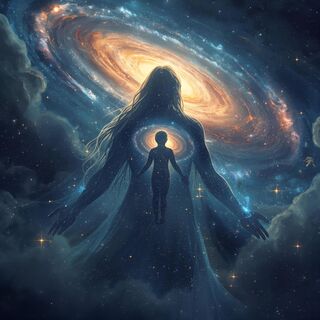
I want to reframe what the part is inside of you that's creating anxiety.
It is a body reaction to something.
But I want you to imagine that the something that it's reacting to is a scared.
Young,
Inner child part.
Something that happened when you were very little.
Maybe pre-verbal so you'll never remember it.
Maybe something you deeply,
Deeply remember.
Painfully remember.
It might be something that happened over and over and over again.
But it's something that happened.
That gets stored in your body.
That never got fully metabolized that became this little sticky bit inside of you.
As little young part of you that never grew up.
That is scared and never had anyone,
No adults,
Came in and helped to make sense of the situation.
To soothe and console and hold that part.
So that part of you.
I was overwhelmed.
Wasn't witnessed.
Wasn't loved through it.
Felt a sense that the only thing to do is to make that feeling go away or make that situation go away or fix it.
And remember as a child.
Their survival was based on.
Making sure that the adults in your life accepted you and loved you.
It kept you safe.
Because you were powerless and young and vulnerable.
Now there's another part of you.
A powerful,
Stronger part,
An adult you.
The you that is capable.
Of facing this.
Young child facing the situation that this young child had to go through.
And turning toward.
Rather than turning away from.
Rather than resisting.
It's mustering the awareness.
Your anxiety is rooted in your body.
In a young memory or young feeling or sensation.
And that what your body needs most is your compassionate.
Caring.
Attention.
To turn toward that part.
To use your imagination of how would you.
Be with a young child who is standing right in front of you,
Crying,
Upset.
Anxious,
Scared.
Shaking.
Would you resist that child?
Would you push that child away and tell that child to stop being anxious,
Stop being scared?
Or would you get down on your knee?
Pull that child close.
Hold the child.
Help that child feel less alone.
Meet that child in their fear.
Oh,
Yes.
I see you're so scared right now.
That must have been so scary for you.
You're not alone anymore.
I'm with you.
I know you were so scared.
You're safe now.
I've got you.
No negating of their experience,
Just an honoring of,
Of course you would feel that way.
Connection.
Compassion.
Bolding,
Closeness.
Reassurance.
Validation And it's in that process.
Not just one time,
Though sometimes for one time.
Though some people it is just one time.
But not just one time,
It's usually many times of going to that child and building trust inside of you.
And doing what you would do toward a physical child who came in front of you.
But toward yourself.
One of the best ways.
To start this process is to take your hand.
And put it on your body.
Oftentimes it's on your heart.
This immediately starts to shift things physiologically because The sympathetic nervous system is.
.
.
I'm high alert and is.
Not in connection mode,
It's in protection mode.
Engaging.
The parasympathetic nervous system and getting you into the right place in your brain.
Oftentimes can be facilitated by Touch.
By putting your hand on your heart or on your belly or on your cheeks.
This brings online.
The connection parts of you,
It starts to flow different hormones.
Oxytocin,
For example.
It starts to interrupt.
The cycle.
And it allows us to.
Find that adult part of us,
Bring that part online.
And start to parent.
The part that feels.
And safe.
Even parent the part that is trying to protect.
The scared child inside.
These are all child parts that got formed when you were little.
Now this is not to negate what's happening in the present day experience.
There could be something happening that's legitimately Scary.
That's legitimately something that you need to set a boundary around or do something with.
I don't want you to think for one second.
That I'm not saying that there might not be a place where you need to protect yourself.
This is about.
Healing the thing.
That makes it hard to see.
Clearly,
What's happening in the present day.
The younger part that is.
Causing you to have a stronger reaction.
That is rooted in.
This body memory.
And it's like the idea that you want to sleep on it.
Because you know you'll make a better decision tomorrow,
Then maybe if you made a decision right now,
You'd be making it from a less rational,
More reactive place.
It's similar to that.
After you've done this work,
Then you get to see more clearly,
Okay,
What do I want to do?
You will also feel like you're coming from a place of inner strength,
Rather than reacting to a difficult or scary situation from the outside.
What's often times not your best,
Most mature,
Most thoughtful,
Compassionate self,
Because you're in protection mode.
And when we're in protection mode,
It's hard to care about other people.
Unless,
Of course,
We're trying to protect someone like our child,
In which case then we will probably care about them in pretty extreme ways.
But in general,
It's a time when it's hard to.
Understand another person's point of view or to consider other perspectives.
And that's why we have to first go to the inner child.
And meet her where she is,
Or where he is.
Put our hand on our heart.
Breathe.
Not to make.
Any of us go away.
But to finally.
Give it the space,
And the attention,
And validation,
And love,
And reassurance,
And care.
And honoring and witnessing that it's been asking for,
For our entire life,
But that we are finally safe enough,
Mature enough.
Capable.
Of meeting it.
And when we need it,
It doesn't have to keep us.
Yanking on our pant leg trying to get our attention.
It doesn't have to keep making big.
Ciao.
To get our attention.
Because we're giving it attention.
It doesn't have to create.
Uncomfortable body sensations and thoughts and worries and make us terribly uncomfortable anymore because We're there.
It doesn't have to try to get your attention.
And fight through the way that we resisted and try to make it go away.
Imagine if someone was trapped in a basement.
They'd probably do anything they could.
Yell and scream and bang on the door.
Walls and break windows because they'd want to get out.
They'd want you to know they're there.
This is what this young part is doing.
And when you finally turn toward it.
The anxiety itself becomes less necessary.
Now you get to meet.
Whatever that is,
And you might meet sadness.
Fear or a child part of you that went through something very difficult.
But at least you're then turning toward it,
Because remember,
What we resist persists.
But we don't tend to.
Keeps rearing its head.
Until we finally do.
So the invitation is to.
Do less managing,
Controlling.
Pushing away.
And more compassionate attunement,
More.
Witnessing.
Turning toward.
So imagine you put your hand on your chest or you put your hand on your cheeks or your belly.
You're saying,
I'm with you.
Who are you with?
You're with yourself.
You're with that young part of you.
You're with apart from the past.
That without you.
.
.
Coming toward that part.
Is just there continuing to be alone,
Continuing to feel rejected,
Continuing to feel like Life is scary.
Because remember,
That part is yum.
And identifies with being powerless,
Vulnerable,
Scared,
Alone.
That part identifies with all those feelings.
Even if you,
In your adult life,
Can look around and say,
Well,
I actually have a partner,
And I have some friends,
And my sister's really supportive,
And I have my therapist,
And.
.
.
My kids,
And I'm really not alone,
And I'm objectively not that unsafe.
Why do I have all this anxiety?
And oftentimes our anxiety doesn't seem rational.
We can look at our anxiety and say,
Gosh,
I know that I'm safe.
I know that this isn't gonna happen to me.
Or I know this probably isn't gonna happen to me.
So in our less anxious moments,
We can see that.
So why can't we change it?
Why can't we just decide?
I say it's because there's this young part inside of us.
That is not rational,
That doesn't understand,
That doesn't have perspective,
That is just waiting for mommy and daddy to come and take care of that young you.
And see how scared you are and help you to make sense of the situation,
To validate your fear.
To appreciate that you're just little.
And when we do that,
We create the.
Circumstances for the inner child part within you.
To essentially grow up.
To become one with you rather than a.
.
.
Disconnected fragment of you.
You kind of snuggle that part in and she or he becomes part of you,
Held in your heart.
Existence held in your heart.
Presence.
Brought with you through life,
No longer.
Banished away into the darkness.
And now brought online.
Brought to your conscious awareness.
So that Anxiety.
Is not needed as a tool to get your attention.
And I don't mean that that child part as being mischievous or troublemaking.
It's just the body's way.
You've probably heard The body keeps score.
The body has a memory and the body remembers these things and then the body reacts to this internal experience.
It reacts to the scared body memories and then causes this cascade of hormones and reactions and sensations and when those things happen.
Chills like anxiety.
So the next time you feel anxiety,
Don't put pressure on yourself to.
Do.
Everything.
Just remember one little thing.
Maybe it's putting your hand on your heart.
Taking a breath and saying.
I'm with you.
You're not alone.
I hear you.
I don't know what to do yet,
But I'm here.
And using your breath.
Instead to make it go away.
Using your breath as a gentle,
Loving caress.
Give it a try.
There's no right or wrong.
There's no perfect.
In fact,
The best thing you could do is intuitively follow your own internal sense of what's most needed in the moment,
Not follow my word-for-word guidance,
But trust yourself to know what you do need.
What you needed when you were little.
You know you best.
Believe it or not,
You do.
Even your parents could have never given you exactly what you needed.
But you can reparent yourself and give yourself what you needed.
And wanted.
When you're a little.
And one last thing I want to remind you of is that you don't have to have a specific memory.
You can just trust.
That there's a part of you that's scared.
And needs you.
It doesn't have to make sense.
A lot of times it's just looking at your childhood and knowing what you didn't get and saying,
It makes sense that.
We felt alone.
It made sense that nobody really saw how upset and scared we were.
It doesn't have to be a specific memory.
It's just giving yourself the things that you didn't get.
When you're a little fulfilling unmet emotional needs.
Tending to fears.
Holding space for feelings.
Only you get to do this for you.
Beautiful thing.
Namaste,
My friends.
Keep moving toward wholeness,
And I'll see you there.