Blessings and welcome to the Path to Freedom here on Insight Timer.
The Path to Freedom is about us waking up to who and what we are as spiritual beings.
It is about us allowing for ever greater and greater expressions of that who and what to emerge.
And it is about us allowing for the peace and the love and the joy and the harmony and the wholeness,
The abundance,
The beauty,
The power that is everywhere around us and that is everywhere within us in each and every single moment.
For all of that to come through,
To flow through us unobstructed and unhindered.
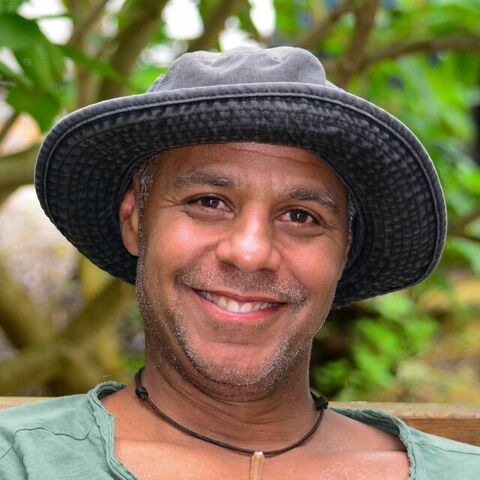
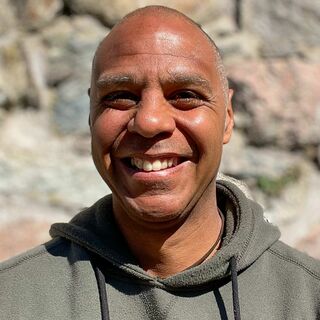
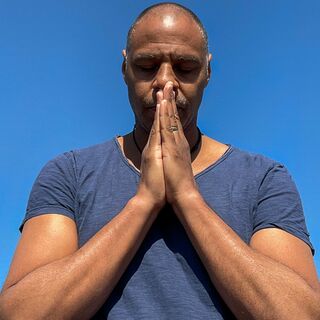
So my name is Daniel Roquejo and I'm grateful and I'm honored to have you tuning in and joining me for this,
What I call a moment of meditation.
And this is a series that I'm starting up here in Insight Timer about meditation.
And so it'll be a regular thing and we will begin with talking about meditation and I'll try to explain what meditation is and the fundamentals of meditation.
And after that we'll move into a meditation session or meditation sitting.
And these moments of meditation obviously they're for everyone but perhaps even more for those of you who are new to meditation.
I remember when I started to meditate many,
Many,
Many,
Many,
Many years ago and I had all these preconceptions as to what meditation is and how it's to be,
You know,
Performed but none of them served me.
I mean I had all these ideas as to how to meditate them and it didn't work for me.
And so what we're gonna do here is just lay it out,
Lay out the fundamentals of meditation so that we can move into it with ease and grace and simplicity and joy because meditation is a joyful thing.
And I remember how I had heard when I began to meditate,
How I had heard that meditators are sitting cross-legged and they kind of have their hands and arms in the end.
There's a posture to meditate and there's a specific meditation position that you need to be able to do.
But when I first started out I was not flexible enough to sit cross-legged and so I still did it.
I still did it.
But it was so much discomfort and actually most of the meditation sitting,
Most of my intention went to just be able to sit and sustain that position and that,
You know,
The cross-legged posture.
So that sort of took the whole thing out of the meditation.
So we're gonna go through all these things,
The basics.
Because meditation,
Oh wow,
I want to say this,
Because meditation along this path of freedom and awakening,
As we begin to wake up to who we are,
There are all these tools that we can use,
That we can benefit from to help us come into this realization and help us catch insights and revelations.
And meditation is one of the most powerful tools that we have at our disposal.
There's study,
Of course,
There is prayer,
There's generosity,
There is hanging out in high fellowship and there are all these sacred surveys.
But meditation is one of the most powerful tools that we can use.
And actually,
And it's kind of funny,
I've said for a number of years now that meditation to me is more important than eating.
And what I mean by that is that I can go for a number of days without eating properly.
I usually don't,
But I could,
But I cannot.
And if I go without eating for a number of days,
Or at least,
I'm not saying that I'm on fasting,
But if I don't eat three times a day,
Or if I don't eat,
If I don't get all the nutrients and all that stuff into my body,
I can go for a number of days before I begin to feel the effects of that,
Before I begin to feel,
Perhaps,
I don't know how I would feel,
But dizzy or my body beginning to experience effects of not getting all the nutrients that it needs.
So I can go for a number of days,
But I cannot,
I cannot go for more than a day or two without meditation before I begin to feel the effects of that.
And these effects are not that my mind begins to become more active,
But that I get more trapped,
I get more caught up in the mind.
I get caught up by opinions and judgments and point of views and perceptions and all of these things that run through our minds constantly.
But if I sustain my meditation practice and I aim to meditate every day,
I don't quite,
But that's my intention.
If I sustain that,
Then much of the thoughts that pass through my consciousness,
They simply pass by.
I don't get caught up by it.
I don't get trapped by it or by them,
But they just pass me by.
So meditation is more important to me than eating.
And the funny thing about this is it was quite recently that I heard Dr.
Bruce Lipton speak about where the energy that we need comes from.
And he said that only 10% of the energy that we need comes from food and the rest comes from,
Call it,
Unified field or quantum field or call it God or call it love or the universe or call it whatever you want to call it.
But according to Bruce Lipton,
90% of all the energy that we need comes from the infinite,
From the eternal.
So that sort of substantiates my claim as to how important meditation is to me.
All right,
So that was a brief background and a brief call it prologue to these serious moments of meditation.
So let's begin by defining what meditation is.
And I'm going to be speaking for only a few more minutes and then we're going to move into the meditation.
But let's define what meditation is.
Meditation,
There are many ways to define it and different people would probably define it in different ways.
But the way I define it is that we come back to the nowness of this moment.
We are fully present,
Fully centered,
Fully grounded in the nowness of this moment,
Which means that we may experience a lot of things.
But as I said,
We don't get caught up by it.
We don't believe the labels.
We don't believe our thoughts.
We don't identify with any of the experiences that we may have in any given moment.
But we're fully,
Fully present and fully grounded and centered in the nowness of this moment.
And of course,
The nowness of this moment is not the same as,
It has nothing to do with time.
So when we're grounded in the nowness of this moment,
When we come back to the nowness of this moment,
We're actually stepping out of time.
We're going beyond time.
Time of course is past and present and future,
All these three tenses.
But the nowness in this moment is beyond all of that.
So meditation is coming back to the nowness of this moment,
Being fully present in the nowness of this moment.
That is what meditation is.
And it becomes so much more easy to meditate when we know what it is.
And so meditation is everything that we do that allows us to come back to the nowness of this moment,
Which means that even though I call these these serious moments of meditation,
What you will find as we move into the meditation in a little bit,
You will slip in and out of being fully present,
Fully anchored,
Fully grounded,
And being caught up by time.
And so,
Just to split hairs here,
We can be said to be meditating when we are fully present.
Even though I may sit for 30 minutes,
The actual meditation,
When I'm actually meditating,
Is perhaps two minutes out of those 30 minutes,
Or 10 minutes,
Or 15 minutes,
Or however long I'm able to stay grounded and centered in the nowness of this moment.
So that is what the meditation is.
And the rest,
That's practice and preparation to move into meditation.
So we sort of drift in and out.
And so I want to just briefly go back to when I started to meditate and how I thought,
And this relates to what meditation is,
Because I thought and I had heard,
I believed that the purpose of meditation is for my mind to shut up,
To be quiet,
To silence itself.
And I'm laughing because I remember so vividly,
I would sit on my couch and I would,
As I said,
I would sit with my legs crossed.
I perhaps had lit a candle,
Burned some incense.
And there were times when I put on some music and there were times when there was total silence and I was so frustrated.
I was so frustrated because my mind would not shut up.
That voice,
That relentless voice of the ego with all these thoughts and opinions and memories and trying to figure things out,
It was far from silent.
And as I thought that that was what meditation was,
I was so frustrated because I was not getting the results that I wanted out of the meditation.
And so this went on for a period of time and it came to the point where I actually stopped meditating because I thought it was useless.
It did me no good at all.
I was not getting to that place where I wanted to get,
Where there is only peace and where there is only bliss and where there's only stillness and where there's only silence and you know,
All these things.
So I stopped and then I picked it up a number of years later and have since come to the realization that meditation is not at all about getting the mind to be quiet.
But the purpose of meditation is for us to not create,
But allow for the space that we are,
The consciousness that we are to expand to the point where we realize that we are not our thoughts.
We are not our emotions.
We are not our experiences.
We are not our bodies even,
But we are the ones experiencing these.
So there becomes a space.
And as we come back to the nowness of this moment,
We come to that space where we get to observe everything that is going on in our consciousness,
In our bodies,
Around us even,
There may be noise around us,
Perhaps cars going by or the neighbors laughing or a dog barking or kids playing or construction workers doing their thing,
You know.
So there can be a lot of things going on,
But as we are present,
As we come back to the nowness of this moment,
We get to observe it.
Just like perhaps you've looked up into the sky and watched the clouds sort of fly by.
You are not the clouds,
But you get to observe the clouds.
And this is what meditation does for us.
Ultimately,
The purpose of meditation is for us to realize that we are infinite beings,
That we are spiritual beings.
And what comes out of that is the dissolving of the identification with our experiences.
All right,
So I don't think we're going to talk much more about the house and the what's of meditation,
But I think we're going to actually move into the meditation and just experience it because meditation,
Oh,
I need to say one more thing.
Just like with anything,
If we want to get good at it,
And I mean good as in if we want to reap the benefits,
If we want to get the goodies out of the meditation,
We need to practice it not once in a while,
Not every three weeks or two months or whatever,
But we need to practice it regularly.
Just like if you want to learn to play the piano,
You need to practice it regularly.
If you want to be good at,
If you want to get your body back in shape,
You need to move into some kind of physical exercise regularly.
So it's not once in a while,
But it's actually something that we do over and over and over again.
And so that is the purpose why,
That is the reason why I believe,
Why I call to make this series because it is something that we need to come back to over and over again.
And so when we do move into the meditation,
I use the breath to take me back or to come back to the nowness at this moment.
And so there are a couple of things we need to realize about the breath as we turn our attention toward the breath,
As we allow the breath to be an anchor into the nowness of this moment or the holy now or the now,
But when we use the breath to come back to the nowness of this moment,
We need to be aware of a couple of things.
And the first thing,
And these are not in any particular order,
But I usually go in this order,
But it doesn't matter.
But the first thing we need to be aware of is that the body with its divine intelligence is fully capable and able of doing the breathing,
Which means that we need not engage in the breathing,
Trying to breathe.
We need not make the breathing happen.
We need not force the breathing,
But the body knows when to breathe,
How much to breathe and when to breathe out.
So we can fully surrender and we can fully let go of our notion to control the breathing,
Right?
Which means that we get to observe.
That is how we use the breath.
We observe the breath.
We use the breath as a point of attention.
We turn our attention toward the breath and just simply observe,
Notice how it feels when the body,
When the chest rises and it falls,
How it feels when the air flows in and out.
So that's how we use the breath,
Right?
And then the other thing we need to be aware of is that as we use the breath as a point of anchorage,
We need to be aware that one breath is not just the in-breath and the out-breath,
But a breath is the in-breath.
And then there's a slight pause or slight space in between the in-breath and the out-breath.
Then we have the out-breath and then there's a space,
Slightly longer space or wider space between the out-breath and the in-breath.
And so as we turn our attention toward the breath,
We want to seek to sustain our attention,
To keep our attention on the full breath,
What I call the full breath.
So it's that circle.
Or it's not even a circle,
It's more of a spiral.
We've got the in-breath,
The space,
The out-breath and the space.
So that's where we want to seek to have our attention,
Observing these four dimensions or these four stages of the breath.
And also whenever I move into,
Oh,
With regards to sitting cross-legged,
Meditation can be used to stretch the boundaries and the limits of the body.
It can be used to sort of be able to take pain and to be able to sort of detach from physical pain and physical discomfort.
But the purpose of meditation is not about any of that.
And so we want to make ourselves comfortable in the meditation.
We don't want whatever posture we're using to be a distraction that pulls us away from being fully present with the breath.
And so in this moment,
I invite you to make yourself comfortable.
I invite you to place your feet firmly on the ground.
I always like to sit barefoot when I'm meditating.
I like to feel the surface of the carpet or if I'm outside,
The grass or the rocks or the gravel or wherever I'm meditating,
The sand if I'm on the beach.
So we want to make ourselves comfortable and we want to place our feet on the ground so they anchor us,
Keep us anchored on the ground,
Grounded.
And then we want to put a smile on our faces.
And the smile informs the body that all is well.
It helps the body relax.
And so when we smile,
What the body does is that it begins to produce and release chemicals that are good for the body,
That sort of dissolves the stress hormones and the anxiety and the fear and the worry and doubt or whatever we are engaged in,
Whatever low vibrations we are engaged in.
So we smile and let's keep that.
And even if you don't feel like smiling,
Even if you don't feel like smiling,
Smile anyway because the body doesn't know the difference between a real smile or fake smile.
So it's going to begin to produce these tonic chemicals as they're called,
Those good for the body chemicals,
Good for the mind,
Good for the soul chemicals.
So we want to have that smile.
We want to keep that smile on our face for a while.
And then I always tap in between my eyebrows.
We've got that first eye,
That spiritual eye or the divine eye or the pineal gland if you want to use more physical expression.
But we want to tap there to activate that,
This eye that sees beyond the eye and hears beyond our ears,
That is the physical eyes and ears.
This first eye is connected to the divine,
To the eternal,
To the infinite.
So let's keep tapping there for a while.
And then we always want to set an intention for our meditation.
And the intentions that I always use are for me to wake up to whom what I am and for me to allow for greater and grander expressions of that who and what to emerge.
Those are my intentions always for whenever I move into meditation,
They're my intentions for everything that I do.
But with regards to meditation,
Those are the intentions that I use.
And you're free to use them as well or if you catch high intentions of your own.
So we can release the tapping.
And now I invite you to place your arms,
Your hands in your lap.
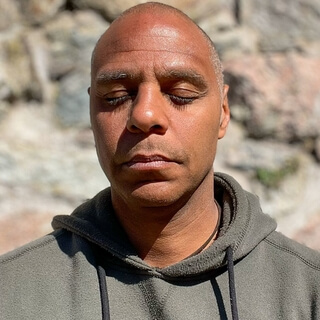
I invite you to close your eyes.
You can have your thumb and middle finger touching as a sign of receptivity,
Of being open and available.
And so let's turn our attention toward our breath,
Seeking to observe the breathing as it happens.
And as we move into this meditation,
I invite you to take on the feeling tone that all is well.
The feeling tone that all is well.
And then let the peace that follows guide you into stillness and silence.
Let your attention drift away from your breathing,
Gently and lovingly turn it back to the breath and you begin again.
Come back to the breath and begin again.
Come back to the breath and begin again.
Come back to the breath and begin again.
Come back to the breath and begin again.
Come back to the breath and begin again.
Come back to the breath and begin again.
Come back to the breath and begin again.
Come back to the breath and begin again.
Come back to the breath and begin again.
Come back to the breath and begin again.
Come back to the breath and begin again.
Come back to the breath and begin again.
Come back to the breath and begin again.
Come back to the breath and begin again.
Come back to the breath and begin again.
Come back to the breath and begin again.
Come back to the breath and begin again.
Come back to the breath and begin again.
Again.
Come back to the breath and begin again.
Come back to the breath and begin again.
Come back to the breath and begin again.
Come back to the breath and begin again.
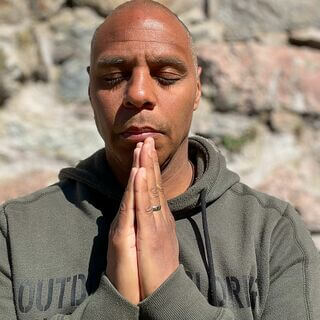
And as I in a brief moment move us into a closing prayer,
I invite you to remain with your eyes closed.
I invite you to remain open and available,
That you may catch the vibration of this prayer and give it permission to move into an even higher and more expanded consciousness,
A higher and even more expanded vibration and frequency.
So in this moment,
How grateful I am for the peace that is here,
For the love that is here,
For the joy that is here,
The wholeness that is here,
The harmony that is here,
The freedom that is here,
The abundance that is here in this moment.
And how grateful I am for your willingness to come back to the nowness of this moment,
For your willingness to release and let go of any and all conditions and circumstances that you may find yourself in and come back to the now.
Where there are only beauties,
Where there are only blessings,
Where there are only gifts,
Where something wonderful is always happening.
So I'm grateful for your willingness,
For your willingness to wake up from this space of gratitude.
I know and feel the allness and the goodness and the eternality of God.
I know and feel that everywhere that we look,
God is fully present in every space,
Every being,
Every object,
In all of creation.
Eternally sourcing,
Fueling and funding itself,
Sustaining and maintaining itself,
Guiding and leading and moving itself into ever greater and greater expressions in,
As and through all of creation.
Infinite love,
Infinite peace,
Infinite joy,
Infinite harmony,
Infinite abundance.
These and many more are qualities of God.
They are the essence and the nature of whom what Spirit is.
What this means,
As Spirit is fully present everywhere,
It means that right where you are,
God is.
Not a part of God,
Not a small bit of God,
But the fullness of God.
You and God are one.
Spirit is you are,
Your unique and perfect emanation of the fullness of Spirit.
You are Spirit expressing Himself in,
As and through you in a beautiful and magnificent and powerful way.
And through coming back to the nowness of this moment,
You make yourself open and available,
You receive all of that which God is,
Which is all of that which you are,
As you and God are one.
So through coming back to the nowness of this moment,
Through the power of meditation,
You make yourself open and available for all of this to flow through you.
You make yourself immune to the world.
You build a presence so strong,
A foundation so strong,
That the world with its fears and worries and doubts and anxieties cannot touch you,
Cannot move you.
So something wonderful has happened.
Something wonderful is always happening,
But during this meditation,
Something wonderful has happened.
The small and the limited,
That which no longer serves you,
Has been dissolved,
Transmuted into the nothingness from which it came,
Leaving only peace and joy and harmony and wholeness and abundance and beauty,
Intelligence.
These are emerging in such a powerful way,
Simply because you've chosen to become still,
Simply because you've chosen to turn your attention within.
Truly,
Truly,
Truly,
All is well.
So peace,
Be still.
All is well.
Peace,
Be still.
I know it.
I feel it.
I accept it.
I give thanks for it.
I allow it to be.
So it is and so be it.
So shall it be.
Amen.
You may now open your eyes and I welcome you to this new space.
I welcome you to this new you.
Because the one,
The you that are here now,
Are not the same as the you who went into the meditation.
Meditation is transformative in nature,
Which means that expansion has taken place,
Growth has taken place,
Unfoldment has taken place.
Not through doing,
But through being,
Through you being still.
So this is meditation.
It's not difficult.
It's not hard.
It doesn't require any prerequisites.
But anyone at any time can choose to go into meditation.
If you don't have a meditation practice,
I invite you to pick one up to make a habit out of it.
Do it on a regular and consistent basis.
You don't have to sit for 20 minutes.
You don't have to sit for 15 minutes.
Just a couple of minutes,
Five minutes,
Every day gets you a long,
Long way toward allowing for the peace and the freedom and the wholeness and the harmony that is within each of us to begin to emerge.
So thank you so,
So much for joining me,
For tuning in,
For co-creating a space and a field of such peace and freedom and harmony.
So until the next time,
I bless,
Bless,
Bless your day and I bless,
Bless,
Bless your way.
Beautiful and magnificent and radiant and powerful,
Abundant being.
Namaste.