Hi,
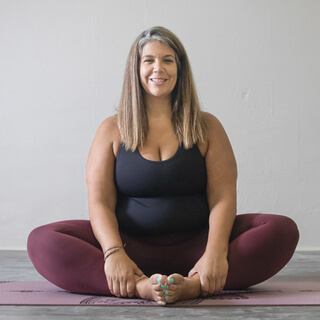
My name is Danielle.
I'm joining you from my home in Malaga,
Spain.
Today we're going to talk about what it means to be alone versus being disconnected.
I specialize in using mindfulness,
Meditation,
And movement through yoga and other somatic practices to support people to have a felt sense of their nervous system and to support their mental health through quick and easy to use tools.
So before we get started,
We want to arrive here in the space together,
Arriving in our body.
So find a position where you can feel the most supported and the most settled for the next.
Five to ten minutes.
Now,
For me,
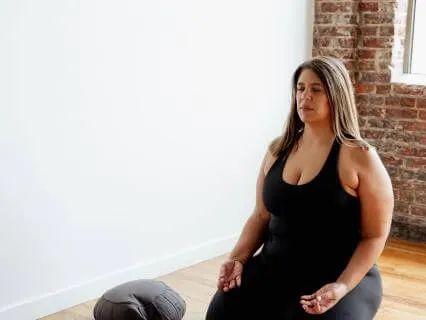
I like to be seated.
Sometimes when I'm practicing,
I'm seated on a pillow.
Sometimes I'm in a chair.
And occasionally I do like to lay down or stand.
All of these are options for you.
The most important part is that your body feels as if it can be accessed.
You can connect with your physical self.
Moment to let either your eyes close or your gaze soften.
And start to pick up on connection point.
Where is the ground or your chair or what you're sitting on or standing on supporting you?
You feel the connection point.
With your feet.
Your hat.
Maybe the back of the head.
Now bring the attention to your breath.
Letting it move naturally for a moment And gently begin to lengthen the exhale.
Lengthen the inhale.
Again,
Breathing in a little slower.
Breathing out.
Allowing the body to register that it's okay to slow down.
Continue to settle into your body.
As we move through the more discussion portion of our practice today.
I want you to think about the difference between being alone and being disconnected.
Because not all time alone is the same.
Sometimes solitude can be really regulating.
It restores our energy.
It increases our clarity.
Gives us space to think and feel.
Allows us to come back refreshed to community and connection.
But disconnection is different.
This connection is when the body withdraws.
Not because it needs rest,
But because it doesn't feel safe enough to stay engaged.
Now from the outside,
These look identical sometimes.
Alone you're quiet you're not interacting but internally they feel very different.
One feels really steady.
Supportive.
The other one might feel tense,
Flat,
Or unsettled.
And a lot of people move into disconnection and they call it solitude,
Not because they're avoiding on purpose,
But just because there are so few spaces where we feel safe to stay open with others.
So our system adapts.
We don't feel safe,
That disconnection,
That disassociation.
It's where we'll go when we're around other people or in situations where we are surrounded by a community that maybe isn't supporting our system's ability to be at ease.
So it's doing a really good job of trying to keep us safe by pulling back.
Or by activating.
And the practice we're going to do,
It's about learning to feel the difference so you can choose more intentionally.
So you'll know when,
Hey,
I'm alone and this is a good alone versus I'm disassociated.
So this might be the time when you close your eyes or you soften your gaze or find something to look at that's not distracting.
I'm gonna visualize and recall a time when you were alone,
But it felt genuinely okay.
Not perfect,
But steady and supported and intentional to you.
Let that memory form.
Notice your body.
Your posture,
Your breath.
Is there ease?
Is there space?
Is there a sense of enough?
I'm staying here just for a few breaths.
Let your body register what regulated and intentional solitude feels like.
Now slowly let that image go and return to your breath.
Lengthen the exhale.
Feel your body here right now in this moment.
Now bring to mind a time when you felt disconnected.
You could have been by yourself or with others.
But you felt shut down,
Excluded.
Pulled inward in a way that didn't feel good,
Didn't feel intentional.
Let this memory come in gently.
Notice your body again.
What changes?
Chas.
Shoulders their attention or perhaps collapse.
There might be numbness.
Just observe.
If that intensity increases,
If it starts to feel uncomfortable,
Just come back to that slow inhale and exhale.
Feeling your feet on the ground.
You are here right now.
You are safe.
You're not there.
Maybe even open the eyes if it becomes overwhelming.
See if you can stay with it.
Noticing the difference between that intentional solitude versus that disconnection.
And disassociation.
In your body.
Not in your thoughts.
Let the image fade.
Take a slow breath in.
And a longer breath out.
Just letting ourselves stabilize.
Wrapping up this practice.
With the awareness that you're here,
You're now.
All right.
So solitude,
Again,
Is something that you can choose.
And disconnection,
Disassociation is something your nervous system defaults to.
When it just doesn't feel safe enough to stay engaged.
The goal of this practice isn't for you to go and force yourself into connection.
It's just,
Again,
Awareness and recognizing when you've shifted into that disconnected state.
So maybe you can gently bring yourself back.
Or you can choose to not be in that situation again.
Perhaps it's a person.
Or place that.
Creates.
That disconnection and you have the option to step away.
The most important thing is that we're present with ourselves and we're aware of what our body is doing.
And then when you come to that awareness,
You come back to the choice.
And from there you decide,
Do I need more time alone in a regulated way?
Or is there a small way I can start to engage in the world with limited space?
For real connection.
The goal is not to force yourself into connection.
It's to recognize when you've shifted into disconnection and to bring yourself back.
Back to your body,
Back to awareness and choice.
And from there,
You can decide,
Do I need more time alone in a regulated way?
Or is there a small way that I can begin to start to reconnect?
This world can sometimes have limited spaces for real,
Genuine connection,
So our awareness becomes really essential.
It allows us to know if we're disassociating and pulling away because we feel less safe.
Because it's a default space for our nervous system to go.
And then to make the choice.
To pause,
To take a deep breath.
Step back.
And maybe re-engage in small ways.
Or to leave.
And do something different.
The awareness also allows us to feel good about the time that we spend alone,
Purposely in solitude to recharge,
To rest,
And restore.
All right.
So as you reflect on today's practice,
Some things you might write down or think out loud.
Or just think about to yourself.
Is how does disconnection and disassociation feel different than chosen solitude?
Another thing you might look at is when you say,
I need space,
Which state are you usually in?
And what are early signs that you're moving into disconnection?
What helps you return to yourself before you try to reconnect with others?
Be specific in your writing or your speaking or your thinking.
Focus on those physical cues and patterns that you can recognize in real time.
Thanks for practicing with me today.