If your shoulders are tight and stressed out,
Then this is just the class for you.
Hi,
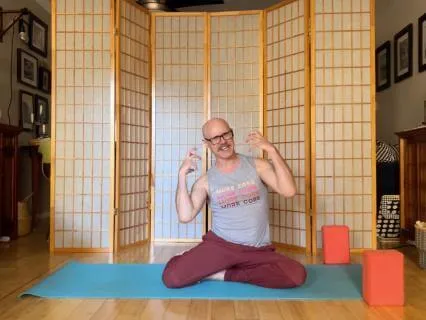
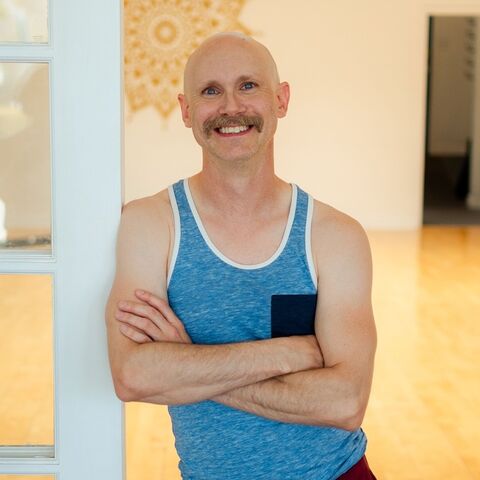
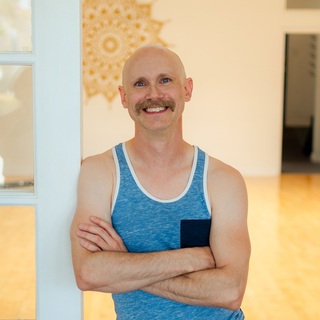
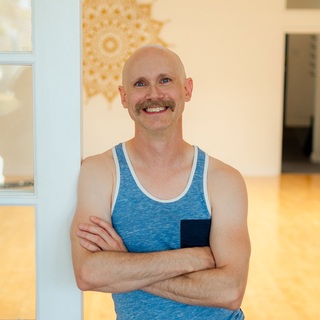
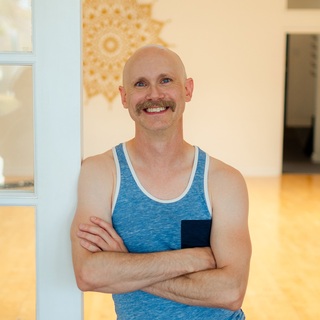
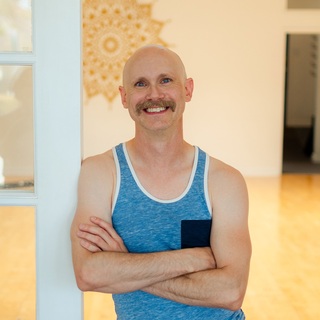
I'm T-Bob.
I'm a yoga and meditation teacher.
I teach a method of yoga created by a physical therapist called Lit,
L-I-T,
Created by a physical therapist.
Laura Hyman.
In today's class,
We'll work all these muscles all around the neck and shoulders.
We'll do some mobilization.
We'll do some stabilizing so that we can unglue these tight,
Stressed out areas.
To start with,
If you have a big pillow that you like to sit on,
Bolster or block.
Do that.
So that you can get yourself up right to start.
So upright meaning shoulders stacked over hips,
Ears stacked back over shoulders.
From here,
Legs can be however you want.
Just put your legs in some way that feels comfortable and some way that can help you stay upright.
Alright,
Clasp the hands behind the back.
Gently,
No death grips on the hands.
Slide your knuckles over to the right.
Any amount.
Whoop!
Only so much that you feel like you're not stressed out about it.
All right,
Watch that.
Watch that left shoulder.
Keep the left shoulder relaxed and down.
And then left ear,
Sorry,
Right ear towards right shoulder in the neck release,
Neutral to the side in the release.
And you might start to feel a stretch in that left side of the neck.
So let's add some breath here.
So take a huge inhale into your upper back.
Big X here later now.
And then see if you can do that.
Back and up into the neck.
Inhale.
And let it go.
Great,
Do one more here.
Great.
And then keeping your head to the side,
Rotate the chin down towards your collarbone.
And only go until you feel like there's another stretch that feels like it needs some breath.
And then stop wherever that point is for you.
And then we'll do three more breaths there.
Big inhale.
Up into the bath,
Up into the neck.
Great.
Take two more breaths on your own,
Just like that.
Great.
Same way you got here.
Come out of it.
So rotate the chin back forward and then bring the head back up on.
All right,
Other side,
Slide the knuckles.
Over to the left.
Left ear towards left shoulder.
Neck release and start to move the breath.
Imagine you could move the breath up to where you feel this stretch.
Three big breaths here.
So we're starting with a neck release because a lot of the muscle,
Well,
There's a few muscles of the shoulder that go up into the neck.
And if we can get those to give a little stretch,
To have a little release.
We'll be better set for the rest of these moves.
Alright,
Keeping the head to the side,
Rotate the chin down towards the collarbone only until you feel a stretch.
This will be different for everybody,
So do that and take three big breaths there.
If it's nice to close the eyes you can.
But you don't have to.
Same way you got here come back out so rotate the chin back forward and bring the head back up on.
All right,
For a wrist stretch,
Reach your hands.
Out in front of you like you're doing a plank.
With your right hand,
Reach over and pull back on those left fingers.
So you can stretch the underside of the palm,
Underside of the forearm.
Preparing the wrists to have a little weight in them in a minute and watch for the thumb,
See what the thumb is doing and reach the thumb away from the other.
Great.
Do the other wrist.
Same thing.
Pull back on the fingers.
Reach them.
So the shoulder is really complex.
In fact,
They call it the shoulder complex because it is complex.
Hang on.
There's a mosquito.
Hang on.
Mosquito almost done.
Because it's a complex collection of bones and joints.
So a lot of people just think of the shoulder as this right here,
Where the humerus plugs in.
But the shoulder complex is four different bones and three,
Sorry,
That's backwards.
Three different bones,
Four joints.
All right.
So now we'll move the least known and the least.
Um,
Probably the joint you're least aware of,
Which is the scapulothoracic joint.
Scapula meaning shoulder blade,
Thoracic meaning the thoracic part of the spine,
The upper back.
So there's a way that the shoulder blade,
If this is your ribs,
The shoulder blade sits on top of the ribs.
And the shoulder blade can glide.
It can go up and down.
It can go out and back in.
And it can also rotate.
So the relationship of the shoulder blade to the ribs is called the scapulothoracic joint.
So let's do some movements of scapulothoracic joints.
Pretend you're doing plank again and then push the shoulders forward.
That's the shoulder blades spreading,
Sliding forward around the rib cage.
And then pull the shoulder back and see if you pull the shoulder blades together on your back.
Do that a few more times.
Reach the shoulders forward,
Spread the shoulder blades.
You might even see my shoulder blades pulse spreading here.
And pull the shoulder blades together.
If you need to bend the elbows to get the shoulder blades together,
You can do that.
Do a few more of those.
Try to isolate that movement.
Of the shoulder blades sliding on top of the rib.
So this is not a single bone meeting a single bone joint.
This is the.
This is the scapula,
The big flat bone gliding over the surface of the room.
Great.
All right.
So to repeat that movement in quadruped hands and knees.
These are called serratus puffs.
Watch the first few times if you've never done anything like this before,
And I'll describe it as I do it.
So I have my knees under my hips,
Wrists right under my shoulders.
On my inhale,
I'll sink the chest and pull the shoulder blades together.
So you might bend elbows here if you need to.
And then exhale,
Puff up,
Spread the shoulder blades.
I'll repeat that.
So join in.
Whenever you feel like you have an idea of what the heck I'm talking about.
Inhale,
Pull shoulder blades together.
Exhale,
Puff up between the shoulder blades.
It's the same movement,
Only now the shoulder blades.
.
.
Can't move on the rib cage.
The rib cage has to slide.
Under the shoulder blade kind of like cat cow only spine is not involved you're not arching and rounding Great,
So this is called protraction-retraction.
Abduction and adduction of the shoulder blade.
Great.
All right.
And then find your neutral.
Where's neutral?
How do you find neutral?
All right.
So it's not not pulling the shoulder blades together,
Not puffed up between the shoulder blades right in between.
Hold that and make sure the shoulders aren't by the ears.
Pull the shoulders back.
If you want to walk the knees.
Back to a supported plank,
You might do that.
You could also keep the knees right under the hips without changing the shoulder blades.
So don't puff up,
Don't sink.
You could also do plank by tucking toes,
Lifting knees for the last big breath if you want to,
But also.
You don't have to.
Alright,
Bring the knees back under the hips.
And we'll move on.
So step your right foot forward.
However,
You need to do that.
For a low lunge,
So torso rises up.
Stacked so we got the knee the hips on top of the knee shoulders on top of the hips ears on top of shoulders And then we'll do some other scapular movements.
So drop the arms by your sides,
Relax,
And circle one shoulder forward,
Up,
Back down,
Other shoulder forward,
Up,
Back down.
Good.
So these shoulder circles or shoulder rolls are really a scapular movement.
So this humerus,
The upper arm box.
It plugs into the socket that you think of as the shoulder.
And that socket is on the outside edge of your shoulder blade.
You may or may not already know this stuff.
But it's good to know the anatomy to understand the relationship.
And how your shoulder blades can affect your whole shoulder complex position and ability or inability to move the shoulder blades has a big uh is a big major issue in shoulder strength shoulder function and of course stiffness tightness Alright,
For a modified side plank,
Bring your left hand down right under your shoulders.
And kick or swipe that right foot back.
Good,
We'll bring the right arm up to the side plank.
If this is way too much on that bottom shoulder,
Spin your back shin,
Bottom shin.
Back behind you.
This will help you to be a little more stable.
It'll be a little less intense on the shoulder.
Or you could also step the right foot in front of you a little bit and sit your butt back towards the back of the mat,
A little kickstand.
Both of these,
All three of these are great options.
Either way,
With that bottom shoulder,
Check to see where it is.
You might pull the shoulder back behind you a little bit and then check to see if it's scrunched up by your ear.
So slide it down the back.
So that's a little bit of depression,
Lowering the shoulder blade.
And this is a much more stable position for your scapula on the back.
All right,
Great.
From here,
We'll come into a regular plank.
Maybe you find.
.
.
Your neutral shoulder blades,
You could lower the knees or not to do that.
Maybe you do a couple little serratus puffs to find neutral.
And then see if you can hold those neutral shoulder blades as you lower your weight all the way to the ground.
All right,
When you get to the ground,
Relax the forehead heavy on the mat and bring the arms out to the side in cactus or goalposts,
So 90-degree bends.
Keep the forehead down as you lift your goalpost,
Pulling shoulder blades together,
And then relax.
Let's do a few pulses like that.
Pulse the arms.
Pulse the goalpost.
Up,
Up,
Up.
Little pulses moving right between the scapula.
So pulling them into the spine and relaxing.
Woo,
Great.
All right,
Bring your hands back under your shoulders and lift up to down dog.
Tuck the toes.
Hike the hips up.
Great.
From here,
If you'd like,
You might pedal the legs.
If you want to shrug the shoulders by the ears a few times,
You could do that.
Just explore your down dog for a couple big breaths.
In any way you want.
Or swiveling hips.
That's a great way to.
.
.
Get some side stretches in if you'd like.
Anything you want to do here for just a couple more breaths.
Alright,
And then lower the knees and we'll do the second side.
Of that so step your left foot forward for the low lunge come up to low lunge drop the arms for your shoulder rolls when you're ready shoulders up back down up back down if you want to get the elbows involved big elbow circles you can add the elbows into this if you feel like that moves your shoulder blade more all around your rib cage go for it All right,
I have to turn away from you for this part,
So I'll see you in a little bit.
Modified side plank,
Right hand down,
Foot steps or slides back,
And left arm comes up.
Making any modifications you need,
You can always spin the right shin behind you or kickstand the left foot in front of you and sit the butt back a little bit.
Either version of this check in with the right shoulder make sure it's not pushed forward in front of you so pull it back And make sure it's not by the ear,
But it's sliding down the back a little,
Making more space in this right side.
All right,
Come into your plank or knees down,
Supported plank.
Maybe do a few serratus puffs to find neutral.
Where is neutral?
Where is it?
Can you hold it?
Neutral we have more muscles working together We have a whole bunch holding it all together and then lower all the way to the ground.
Try to hold your shoulder blades neutral all the way down.
Great.
Relax the forehead down for our goal post pulses.
Arms out by the side.
Pulse up,
Up,
Up,
Up.
Breathe.
Head is heavy,
Relaxed,
So the neck doesn't get involved in these.
We're really isolating those muscles that pull the shoulder blades together.
Great,
And then bring the hands under your shoulders for one cobra here.
So pull the hands back on the mat as you slide chest forward like you're trying to.
Pull yourself to the front of the mat and check in with the shoulders here.
Don't let them sink.
Lift the shoulders up.
Hold the shoulders back.
Pull back on the mat energetically and take two more big breaths.
Alright,
Alright.
Make your way up to Down Dog.
And take just a few more moments here in Down Dog to explore any other movements you want.
You can swivel.
The knees side to side if you want or you can shrug the shoulders or pedal the legs.
Or if there's something else he would like to do here,
Go for it.
Great.
Alright.
And then if you'd like to rest,
You might lay on your back for a few moments.
Um you can take a short break set of time or if you want if you do lay on your back just see where your shoulder blades are when you lay down try to get the shoulders right under you you might have to lift the chest up and relax the chest heavy on the shoulder blades Or if you're good to go,
You're good to go and go on with your day.
And hopefully you feel stronger and more released all around the shoulders.
All right.
Thank you,
Friends.
Have a great day.