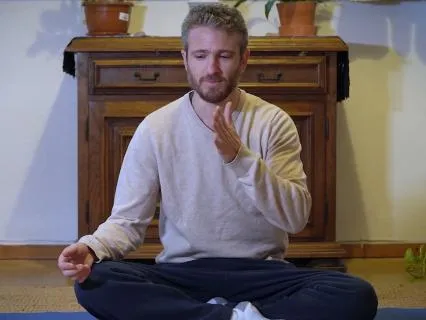
In this lecture I want to talk with you about meditation postures.
What are meditation postures?
Well Patanjali tells us that posture is sthira sukham asanam.
Sthira means stable.
Sukham means comfortable.
And so asana is that which is stable and comfortable.
And I would add to that with an upright spine.
And let's explain why.
Well when we're meditating we want to have an internal focus.
And so I don't want to have my attention constantly go to my stability.
Like if I were taking a posture like this and I was trying to meditate,
Well I can't really focus inside because I'm moving.
I need to focus on my stability.
And it's not that it's not beneficial to do this posture.
It's just that the effects of this posture are going to be.
.
.
The performance of this posture is going to take a lot of my resources.
Resources that I would like to put into the meditative process itself of concentrating the mind and focusing on my breath.
I don't want to be focusing on my balance unless my balance is my object of focus.
And then a posture like this would work.
But for the most part we want to be stable.
And the reason why we want to be stable is because we want to let go.
We want to be able to let go and relax and then focus on the infinite,
Which is what Patanjali tells us we should do in postures.
And I can only do that if I'm stable.
If I try to relax here,
Well this is not comfortable,
Right?
So I can't relax in it.
To achieve the comfort that Patanjali tells us is needed of a meditative posture,
Well,
If I try to relax this,
I need to relax to be comfortable,
Right?
And if I try to relax,
I'm just going to fall down.
So asana is that which is comfortable and stable.
Stable so I can remain comfortable in it by relaxing without losing the shape of the posture itself.
And we added to this an upright spine.
Why an upright spine?
Well,
There is one meditative posture which we do lying down,
Which is shavasana,
The corpse pose.
But for the most part we want our spine upwards because it's said that kundalini rises up.
Whichever way that we are,
Kundalini tries to rise up.
And so if we are in shavasana,
Kundalini is just going to rise up towards the sky.
And if I am lying on my back,
Then kundalini is going to rise up towards there.
But I want kundalini to go to the top of my head because,
As we said,
According to kundalini yoga,
The states of meditation are produced when kundalini rises to the head,
Whether we consciously are rising it or it rises by itself.
So,
Stable,
Comfortable,
And with an upright spine.
Now,
How important is it that we sit in these kind of postures that you can see in paintings or in books or etc.
?
Why shouldn't we just sit and meditate in a chair?
Well,
The truth is,
If you cannot be comfortable in a posture like this,
Or if you're not stable in a posture like this,
Then this doesn't automatically,
This ceases to be a meditative posture or a meditation posture.
And it becomes a posture of effort.
And in those cases,
Definitely you should sit and meditate on a chair.
Some of the best meditators that I know of meditate in a chair,
And I'm going to show you how to meditate in a chair.
But for the most part,
These postures have some advantage.
Some postures are better for certain meditations,
Some postures are better for other meditations.
And I used to evaluate that a meditation posture gave us like a 30% boost to our meditation.
I have to revise that.
And I have to say that depending on our mental state,
Depending on how much practice we do,
And depending on the meditation posture itself,
It can be anywhere from a 30% difference to actually 100% difference,
Multiplying it two times better,
Or maybe even three times better.
And so,
Yeah,
It can be quite a shame when we can't sit in these meditation postures for longer periods of time.
Because understand,
This needs to remain comfortable and stable for long periods of time,
Half an hour,
One hour,
Okay?
The fact that I can sit in this for two minutes doesn't make it that I can sit in this for half an hour.
And I am one that sits on a chair quite a lot.
I love sitting in these postures when I can,
But due to my physiological structure,
It might be a little bit different.
And that's the next point that I want to make is that not all postures are available to us because of our physiological structure.
For the first thing,
Us in the West,
If you look at kids,
You see that kids can just sit and they put their legs in the lotus,
And I can't do the lotus,
I'm just going to do the half lotus.
But they just put the other leg up and they're in the lotus and they're all happy.
There is this flexibility that we have as children.
And as we grow up,
We lose this flexibility.
And this doesn't happen for people who just are accustomed to sitting all of their life in these postures.
So while we,
As Western adults entering into yoga,
We have to regain this flexibility.
People who are living in the East,
Who are just accustomed to sitting like this when they eat lunch,
When they sit and learn,
They have the ability to do this naturally.
Now there's some things that we can regain when it comes to our flexibility,
And there's some things we cannot.
There's some things that ossify,
That become more rigid in our body if we don't maintain that original flexibility.
And there's nothing we can do about it.
We're just limited by our Western lifestyle sometimes,
And then some postures are impossible for us.
I cannot do the lotus pose.
Another thing is that we may have different bodily proportions,
And you're going to see it in one of the postures,
That we may have different bodily proportions which are going to make one posture impossible for us and another one possible for us.
So the key point here is just do what you can.
Do what you can.
If you cannot do any of these postures,
Then just sit and meditate in a chair.
But my intention in this class is to go through all of the meditation postures.
I'll tell you which ones are better for what,
How to do them,
Nuances,
Etc.
With the purpose of you finding at least one that you can sit in relatively comfortably,
And then through some of the stretches and techniques that we'll learn to enhance our flexibility of our joints,
You'll develop the ability to sit in these postures over time.
Okay,
So sthira sukham asanam.
Stable,
Comfortable,
And we added to that an upright spine.
So let's talk about this stability first of all.
Well,
The most stable shape in the world is a triangle.
I'm filming this on a tripod,
And this tripod has three legs.
Why don't tripods have four legs?
Why is it tripod?
Three legs.
Why three legs and not four?
Well,
The answer is that three legs are always more stable than four.
When you have a chair with four legs,
One leg might be off the ground at any given moment.
It actually only takes three points to be stable.
So a fourth leg can make us wobble,
But if we build our chair to be stable with three chairs,
With three legs,
Then that will be stable no matter the angle.
Four legs make sure that we are level,
And that's the advantage of having four legs.
It makes sure that we're level,
But if we want stability at any angle,
Then we use three legs.
And if you look at meditation postures,
They usually create a triangle.
A triangle is made out of three points,
And it's this achieving a triangulism,
I don't know if that's a word,
Is what gives asanas their stability.
So that's stability.
Comfort means choosing the right posture for us.
And finally,
The spine.
So what determines that our spine is upright,
And what is an upright spine?
So what determines an upright spine?
The spine is directly connected to what?
It's directly connected to our hips.
And in every joint,
The available angles for the other joints are determined by the joint which is before it.
So the thing that is supporting my spine is my hips,
And it's the position of the hips which creates an upright spine.
Now,
What does an upright spine mean?
Well,
An upright spine is a spine which has not a straight spine.
The spine is never straight.
What we should talk about is the natural position of the spine,
Which is the S-curve.
And this S-curve,
If I accentuate it a little bit,
Is a bit this posture.
Okay?
Now,
This is not an upright spine.
This is a spine with lordosis,
Where my abdomen is going forward and my buttocks are more back,
So I have too much of an arc here.
But the natural position of the spine,
This is what we call an upright spine.
Now,
This is determined by the angle of the hips.
If my hips are turned anteriorly,
This is called an anterior pelvic tilt.
Let's talk anatomy.
So if I have an anterior pelvic tilt where it's like my buttocks are trying to reach the sky,
Okay?
So my hands here are going to represent my pelvic bones.
And if I have an anterior pelvic tilt,
That creates this natural curvature of the spine.
If it goes too much,
Then I will get lordosis.
And if it goes too little,
I will get this,
Which is a kyphosis.
Now,
For most of us,
We have more of an issue of our hips being in this position,
And so we're going to need to find a way to compensate in this way.
Now,
This is what determines the way that the spine is held.
But what determines how the hips are held?
Well,
That's our legs,
Right?
The femurs,
And then the knees,
And then all the way down to my feet.
So actually,
When I'm standing,
What's determining my uprightness is first my feet,
Then my ankles,
Then my knees,
And then finally the hip joint itself.
But when I'm sitting in meditation,
I'm canceling out everything that is basically knees and down,
Okay?
So we're going to need to look at the position of our knees,
But especially the position of the pelvis.
So let's take a look at this right now.
So we'll be exploring all sorts of meditation postures,
And I hope you find one which is right for you.
So please join me while I perform these postures.
Pause the video when you need,
And try them out,
And try out all the tricks and tips that I'm giving for each and every meditation posture.
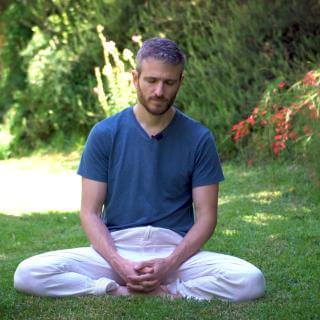
So let's talk about the simplest meditation posture.
The simplest meditation posture would be called Sukhasana,
The comfortable pose,
Which is the,
We could say,
The regular cross-legged position.
Now there's two ways of doing it.
There is the correct way,
And there is the comfortable way.
The correct way is that we place the legs,
And it doesn't matter at this moment which leg is on the inside and which leg is on the outside,
But we place one leg inside,
One leg outside,
And the keys for making this posture correct and when I say correct,
It means that if we do it in this variation,
It's going to achieve certain effects.
There's certain effects that we will get from this posture that we will not get from other postures if we do it in this way,
And therefore I say that each posture has certain keys to it.
There's certain elements which are key,
And they need to be held.
Otherwise,
It has a different effect.
So the keys for making this posture the way that is kind of like the way is to have the ankles,
The heels,
Just underneath the knee.
So the right ankle is going to be just underneath the left knee,
And the left ankle is just underneath the right knee.
And my legs here are straight.
They're not pulled back.
They're not creating an angle,
But they create a straight line,
And what that means is that I have a triangle here in the middle,
And this would be Sukhasana in its most official form.
I would stretch out my hands,
Turn the palms upwards,
And then create a mudra,
Usually jnana mudra.
So a few things,
A few pointers that we can learn from this.
The first is that when I have my hands like this,
It helps me to keep my spine upright.
There's not much which supports here the spine.
I mean,
I can fall down like this,
But if I straighten my hands,
The weight of my palm.
.
.
See what's happening?
The weight of my palm is lifting the shoulder up.
Let's look at it from an angle.
The weight of my palm is lifting the shoulder,
And lifting the shoulder means lifting the shoulders and elongating the spine.
So having the hands like this and actually making some effort.
I can do this not just with the weight of my palm,
But I actually can try to straighten it.
And if I try to straighten it,
It presses on the knee that lifts the shoulder.
Lifting the shoulder lifts the shoulder girdle,
And that elongates the spine.
So this,
Although called Sukhasana,
Has quite a lot of effort done in it.
And you can see that some of the more Hatha yogic traditions,
Hatha means forceful,
They use this type of posture for meditation.
So it's quite intense.
But we're looking as to what we can do to prevent our spine from falling like this.
So what can we do?
Well,
We need to make sure that our hips are anteriorly.
.
.
That our pelvis is anteriorly tilted,
Which means it needs to be like that.
Not like this,
But like that.
How do we achieve that?
Well,
There's a few ways.
One of the easiest ways to do that is to realize that when the hips are higher than the knees,
This naturally happens.
So if I just get enough cushioning,
And lift my buttocks up until my buttocks are higher than my knees,
That's going to happen naturally.
So let's see how that works.
Let's take this and lift myself.
Now,
Can you see that?
Once I sit,
Look very carefully here,
What happens?
Now my hips are at the height of the knees.
And even that,
My pelvis right now is like that.
So that's already better.
See,
When my spine is in this natural position,
Each vertebra is sitting on each vertebra.
And what happens is that I can let go.
I can relax.
Now I have no effort in keeping my spine upright.
It's just held by the weight of the vertebras,
One on top of the other.
This S-curvature makes it so that I can just relax and let go completely,
Which is again what Patanjali tells us that he wants us to do in meditation,
To let go into the infinite.
But this is still not enough clear,
I would say.
So in this posture,
I can take another cushion,
And I can put this one up.
And now my knees are lower than my hips.
And as you can see,
Now I am upright,
Less effort,
My hips now are turned even more.
And one of the things that happens is that I almost feel like I'm falling forward.
And this motion of falling forward,
It happens because of this twist of the hips.
Because right now my hips are like this,
But then they turn like this.
So I'm just pushing myself back a few times until it fits.
And that's Now I'm in this posture.
Now,
I could do this like the really accurate way,
As we said,
Like so.
But Sukhasana is really comfortable when it's just done,
I would say,
Unofficially,
Which means we let go of this shape,
That the ankles have to be underneath the the knees,
And that this has to be straight.
And if I just let go of that,
And I just bring my legs,
Whichever way they fall,
Well,
This leg falls here,
This leg falls here.
And this is what I would call for me a Sukhasana,
A comfortable asana.
It's not the perfected Sukhasana in this way.
No,
Some of the effects of this are going to go away.
But this is more comfortable.
Okay,
So number one trick,
Number one trick,
Keep your pelvis higher than your knees.
Now,
You may notice that I'm using a very hard cushion.
These cushions are tough.
They're not fluffy.
They're not like this cushion.
And there's a reason for that.
For meditation,
If you choose a cushion for meditation,
You want a cushion that is tough.
Because if we just fall in,
We lose all of the height.
So we see that if we lift the pelvis up higher than the knees,
We automatically get this anterior pelvic tilt.
But is that the only way?
And is that the best way to do this?
The answer to that is no.
It's not the only way,
And it's not the best way to do this.
So let's look at one more way which we can produce this with a cushion,
And another way where we can produce this almost without a cushion.
Okay,
So first,
Let's talk about the cushion.
And I want to show you another posture,
Which is called Ardha Siddhasana,
Or sometimes the Burmese sitting.
And it's basically just putting the legs one in front of the other.
We keep the left leg in with the heel close to perineum,
And the other foot in front of it.
This is called the Burmese sitting.
It's a very comfortable sitting,
Used a lot in Vipassana.
And one of the ways which I use to meditate in this is by sitting on a cushion.
But when I sit on a cushion,
I don't sit with all of my body on a cushion.
Because if I do that,
I lose this effect.
What actually I want is I want most of my body not to be on the cushion.
And so for this posture,
This cushion is a bit high.
Because if I were to sit,
What I kind of want to do is I want to sit at the edge of the cushion,
And then slide off the cushion.
So just a little part of my body is sitting on the cushion.
And when I do that,
I get more pressure on my legs.
But this sliding off motion,
Look at what it does to my pelvis.
Okay,
Now,
As I said,
For this posture,
This cushion is too high for me,
Each person will find their own.
So for me,
I kind of like to use this cushion.
And it's enough,
Enough,
This little cushion that if I sit on it,
Okay,
It's almost imperceptible.
Can you see it?
It's enough that if I sit on it and put my legs a bit more forward than than usual.
So now I've got a fist between my heel and my perineum.
And then I just slide off it.
Well,
This sliding off what it does is it turns the it creates this anterior pelvic tilt.
And now what happens is that I've got this cushion sitting underneath what?
Underneath my sits bones.
And these are the two edges of the pelvic bone.
And what happens is that it presses.
So I've got these two bones here.
And once this presses on them,
It prevents my hips now from rotating back,
I've got something which is preventing that.
So I'm going to try look,
And I get pushed.
So just by sitting on the edge of a cushion,
And then sliding off it,
Until I get that support of it,
I create this anterior pelvic tilt.
And now effortless,
I don't need to do anything.
Because normally,
I could get the anterior pelvic tilt just by sitting and lifting my spine,
Try that out.
Try just pushing,
Lifting your buttocks,
Pushing the pelvis back,
And then lifting.
Now I have to hold on to my to my foot to keep my spine upright.
And then I'm using so much effort because my spine just wants to do this.
But the moment that I take this little cushion,
Sit on the edge,
Bring my legs a little bit forward,
Then slide off of it,
Just have it support my sits bones.
And that just prevents,
All it does,
All it does,
And there's no weight carried here.
The weight is underneath my legs,
Under the triangle of my legs.
All it does is it prevents my pelvis from going into a posterior pelvic tilt.
It just keeps me upright.
Now this will work for this posture.
And this will work also for the Sukhasana,
The comfortable pose.
Sliding off of it,
And that's it.
I'm trying,
But it's pushing me forward.
And that's the opposite of what was before.
And suddenly this becomes,
Oh,
So comfortable.
So nice.
And now I can meditate.
I don't need my hands to be like this to keep me straight.
I can just put them like this.
That's it.
That's all I needed.
Now you know something,
I don't even need this.
And I don't even need something to slide off of.
Because here's what I can do.
I can take my yoga mat,
And I can just make this little bulge here.
And I don't need to slide off of it anything.
I can just sit,
Make the anterior pelvic tilt myself.
Okay,
I've got the anterior.
I'm leaning forward,
Lifting my buttocks up a bit,
And just putting that underneath my sits bones.
And that's it.
Same thing.
Okay,
So I don't even need a cushion.
I didn't even need to slide off of something.
I just needed to roll this and place it underneath my sits bones to support them from doing that.
Okay,
And that's it.
Okay,
So we've had the Sukhasana,
The comfortable pose,
And I hope I showed you most of the tricks regarding that.
And I just demonstrated the Burmese sitting,
Which by the way,
This is the posture that I'm in in this moment.
So the Burmese posture.
And I said that if I just put a little bit of elevation,
That can work for me.
Now,
What happens if I have one knee off the ground?
So let's create that situation.
And now you may ask why the left leg inside in the Burmese sitting,
You can change.
But as I've mentioned,
It's also called Ardha Siddhasana.
And there's a reason why in Ardha Siddhasana,
We sit with the left leg inside.
And so there's a reason why it would be the left leg in Ardha Siddhasana as well.
If one of your knees is off the ground,
Then you're putting,
The weight is not evenly distributed.
And then you may want to put a cushion underneath that knee.
It really depends on the posture,
I would say.
At times,
I felt that this was causing an imbalance,
Like I was leaning here.
And so I would rather even get two cushions and put one here,
One here.
As long as I'm comfortable,
This is fine.
There's no problem.
Next on our list of postures is a posture which is called Svastikasana.
You probably know this name because it was misappropriated by the Nazis.
But the swastika is a sun symbol.
It's a symbol of sovereignty.
That's why they took it,
By the way.
It's an ancient symbol,
And it has nothing to do with Nazism.
Unfortunately,
They appropriated it.
And then it has all these negative connotations.
But this is the Svastikasana.
It looks a little bit similar to the Siddhasana.
It's another cross-legged position.
But in this one,
What happens is that I put my left foot between the calf and the thigh,
And I put the right foot also between the calf and the thigh.
So I have a space here where both my heels are not touching the perineum.
And this is a very upright posture,
So also a very interesting one.
This usually causes,
If you don't have enough elevation behind your buttocks,
Then it causes that one of the knees is going to come up.
So if you are high enough,
Then both knees are going to be on the ground.
So you may need a bit more of cushioning for this posture.
But very centered,
Very yogic,
Very rudra,
I would say.
So we had the Sukhasana,
And we had the Burmese sitting.
And these two are two of the most comfortable sitting positions,
Cross-legged sitting positions that there are.
Now let's talk a bit about more advanced postures.
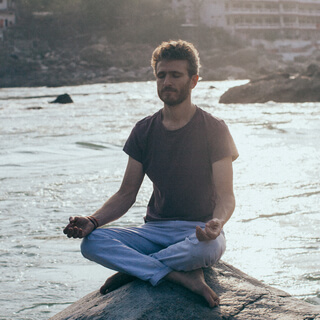
So the first one that I want to tackle is the lotus pose and the half lotus pose.
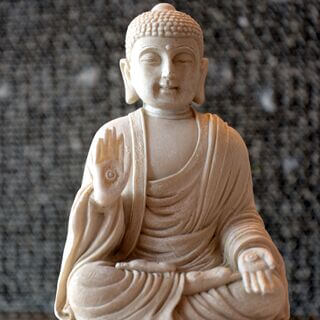
The lotus pose,
Padmasana,
This is the posture that you're going to find the Buddha sitting in,
That you're going to find many statues and many yogis sitting in it.
There is an issue with the full lotus pose,
And that is that it creates a lot of tension in the knees and in the ankles.
And it can actually be quite dangerous.
Now,
Most people cannot perform Padmasana,
The lotus pose,
Properly.
We can enter into it,
But our bodies don't support it,
Because we might not have enough degrees of rotation in our hips or in our knees or in our ankles.
And there's various estimates as to how many degrees of rotation we need in each one of these joints in order to safely sit in Padmasana.
Some people claim that we need.
.
.
And it's basically like this.
We're going to dedicate a full class on this Padmasana,
So I'm just going to recap here.
But as a general rule,
The first joint to move in creating a posture of the legs is the hips.
Whatever the hips can't do,
The pressure is going to go to the ankle.
And whatever is left over from the ankle is going to go to the knee for these cross-leg positions.
Why?
Because they require us to make a bend of the leg like this.
The knee doesn't bend this way.
It bends this way.
It can turn a little bit,
And it has a little bit of motion here,
But not much,
As opposed to this joint,
The ankle joint,
Which can really go,
Or the hip joint.
Now I'm just doing this for my hip.
So in order to create cross-leg positions,
We need flexibility of these two joints.
If you're not flexible enough,
And you try to do Padmasana,
First you're going to reach the edge of this joint.
Then this joint is going to turn as much as it can,
And the truth is that we don't want it to turn all the way like this.
To properly sit in the lotus pose,
We want our ankle joints to be as straight as possible.
So this would be a more anatomically correct lotus pose than this posture.
And so once this reaches a limit,
We start putting pressure on the knees in this direction,
And that can cause damage to the knees.
But even if we don't reach this,
And this feels comfortable,
We might be overextending our ankles and creating damage for our ankles.
So they say that we try not to put the pressure on these two joints.
So we want this joint to be flexible enough.
And then the question is,
How much do we need this joint to be able to turn in order for reaching the lotus pose?
And the answer is,
They say that we need anywhere between 90 and 115 degrees of external rotation.
Now,
I can't really do it to myself,
But I'm going to try.
And you can see that if I turn my hip joint,
Then I reach about there.
And that's about 90 degrees.
Some people believe that it's okay to do this posture with 90 degrees,
And some people believe that it should be 115,
So around here.
And definitely I can tell you that it's more safe when you have this 115,
Even 120 degrees of external rotation of the hips.
So for most of us,
Doing anatomically safe padmasana is quite impossible.
So let's talk about the Ardha Padmasana.
In Ardha Padmasana,
I have one leg on the ground,
And then the other leg,
I place it up,
And I place it as close as I can to the hip joint.
Then I can take this leg out to make it more comfortable and rest the knee of the leg that is upper on the foot that is lower.
Now,
The full padmasana will require me to put this leg on top.
Now,
As you can see,
I'm getting this angle in my feet.
But right now,
Because there's no pressure on here,
I'm not overly extending.
It's free.
The knee is free to rise if it's necessary.
And so for most of us,
This Ardha Padmasana is quite accessible.
I like this posture a lot.
I've meditated with this posture quite a lot.
I enjoy it a lot.
I have when I was younger.
I used to do padmasana as well for very short durations,
And I found it to be good.
But I was never able to sit in it comfortably without pain and stably for long enough periods of time to see the effects.
But they say that padmasana is good for meditation because it creates a certain activation of the Ajna Chakra.
There are two pressure points,
One here and one here,
And when these two get pressed,
Something happens with our kundalini and something in the Ajna Chakra awakens.
It's a certain awakening of the Ajna Chakra because,
As we're going to see,
There are other postures which also achieve an activation of the Ajna Chakra,
But they do it differently.
One of the main reasons why padmasana is considered really good for meditation is because of levitation.
Yes.
What happens in padmasana is that this position,
It locks the spine.
So that would be one benefit for us all.
It locks the spine,
It prevents the hips from this anterior pelvic tilt,
And so the spine remains upright.
But in the yogic lore,
It's said that meditators can start to levitate off the ground.
Now,
When I have both my feet,
One on top of the other,
Then this position is locked.
So if I start to levitate,
I'm not going to lose the position.
But if I have any other posture,
Let's say it's the half lotus,
And I start to levitate,
Well,
I'm going to lose the posture.
One leg is going to fall down.
And that's one of the reasons why it's considered that the lotus is a really advanced posture and really helpful in advanced meditation,
Because then the person can float in the air and be in the lotus position,
And they don't lose the lotus position as they're levitating.
But since I have never seen anybody levitate,
And I haven't heard anybody encountering this problem,
We really don't need to do this.
Not to mention the fact that while some people consider this to be the best yoga posture,
Most yogic texts,
They don't mention this one as the best yoga posture.
They actually mention another yoga posture.
The Hatha Yoga Pradipika mentions that if you had to choose one asana,
Let it be Siddhasana,
The accomplished pose.
So Padmasana means lotus,
Siddhasana means the accomplished pose.
And we've just encountered the Ardha Siddhasana,
Which is the half-accomplished pose.
So now let's look at the full Siddhasana,
Which is considered the best meditation posture by the Hatha Yoga Pradipika,
And I think the Garanda Samhita and Shiva Samhita as well.
So definitely an amazing posture,
And possibly even the best one.
Well,
To do this one,
We almost always need a cushion.
It can be a small one or a bigger one.
I'm going to try with the bigger one and see which one fits me better.
And this posture is always done in the same way.
It's always done with the left leg inside,
While other postures we can change,
And we'll talk about this change and some theories behind it.
But in Siddhasana,
It's always quoted as performing it always on the same side.
And the way it's done is like so.
We take the left heel and we place it on the perineum.
No,
This cushion is too high for me because I can't reach my perineum.
We use a cushion just to elevate the buttocks a little bit.
And a good cushion is one which is right at the height of your ankle.
And this is just like one centimeter smaller than what I need,
But it will do therefore.
And we're placing the heel into the perineum,
Like we're digging it in.
For women,
Sometimes some yogis say that they should place the left heel inside the perineum,
But we'll talk about that later on in the video.
So that's the first part.
Then the second part is that I take my right leg,
And it's always the right leg,
And I place the foot into the fold between the calf and the thigh.
So I place my fingers in there,
And then I align both my heels to be one on top of the other.
And what I do next is that for men,
I place the penis in between the two heels.
And I basically have one testicle going to the left and one testicle going to the right.
And then I press on the root of the penis with my heel.
And then this is the posture.
Now,
Because this is a bit low,
I need almost like a little bit of cushioning here.
So let me just fold my mat to get that.
Let me just make another fold.
Yeah,
That's it.
And so my genitals are being pressed between the two heels.
And what it said that this posture does is,
Well,
One thing is that it locks these lower centers,
The Muladhara and the Svadhisthana,
And then allows everything to go up.
And then I can have my hands again in Gyan Mudra,
Chin Mudra,
Dhyan Mudra,
Or any one of the meditation Mudras.
And that's it.
Now,
For women,
You place the left heel into your perineum.
In some versions,
The left heel is,
This posture is done when you have a kind of sari,
So a kind of skirt,
And they do it naked.
And so they place the heel into the vagina,
And then the left heel and the right heel is pressing from the top onto the clitoris and is pressing down on it.
So men also would do this naked,
Of course,
Underneath the clothes.
Men would do it also with a lungi,
And so they're naked underneath the lungi,
And the lungi covers the loins.
At your home,
You can do it fully naked if you want,
And you press the genitals in both cases.
Now,
What you're going to find is that this posture is impossible for some people.
As I said,
I cannot do the Padmasana,
And for some people,
This posture is impossible.
So what limits me from doing Padmasana is that my hips don't rotate enough.
What can limit you from doing the Siddhasana?
Well,
For some people,
The proportion between their thigh and their calf is such that when they fold their knee,
Their heel is never going to reach the perineum.
Usually,
To help reach the perineum,
We move our knee forward.
So if your knee is very to the side,
If we move it forward,
That's going to help.
But this doesn't work for everybody.
So if you've moved your knees as far forward as you can,
But still your heel is not reaching your perineum,
Don't worry about it.
You can't do this posture,
And it's fine.
Does it still work?
No,
It does not.
And that's unfortunate,
But this is life.
Yes,
So again,
The full Siddhasana,
I'm placing my genitals between the heels,
Spine upright.
Now,
This posture,
It works like this.
For most of the population,
It really makes meditation better.
For maybe 1%,
This is magic,
Pure magic.
You sit in this,
And within five minutes,
Something very intense starts to happen to you.
And if you sit with it,
You become meditative by itself.
It also activates the Ajna chakra differently than Padmasana,
But for this 1%,
You don't need to even try to meditate.
Just the posture itself will take you all the way.
And it's considered that this posture,
Just by sitting in it,
Can take us all the way into Samadhi,
Into the higher states of consciousness.
And this is not stated for Padmasana.
Padmasana,
It's said that you need to sit in Padmasana and focus on the infinite,
While in this posture,
You just need to sit in it.
That's why this is Muktasana,
The posture of liberation.
This is why this is considered the.
.
.
If you had to choose one posture,
And that's how the Hatha Yoga Pradipika says it,
If you had to choose one asana,
Let it be Siddhasana.
Okay?
So by far,
This is the best posture for meditation,
In my view.
And it's much more accessible for most of us.
And so this would be the recommended one.
So in the case that cross-legged positions are unavailable to us,
There is another class of postures,
Basically around one posture,
Which does not require us to sit cross-legged,
And is considered,
Again,
One of the best meditation postures there are.
And that is the Vajrasana.
The Vajrasana is this sitting on the.
.
.
Posture of sitting on the knees.
It's used in Zen meditation.
It's a very comfortable position.
Yes,
There are a few points to note about this meditation posture.
The first is that we want our knees to be no more than one fist apart.
They can be together,
And they can be one fist apart,
But not more than that.
Some people have this tendency of sitting in this posture.
This is not conducive to meditation.
It's very relaxing,
But it does not create the mental conditions and the mind conditions that help us to become meditative.
We can become very imaginative in it.
We can become very going into fantasies and daydreaming,
But it doesn't create this meditative thing.
If you have a tendency to go into this kind of posture,
Then don't.
If you have the tendency to sit in this posture,
It means you shouldn't be sitting in it.
If you don't have a tendency of sitting in this posture,
Then in some cases you may want,
But not while meditating.
So this is point number one,
Having no more than one fist between the knees.
The second has to do with the position of the feet.
So I'm going to turn around so you can see.
That is,
Do we sit on our heels or do we sit with the heels to the side?
In some places,
It's taught that we should sit with the heels to the side,
And so we're even taught to grab the calves and move them to the side and then sit down.
It's viable.
It's valuable.
You have to check for yourself.
When we sit like this with the buttocks pushing the heels to the side,
We bring the big toes closer to one another,
And this creates some pressure on our knees.
So I don't know if I like that,
But when we're sitting on the heels,
We place the pressure on the heels.
So there's a contention,
Which is better.
We create a pressure on the ankle joints in this position.
Sitting like so,
We're creating a pressure on the ankle joints.
One way to avoid this is to use a cushion,
But we don't place the cushion normally just like this,
Because then we're making even more pressure.
What we do is we place the cushion between our legs.
And from this angle,
We place the cushion between our legs,
And then I'm sitting on the cushion.
You can also use a yoga block,
And you can also use something like this.
So you can place this between the legs,
And then you can sit on that,
And I can make it as high as I need.
Now,
I don't want to put this one.
I can.
I can put this one like this,
And you might be wondering why it's sticking out so much.
Well,
The reason is that if I place the cushion and sit like this,
What did I get?
I get the knees really separated in the way that I said we don't want to sit like this.
And so when I push it back,
And it's only resting on my toes that I can bring my knees together,
And now there's pressure on my toes,
But there's nothing on my heels.
And let's look at it from another angle again.
So I'm placing it right at the edge here,
Sitting,
And then I can bring my knees together.
So my heels are at the sides of the cushion.
No problem there.
Okay?
One way to do this posture in a way that we keep the heels to the sides is actually starting with the heels in this posture,
Having the knees really outside.
And then if I bring my toes closer,
And I'm placing my buttocks,
My heels are at the sides.
If I lean a little bit back and bring my knees together,
I'm going to make sure that I'm not sitting on the heels,
And now my knees are together.
And from this angle,
I will start with my knees apart,
Lean back a little bit,
And then bring them together.
And finally,
From this angle,
Put them apart and bring them together.
Now another major question which usually comes up is,
Should my big toes touch or not?
And there's multiple answers to that.
Some people are adamant that they should not touch,
Some people are adamant that they should touch.
And from my perspective,
It can be either way,
But I think it's better when they do touch.
And there's multiple reasons for that,
But they come from other teachings,
So I don't want to put them together.
Okay,
So we talked about cushions,
We talked about all of the meditation postures except sitting in a chair.
And there's one more trick that we can do with this type of Vajrasana meditation posture,
The meditation posture that we sit in Zazen,
And that is the use of a meditation chair.
This is a meditation chair,
It's built to have a slight angle,
And it's built in such a way that I just place it like so,
And I am sitting in a meditative posture,
Basically in this Vajrasana.
I can have a cushion here or no cushion,
And from the side,
I just place this and sit on top of it.
And that's it.
This kind of chair can be really comfortable for this posture,
The Vajrasana type of posture.
It can also be used for these cross-legged positions,
Because just like a cushion,
This angle,
It produces,
It gives me,
It's like having the floor at an angle,
And what this does is it gives this anterior pelvic tilt,
Which keeps my spine upright,
So I can sit in like so.
Okay?
And also just as comfortable.
And finally,
We have meditating in a chair.
When we meditate in a chair,
There's a few nuances that we should pay attention to.
The first,
We need the chair to be at the right height.
If the chair is too high and our feet are dangling,
Then that doesn't do the trick.
If that is the case,
Then you can take a cushion,
Or as I'm doing now with the yoga mat,
Folding it,
And then you place your feet on the cushion.
The second thing is that when we're meditating in the chair,
We don't want to do this.
It's okay,
There's no problem with this,
But it's just,
It's the same as not sitting properly in a meditation posture.
We don't get the added effects for it.
The meditation posture when we sit in the chair is called the pharaoh position,
Where everything is just 90 degree angles,
So my feet are at the width of the hips,
They are facing forward,
My hands can be in various mudras,
You'll find what's comfortable for you,
And my spine is upright.
Let's look at it from the side.
So,
Spine is upright.
Now,
When I meditate in a chair,
We have a tendency of leaning back,
And although this is more comfortable,
We do want to have our spine upright by itself.
So,
As you can see,
What I'm doing is I'm doing this anterior pelvic tilt.
I'm sending my hips back,
And I'm using the edge of the chair to prop my pelvis in this position,
And then I'm sitting,
And my spine doesn't touch the chair.
It's important that the spine doesn't touch the back of the chair in various meditations.
We want our spine to be free for kundalini to go through,
Up the spine.
And so,
This would be the recommended sitting position.
If the other positions are painful for you,
Then you want to be able to sit in this position.
You want to sit in a meditation posture.
You want to be able to sit comfortably,
And sitting in a chair in the pharaoh position is better.
If this is comfortable,
It's better than sitting in the ground in pain in one of the other postures.
Sometimes,
You may want to take a cushion and place it very low.
This is not this kind of chair.
If this was one of these plastic chairs,
Then I may have placed this cushion down along,
And then sat with the cushion just supporting here,
Or just the lowest parts of my spine.
Sitting in this pharaoh position is closer to Vajrasana,
And if I lean into the seat like this,
It's closer to this lazy Sukhasana,
Where I let my body drop and focus more on the internal world of thoughts and emotions.
Now,
Let's talk about a few issues,
A few things.
So,
The first is this position of the legs.
Left leg inside versus right leg inside.
There's multiple visions of this.
One vision is that the left leg is connected with the left side of the body,
And therefore with the right brain hemisphere,
With the Ida Nadi,
And the right leg is connected with the right side of the body,
With the Pingala Nadi,
And with the left brain hemisphere,
And you know what that means,
What the connections are.
If you don't,
It means you haven't watched the video about polarity,
And I want you to do that before.
So,
I'm not going to tell you the connection right now.
And so,
For some people,
We should sit an equal amount of time on each side to make sure that we keep balance.
We don't over-activate one part of us and under-activate another part.
That is one vision,
Okay?
And that would mean that we do equal amounts of time with the left leg inside,
Which means it's the dominant leg,
Or the right leg inside,
Which means it's the dominant leg,
Or with the left leg up in postures where one is up and one is down,
And then whatever is up is considered dominant,
And the other one is up.
Another vision coming from the Tibetan tradition is that men and women have an opposite pranic system.
So,
What is the qualities of the left side for women,
Or what are the actual right side qualities for men,
And whatever is right-sided for women is left-sided for men.
Now,
This would especially come into effect when we come to talk about siddhasana.
In siddhasana,
It's always explained as having the left leg inside,
And if we go by this view that men and women have opposite pranic structures,
Which is just one version of it,
And just in some forms of Tibetan yoga,
Then it would be logical to assume that women should do with the right leg inside and the left leg up.
I am still searching for this one percent,
Which by the way,
They're mostly women,
To try out the two sides and let me know if the other side works better for them,
Or worse,
Or what is going on.
But for the most part,
Even for women,
It's never taught as using the right leg inside.
So,
This is my own speculation.
If you happen to be one of these one percent,
Where something insane happens when you sit in this posture,
Then please contact me and I'd be really happy to do this little experiment with you and find out if maybe women should do it on their right side.
Swami Satyananda of the Bihar School of Yoga created a new posture which he called siddhayoni asana,
Where he describes that the heel should enter into the vagina,
And so even though he created an asana specifically for women,
He didn't consider that it should be the right leg inside.
I am not so much an adherent of Swami Satyananda.
I don't think he is the most accomplished yogi ever.
There's some controversies and questions about his proficiency,
So I don't know where he brought this idea from.
I still teach it as women should do it with the left leg inside,
Just in the same way as men.
One of the thoughts that I had to actually support the claim that women should do it with the right leg inside,
Because the main argument that women should do it in the same way as men,
Is that the original texts don't say that women should do it with the right leg inside.
They only specify that the left leg should be inside,
And my counter-argument to that is that these texts were mainly written by men for men,
But the thing is that also texts that are written by women,
And there are a couple which are considered to be like so,
Mention this posture in this way.
This is about left or right.
Either we balance one with the other,
Or men and women have opposite pranic structures.
One view that I heard was that because men and women have a different structure,
Men should be with the left leg inside.
So also in Sukhasana,
They should always be with the left leg inside,
Because this will make the posture generate kundalini in a more spiritual way.
And women should always have the right leg inside,
And therefore it would also be for Arda Siddhasana,
And also for Arda Padmasana,
Women should do it in this way.
In this case,
It's about which leg is closer to the perineum.
If we start this debate,
We're not going to get out of it,
Because we can start arguing why men should actually have the left leg on top in Arda Padmasana,
And so on.
I think things are not so clear-cut.
And I think things need to be tested rather than just making theories in the air,
Hence my invitation for women who are very sensitive to Arda Siddhasana to test it out on both sides and record their differences,
And then we can figure out how it works differently.
Because as I said,
When it works,
The Siddhasana,
Not the Arda Siddhasana,
The complete Siddhasana,
When it works,
It works in a magical way that is very clear that it's working.
Okay,
What else should we talk about?
The first is what to do if our limbs start to fall asleep.
Well,
The reasons why limbs fall asleep is twofold.
The first is that you may be pressing on a nerve.
So when you are folding your leg,
You may be pressing on one of the nerves.
This can also happen if you are having a pressure,
A point of pressure,
The nerve gets compressed,
It doesn't get oxygen,
And then it starts producing these sensations of pins and needles.
So that's one reason why we might get pins and needles in the legs.
Another reason is that we might not be constricting a nerve,
But we are constricting the flow of blood.
And when blood doesn't flow,
Then the nerves don't get the oxygen,
And then they start producing these pins and needles again.
It's not that they don't get any oxygen,
It's just that they get a diminished amount of oxygen.
This is natural.
It's natural to happen in the beginning for people,
So I wouldn't worry about it so much.
You're going to notice that,
For example,
When I sit in this posture,
Because my calf is pressing on the heel here,
That I can get that this part is going to fall asleep only from down here,
From here on downwards.
What does this hint to us?
It hints that we need to make sure that we're sitting in a way that there's no excess pressure on one single point.
Sometimes those single points are actually here in the buttocks,
And that's why we try to get the maximum amount of our body in contact with the ground.
This is another reason why Padmasana is a very good meditation posture,
The lotus pose,
Because in Padmasana the whole of the thigh is in contact with the ground,
And so there's no one spot which gets pressured and therefore loses the flow of blood and creates this sensation of tingling.
If I take my whole artery and I press on all of it lightly,
The pressure is going to allow the blood flow to go through all of it,
But if I just make a pressure in one spot,
I'm going to cut off the flow because I compress it all the way.
So that is the trick.
You want to try to get as much of your body in contact with the ground.
So if you're taking cushions and you see that you have points which are in the air,
You may want to put support for them as well.
The more support you have,
The more parts of your body are transferring your weight to the ground,
Other than just right now I'm sitting on two points.
The more we have points of contact with the ground,
The less this is going to bother us.
So it doesn't matter if it's a nerve which is getting compressed by our weight or if it's the blood flow,
The solution is basically the same.
Modify the posture so your weight is evenly distributed upon as many points of the body as possible.
Okay,
Next point is joint motility.
Two exercises to work.
One for the ankles.
Just place your foot of one leg just a bit over where the other leg is and make rotations.
So I'm placing this part on my thigh so my whole ankle is in the air and I'm just doing these rotations.
So this works on the ankle joint.
Another great exercise for developing more ability to sit in meditation postures is to hug the leg and rock the baby.
You can have one leg up front.
This really helps with opening the thighs.
And another posture which really,
Really helps to open the thighs,
And which can be a meditation posture in itself,
Is Gomukasana,
Where we sit in this manner with the left leg to the right side of the body,
The right leg to the left side of the body.
Of course,
Right now this one is on top.
I can have the other one on the left side of the body.
I try to bring my heels as close as I can to the buttocks.
And sitting in this way,
I can also sit and consider this a meditative posture,
Although it will not create,
It will not support the meditation.
So let's talk about which posture,
Which postures are best.
Well,
The best is the one that is comfortable for you.
But besides that,
I find that Sukhasana,
This posture is really comfortable and really neutral.
And so when I'm in a meditation where I want to look at the contents of my own subconscious mind,
This will prevent external things or the posture itself from affecting the contents of my subconscious mind.
Because if I do in a posture which the posture really elevates me,
I'm not going to be able to see what's inside.
So I like to do this kind of contemplative meditation,
This self-inquiry meditation,
In this posture,
Where I even allow my spine to just roll a little bit and allow my head down at times.
Another very neutral posture is the Ardha Siddhasana,
The Burmese posture.
This posture is also very neutral,
Very good for this kind of meditation and for all meditations that there are.
Svastikasana,
When we place the legs so,
Better for meditation.
It creates a certain kind of focus and is helpful,
But it's not very elevated.
It's more focused than the other ones,
The two I just mentioned,
But not so elevated.
Then we have the Half Lotus Pose,
Which is very good.
The Full Lotus,
Which really activates the Ajna Chakra in a way that is very supportive of meditation.
And then we have the Siddhasana,
Which activates Ajna Chakra in a different way and is amazing.
The Full Siddhasana,
As I said,
Probably the best posture for meditation.
And then the Vajrasana,
Which also activates the Ajna Chakra in a different way.
And by the way,
This is why we don't want to do this really wide posture.
If we do this wide posture,
We don't get this activation of the Ajna Chakra.
And then sitting and meditating on a chair.
So,
I hope that you now have at least one,
If not more,
But at least one posture in which you feel comfortable meditating and play around with it.
Start working on it.
The best way to develop in meditation postures is just to sit more in them.
The more you sit in them,
The more you're going to become flexible,
The more comfortable they're going to become,
And the easier it's going to be for you to perform them.
And don't worry if one sit is not enough for you.
It's going to be uncomfortable or you're not able to do the Padmasana.
Don't worry.
You only need one.
So,
I hope you've got that,
And I'll see you in the next video.
Namaste.