Hi,
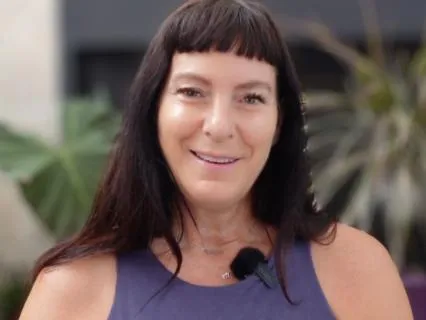
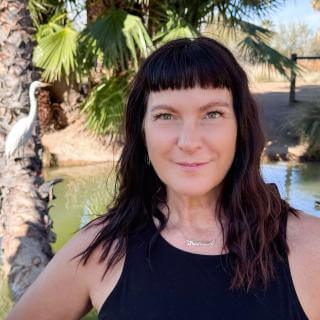
I'm Kumari Skye,
The Relaxationist,
And in this video,
I'm sharing all about Yoga Nidra.
What is this practice?
What are the benefits?
How can it help you relax?
I hope to see you in the video.
I'm Kumari.
And yoga nidra is one of my favorite things to offer.
And so I like to come on here every couple months and just do a question and answer session with anyone that wants to know more about the practice of Yoga Nidra,
Anyone that has a current practice and wants to ask a question about an experience they've had,
Really anything.
So how we'll work this is that you can feel free to ask me a question in the chat and I will answer it or I can just kind of start talking about yoga nidra if no one has any specific questions.
So I'll just give you a moment to type something in the chat box if you have a question for me.
Someone else joined,
Welcome,
Welcome.
I'm Kumari.
And I'm your Yoga Nidra expert.
I'm your Yoga Nidra guide.
So if this is something you practice regularly,
Then I am here for you to answer any questions you might have about your practice or the practice in general.
Well,
If no one has any current questions,
That's just fine.
You can always feel free anytime to put it in the chat.
I guess I'll start out with What is yoga nidra?
At its core in the most simplified way I can explain it.
Yoga nidra is an effortless guided relaxation practice.
The goal of the practice is to guide the practitioner into a deep state of relaxation.
In a really short amount of time.
The benefits.
Are mini,
Like I'm about to do a training on yoga nidra.
I made a sheet that is like a handout that's like four pages worth of the benefits of the practice.
So before I would talk about benefits,
I would maybe tell you about.
.
.
Why or how yoga nidra is so beneficial.
So I said it's an effortless guided relaxation practice.
And so.
There's a systematic set of techniques.
That have been practiced for ages and have shown to bring people that do it into a really deep state of rest.
But how does that happen?
Why do we do it in the first place?
When we move through these techniques that have been developed over time so yoga nidra Parts of what Yoga Nidra is are ancient practices.
But it wasn't until people or aesthetics or yogis,
Monks started to Understand?
That This practice can really bring you into a state of awareness that is likened to your true nature,
Which is peace,
Which is love,
Which is connection to God.
Be infinite,
Right?
I don't know what it is,
But it feels really good and I think Truth is one,
Paths are many.
So some people might say God,
Some people might say source energy,
Some people might say pure awareness or the zero point.
You get what I'm saying.
Um.
.
.
So what happens to the physical body through the use of these systematic set of techniques is that we move into a place where the body,
The physical body has been relapsed so much.
That it's asleep,
It's offline,
So to speak.
But what remains is.
.
.
Ultimately pure awareness when we kind of take the avatar of the body out of the equation we're left with the energy,
With the mind.
Um And we could even take it a little further and say we're disidentified.
From the little mind the ego the natural mind whatever you've heard it called the conscious mind And what's happening is we're moving into a space where we're residing,
We're dwelling in the subconscious or the unconscious or the the big I,
So to speak,
Versus like the ego.
And pure positive energy,
Right?
We're experiencing this separation.
And that kind of leads me to.
.
.
Why it's called yoga nidra And again,
Feel free to tap in with questions at any time.
If I said something that you don't understand,
I'm here.
For this purpose to help you understand.
Um so yoga nidra sometimes can be confusing because we all Think of yoga as child's pose or downward dog or warrior poses,
Which it is,
Right?
But there's different kinds of yoga.
So those poses I just mentioned,
Those are hatha yoga.
Or asana.
So what we do with the body,
The physical body,
Which ultimately is trying to lead us to a path of stillness.
Which brings us to our divine true nature just like yoga nidra does.
Hello,
Welcome.
Um But.
.
.
When we're talking about yoga with Nidra,
We're gonna go back to what does yoga really mean?
Hello,
Welcome.
So yoga.
P E A N broken down into union.
So.
.
.
We are.
.
.
Combining that with Nid Drah.
And nidra in sanskrit means sleep but when we combine it with yoga and make it yoga nidra It is a sort of transformational sleep.
It's the sleep that happens when We are.
In such a relaxed state but we're not actually sleeping like we do when we go to bed at night.
Although our brainwaves mimic that of sleep.
So our brainwaves fluctuate like every 75 minutes approximately.
But in yoga nidra,
It happens a lot faster.
And so we're able to come into that deep state of rest where we're disidentified from the body in a really short amount of time.
So yoga nidra.
Makes it a practice.
And also a state of consciousness.
Um.
.
.
And so that's what defines it as that kind of yoga.
I'm gonna put my glasses on so I can read what these people said.
Katrina,
Hi.
Hi Chase,
Thanks for introducing yourself.
So stoked you're here.
Today I'm talking about Yoga Nidra.
Have you ever done it?
It's an effortless guided meditation or relaxation.
It's a really amazing way for a beginner to start to meditate.
Something about Yoga Nidra is that it's completely guided.
And then you also lay down usually for it.
Most people lay down for it.
And so that way it kind of takes out of the equation,
Like the body trying to get used to like being in an upright meditative position.
But it gives you the experience of what it means to quiet your mind and be in a meditative state.
So I'm not.
I'm not putting down meditation at all.
I personally meditate in an upright position.
But yoga nidra can be really great for someone that's just starting out,
But also it's great for anyone.
So right now,
If you just joined,
I'm talking about.
What yoga nidra is and what happens during it.
So I kind of went over that it's an ancient practice,
But I didn't say this part yet.
It was only relatively recently codified into a practice.
It was created into a practice so the different elements of yoga nidra have been practiced.
Bye,
Yogis.
So for instance,
Like the body scan,
When we move around the body and I ask you to put your attention in different places.
The body scan.
Is a concept called Nyasa and putting your attention on a place.
And that is all about.
Not only building awareness,
But building interoception,
So a connection with your physical and energetic body and this ultimately is going to help you especially in yoga nidra,
Release.
Tension in the physical body.
Okay,
So we know that yoga nidra is an ancient practice,
But it has more recently,
Like I'm talking 1972,
The first book was written about it.
And that book is by Swami Satyananda Saraswati.
I actually happen to have it sitting right here.
And I can put that in the chat as well.
And.
.
.
So he kind of created like a.
.
.
An outline to bring people into what is the state of yoga nidra.
So the state of yoga nidra is this liminal space where you're not identified with your body,
Your avatar,
And you're not identified with anything around you.
You're resting in a place of just How could I explain it?
Like just pure peace.
If you've done Yoga Nidra before,
Most likely maybe you've felt a touch of that,
Even if it was only for 30 seconds.
And The practice itself deeply relaxes the physical body,
The mind,
And in that way.
You are.
.
.
In a sense,
Like recalibrating your body,
Your mind,
Your spirit by doing this practice.
I know it sounds like It does kind of sound fanciful and magical,
But it really is a powerful practice.
And so these stages.
.
.
Are moving through the koshas and in yoga philosophy it is believed it's said that we have five bodies Four of them are energetic and only one is this physical see,
Feel,
Hear,
Touch body.
And so the practice is intending to work on all the layers of the being.
And when we start doing that,
We start releasing resistance that has built up.
And when I say resistance,
I mean.
.
.
Anything that's taken us.
Farther away from our true nature.
So think of a baby.
It's just pure.
It's just joy,
It's just love.
And this is what Yoga Nidra aims to do,
Is to guide us back to residing in that state for a short amount of time.
And in the process of that,
We're releasing resistance,
We're releasing habits,
Stories,
Beliefs,
Things that Don't.
Really support and serve us.
We've just picked up on our human trail.
Everyone has it.
And there's even yoga nidra teachers that are working with people on deeper traumas and helping release those through this practice.
And this person who's doing this,
It's called iRest Yoga Nidra,
And his name is Richard Miller.
He actually has been associated with the Walter Reed Medical Center since early 90s maybe.
And he's been working with soldiers with this practice that have severe trauma,
Like PTSD,
That have brain injuries.
And he's still doing it and he's had thousands and thousands of participants and has helped people have more normal,
Meaningful life after they've been traumatized through.
War.
So that's a beautiful thing.
It is a different style of yoga nidra and that is true that there's different styles of yoga nidra.
His would be more like trauma informed and maybe asking the harder questions,
But they're in a safe space with people that are trained psychologists,
Right?
For what we have here potentially like on this app.
It can still be really helpful in healing trauma and past hurts.
But it's not as focused and pointed on that.
I don't know if this is making sense,
But I'm just trying to relate.
We can use yoga nidra intentionally to heal different aspects of our being,
Right?
So,
For instance,
On this app,
Like there's all different kinds of yoga nidra all different lengths all different voices,
All different ways of sharing it,
And that's because since it was originally created.
There's been a lot of study since then,
And a lot of schools have emerged that.
Teach yoga nidra they're all the same at their core But there can be variance in how the delivery is made.
For instance,
Like Swami Satyananda,
The one who wrote the first book on it in the early 70s,
His.
Way of doing it is going to be a little different than for instance like a newer school of yoga nidra like my school is the school of transformational sleep.
And I was taught a little variance of what this book says.
It's not that anyone's doing it wrong.
It's just the you know,
There's different ways to do it.
Think of like all the different styles of physical yoga of asana.
There's all different styles nowadays,
But the essence is still the same.
The essence is helping the body come more into alignment.
And feel better and feel more fluid,
Right?
Like motion is lotion,
But there's a lot of different ways we can get at that.
Okay,
So I hope that wasn't too confusing.
Does anybody have any questions after all that?
Okay so i've talked about the history kind of of yoga nidra and how how it came about it's not a really old practice but it's ancient in the fact that the state of yoga nidra was understood and known.
It wasn't until the early 70s that it was actually codified.
For what is called in like yoga,
Householders.
So just for like average people that want to relax.
And do a guided meditation.
Where it has you know,
A thousand years ago.
It wasn't that.
It was only done by like monks and aesthetics and very.
Committed people to the yogic philosophy that were seeking enlightenment through these practices.
And then we also talked about the word yoga and the word Nidra.
I guess another really integral piece of Yoga Nidra is a concept called Sankalpa.
So some copa.
Could be likened as an intention.
Ultimately it's more than that.
So in modern yoga nidra you might be guided to intention.
Maybe there's a theme to the yoga nidra.
Maybe it's all about being calm.
So your guide might offer you a pre-made sankalpa like I am calm and steady.
I am calm and steady.
So we're using the practice in order to embody that idea that we're calm and steady because remember when we go into these deep,
Deep states of relaxation,
This is where an intention can be a lot more powerful because we don't have like our ego,
Our thinking mind resisting it.
Like if I was just to say I'm calm and steady while I'm sitting in traffic.
That might not really be authentic,
Right?
That could be kind of lip service,
Like,
I want to be calm and steady,
But I'm not really and probably embodying that.
Whereas when we move into these relaxed states,
We are more able to like really like take that in at a deeper level and kind of like plant that seed.
Okay,
So you can have a sankalpa that's offered to you.
You might also be in a yoga nidra practice where you're just asked to create a sankalpa.
N.
It might even just be one word.
It could just be something really personal to use.
The important thing to remember is that a Sankalpa isn't a goal.
And we're not using this intention towards someone else.
Like it's about us and our life.
Ultimately,
It's a statement that encapsulates something we want to live every single day of our lives and embody.
Sankalpa goes even deeper.
When we break down the word Sankalpa,
San can be translated back to sat and sat means truth.
Culpa is a measure of time.
And in yogic philosophy the measure of time is an aeon.
So we're creating an intention that is a truth for the thread of our very existence.
I know that sounds like a lot.
But this is the most powerful way of using a syncopa.
Let me give you an example.
Let's say all of a person's life that they felt unworthy.
They felt like they didn't belong.
They have a hard time accepting and feeling love.
And maybe this stems from when they were three years old.
They heard their parents arguing and the mom shouted,
Maybe we should never have had that our baby,
You know,
Like.
Maybe three years old would be a little too young.
You wouldn't have the,
Let's say the little girl is seven and she hears that.
So that might not,
Like that just went in and made like a little groove in her brain that started a cascade of her not feeling wanted,
Not feeling worthy,
Not really able to accept love.
And maybe it didn't start right away,
But that was a big issue or a big thing that came into her consciousness and then maybe at school she was unpopular or the teacher never calling her even though she was really smart,
You know,
Like things just like keep building that affirm that original idea that she's not good enough.
She's unworthy.
And so then this little girl like she's living an okay life,
Right?
We're all living,
Most likely,
You know,
An okay life.
But as she gets older,
She starts to reflect on how she acts and who she is,
And why does she have so much trouble in relationships?
Like,
She just can't accept the person's love.
You see where I'm going with this,
Right?
Like,
This one little thing that happened started a cascade that lasted until,
Let's just say,
She's 35 now,
And she's doing some work with herself.
And now she's at a yoga nidra seminar,
And she's asked to create a Sankalpa.
So when I'm asking my group to create their primary Sankalpa,
This is different than just a one-off Sankalpa in a practice.
This is where we're gonna take time and we're going to try to understand from our past what we want most in our life.
So maybe for her,
She wants to feel worthy and able to accept love in her life.
That's like just this thread in her life that like keeps coming up.
This is how we create the Sankalpa and we use this Sankalpa every time we practice Yoga Nidra.
And hopefully that's really regularly,
Maybe even every day.
And so she spends time on a worksheet that her guide gave her to help her draw out what it is she really wants to embody in her life.
And so maybe she would distill it down too.
I am worthy of love.
I am worthy of love.
She doesn't need to talk about.
.
.
What's happened in her life that gets her there.
It's more like this is the intention she wants.
This is what she wants most in her life.
And she can feel that it's been a thread her whole life.
And so as she says this in her daily yoga nidra practice she's impressing her subconscious and in a sense She's creating a new neural pathway of what she wants.
That.
Overrides the neural pathway,
That old one that had her believing she wasn't worthy of all she desires.
Okay?
Do you get all of that?
Sankalpa can be a really big deal.
It's an integral piece in Yoga Nidra,
Especially if you're using it as a daily healing and balancing practice,
Which I highly recommend.
It's totally fine to just do yoga nidra when you're stressed out or once in a while.
It's okay.
Everything,
Just do it,
Right?
But if we're talking about the deeper essence and level of what yoga nidra is,
Sankalpa is a really,
Really important piece of it.
Um And so.
.
.
I do have a talk on Sankalpa.
I also have three yoga nidra courses.
So I'll put those slides up later.
But please know that like,
It doesn't have to be as serious as I just made it sound.
But I would be remiss if I didn't tell you because I hear I do hear misinformation about yoga nidra.
That happens with every practice that people are teaching,
Right?
There's a difference between a teacher that went to a weekend training on Yoga Nidra,
And then there's a difference between a teacher who's done hundreds of hours of training in Yoga Nidra.
So I find it really important to just educate people on what it is.
So I'm going to have a little more tea if you have any questions on that little speech.
Sorry,
That probably really loud.
Okay,
No questions,
That's okay.
So Yoga Nidra has those phases I was talking about,
Or a systematic set of techniques Sankalpa is one of those.
Your Sankalpa will be brought forth.
After the initial relaxation of yoga nidra so Hopefully.
When you practice.
You'll be guided to get relaxed,
Get comfortable.
Maybe you'll do a general just like body scan or some breathing.
So just getting,
Getting the person in a relaxed state.
And I personally think this is really important part of it.
Um.
.
.
Then once we're in that relaxed state,
We're asked to call forth our sankalpas.
However your guide is doing that is their way of doing it.
The idea is to be relaxed So that Sankalpa can feel more true,
More believable.
When we create it,
It already should feel really true.
It should actually feel like our true north.
But maybe if we're in a more casual situation,
Planting it at this point when we're already relaxed,
It's like the subconscious can draw it in a little easier or more.
If that makes sense.
And then we're gonna plant it again.
So we're gonna like water that seed later in the practice towards the very end.
And this is when you're in the deepest state of relaxation.
This is when most likely your brain waves have really slowed down and you're in a very um,
Receptive state.
It's kind of like hypnosis,
But with hypnosis,
You're only really working with like one hemisphere of the brain whereas yoga nidra the whole brain is active throughout the process.
So when we're in this deeply relaxed state,
The power of the intention we're planting.
Is magnified.
All right,
So that's a little bit about the Sankalpa and how and why it's so important.
Something I want to circle back to.
Is in modern times.
I did talk about Richard Miller and how he's using it specifically for trauma with soldiers and other people.
But there's also a person named Daniel Huberman.
And he is I'm pretty sure he's a neuroscientist at Stanford.
I'm sure someone on here has heard of him before.
Um.
.
.
Here's a Huberman podcast.
Anyways.
He heard because he's all about like optimizing the human experience and somehow like he heard about yoga nidra several years ago And so he studied like how and why does this work.
So now more neuroscience studies coming into understanding this practice.
There's been some studies that have been reflected in some books by really great teachers.
I won't get into that at the moment.
So,
Huberman studied this in his lab and studied the brainwave states and the human physiological response.
To Yoga Nidra.
And it was outstanding.
Right?
The whole brain is active.
The prefrontal cortex is lighted up and we're not cognating on a on a level of just daily life,
We've gone beyond that.
And like I was saying,
There's literally new neural pathways being created.
But really what I wanted to get to about this is that he did pick apart the practice and study every phase of it or every technique of it to find out what happens to a person's brain and body when you're going through it.
He did find out that because we are moving through the brainwave state and we are dominantly resting in like the alpha and theta brainwaves states,
And so this is like the meditative state,
This is deep relaxation,
This is a feeling of connection.
Uh,
I just lost my train of thought here.
Okay,
Anyways,
Yeah,
So we are building neuroplasticity,
Yeah,
For sure.
What he found out is that the body can attain the benefits of Sleeping.
In a short amount of time.
So for instance,
Potentially like a 45 minute practice could have the effect of like three hours of deep sleep.
He took,
So he took away the like more like yogic language and he created a practice called non-sleep deep rest,
NSDR.
This practice doesn't include a Sankalpa.
But it's still extremely effective.
So he made like a science-y version.
Of yoga nidra so this answers the question people sometimes have is Why does it say NSDR slash yoga ninja?
That's why that's why so it's.
It's a modernized practice.
Of an ancient So it's pretty cool that it got studied like that.
What I teach is a traditional practice of yoga nidra.
Anybody have any questions?
A lot of you on here right now.
I'll introduce myself again.
I'm Kumari Skye,
The Relaxationist.
Yoga Nidra is one of my specialties.
I also specialize in tranquil yoga practices,
Yin and restorative,
And yin with myofascial release techniques.
And I also offer sound healing,
Sound baths,
Sound journeys,
Whatever you want to call it.
I use sound,
Frequency,
Vibration to help people move into a state of relaxation and nervous system regulation.
So hello and welcome if we haven't met yet.
Okay,
So no other questions.
I'm going to put up my card about the Simkalpa.
If you want to save it to listen to later if you're interested in deepening your practice using Sankalpa in your practice to Create.
Amore aligned and peaceful.
Balanced life.
This is truly the gift of Yoga Nidra.
As I mentioned in the beginning,
There's so many benefits.
Enough that I was able to fill four pages of a document.
Oh goody,
Some questions.
What did I do with my glasses?
Or symptom.
Cat blue,
I am that I am.
That's cool,
I like that.
I've been using neuroplasticity for quite some time and it's an amazing way to dissolve old neural pathways and build new neural pathways,
Something science used to think was impossible,
Right?
It's so cool.
Like,
I just feel like we're on the leading edge of time and space right now with all of this new science.
Confirming,
Affirming what the ancient people have known for thousands of years.
Hi Helen,
I'm so glad,
I'm so glad.
And that is a really important aspect of doing Yoga Nidra.
You have to find the person that you love their voice,
You love their style of guidance.
And that doesn't matter to everybody.
Some people are totally fine just being like,
I'm gonna do this 25 minute yoga nidra and just do it.
I think after a while we start to create our preferences.
I know that that's true for me.
I have my favorite teachers and I love their voices.
I love their style of guiding.
So I end up just listening to that a lot.
So I'm glad that you like my voice,
Helen.
I think that's an important aspect of relaxation,
Feeling held and supported by someone's voice.
Well good,
I'm glad.
I love guiding Yoga Nidra.
So Yoga Nidra really supported me many,
Many,
Many years ago.
2012,
I had a near fatal car accident that I broke my neck.
And I also had some other really serious injuries in other places in my body,
But that was the big one.
And I had to wear a halo brace,
Like the thing where it's like on your head,
Like you can't,
It stabilizes your neck.
And I wore that for three months and I couldn't lay down.
I slept in a chair.
And.
.
.
What I believe really,
One of the things that really got me through that was yoga nidra.
I had always heard of Yoga Nidra because I've been into yoga since 1994,
A long time ago.
Actually,
1991,
I should say.
94 is when my first kid was born.
But I've been doing yoga since 1991.
I've definitely heard about Yoga Nidra.
But it wasn't until a friend brought over a CD while I was recovering by Rod Stryker.
And I listened to those Yoga Nidras religiously,
Like sometimes three times a day.
And I truly believe that it was an integral piece in my healing journey.
I didn't even know it at the time.
My friend told me it was really good and really healing to do,
But I didn't understand it at all.
How it was really affecting.
I didn't understand that I was working through the layers of my consciousness.
Bringing deep relaxation and alignment and connection with my innate true nature and really the deepest healing happens when we are dwelling in the slower brainwave states that Yoga Nidra takes us to.
Kind of like when we go to sleep at night.
That's when healing and regeneration happen.
That's why sleep is so important.
So,
Rewinding,
Like,
I didn't even know.
I didn't even know that that's what was happening.
I mean I was a yogi so I was still doing my breathing practices and believe it or not I was still trying to like stretch my arms and legs as much as I could with this halo brace on and being in pain and whatever.
So now when I look back all these years later,
I'm like,
Whoa.
I didn't keep it as a regular practice once I was recovered and healed.
Probably about five or so years ago that the studio I am associated with here in Tucson said,
Hey,
Would you like to add yoga nidra to your yin class?
And I said,
Yeah.
Let me like go back to it and study it a little more.
So that's when I ended up doing a hundred hour training with a amazing teacher named Allie Boothroyd.
You may have heard of her before.
She's on this app.
She's one of my favorite teachers that I was talking about.
I love her voice.
And I learned all about yoga nidra,
The ins and outs,
The everythings.
More reading and studying,
You know,
Beyond that training as well.
And now in my life,
Now that I'm older,
Life is different.
My kids are all grown up.
I've used Yoga Nidra regularly to help me support going through the changes in my life.
As us women know,
Once we hit 50 and above,
Things change.
And one of those things that changed for me was more anxiety started to happen and more sleep disturbances.
And so that's when I started to really use Yoga Nidra on a very,
Very regular basis.
In fact,
I still do Yoga Nidra every single night.
But back then I was doing it during the day as well.
I love a morning practice.
I love an afternoon practice.
And so that's,
You know,
And now and then keep teaching it and now I'm doing trainings on it.
So my journey has been bag.
Oh yeah,
Helen.
It wasn't that fun.
Yeah,
So you found the benefits too,
Cat Blue.
Out.
Hi Dolly,
Thanks for joining.
Yes,
Yoga nidra naps.
So maybe that kind of leads me,
Some people get really confused about like how can a yoga nidra be 10 minutes?
Why are some 50 minutes?
Why are some 30 minutes?
And maybe you don't have that question but yoga nidra There's a core set of techniques that we can vary a little bit.
So it might not be a full traditional five kosha.
So the koshas are the bodies in yoga.
But we can bring our practice ourselves into a deep state of rest with that beginning settling,
The sankalpa,
The body scan,
And the breathing part.
That can really get people into a relaxed state.
So basically what you need to know is if you see a 10,
Like my teacher just released a 10 minute yoga nidra.
It's not going to take you as deep as a 50 minute yoga ninja.
It's just not.
But it can.
Take you into a really relaxed state in a short amount of time.
That can be like a power nap.
Or just like a grounding and balancing practice,
Just like a meditation.
Would give you.
So maybe you don't feel inspired to do your 15 minute meditation where you just sit there,
You could totally just do a yoga nidra for that amount of time as well.
But some of the benefits include a softening of resistance.
So in the realm of anxiety.
Panic.
Because.
.
.
We're doing things.
Like focusing on the body,
We're taking awareness away from the thinking mind,
So the area of the mind that actually creates anxiety and panic.
Okay,
So we're kind of like.
Putting that aside and coming back into our divine true nature and that is peace.
And so when we get a little break,
This can really help soothe.
Anxiety.
And really this also can happen with like tension in the physical body.
So let's just say like Your neck and upper back are like super tense because you're stressed out.
You've been working like 60 hours a week.
Yoga Nidra can also help with that too.
It's relaxing the physical body.
Think of it like it's bringing you back to baseline.
Baseline.
It can help with things.
But like trauma.
I never,
I personally don't like specifically claim that or call that out.
Because I think it does need to go hand in hand with a really experienced therapist and guide of yoga nidra.
But know that it is working in the background.
You are practice after practice,
Bringing yourself into a state of receptivity to receptivity to the truth of who you are.
The truth of who you are and the truth of who you are is love,
Is peace,
Is like,
As I mentioned,
Way more.
In the beginning,
Like think of a baby.
Their pure positive energy.
So this is what Yoga Nidra potentially can bring you back to,
Even if it's just one little glimpse of it.
It's so powerful.
Yoga nidra can help with things like blood pressure,
Heart rate.
Nervous system regulation for sure and that is in fact how blood pressure can be brought back to a more normal level.
Is through nervous system regulation and then,
Yeah,
The nervous system regulation like really is what we could say causes all the benefits.
Um.
.
.
But it also can help with things like clarity when we.
.
.
Intentionally.
Take ourselves into this balanced state of being.
Anything any like background static noise things like that start to dwindle and we create more of a capacity to be in like a maybe like a a gamma state where we are more akin to learn better.
And it's not that we have to be in that state the whole time.
It's just because we're,
Like I was saying,
We're cycling through the brainwave states through our practice.
So we're also cycling through the different states of consciousness.
Waking,
Dreaming,
Sleeping,
And then being in that limitless space that's also a state of human consciousness to be able to move into what maybe we could call like the flow state.
Um so yeah i mean yoga nidra is just it's so amazing and so potent and so beneficial and To kind of wrap things up,
My favorite part of it is that anyone can do it.
Like literally anyone can do this.
You don't have to have any training.
You don't have to have any experience.
It might be harder for some people.
Some of the people I've worked with have ADHD.
They find it a little harder to pay attention and relax and go through.
What I have learned is after a while,
Their brain starts to understand and get used to it,
And then they move into a relaxed state.
I might give them a weighted blanket or some sandbags to really help the nervous system go along with this.
Even someone that's handicapped can most likely do.
It would be pretty slim,
Like,
I can't do yoga nidra.
Anyone that can sleep.
Khendu Yoga Nidra.
It would be more of like they just don't prefer it,
Or they don't want to do it,
Or they don't like it.
That would be like what would be stopping someone.
So any other final questions before I get on with my day and you get on with yours?
Thanks for joining,
And I hope that this video enlightened you about yoga nidra.
And I wanted to let you know,
If you have any other questions,
Please feel free to leave those in the comment section and we can talk more about it.
Until next time.
Thanks for watching.